- Seller: Steve R (Contact)
- Location: Ottawa, Ontario, Canada
- Mileage: 89,000 Shown
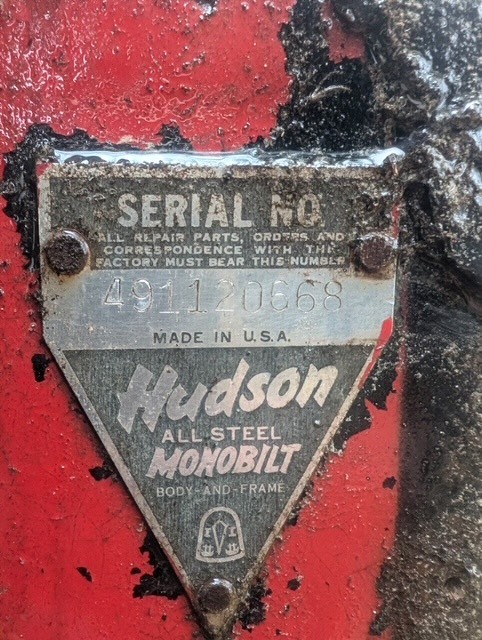
- Chassis #: 490500
- Title Status: Clean
- Engine: 308 cui Inline-6
- Transmission: 3-Speed Manual
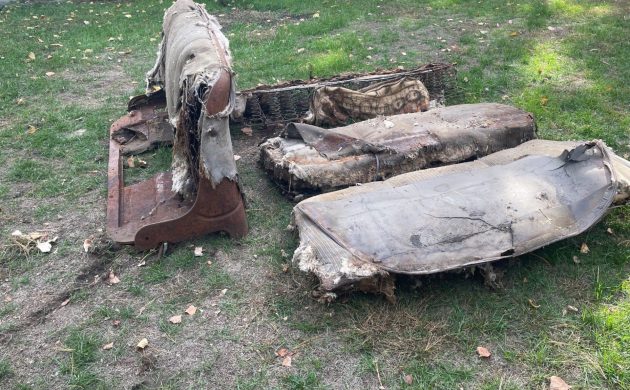
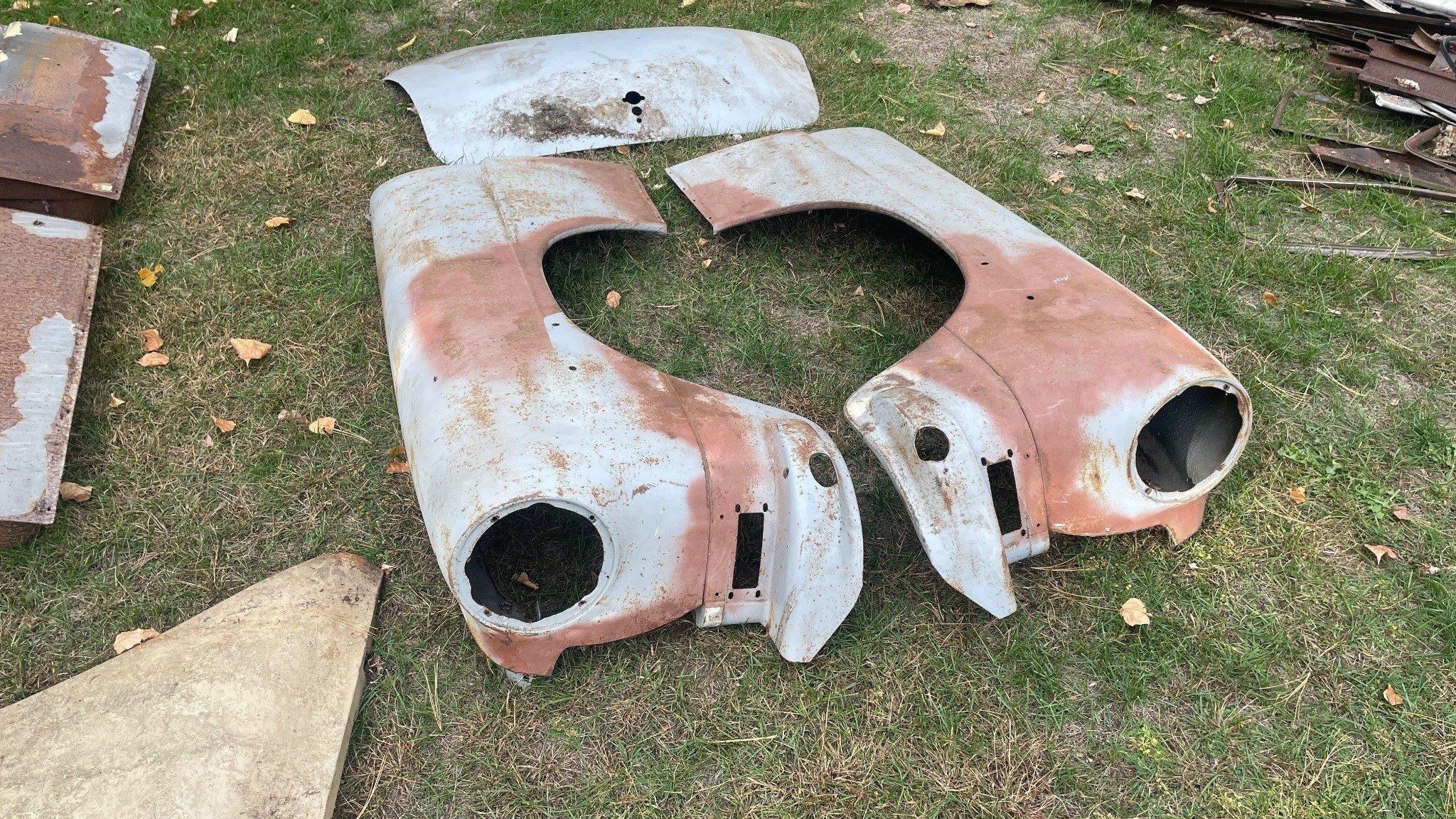
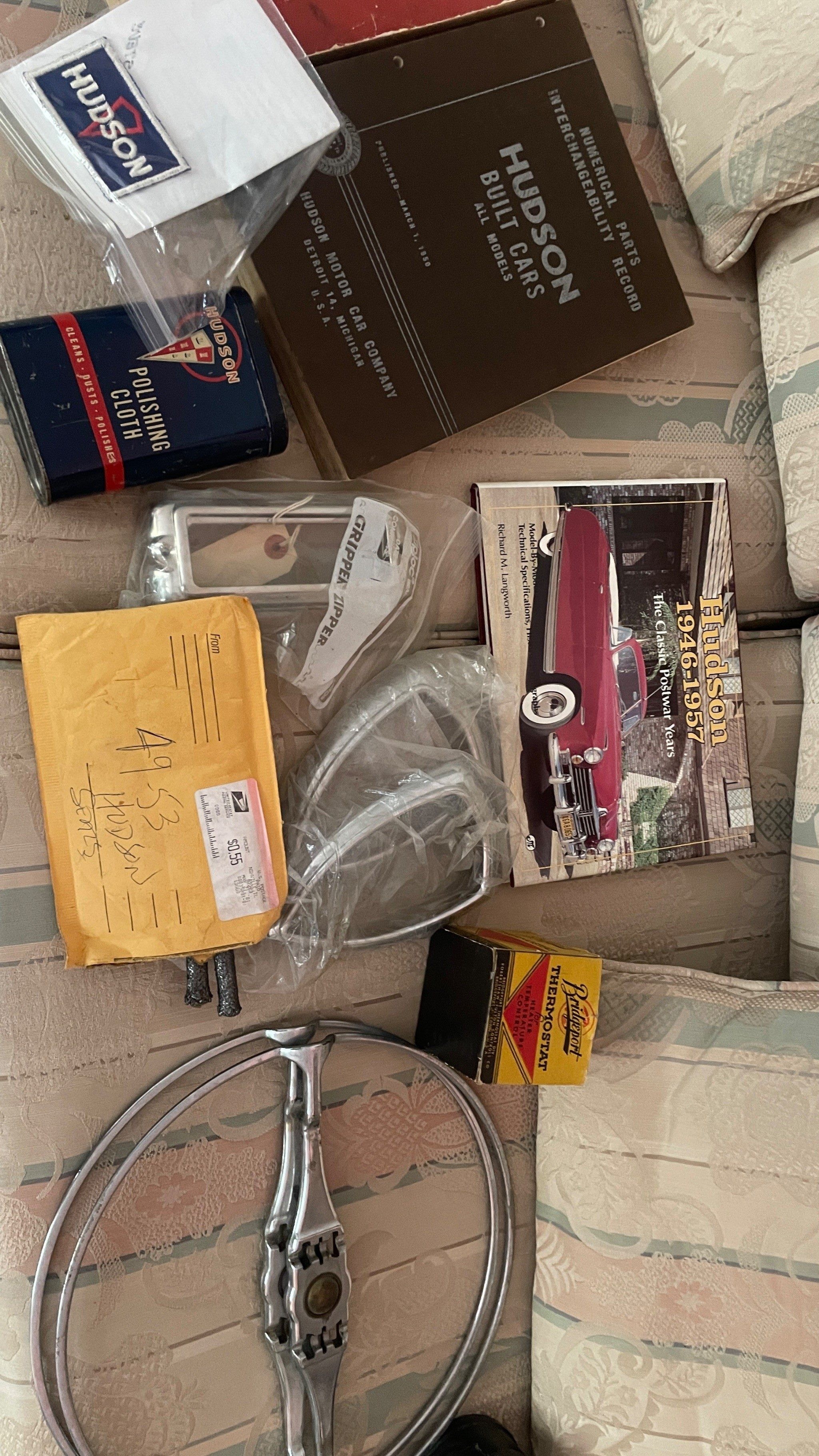
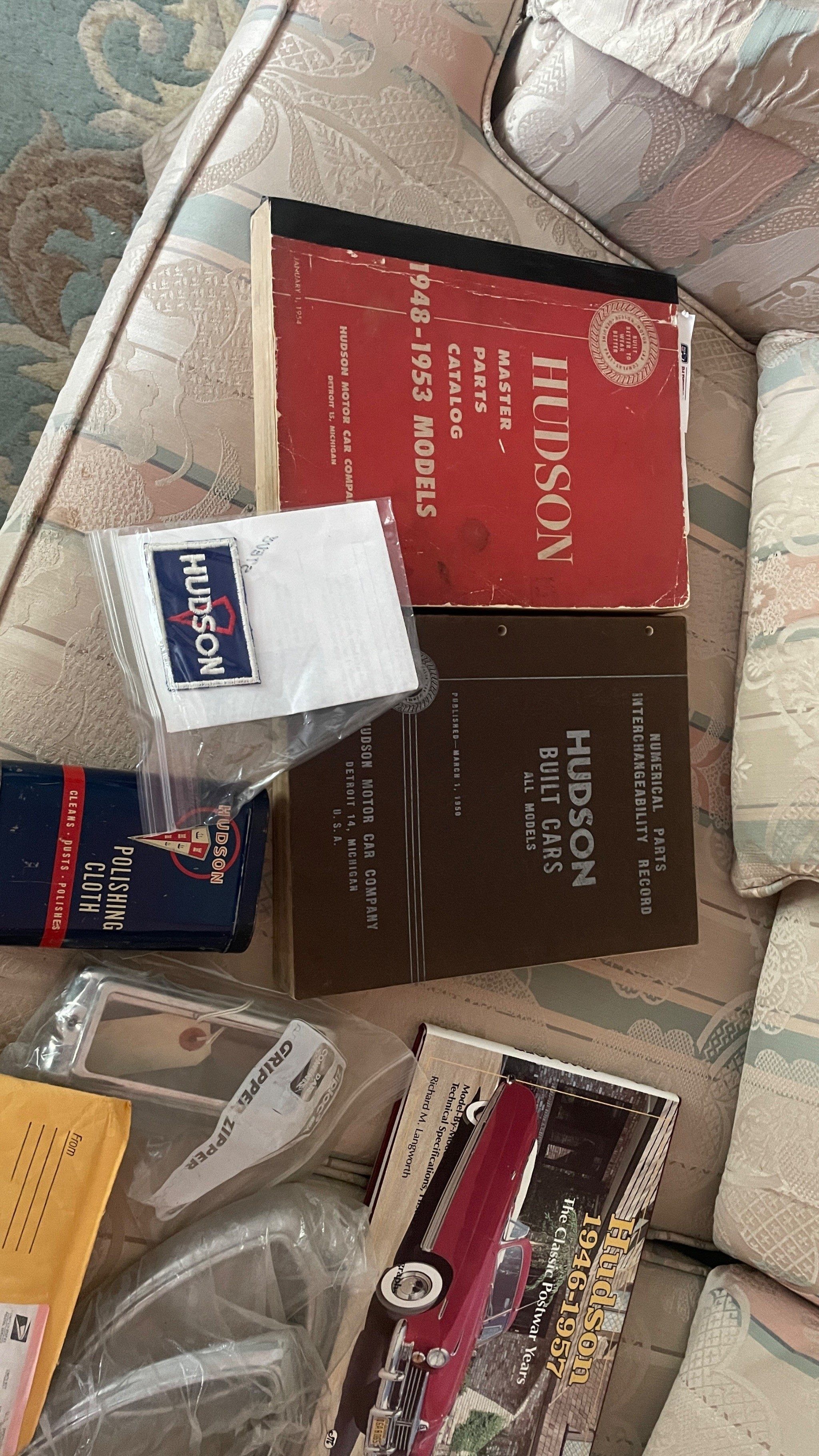
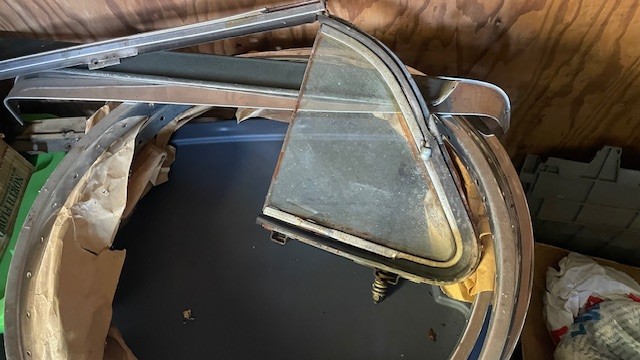
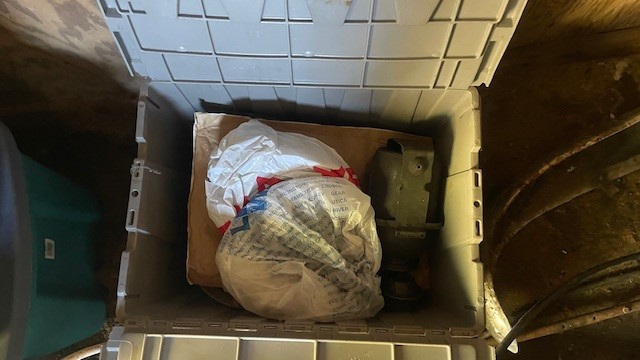
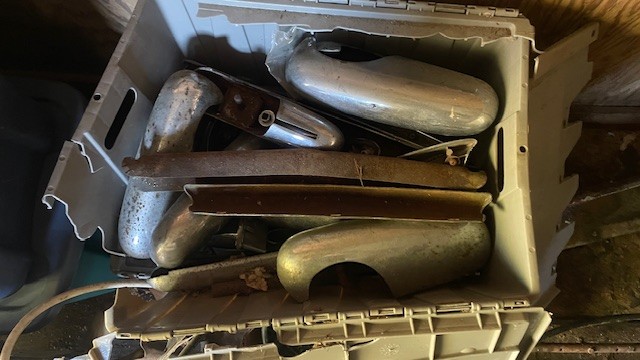
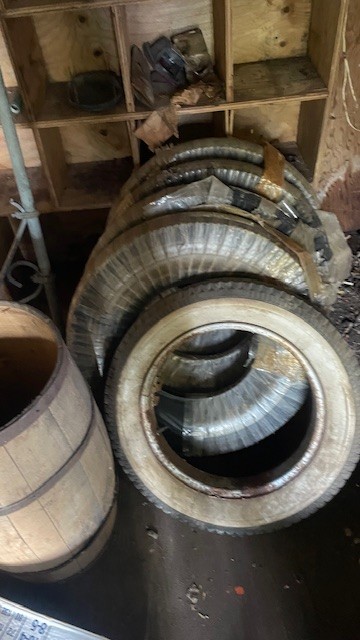
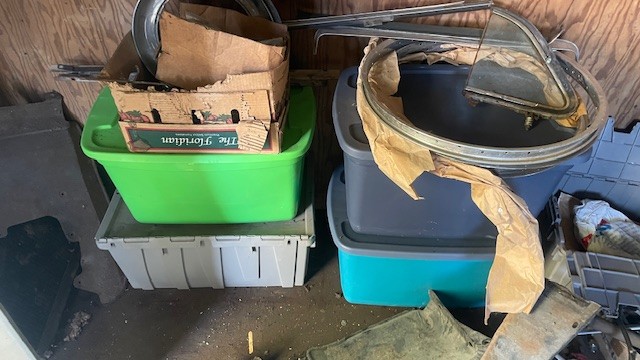
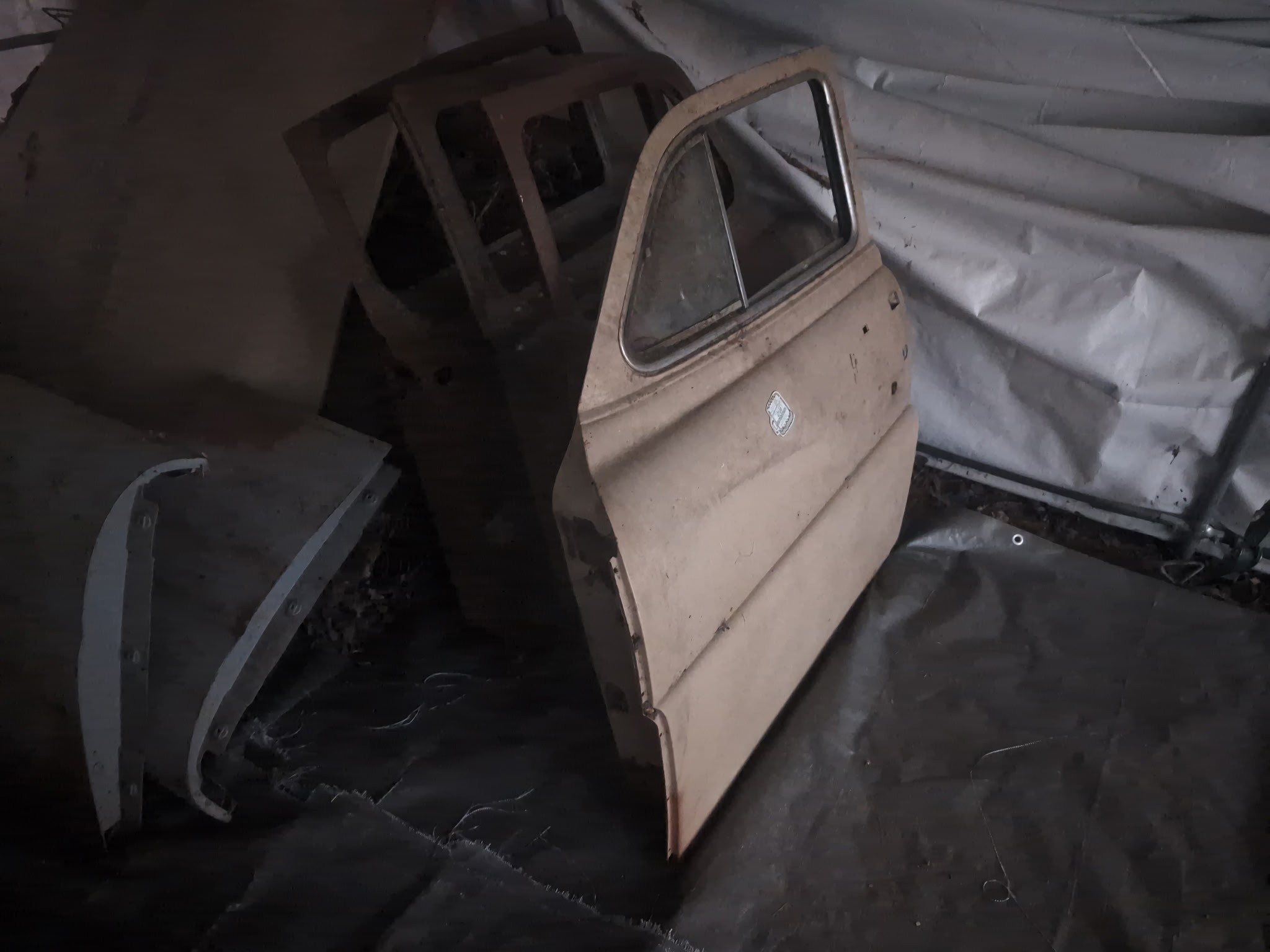
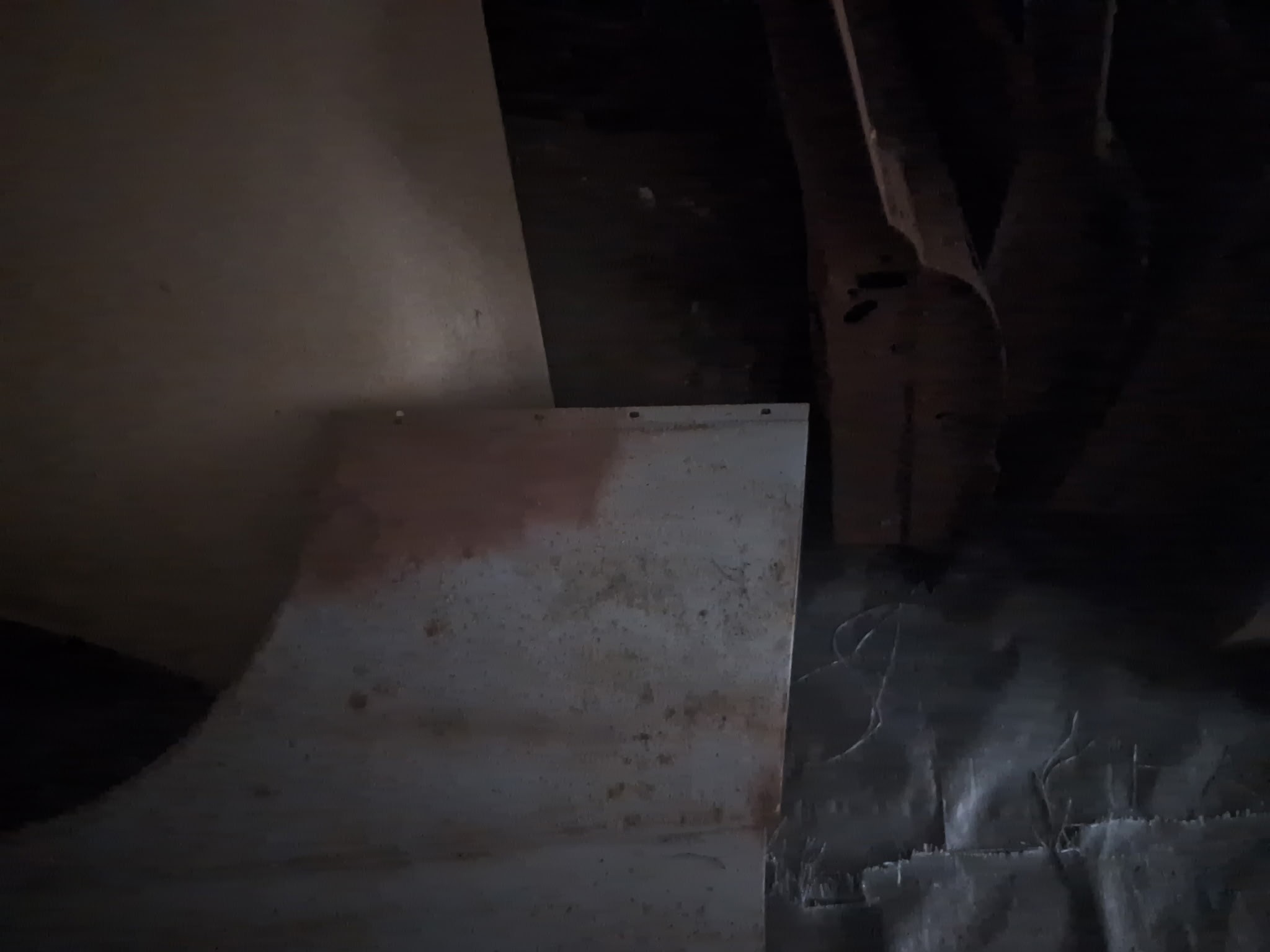
UPDATE – The seller has added photos of the included parts.
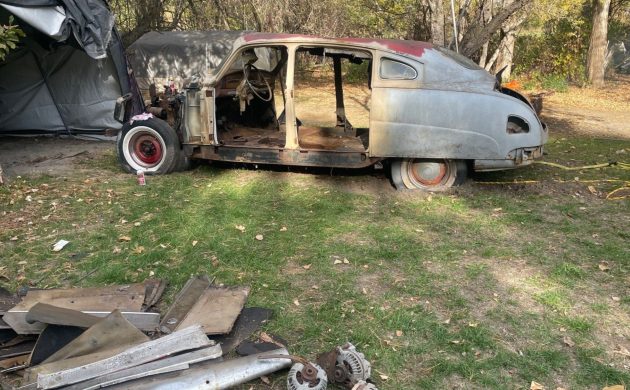
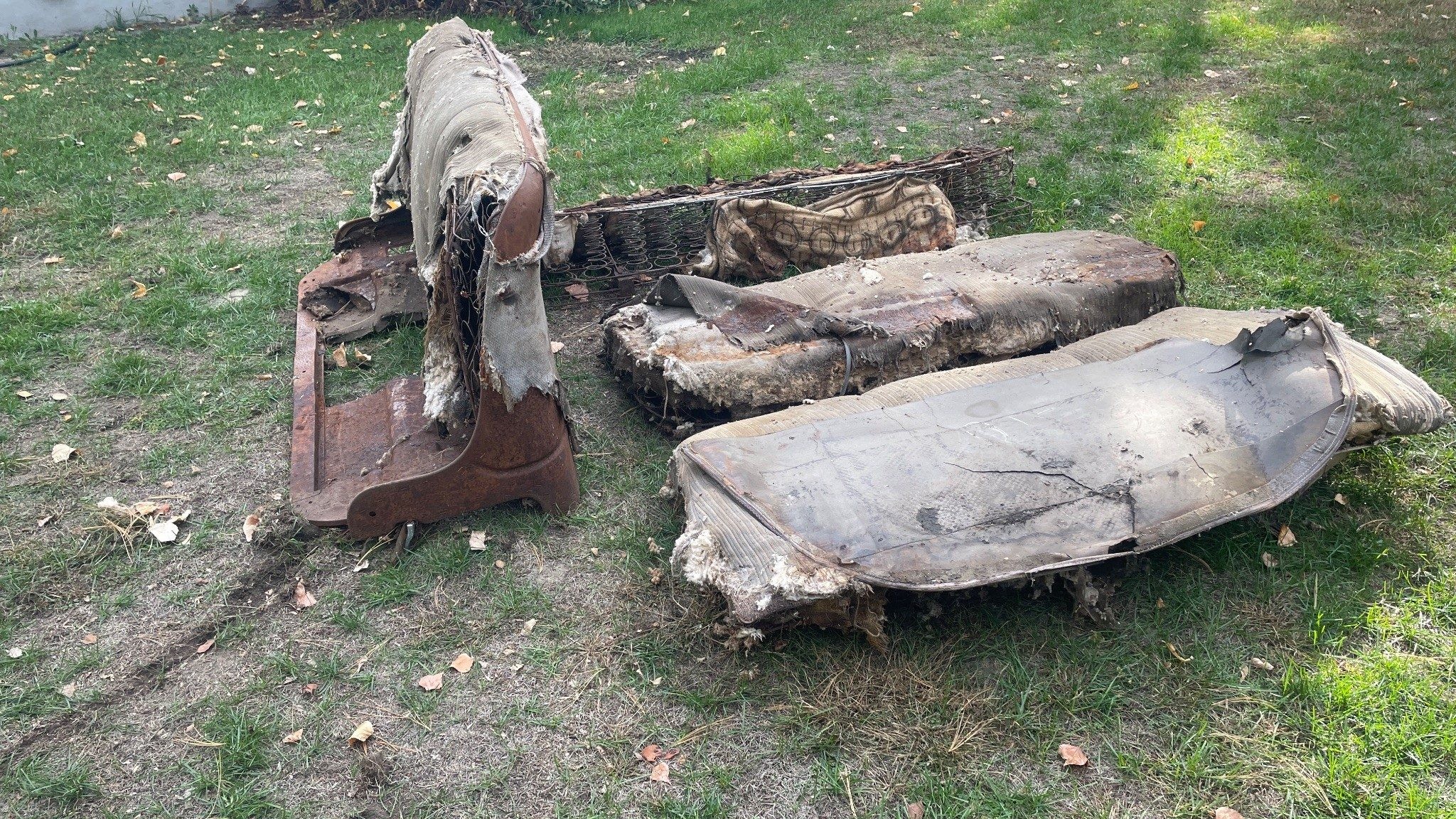
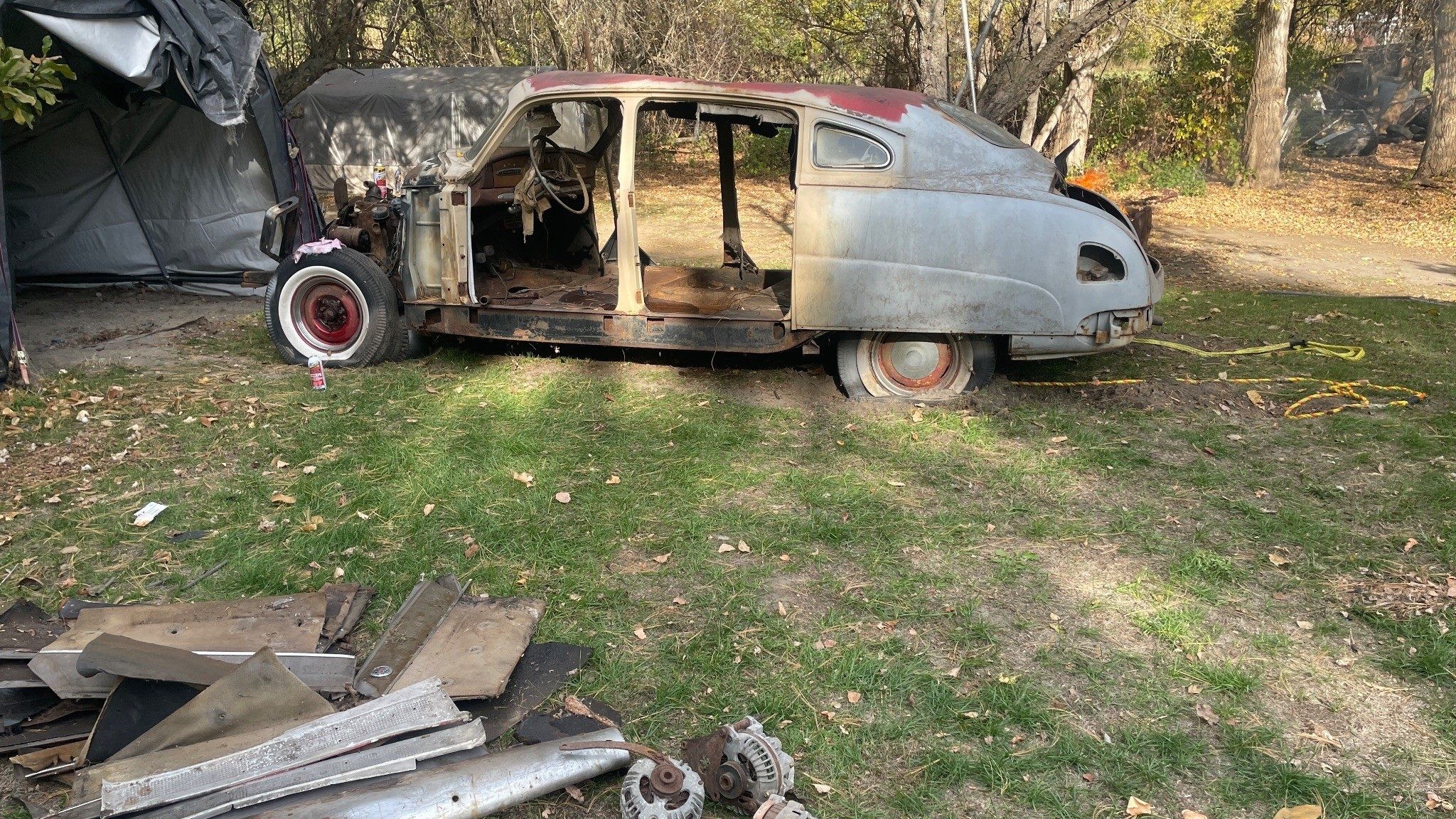
Up for grabs exclusively on Barn Finds as a no-reserve auction, this 1949 Hudson Hornet represents a rare opportunity to finish a restoration of one of the most distinctive postwar American cars ever built. This four-door “step-down” sedan was in the midst of a full restoration before the passing of the owner’s restoration partner, and it’s now being offered along with a wealth of new, used, and NOS parts.
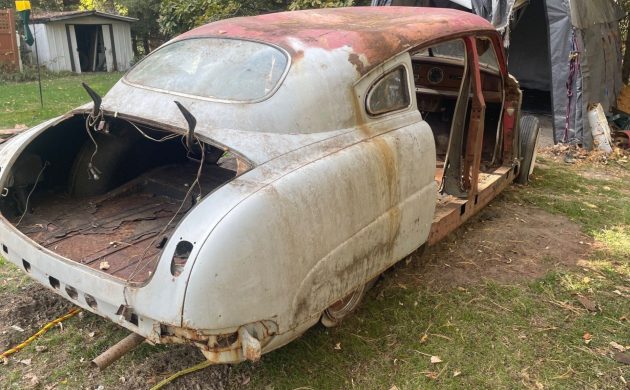
Located in Ottawa, Ontario, Canada, this Hornet shows 89,000 miles and carries a clean title. It was originally imported from the United States about twenty years ago, and according to the seller, there would be no problem bringing it back into the States for anyone looking to continue the restoration south of the border.
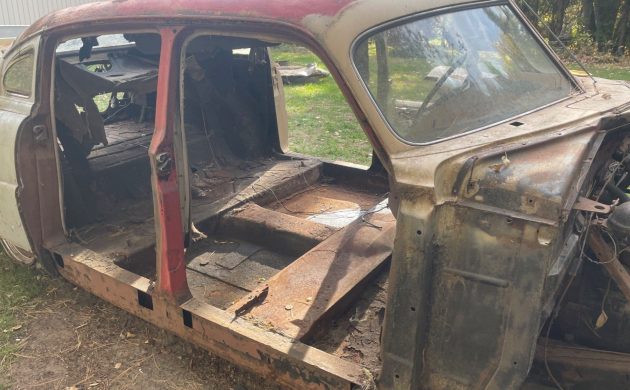
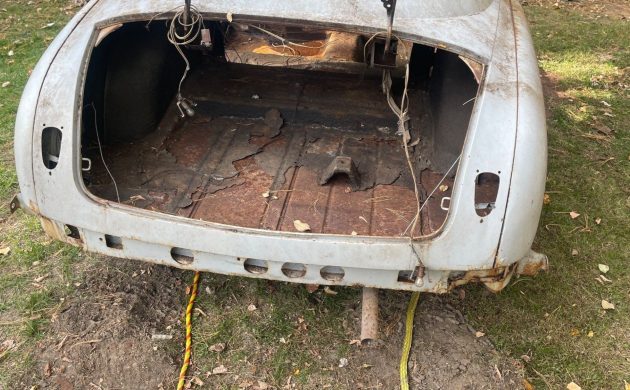
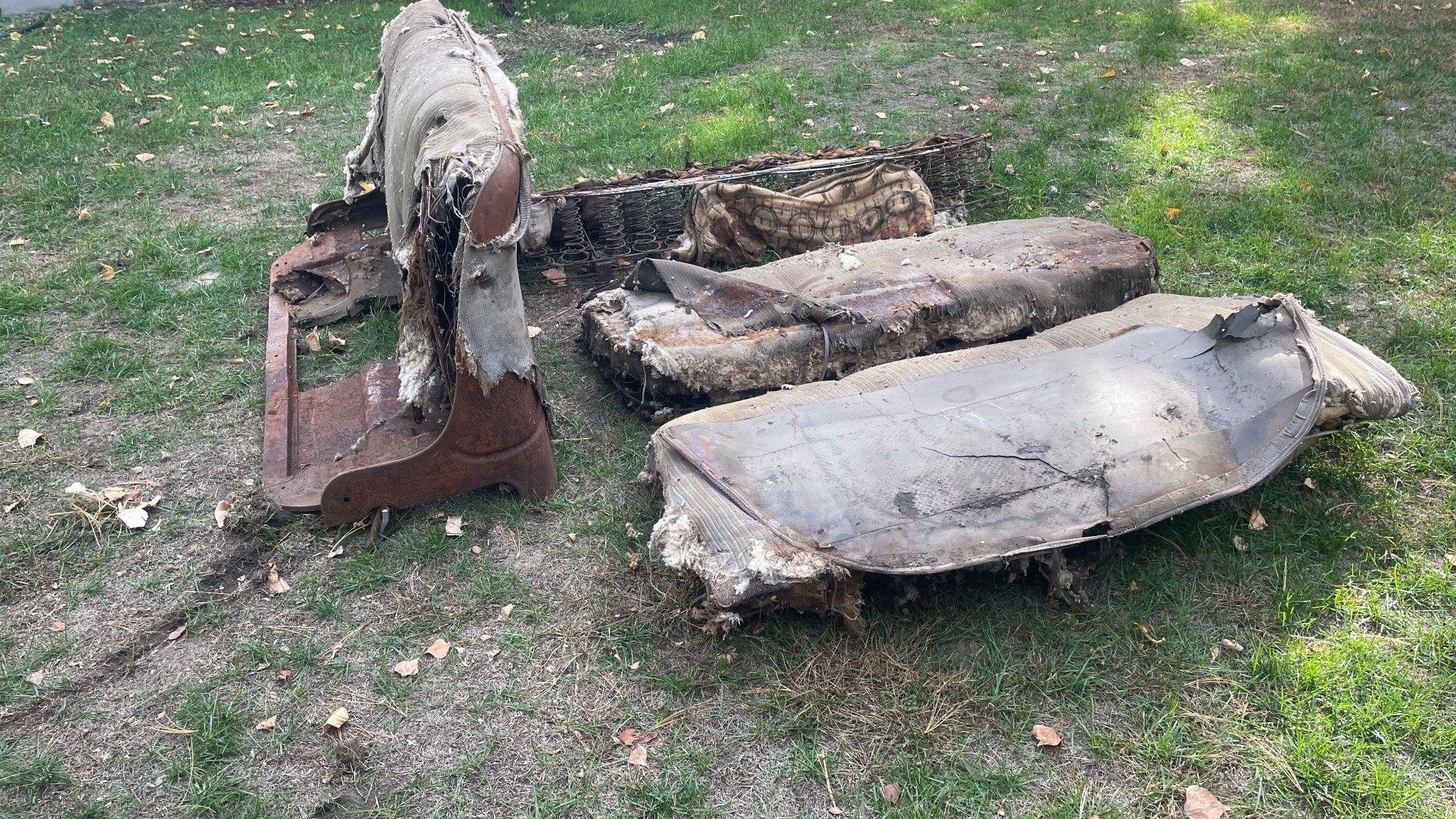
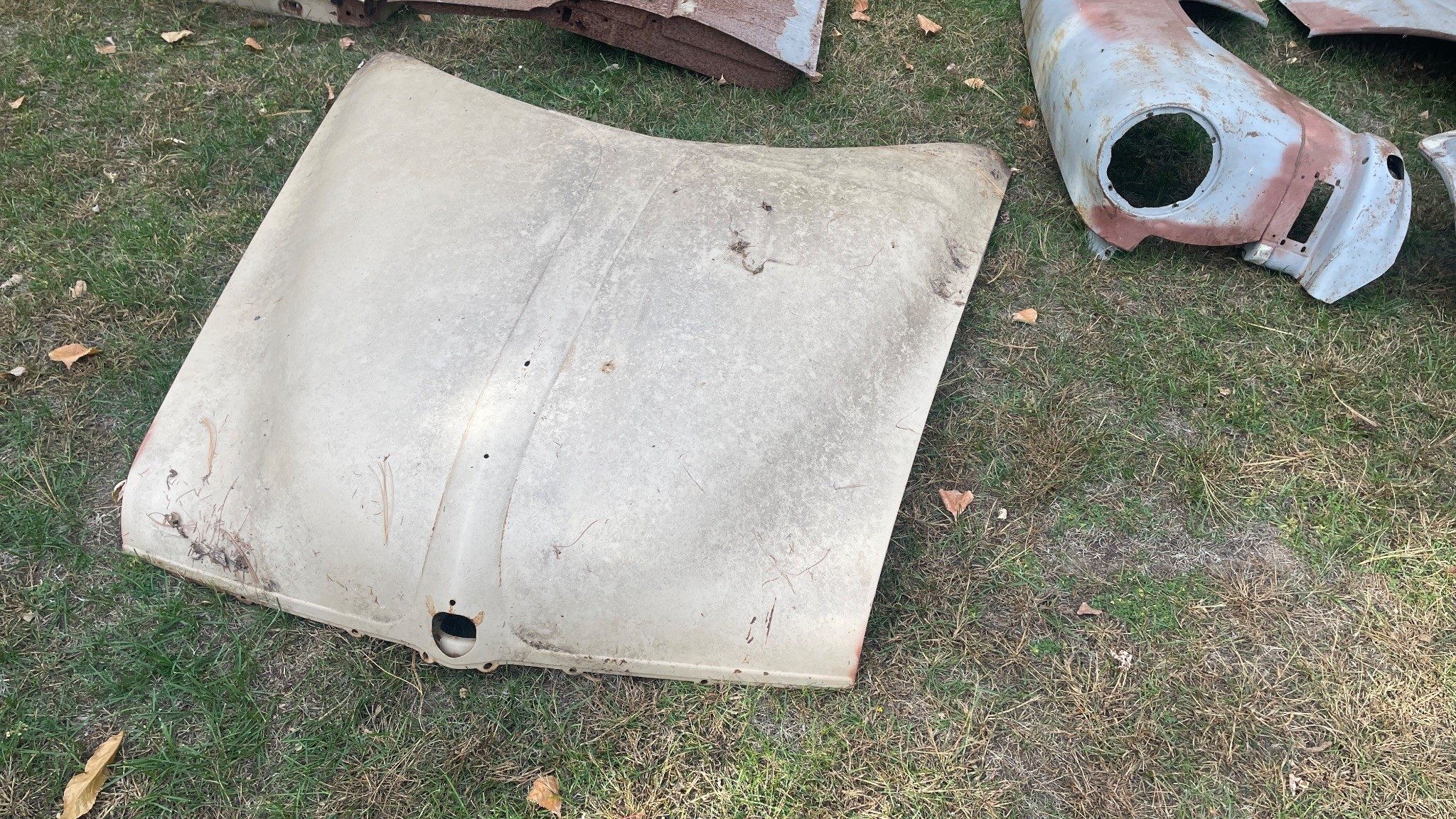
The seller notes that the car was in much the same condition when they acquired it, though the roof was damaged when a barn collapsed on it. Despite that setback, the body panels are described as solid and straight, which is good news given how difficult quality Hudson sheet metal can be to source.
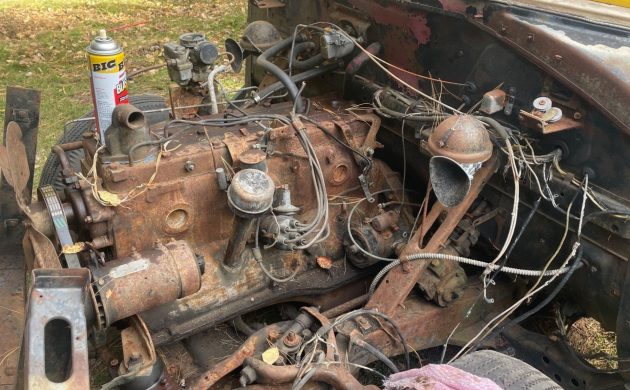
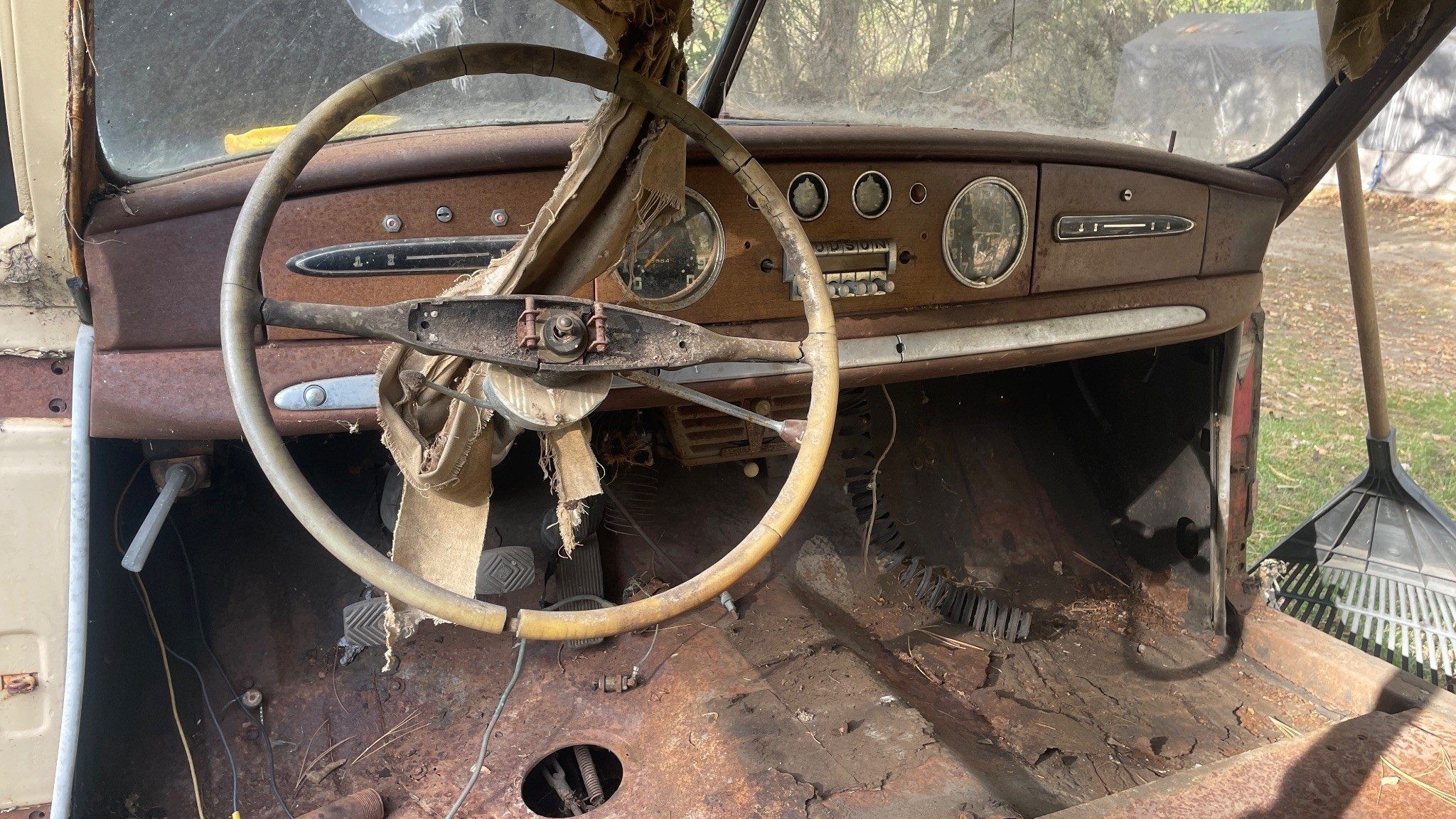
Under the hood sits the original engine, which the seller was told had been rebuilt before they purchased the car. However, it is now seized and will require attention before it can be brought back to life. The manual transmission remains in place, and all dash instruments appear to be in good order.
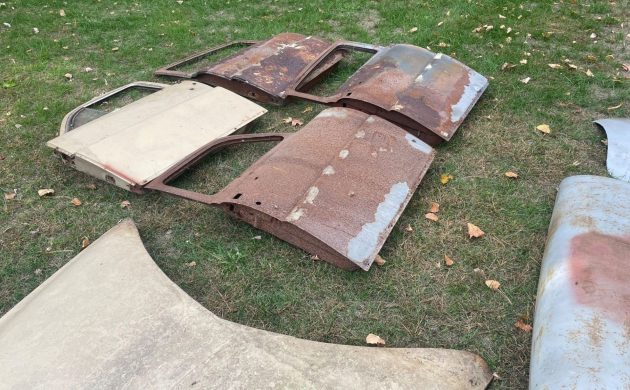
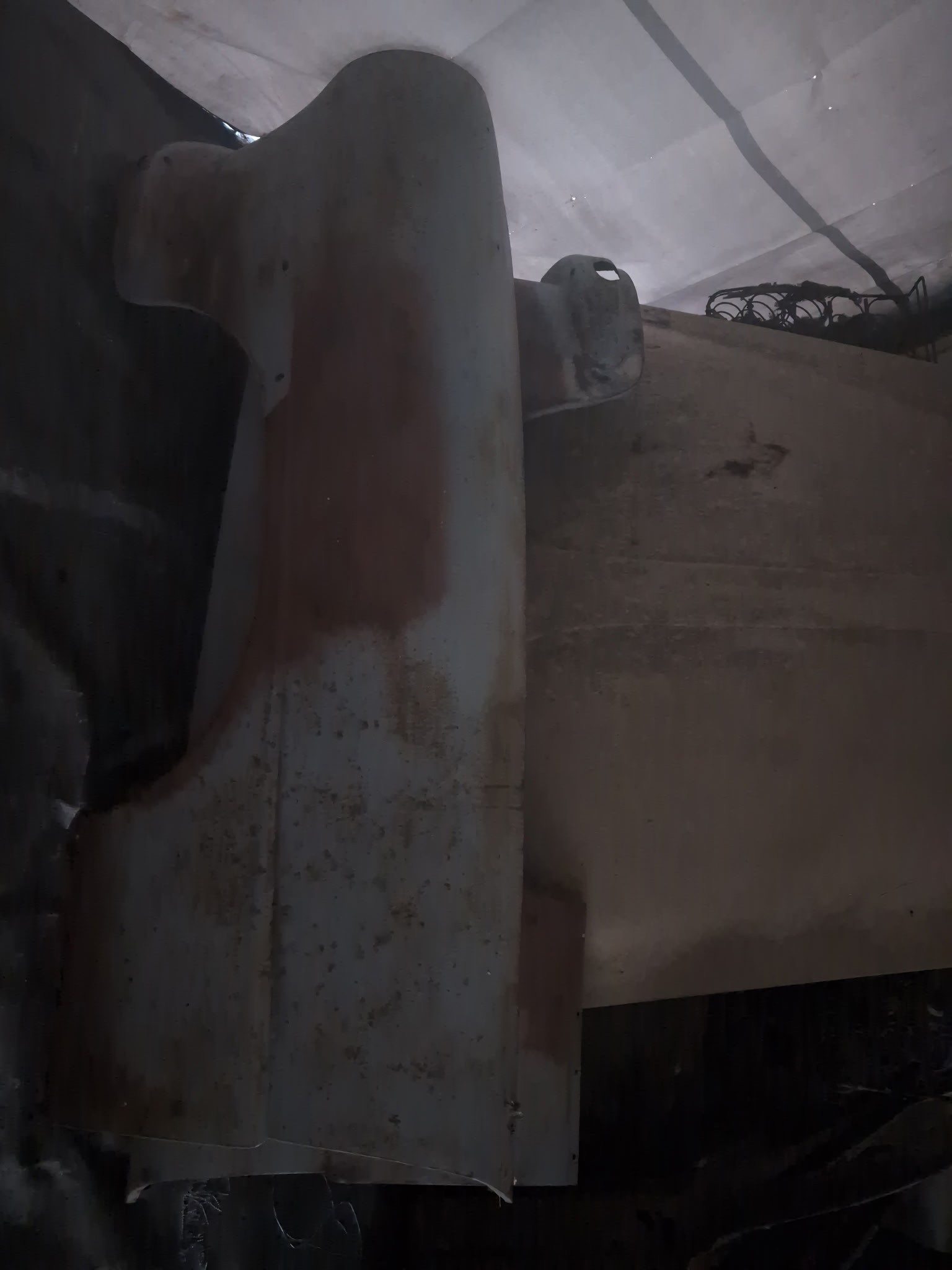
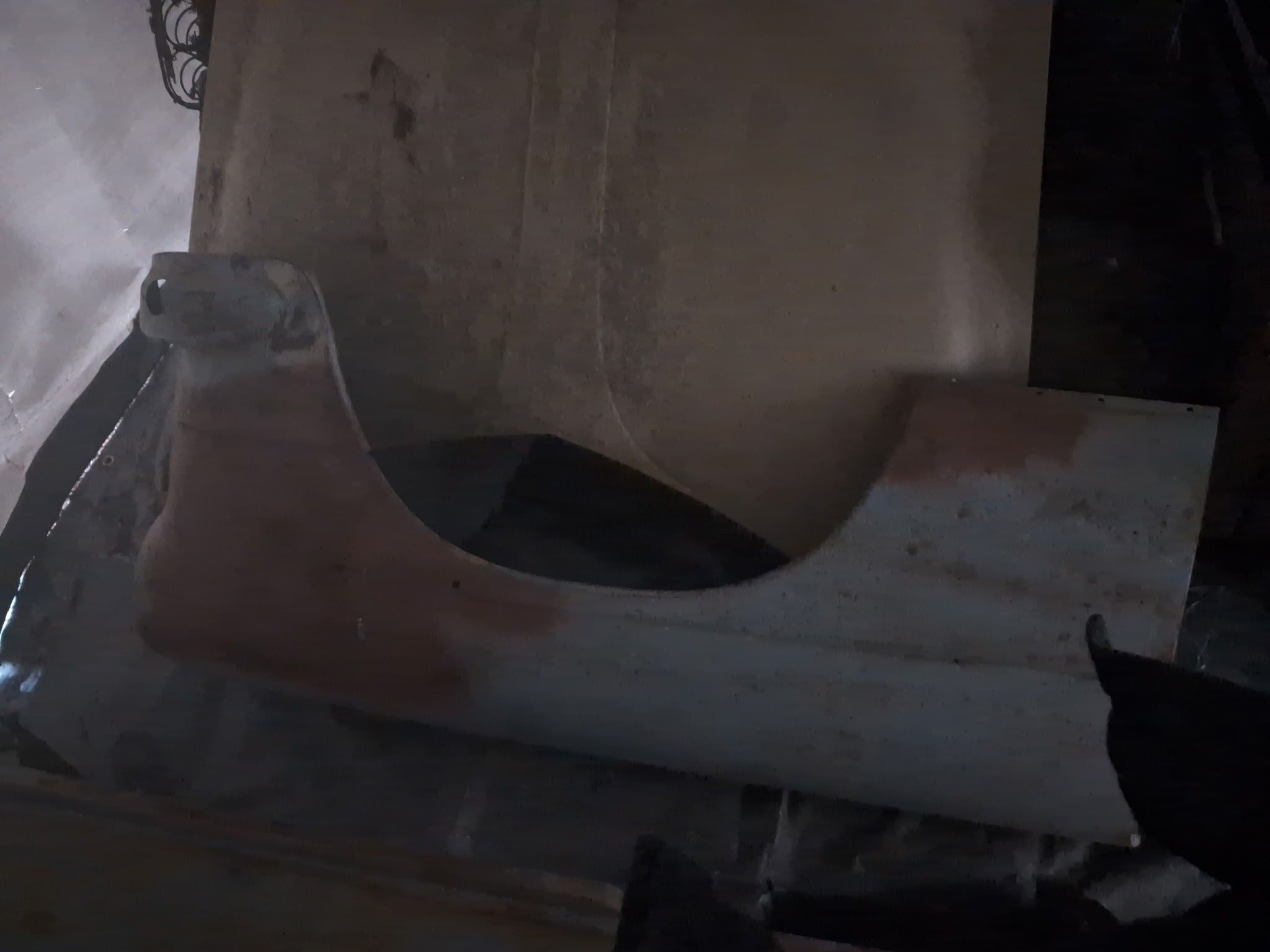
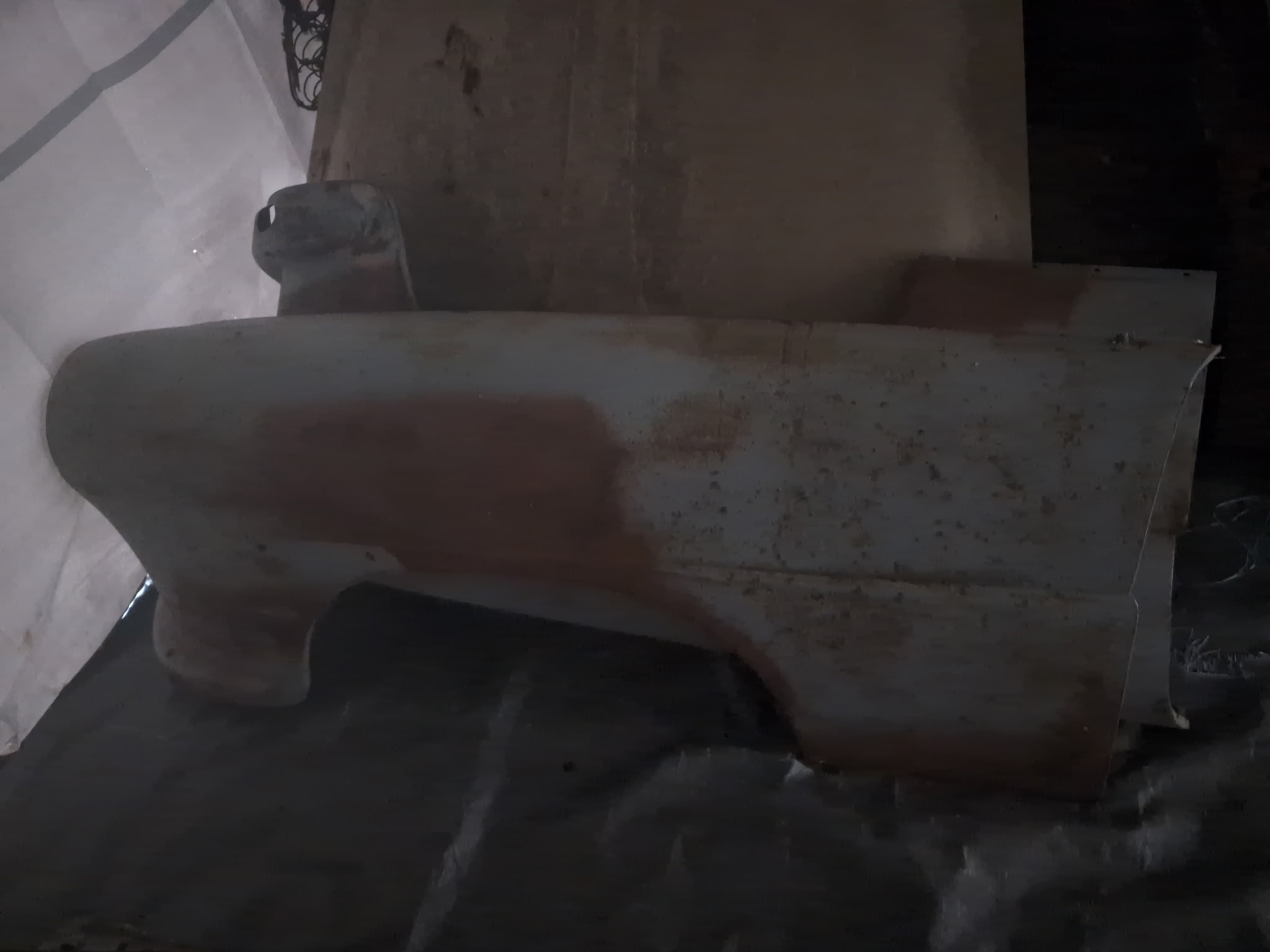
Included with the sale are bundled and boxed parts, as well as valuable reference materials such as a Hudson parts book and interchange manuals. The seller also mentions having acquired a number of new old stock components, including a set of four whitewall tires that have not yet been installed.
This Hornet will need to be trailered, as the current tires are dry-rotted and no longer hold air. The seller emphasizes that the car is offered as-is and for pickup only, with no delivery available.
Even in project form, this 1949 Hudson Hornet carries tremendous potential. The early step-down models are increasingly appreciated for their engineering and low-slung design—traits that made them legends on the track and icons of American motoring history. For the right enthusiast, this car could be the start of a rewarding and historically significant restoration. Would you bring this classic Hudson back to life or preserve it as a time capsule of its restoration story?
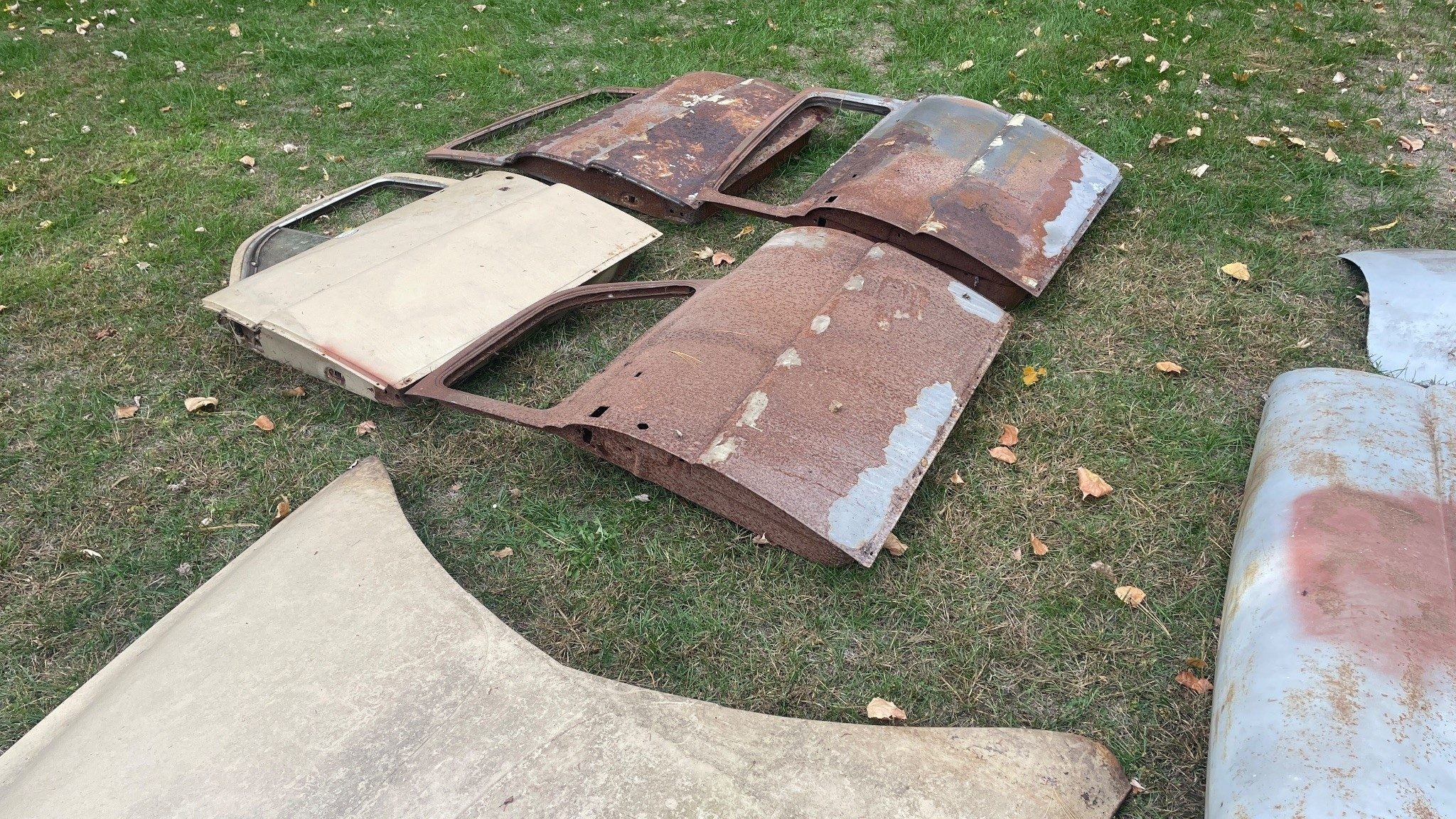
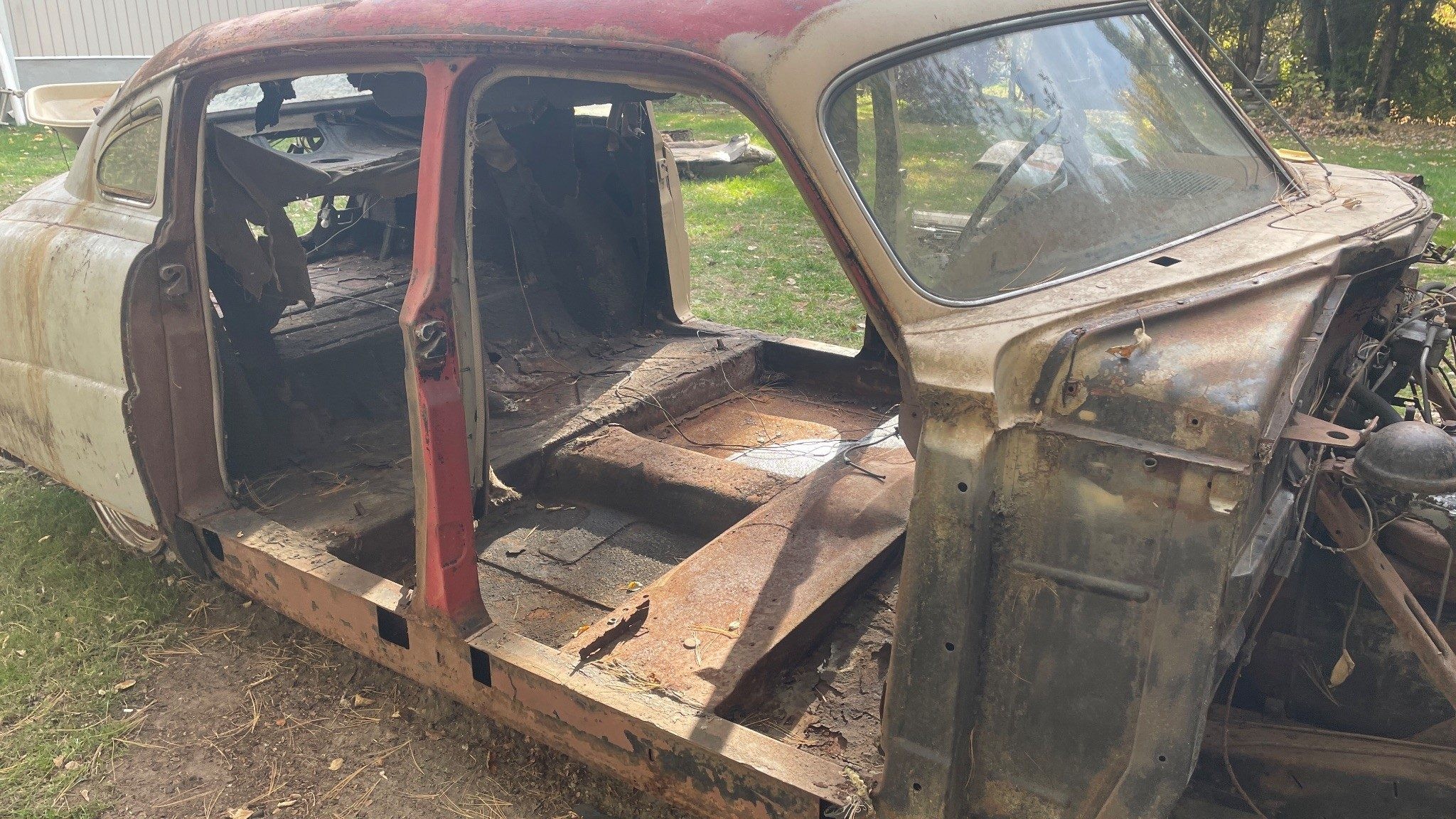
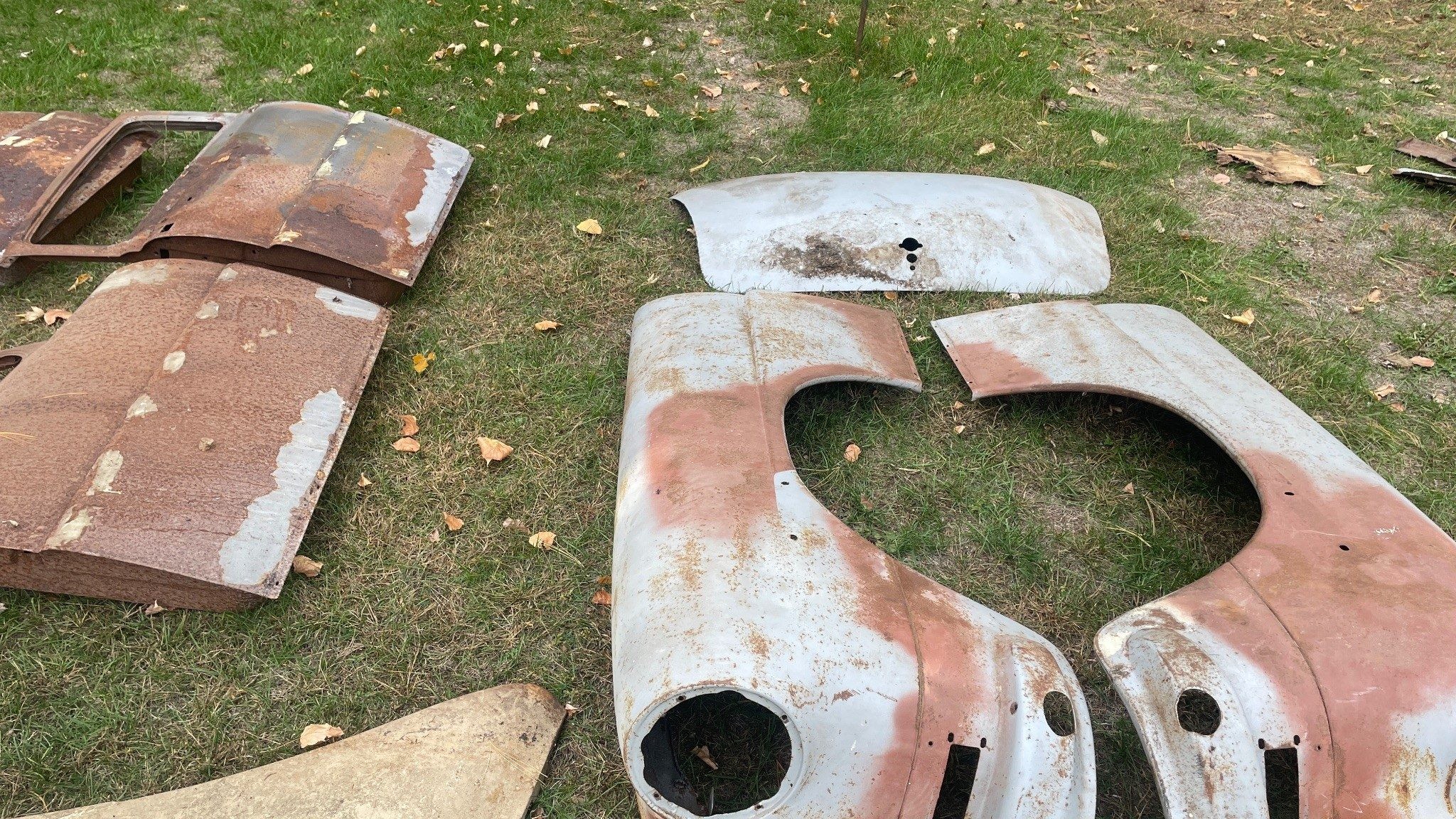
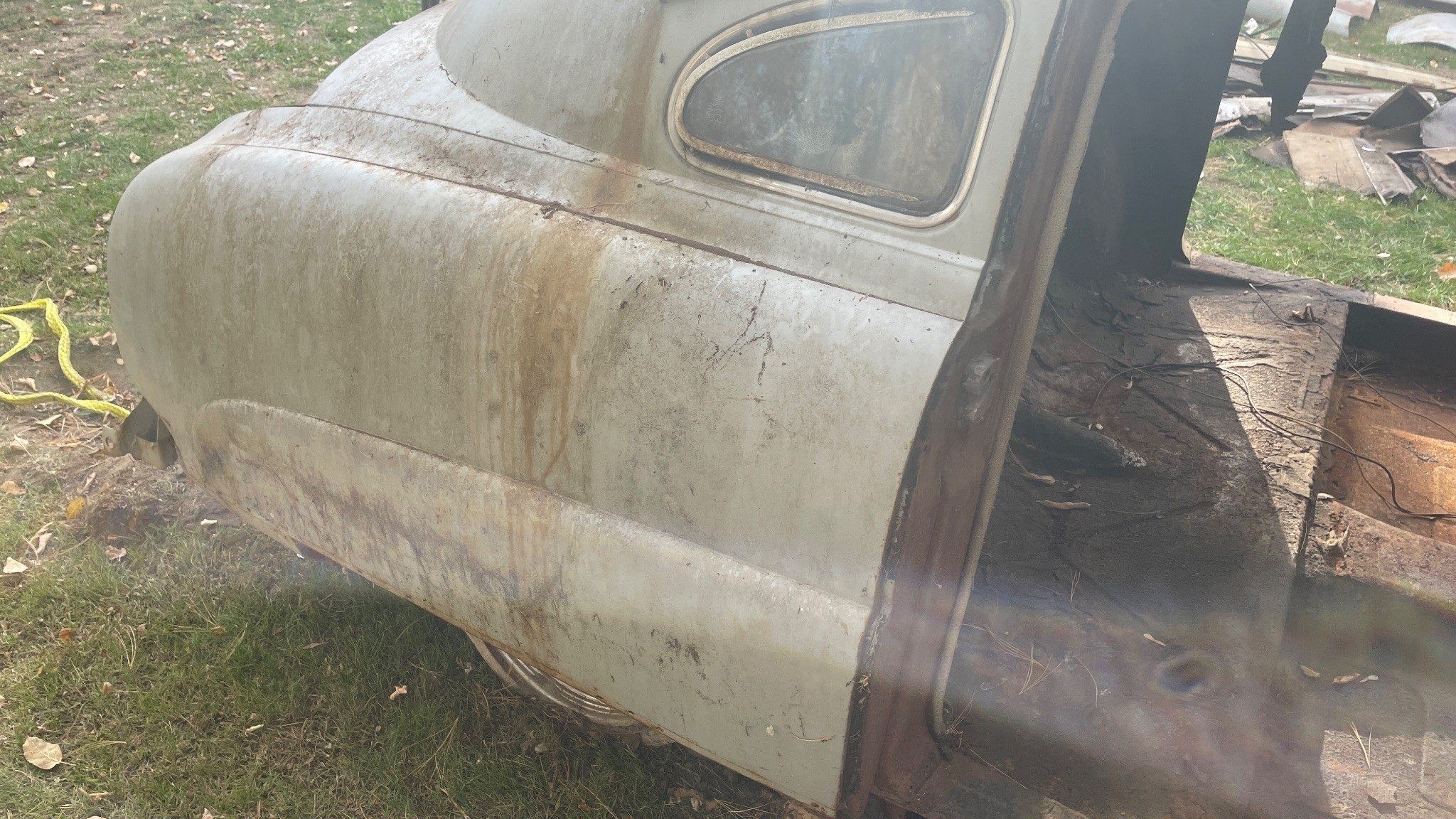
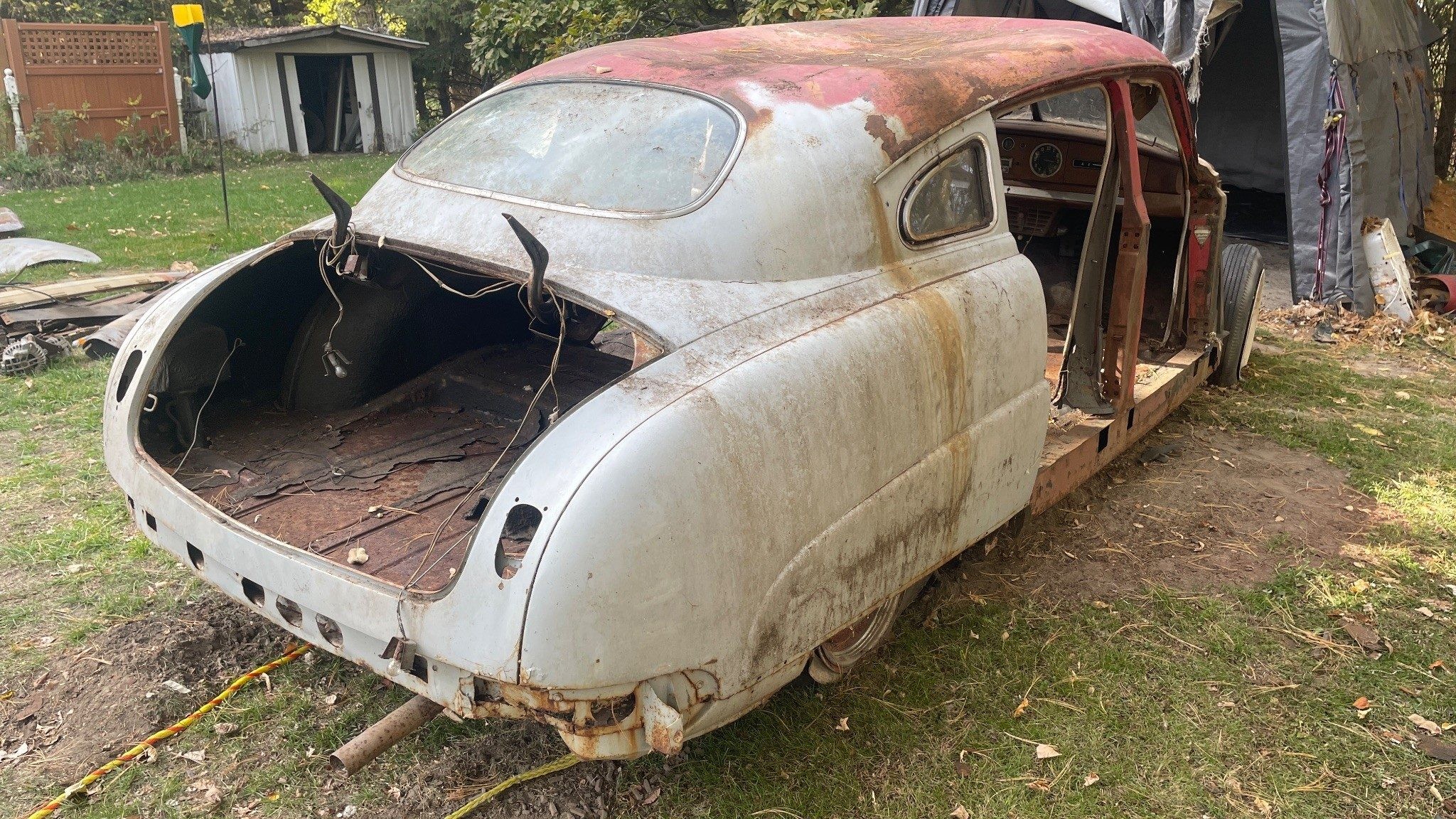
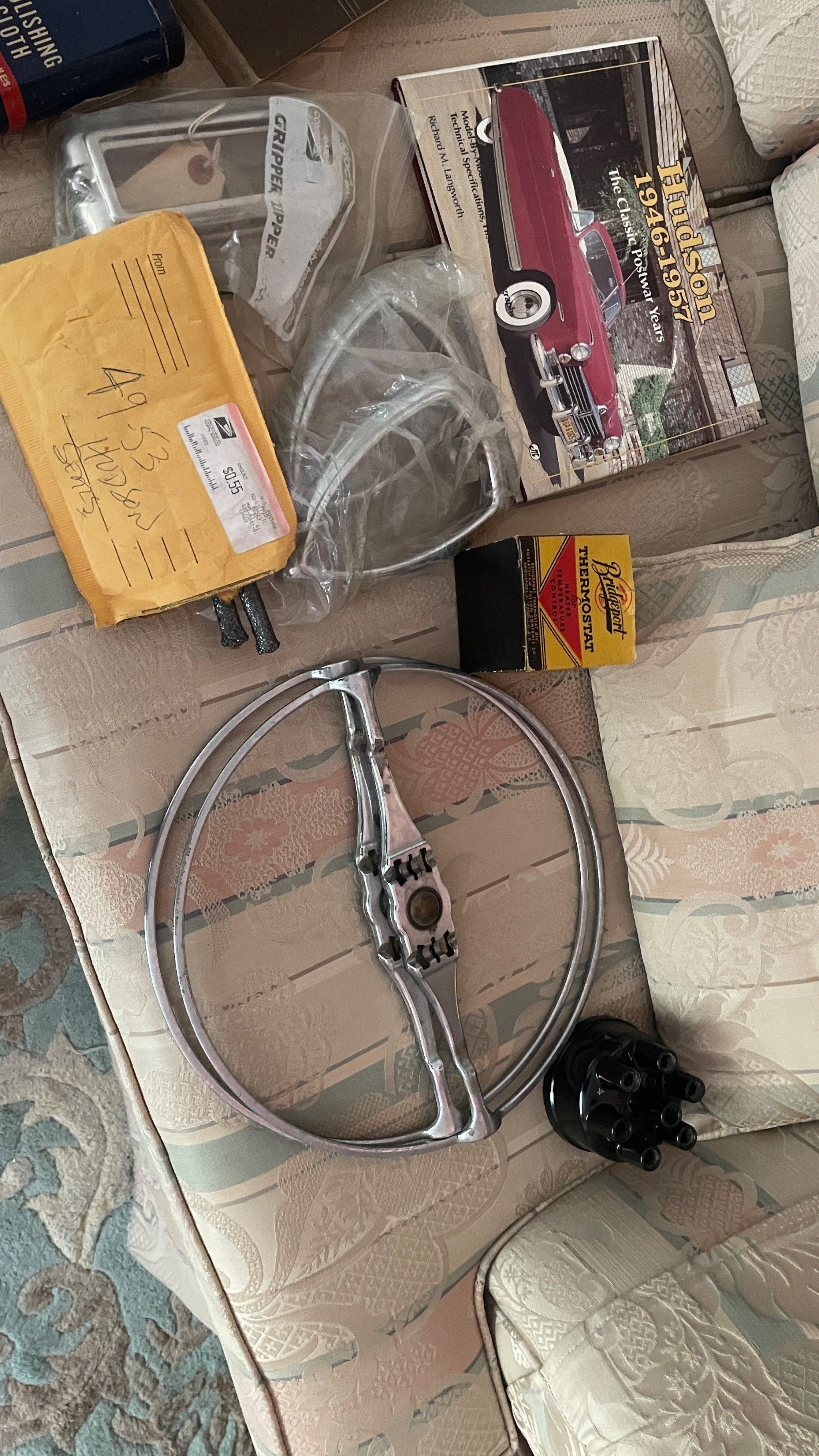
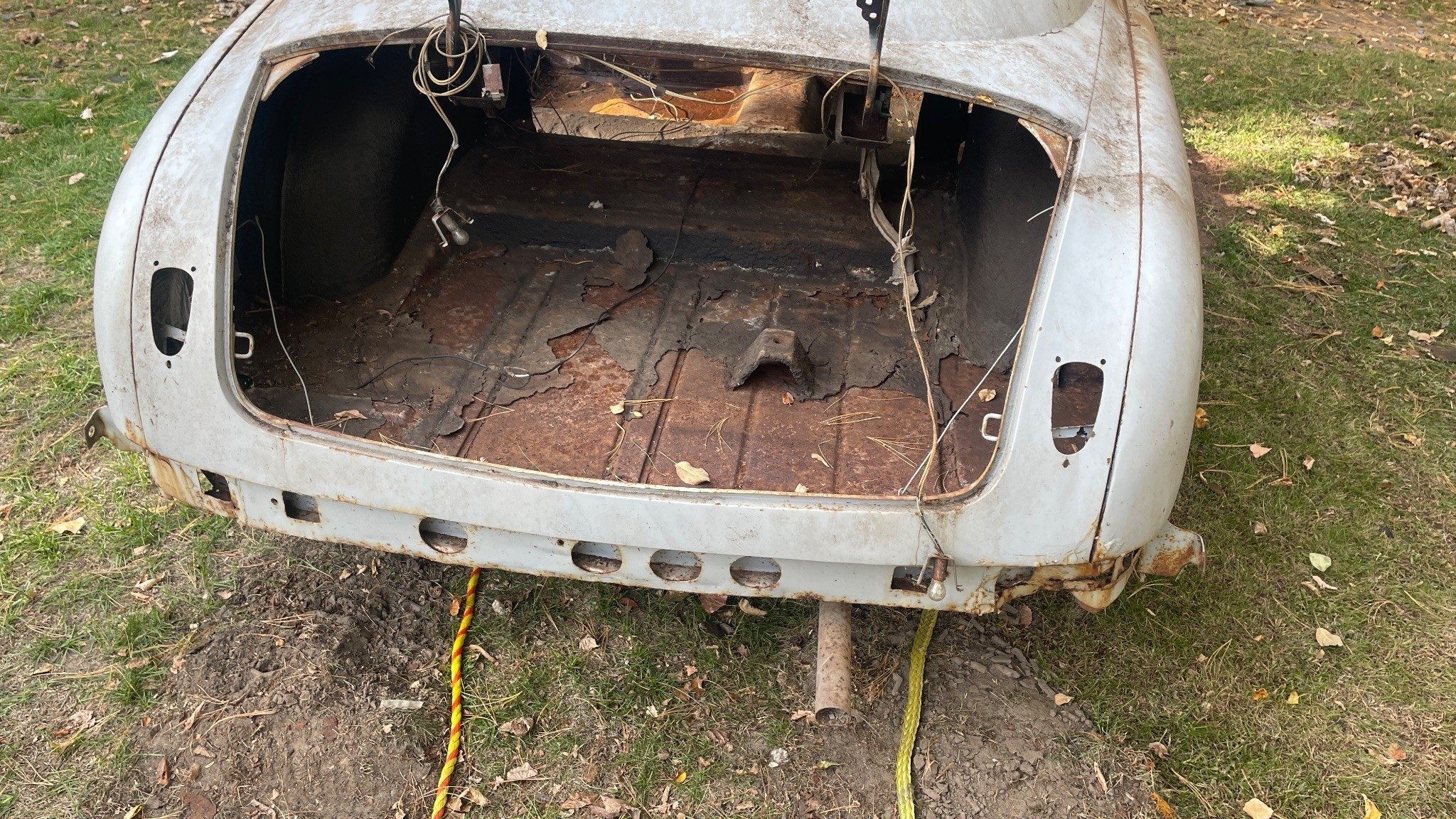
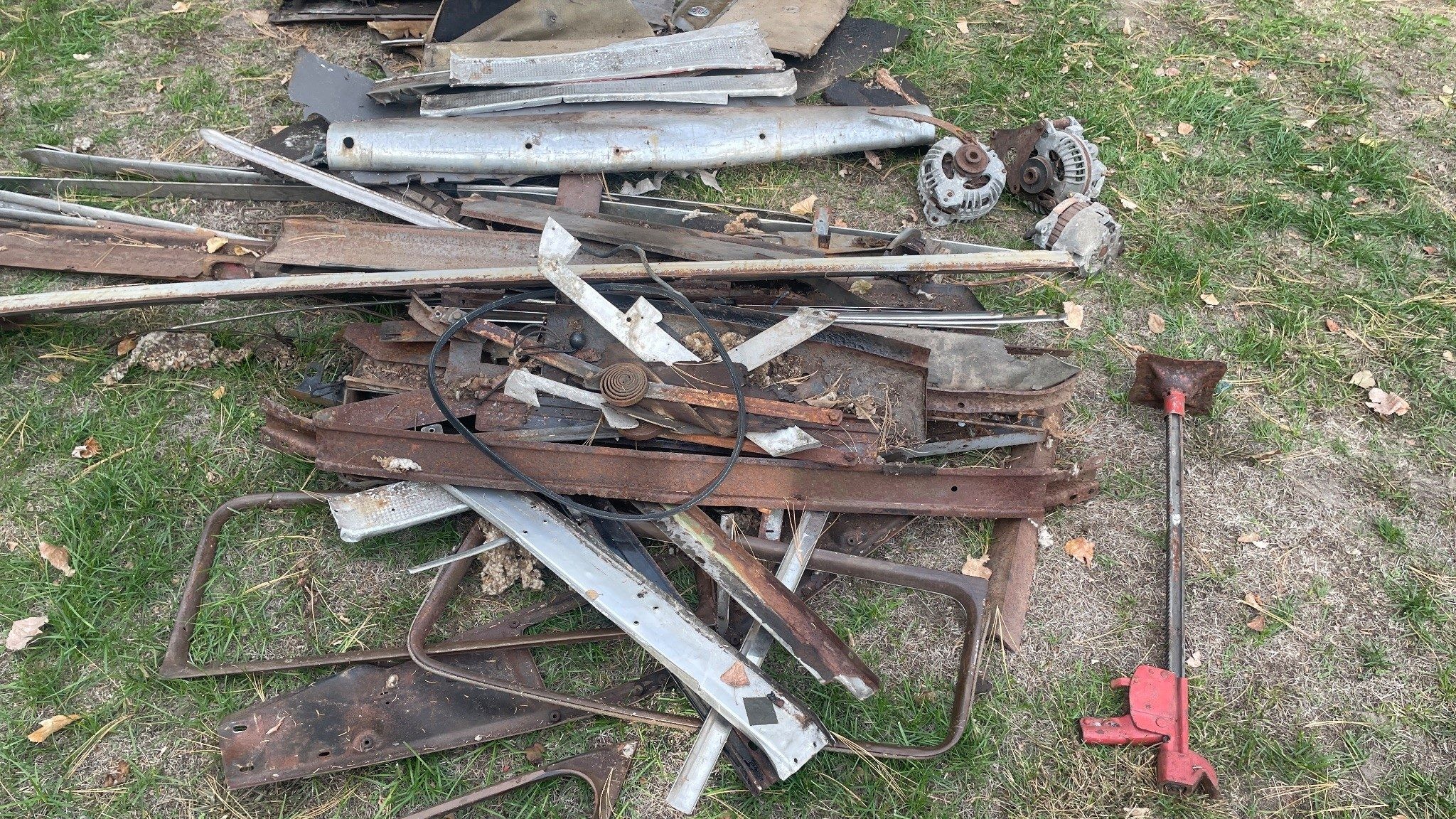
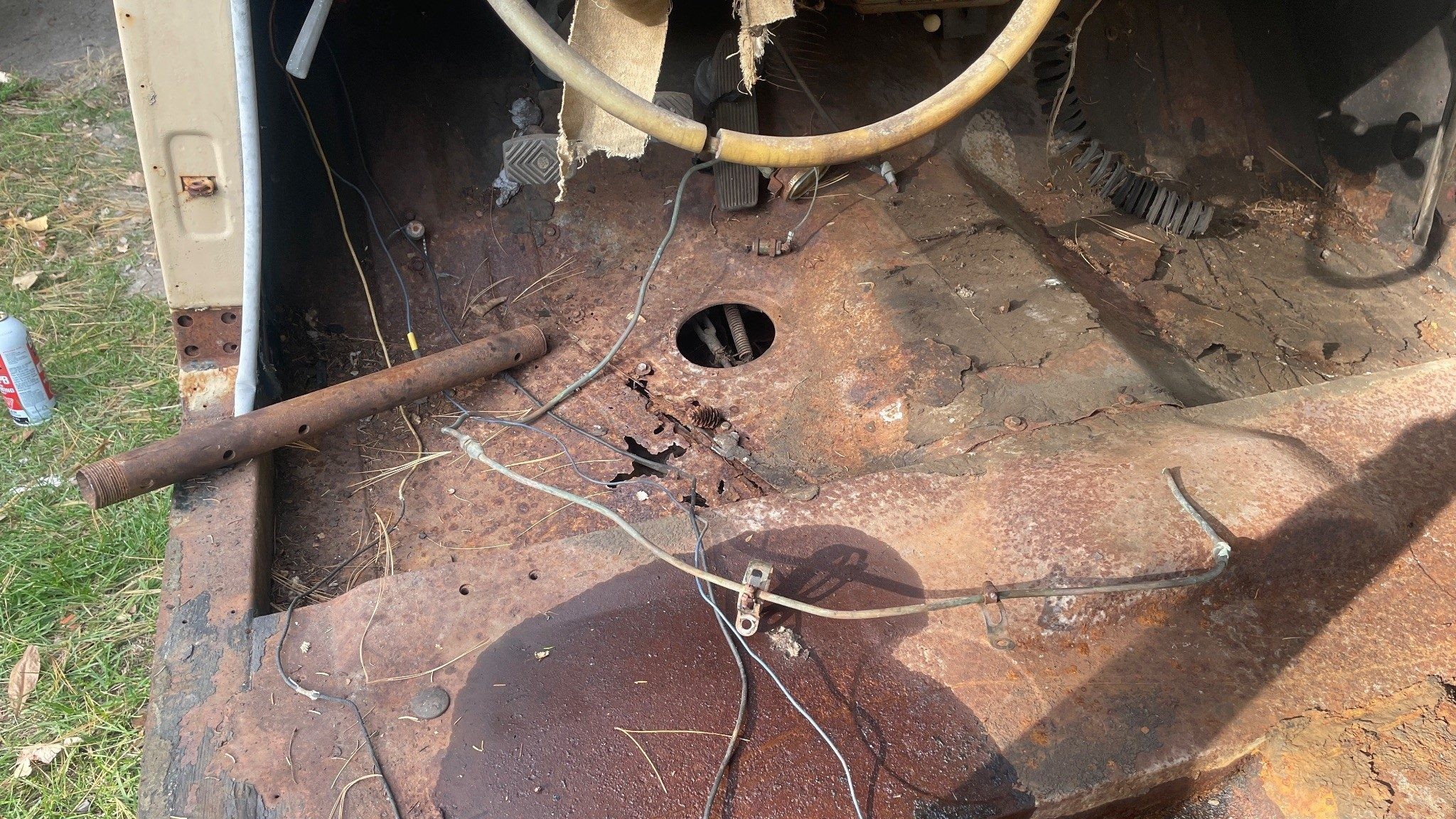
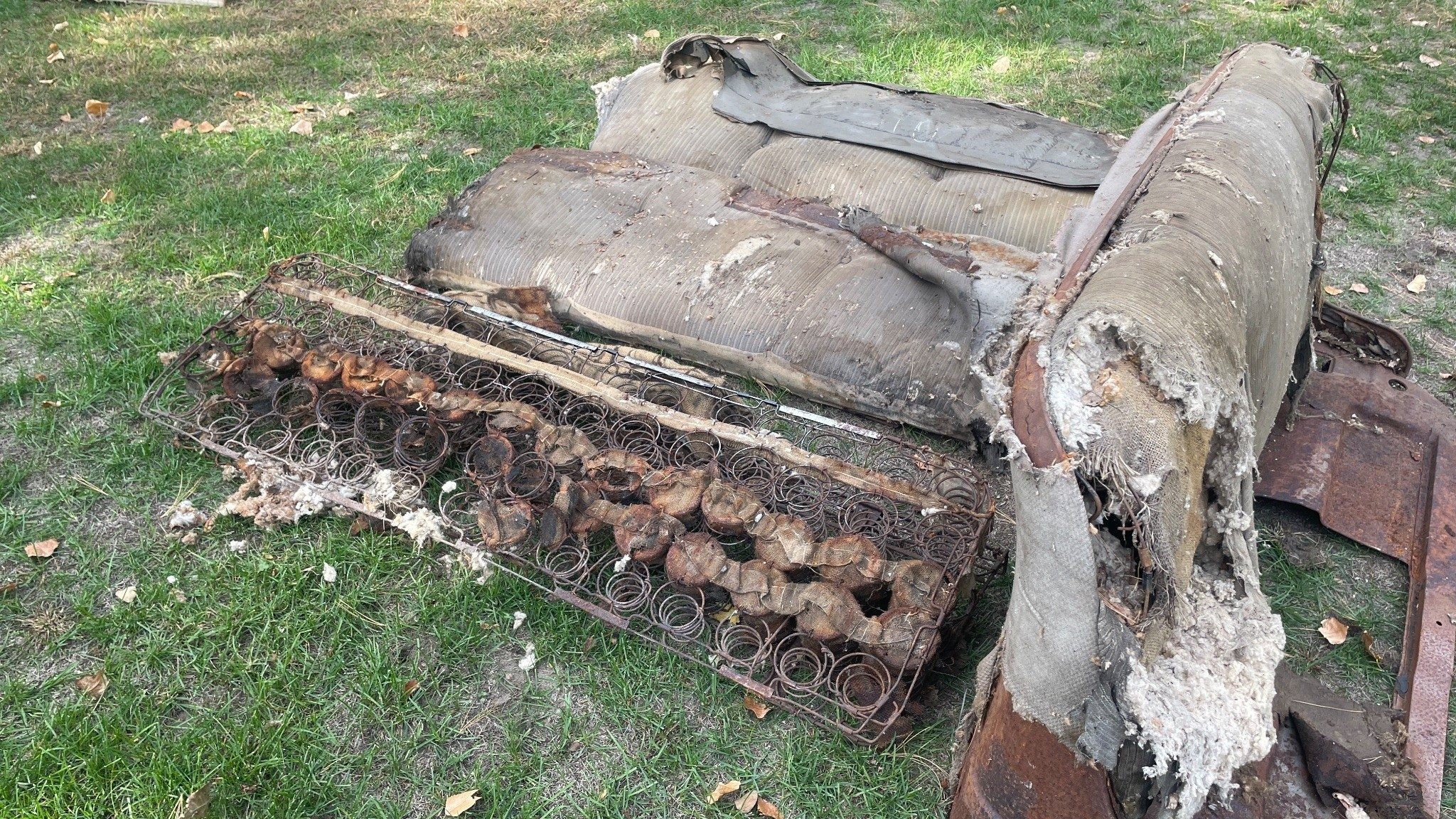
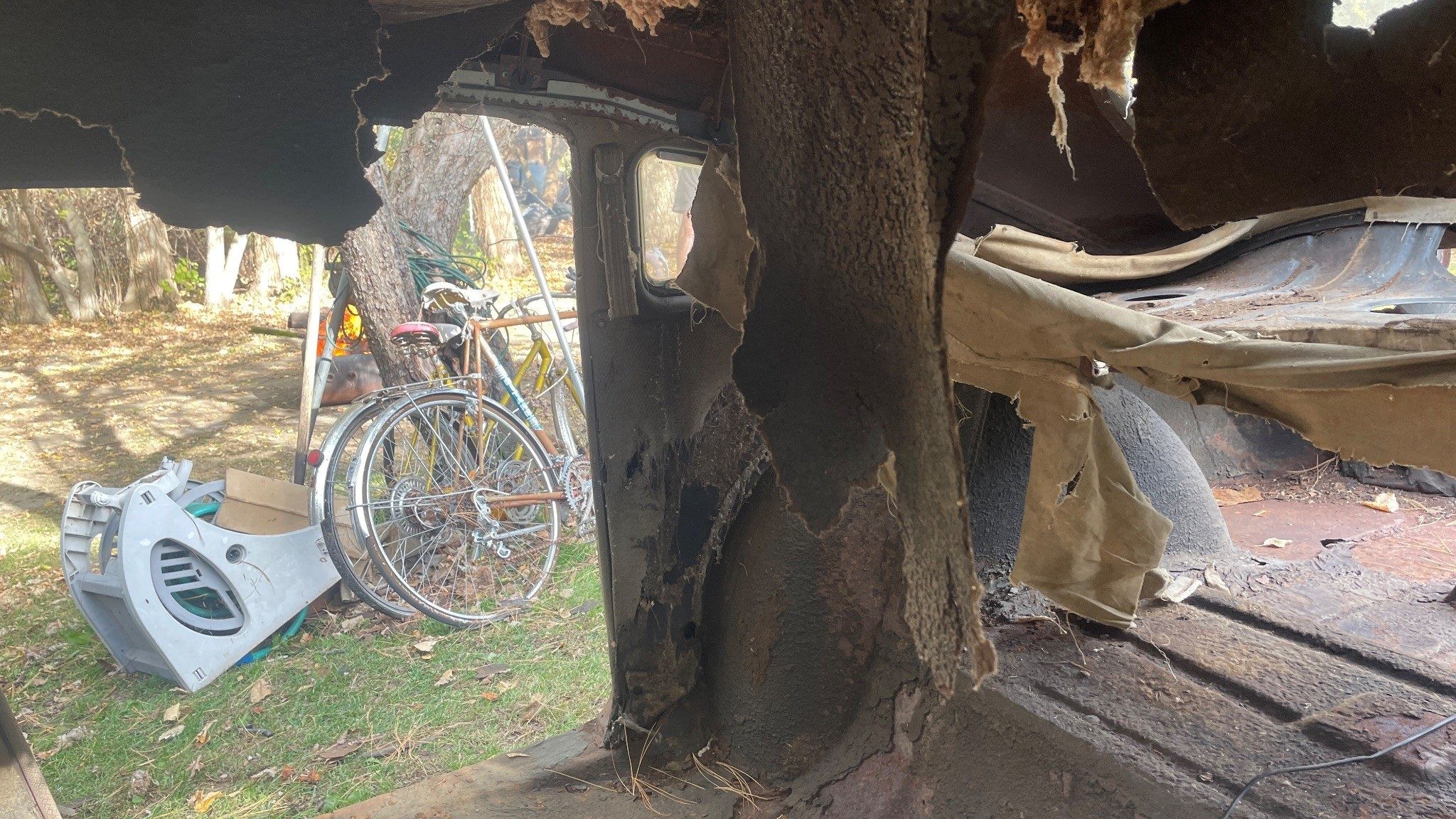
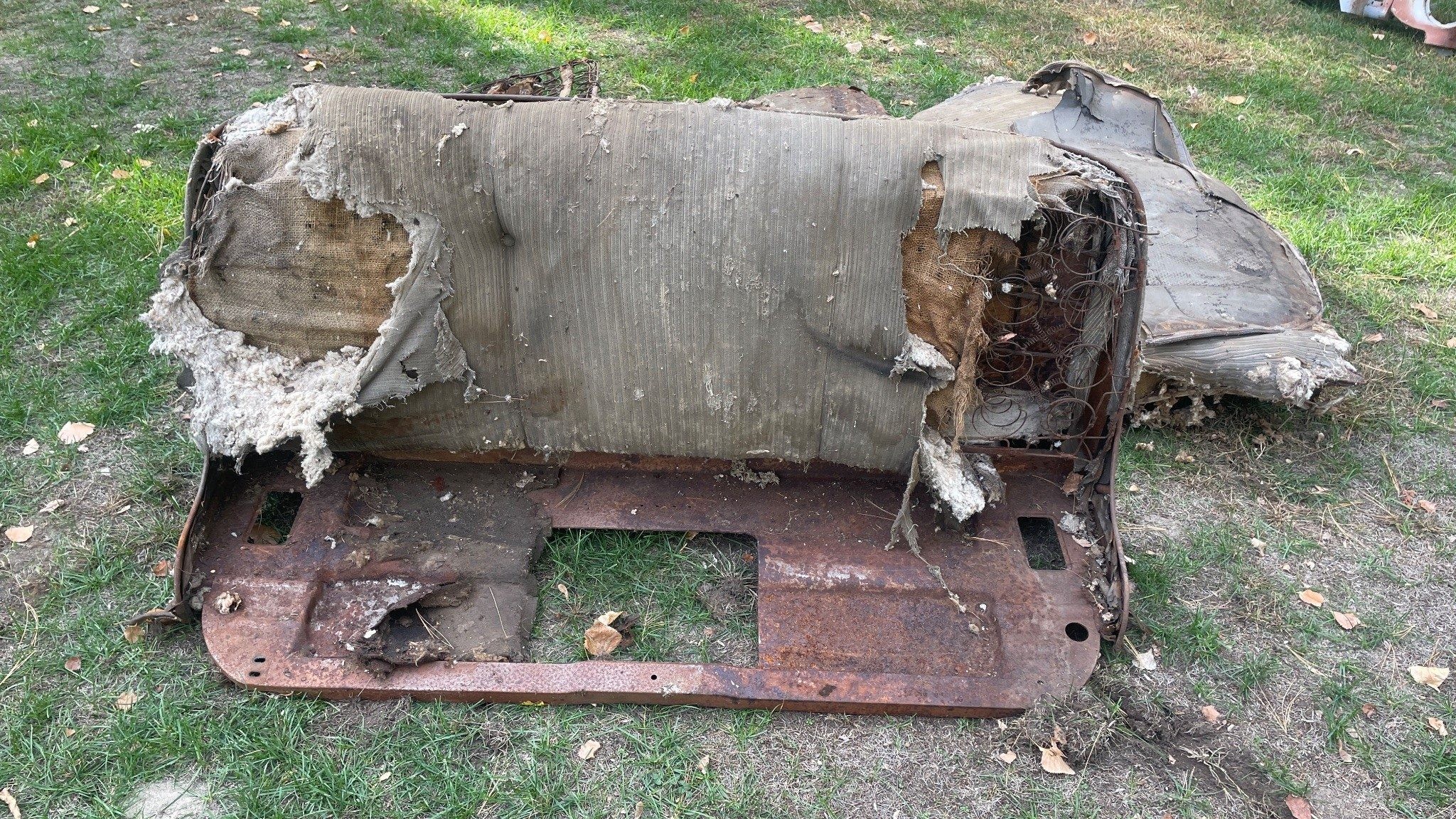
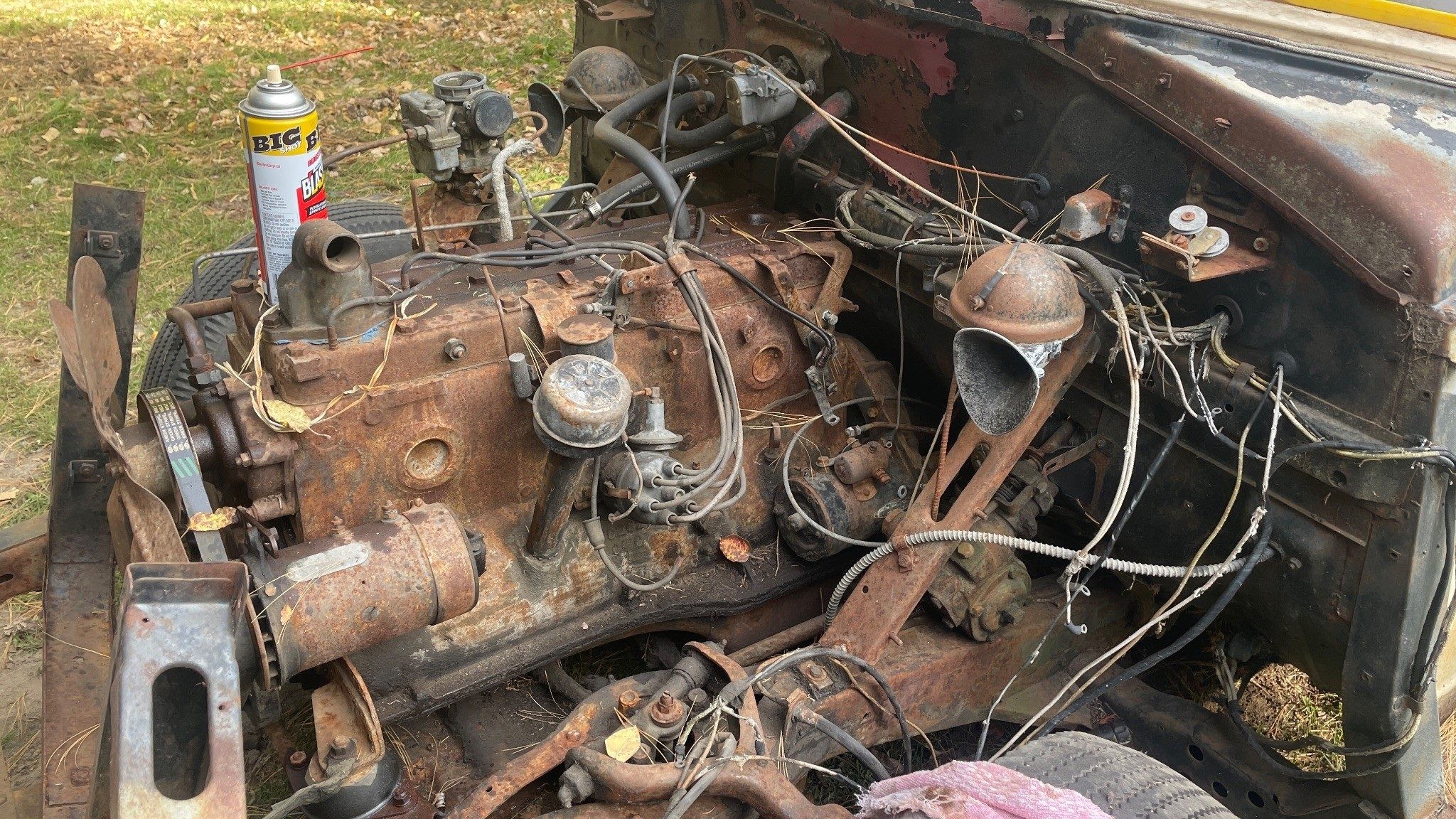
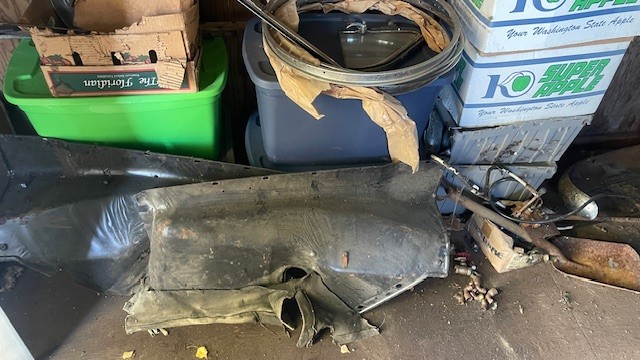
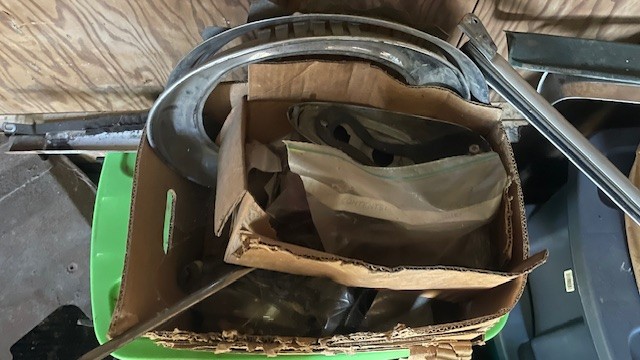
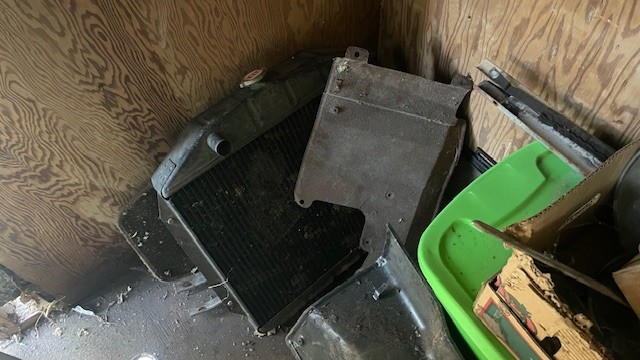
-
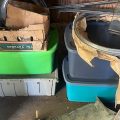
- Bicycle Rims not included
Bid On This Auction
 John bid $150.00 2025-10-31 07:20:04



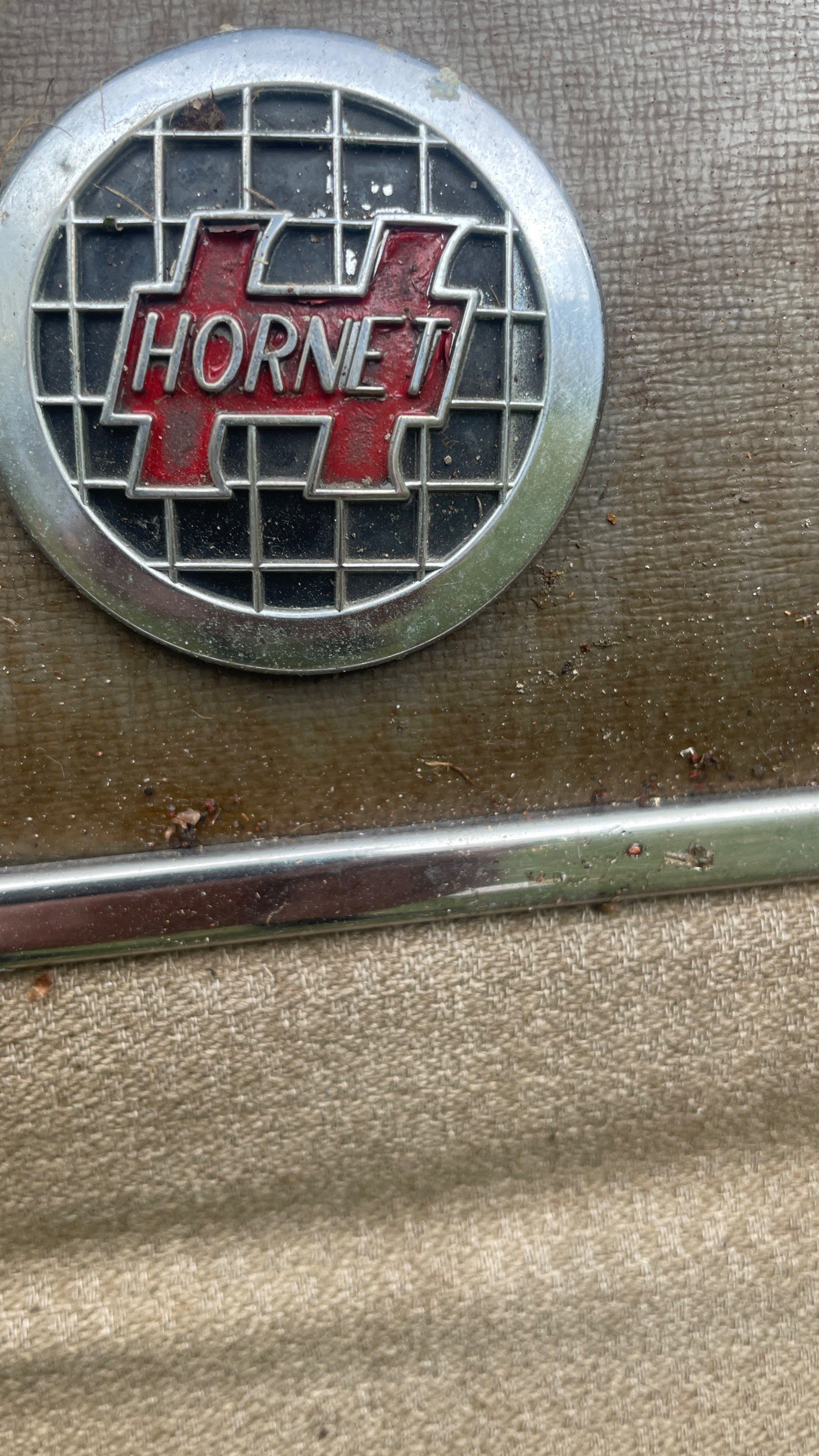
Hudson only produced Hornet models from 1951 through 1954. If the above vehicle is a 1949 model, it is not a Hornet.
Ran when parked! Needs TLC & Duct tape….
And bailing wire.
The Hornet arrived in 1951, hence the badge is not original to this car. It does, though, look like some hornets made their home here.
Does the lucky individuals that buys this project have to pay the tariff is it crosses the border to the USA 🇺🇸?
It’s 100% USA made so hopefully not. But that changes on a whim. I will by a turn key version thank you very much.
When I was very young my grandparents had a Hudson ‘Wasp’, I’m no expert on these but could that be what this is?
No, because the Wasp came out in 1952.
If Hudson had put the speedometer in front of the driver instead of to the right of the steering wheel, maybe Miss Daisy wouldn’t have seen how fast Hoke was going.
“You’re speeding, I can see it!”
“No, Miss Daisy, I’m only going 19 miles per hour.”
Although, I think hers was a ’51 Hudson Hornet as the license plate said ’51.
Driving Miss Daisy was set in 1948 for the beginning part of the movie and a 1948 Hudson Commodore was used in the movie. Bill Albright, long time Hudson Club member in Fontana, California at some point furnished some of his Hudson collection for movies. I don’t know if the Hudson used in Driving Miss Daisy was from his collection. He restored his Hudsons to perfection and then sold them as his business after he retired from the Alcoa plant in Fontana. He was a perfectionist when it came to restoring Hudsons. When I had my restored 1950 Hudson at a car show in Pennsylvania he was there and was considered to be the expert authority on 1950 Hudsons. He got into my car, looked it over, came out and said to me that it’s hard to duplicate the original paint scheme for the dashboard. Hudson in 1950 used a greenish blue paint with what was nicknamed a snakeskin pattern. I made no attempt to find a painter who could duplicate that pattern, so I just picked a paint color from paint that AMC used that looked close to the shade of original dash. I didn’t like the snakeskin pattern at all that Hudson used. Hudson offered some metal flake looking colors in those days. Instead of using metal flakes, they used fish scales to achieve that look. To duplicate the 2-tone gray paint scheme that I chose from Hudson paint chips, I used metal flake paint that modern Chrysler vehicles used. My painter was supposed to tell the paint store to only put in 50% of the metal flakes when they mixed the paint, but he forgot to do that.
Miss Daisy had a 1948 Chrysler that she totalled at the beginning of the movie. That’s how she got the 1951 Hudson from her son that he bought new off the showroom floor, and he hired a driver for her.
After the Hudson was a 1955 Cadillac Series 62, then a 1965 Cadillac Calais and the final car was a 1970 Cadillac Sedan de Ville
Steve, my interior metalwork including the dash is the greenish/blue pattern. The small noticeably flaked area is only around the starter button. I can live with that, and carefully try to touch it up another day. Most unfortunate is that I could not find any exact match for the cloth, although the blue multi-striped and textured pattern I had installed does look luxurious and convincing.
Thanks for your research!
It would be a Commodore for 1949. I have slight interest but to far away and to hard to get.
It would be a Commodore for 1949. I have slight interest but too far and hard to get
days gone by I would be interested if you even find parts for that old boat
not worth restoring these days
If 1949, would have to be a Hudson Commodore
Parts for 1949 Hudson Commodore should not be a problem because of the Hudson-Essex-Terraplane Club, at least when I was last a member in 1995. At that time some fellow club members had several Hudsons parked on their property with the bodies at least in great condition. I never understood why a rural mailman in the club in the Dutch chapter had so many Hudsons outside on his farm. He would just buy them with no intention of ever restoring them. Just saving them from the crusher. Seemed like hoarding to me at the time.
I would have to watch the movie again to look at that Hudson to see if I see any Hornet emblems on the car. Whenever I was at Hudson car shows someone would have a driving miss daisy name on their Hudson and the car was painted the same color as the car in the movie. But each one of those replica cars was either a 1948 or 1949 Commodore and not a 1951 Hornet. The movie was based on the play, Driving Miss Daisy. I read the play and the car that she was given by her son was not a Hudson, it was an Oldsmobile but the producer of the movie chose a Hudson instead.
@Steve Mehl
Interesting set of information. I did not know that about the Oldsmobile/Hudson switch.
Miss Daisy already had the Chrysler at the beginning of the movie, so I’m assuming she got it in 1947 or 1948. The first time they show the Hudson it’s parked in the garage showing only the back end, including the license plate which read 1951.
Hoke even replies with “you got the nice new Hudson sitting in the garage which hasn’t moved since you brought it home from the dealer.” So I’m again assuming the movie starts in 1950 or 1951. Im also pretty sure it said Hornet on the front fender spear. Maybe it said Hudson. My dvd copy is sitting in storage in Vegas
The movie starts in 1948 as all online articles about the movie agree on that. If the plate says 1951 it is because the prop person was too young to notice the mistake. Miscues happen like that because some of the people making certain movies were not old enough or even alive during earlier time periods. But ask anyone from the Hudson club what year Hudson that was in the movie and they will tell you. I could tell just from the grill and the dashboard. I will have to see if the movie is on you tube, or at least the trailer. The play was interesting. Morgan Freeman had the same part in the play as in the movie. But on stage he merely sat in a chair and pretended to be holding a steering wheel, as I recall. I must have watched a film of the play.
I would have recognized the Hornet emblems if the movie car was a 1951 model. I did some research online and found this statement from someone who saw the actual movie car in person. Also, all the other comments about the car state that it was either a 1948 or a 1949 Commodore.
◊ 2011-01-27 05:17
ask the guys at Twin H Garage in GA http://www.twinhgarage.com
I was there last week and the very 48 Hudson Commodore from the movie was in the shop being spiffed up.
I love Hudsons because they look cool and they are filled with amazing inovations.
Also Hudsons are still available out there and cheeper than you might think.
Googled Miss Daisy’s Hudson. Appearently Steve is right. Its a 1949 Hudson Commador. cClick on the screenshot to read it entirely.
Case closed. I watched the trailer of Driving Miss Daisy on You Tube and the grill is 1948-1949, and the emblem on the side of the front fender does not have the Hornet chrome name on it. The car that she backs out from the garage is said to be a 1946 Chrysler. You can look up online pictures of the 1948 and 1951 Hudsons and see for yourself the difference.
I just saw a still picture of the Hudson in the Piggly Wiggly parking lot with Morgan Freeman standing beside the car and the license plate date is a little blurry, but you can tell is says 48 or 49. Also, there is a big close up picture of Morgan Freeman inside the car and the steering wheel is 48 or 49, as is the upholstery. I drove a friend’s beautifully restored 1949 Hudson Commodore in the 1990’s.
i took it apart you put it back together. good luck with that
https://www.imdb.com/title/tt0097239/mediaindex/
You can scroll down at the above website to see still pictures from the movie and you will see a close up of the back of the Hudson clearly showing the Georgia license plate as 1948. New cars used to show up at dealerships in the early fall and they would have next year’s model year. So if you bought a new car between fall of 1948 and before January, 1949 you would be buying a 1949 model but your plate would be from 1948. So the Hudson with the 1948 plate in the movie, is most likely a 1949 model since most of the articles about the movie say the car is a 1949 Hudson and it was bought in 1948 because that is the year where the movie starts.
To Bali Blue, in 1991 when I had my light blue door panels and light blue headliner restored by a local car upholstery shop in York county PA for my 1950 Hudson, he showed me in his fabric sample book that he could order the same blue and grey striped fabric pattern that my Hudson seats had if I also wanted to redo the seats. Since my car had seat covers, the original upholstery was in good shape so I only had it cleaned rather than replaced. But I was amazed that the exact fabric from 1950 was still available. I’m surprised that this article about a Hudson hasn’t drawn comments from more Hudson owners, past and present. Hudsons are plentiful, so I’m not sure why anyone would want to tackle this, from the ground up Hudson project.
Aside from it not being a Hornet, the displacement of the original engine was smaller, as the 308 did not appear until 1951.