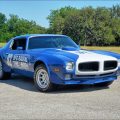
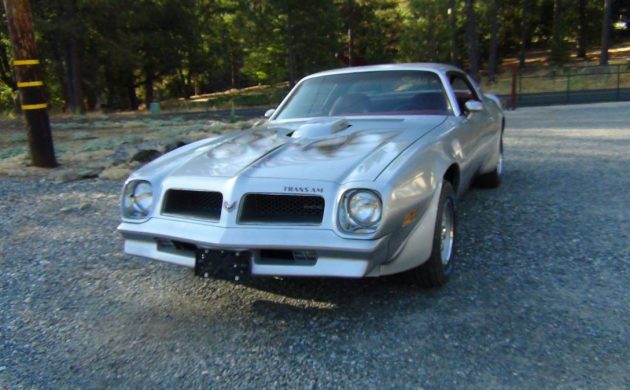
In the history of American muscle, 1976 is often dismissed as a “malaise era” afterthought—a time of strangulating emissions, plummeting compression ratios, and the slow death of performance. But for the Pontiac Trans Am, 1976 wasn’t a funeral; it was a coronation. This model year represents a critical demarcation line in F-Body history: the final stand of the 455 cubic inch era and the birth of the pop-culture icon that would define the late 1970s. This 1976 Pontiac Trans Am is a frame off restoration example located in Wilseyville, California in the Sierra Foothills. It is listed here on Craigslist for a handsome price of $63,000. The car has been posted for sale for just over two weeks. The seller states that he or she has owned the car since 1980 and spent 5 years restoring it.
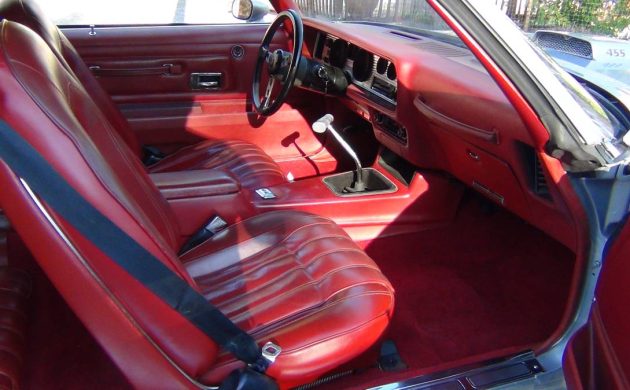
The listing boasts a “Frame-off restoration” with “every nut, bolt, washer, and screw sandblasted and painted.” While “restored” is a subjective term on Craigslist, the specific details provided—such as the “Original Space Saver Tire” and “New Honeycomb Rims in GM Boxes”—suggest an owner obsessed with OEM correctness. Those NOS (New Old Stock) Honeycomb wheels alone are worth thousands of dollars and are nearly impossible to find. The mentioned “cons” (replaced carpet and headliner) are negligible maintenance items that do not detract from the car’s investment grade.
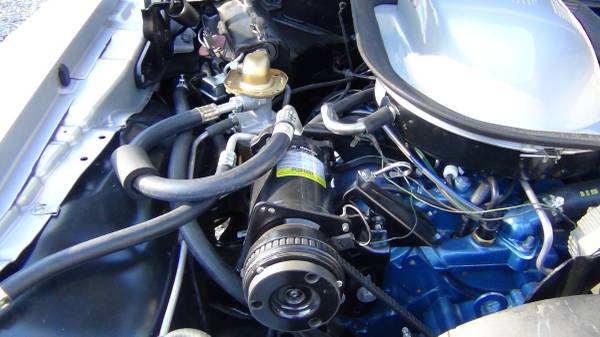
The headline for 1976 was the swan song of the 455-cubic-inch V8. While other manufacturers had long since abandoned their high-displacement engines—Chevrolet killed the 454 in the Camaro years prior, and Mopar’s 440 was a shadow of its former self—Pontiac engineers stubbornly kept the 455 alive for one last brawl. Rated at a modest 200 net horsepower, the L75 455 was undoubtedly a far cry from the 370-hp monsters of 1970. However, paper numbers tell only half the story. The 455 still churned out a massive 330 lb ft of torque at a useful 2,000 rpm. On the street, this translated to effortless, tire-shredding thrust that made the Trans Am feel significantly faster than its smog-choked contemporaries. Considering other muscle car options in 1976, the Trans Am offered the kind of visceral, low-end grunt that other manufacturers simply couldn’t match. You could only order a 1976 Trans Am with a 455 and a 4 speed manual transmission. The fact that this car presents with the correct Borg-Warner Super T-10 4 speed lends immediate credibility to its authenticity. Out of 46,701 Trans Ams produced in 1976, only 7,099 were built with the L75 455 engine.
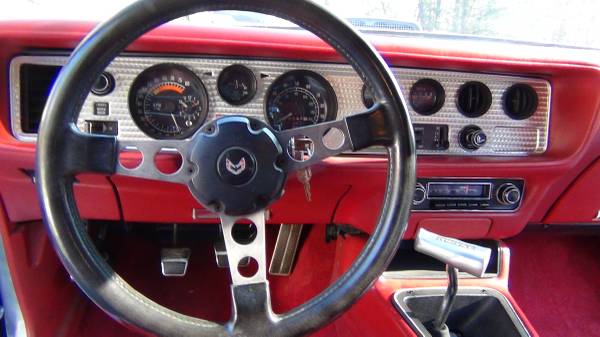
Unlike Chevrolets of this era, which are notoriously difficult to authenticate, Pontiacs have the Pontiac Historical Service (PHS). A PHS packet will include a copy of the original factory invoice. You are looking for the engine code L75 and the transmission code M21 (4-speed). Furthermore, the VIN on the dash must have a “W” in the fifth digit (e.g., 2W87W6…). If the VIN has a “Z” or “S,” it was born a 400 car, and the value is halved. Whoever buys this car will own the final chapter of the massive-displacement Pontiac V8 story, wrapped in a restored package that is ready to appreciate.




It’s cool but 63 Large for a ’76 Trans Am 455 equipped or not is approaching Super Duty territory
A ‘73 – 74 SD in similar condition would be a deal at twice the price of this one. If you find an SD for 63 grand it’s likely going to need a complete restoration
Chevrolet did offer the big block 396(402) in the Camaro, it never offered the 454.
You are correct there!
In 1970 you could get a 396 in a1970 camaro s s
Nice car but no way. The 455 ’76 Trans am was not all that fast. About 8.5 seconds 0-60 and 16.0 seconds in the quarter mile. In other words , about as fast as a 1978-79 Z28 that would cost considerably less money and be easy to modify to be much quicker without as much guilt. In today’s market, this will sit for a while, especially with the limited and amateur photo presentation.
Anything under 10 seconds back in 1976 is considered fast. Not fair to compare technology then with technology now.
True on the first point. As to technology, my comparison was to a 1978 car. And the 63 grand is in today’s money, LOL! So when I’m looking at that number, I’m thinking C6 Z06 or ZL1 Corvette, Hellcat, Shelby Mustang, etc. Maybe not fair, but this is a big ask.
Nice find, Bruce, of a beautiful car in an area with fantastic roads for those who like to ride/drive. This sweetheart is probably right at home on these roads, some of which seem to be paved-over pathways made by drunken billy goats.
$63k seems like a lot of coin until you try to replicate a car like this.
GLWTS, and if anyone here decides to go check this out with an appreciation for a good Old Vine Zinfandel, be sure to take an extra day-or few-to scope out the area as it’s a throwback to Napa-Sonoma of the ‘70’s/‘80’s (as in the vintners are often doing the pouring in the tasting room).
Nice T/A but 63… Nah!!
It’s a nice car but needs a lot more detail work to justify the price. If obsessed with originality why did they paint the engine the wrong color blue? Through 76 Pontiac engines were medium metallic blue. (sort of a silvery blue) 77 on was corporate blue which was a darker blue similar to the Ford blue which is what this seems to be. There are no pictures of the body except a somewhat unfocused front end shot and in the CL ad a picture of the hood to show the 455 decal. What the hood photo also shows is terrible orange peel that should have been addressed before the decals were applied. It’s not anywhere near top dollar yet.
You are correct on the orange peel, I have seen this car in person.
Worked with a guy in ’79-’80 who had a white over blue with the gray graphics. Nice car when he got it but he beat it into submission and traded it on an ’81 Chevette with an automatic.😕
Beautiful car, but I imagine the guy is trying to get out of the car what he has in it. I dont see that happening, could be wrong, but it seems way out of the price range for those cars.
nice looking in the color combo. i would either install those honeycombs or sell them. the ask is auction house hammer price. this is 1 of the good-looking years
Best looking year after ’73. 63 large is far beyond what I would pay, but I do like it a lot.
Clean Pontiac here with that drivetrain set up 4 speed/455/with A/C. Needs more pictures to sell and for that kind of money.
I’m no Trans-Am expert but I find it odd it has black seat belts in a red interior.
Black were standard, color optional.
They’ve watched to much Barrett-Jackson.
Nice T/A and good write up, Russ. Agree with those that say it is a lot of coin and approaching SD dollars, but so are W-72 400 cars (even some L78s). I think the ask may be high, but it is not outrageous.
I appreciate the fairness on the car’s era. A 455 anything was a special car in 1976. A 455 F-body was something that Chevrolet never even tried to match. These were the lone muscle cars of the era in that sense. As for 0-60, 1/4 mile. etc., the numbers were off, but the real world driving experience wasn’t. The engineers were not stupid. They understood that maximizing the engine’s torque curve is what really matters for seat of the pants performance. HP ratings are a marketing tool. Even BMW understands this and designs their engines with torque curve in mind, as opposed to maximum HP (which is often at odds with torque curve in a classic non-variable valve timing engine) to this day.
Hard to trust a seller who took the “frame off” of a frameless car.
The guy is actually OK unless its been flipped since I saw it last year
Has a frame, sub frame.
I feel like I’ve been framed.
I bought a 73 Firebird from him that was on barn finds through a similar craigslist add. The dark burgundy one
He doesn’t know about barn finds so it was hard to knock him down on price since he thought everyone inquiring was serious and had found it on Craigslist
Side note; this is the town where Leonard Lake and Charles Ng did their crazyness