
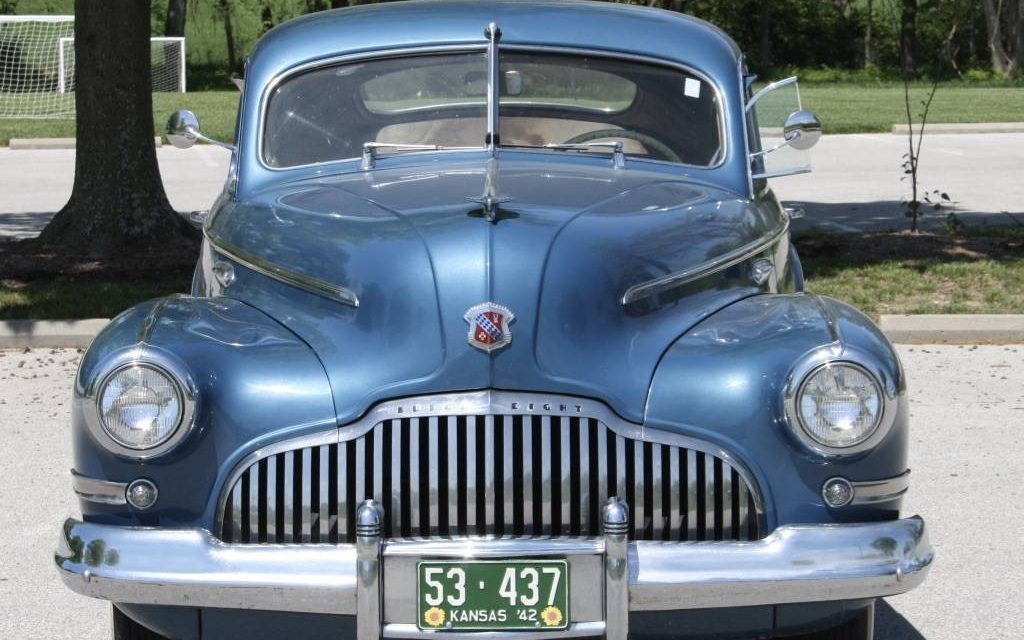
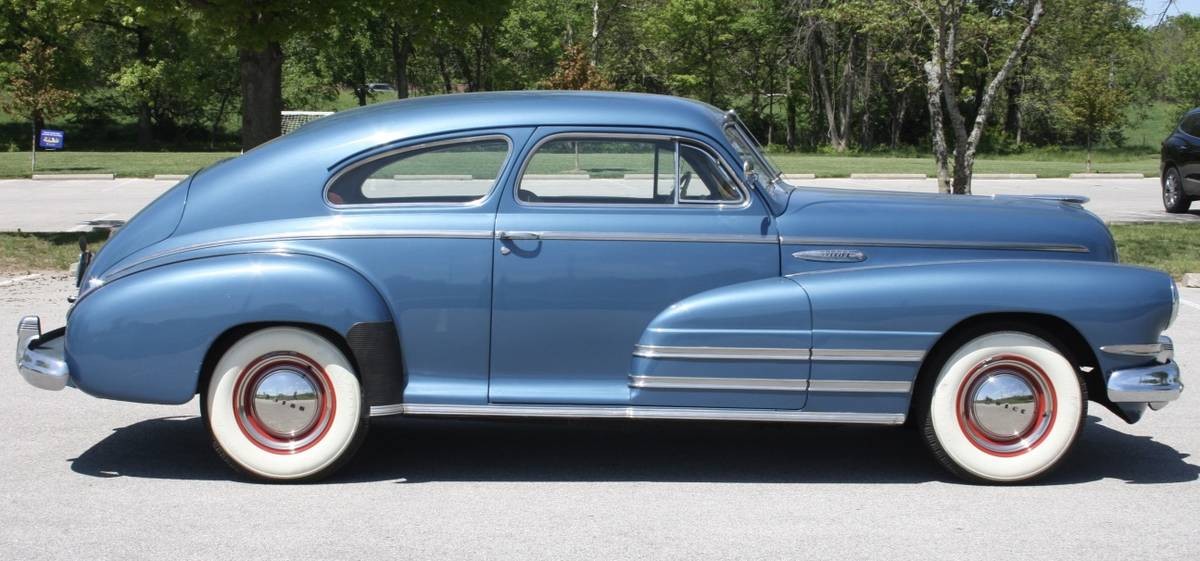
Given that Buick’s 1942 model year began in October 1941 and ended in February 1942, it may come as no surprise that fewer than 100,000 of them were sold, and of those, a mere 5,981 were Model 48S Special “Family” Sedanets. Because of their relative rarity, finding a 1942 model anything is always a treat, especially when it’s a claimed 66,000-mile, one-repaint, mostly unrestored example like this prewar Buick. Barn Finds reader Jack M. found it on craigslist in Mission Hills, Kansas, with an asking price of $20,000. Will its beautiful blue paint and status as a 1942 model propel this Special out of the market doldrums facing 1940s cars?
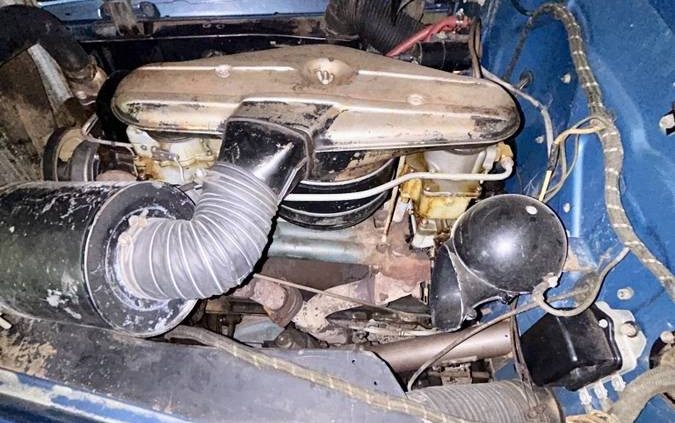
Mechanically, the Special was mostly a carryover from 1941, being powered by the same 248-cubic-inch, 118-horsepower straight eight with compound carburetion (in its second and final model year of production); this one appears to have the Stromberg “Aerotype” two-barrel carburetors. The only significant change was that Specials used cast iron pistons for 1942 rather than aluminum alloy. The Dynaflow was still six years off in 1942, so this car has the only transmission available, the three-speed manual. The seller says that this Special runs and drives like new.
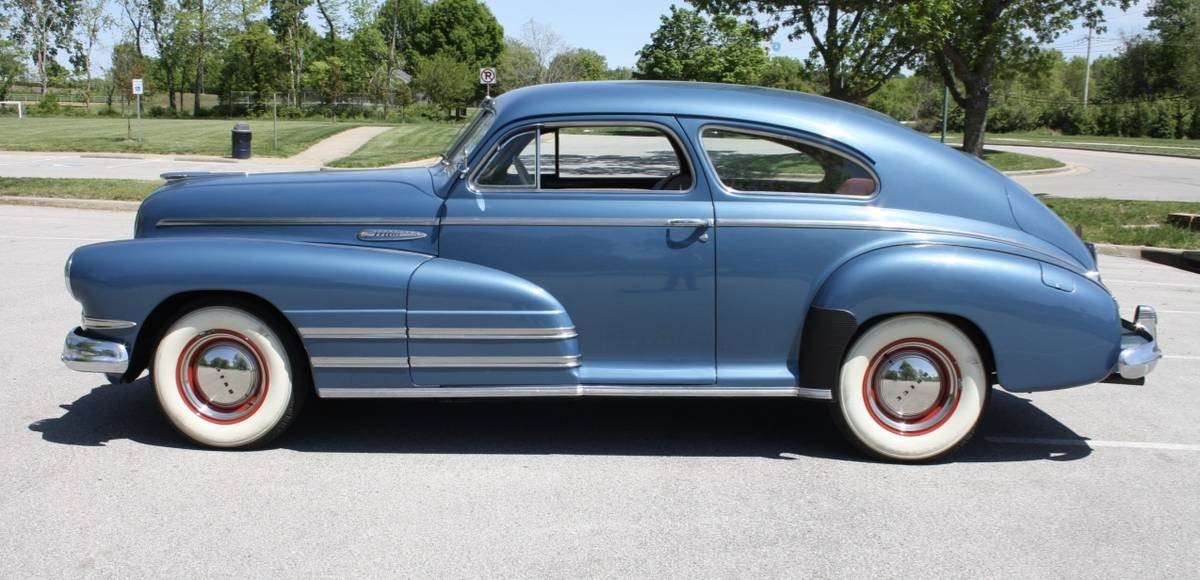
The 1942 Special received some fairly significant styling updates from its 1941 counterpart, including fenders that extended into the doors, a new waterfall grille, and polished horizontal trim on the lower front fenders that made the Special look longer and lower. The fastback “Sedanet” bodystyle was still in style and was carried over from the previous year.
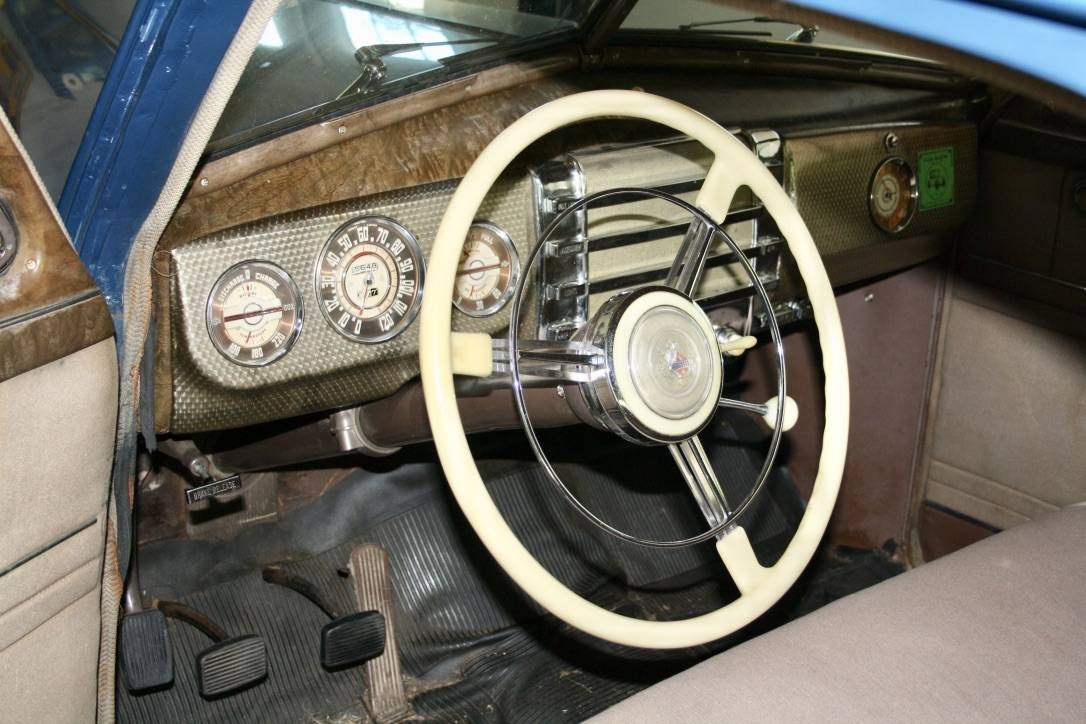
The interior is in mostly good condition aside from some cracked plastic window cranks (apparently common on ’42s) and some staining on the driver’s door panel. The seller says that the Special has “original upholstery, wood graining, dashboard engine turning, front floor rubber mat, [and] rear carpet.”
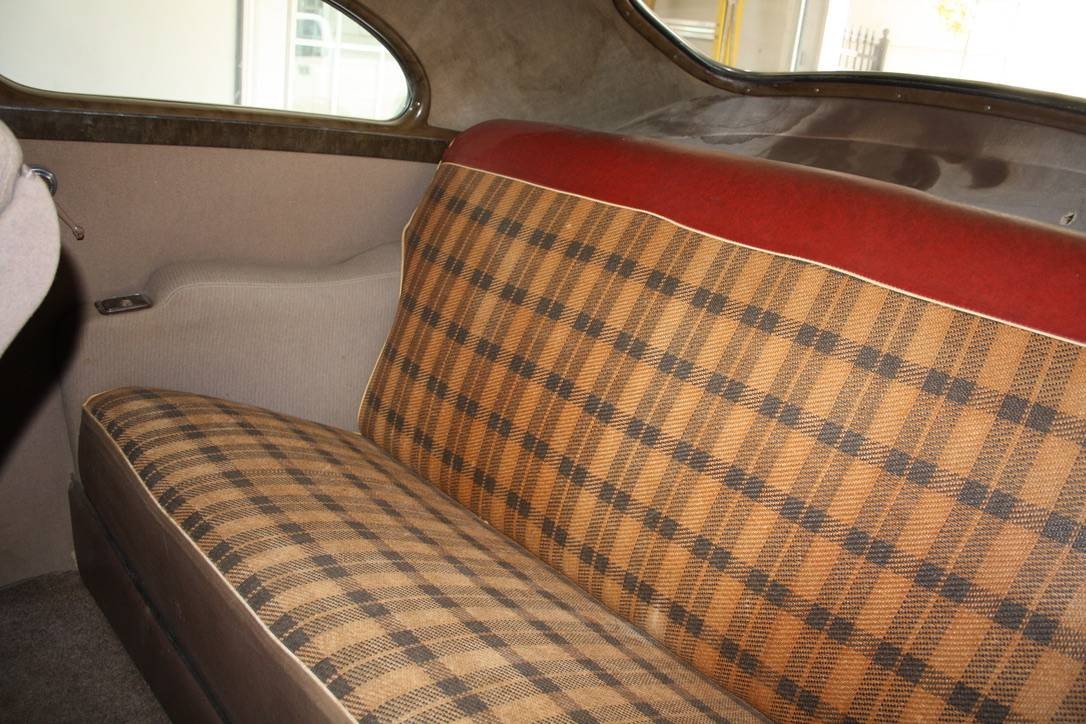
It also has this interesting rear seating area, which the seller says is the “original seat covers.” It’s a little confusing; it has to be an aftermarket seat cover of some sort, as the front seat upholstery matches Buick sales materials from 1942.
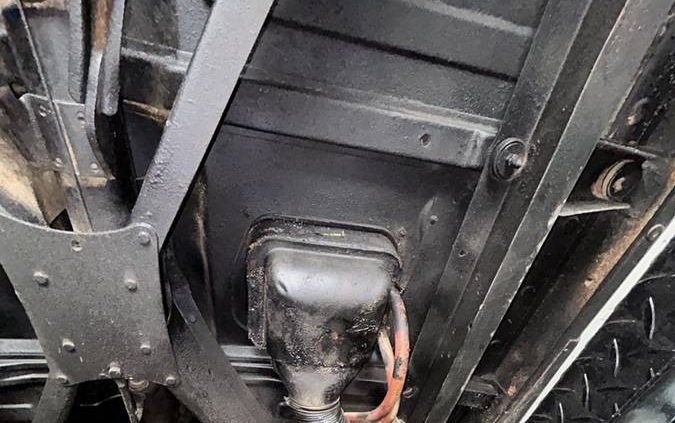
The undercarriage looks solid and original, although it appears to have had a spritz or two of chassis black to clean things up a bit. You can see Buick’s underseat heater in this photo, and you haven’t lived until you’ve tried to figure out the maze of heater hoses and where they’re routed in a ’40s or ’50s Buick. There’s also a defroster core mounted in one of the air inlets in the engine compartment, so your heater hose budget is many times greater than almost any other old car.
But it’s worth it to drive a classy Buick from the straight-eight period, and I’m one of their biggest boosters. Twenty grand is a fair bit of money for a car from an era that isn’t exactly gaining popularity, but I don’t think it’s too far out of line for a car this nice and this uncommon. For the sake of our hobby, I hope the seller gets a good price for it.




This is simply one beautiful Buick. Ot is sad that the audience for cars from this era is getting smaller. Think about it…. If you were BORN in 1942 you’d be 83. I’m not that old, but yet the thought of owning a Buick like this just appeals to me. It has beautiful lines, and that straight 8 will keep up with in town traffic with no problem. If I were in the market for something like this, I’d take a good long hard look at this one.
I was born Feb 1942 and family is from Kansas,I would love to have this,but not ment to be:
I agree with Dave, and a bit of irony with “Honolulu Blue”, don’t ya’ think? This is without question another of those “off to war” scenarios, except, I think this person did come back and put some miles on their carefully stored Buick well through the 50s. It sat at some point, I’m sure. My experience with straight 8s is limited to the Packard, and these were pretty much sitting in junkyards by the 70s, and I’ve never seen that dual carb setup before. I bet this car really rolled. Not like a Century, with a top speed of about 82 mph, but clearly not this buyers intent, and local trips, this was one classy ride.I never saw’r that underseat heater either, or that I knew about it. By the 60s, heaters had improved and these weren’t needed. Tell you one thing, whoever had this car smoked Lucky Strikes( or worse). My grandparents cars ( and our lungs) had those stains in the headliner too.
And that’s about it,,,no wait, something I was going to say related to all these wonderful stick shift cars,,,,,,,,oh yeah, the stick is gonna kill it,, :)
Sorry, but when the Century appeared for 1936, it was called that because of its top speed. A friend and I took his ‘36 to over 90 before we regained our senses.
So as a “younger” hobbyist (well… closing on 50, but I feel like that still puts me on the front 9 of classic car hobbyists lol) I think there remains a lot of interest in these works of art, and even prewar models. The issue, as it strikes me, is that these are not a “first” project. For context, my first project was a 1995 Pontiac Firebird from my teen years, and I am in the midst of a multiyear restoration on a 1970 Oldsmobile Toronado. So, I think the key factors for many of us are familiarity and speed, neither of which are offered by cars of this vintage. I think it takes time and experience in the hobby to truly appreciate the styling, engineering, and – most critically – driving experience offered by a vehicle like this, as well as to understand the sometimes-alien-feeling maintenance an older vehicle requires. Just my two cents. I’d love to hear others’ thoughts on the topic.
P.S. Putting my money where my mouth is…eventually… my next project WILL be a 40s-era car (with original drivetrain preserved or restorable).
I’m about your age, Eddie, so I completely understand what you’re saying. With my parents’ help, I got into the hobby at a very young age and became mostly fixated on ’60s cars, but one of my favorite cars is my ’53 Buick Special. One thing that’s helped me appreciate older stuff is that I’m not a “speed” guy; as long as my car can keep up with traffic, give or take, I’m happy with its performance.
Aaron, my Dad had a ’53 Buick Special post coupe which I think is what Special 2-doors were. Straight 8 & 3 on the tree. His was 2-tone green with the driver’s outside mirror being attached to a real spotlight and hubcaps. I was born in ’54 but still remember this car along with a
Studebaker pickup with the visor. Sometimes when Dad pushed the clutch on the Studebaker sparks would come out of the floor.
The Special was available as a two-door sedan or a Riviera hardtop, Jon. Mine is the 45R “Riviera” with a Dynaflow.
Your dad’s would have looked great in two-tone green.
I lean more towards the “speed” guy hobbyist. So if someone installed a Buick 455 and Turbo 400 in this car to keep it on the road I wouldn’t be offended.
I can just about hear this car going through the gears in my mind. It sounds like all the cars in those black and white movies from that time. Beautiful lines.
Great writeup on a beautiful car! Love this and its cousin ’41 Cadillac Series 61.
Benefit of pre-war is that the grill wasn’t designed by an orthodontist, but rather resembles baleen cutting through the air!
This must be an early production model since it has all it’s chrome trim. Those built closer to January of `42 got the painted parts. I recall my Dad telling me how his uncle Billy was lucky enough to snag a `42 Chevy before the assembly line ground to a halt. He said it was a dull army green with painted dark green trim incl. hubcaps. It got him through the war years just fine I’m sure.
What is the knob for between the windshields
It’s a rest for the antenna in the down position, so it doesn’t contact the windshield, center molding or body. If you look at one of the interior pictures, the ivory knob with the down arrow shows that the antenna is in the down position. It swivels by hand, in a circle.
If it’s in the ceiling, it’s the radio antenna which could be swung down to park on a notched rest between the windscreen halves as shown in the pix. It was strictly a Buick thing. Our ’46 Super 4-door had it. Fun to play with as a kid but I never saw the need for it unless you were backing under some low trees.
Another thing that was fun to play with were the radio preset buttons which could be removed in order to set the preset (if that makes any sense). There were five of them and they spelled out B U I C K. This smart-a$$ kid used to rearrange them to Pop’s consternation when he’d climb in and find C U B I K.
It’s the radio antenna which could be swung down to park on a notched rest between the windscreen halves as shown in the pix. It was strictly a Buick thing. Our ’46 Super 4-door had it. Fun to play with as a kid but I never saw the need for it unless you were backing under some low trees.
In the ’46 another thing that was fun to play with were the radio preset buttons which could be removed in order to set the preset (if that makes any sense). There were five of them and they spelled out B U I C K. This smart-a$$ kid used to rearrange them to Pop’s consternation when he’d climb in and find C U B I K.
Oh, and the underseat heaters worked wonderfully for keeping the whole cabin warm rather than too hot in front, too cold in back.
Most of the ’41 and ’42 models with the dual carb setup were such a pain that dealers were known to put a blank-off plate under one of them and block off the fuel line. Don’t know what that did to the balance of intake in that long engine but it couldn’t have been good.
I would rather have the 49 Buick that sold for $12000 that was listed a couple of weeks ago.
This is a fine looking Buick and a rare one to boot. The underseat heater in my ’52 Buick Super kept the car warm for the front and back seat occupants. The twin carbs were the forerunner of the 4 barrel carburetor. The ’52 Roadmaster had the one of the first factory 4 barrels.
Wish I had the room for this one.
What is the knob for between the windshields?
That is for antenna adjustment. You turned it to get better tuneing. In the collapsed position it will rotate 360 degrees
That is to tune the radio antenna. If antenna is collapsed the knob will rotate 360 degrees
Perhaps a bit more info on why you even needed that. Post war Packards had those too, one of my parts cars had it. You see, with car radio in its infancy, radio stations had a very limited distance. As you got farther away from the transmitter, you needed to adjust the antenna aiming it towards the tower. Early TV was similar with “rotating” antennas. You might have gotten another 5 minutes, but was futile, until another station came into range.
I can’t imagine this lasting more than a day or two. Somebody is going to snatch it up at that price.
My only experience with the Buick straight 8’s is that they were used in Flxible busses on a commercial basis. If you let them get too hot, too ling they would burn the #8 piston..
LOVE the ’42s! I did also when they first came out. It was that deco-modern era, and a number of 1942’s were heavy re-stylings on the ’41s, making them look sleeker, lower, and wider. They were exciting at the time. Most of them simply re-appeared as 1946 models, but with their “deco” elements removed or subdued, and their interior earthtones supplanted by blues, greys, and silvers.
My kind of car.
I like it. Especially the fastback body style and the front fenders that flow back into the doors. And that grill is a work of art and announces to all that this is a Buick. I found the dual two barrel carburetors unusual and surprising (for me anyway). I would love to take this for a spin. I’ll bet it has some nice torque. The fact that this car is a 1942 model does give it somewhat of a “leg up” in collectibility. But the window for this is closing a little more each year. Since my beginning of this year pledge to refrain from being judgmental on asking price prevents me from opining; I will just say that I hope that the seller’s expectations are fulfilled closer rather than further from their figure. Personally I think that the market has declined for this era of automobiles. One of the few things that is costing less than it used to. GLWTS.
‘Original seat covers’ no doubt alludes to the installation of these aftermarket seat covers when the car was newly put in service, or not too long afterwards. The remaining covers on the back seat look period correct and add to the character of the car in my opinion.
I love my 1940 Plymouth, such fun to drive. Funny stat: The heater was an option, the passenger side arm rest was an option, the passenger side sun visor was an option as well. Mine has the factory installed radio antenna on the outside A pillar, although mine did not have a radio. (another option). Yeah the price on these 40’s cars is slowly dropping. I’m sure I’ve got more $ in mine than what its’s worth. But I don’t care, I don’t plan on getting rid of it as long as I can still manage the three on the tree. (a wonderful anti-😂theft option).
Wonderful original prewar artifact. To me it begs the question what would America (and the rest of the world) look like if WW2 hadn’t been necessary? I’m also assuming the absence of prewar totalitarianism. An interesting thought experiment inspired by this magnificent machine!
And the Special was basically an afterthought, essentially a leftover ’41. The up-market models didn’t have the stripes on the fenders nor the beltline bright trim from front of the hood back. This was the “A-body” (Chevy, Pontiac, Olds) fastback with a longer wheelbase and Buick front clip. And, of course, that wonderful “Fireball Eight.” The upper models for ’42 had the stretched fenders running back to the OEM rear fender skirts.
I disagree. Pre WW II, the Special was, except for 1940, which saw the introduction of the 50 Series Super, ALWAYS Buick’s best seller. Buyers received Buick quality and an OHV straight eight for not much more money than a Chevy, Pontiac or Olds.
That’s the way GM operated back then. It was a matter of overlapping markets with the top of one getting into the bottom of the next higher echelon. The inverse was applicable too. A “rubbernose” Pontiac and the name’s panache cost less than a “full dress” Chevy and so on up the line. It all depended on 1) how much you wanted to spend, 2) what accoutrements you wanted and 3) how much you wanted to impress others with your ride, or “driveway appeal.”