
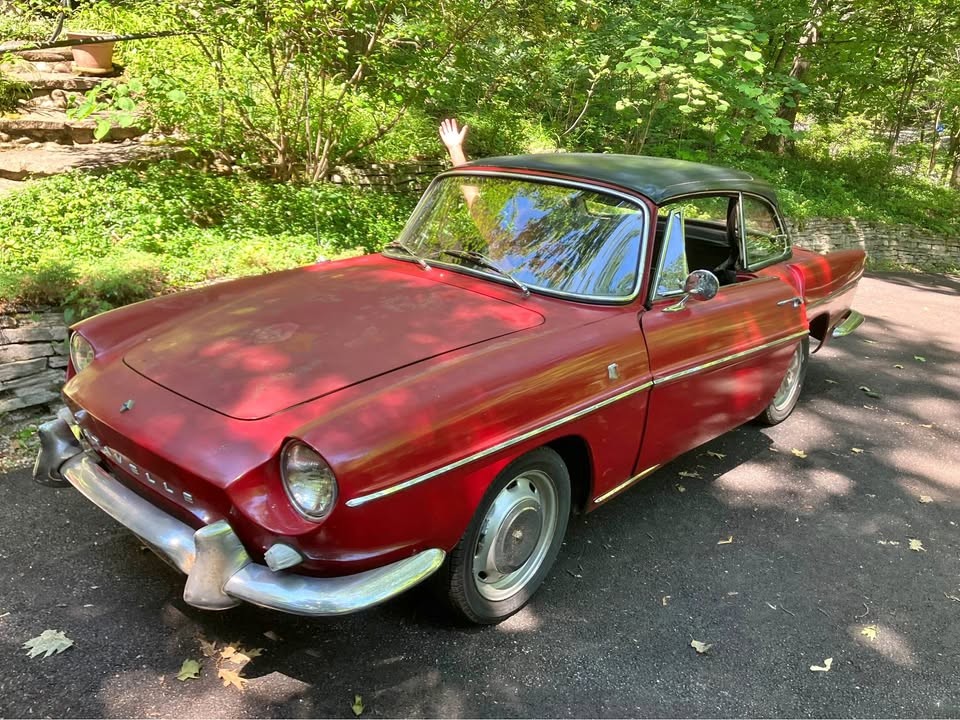
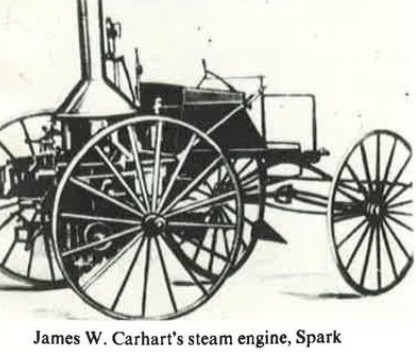
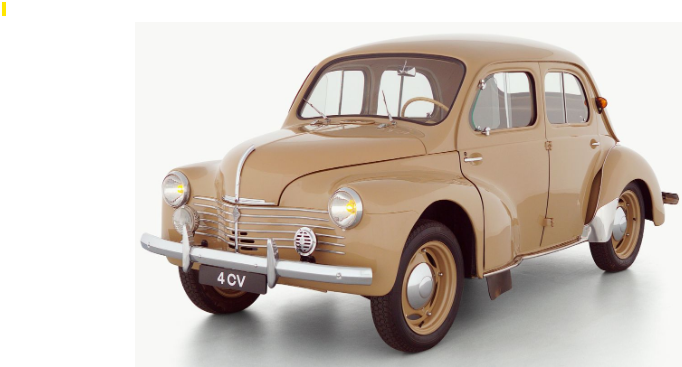
Identifying the first car and when it was made is surprisingly difficult (like, what’s a car, exactly?), but no matter whether you think the steam-powered contraption running around Wisconsin in 1873 was first, or it was the 1885 Benz Patent-Motorwagen, Renault was around from very near the beginning. The company was founded in 1899, months after the sale of its first car; the brothers Renault must have known they had a tiger by the tail when their voiturette found a buyer right after a test drive. Unlike Citroën and Panhard, Renault managed its financial affairs relatively well – despite the obliteration of its factories in WWII, the heavy-handed expropriation of the entire company by the French government, and the death of its founder. Instrumental to its survival was the launch of the 4CV, the first French car to sell over 1 million copies; this model was followed by the Dauphine – also a solid seller. Dealers, though, watched competing automakers drift away from thrifty dumplings to introduce compact convertibles like the Karmann Ghia and the Corvair. Renault leadership agreed to meet the challenges of the market head-on, and the Caravelle convertible was introduced in 1958. This example, advertised here on facebook Marketplace for $6250, is located in Columbus, Ohio. We have Ted to thank for this tip!
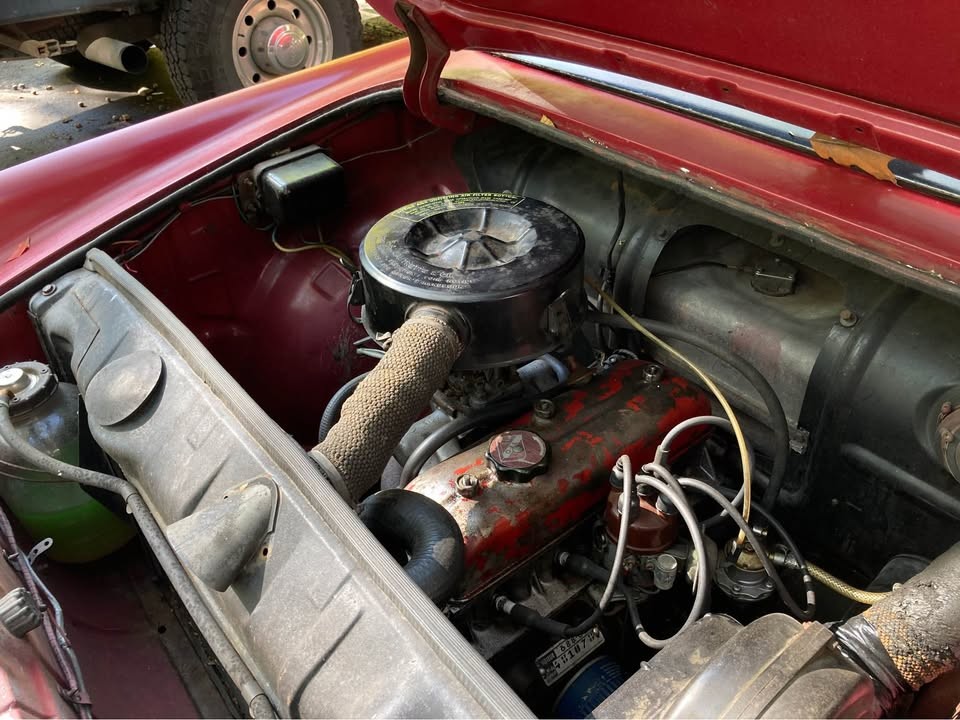
During production, the Caravelle was upgraded in important increments, particularly in the engine bay. The first cars utilized the Dauphine’s underpowered 845 cc engine, but by the time this example was made, displacement was up to 1108 ccs, and horsepower had increased to 55. All the engines were rear-mounted and water-cooled. The gearbox was another source of gradual evolution: from a partially-synchro’d three-speed to the all-synchro four-speed manual that came standard with the largest engine. Later cars also received improved suspension geometry and disc brakes. The seller notes that he has maintained and repaired the car using NOS parts, and it is said to run, drive, and stop “100%”.
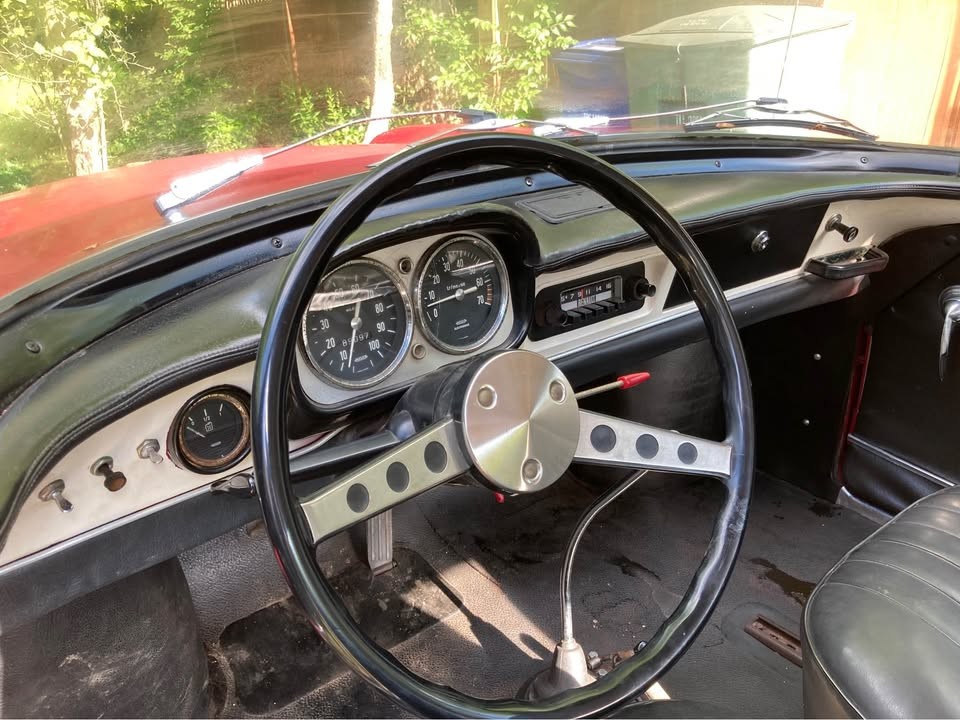
Looking past the vintage French charm of the interior, we see stains on the passenger-side floor mat, which could mean a leaking top or seals. The seller notes that the horn and tachometer need to be repaired. We aren’t shown the seats, but the car has individual seating in front, and a bench seat in the rear. Two tops came with each car – a color-keyed hard top and a soft top. This one’s hard top has been painted black; no soft top is in evidence.
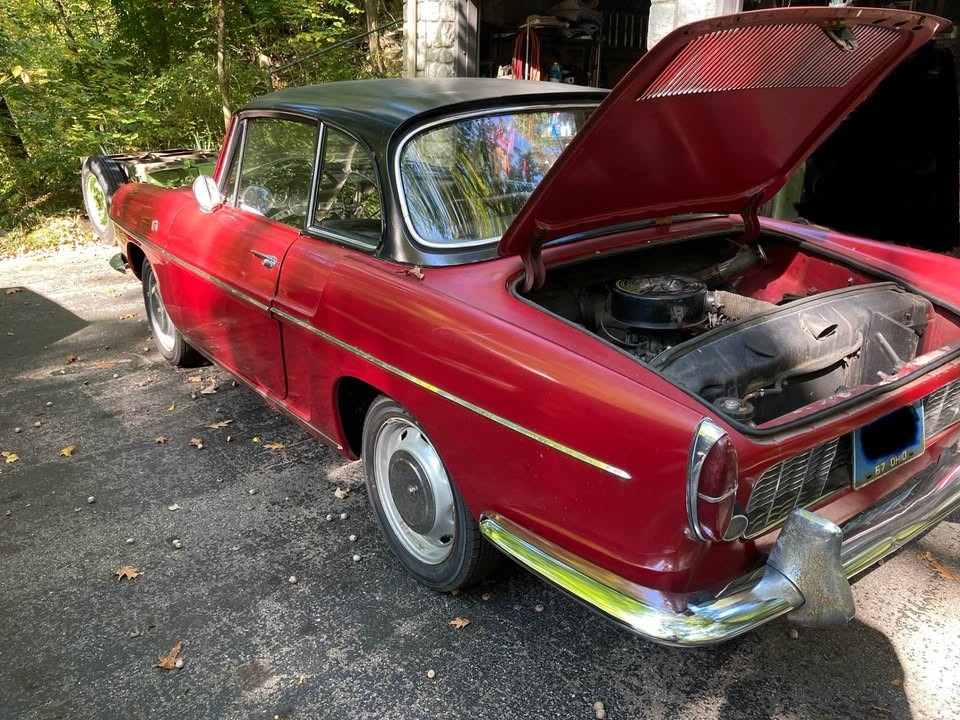
The Caravelle’s design attribution is a matter of contention. Often credited to Pietro Frua, others indicate the first sketches were submitted by Virgil Exner, who was contracted with Ghia while the car was in development. Frua’s involvement apparently came later, when the car was mildly facelifted. No matter the stylist, the Caravelle is appealing. Despite its woefully underpowered engine, more than 117,000 were sold. Prices are all over the lot: this credible example sold for only $6500 in mid-2023, while it took over $31k to acquire this restored ’67 at Mecum last year. Would this French roadster be welcome in your garage?




This car was written up around Thanksgiving, and as rare as this car was, there are 19 examples on this site alone. Pretty much spilled on the last submission, but briefly, the old man had a Caravelle when I was a kid. Not sure how he got it, but long story short, we had some friends, the guy weighed almost 400 pounds. My dad gave him a ride and the car broke in half. I see by the sagging doors on this one, it may be headed in the same direction. This car, I think, is an 1100S, with that gauge package and a bit more HP ,57.2 vs 55, (it’s that 2.2 HP that gets you over the hill), but pretty inept for any of todays travel. I read the model was ended in 1968, so this could be one of the last ones. I’d love to have this, COLUMBUS OHIO, gee whiz, why aren’t these things ever in your back yard?
Howard. This 400 pound friend of your Dads, he wasn’t one of the 4 people that rode in that Fiat Multipla. If so, I’ll give that little buggy a little more credit than I did before.
I don’t remember seeing these but I do remember a few other models here and there. They weren’t very plentiful where I grew up. This seems like a neat little car and hopefully not too bad underneath.
Ha! No, he wasn’t one in the Multipla, I’d hate to think of the performance with that family. They were wonderful people, just loved to eat. They were all 400 pounds.
I picked up a client who I hadn’t met before at an airport once who weighed about that amount in a “midsize” rental car (naturally, with bucket seats and a console). It was all that we both could do to eventually close the passenger door. Awkward…🫢 You can only say, “So, how are the wife and kids?” for so long while putting your shoulder into the passenger door like it was a blocking sled before it gets weird…
That’s interesting. 90 % of the cars that I’m interested in, and are in my price range, happen to be in your(general) neck of the woods. 3000 miles away from me!
The pretty lady I dated in high school and a couple years in college had a bright red version of this car. Not good for long trips but good for running around the campus. Wouldn’t make a move on this one until I saw the underside.
The French steam powered Cugnot of 1792 holds that title of first car even though it was not practical. In 1807 another Frenchman Francois Rivaz invented a hydrogen powered internal combustion engine and then in 1859 Jean Lenoir invented a petroleum based internal combustion engine which he adapted to a vehicle and made several demonstration runs around the French countryside. His automobile was not a commercial success, but he set up a factory to produce the engines and sold several hundred of them for various stationary power and marine applications.
My dad owned a 1962ish Caravelle with a much more attractive and sporty hard top. He had several gutless Renault Dophines but the caravelle had a “ Gordinni kit in it and it was quite spirited. I have no idea what that kit was composed of but it was a pretty quick car. The two problems he had with it was the rear coils lost their spring ability and dad being a farmer never looked for replacements, he just took them out and stretched them with a block and tackle. Soon it was sitting with the extreme negative camber again that a swing arm suspension usually has. The other problem was rust in the frame. The car spent its initial life in Salt Lake City and the unibody frame was disappearing out from under the car. There was no fix that wouldn’t outstrip the car’s value to complete. We expected the nose of the car to collapse at any time. I loved that car and dreamed of a high dollar restoration once i hopefully became financially healed. Then one day some buy and flip people noticed it sticking out under the open front shed it had been stored for 40 years and offered my dad $300. He took it. When I saw the empty shed I was devastated. But alas with 5 other rebuildable cars in my warehouse already I rationalized and decided to put that inspiration into one of my other projects. Oh, one more thing kind of quirky about this car was the gear shifter sick was like working a butter churn. Finding a the appropriate gear was was a stab in the dark. So many good times had in this beauty.
Most dangerous car I ever drove. If Ralph Nader thought the Corvair was bad this was much worse. The rear end would come out from under you without any notice. Go into a corner a little hot, next thing you’re in the weeds.
The Renault Caravelle is the only car I know of (thank goodness) that every time a conversation starts, there is at least one story of it breaking in two.