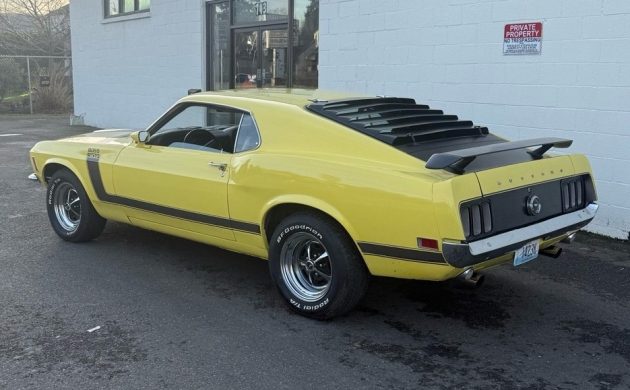
If you’ve been hunting for the ultimate intersection of SCCA racing history and street-legal muscle, this 1970 Boss 302 might just be the ticket. Located here on eBay, it is already generating buzz. This 1970 Ford Mustang Boss 302 represents the second and final year of Ford’s Trans-Am homologation effort. Finding a Boss 302 that retains its mechanical integrity is a serious event in the enthusiast community. There are 5 days left in the auction, and bids have reached $49,200. The car is located in Auburn, Washington. We appreciate Curvette sending us this listing. Priced at $3,720 when new, the Boss 302 was a premium machine. While the 1969 production was limited to just 1,628 units, the 1970 run expanded to 7,013 cars, making them slightly more attainable but no less desirable.
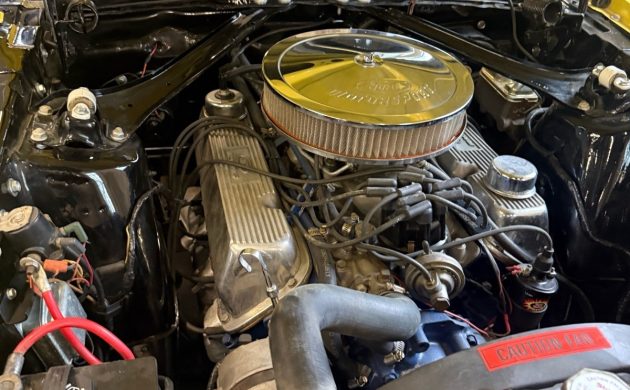
To qualify for SCCA Trans-Am racing, Ford engineers created a Frankenstein monster of an engine, mating free-flowing “Cleveland” style cylinder heads (with massive canted valves) to a strengthened “Windsor” tunnel-port block and called it the Boss 302. Factory-rated at a conservative 290 horsepower at 5,800 RPM, real-world output was significantly higher. A key spotter’s detail for the survivor hunter: look for the rev-limiter box mounted on the driver’s side inner fender apron. It was factory-set to cut spark around 6,150 RPM to keep the engine together, though the bottom end—with its 4-bolt mains and forged steel crank—was built to take a beating.
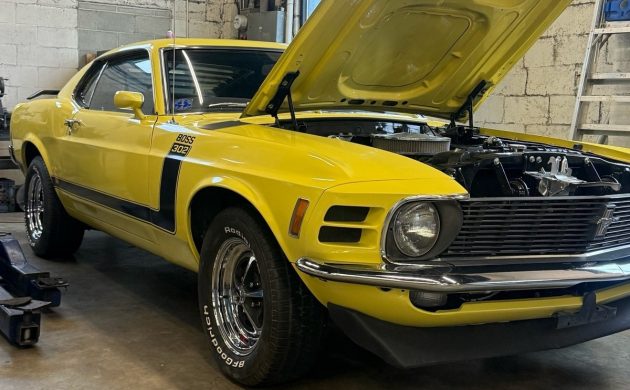
According to the door tag, this Boss left the factory wearing high-impact Grabber Orange (Code U), but at some point in its life, it was color-changed. It now wears a striking Yellow finish—likely the period-correct Bright Yellow (Code D), often referred to by enthusiasts as “Grabber Yellow” (a name officially used in 1971). The new paint serves as a perfect backdrop for the 1970-specific “hockey stick” stripes designed by Larry Shinoda. You’ll also notice the front fascia is distinct for this year—the headlights are moved inside the grille vents, giving it a wider, more aggressive stance than its predecessor. The look is capped off with the correct 15×7 Magnum 500 wheels wrapped in aftermarket tires.
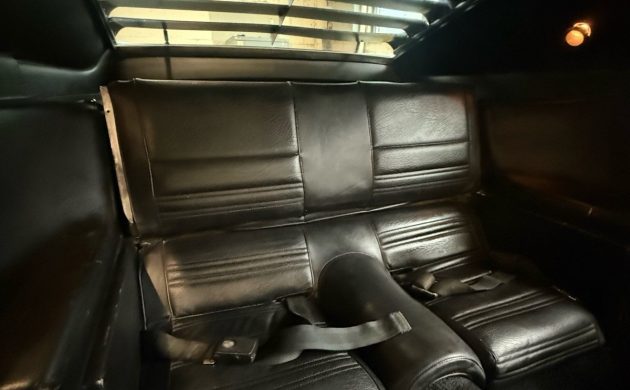
Inside, the cockpit is all business, featuring the standard Black Vinyl (Code BA) high-back bucket seats. This picture shows the unique rear seating. Ford ditched the woven “ComfortWeave” material for standard vinyl in the Boss to keep things durable. The Hurst T-handle shifter is the centerpiece of front row, connected directly to the mandatory Toploader 4-speed manual transmission. There’s no automatic option here—if you wanted to drive a Boss, you had to shift it yourself.



4.30 rear gear ⚙️ usually track cars have longer legs. One of the great factory packages Boss 302.
Saw one of the first races for the cars in Sonoma, CA. Parnelli Jones was 2 feet behind Mark Donahue the whole race and finished that way. Goose bumps every time they roared by us. Next race Jones won.
Donahue drove AMC, no?
In 1969 Donahue drove a Camaro for Roger Penske, they switched to AMC in 1970. In 1969 Donahue beat Jones, in a Mustang, finishing 1st and 2nd respectively.
Steve R
H E Double Hockey Stripes yeah!!!
Sweet, not the best photos to sell a car.
Anyone that buys a vehicle on photos alone is foolish. You’ve gotta actually physically check it out to see what the camera doesn’t show you. Photos always make the vehicle look better than it really is.
Bought a very low mileage of this car for my youngest Grandson for Christmas (of course it was the Maisto model car version sold at Costco). Also saw this one on a dealer website in Warrenton, OR several months ago. Nice car and if the workmanship and condition is true to the pics, an awesome car for someone that will respect it. Hope it gets a good home.
A friend bought one off the showroom floor, after ordering a 1970 Shelby. HE DIDN’T want to wait for 5 months to get it, so he bought the yellow and black Boss for $5,000 off the showroom floor. He was a tech genius, working at Tectroniks in Beaverton, Oregon.
We won rallys all the time. AMAZING CAR, especially driving it at 16. HE got too many tickets, judge said, sell it or lose his license. I talked my parents into buying it. He got a Vega, my parents couldn’t afford the gas, eventually he couldn’t stand his gutless Vega, and bought it back. To this day I want it back, but I now am retired, and bought myself a 2007 GT with a 4.6 liter, healthy as he’ll at almost 100,000. BEST Car I’ve ever owned, ❤️ Sheela is awesome
Legend, too bad about the color change. Still sweet though.
Pure Legend! Were I a single man, I would have a bid in on it…
the color change may hold the price back. why would anybody do a color change on a rare low production car.?
Some owners don’t care about resale value, they just want the car to their liking. The previous owner probably hated orange 🍊.
One of the few Fords that actually tempted me back in the day. I looked at one but ended up buying an L78 Chevelle instead. That’s the one I should have kept. Who knew? And life, marriage, family all got in the way. Not complaining, I’m very blessed!
Nice Boss!! 290 HP was a joke… had a whole lot more!!
With two days to go it’s topped $56K, a lot of money for a car that needs quite a bit of restoration. Besides the color change, there’s a lot wrong under the hood, and the fresh coat of undercoating on the underside is a concern. Still if it is a real 69 Boss 302, it’s a car worth pursuing.
One of my customers would have been a buyer for this car two months ago. He already has a full set of first gen Z/28’s, a 69 Boss 302, and a 69 Boss 429 and was looking for another pony car project. I found him another 69 Boss 429 project car which he bought and it will be keeping his shop busy for a while.
This is a 1970. And it had a highend restoration completed. Are you looking at the same auction??
Ford missed the boat completely when they decided not to build Boss 302 Mavericks
SOLD for $65,100.
36 bids.
That’s a good deal!