
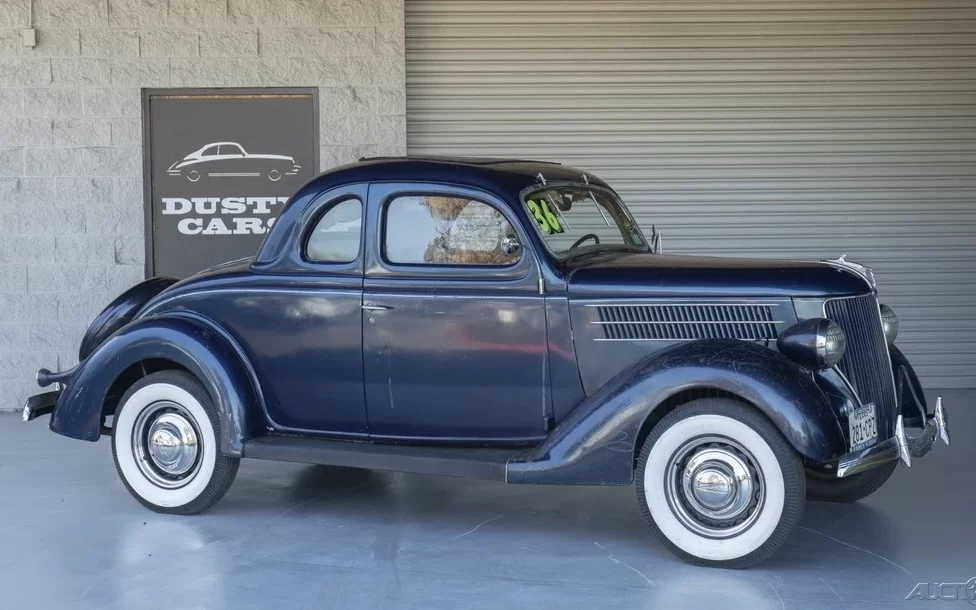
Like almost anyone with gasoline in their veins, I’m a sucker for 1936 Ford Coupes; they’re my favorite from a decade that abounds with stylistic riches in the Ford line. While I prefer the three-window coupes, I would categorize the five-window as number “1a” in a close matchup. Therefore, I’m always excited when a ’36 comes up for sale, and upon first glance, this example looks like it’s just my type: stock and mostly untouched. But someone’s had their hand in the cookie jar, folks, and the new owner is going to have to deal with a significant number of “upgrades” that haven’t been dragged across the finish line. In my opinion, it would be best to start combing the club classifieds for some stock components as soon as you sign on the dotted line. The car itself is for sale on eBay at a dealer in Pleasanton, California, which has had some very interesting old cars from a Texas collection on sale as of late. This one, despite its faults, will probably bring a strong price, but it currently sits at an $8,800 high bid (with the reserve obviously not yet met).
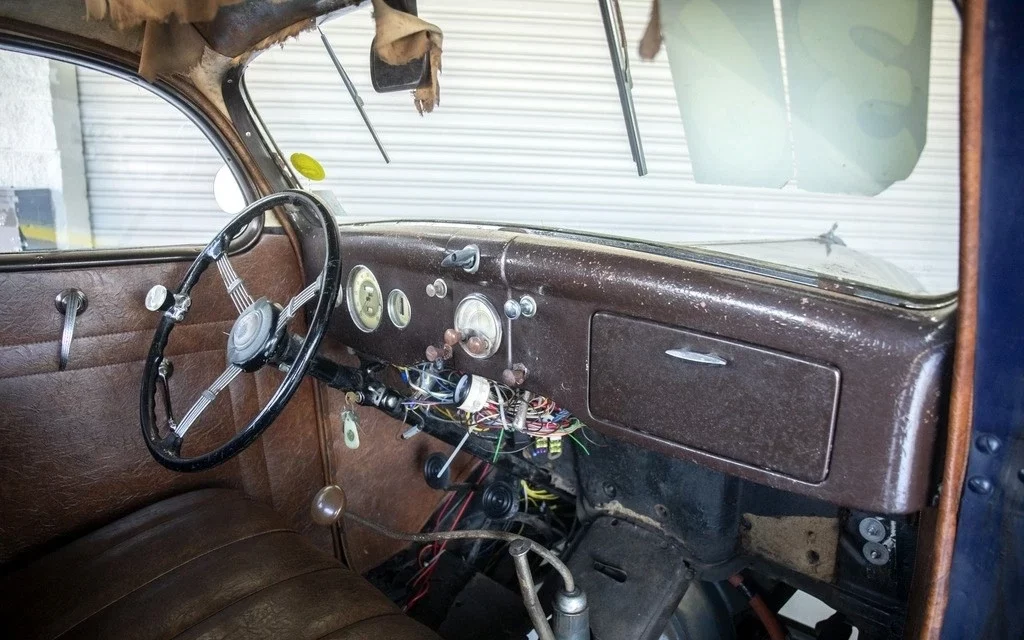
Based on the trim, I believe this Ford is the rarer DeLuxe Coupe (29,938 produced vs. 78,534 Standard Coupes), as it has bright trim on the headlights and windshield, in addition to having two taillights (no, that was not the case on the Standard), trim rings on the wheels, and a rear-view mirror. Aside from the headliner, which is shown in several pictures and was clearly mouse-infested for much of its life, the interior looks perfectly serviceable. However, look at that wiring under the dashboard. There’s more in the trunk (this car doesn’t have a rumble seat). In my opinion, most of this needs to be torn out and the new owner either needs to see what is left of the factory harness or start anew.
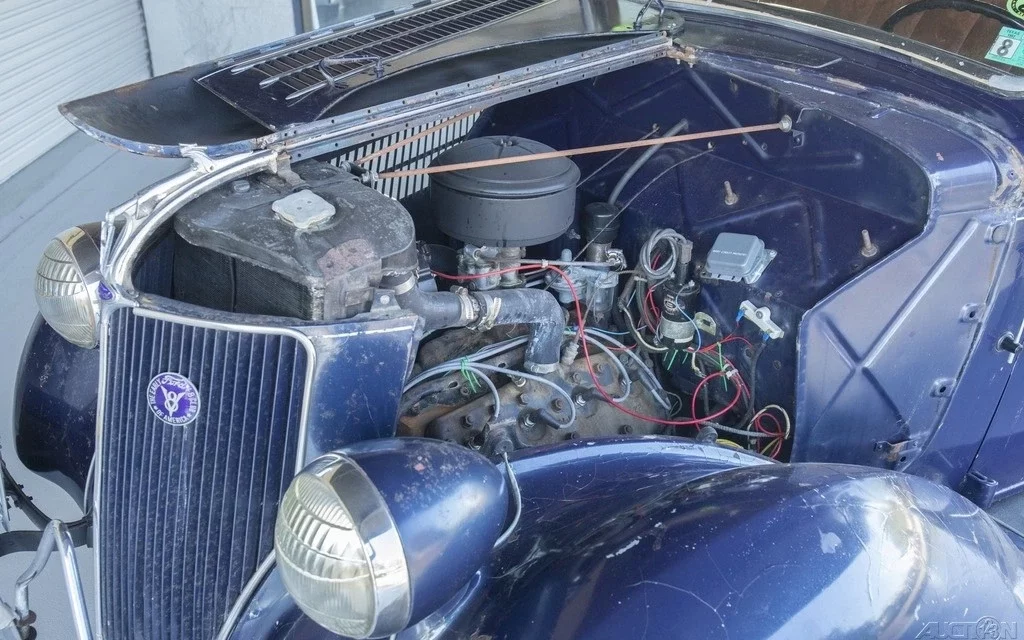
Oh no, there’s more under the hood. It looks like someone has installed a 12-volt conversion with a solid-state voltage regulator and perhaps even an electronic ignition system. There are no pictures that show it, but I imagine it has an alternator conversion, and it definitely has a new starter. Fortunately, the flathead is still under the hood, and in stock form, it was of the 85-horsepower, 221-cubic-inch variety, which breathed through a Ford two-barrel. The seller doesn’t mention anything about the car running or driving, so I’d imagine it’s not.
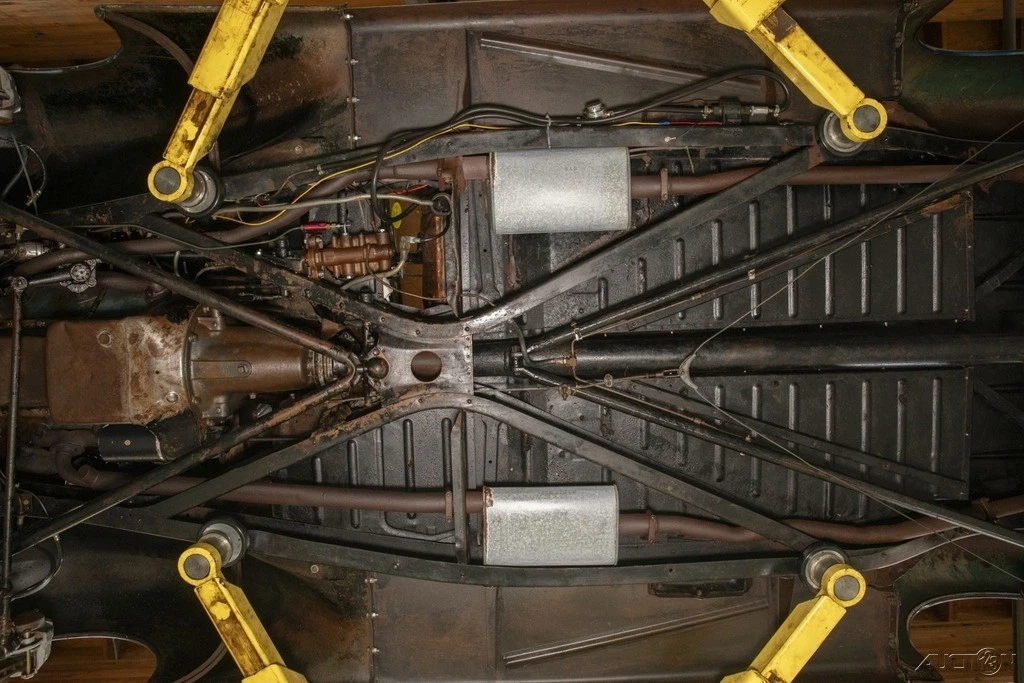
There’s more to deal with underneath. Although the undercarriage looks very solid, and the engine will sound great through those dual exhausts, I would eliminate the electric fuel pump, parts store regulator, and all that rubber hose and try to get back to a fuel system that more closely emulates the stock setup.
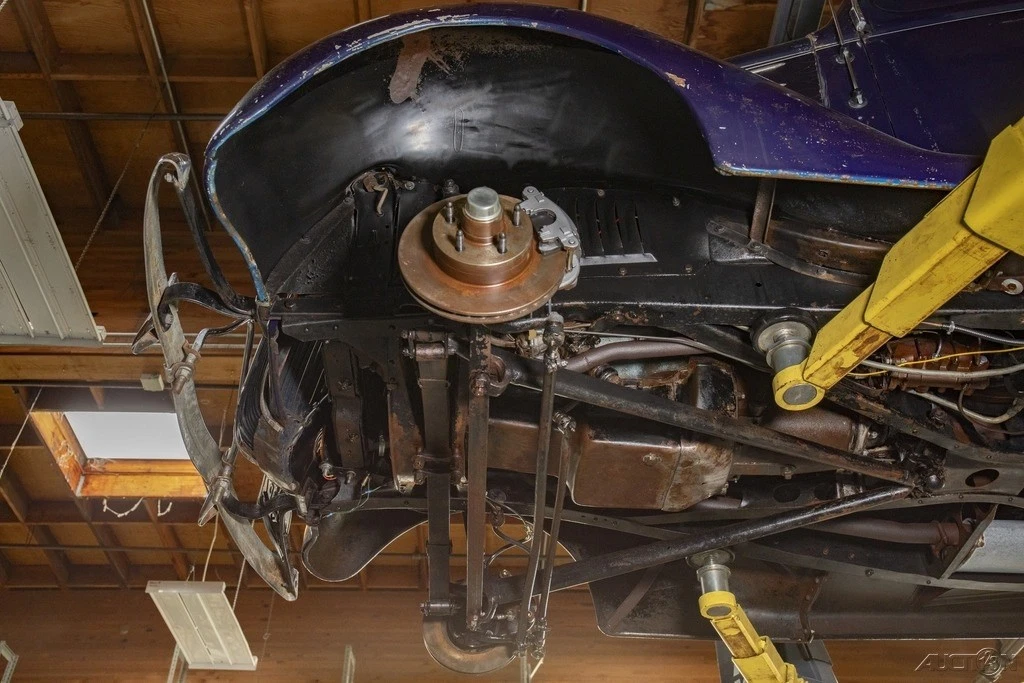
And while there’s nothing wrong with a hydraulic brake conversion and front discs, in this case the front wheels are pushed out too far to the lips of the wheelwells; the track is clearly too wide. Once again, I would prefer that the car still had its factory mechanical brakes; then I could decide if they were adequate for my kind of driving or not. As it stands, I have a bad feeling that this combination isn’t quite ready for prime time.
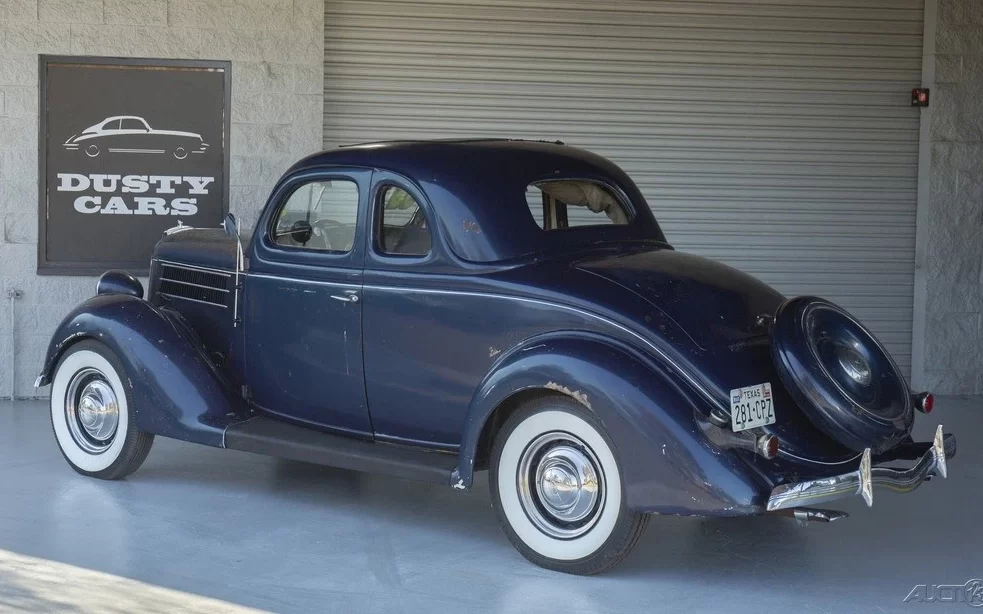
None of this takes away from the fact that this is an excellent starting point for a really great 1936 Ford Five-Window Coupe driver. While I’m sure that the mechanical upgrades could be figured out, I think I’d probably bite the bullet and throw most of it away and start from scratch with good old Ford parts from the thirties. It would be expensive, but I know I’d be happier in the long run. What would you do: keep the upgrades and get everything working correctly or start from scratch?




Aaron, you have good taste!!! A ’36 Ford coupe in Washington Blue is a beautiful car. The “Banjo” steering wheel is one of my all time favorites. I’m guessing the previous owner was going for more modern road friendly manners. I’ve never driven a Ford with mechanical brakes, but I’ve read that when working properly, they do their job just fine. Anyone who knows me, knows that wiring is my Achilles Heel. MASSIVELY!!! So, seeing the wiring, I would go your route and get an original harness and start from scratch and go back to 6Volt. But this Old Ford certainly has a great look to it and I’m thinking those duals make that Flathead sound great. Hopefully this gets to a good new home and on the road again. Great write up on this Classic Ford up Aaron. Thanks
Well said sir! Thank you. The mechanical brakes on my old Ford work great. What folks don’t seem to understand is that you have to adjust both the brakes at the wheel and also adjust the linkage. I’m working on getting my old Ford back to stock and am so glad it wasn’t converted to juice brakes.
Yes, I think obtaining an original 6-volt harness is a way to go, having the heavier gauge wire necessary for 6 volts. I never had an issue with my 53 F-100 Ford for 30 years with 6 volts, the only thing necessary to occasionally check, making sure the grounds are clean and shiny. That is also true with my 66 F-100 now, though it has 12 volts of course. An easy and free thing to do.
I certainly agree on a wire replacement but have some ideas on the rest of your comments Aron. You can get old look generators with alternator guts which would save a lot of work going back to 6 volts. As for the brakes, keep the system and slightly offset the front wheels to move them back to original position. Great car here. Would rather drive it than work on it.
Good points, Bob, but I’d have to take a good look at the work done so far before sticking with the current components. It doesn’t look great in the pictures, but it also might have been left in a “test” phase before the project was abandoned.
My brain is finally catching up to my eyeballs this morning. The front disc is a 5 lug small bolt circle while the originals are a much bigger circle. That means that there is a not shown adapter that accounts for the wider track up front. Older VWs needed similar adapters to put fatter tires on them.
Aaron……. “but I’d have to take a good look at the work done so far before sticking with the CURRENT components.”
UMMMM…… Is that an INTENDED pun??? If it was, that was funny….. If it wasn’t……
Even better….. lol.
-Dave
I noticed that after I wrote it, Dave, so it was unconsciously intentional. :)
Hey, you gave me a good laugh. You have to admit… That did fit i there perfectly!!!
My late dad’s favorite coupe.
Wiring is not hard with a good diagram.
I would do a couple things myself.
One buy a modern fusebox like I did on my 1954 3100 Chevrolet pickup.
I replaced meticulously one thing at a time (lights, heater, radio, ignition etc etc) as converted to a 12 volt .
These old vehicles had little to none fuses and can be fire traps. I am a big fan of quick disconnects to batteries.
Its a beautiful car and hope the flat head and majority (minus wiring, 12 volt conversion) stays original.
Ford got it right like Bonnie and Clyde said in their letter to Ford. They praised the V8 power…
Agreed, if you are patient & have some skills, it’s not that hard. But, to rewire the car & bring it up to snuff, it is a daunting project.
This car looks a lot better than it is, it has a lot of issues, the wiring being the most noticeable. I think if you want a 36 Ford Coupe, there are many much better out there. It could be a good start if given a serious inspection before buying. I think it would be a total take it apart and start fresh.
Love these comments on what to do!.. I myself have a 58 studebaker 2dr wagon with 4 wire fusebox..and a 2013 Explorer that had over 4 miles( yes 4 miles) of wiring inside..I agree,one thing at a time,rewire it
I like the way this looks.
A few years old I was going to add turn signals to and repair the inop brake lights on my 41 Chevy Special Deluxe. Once I got going I found my original cloth covered wiring was in very poor condition. I ended up making it a winter project, replacing all of the wiring, making a fuse panel and circuit board, converting to 12 volt, adding an alternator and a HEI distributor to the 216. The lighting is all LED except for halogen headlights. I used a vintage Signal Stat turn signal stalk rewired to include 4 way flashers and used braided looming that had a colored “plaid” pattern to make the new wiring look more period correct. The end result is a car that is more reliable comfortable and safer. If I were to do it again, I’d buy a complete fuse panel/harness kit – I was too cheap at the beginning but it would be much faster/easier with less hair pulling out.
Plus in the long run it would have been cheaper.
427 Turbojet: Nice wiring job! I have a 25 year old GMC Sierra, fancy for its time but there is a voltage leak that runs the battery down in a couple weeks. I gave up looking for it because if you count fuses, breakers, relays and misc like circuits I have counted and tested 80 such. On the other hand I built a RaTT Rod from a Model TT (truck) and wired it with a 12 circuit Speedway harness and fuse panel. It is completely street legal including electric fan, electric power steering (but no heater). I have 3 fuses & circuits left over, unused. LOL. :-) Terry J
I know your pain with the GMC. I have a 2004 K2500 HD sitting outside right now, not starting. It has 220,000+ miles and they’re known for open ground issues. It was -7 degrees here this morning so I’m not jumping to do tracing. I have several other vehicles to drive so I’m thinking this one’s going to be a “cabin fever” day repair. I’m not that excited about wiring repairs!
Can’t hardly give away original cars now.if they are not up dated .it’s a shame to me but these cars are not worth much anymore.
I was considering a couple of options for dinner tonight. After looking at the pictures of the wiring on this car, I made my decision, spaghetti.
I had a thought also, fishing. Wiring reminded me of multicolored plastic worms.
This ’36 has a later model flathead V8 in it. The original would have the water pumps at the fronts of the cylinder heads. The upper radiator hoses would connect to the pumps and not at the centers of the heads.
This is the car that my father said was the first car he managed 100 mph (on the speedo!), given it has the V8, as it seems. So it has a special value to me.
So, what was its actual top speed?
Chris
Cape Town
South Africa
Story has it that in the late ’40s Zora Arkus Duntov was driving a Ford flathead V8 downhill and it went so fast he thought “Hmm if these engines can breathe they can really go”. He went on to create the famous ARDUN OHV hemi heads for the flathead. :-) Terry J
My friend that has the engine machine that his father started recently told me that when he was young, he thought his father made snd sold those heads.
His father’s name was Ardin.
neat ride but that wiring is a hot mess. surprised there has not been a fire. cool patina on the paint
Am i the only one that thinks auto (not modern junk) wiring is good clean work?
Rallye cars 40 50 years ago, then countless rebodied Ferrari 250s, TR61 copy was totally from scratch (only 4 real cars built) and Lola t70s converted to street. They were for the same coach builder but he got the idea he could save money and his employees install hot rod harnesses. When I got there the open car had a blade fuse box installed outsideon the body work behind the seats.
In at least one article that i wrote long ago:
Put one end of the first wire in place. Carefully route it to where it should go.
Continue with the rest, one at a time.
I mean really, how hard can it be to rewire this!? It must have all of 5 wires running to the rear. Wire it back to original and enjoy it.
I’ve left my 1949 Nash 600 original and NEVER had any issues. If you want the original sound and operation, stay with the 6 volt system.
I never understand people that spend all kinds of time and money to change something and then tell everyone what it ISN’T!
A great big “Amen!” Folks are still hung up on the “12 v. is better than 6 v.” nonsense.
Same goes for drums vs. discs. Back in the day, a good set of drum brakes, properly maintained, could lock up all four wheels, no sweat.
We’ve morphed into a bunch of power-hungry “I love the look of old cars but hate their innards” wusses. No one seems to realize that REAL fun is driving flat out all the time, balancing energy maintenance and safety. That’s why I’m a fan of small cube, high revving engines in innocuous little sedans.
Guess my age is showing…
Back in 1972, I bought a very original 36 Fordor with something like 71,000 original miles, everything stock. Drove it back from western Pennsylvania to NW Ohio, and a week later, took off in it with 2 friends. Drove to Virginia Beach, down to Key West, then on to New Orleans and back to NW Ohio. Generator needed rebuilding in New Bern, NC, windshield rubber from frame kind of melted to body in 100+ heat in Disney parking lot, wheel bearing took a $hit in Ponce De Leon, FL, and kept adding lots of oil, especially on the return leg from NO. That was it. Mechanical brakes worked perfectly. Headlights were a little dim, but much better after North Carolina. Took the engine apart when home, and 21 of 24 rings were either cracked or broken. Plenty of parts available to fix that. Took it to Dearborn a couple times after that. Don’t tell me 6v or mechanical brakes NEEEED to be replaced [crybabies].
Above is the main reason I went to 12 volt. Harnesses needed replacement and I wanted better lighting. I always cringed when coming to a stop with the poor brake lights on my 41, so when the stop lamps failed completely it was a no brainer to go 12 volt. When’s the last time you picked up a 6 volt bulb? Most convenience stores don’t stock them🤔
Added benefits include actually seeing the road at night and being able to read the instruments after dark. Plus, with 12 volts going to the 6 volt starter and the HEI ignition it starts immediately. And, you can add a hidden sound system if you want. I’m very happy I went to 12 volt!
This was my1st car, Ibiught it with the funds I was given foe illegally being on death row for 3.5 years from the age of 18 when I had just come home from Korea.
I truly like the 1937 styling better because of the headlights. Ford made good looking cars in this decade. America loved them and many still do. Ford, please make reliable, affordable CARS again in numerous body styles. I bet your fortunes would improve! YOU MAKE ABSOLUTELY NOTHING THAT I WOULD BUY NOW.
Car needs a small block and modern suspension. Save the old parts, don’t butcher anything, build a Hot Rod.
The brakes are not mechanical it has disccon the fron
Original equipment brakes in 1936 were mechanical. What’s on this car is not original equipment.
I’ve heard rumors that mechanical brakes can be quite good if properly set up, but the criterion is the modern brake performance. If you can’t stop as quickly as the modern car in front of you, it could spoil the rest of your day. Beyond that, a car that only looks old doesn’t appeal much to me. I want the sound and the feel as well as the looks. I also take pleasure in making the old stuff work like it did when new – or even kinda old. Let’s face it: by the ’30s and ’40s, the technology was up pretty close to modern reliability standards. Yeah, maintenance was a little more intense – and it included some minor repairs along the way that we don’t tolerate from modern cars any more. But the potential was there and a lot of folks drove a lot of miles without much trouble.
Wiring. How complicated can it be on a ’36 Ford? It’s all simple circuitry – and compared to modern cars there wasn’t even that much of it. Connect one circuit at a time. Make sure you’re observing the color codes correctly and after awhile, you’re done.
FWIW…
Amen brother.
Love the body style, the conversion, not so much. The idea of disc brakes is OK, but I don’t think this one was as well thought out as it could have been; the combo of old and new makes no sense to me vis a vis the wheel stud spacing. Choose one and stick to it, but I’d rather the old spacing.
I feel like the asking price is too much for the mish-mosh, especially considering it doesn’t run. If the seller doesn’t want to answer the simple question of whether the engine is seized or not, then I don’t want to explore it any further.
Ha ha! 6 volt vs 12 volt for authenticity? That also means retaining the positive ground system then. I’m old enough to remember what those were like, plus I have had 2 British sports cars.The entire world went away from that set up. But that said, if I had a good running old car I wouldn’t see need to change it just for that reason, plus the nostalgic entertainment factor. :-) Terry J
I believe that a main reason for the switch to 12 volts in the 1950’s is due to lower cost for thinner gauge copper wiring required. That’s even more so now with copper at $5.95 per ounce. Well copper has not increased as much percentage wise as silver, but that’s another story. I think the positive to negative ground change has to do with efficiency. But 6-volt systems work fine too.