

Fire trucks don’t usually show up in the classifieds as ready-to-work, privately owned rigs, but that’s exactly what makes this 1982 GMC 7000 4×4 Wildland Fire Truck stand out. Offered for sale in Hamilton, Idaho, this heavy-duty GMC isn’t a retired novelty piece or a tired surplus unit—it’s a truck that has remained in active service and continues to be maintained to meet real-world demands. You can see the listing here on craigslist, thanks for the tip Jack M.!
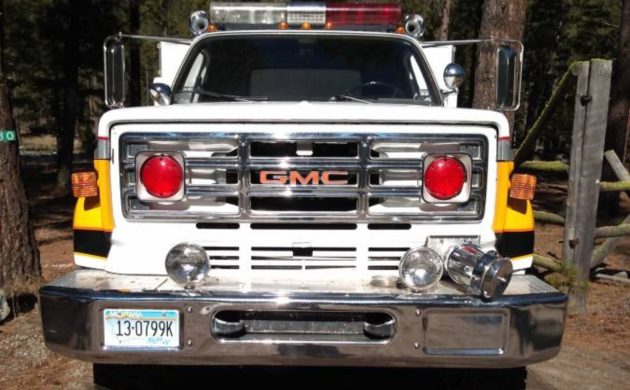
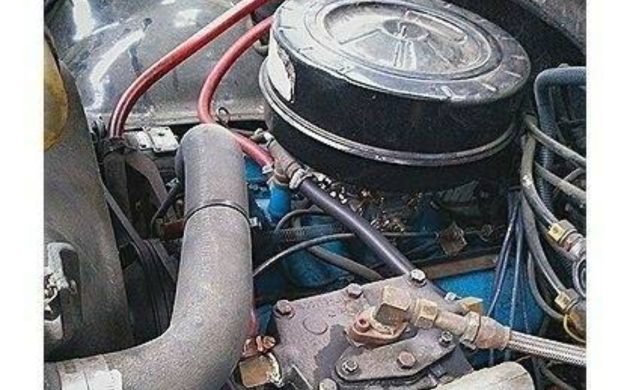
According to the seller, this GMC spent its early life with a fire department before being taken over by a wildland firefighting company, where it remains under contract today. Because of that, it has been kept in top operating condition rather than parked or neglected. Power comes from a 427 big-block gasoline V8 that has received a complete top-end rebuild and is said to run like new. That engine is paired with an Allison automatic transmission, which the seller notes works perfectly and makes the truck surprisingly easy to operate for its size.
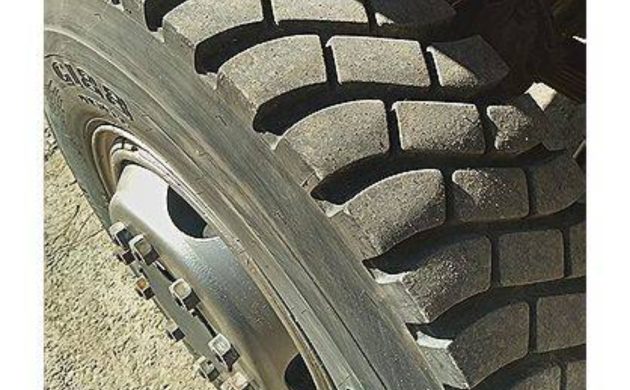
This is a true four-wheel-drive truck, and the drivetrain is set up for work rather than highway cruising. With gearing designed for pulling water and climbing hills, the truck tops out around 55 mph without being pushed. That trade-off makes sense for its intended role, especially considering the stated gross vehicle weight of 27,500 pounds.
Water-handling capability is where this GMC really earns its keep. The truck has been upgraded to carry approximately 700 gallons of water and features two onboard pumps. One is a driveline-driven pump capable of moving large volumes at high pressure and offering drafting capability. The second is a smaller auxiliary pump designed for mop-up work or controlled burn projects, rated at 100 psi and 60 gallons per minute. A brand-new 2-inch trash pump is also included, intended to help speed up drafting operations when setting up a water source.
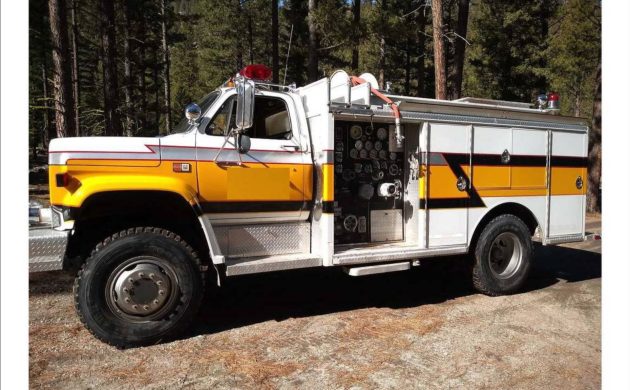
Supporting equipment includes a 5,000-watt Honda generator that was professionally installed during its fire department service. The braking system has also been addressed, with new brake shoes and two new air brake canisters on the rear. All lighting remains intact, and the seller reports original mileage of 38,000 miles.

Offered with a clean title, this GMC 7000 represents an unusual opportunity for anyone needing a capable fire suppression vehicle for a ranch, homestead, or rural community—or simply someone who appreciates serious, purpose-built equipment that’s been maintained to do a job. At $18,500, it’s not just a former fire truck—it’s one that’s still ready to answer the call.




Well, here’s another one that a person would love to have but what the devil do you do with it? Kind of like the dog that chases the car but still doesn’t know what to do with it if he caught it.
We had a few of these trucks come through our shop back in the day. Trucks were used (more like abused) by seismograph companies and always took what they were given.
You’re not likely to break any part of that powertrain, except maybe, the transmission. And it’s going to take a lot before then. The high deck 427 will handle a lot of high rpm. I’ve never seen one scatter but I’ve heard of them doing it. Actually if you got an older Chevy with a 409, you would see them turned into one helluva door stop in a hurry; some even blew the crankshaft and main webs straight out the bottom (You didn’t even need to hotrod them for that). Well, for this, I don’t think you’ll have any troubles getting to the fire…
Anyone with a ranch would do good to have this truck in their fleet to protect their assets against fire. Here in Texas I’ve heard of smokes keeping one on site. About ten years we had a major fire in the Bastrop area. Having one of these might mean the difference in your home remaining or not.
There’s a lot of farmers out west who have a fire truck, or at least, a water truck with a sizable pump. You ignite one of those million dollar combines, plus crop, and the losses add up mighty fast.
On a ride to Canada last summer, our group stopped at a very rural little Oregon town for lunch. It had a great collection of very old cars and trucks but when we noticed their fire truck was just some years newer we walked over to investigate (my wife works at a company that sells new and refurbished fire trucks and EMS rigs).
In short, their truck was restricted to very local calls as it was unsafe on runs of more than 1/2 hr run either way and very limited funds for transport/repair.
We set them up with a company that did road calls, but a rig like this one could be a manna from Heaven for those distant communities as a backup.
Looks well cared for and seems to be a good price though another question would be concerning the FD insurance requirements for vehicle age, etc.
A small town somewhere needs this rig.
A lot of these “age-out”,or maintanence costs make them
financially unwise to keep in service.
Cool rig,but as said – what do you do with it?
Insurance regs take a lot of useful equipment out of service which makes it hard on small town first responders and new equipment costs are just ridiculous.
🎯 Nevada 👍🤝
This would be a great rig for someone with a large ranch and a long response time from the local FD. Controlled burns are a big thing for ranchers around here, it would be handy to have just in case something weird happened.
It would be interesting to know how many hours are on it, rather than miles. Most of these don’t drive far, but can have 10’s of thousands of hours running, so there is usually an hour meter.
If everything works as indicated it might be worth an offer, but if ANYTHING in the water transfer system is amiss, these are really tough to work on and “fire” parts are stupid high cost. They should be listing what the PTO will put out as that is what you are paying for. If it isn’t in good condition, the price is WAAAY too high, and I’m suspicious why they need an additional water pump .
Id especially look at the draft suction system as I don’t understand why you would also carry an additional trash pump it it were working perfectly. And 100psi and 60 GPM means nothing without the draft parameters. If it is sucking out of the truck, that is only 11 minutes of water.
No hoses, lots of additional cost. No draft hoses for the PTO pump is really going to cost you.
Working fire trucks are great to have for emergency service, but they require consistent operation ( daily or weekly) to make sure they 100% will be up when the time comes. Two additional motors besides the main engine is a liability. Plus firetrucks usually require someone that has some experience to make them function too.
Oh, and some serious care for winter storage to assure all the pipes are dry.
Buying a fire truck is a crap shoot unless you have someone knowledgeable to check out all the systems, and this one needing aux pumps raises questions..
Great info, Jay. Thx-
Being only a novice volunteer fireman, the only reason for a second PTO driven pump is with a spray bar under the front bumper (which I do NOT see) so that you can fight a large grass fire by driving down the fire line. Our local volunteer fire dept had them on our smaller 4X4 brush trucks.
The “Bomberos”, in Mexico, could put this to good use!
I think we called this the Top Kick (class7, 26K, used ’73/89 ‘square body’s’ cab) as/per military (not lingo but) nickname. Now…
some here said “like to see the ‘64 IH R230 wrecker (yesterday’s BF?) made into p/u.” I have seen several of these done that way (‘hidden 5th wheel” in the bed). I’d doit w/a 12v & allison. That would bea money maker (I can see it w/a car hauler, hay box, reefer?)…
Our fire trucks are bought by the local Fuel company they put tanks on the back and use them daily
The way the winter has been, [or hasn’t been] in eastern Montana, this might be a good investment! It’s only January and we’re already getting grass fire warnings! With the lack of moisture and continual winds I might just buy this myself just to protect my property!