
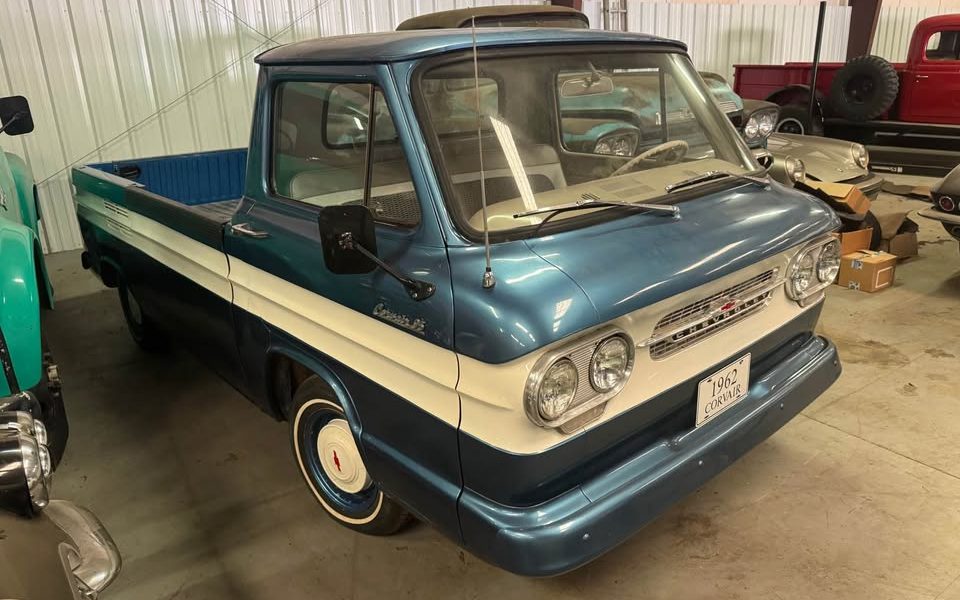
Whomever he is, the seller of this 1962 Chevy Corvair Rampside is doing something right: He “purchased [the] truck 2 years ago and [it] has been sitting in [his] warehouse.” One, he has a warehouse. Two, he can buy this neat Rampside and just forget about it for two years. Not a bad gig. But now it’s time to sell, and although he isn’t sure if it runs or not, it comes with an engine that also may or may not run. Still, solid Rampsides are uncommon; only 4,102 (some say 4,471, but I think that number includes the “Loadside”) were built in 1962, and their values are proving that out. Barn Finds reader T.J. spotted the little Corvair on Marketplace in Piedmont, South Carolina, with an asking price of $15,000 or best offer.
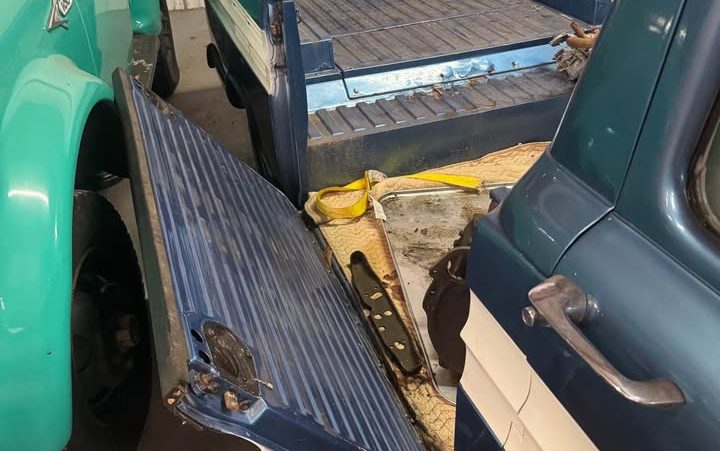
The Rampside’s party trick was this: the passenger side “ramp” lowered onto the curb or sidewalk for easy loading into its low central bed. The Rampside’s liability is seen behind that low load floor; the rear of the bed had to be raised to accommodate the engine; an 80-horsepower 145-cubic-inch, air-cooled flat six. The seller doesn’t show any pictures of the engine in the truck or the spare, so you may as well go into the situation assuming it’s a non-runner, or at the very least will require a day or two in the garage to get it going.
A fun fact: Chevy built 369 “Loadside” Corvair 95 pickups in 1962; they didn’t have the ramp, which required loading from the tailgate. It’s no surprise they sold so poorly.
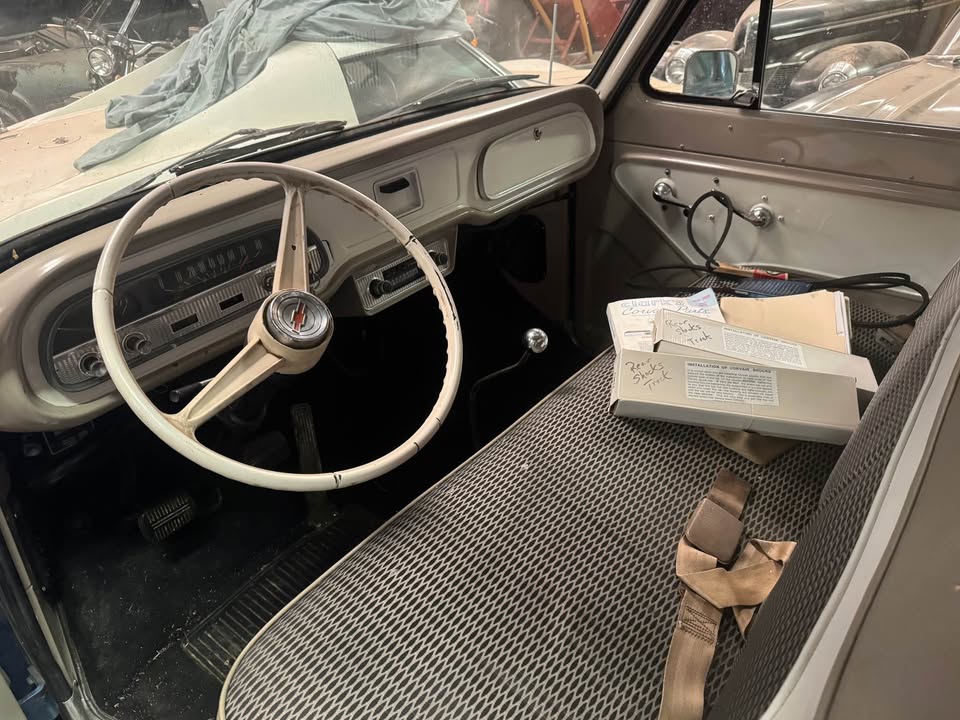
This Rampside has a manual transmission, which came in two varieties, a three-speed or a four-speed. The seller doesn’t mention which transmission this truck has, but considering that it doesn’t sound as if he’s driven it, he may not know for sure. It doesn’t matter much; the main benefit of the four-speed is that it has a synchronized first gear, which is nice in low-speed traffic; additionally, the gear spacing is obviously a little better, which is good when you have 80 horsepower pushing a fairly blunt object. Gearing on Corvair 95s (named for their wheelbase, by the way) was 3.89:1, a fairly steep ratio to get things going.
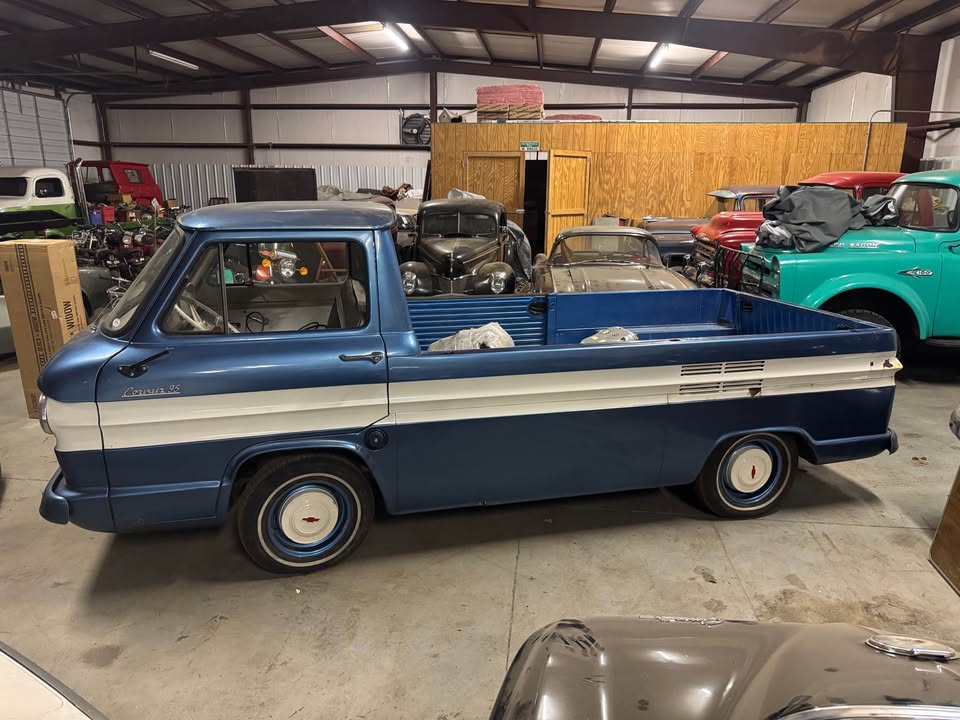
If you decide to check this Rampside out, it may be worth bringing a magnet and inspecting the rocker panels, dog legs, front valence, etc., as these are common rust points on 95s. I’ve never worked on a Rampside myself, but I’ve read that the front suspension is borrowed from concurrent Chevy station wagons or, on later FCs, full-size pickups.
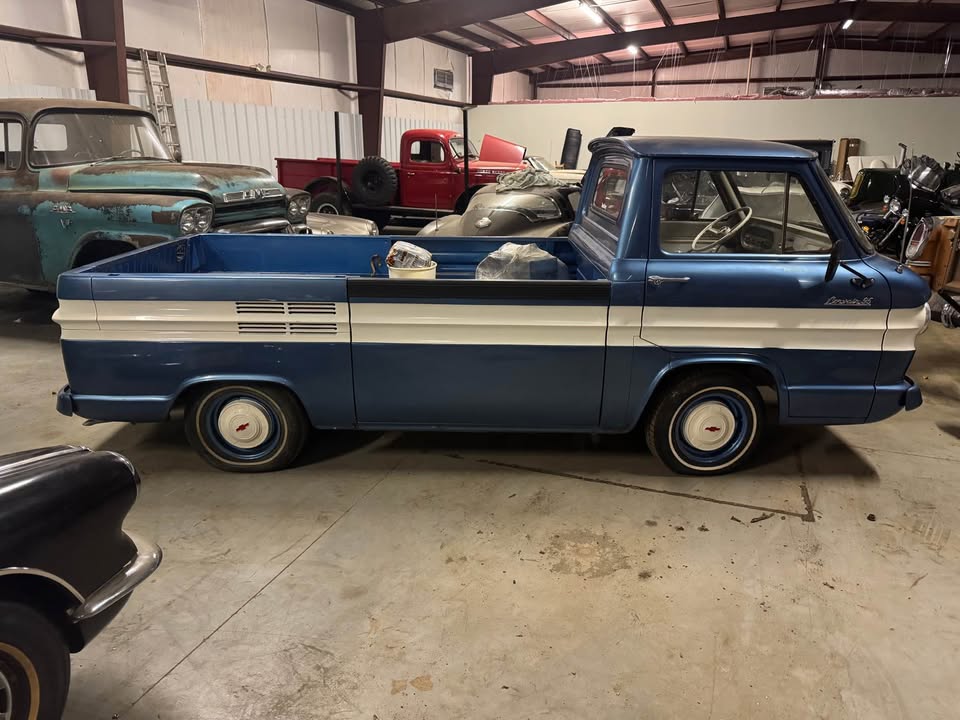
The color on this one is a pretty blue-and-white two-tone combination; if it’s original, it might be Nassau Blue and Ermine White. The bumpers wouldn’t have been originally painted the lower body color; according to marketing materials, they were either chrome or white, but they don’t look bad and few will notice or care. If you’re interested in a Rampside, don’t let its limited production scare you; Corvair parts suppliers are well-stocked for most of the mechanical parts you’ll need, and most of them are shared with other Corvairs and Corvair 95s. Is this one priced right? I’d be happier about it if it were a runner, but that’s something you can discuss with the owner if you’re an interested buyer.



Aaron, when I saw what other vehicles this guy has in his warehouse, I thought maybe I could be his new best buddy.
Mine too, especially if he lets us store our cars there!
I suspect many of us Barn Finders, if we had a warehouse like this, we would have it full. Plus probably one or two more vehicles sitting outside.
My only experience with these is via a much smaller version. I assumed Tonka, but when I just looked on ebay, it was a Structo. It was green and white and performed very well under kid-duty; even the ramp didn’t break.
Interesting vehicle. Thanks Aaron.
This is a great looking Rampside Corvair. The two tone blue and white really works and highlights its lines. If its all sheetmetal and no bondo that would be absolutely terrific, and whatever it takes to get it running again I think would be well worth it.
I think all of us here who have commented would be best buddies with someone who has a barn full of old classics like this, although I like Aarons spin on things and they let you park your cars there!! Another great find by T.J. and I enjoyed your write up too Aaron, thanks!!!
These were never a super popular vehicle out west. It seems that if someone justified owning a pickup then he went the whole route and got a conventional half-ton. Just the same these were visible, more the Green Briar van but I do remember a local appliance dealer who used one of these extensively.
Closer to home, a local teacher had a Corvair wagon, almost the exact same shade of blue as this truck. I went to school with a guy who had a ’60 car that marked its spot everywhere he parked it. In ’69, a retired teacher bought a Corsa convertible, complete with the fully-blown 185 hp engine.
She never kept it long; I think her fully-grown son talked her into getting something more suitable for her–I think a Mazda 808 or some other Tokyo Trash Can.
Yes, Corvairs weren’t very popular out west. I remember when the actor/hot-rodder, Norm Grabowski, took a Corvair engine and adapted it to an Indian Shaft-drive motorcyle, calling it the “Six-Pack,” and then a few years later, adding a sidecar to the ensemble.
I was enthralled…
Here’s an updated pic of the Sidecar version. I preferred the original one myself. I would normally choose the Six-Pack over the truck, but I really wouldn’t turn either of them down…
“Tokyo Trash Can”. Funny. geo, you might have enjoyed the license plate bracket I had on my now long gone ’76 CB-750; “MADE FROM JAP BEER CANS”.
Asahi beer was actually pretty good. Not as hearty as good ol’ Bud but it still went through you the same old way. But I’m not sure if the aluminum the cans were made of was tough enough for those of us who used our vehicles to the max…
The usefulness of the loadside was what Chevy called the ‘deep-well cargo area.’ Not having a full-level floor was also a bit of a limitation for the rampside. RPO 134 might be one of the rarest options Chevy ever offered. It consisted of three 3/4 inch plywood panels each with a steel frame used to cover the well.
The truck looks pretty good but shiny paint can hide a lot of flaws. There are issues around the driver side’s rear. Except for the body-painted bumpers the paint scheme looks factory right down to the rims and hub caps.
It appears the drivetrain may be in the bed.
VW had already solved this with their drop sides and flat load floor with a large storage locker underneath. Jobsite materials go on the bed, tools in the “trunk”.
15K is the price range for a pristine Rampy. This one has areas of missing paint, a very questionable looking spot on the lower driver’s door that might be bubbling paint, and completely unknown mechanicals.
Not sure what you mean by “out west”, but Corvairs were very popular in Colorado, I have hundreds of Corvairs from the area, and dozens of Corvair forward controls, so many survived, because there were so many sold here.
You’re right, Duaney. When in high school in CO I drove a ’63 Monza. After that I had a ’65 Corsa (140 hp). Wish I had either one of them today, especially the Corsa. Corvairs were indeed popular in Colorado.
In this month’s Hemmings they stated that these have the same payload rating as a period 3/4 ton. It was customary to have two 20-series for some number of years.
I really like these. But there sure is some interesting vehicles in that warehouse. 2 different Corvettes, a ’40 Ford some older Dodge trucks and I think I spied an old Power Wagon.
What, not a single comment on how the vans and pickups were heated. I was in the automotive field from 1966 at Jolly’s Frame and Wheel Alignment in Columbia SC through 1977 moved Camden SC opened my own shop through 2019 then retired, saw many Corvairs cars, trucks & vans. Always wanted one, car.
Two heater options, hot air from the engine, or a gas fired heater.
I’ll take the red Power Wagon in the background, thank you very much!