
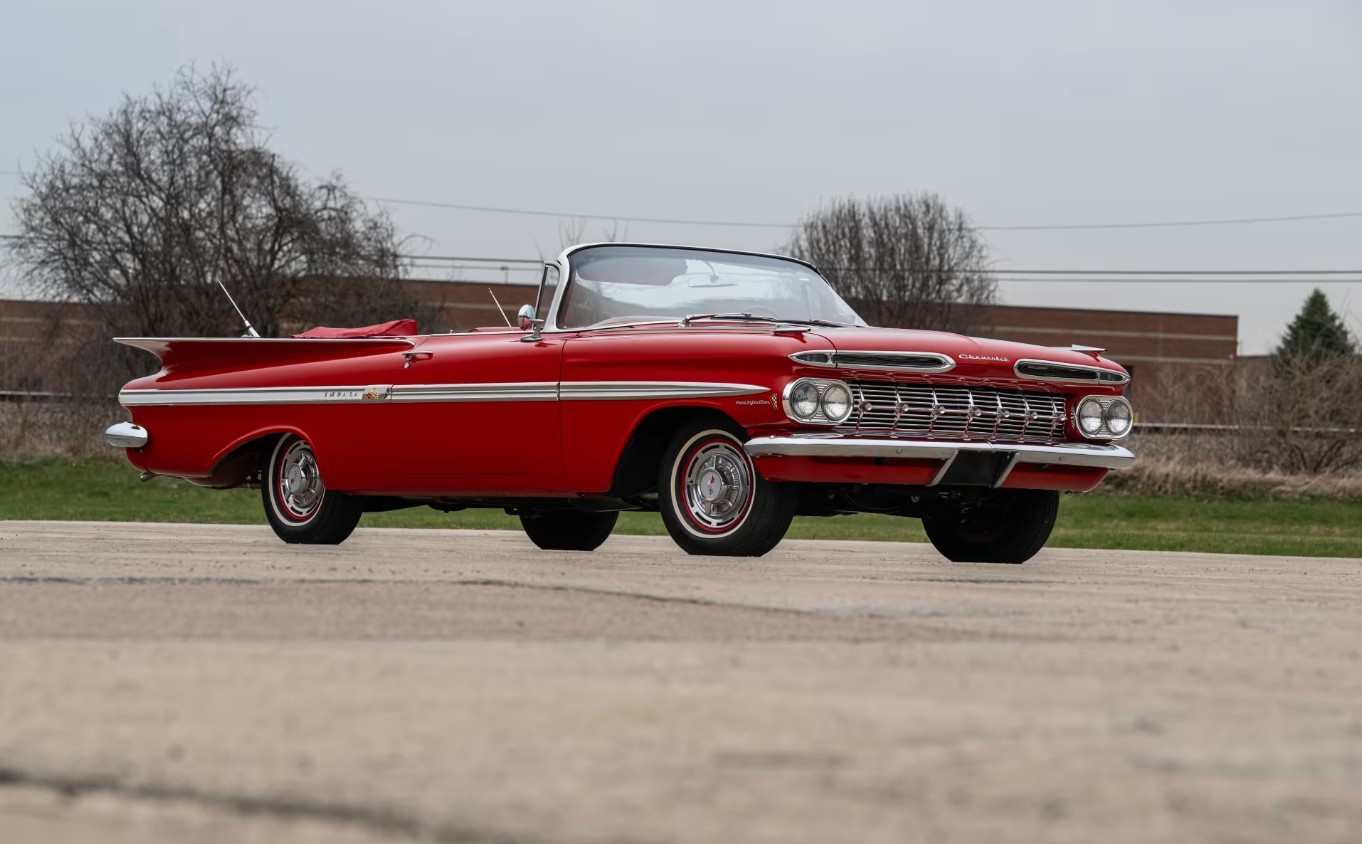
Does the perfect classic actually exist? Is there a car with a combination of looks, condition, rarity, and specifications that places it seemingly beyond criticism? Those are the questions posed by this 1959 Chevrolet Impala Convertible. Not only does it present exquisitely following a meticulous restoration, but it is believed that its mechanical specifications make it extraordinarily rare. I must say a big thank you to Barn Finder Mitchell G. for spotting the Impala that is listed here at Mecum Auctions. It is set to cross the block in Indianapolis, Indiana, on Friday, May 16th.
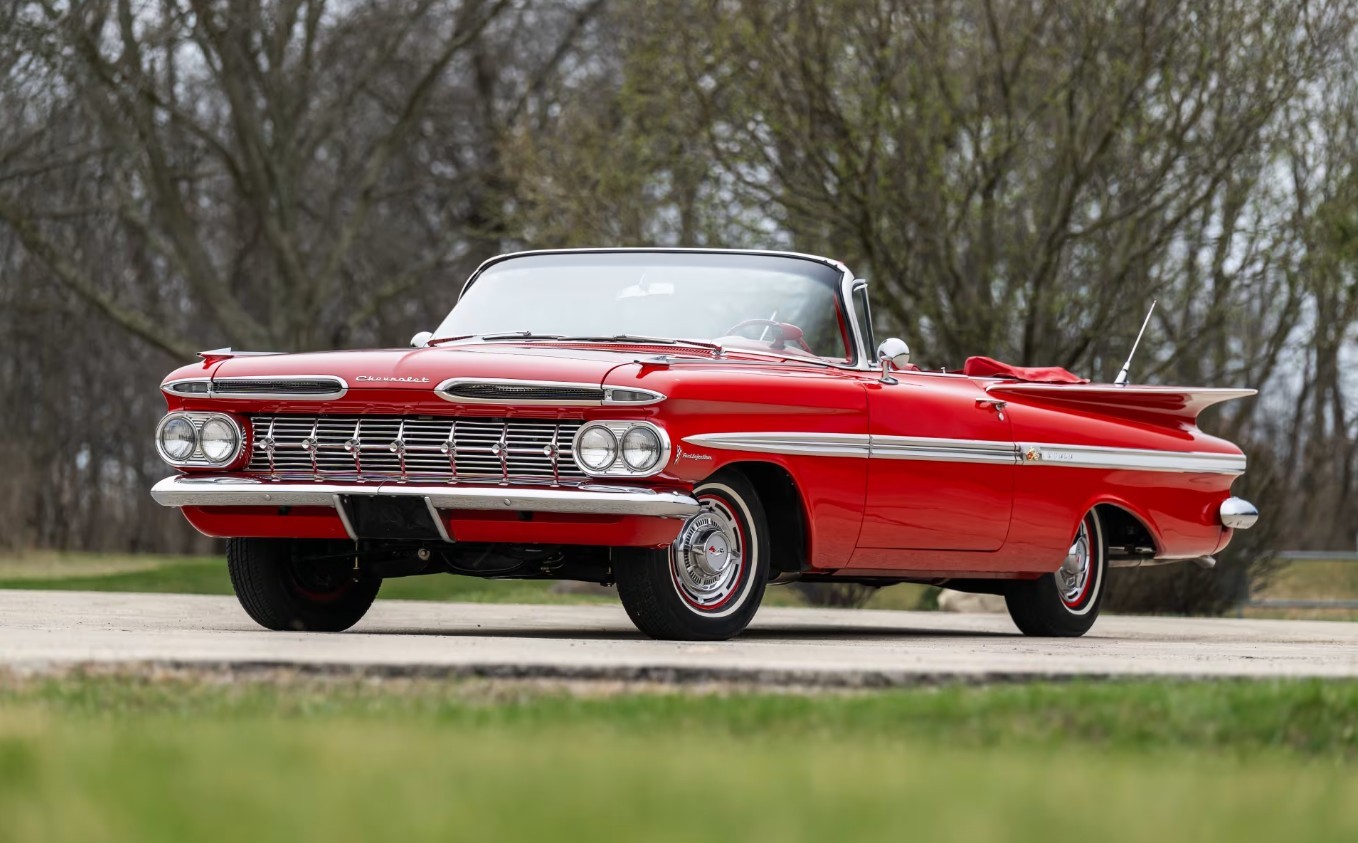
Chevrolet introduced its Second Generation Impala in 1959, with the latest model remaining on sale for two years. The fin craze was at the literal height of its power in 1959, with those found on the Cadillac and various Chrysler models reaching an extreme. Chevrolet blessed the Impala with fins, but chose to follow a more horizontal path to create a distinctive look resembling arched eyebrows. The seller states that this classic underwent a meticulous restoration in 2025 and has only clocked twenty-five miles since the work ended. Therefore, the fact that it presents so beautifully is unsurprising. The Roman Red paint shines like a mirror, covering laser-straight panels. The tight and consistent gaps demonstrate an eye for fine details and are probably better than they were when this car rolled off the line. There is no evidence or mention of rust, and the bright trim and glass look perfect.
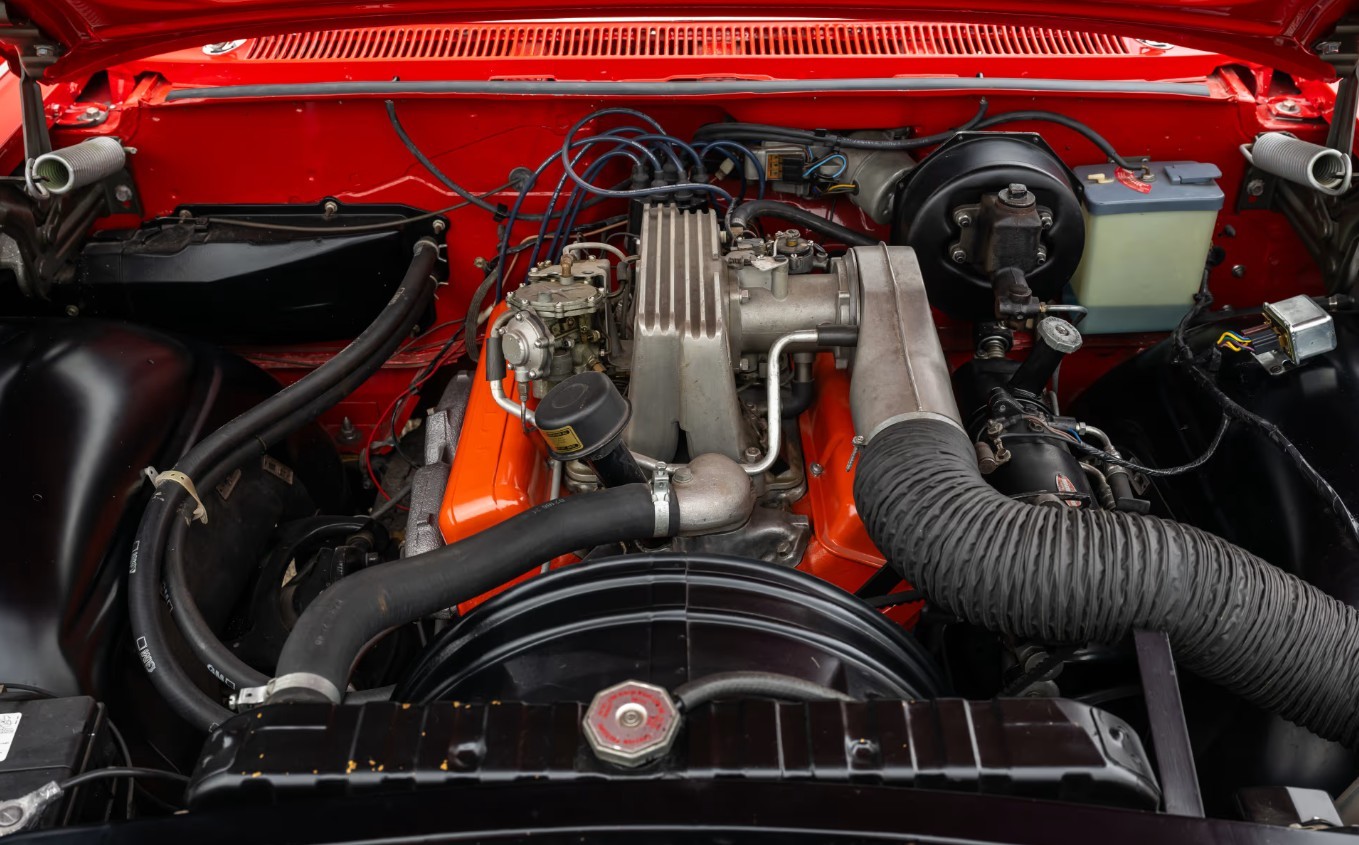
Lifting the hood reveals what makes this Impala so special. The first owner equipped this classic with a 283ci Fuelie V8, a four-speed manual transmission, and power assistance for the steering and brakes. The V8 produces 290hp and 290 ft/lbs of torque, making this amongst the most potent vehicles to wear the Impala badge in 1959. That brings us to a point to ponder. There are no definitive figures on production totals for the Impala Convertible featuring the Fuelie engine, although Rochester stated that it produced thirty-seven engines that were destined for Chevrolet’s full-size models. Several sources agree that only twenty-six of those engines ever found their way into cars, but from there, the trail goes cold. I performed what I admit was a brief search when writing this article, discovering that claims made by various sources that this is a 1-of-2 classic might be inaccurate. I located another Roman Red ’59 Impala Convertible featuring the same Fuelie/4-speed mechanical combination that is currently for sale via a dealer in Chatsworth, California. I also spotted a listing for a Frost Blue example that changed hands in 2011, demonstrating that there were at least three of these cars built. It would require further investigation, but what is undeniable is that these cars are extremely rare. The seller supplies no information regarding the mechanical health, but with only twenty-five miles covered since its restoration, the news should be positive.
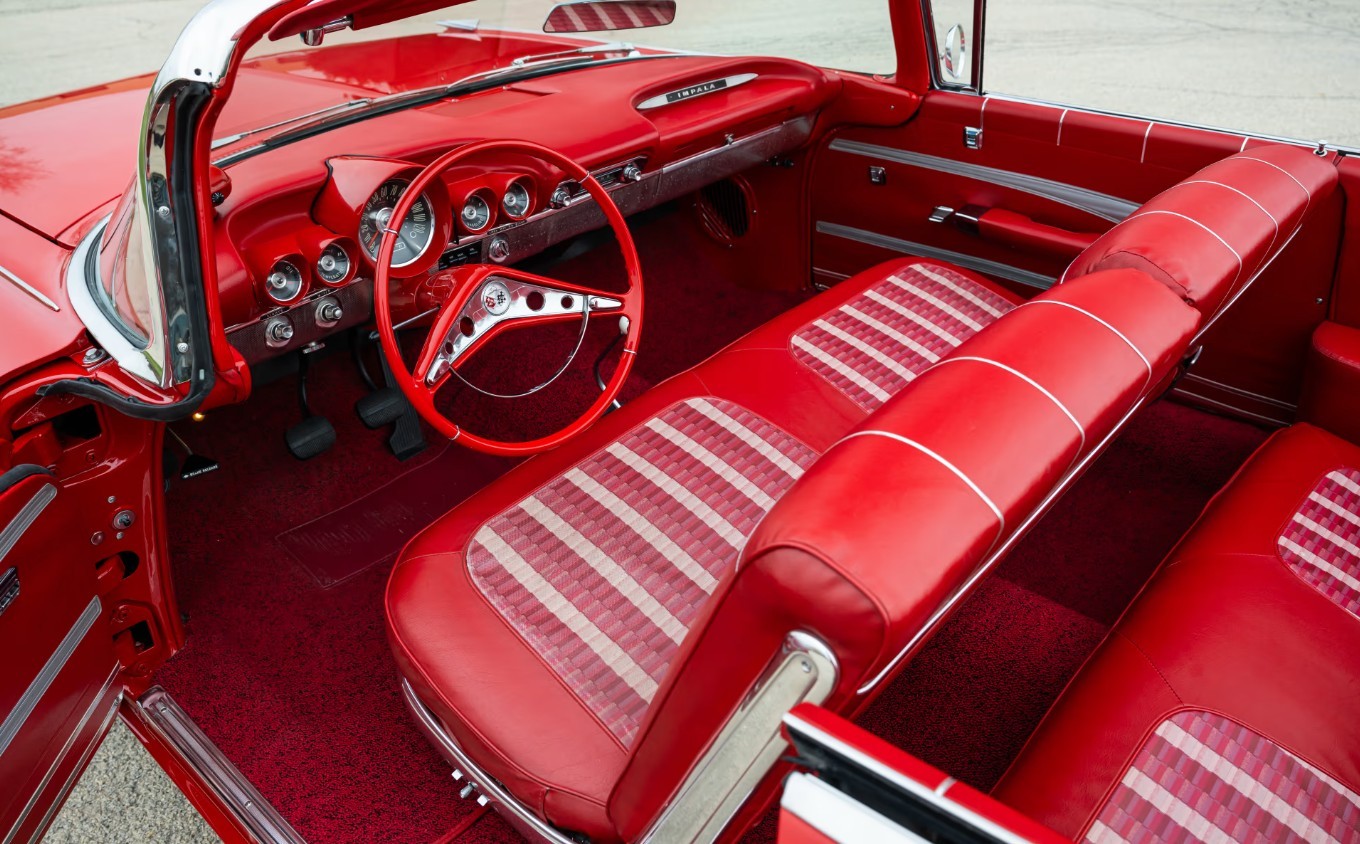
I have long admired American classics from this era because manufacturers were bold and daring with interior trim choices. Some combinations didn’t work particularly well, but the Tri-Tone cloth and vinyl in this Impala looks stunning. As with the exterior, the recent restoration has left it looking beautiful. A close inspection reveals minor scratches on some bright trim pieces, but that is the only criticism that I can level. It doesn’t simply look good, because it features enough factory options to satisfy most buyers. This Impala scores power windows, a power front seat, a power top, an Autronic eye, and a Wonderbar radio.
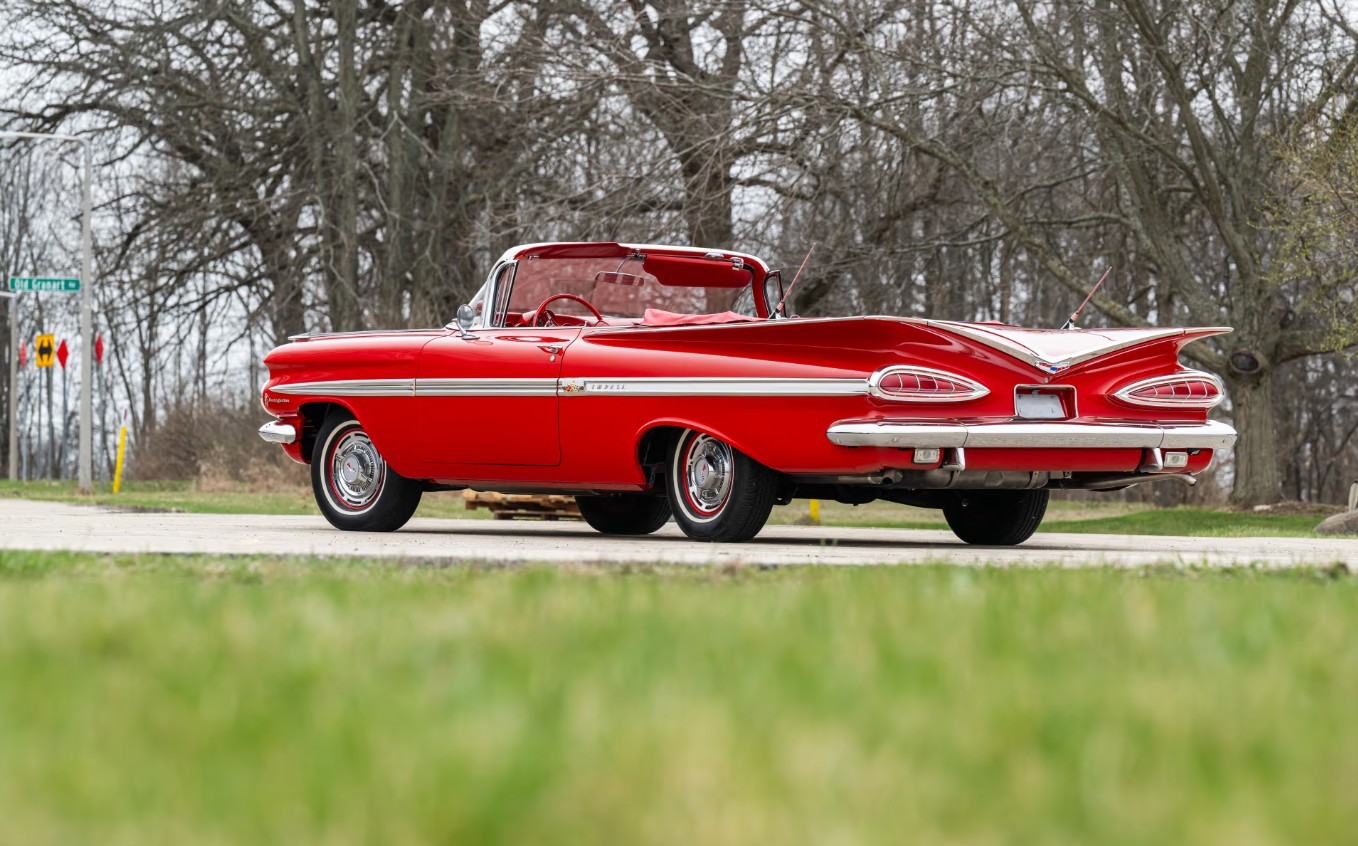
This 1959 Chevrolet Impala Convertible is a stunning car, and the winning bidder can hit the road behind the wheel of this classic with their head held high. General Motors is usually meticulous with its recordkeeping, but there are no definite figures confirming exactly how many Convertibles were built to these specifications. Various sources suggest that only two such vehicles ever left the factory, although, as my investigations demonstrated, there were at least three of these cars produced in that model year. That brings us to the question of what the bidding might reach before the hammer falls. The Frost Blue example that I mentioned earlier achieved a price of $81,900, although it is worth remembering that the auction for that vehicle was in 2011. How high will values have climbed since? I suspect that this Convertible will soar effortlessly into six-figure territory, and a price beyond $160,000 is within reach. Do you agree, or do you have a different figure in mind?




Some setup for 1959. The fuelie is a high winder, peak tq@4400. 4sp, and factory 3.55 rearend will help keep it on boil. Incredible Chevrolet 🏁
College friend came back from Christmas with a black over red convertible with the 348 tri-power engine and the 4 speed floor shift. Just listening to that engine wind up was worth the ride. The wild design was well done, and as Adam said, one of the better fin cars of the era.
I remember in high school, one of the kids had a red ’59 convertible just like this, except for one detail. It was equipped with a six-cylinder and 3 on the tree, and smoked like a factory. It was definitely a beater with a heater, but restored today (it’s probably had a date with the crusher long ago) what would it be worth with its meager power train? Impalas could be had with the six back then. About this car, I’m glad they kept the factory wheel covers instead of replacing them with later rallye wheels like so many seem to do with vintage Chevys.
Terrry’s “beater with a heater” remark is Great.
I have been there a few times, Anyone else?
Also love “beater with a heater” but also had a Decade or more of beaters with no heater VWs: two Type 2s, then a bug that had been paintbrush-enhanced and a couple of Karmann Ghias. When my feet went numb it was time to stop and go inside a local store to thaw out.
Being a V8 car, it should have a “V” on the hood under the Chevrolet script.
Yes it would, or this is a CLONE or Tribute.
Not sure this particular fuelie was this loaded when it left the factory, but nice to see. It has power vent wings too; possibly the only Chevy that year built with them! Only change I would make is a set of proper coker wide whitewalls.
You’d think there would be something in the VIN to designate this as a fuelie car, but apparently there isn’t. Most likely this engine was ‘donated” from something else and restored.
I know of a black ’59 Fuelie convertible in a Michigan collection/museum. The ’59 Fuel Injection emblem on the front fenders is unique to that year and the air cleaner (not shown) is also unique to ’59.
Beautiful car. Manufactured when ‘styling’ was a thing, not just a catchphrase.
CORRECTION to my earlier post. The Michigan car is RED, not Black. So, it might be the car that is being auctioned! Sorry for the initial mistake.
The “Original” owner ordered a 6cyl engine according to the hood.
Factory 4spd cars did not have “Back up” lights.
Convertibles can with rubber floor covering not carpet.
There is no way to verify what options this American built car came with.
A car built for “Resale”.
Backup lamps were standard equipment on the 1959 17-1800 passenger series (Impala). For the other passenger series they were an option.
Only the 11-1200 passenger series (Biscayne) used rubber mats as floor coverings. Carpet was standard on all other passenger cars.
According to the Dealer “Specifications” book( The one with actual fabric and paint samples) the page titled “Impala Convertible Interior” the paragraph titled “Special” states “With carpet textured vinyl coated floor mats”.
The interior diagram to the right states “F” “Medium toned carpet-textured rubber floor mat, vinyl-coated”.
Having had access to two one owner “Survivor ” ’59 348 4spd. cats they didn’t come with back up lights, nor is there and wiring for them
My comments were based on information from
1959 Chevrolet Passenger Car Specifications
from GM Heritage dated 10-15-58
I’m not a 59 expert, so I went to a contemporaneous source:
The 1959 Chevrolet Engineering Features book, published by Chevrolet at the time the cars were built, specifically says that:
– “Floor Covering – Carpet” was included with ALL Model 1700-1800 cars (which is Impala 6-cylinder, or V8, respectively, includes Impala Convertibles). There is no separate listing for Convertibles. There are notably several OTHER items that do have specific references for “17-1837” (which is Convertibles), such as presence of standard under-dash courtesy lamps, and absence of roof-mounted coat hooks.
And it states that:
– “Twin back-up lights” were included on ALL “Model 1700-1800” cars. There is no exception stated for 4-speed cars. And the description of the 4-speed option itself does NOT say that you lose your standard back-up lights in an Impala if you order a 4-speed.
Lastly, the Chevrolet parts book published November 1962 has a specific listing for a backup light switch for a “59 PASS. w 4-SPD”, part # 3791656.
incredible find, i could look at that engine bay for hours on end. beatiful and simple
We’re cutting hairs here which doesn’t really matter – car should come with some kind of documentation – maybe even a before picture ?
Interesting that this Chevrolet has the extremely rare option of power vent windows. That option had to be buried deep in the options list as GM usually reserved the power Vent window option for its’ higher line brands.
Autronic Eye was also rare to see on the GM entry level Chevrolet brand, ditto the Wonderbar radio.
Impressive car with impressive options for 1959.
I really envy the ability to add options singularly vs the massive packaged options that are only available today. Back then, one could order tinted glass, a radio, backup lights, door edge guards plus windshield washers and be done.
It must have been fun to scroll through a long list of options to check off when ordering your car.
the back-up lights can still be bought as a complete kit–looked it up yesterday, but being an old fart, forgot who makes it
the back-up lights can still be bought as a complete kit–looked it up yesterday, but being an old fart, forgot who makes it
“348” was needed in that “barge”!