
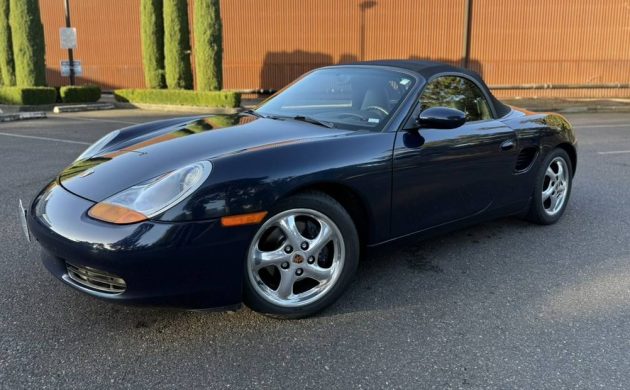
There’s a growing appreciation for the first-generation Porsche Boxster as one of the best deals out there for an entry-level sports car. I’m not sure if the Boxster was dragged down by the initial distaste for the water-cooled 996 or if it was the manufactured hysteria over the IMS bearing failure rate, but the mid-engined sports car has been shockingly cheap for years despite being a phenomenal driver’s car. The Boxster shown here is an earlier example and it has a scant 21,000 miles on the clock. The seller notes it belonged to his father who no longer drives it and it’s listed here on craigslist for $23,000.
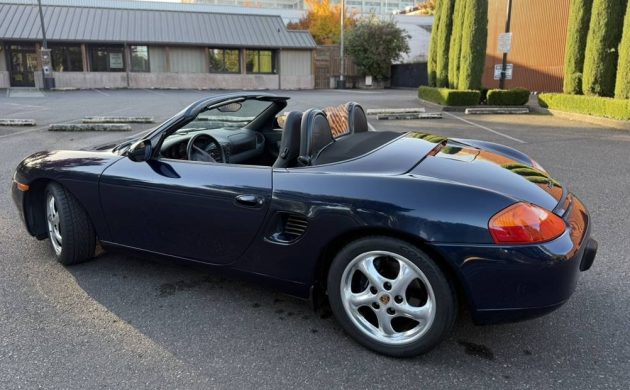
This is still such a pretty car. But it does suffer from the “entry level Porsche” syndrome, which seems to affect every model that isn’t a 911. And it’s tough, because other products essentially exist to support the 911 and keep it financially viable. Still, unlike the 924 and the 944, the Boxster got his with the dreaded IMS failure syndrome that also affects the 996-chassis cars. What’s incredible is looking back through message board posts from the early and middle 2000s and seeing how many owners didn’t know or didn’t care about the IMS and were simply enjoying their cars. The fear mongering that has been drummed up since that time is significant.
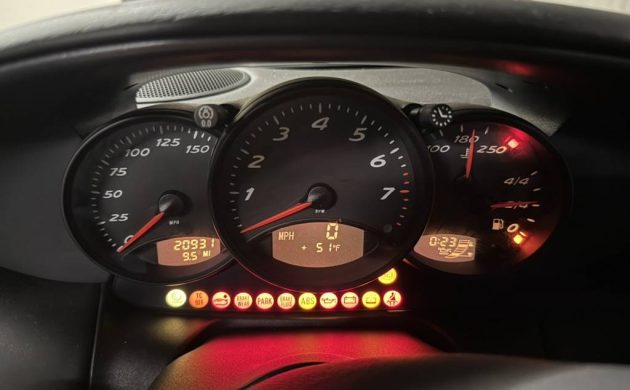
And while I understand the IMS can be a real paint point, there’s no denying that a certain group of shops and service providers have made a very healthy living telling owners of these cars that it’s ticking time bomb. The seller of this Boxster makes no mention of his father proactively replacing the IMS but does reference a thick stack of records. Given the mileage is so low, I’m curious what work has been done despite conceivably not needing much of anything with just 21K on the clock. Even the soft top was redone, I’m guessing just to make the car even more cosmetically perfect, and the seller notes the factory hardtop is included and was never used.
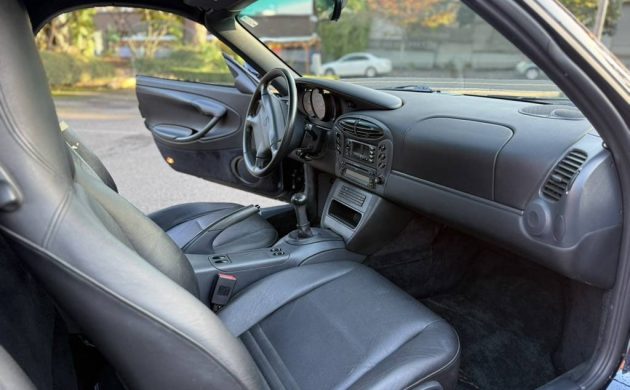
The leather looks outstanding, as do the carpets and dash. There’s little reason to doubt the mileage given the condition on display here, and the seller notes it’s kept secure and dry in underground parking. The 1997 Boxster is powered by a 2.5-liter flat-six engine producing 201 horsepower and 181 lb.-ft. of torque. It’s a terrific car to drive hard with no fear of getting in too much trouble with law enforcement, and if you can past the IMS fears, annual upkeep is quite reasonable for a mid-engined sports car. While there are legions of cheaper examples out there, this isn’t much to pay for what is likely one of the best first-generation Boxsters left. Thanks to Barn Finds reader Curvette for the tip.



These cars are a blast to drive. You can do almost anything with them and survive. It needs the upgraded IMS bearing if it doesn’t already have it. At 21K you almost have a new car.
The low miles make me wonder how Dad used this car. If he babied it, then that is definitely a concern for the IMS. I know it’s a gearhead cliche, but these engines need to be flogged hard. Gentle use is death for the IMS bearing.
That hardtop alone, is worth over $3,000. As far as the IMS, I’ve got 107,000 miles on a 2001 “s”, with no problems. It has something to do with a single, or double row IMS bearing. Engine numbers aren’t reliable to ID THE BEARING. You have to drop the engine, and look at the mounting flange.
I have a 98 Boxster with 140,000 miles and the original IMS bearing. 97 to 99 have a 2-row bearing and 2-3% failure rate. 2000 to 2007 have a single-row bearing and 8-10% failure rate. Supposedly higher failures with infrequent use. This low-mileage Boxster is so nice, the $2000 to $4000 IMS replacement cost would be good insurance and peace of mind.
I spent some time in one of these. I loved driving it with the top down. But with the top up, not so much. I found the engine noise a distraction to me. Friends have said to me, NOT YOU!!??. Mr. Love to hear mechanical noises guy! But, I found it distasteful enough for me to not even consider one of these. It may have been a certain frequency that bothered me. But it was just something that I could get past.
I had a ’99. IMS failed at 98k miles. It was my wife’s car, really, but she drove it spiritedly. So did I when I had the chance. I wouldn’t call IMS bearing failure concern “manufactured hysteria,” I’d call F’ing expensive. I paid $18k for a new engine and clutch, installed, on a car that was probably worth $9k. No way I’d ever own one again that didn’t have that issue remedied.
I am interested in this car but I cannot find any contact information, just a phone number of the shop that worked on it. Can anyone help? I am going to keep reading the article and maybe I just overlooked the contact information
John, hit Reply and then hit Show Contact Info.
One of my brothers was an automotive writer for a weekly auto magazine back in the 90s/2000s and he visited Porsches US HQ and there were stacks of crates with new engines piled up because of the IMS problem.
A friend of mine bought a new 2004 Porsche and in 2006 Porsche spent $20,000 under warranty replacing the engine. So IMHO, if you buy a Porsche built between 1997- 2008, have the IMS bearing fix installed if it hasn’t been done already. That is except the factory turbo’s which don’t have the IMS bearing
I also had a IMS failure (double row) on my 00 S (regular and spirited use – around 100k miles). Luckily I caught it by fluke. Went in for a clutch job. Decided as preventative to do the ceramic bearing. One row of my double had failed. Lots of play. I was lucky.
Otherwise though, these are great cars. Very undervalued compared to other Porsches.