
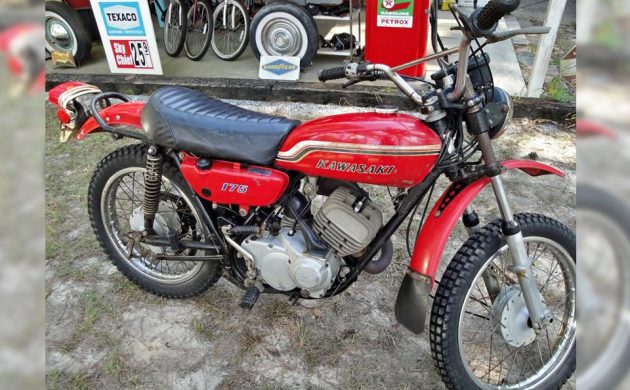
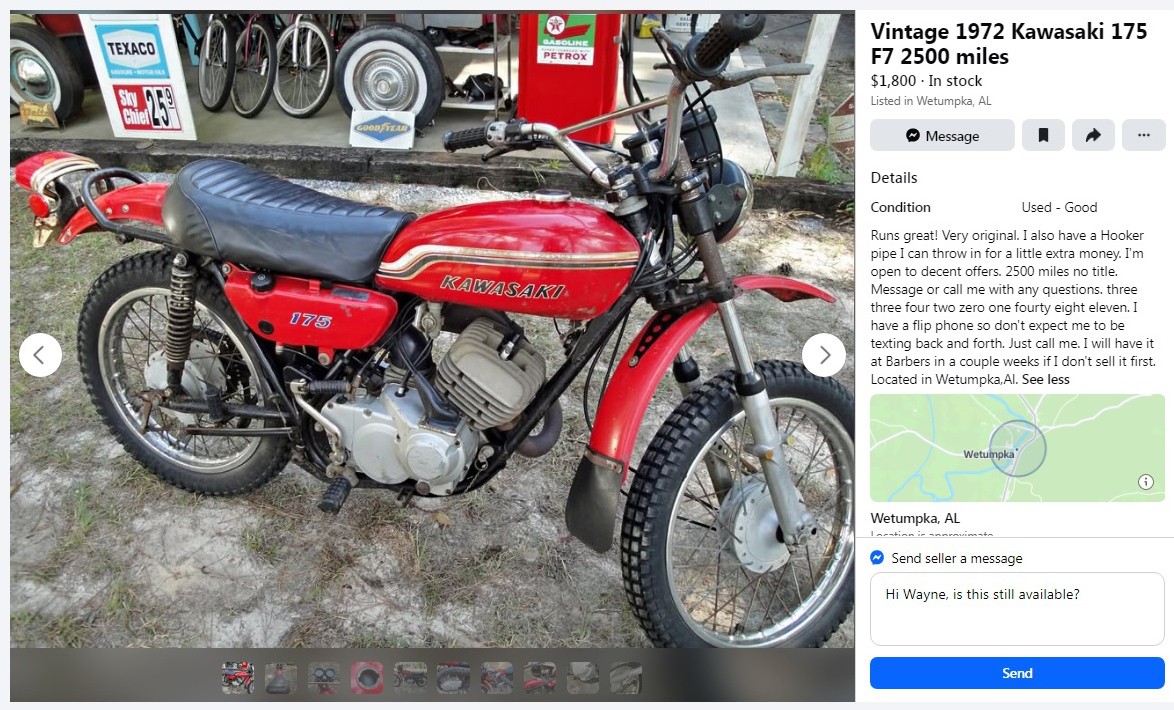
“From freeway to freedom” is how a Kawasaki brochure describes the lifestyle of owning a 1972 Kawasaki F7 175. I’d stick with back roads as much as possible, but maybe some short stints on a non-rush-hour-clogged freeway on your way to a gravel road somewhere would be ok. This low-mile survivor is listed here on Facebook Marketplace in Wetumpka, AL, and the seller is asking $1,800. Here is the original listing, and thanks to PRA4SNW for the tip!
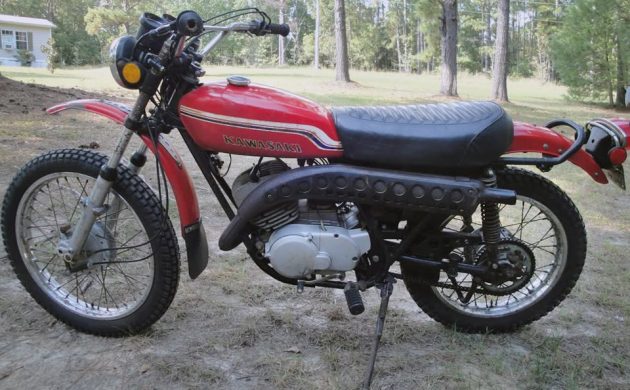
Made from 1971 through 1975, Kawasaki’s F7 series of 175 enduro bikes was a nice compromise between a smaller, starter motorcycle and one with so much power that it may be intimidating for some riders. Myself included. I grew up with a late 60s Yamaha street twin that my brother and I modified a bit with a bigger rear sprocket and knobby tire so we could use it on trails behind our house. It wasn’t ideal, but it was small enough not to be scary to ride.
Then in the mid-80s, my brother got a Honda XL600R off-road bike, and that one was scary to ride. Somewhere between a 175 and a 250 is about the perfect-sized off-road bike for me. There isn’t much information out there on the F7 175 Kawasaki, but we do know they can hit 75 mph, and that’s fast on two wheels, no matter what size engine is under you.
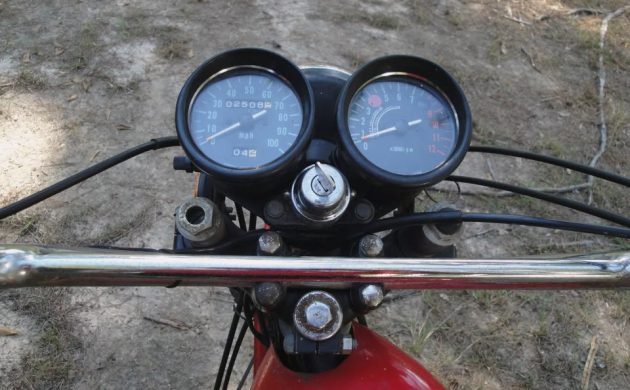
A Nippon Seiki 100-mph speedometer and a tach, that’s nice to see. This bike has just a tick over 2,500 miles, very low for a 53-year-old motorcycle. A big feature of some Kawasaki on/off-road bikes of this era was something called Hatta Forks, adjustable front forks that can be changed depending on the road or trail conditions.
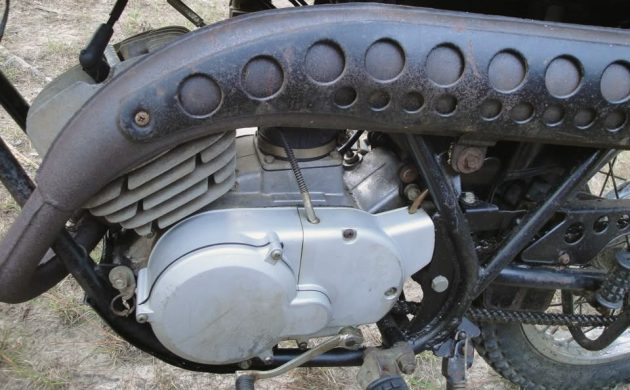
Sitting in that double-cradle frame is Kawasaki’s 174-cc two-stroke, oil-injected, rotary valve single-cylinder with just under 22 horsepower and just over 15 lb-ft of torque. It’s sent to the rear wheel via a five-speed manual transmission, and the seller says it runs great. There is no title, but they’re open to offers on this good-looking F7 175. Have any of you heard of this model?




Heard of the Kwai 175 enduro but never really knew anyone with one. It’s a normal UJMC of the time that didn’t do anything exceptional but did most everything well. Nobody really noticed them then or when they were gone, but as we got older they suddenly took on a special place-because they hadn’t before and we missed out.
Excellent work in stoking the WayBack machine memory, Scotty.
That’s Kawi, not Kiwi or anything Siri enjoys correcting erroneously..
Well, getting better. More of a full size bike that could do 55, so as not to impede traffic flow, but it was really just to get to the trails, and the fun began, for the most part. The 70s were all about bikes like this. Modern regulations hadn’t kicked in yet, kids were a lot tougher then, and any dirt lot was fair game. These were the bikes that replaced the CT70s when we got our licenses, and unbelievably, took whatever was dished out.Dual sport bikes, took an unpleasant, for me, turn and this liquid cooling crap is nothing but a hassle to make dealers rich( er). These simple air cooled, kick start, machines are what was intended. I see the turn signals have gone missing, the 1st to go in an upset. Sure is evident people are cleaning out the sheds.
Kawasaki was heavily invested in rotary valve engines at the time, but apparently spent few resources on frame geometry, or suspension technology. They eventually gave up on the rotary valve experiment, as did all the other manufacturers, Japanese or otherwise. Four or five years later they even made good progress on that handling business!
These are really cool bikes unfortunately parts are mainly made of unobtanium…the rarity means few parts. I almost bought one a couple of years back but researching replacement parts led to a lot of very little….so I bought a CT-110 instead. But I still love the early 70’s Kawi’s in any size.
Bought a new F7 in 1972 exactly like this offering. I used it for trail riding, it saw very street use. In 1975 Honda debuted their MR175 so I sold the F7 and bought a new MR.