

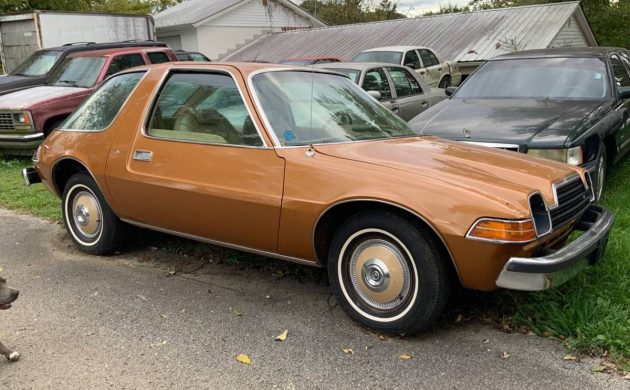
American Motors – the only independent manufacturer remaining after Studebaker closed in 1966 – occasionally took a quirky path to distinguish itself from the Big Three. The Marlin was odd, then the Gremlin came along, launched in 1970 to compete with imports. With the advent of the fuel crisis, AMC began to design a more efficient compact – an effort that would give birth to one of the company’s most famous oddities: the Pacer. Before it hit the road, though, the Pacer was forced away from its intent slightly: the original plan was to utilize GM’s Wankel engine, but when GM pulled the plug on that development program, it sent AMC scrambling back to its own six-cylinder. Meanwhile, AMC had to bolster the side-impact crashworthiness of the new car’s body in response to safety regulations, changing the styling lines. Eventually, the Pacer emerged, with 40% of its surface area devoted to glass, earning it the nickname “fish bowl”. It was as wide as a full-sized car, sitting on a wheelbase of just 100″. This example is offered here on craigslist for $6900; it’s located in Nashville, Tennessee. We owe thanks to Rocco B for the tip!
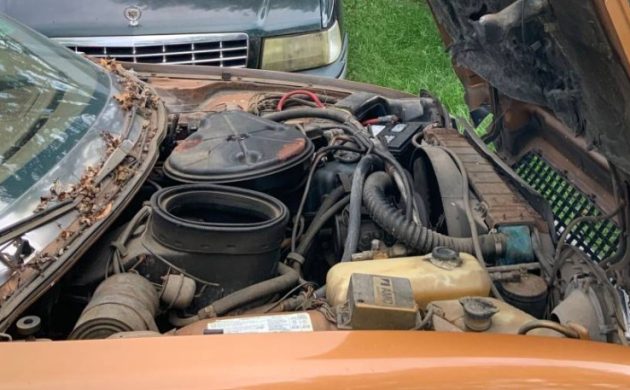
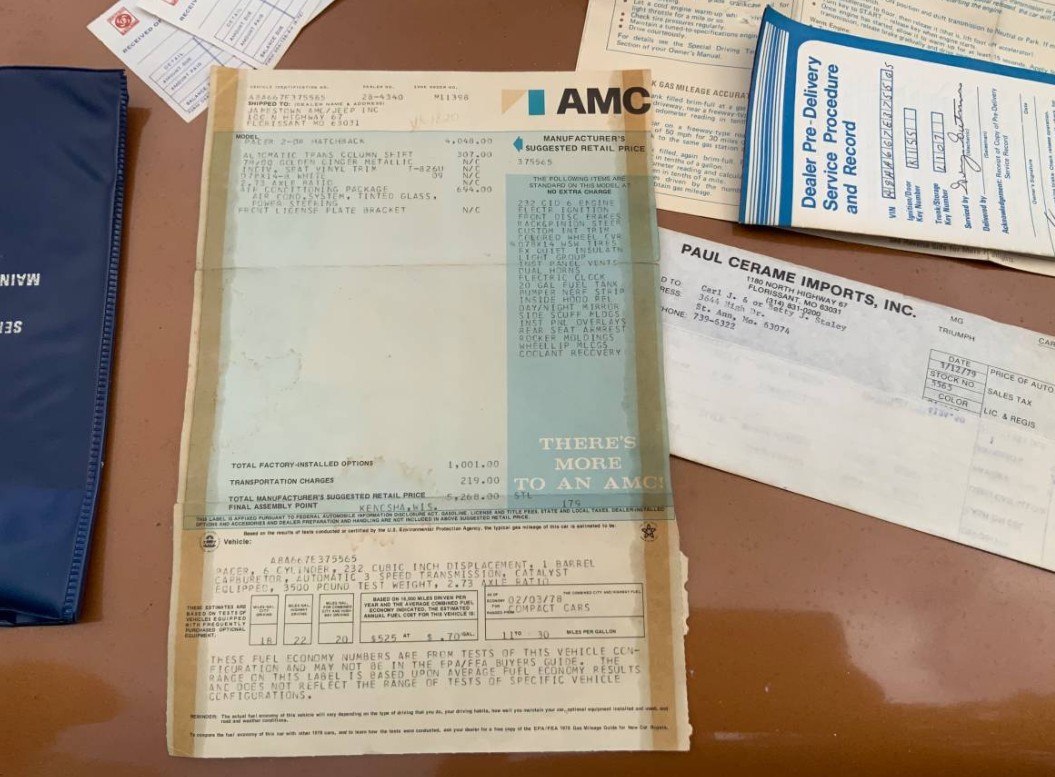
In place of the Wankel, here sits AMC’s 232 cu. in. in-line six, with its rearmost two cylinders snuggled under the cowl. Not only was it a tight fit, AMC should have put a four-cylinder in here to synch with the “economy car” theme, but it didn’t have one. The six got about 24 mpg in its 1975 iteration on the highway, not terrible for the time, but not great either. It was slow-ish, with zero to sixty coming up in more than 16 seconds. On the other hand, the car has front disc brakes, rack and pinion steering, and a unique-for-the-time approach to segregating the front suspension on a rubber-cushioned crossmember. The original buyer paid $307 in 1978 dollars to equip his car with a column-shift automatic. Unfortunately, this car has been stored outside, accumulating leaves and surface rust, but it does run and drive, riding on new tires!
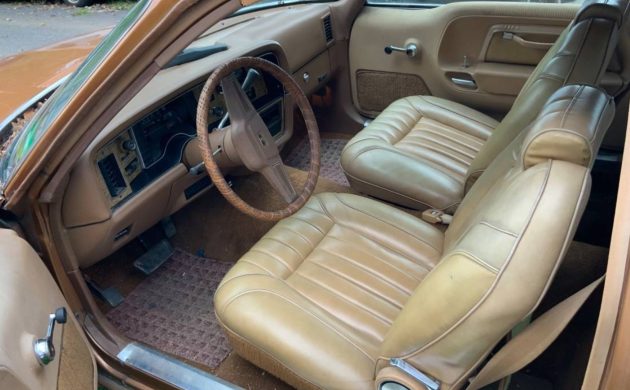
The Pacer was built from the inside out, so that four seated adults would have plenty of head-, leg-, and seat-room. Other than discolored upholstery, this interior is pretty nice! The seller notes that the headliner is in excellent condition, and photos show an uncracked dash. Occupants enjoyed easy sight lines out of all that glass, but for design reasons, the side glass did not completely retract into the doors. That’s why the Pacer’s door panels “jog” upward – to hide the still-protruding glass. The door lock buttons were relocated to the armrests. This car comes with dealer information as well as its original window sticker and manuals.
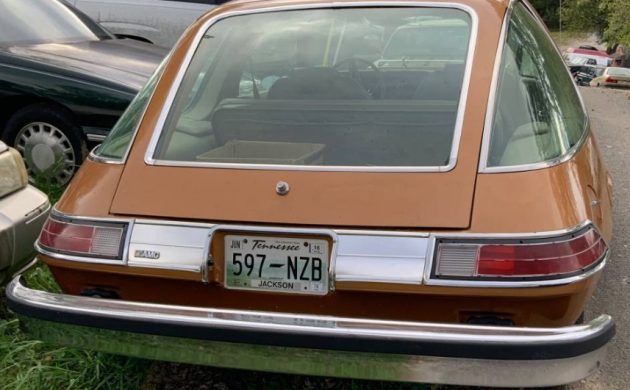
No doubt Pacers have gained some cachet in the last few years. Ten years ago, you might find a reasonable driver for $2500, but today that car will cost you three times as much. Hagerty places a value of $4300 on a “fair” car. Today’s Pacer is certainly a notch better than “fair”, with great paint, bright lenses and chrome, and a very serviceable interior. What do you think – is this car a good deal?

“American Motors – the only independent manufacturer remaining after Studebaker closed…” Just wondering, what makes them independent? Would that make General Motors or Ford or Chrysler “dependent,” or has it to do with them being amalgamations of manufacturers?
Just checking on the nomenclature of things.
Thanks Michelle.
That’s a great question. It was for sure the last remaining company that hadn’t been folded into the Big Three, which were all by then conglomerations of multiple makes. “Independent” in this context means not part of those three much larger companies. Companies in this category were also benchmarked by niche markets, so AMC occupied the compact market until Roy Abernethy decided the company should move onto the Big Three’s luxury turf, which did not turn out so well.
I have wondered why the convention has been to call, say, Studebaker, Hudson, AMC, etc “independents”, and it just seems to be “non Big Three.”
You know… This is a very good question, and Michelle, you have a very good answer. For years we’ve heard or read that term ” Independent “. It seems that you have the “Big 3”. And then there was everybody else. Its a shame really, all the good names of many good quality vehicles, that are now sadly a piece of history. I personally enjoy seeing the “Independent ” vehicles on here and like to see them preserved. They deserve it.
We called my Pacers the “peoplequarium.”
Hilarious! I love that…