
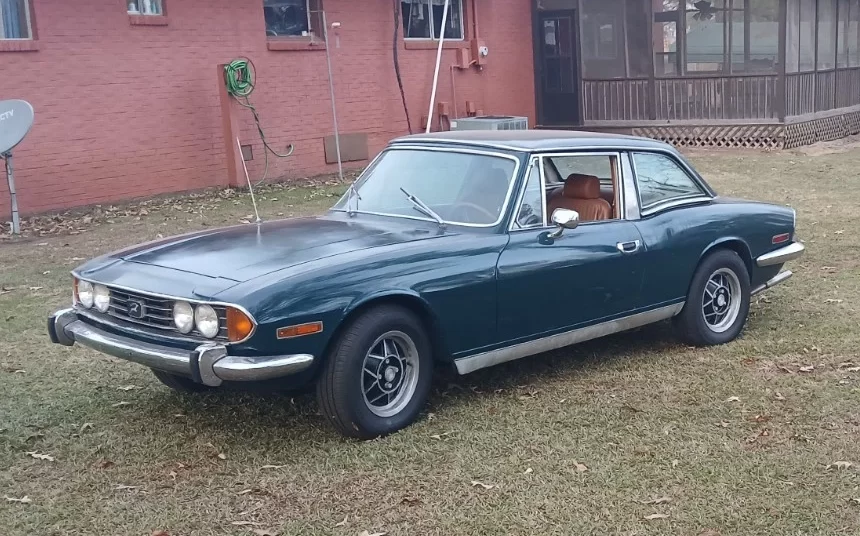
When I was in high school back in the mid-1990s, I started collecting literature on Triumphs, because I couldn’t decide if I’d own a TR2 or a TR3 someday (I would have been disappointed to know that I’ve owned neither—yet). One of the books that found its way onto my shelves was Richard Newton’s Illustrated Triumph Buyer’s Guide. Considering the Triumph Stag’s battle-scarred reputation among collectors, I expected a bloodbath on the pages on Mr. Newton’s tome; on the contrary, he gave it four-stars for collectibility, saying that it “is one of the nicest and most unique Triumphs around.” That’s a good enough place to start with this solid 1973 Stag, which comes with its own 1971 parts car (probably not a bad idea when buying one of these uncommon Triumphs). It’s for sale here on eBay in Fort Valley, Georgia, and the current high bid is a mere $2,027, which has unsurprisingly not met the reserve.
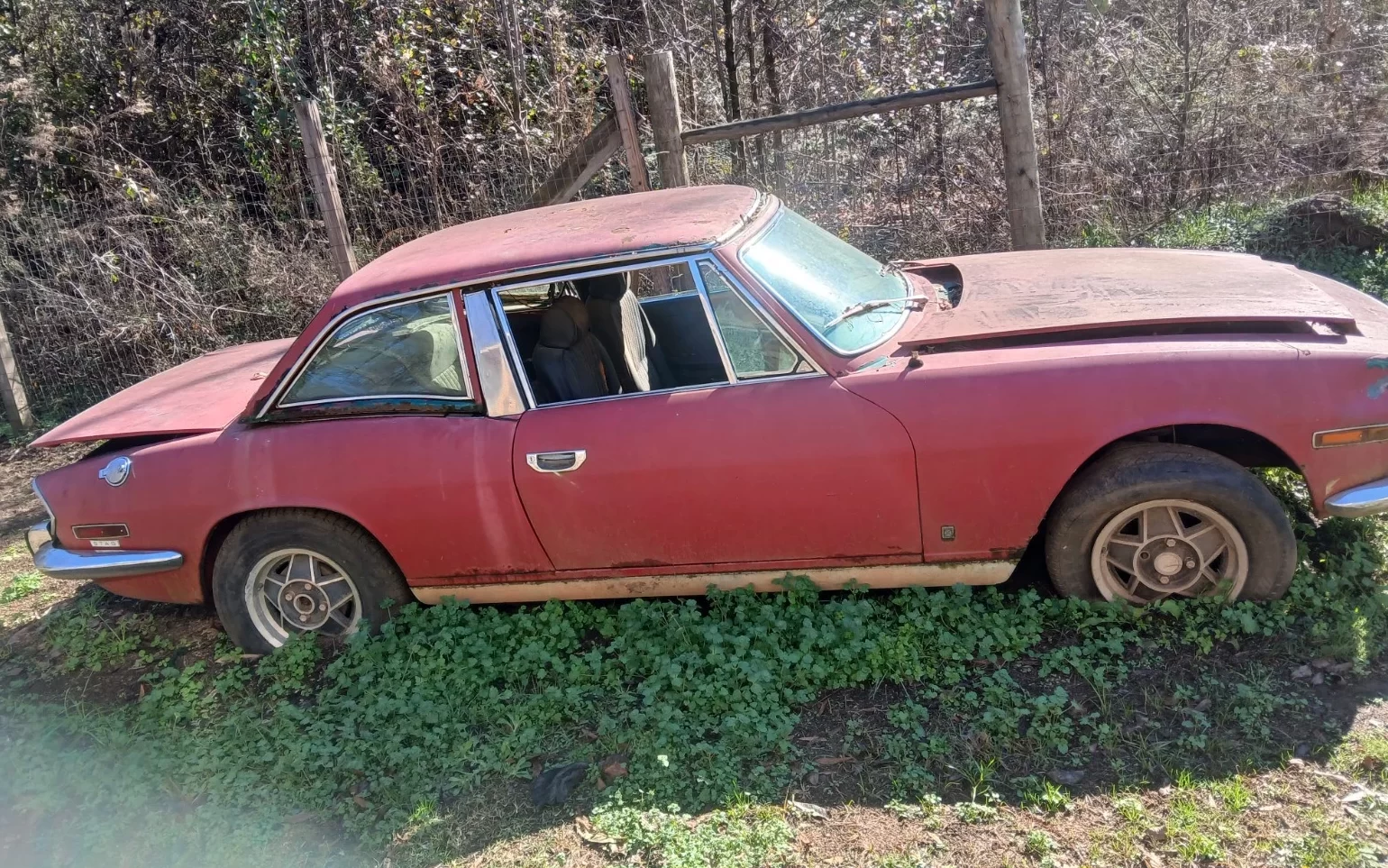
This is the “parts Stag,” which is a stick-shift car with all the parts to convert the driver from automatic to manual, if the new buyer so chooses. In addition to the parts car, the seller will include “a ton of spare and original parts,” including the original carburetor.
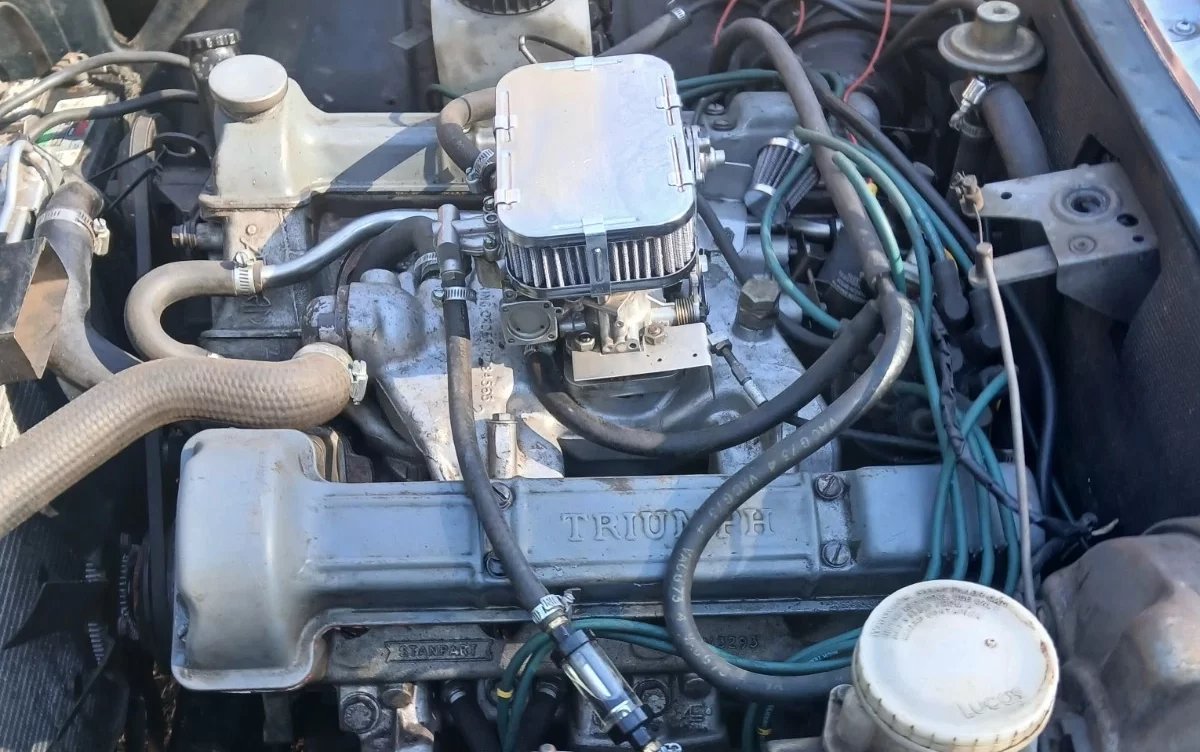
One of the major complaints about the Stag over the years was the engine; while other British Leyland sports cars got the time-tested Rover/Buick 3500 V8, the Stag got its own three-liter, 145-horsepower V8 with single-overhead camshafts. This engine apparently had at least two Achilles’ heels: If the engine overheated, it would warp cylinder heads, and if that weren’t enough of a problem, the timing chains (according to Mr. Newton) needed replacing every 25,000 miles.
Fortunately, this Stag has a recently rebuilt engine, including “new timing chains, head gaskets, tensioners, gaskets, seals, valves, valve guides, water pump, fuel pump, carburetor, coil, alternator, starter, etc.” It has new tires and apparently runs, drives, and stops well.
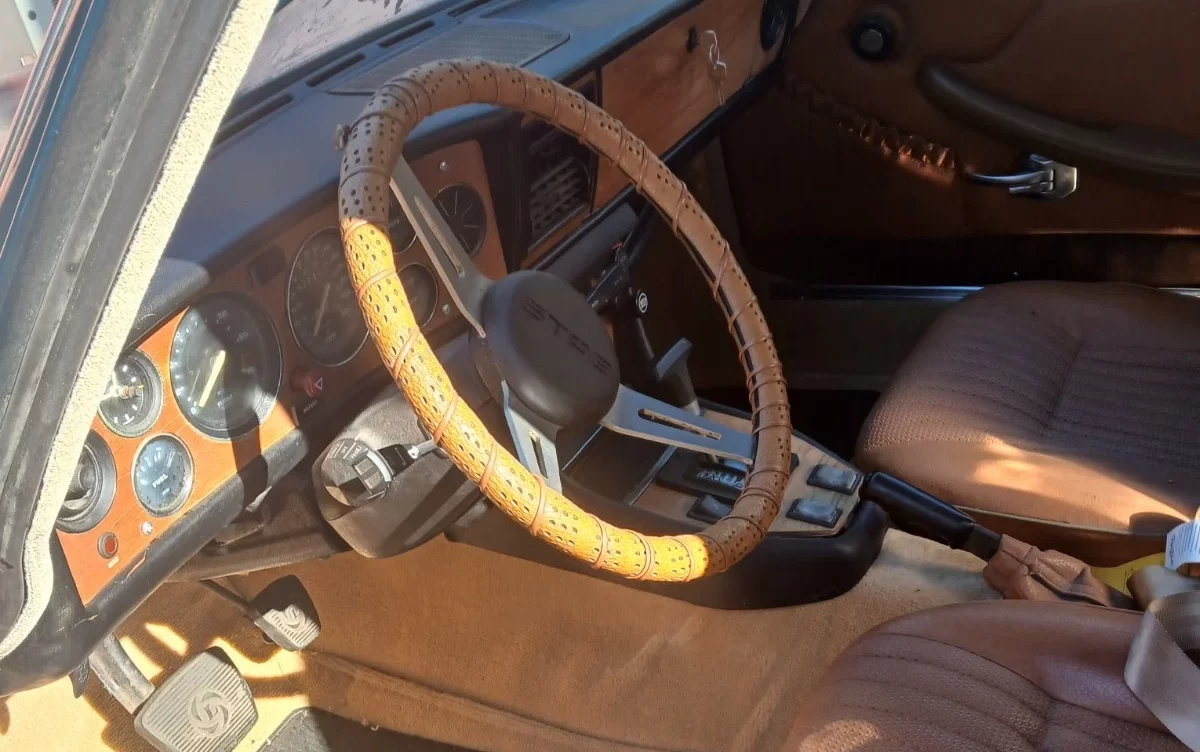
The interior has been refurbished and appears to be in nice condition. The hardtop has had a new headliner and weatherstripping installed, the soft top “works well and seals nicely,” and the interior has new seat belts, sun visors, weatherstripping, carpet, and other assorted pieces. As I mentioned before, the Stag has an automatic transmission, a Borg-Warner, and while a manual would be nice, the automatic doesn’t seem to clash with the car’s intended purpose as a gutsy top-down cruiser rather than an out-and-out sports car.
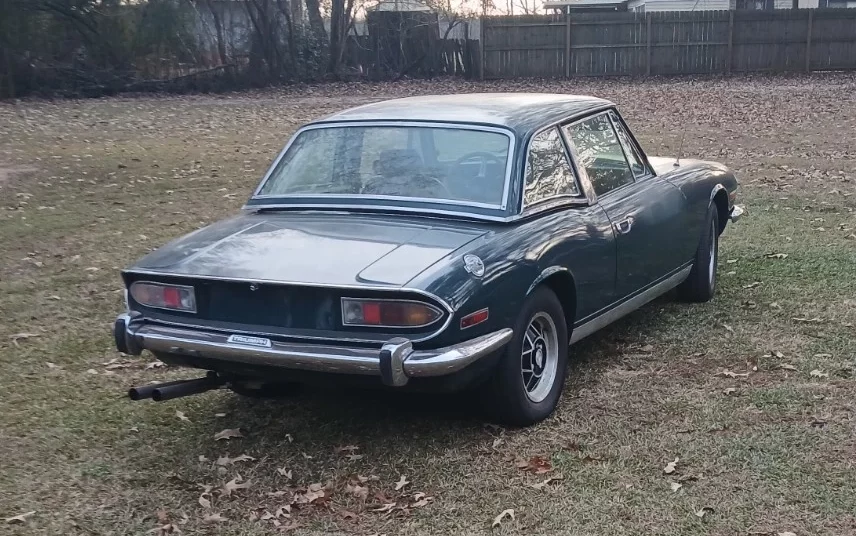
The best thing about the Stag is that it’s an Arizona car, so it’s solid. The seller actually intended for the car to be a daily driver, and has spent a couple years and thousands of dollars getting it to where it is today. Triumph only sold 6,780 Stags in America, and most of them were certainly junked when they either overheated or lunched a timing chain or two. That leaves precious few left for those who appreciate the Stag’s classic styling by Giovanni Michelotti, a famous name in the world of classic Triumphs. Performance was not bad, as contemporary road tests showed that the Stag could accelerate to sixty in under ten seconds. It sounds like the seller had the right idea; this could be a very fun daily driver at a decent price.




Great article, Aaron! I’ve always liked these cars. The owner says he has spent thousands making the blue car into a daily driver, and for that purpose I wouldn’t mind the auto. In fact with space at a premium for nearly everyone, it’s almost a liability to have to take the red car too.
Thanks, Michelle. I’ve long been out of space, but that’s why entrepreneurs build rental storage garages!
Still, I don’t need two Triumphs hanging around. :)
Good feature, Aaron. Good looking car unfortunately with a terrible reputation. Another “if only they had” car-if only they had a reliable motor (or had sorted the issues BEFORE taking it to market)..
Thanks! I think the car would have had a better fate if they would have given it the Rover V8.
I always liked the look of the Stag. it was an attractive automobile. Too bad the engine was disastrous. In its day, I knew of a few that had Corvette motors dropped into them. That was the economical and longevity solution back then when you could find a good motor reasonably. Nowadays , for the purists, the value of those cars would drop considerably, but you would still have a driver. I would not go near one now as a project, especially an automatic! It’s a English sports car, why an automatic!
Never was there a car more emblematic of the ineptitude of British Leyland than the Stag, a car about much not much was wrong except the engine’s seven flaws and the sad stories explaining (1) the problems with the engine and (2) why the Rover V8 wasn’t used are a cautionary tale of corporate mismanagement. It’s true that late in the day it wouldn’t have been possible quickly to increase production of the Rover V8 to meet the volumes expected to be required for the Stag but by 1968 Jaguar also was under the corporate umbrella and the decision had been taken to end production of the Daimler V8s. If acquired by Triumph, the 2.5 Daimler unit easily could have been enlarged to 2.8 to take advantage of European taxation rules and the 4.6 would have been ideal for markets like the US and Australia. Both would have out-performed the Triumph 3.0, sounded just as good and been reliable. With either, the Stag would likely have been a success because the demand was there.