
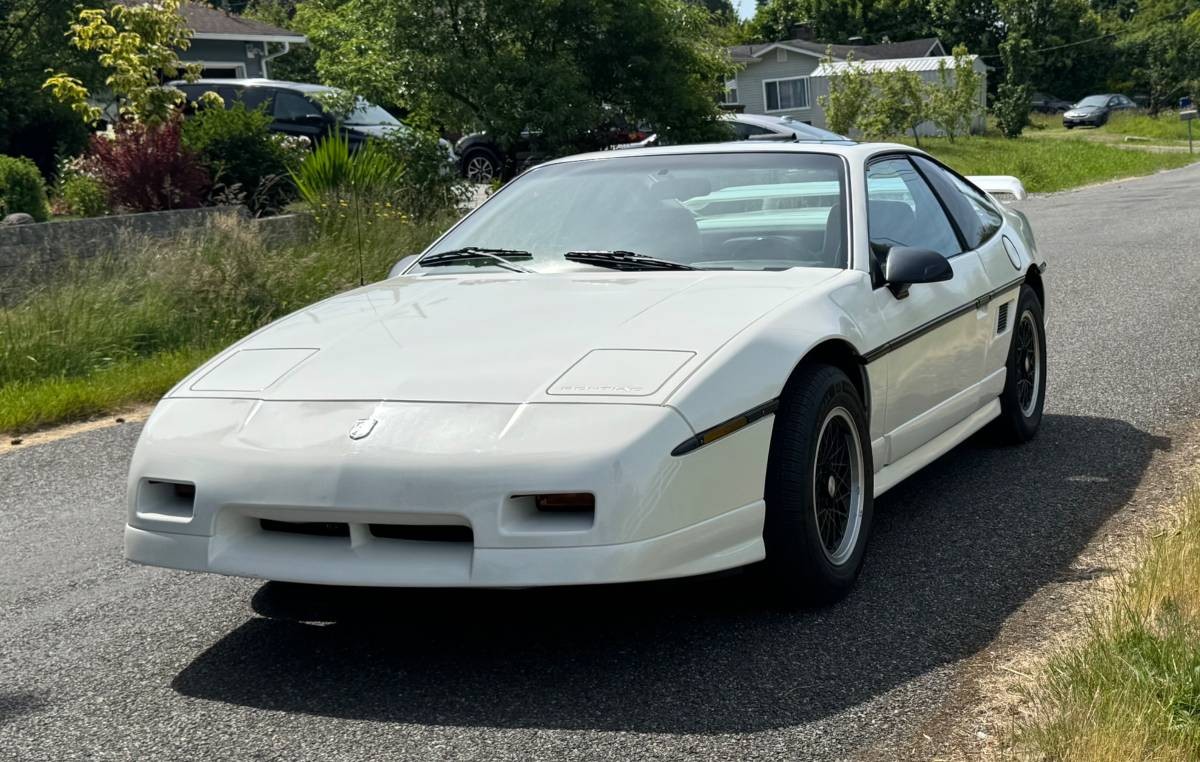
Being forced to part with a classic due to illness or injury can be a bitter pill to swallow, but it is a decision that has been made by the current owner of this 1988 Pontiac Fiero GT. It is a fairly tidy classic with only minor needs, but the inability to operate the clutch has left the seller with little choice but to send the Fiero to a new home. I must say a big thank you to Barn Finder Scott for spotting the Pontiac listed here on Craigslist in Summit, Washington. The seller set their price at $13,750 for a classic that comes with a range of additional parts.
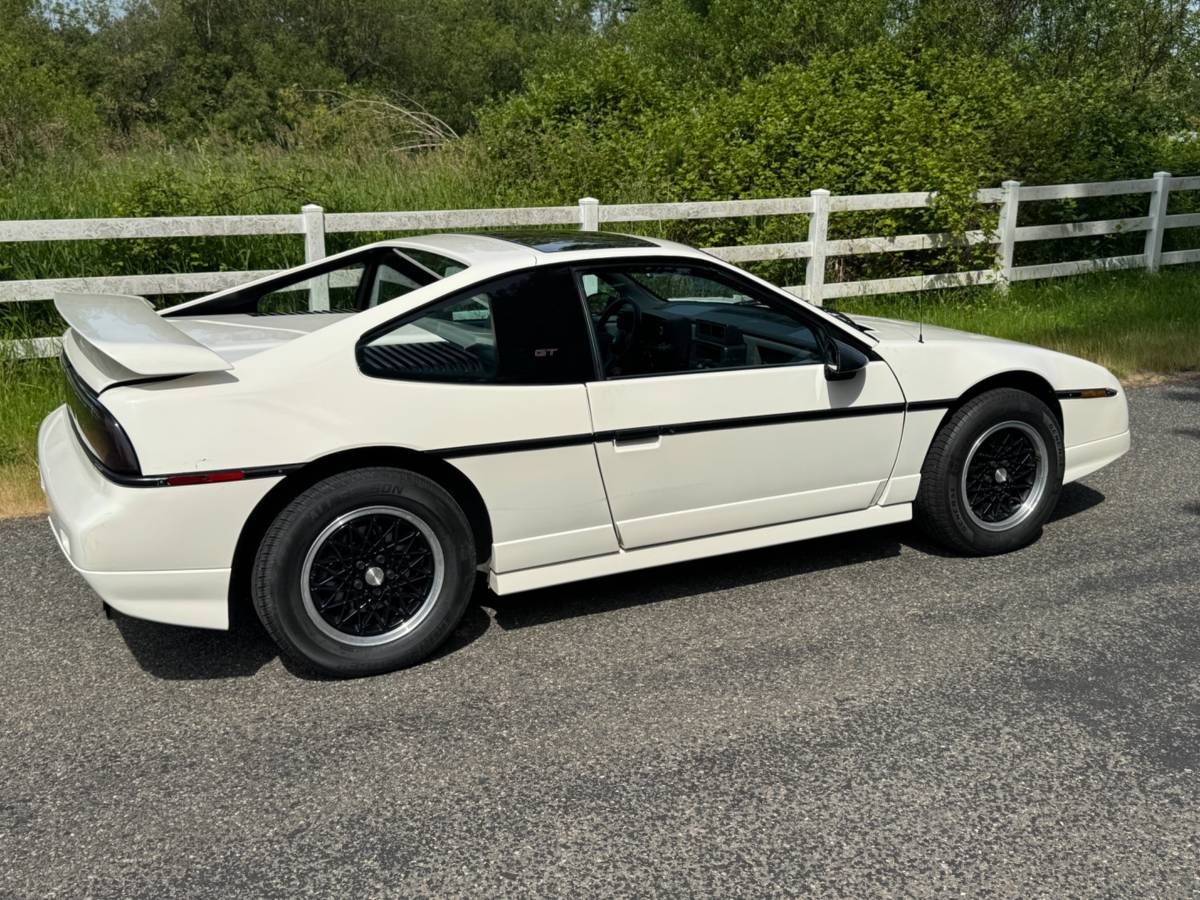
Pontiac released the Fiero in 1984, having high hopes for its first two-seater in decades. The production run proved far shorter than envisaged as buyers failed to embrace Pontiac’s latest offering. The first owner ordered this GT variant in 1988, selecting Code 40 White from the six available shades on that year’s Fiero color palette. The car makes a positive impression, with no visible dings or dents, and no evidence of rust. Close inspection reveals a selection of minor paint scratches and chips, and while most might be okay with localized repairs, some enthusiasts may view a complete repaint as the most appropriate course of action. The trim and glass appear to be in good order, and the alloy wheels are excellent.
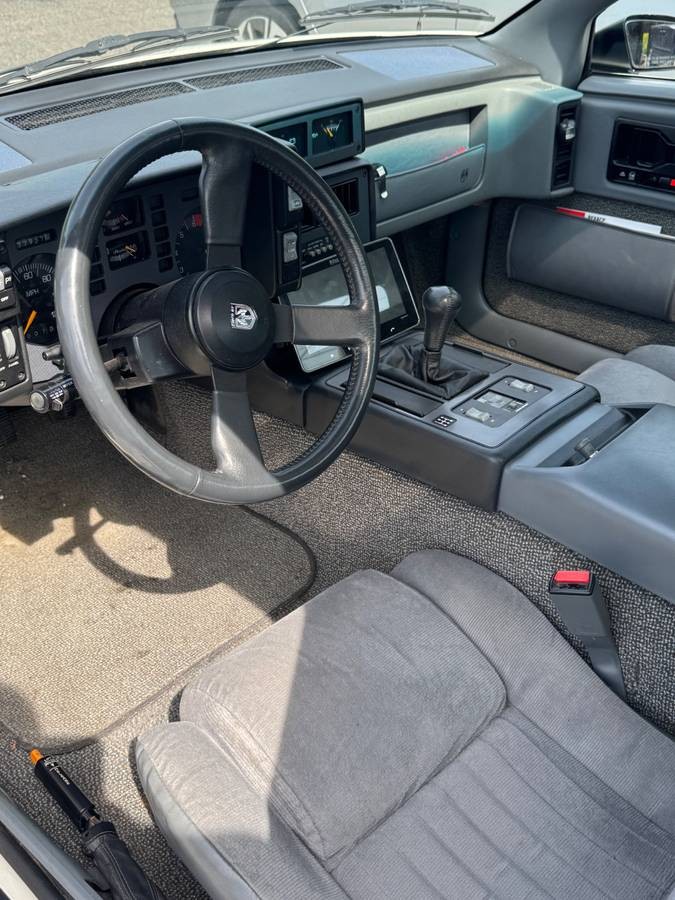
One of the biggest criticisms levelled at the Fiero by potential buyers and the motoring press was that the interior had a “cheap” feel due to the wide expanses of plastic trim. Pontiac aimed to build the car at an affordable price, and the interior was the most obvious sign of this approach. However, the bucket seats won praise for their comfort, and the equipment levels were quite respectable by the standards of the day. This GT scores air conditioning, power windows, power locks, power mirrors, cruise control, a tilt wheel, and the standard Fiero sports gauge cluster. The inoperative factory radio/cassette player has made way for a modern touchscreen unit as the only obvious aftermarket addition. The seats lack the typical edge wear that can plague these cars, while the dash, remaining plastic, and the carpet are in good condition. The seller includes a wide range of additional parts that will help the new owner to perform a few upgrades and to keep this classic ticking along reliably.
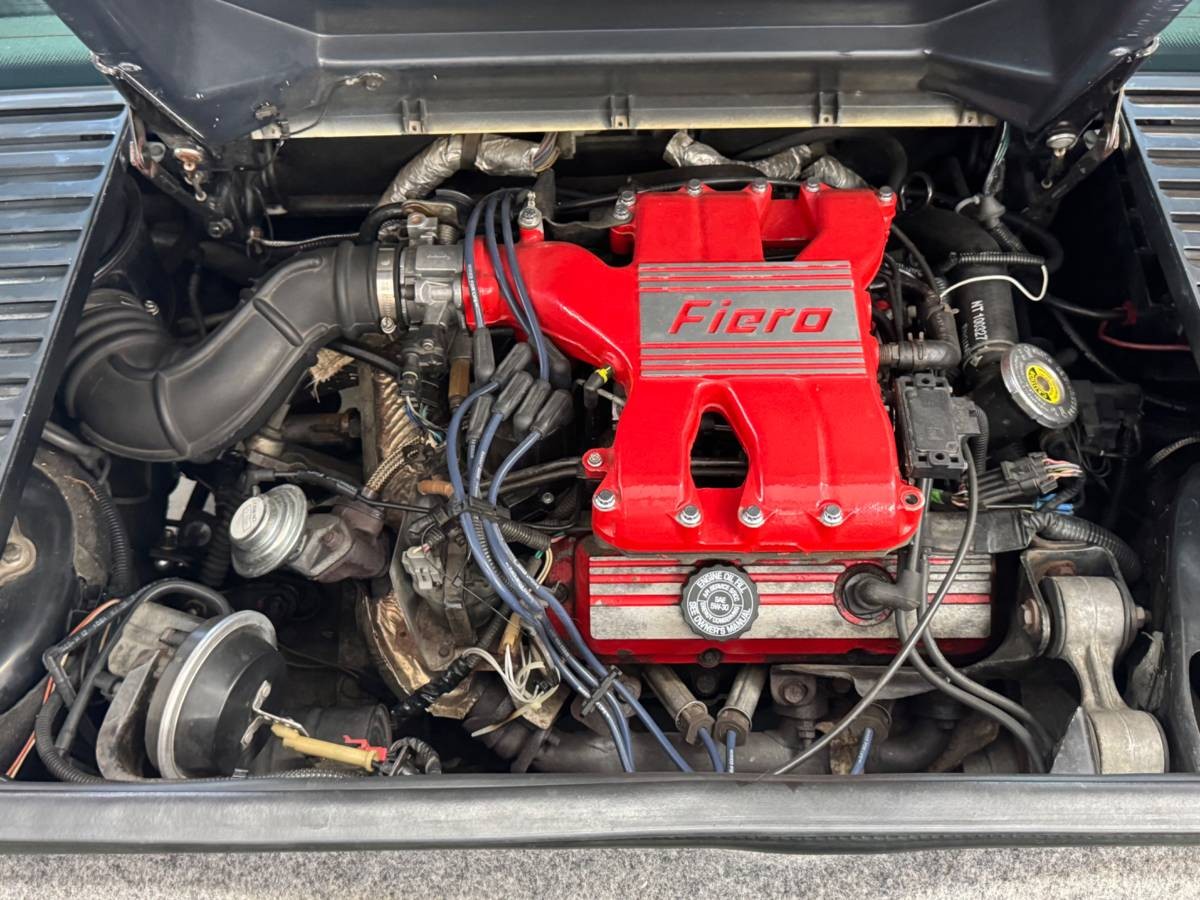
My belief that the Fiero represented a bold statement by Pontiac is reflected in its mechanical configuration. It was the first mid-engined sports car produced domestically, and while it isn’t a fast as European exotics, the layout provides excellent weight distribution to maximize the car’s handling potential. Pontiac’s 1988 Dealer Bulletin confirms that this GT’s 2.8-liter V6 will send 135hp to the rear wheels via a five-speed manual transaxle. That is the rub, and is the reason why this classic needs a new home. A recent injury has left the seller unable to operate a clutch pedal, which has forced the sale. However, the buyer will benefit, because this gem recently received rebuilds to all four brake calipers, with the hydraulic systems also receiving a flush. It appears that the Fiero is a turnkey proposition that would allow the buyer to fly in and drive it home.
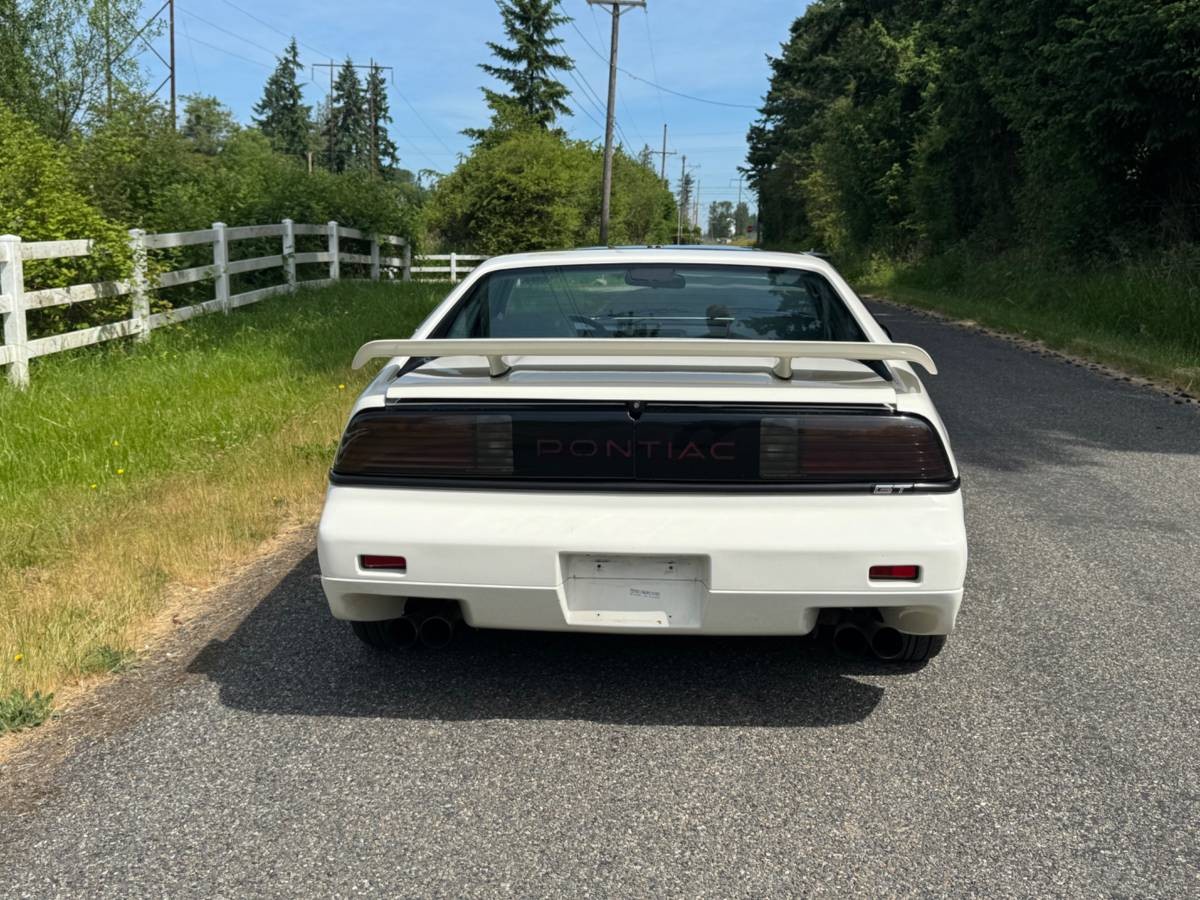
Without wishing to sound like one of those guys who says, “they don’t make them like they used to,” I feel that mainstream vehicle manufacturers have largely lost the ability to be bold and daring. Model development is largely driven by sales and profit projections, and less by creating an interesting halo model. Pontiac created the Fiero as an economical sporting option, but the badge didn’t achieve the success the company envisaged. Only 6,848 buyers handed over the cash for a GT in 1988, and with an overall sales tally of 26,402 cars during that model year, Pontiac drew the curtain on its bold experiment. This one looks like a gem, and its needs are relatively minor. It won’t possess the outright performance of a European exotic, but nor will it cost as much. Therefore, if an economical sports car that could function as a practical daily driver is on your radar, this Fiero deserves more than a passing glance.



I worked at Budd Plastics North Baltimore Ohio where the Fiero body panel were made out of SMC which is a fiberglass type material. Panels are formed in vacuum compression molds so rust is something this car will never have like a Corvette.
Uh..I don’t believe the fiberglass on a Corvette will rust either. Of course, the frame on both the Fiero and ‘Vette is another matter.
No, the plastic won’t rust, but the steel space frame underneath the plastic will! Mom’s 1994 Saturn SL1 developed significant rust on the rocker panels at the rear door by the rear wheel arches. It wasn’t visible from the outside, but open the rear doors, where the plastic body panels were bolted to the steel space frame and it was a different story! The plastic panels actually made spotting the rust more difficult, which allowed the leprosy to spread unchecked until it became far too expensive to repair. If you are thinking of buying a Fiero or Saturn, inspection of the underside on a lift should be mandatory!
Were Bricklin body panels different/thicker/better/stronger?
Fieros were bodied in plastic so no rust top-side. But this car has the waviness I have seen before on the snout between the two panels. The paint also appears chalky. Elsewhere, these interiors don’t wear that well, and this one looks good, so does the engine bay, plus it’s a six.
All GTs were a six.
I always had a soft spot for these cars. I think it was in my head. But seriously these late model Fieros are worth having, and with a stick? Tempting at that price, but that tacked on gauge cluster and touch screen would have to go.
That tacked-on gauge cluster atop the center stack is a factory option included in the GT package.
The touchscreen prolly controls a modern digital-media stereo system, better than the ancient cassette stereo it came with, but agreed there are prolly nicer-looking solutions that would slot right into the factory radio spot. Maybe the seller didn’t want to alter the factory equipment for originality’s sake.
I’m with you on the radio, but the factory gage cluster on the top of the dash would stay. Fortunately, the owner kept the factory radio. Also, there are Double-DIN options available on the aftermarket that are a much better fit that the one the present owner selected.
The Fiero’s weak point was always the engine choice. The base model cars, with the 2.5L Iron Duke was the worst possible engine choice. The 2.8L V6 was much better, but came too late to save the car in the marketplace. The still born 1989 model had the engines the car should have had from the start, the Olds Quad 4 and a more potent V6.
This is a perfect case of where the failings of an earlier version of a model destroyed the sales of the later version, because by ’87 the Fiero had the bugs worked out. No matter, the damage had been done and toward the end Pontiac couldn’t give them away.
My recollection is a bit vague, but I recall that the ’88s were all-new under the skin – better suspension, brakes, etc – the car was finally built as it should’ve been built from the beginning.
At the time, I had an MR2, and remember encountering a few Fieros on the local freeways and twisty roads. I could always outrun them, but the V6s were faster off the line.
Not quite “all new” but yes, they did get improved suspension, steering and brakes, basically what Pontiac engineers had intended all along before more cost-cutting (repurposing existing Chevette and Citation components) was demanded to green-light the Fiero at all in the first place, positioned as a small, economical “commuter car” that looked sportier than it could really deliver.
As to why GM would approve investing in such major updates for one final year only, they didn’t, at least not intentionally. The second-gen Fiero was already late in development and set to launch for ’89 or ’90, largely just a reskin of the existing spaceframe along with a new interior and the improved running gear, so they decided to roll out the technical improvements for ’88 as a “sneak preview” of better things to come and see if that goosed Fiero sales.
Instead, sales for ’88 continued to drop, as they’d been doing year over year ever since the Fiero launched, so they pulled the plug on the second-gen Fiero entirely at the eleventh hour.
The primary reason that the MR2 succeeded where the Fiero failed was that the MR2 was correct right out of the box, but GM needed four (4) years to get the Fiero right! I test drove both the MR2 and the Fiero in 1985, when shopping for my first new car, and the only reason the MR2 didn’t end up in my garage was the obscene Toyota dealer gouging, with “Delivery Charges”, “Availability Charges” or “Additional Dealer Markups” of as much as $4000 over sticker price! The fact that Fieros were being heavily discounted over at Pontiac dealers tells you all you need to know about the state of both GM and Toyota at the time.
The Toyota had a much better looking and feeling interior. The smaller 1.6L engine in the Toyota had about the same power output as the prehistoric Iron Duke, but was smaller, lighter and revved higher, offering a much more pleasing driving experience!
And, the 2nd gen Fiero was a much better looking car. Too bad it didn’t make it.
That was GM’s problem in general and the Fiero’s problem in particular. The early examples were mediocre to poor and by the time GM worked the bugs out of the cars, the car’s reputation was in the toilet and sales were awful. Toyota and Honda understood this implicitly, which is why the Asian competition was so dominant. They understood that you only get one chance to make a first impression, so make it a good one! The “Big Three” still don’t seem to have learned that lesson and it doesn’t bode well for their chances of future success.
Classic example of “beta testing in production”, using customers to identify (and suffer) all the niggling minor bugs that didn’t turn up in the cursory testing during pre-launch development.
Best series on the low-budget restoration of one of these:
https://youtu.be/fMfqLtfsIj0?si=7UaC_vhAG2RCNrgZ
Fieros have been made into powerful speed demons with different engine swaps. Small block Chevy, 4.9 Northstar engines, 3800SC engines.
I have an 88GT T Top,the last year model when they had the improved suspension. I have had it for 20+ years.
There is a big Fiero following at Fiero.nl . A very active and friendly community. Go to the forum section to read all about the Fiero.
Owned one of these in the early 90’s. Such a fun car to drive, very quick and handled like a gokart. Mine was silver with the ground effects and spoilers. I debadged it and this caused several people to ask me what it was. Weren’t many around so recognition was scarce. But even when I told them it was a Fiero GT, it still didn’t ring a bell with them. I imagine the same would hold true today. Wouldn’t mind owning one now.
88 was the only year to own. Pontiac T-1000 platform til then. 87 back are Chevettes that got plastic surgery.
Not exactly. The ’84-87 Fieros did use some steering, suspension, and brake components borrowed from the front-engined RWD T-cars (Chevette/T1000) and FWD X-cars (Citation/Phoenix/etc.), but the overall platform was a rear mid-engined spaceframe unique to the Fiero.
In some sense, the Fiero DNA lived on in the 4th-gen F-cars (Camaro/Firebird) and Saturn S-series sedans/coupes, which used a similar spaceframe clad in non-loadbearing plastic body panels approach that the Fiero had pioneered.
Here’s look at the stillborn 1990 Pontiac Fiero prototypes before GM pulled the plug in 1988:
https://www.curbsideclassic.com/blog/forgotten-future/forgotten-future-1990-pontiac-fiero-prototype/
Cool looking car. It’s a shame it was never put into production.
Lovely looking car. I love the front end appearance of this Pontiac Fiero. I consider it damned unforgivable that it was discontinued when it was. I can imagine it competing with the Toyota MR2 or the Porsche 911. Was it perfect? That depends on how you define perfect. But for a car like this, with the right service network and careful driving, it could’ve been a fun car to drive.
Imagine what it would cost today tho. & the popup headlites would be gone, replaced with a clown front end with xmas tree lights. & no manual trans would be available. & huge rough riding tires would replace the ’88 14 or 15 inchers.
Most of today’s cars look hideous.
Saw an ’88 come up for sale last year. Still in good shape. Would still love to own a Fiero.
https://foreverpontiac.com/forums/topic/19571-for-sale-1988-fiero-gt-14499/#comment-149650