
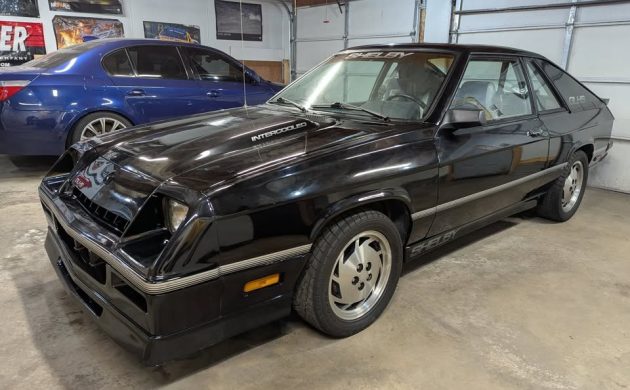
At the time, Car & Driver magazine called the Shelby Charger GLHS “…crude but effective”, and that is likely a fair summation of most turbocharged Chrysler products from the 1980s. These were impressive machines out of the box in terms of horsepower and handling, but the basis for these Shelby-inspired builds were not exactly overbuilt machines with layers of sound deadening and cushy interior materials. However, that’s not why you were buying a car like this; you purchased one to make a Mustang owner think twice about challenging you at the stoplight. Find this 1987 Dodge Shelby Charger GLHS listed here on Facebook Marketplace for $10,000.
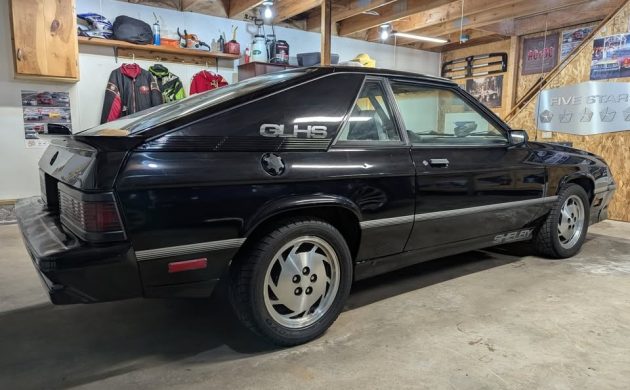
The Charger was already a fairly crude implement before Carroll Shelby got his hands on it, and Shelby wasn’t exactly known for massaging cars into machines with great manners and plush surfaces. No, he took what was already fairly roughshod and exposed those weaknesses to an even higher degree by loading it up with horsepower and torque, seemingly with no regard to whether the chassis could handle those tweaks. Road test editors spoke of a manual transmission that had to be ham-fisted into gear, and general fit and finish that made it seem like the cheap hardware holding it together might wiggle its way loose thanks to the boost being turned up to 12 psi in the GLHS version.
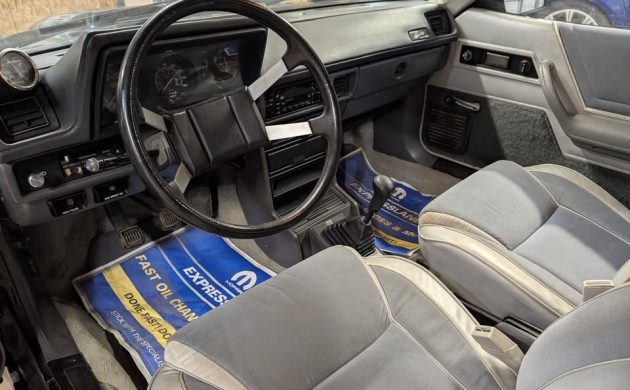
The GLHS cars, specifically the Charger and Omni, really did offer a ton of bang for the buck, however, not unlike the modern-day SRT products from Dodge. The recipe hasn’t changed, with the company layering in truly significant performance improvements without worrying about whether the seats had the proper stuffing for delicate hindquarters. The Shelby Charger GLHS reached 60 miles per hour in well under seven seconds, and would eclipse the quarter mile at a tick under 15 seconds, going on to a top speed north of 130 miles per hour. Those are still good numbers by today’s standards, especially for a bargain-basement econobox.
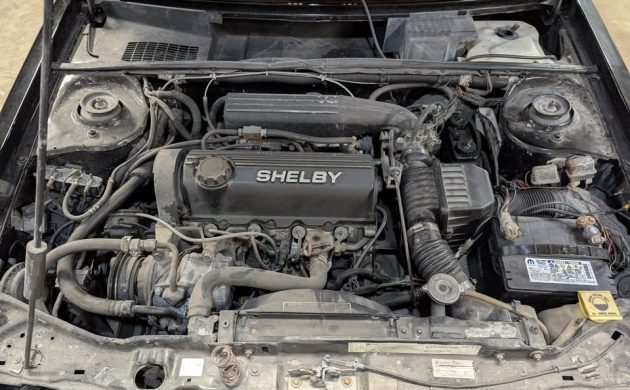
And that’s because Shelby didn’t give a hoot about your posterior comfort, instead focusing on building a car as cheaply as possible that would embarrass all manners of far more exotic sheetmetal. The 2.2L turbocharged, four-cylinder engine was tuned up thanks to a unique intake plenum, an updated turbocharger, an air-to-air intercooler, and a larger throttle body and fuel rails. As you can see, Shelby didn’t just turn up the boost – he thoroughly re-worked the same four-cylinder engine he had abused the hell out of for years. It’s good, clean, fun, and while I don’t know if this GLHS is worth $10K in today’s market, it sure looks like a ton of fun for the money. Thanks to Barn Finds reader Lothar… of the Hill People for the tip.




GLHS…. goes like hell Shelby ?
Hey Stan. GLH was “Goes Like Hell” GLHS I believe was “Goes Like Hell Some more” or perhaps S’more(?) Why am I suddenly in the mood for Graham crackers Hersheys chocolate and a marshmallow? Anyways, in its day and even today, these have very respectable performance.
Thanks Dave. Quick cars for sure. I like the looks of this model in black.
If my memory serves me correctly. GLHS was two versions. Turbo and non turbo. This engine doesn’t look like a Turbo. And it would say it on the valve covers or intake. Yes i see what the hood said. But it could have been change a while ago. The seller doesn’t mention turbo in the description. Do we have a Mopar person to help me out in this? Good luck to the seller. 🐻🇺🇸
Its a factory turbo car. All GLH(S) cars were turbo. Only thing with a GLH code that wasn’t turbo was a GLH omni. (4 lug wheels) in earlier years.
Luke… thanks.. but i really thought it was stamp turbo on the engine. I guess the older I get my mind is not remember things correctly. 🐻🇺🇸
It doesn’t say TURBO on the engine because it says SHELBY instead. All Shelby Omni GLH-S and Charger GLHS models were turbos, built at the Shelby Automotive skunkworks in Whittier, CA, and thus officially and legally Shelbys by marque (not Dodges). These were limited-production “last hurrah” versions of the Shelby-tuned Omni/Charger lineage
The earlier Dodge Omni GLH and Dodge Shelby Charger models were built by Chrysler at their own factories, using high-performance components developed in collaboration with Shelby. Initially for ’83-84, the Omni GLH and Charger Shelby models had a non-turbo high-compression version of the Chrysler 2.2L engine. Then for ’85-87 the Chrysler “Turbo I” 2.2L engine became standard for the Shelby Charger and an optional (tho’ usually equipped) upgrade for the Omni GLH.
‘Crude but effective’ describes most of what are considered 60’s muscle cars. Stuff a high performance engine in an intermediate and here we go! By the time the energy crisis started (1973-1974) insurance companies were well aware of the liabilities muscle cars carried. Emissions and fuel economy started to really change the game. Personal luxury car posers became the game and performance became secondary to appearance. Would you like go-fast vinyl on your new car?
The GLHS weren’t bad cars for the time. Perhaps they were better dollar per driving fun than the factory hotrods of the time.
Bought an ’85 Shelby Charger brand new back in the day. It was a great fun little car. Fast for the time. Those Shelby seats though are very comfortable. Handled like a go-cart only with more understeer. All of that and close to 30mpg on the highway. What’s not to like?
Goes like hell STOPS like hell
Had a new 84′ Daytona turbo back in the day and I remember these little cars. They were certainly quick for the time. The Shelby factory cars seem to be the ones that are appreciating the most in value these days. Overall it looks pretty clean. If it all checked out without any major flaws, I’d say he’s asking a realistic price.
I bought one of these brand new in 1988. There were 4 leftovers on the lot. These were $13 and change. Very fast car, kept up with my friend’s Mustang GT. I traded it in for a Dakota in 1994 and I wish I hadn’t. Mine never saw winter. I had a 1984 Rampage for my daily driver.
I still have fond memories of my GLH-T, bought new in ’86.
I really wanted a GLHS but couldn’t afford it. If I had 10K for a fun car, this would be in the running.
I bought an ‘87 GLH-S in 1988. It was one of 4 leftovers on the lot. $13.5K. My first new car. I kept up with my friend’s Mustang GT. Car was very fast and handled great. I loved the Koni adjustable shocks. The car never saw winter. My daily driver was an ‘84 Rampage. I traded the Shelby for a Dakota in 1994, and now I wish I still had it!