
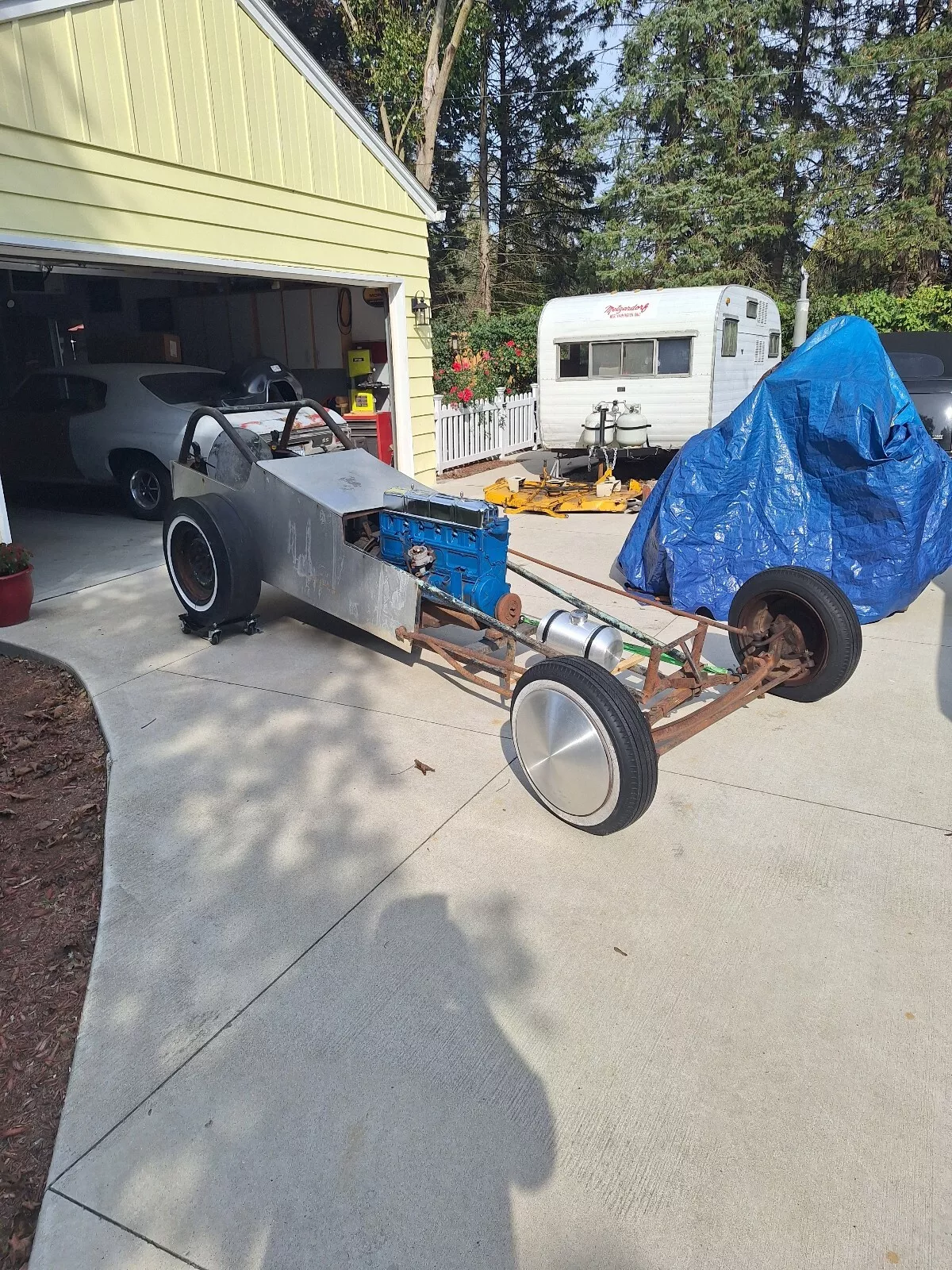
The postwar period was a time of great achievements in all categories. We were in the atomic age, spirits were high, and anything seemed possible. On the automotive front, racing in any and all forms was wild, innovative, and dangerous. Many of the race cars we read about were not only made by giant corporations. Innovations happened everywhere from the back of gas stations to inside single-car garages attached to ranch houses. This 1950s slingshot dragster for sale on eBay in Auburn Hills, Michigan is a rolling example of backyard innovation. With its simple solid axle and fabricated frame, this ungainly-looking contraption is looking for someone interested in returning it to the drag strip. Is your love for fifties racing matched only by your abilities to weld and turn wrenches? If so, this may be the ugly duckling you need to turn into a swan. At $2,000 or best offer, is this dragster a bargain or an overpriced hole to throw money down?
Whenever any organized event begins, the rule list is small, and innovative thinking takes seed in this fertile ground. Racing after World War II was no exception to this. Anyone with a good idea, a little money in their pocket, and the guts to try something new flooded into their chosen racing type. From sports cars, sprint cars, stock cars, land speed racers, to drag racing, the old pictures and in rare videos we see an amazing number of variations regarding the cars being campaigned. As the rule book got thicker and more onerous, cars began to look more and more alike. This eventually leads to the boring sameness we see today in all forms of racing. Safety rules are there for a reason, but a flood of regulations meant to level the field stifles innovation, raises costs, and drives the little guy with a new idea out into the cold.
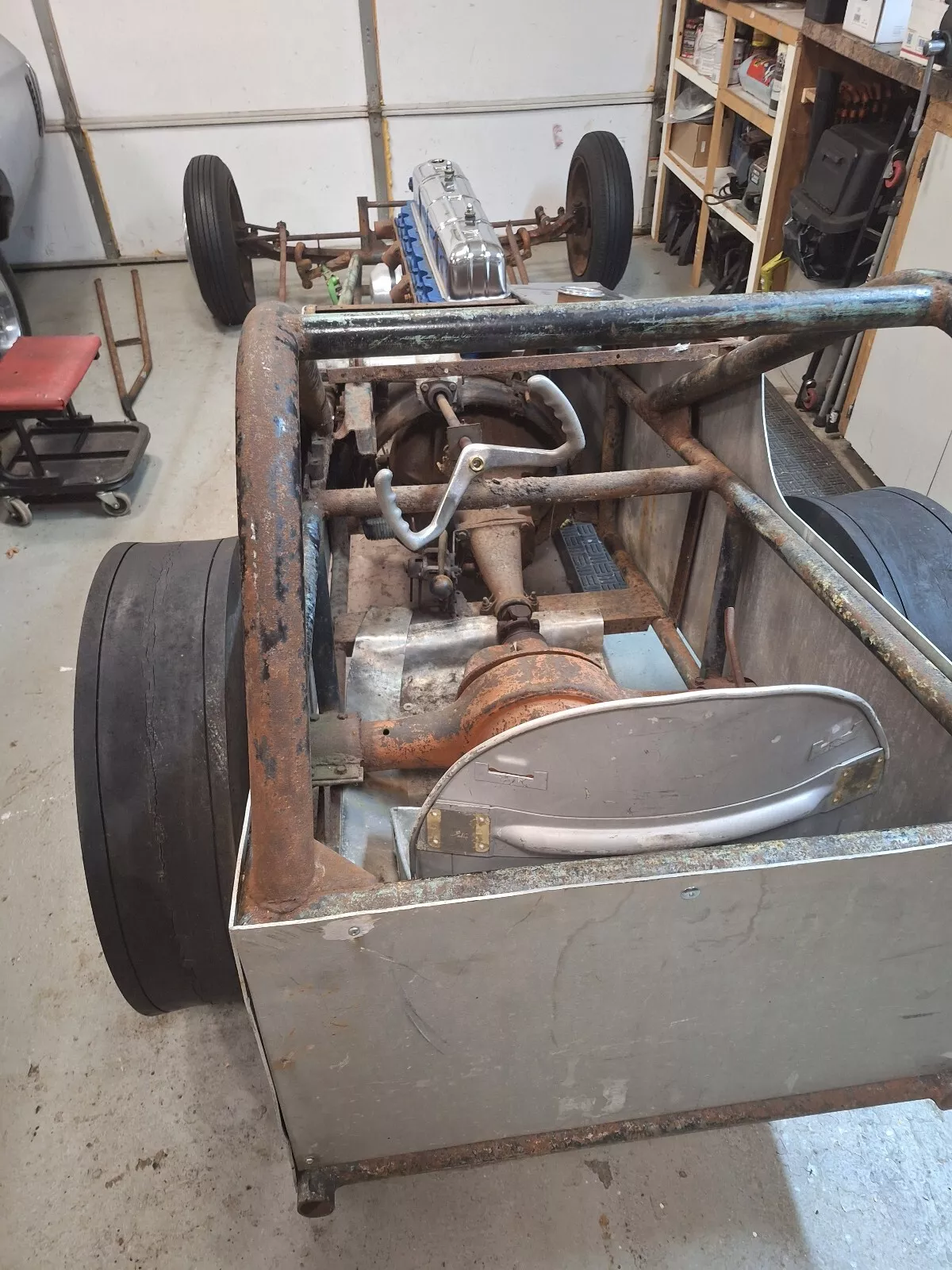
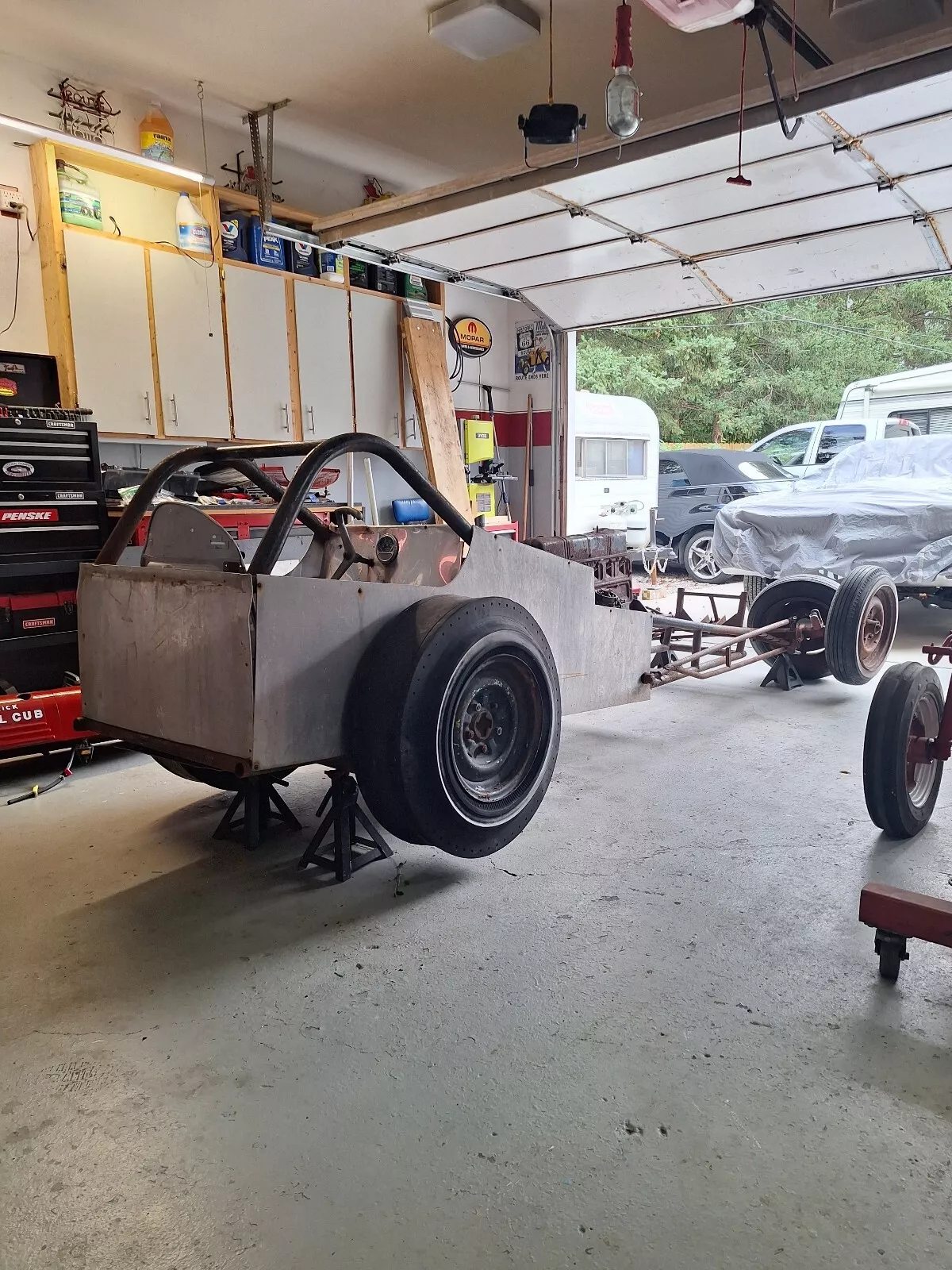
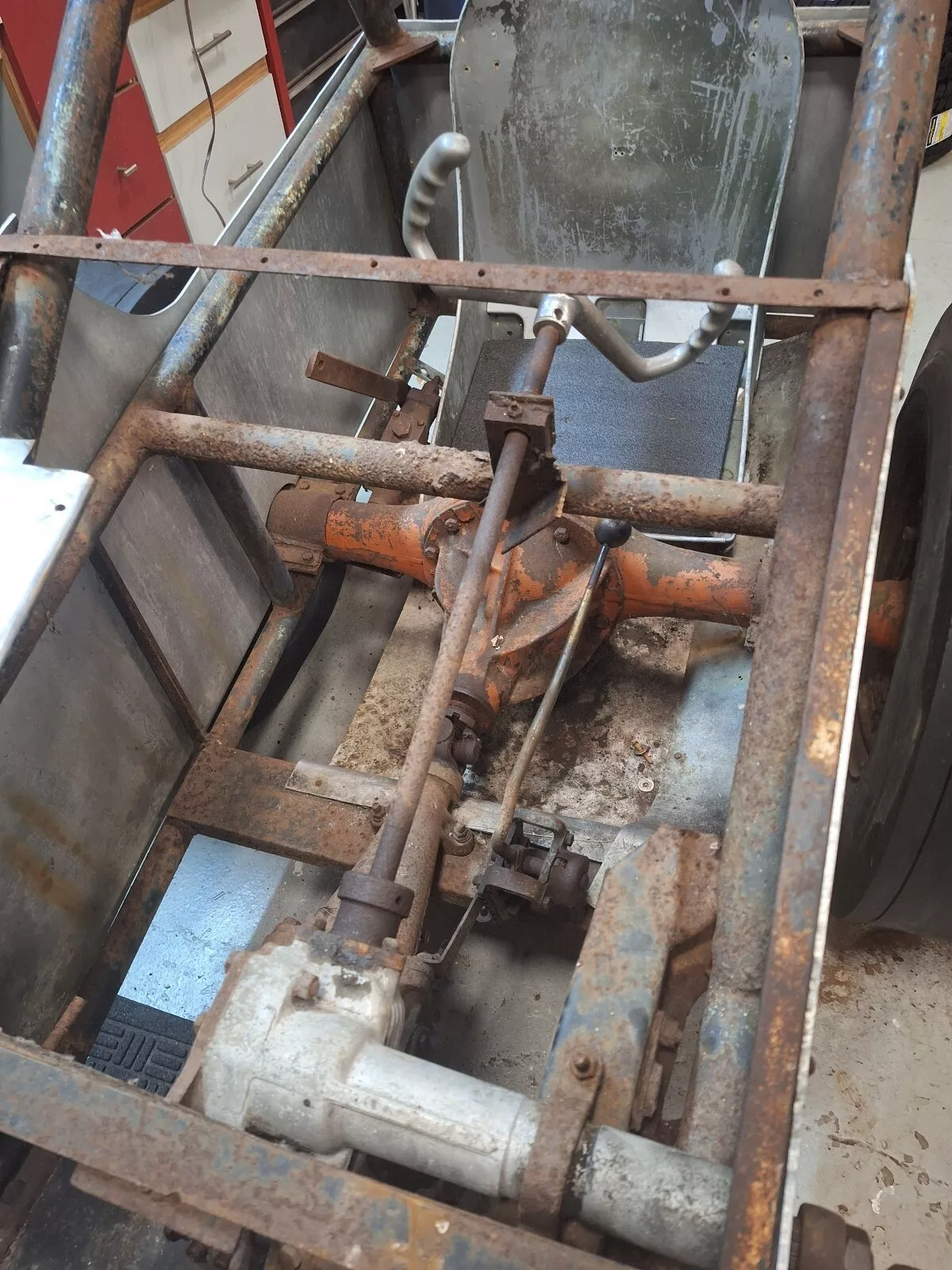
The rail dragster you see here is a good example of a homebuilt race car from this Wild West era of motorsports. According to the seller, this dragster was built by a car club in Central Michigan. Unfortunately, we do not know the name of the club, where they were located, or when it was built other than some time in the fifties. The seller also gives us the cryptic statement that “Oldsmobile rear end looks like it was never completed.” Does that mean that the rear end was replaced with an Oldsmobile unit but the repair was never completed? Or, was the progress on the initial build halted when the technical difficulties of narrowing a rear end got the best of the club? Did this car ever make a pass in competition?
Taking a close look at the construction of this dragster reveals stout, but rather rudimentary construction. The framework appears to be crafted of mild steel tubing and many of the parts are off-the-shelf components from catalogs and speed shops. When you consider such a car is designed to have the minimum amount of weight, the use of a Chevrolet 216 cubic inch “Stovebolt” six is a bit unusual. Produced from 1937 through 1941 in this displacement, these engines were not known for being light or particularly powerful. A lot of that weight is also higher than would be preferred in any type of race car. It may have been a question of what the club had available, or perhaps they were going for a certain class in the rule book. Inline six-cylinder dragsters were a thing back then and they show up occasionally in some of the vintage drag racing events held today. When you think about it, it is kind of cool to use such an unconventional engine choice.
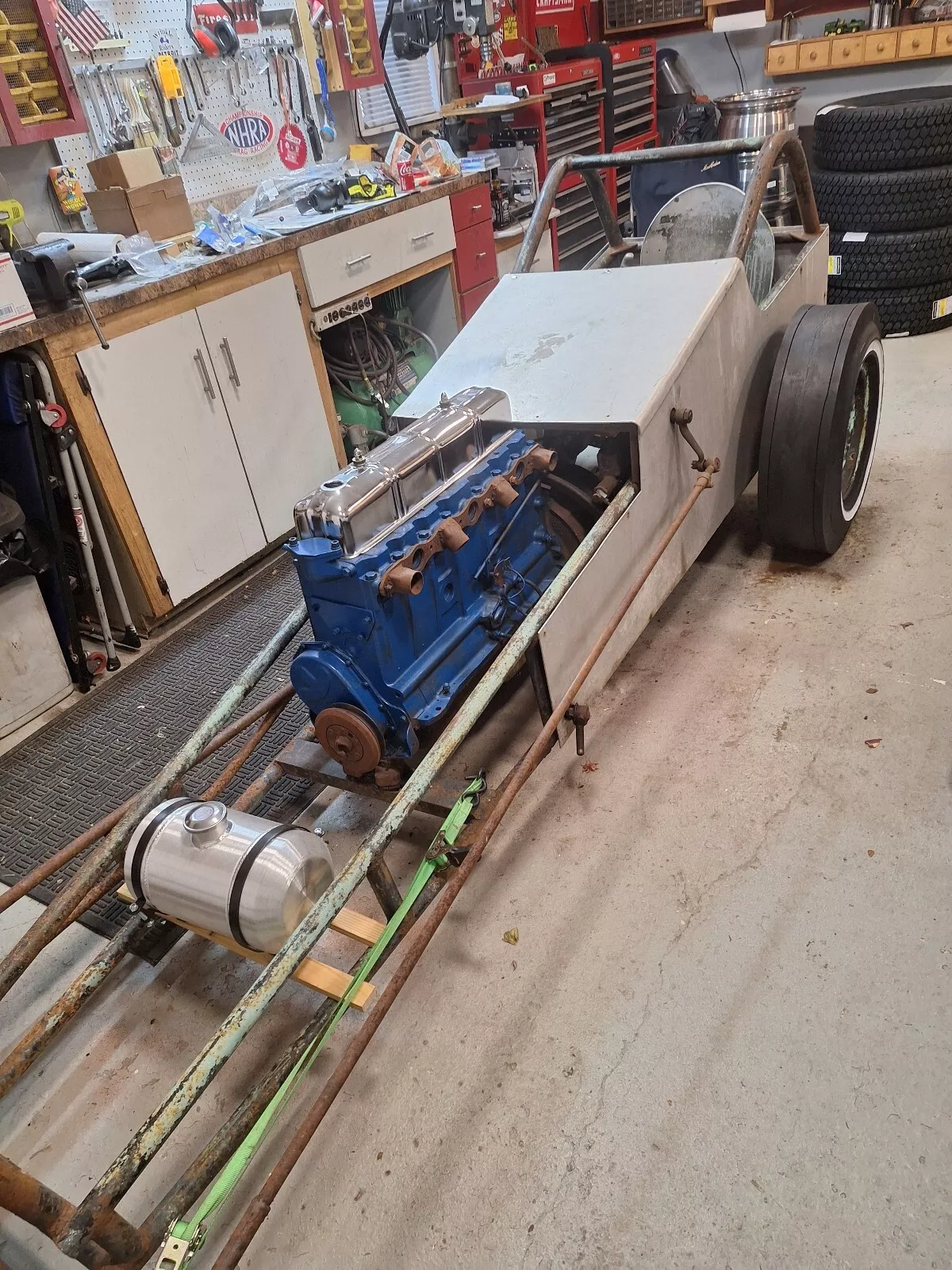
That unconventional engine choice combined with the amount of work needed to get this car to the track may be an issue. Add to that the dog’s breakfast of mechanical components mentioned by the seller includes a three-speed transmission, a hydraulic clutch, and a manual brake master cylinder. None of the sources for these items are stated in the ad. The design may also hold experienced racers and builders at arm’s length from purchasing this car as well. Perhaps one of our more educated readers could comment on what they are seeing with the design and construction of this car. It would be interesting to hear exactly what the club got right and what they got wrong on this interesting project.
Do you think this is a project worth completing? What would you change if you bought this car to finish and race yourself? Please share your thoughts in the comments.




I sent in a tip for a vintage FED, but never happened. Great write up, one thing for sure, gutsy returning GIs had one thing on their mind during the war. Since the ones that did make it back, they found, society was horribly boring, and drag racing was born. To be clear, this car was strictly for “Airport Road” after dark. Maybe a “grudge race” at the local strip on Saturday night. For any kind of sanctioned events, very few in-line 6s, but for back woods racing, some of these guys, and gals, made whatever they had run. A car like this , I read, could do 12s, at over 120mph. THAT took guts. We have to remember, the supercharged hemi jobs, typically ran in the low 8s then, with 7s not far away. I have the Roku TV, non subscriber, and they have a NHRA channel. Many of the shows include vintage drag racing. It’s incredible to see the creations lined up for blocks. It, I read, was Mickey Thompson that moved the driver behind the axle, and of course, Don Garlits with the rear engine, that is still used today. Back then, these guys, mostly young men in their 20s, had a good job, typically automotive related sometimes sponsored on the side, and when not working, this is what they did all across this country. “hot rod dot com” has a cool thread on the rise of slingshot dragsters. It shows some wild creations, multi-engined, even chain drive “sidewinders”, all trying to get the right combination. Man, that must have been a fun time.
This? Well, I’ll tell ya’, Airport Road is a subdivision ( yeah, by the airport) local dragstrips are overgrown with weeds, and it would take WAY too much to try and race this. Yard art is all now, but boy howdy, at one time,,,,
No,,,2 things on their mind,, :)
A good reference to early drag racing is a book called “Challenger,” by Mickey Thompson. He describes his journey through the 50s with dragstrip life and then when he went to Bonneville. Very well done…
If you want to see the history of drag racing from the beginning visit Don Garlit’s museum in Ocala, Florida. His first drag car was built in the late ’40s and was nothing more that a rectangle frame with the engine up front somewhat between the rails, seat and fuel tank sitting on top in that order. Personally, I wouldn’t drive something like that around in my back yard but it was the start of it all. He has several big name race cars starting in the ’50s and through to his last car. Innovation was the buzz word and you can see it in action as you follow the history.
If traveling through western FL. a stop in Ocala to see the museum should be a top priority. I didn’t have time to see the entire facility, but what I saw was most impressive. He has a store you can buy autographed pistons for sale. “Big Daddy” wasn’t there, but the secretary, who has been with him for years, said, he would give personalized tours. He is an unbelievable guy, and better catch him soon, he’s 93. I saw an interview with him, when he made his 1st RED. After his near miss accident that took his foot off, he went to work on a new FED. When his wife came in, said what are you doing, he said making a new dragster, she said, like Hell you are. He then began work on the RED, the norm of today. He said, nobody would race next to him until they saw him run. Not bad for an Okie from the back swamps of Florida,
This is pretty typical of what you’d see in the late-50’s. The 6 cylinder might have been chosen to fit in a particular class. I have a collection of late-50’s (1957-1959) California centered racing publications, there are a lot of pictures of cars with a similar construction.
This car will never race in the future, if finished it will be taken to shows and might participate in “cackle fest”. It’s a neat car and an early example by the look of the roll bar, by the early-60’s 3 point roll bars that enclosed the drivers head had become the norm. Hopefully someone will finish it, these early cars aren’t seen often, it won’t be terribly expensive if it’s used as a static display. I’ve even seen a few turned into garage art hung sideways from the wall of shops.
Steve R
Attention Howard and everyone else in BF land, check out George Klass remembers,it’s your one stop sight for vintage drag racing photos…
Ball buster.
I do believe the 216 CI Chevy engine was around until 1952.
There are a few smalltown drag strips around:
https://elkcreekdragway.com/
One of the best quotes I’ve ever heard was when Big couldn’t get the first rear engine dragster to quit making 20 degree turns at half track, he made changes to the steering. And the problems only got worse.
The quotes are “Every time we change the steering it gets worse. In a dragster is should get better.” Art Malone’s answer was “Big, that ain’t a front engine dragster.”
They went the other direction and it went straight. That’s priceless. I met Big at Gainesville in 1996, still have the program he signed. I had to talk my Dad into going to the museum the first time we got to Florida. The second year we weren’t even done washing road salt off the rig and he wanted to know if we were going that afternoon or tomorrow. Dad was a WWII tank mechanic who worked at a Chevy dealer after the war. It took a lot to impress him, but that did it.
I made a couple of copies of the signed Gainesville program for my friend’s garages. This was 1996, so I went to a high end printer. The lady noticed that it was signed. I told her that he is not only in the Hall of Fame, but he owns the Hall of Fame and people gladly pay money to see it.
Steve, there may be one or two “Outlaw” strips in the country that might let this thing run if it was finished and showed up, but the average tech guy at an NHRA/IHRA strip would probably hurt themselves laughing at it before they invited it to leave.
Look in the dictionary under “widow-maker” and they just may have a photo of this here dragster…