
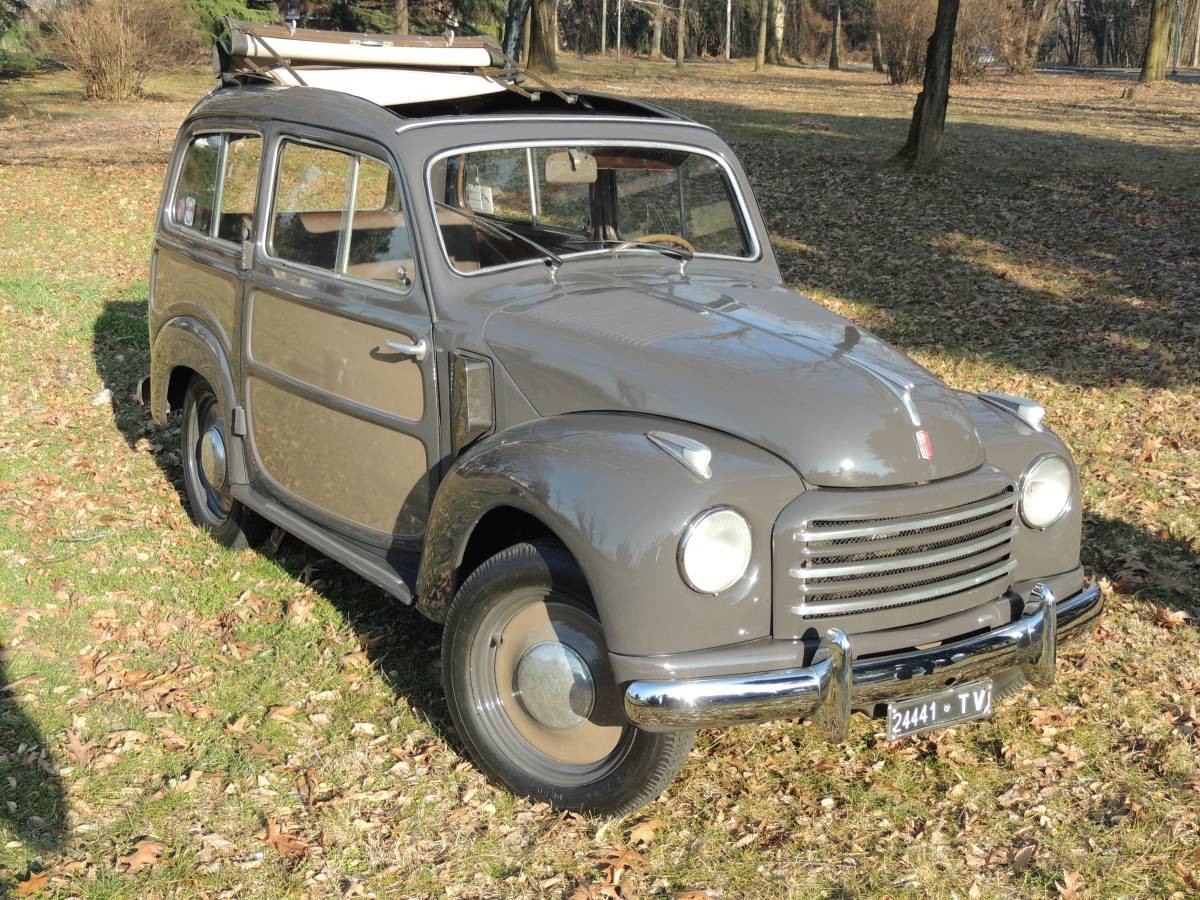
Fiat’s Topolino was a minor miracle for a country recovering from WWII. Continuing in production after the war from its launch in the mid 1930s, the family-friendly “little mouse” gave its buyers weather protection above and beyond a scooter at an economical price. Its successor, the 500, was just as beloved, offering several improvements while remaining cheap to buy and operate. Meanwhile, Carrozzeria Viotti. with Mario Revelli di Beaumont steering the design studio, had adopted the notion of a “woody wagon” from America, but with Italian flair. Viotti introduced its Giardinetta in the late 1940s – a wagon body named after the garden carts that Italian farmers used to transport goods to market. Viotti trademarked the name, which did not stop other coachbuilders from styling their own wagons. However, these were called “Giardiniera” – since none could use Viotti’s protected label. Sales were spotty, largely because the new body style resembled the hearses and ambulances so prevalent during the horrendous war years. Still, Fiat introduced its Giardiniera Belvedere, based on the 500, in about 1950. The Belvedere offered a sunroof, in addition to the three doors and side-valve engine of the ordinary Giardiniera. Constructed in all metal rather than the wood panels of the more upscale Giardiniera, the Belvedere was a practical approach to family travel. Here on craigslist is a 1952 Fiat 500C Giardiniera Belvedere recently imported from Italy and offered for $19,975. Thanks to T.J. for the tip!
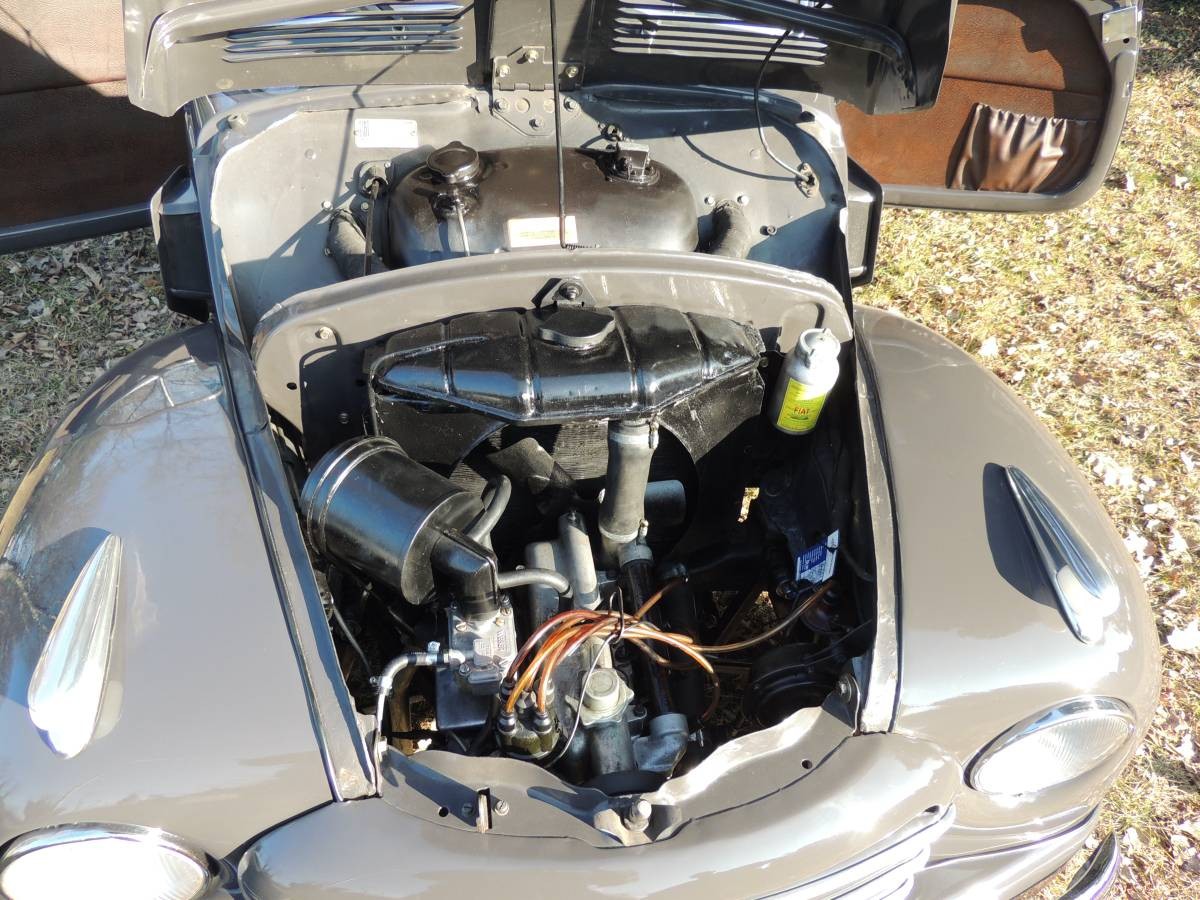
The engine is Fiat’s 569 cc flathead four, generating 16 hp (not a misprint), front-mounted, good for a theoretical top speed of 55 mph. (Maybe it would get there eventually if occupied by just one small person in the driver’s seat, but no way with four people aboard….) The gearbox is a four-speed manual. In 2018, this car received considerable mechanical attention, including new brakes, new fuel lines, a carburetor rebuild, and suspension work. The car runs and drives well.
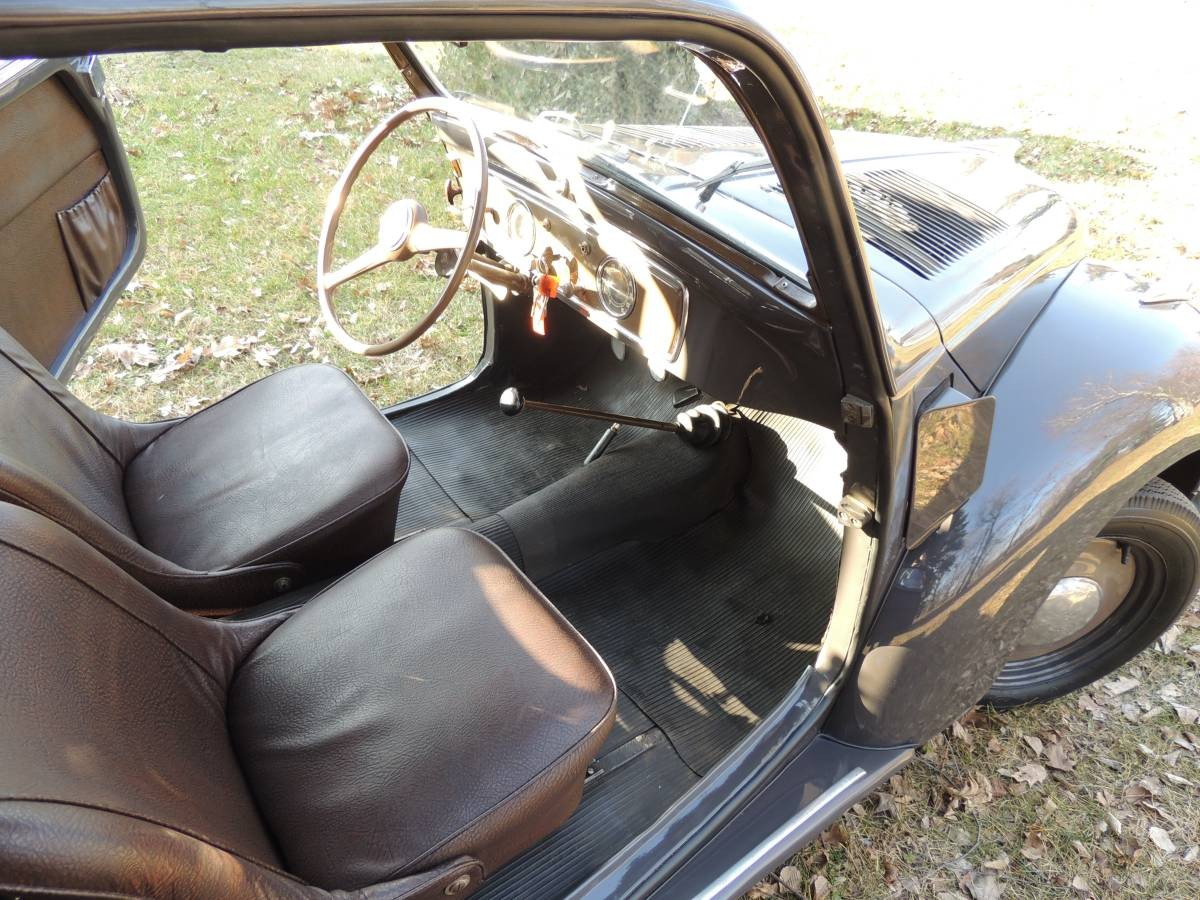
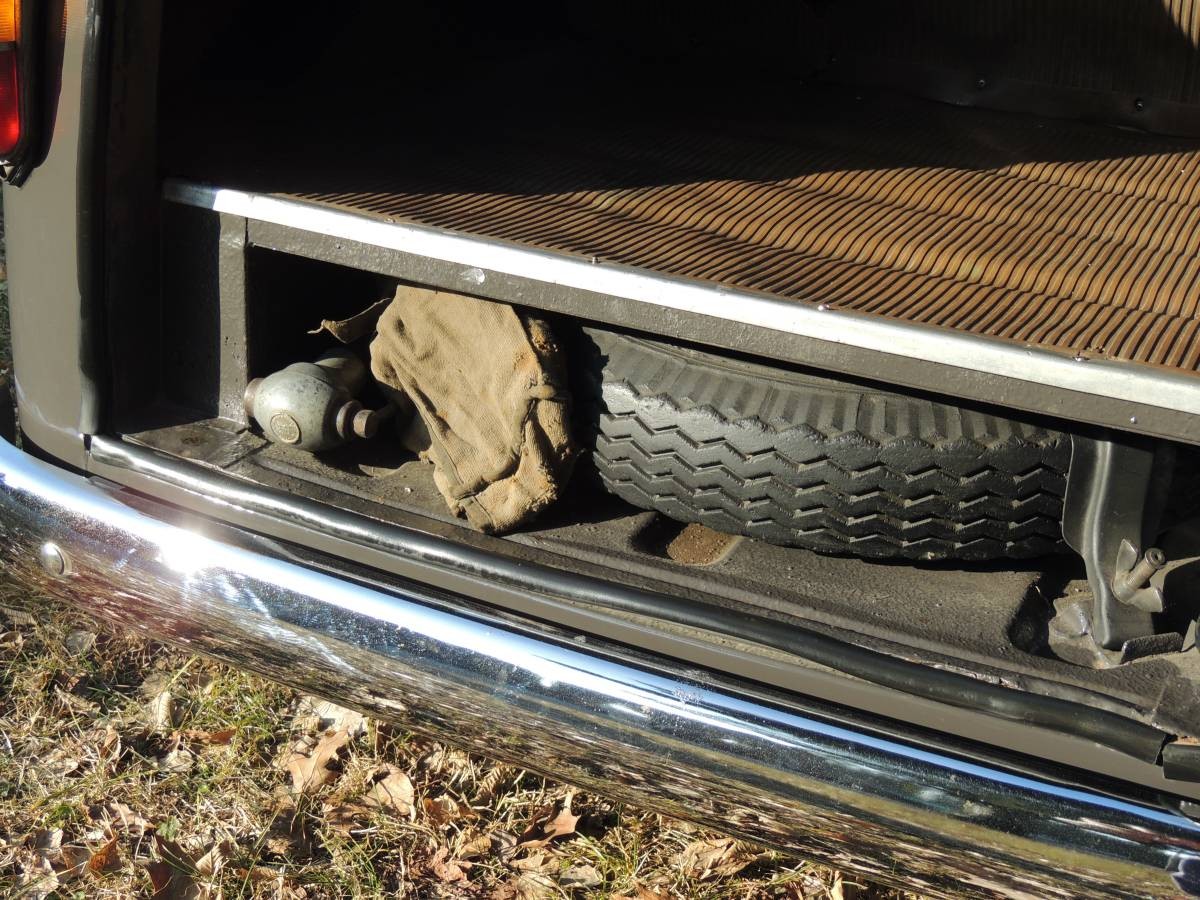
The interior is iconic Fiat: sparse but a little quirky. The folding fabric roof is in good condition; the two-spoke steering wheel is cracked in a couple of places, the original ribbed rubber mats are in place (including in the trunk), the seller notes that a few of the gauges have been reconditioned, and the switches all work. The suicide doors are cool, and if you are worried about safety – they latch shut! The spare is tucked into the trunk, held fast by its original clamp.
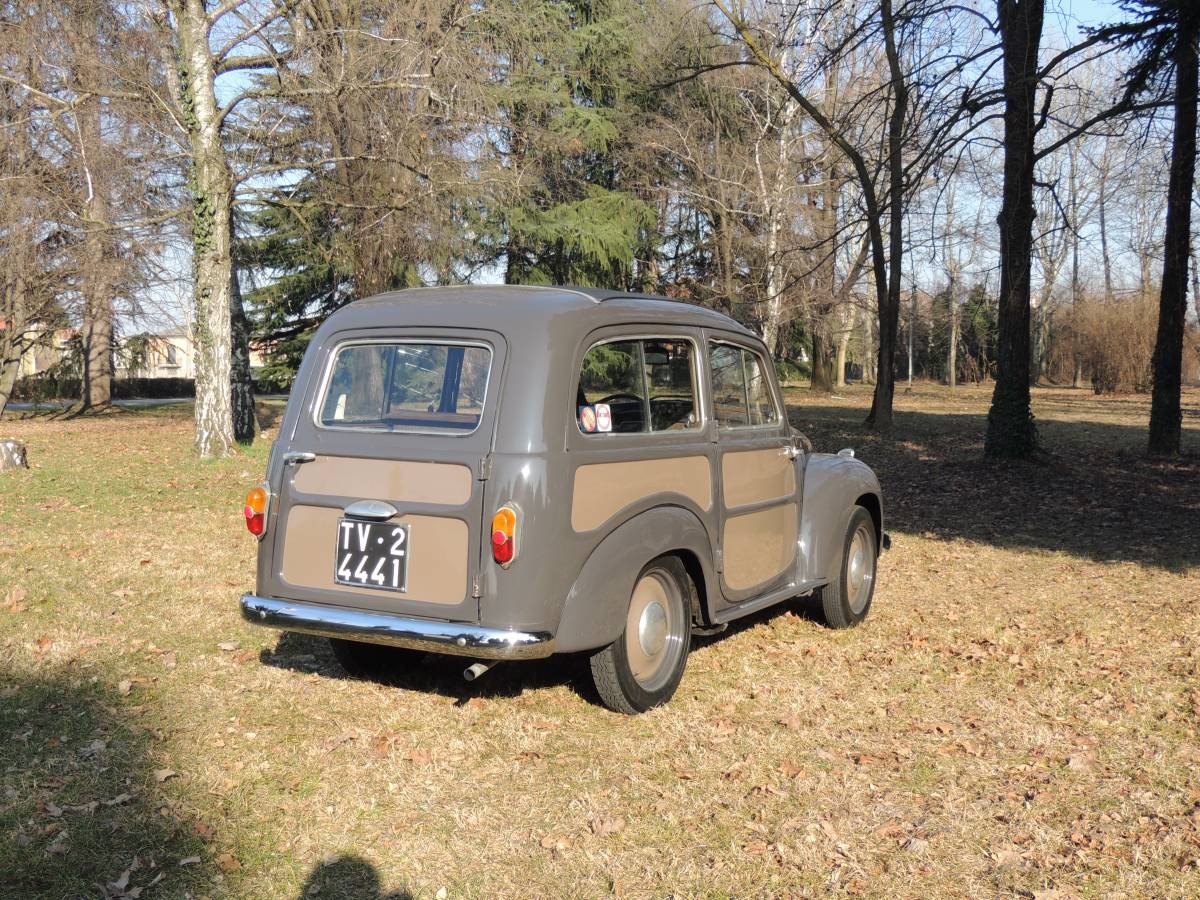
The colors are attractive, and the car retains its Treviso, Italy plate, though notably, all import paperwork is complete and it has a clear California title. These charming cars are almost a dime a dozen on the market in Europe, where they will sell for mid four figures. A decade ago, in the heyday of high vintage car prices, auction houses on our shores were receiving mid-twenties for metal-bodied Belvederes and more than twice that for woodies. Today, it’s anyone’s guess – we haven’t seen a recent sale in America that’s comparable to this very original example. If I had to guess, I’d say a discount will be required to move her to a new garage.




This little guy is actually interesting. Although the diminutive horsepower would relegate it to city dwellings. But if you are stuck to get parts i’m guessing you gotta learn Italian and call Fiat in Italy
Naw, most parts are shared with other contemporary Fiats, and they made a jillion of the relevant models. Mr Fiat, FD Ricambi, AutoRicambi, there’s lots of suppliers and they speak English!
I worked in an automotive machine shop in the 70’s and we would take in a very wide variety of different jobs, foreign and domestic. At the time overhead camshaft engines were becoming more common and some claimed bragging rights if they owned a car with OHC. One old timer who was a customer loved to joke about these FIAT’s having an “overhead fan shaft”. Necessary of course for a radiator mounted behind the engine. ;)
Michelle, the “600” was the successor to the Topolino in 1955. It, too, was four cylinder, liquid cooled.
The ’57 “Nuova 500” was a different animal altogether although it did share Dante Giacosa’s ingenious double-mount transverse front spring/lower control arm design with built-in anti-roll characteristics. They both also shared his wonderful no-tuck semi-trailing arm IRS design.
The cars parted company in the engine room, however; the Cinquecento went the air-cooled in-line twin route.
Finally, the 600 was a true 4-seater whereas the 500 was, at best, a 2+2. The Topolino was, in standard form, just a 2-seater although the wagons and some other coachbuilt cars extended the cabin to provided a rear seat. Interestingly, the 600 carried two more passengers than the Topo in a package that was the same size.
There’s also the Steyr-Puch 650 – which was a Fiat 500 fitted with a 650cc flat twin.
Thanks for the correction, Will, appreciate it.
If Crosley, DKW, Morris and Renault had ever collaborated on a single vehicle’s design, this might have been the end result. But I like!