
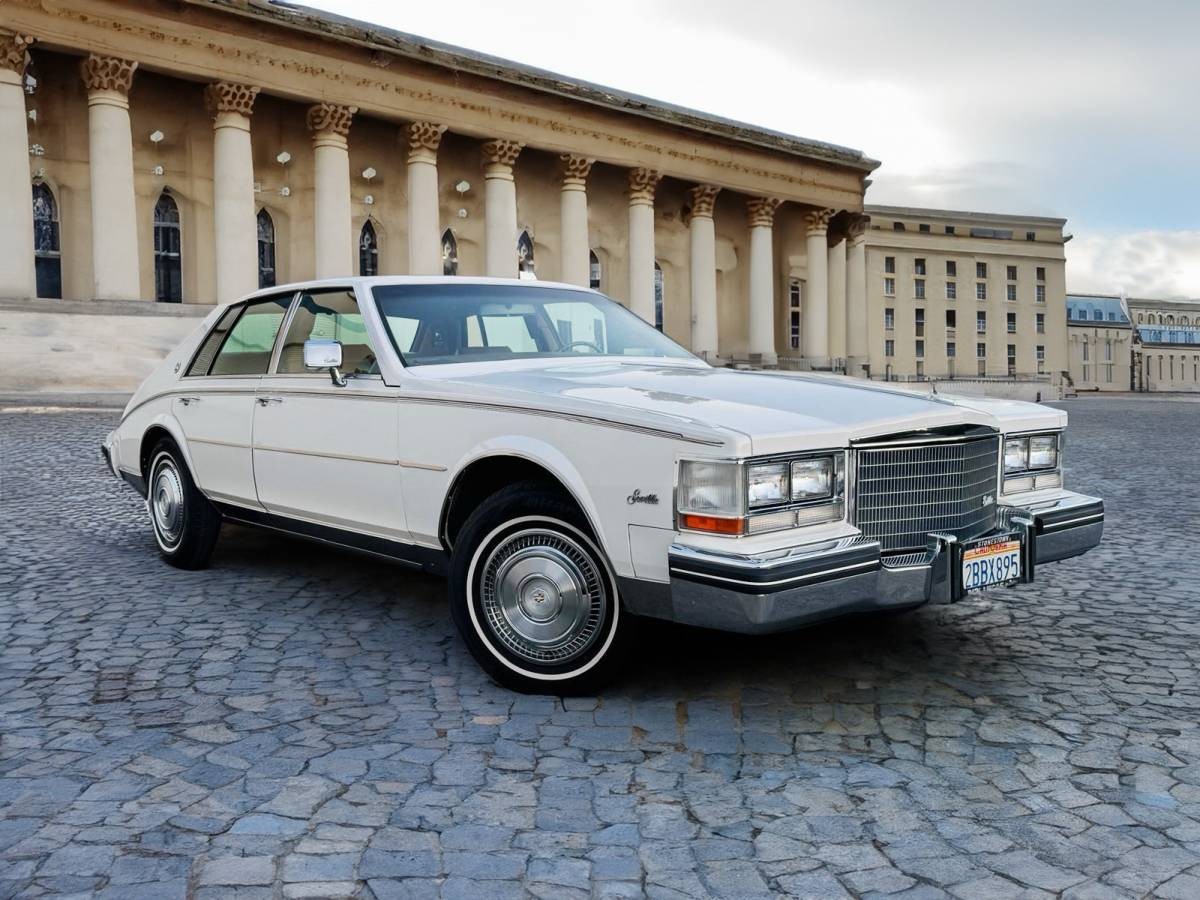
The early 1960s found Detroit car makers preoccupied with each other while occasionally taking pot shots at VW by serving up Corvairs, Larks, and Falcons. But the mid 1960s and 1970s brought an entirely new threat to our shores. Mercedes-Benz established its US division in 1965 and a decade later, along came BMW’s North American unit. At a time of rapidly evolving regulations and fuel crises, the presence of these two venerable companies with their sporting and luxury models opened a new front in the battle for market share. As is often the case, these pressures wrought trouble for some, and spurred innovation from others. Downsizing platforms was one way to deal with the changing environment. Cadillac employed this tactic beginning with its Seville, a nimble luxury car planted on its new mid-sized K-platform. Launched in 1976, the first generation Seville sold well largely because the car was reasonably priced next to a Mercedes. Alas, the Seville missed its primary goals, which were to steal buyers from foreign interlopers and appeal to a younger crowd. Only 15% of buyers turned in an import luxury car when they purchased a Seville, and the average age of a Cadillac owner actually moved up, not down. Cadillac tried again with a redesign of the first-gen car, bringing us the “bustleback” Seville of 1980. Designed by Wayne Kady, the new look was reviled by many, further alienating potential customers. Yet the tide of nostalgia is strong: the collector market has boosted prices of well-maintained second-gen Sevilles into the ‘teens. Here on craigslist is a pampered, low-mileage 1984 Seville priced at $13,500; the new owner could motor it home in leisurely fashion from Citrus Heights, California. Thanks, Tony Primo, for the great tip!
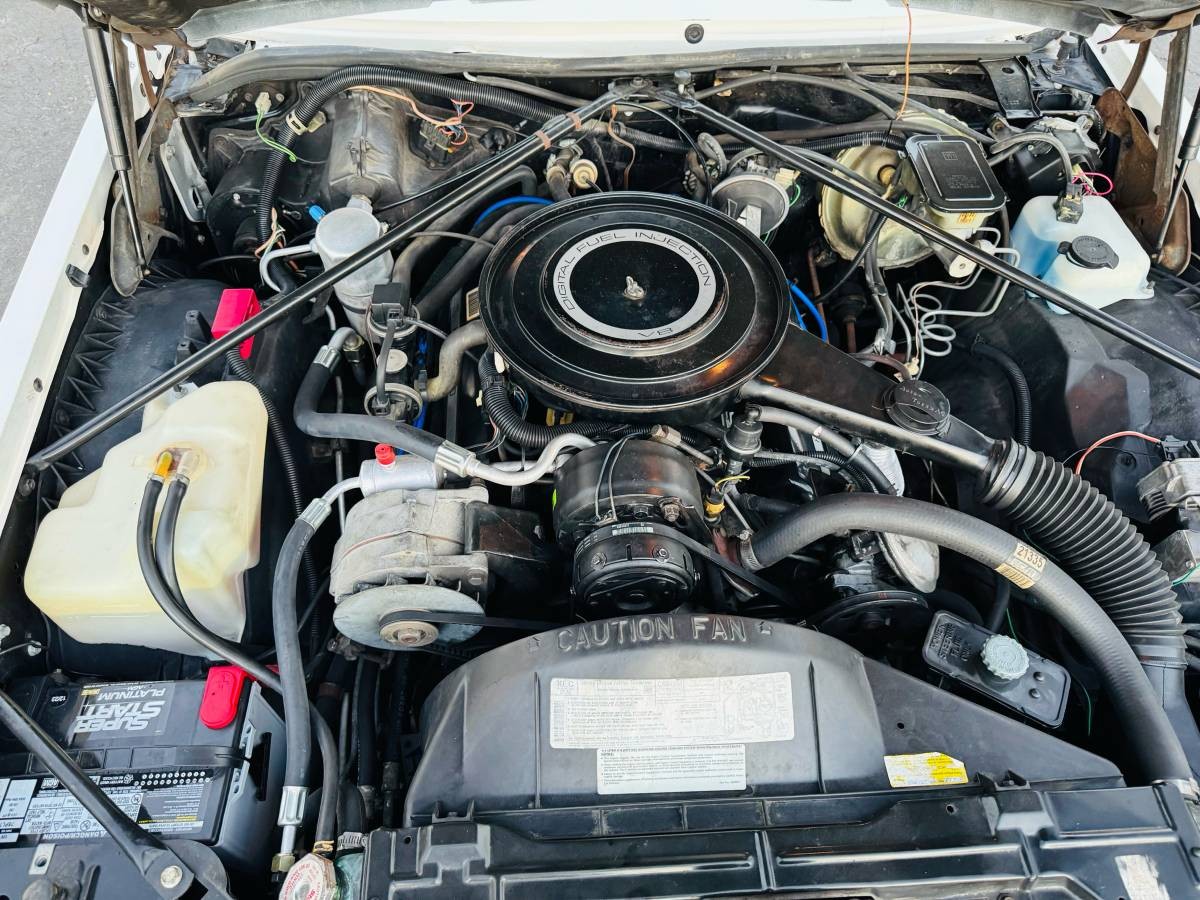
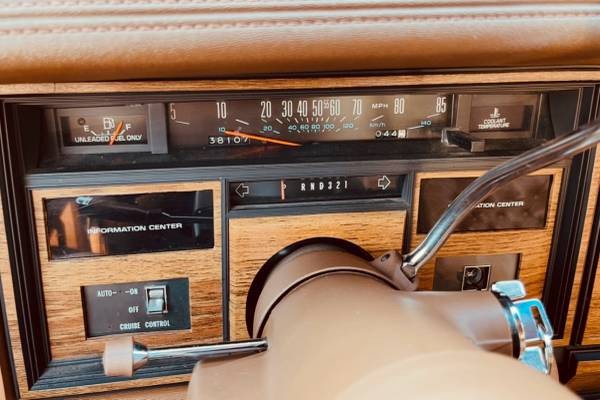
In a confounding move, Cadillac gave the new Seville a diesel motor as standard. Problems with that engine prompted the company to rush its V8-6-4 to market. The 8-6-4 attempted to idle cylinders when they weren’t needed, but the technology wasn’t ready for prime time. Cadillac didn’t rest on its laurels – it brought yet another imperfect engine to market in 1982 – the HT-4100, an underpowered, undertorque’d, unreliable lump that has few, if any, fans. (Does this sound like an American car company shooting itself in the proverbial foot yet?) That said, a small improvement in horsepower bumped performance mildly by the time this car rolled off the line. The seller notes that he serviced the automatic transmission and replaced the torque converter. Other maintenance items include new brakes, a new steering pump, new air shocks, and a new catalytic converter. The seller indicates that the odometer’s 38,200 mile reading is all she’s covered since new.
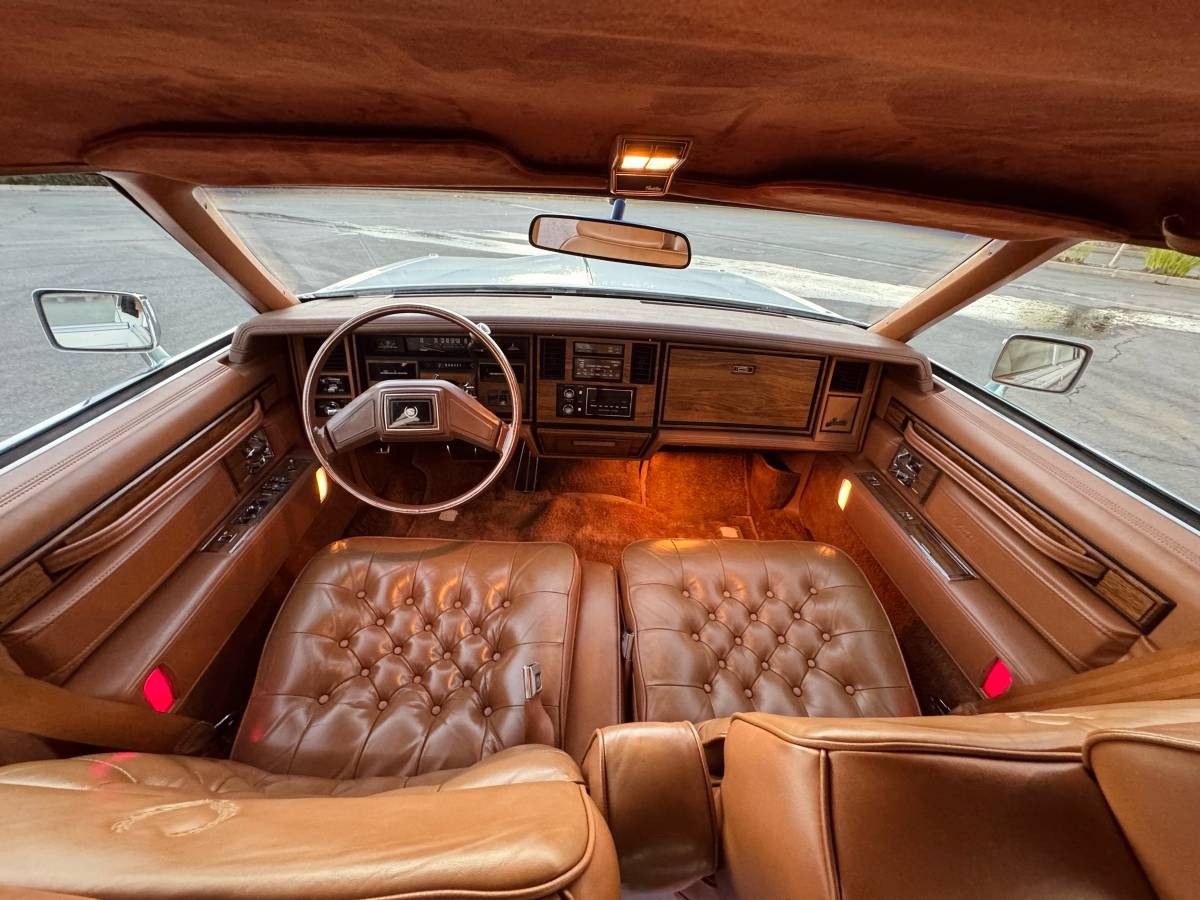
The interior screams “Cadillac” – with tufted upholstery, enough cabin lighting to conduct a heart transplant, plush carpeting, a new headliner … and everything is said to work “perfectly”. The air conditioner unit has a new compressor and new lines – no word on whether it’s been recharged with modern refrigerant but this owner is meticulous so it wouldn’t surprise me if he’s thought of that, too. The trunk is as nice as the rest of the car. Stylistically, the gauge arrangement reminds me of a kindergartner’s drawing with its oddly sized squares all over the place – but that was the idiom in the early ’80s.
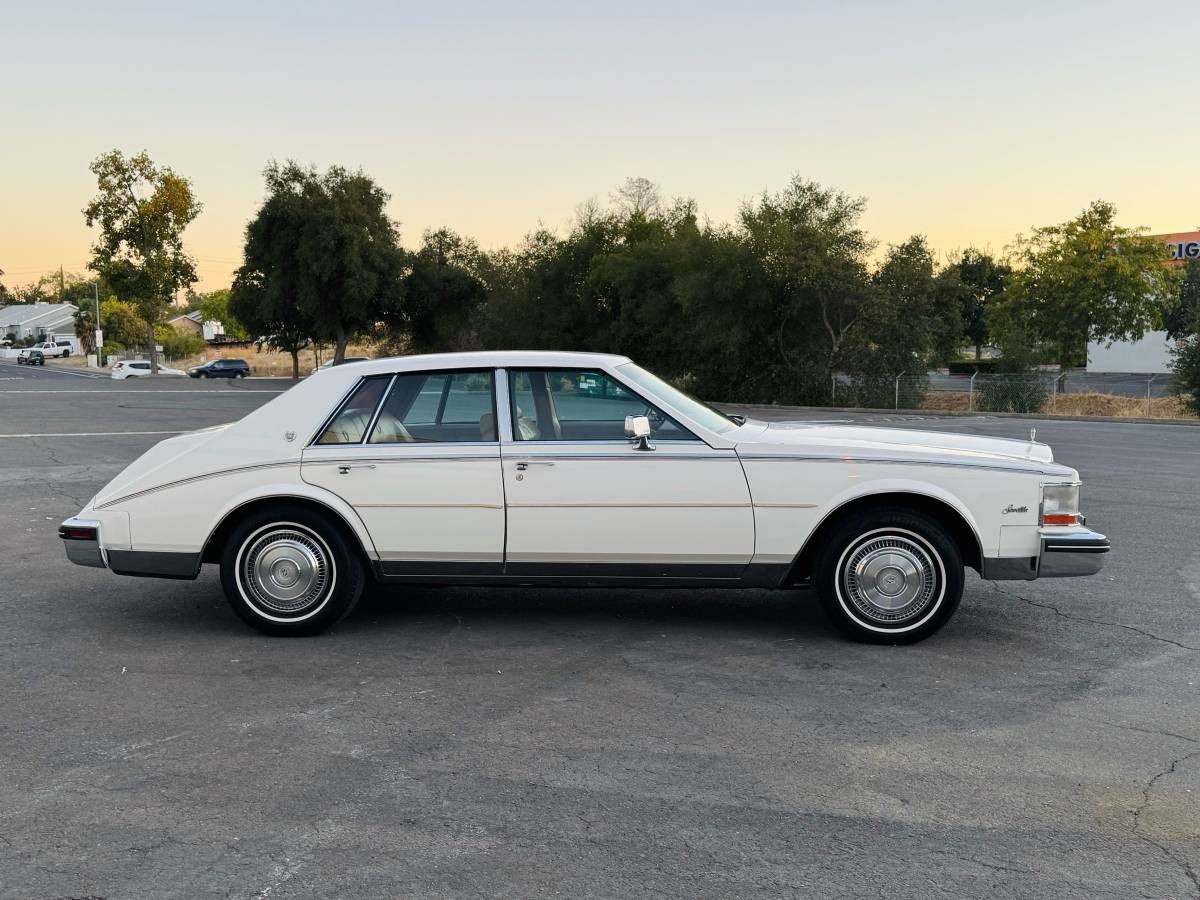
Here she is in profile. That passenger-side door gap bothers me, but I note the door edges are clad in trim. Maybe it’s a bit of ill-fitting trim. Aside from that nit, we want to know how the bustleback Cadillac strikes you: Do you love it, or hate it? Would you pay mid-teens for a low-mileage Seville?




Why didn’t Cadillac just drop in a corporate 350 under the hood of this stunning design. Love the Seville. Thanks Michelle 👍
By 1980 there were no “corporate” 350’s. All phased out. Pontiac, Buick, Olds, even Chevy except for trucks. The push then for GM was fuel economy. Cadillac was left with a 368 V-8, which they used. GM was committed to the diesel, and worked really hard to perfect it, by 1981 with the DX block, it was a durable and dependable engine.
👍 Even better duaney.. Cadillac could have claimed it their
“own ” 350.
Nice one, Michelle! Although, wow, is that asking price painful. I paid $3,800 for my one-owner, rust-free ’84 black Seville about six years ago and sold it a year or so later for $5,400 to a retired firefighter in Dearborn, MI. It had the same exact interior, and everything worked like new. I even updated the factory garage door opener system with a digital one so the factory-looking buttons by the rearview mirror would work with our digital door openers. I should have kept that one; mistake #347…
Had 3 ’85s. One had a flat cam on a 120K mile engine. C’mon GM. Your flagship car and you cannot make a hard cam? How long had you been building cars by ’85? A’int never heard of Benz or BMW having such a basic flaw, not to mention the Japanese.
Taken care of well, beautiful interior, but either of those 3 engines spoken of, the price is just too much, plus rather have spoke wheel covers.
I wanted one of these until I heard the horror stories about the HT 4100 boat anchor. I think they put an Olds engine in the 1980 model but I never made the effort to track one down, at some point you move on.
LS swap candidate?, cool/unique body! Its too bad GM didn’t offer the 350 Olds engine my ’79 Eldo had!
Hmmmm, an ’85 red w/faux convertible top or ’84 white w/no covering. Both red interiors. Decisions, decisions.
Can I have both?
“Enough cabin lighting to do a heart transplant”. One of the funniest lines I’ve seen here. Michelle, you did yourself proud with that one! Lol!
With the background setting of the first pic, I thought I’d seen this one before. Similar miles, but the other one had wire covers.
Oh well, nice car in spite of the engine, which our featured author pointed out the later history of Cadillac engines, I don’t care for these as much as the first edition.
A shout-out to our resident Caddy queen, Angel.
Another HT(hook & tow)4100. Oh boy.
Not a big fan of the HT 4100. Have a bunch of them. Sometimes though, they do run quite well, good mileage, and of course low on power. One crucial item is the cooling system additives, such as the tablets GM recommends. Anyway, they’re not all bad. An example like this car in good running condition probably has a good engine with all the years that have went by. My preference is the Olds diesel, which by 1980-81 was a very durable and dependable engine.
Lots of cabin lights for sure my 81 and 85 Seville had 14 lights with 14 separate bulbs and 12 came on when any door was opened. I wish I had LEDs then!
Can’t see the back while driving it, so I would be fine.
I LOVED the LOOK of these, when they came out in 1980. But the ugly mechanical problems are a hard turn-off. After my 1978 experience with that clattering and smelly Olds diesel, you couldn’t GIVE me one! Cadillac should have put a reasonably economical tried-and-true V-8 of long-standing in these new Sevilles. Beautiful car. Wonderful luxury. But if it’s a mechanical piece-of-trash; then, what’s the POINT??? When you buy a luxury car, you want RELIABLE LONG LIFE and virtually PROBLEM-FREE. Hard pass. By the way, I hated the first generation Seville: looked like a lesser make’s mid-size, badge-engineered for Cadillac — like the equally hideous Lincoln Versailles for all the same reasons. Finally, in 1980, the Cadillac Seville looked utterly classy, and totally worthy of Cadillac — then they burdened it with lousy mechanics. Too bad.
Thanks for the informative–and amusing–overview of Cadillac engines. And next up was the Northstar, with its problems. It’s a long way from the “Standard of the World”.