
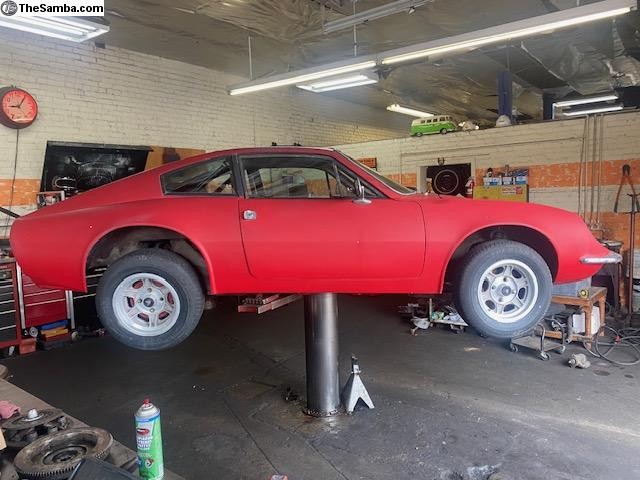
In a way, the Puma wouldn’t exist without the heavy hand of the Brazilian government at work in the economy. While Ford and GM had been on the ground in São Paulo since the 1920s, protectionism arose in the late 1940s. Import controls coincided with state support of a new national steel company and an automaking organization. These moves did not preclude imports, but now currency values favored European vehicles over their American competition. The continuing trickle of foreign makes into Brazil’s market provoked increased controls which eventually resulted in a proliferation of home-grown assemblers as well as parts and service suppliers. Volkswagen, for instance, decided to establish itself in the country in 1953. Puma was founded ten years later, by Rino Malzoni, an Italian immigrant. This example, advertised here on The Samba, is waiting to be rescued by a buyer willing to pay $6500. Take a trailer to Long Beach, California to pick her up. Thanks to Chuck Foster for spotting this one for us!
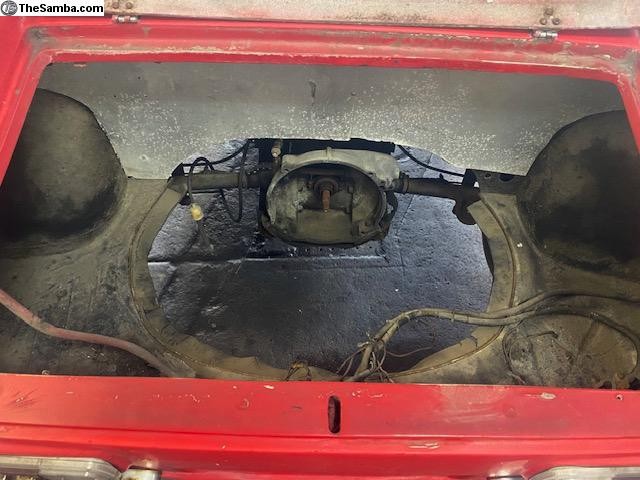
First produced in a front-engine layout based on DKW components, the Puma was radically reconceived when VW bought DKW-Vemag in 1967. Malzoni had to switch to a rear-engine layout using the Karmann Ghia chassis. By 1972, a 1600 cc flat-four would have been resident in this empty engine bay. Enterprising owners have built Pumas with Corvair and Subaru engines, or even slapped a turbocharger on the VW unit. But the body is fiberglass, so even the original configuration provides a sporty feel.
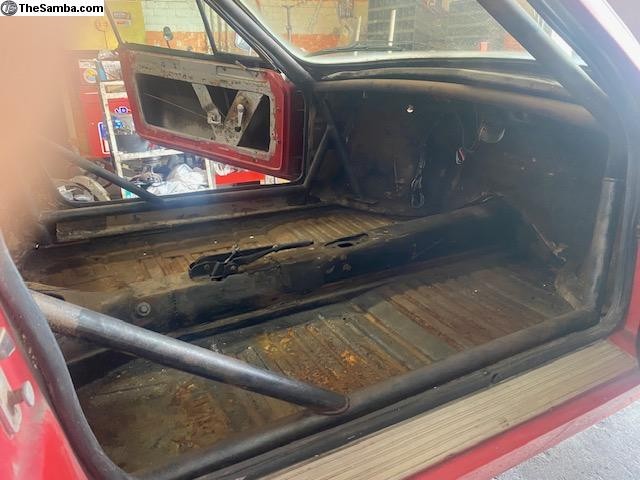
The seller notes that the Puma’s gauges are with the car but they’re not in evidence here. The car does have a full rollcage, and other than missing what I think is a crucial element if you’re going to race – bars across the inside of the doors – it’s pretty well done. If you are going racing, keep in mind that rollcage angles and materials must coordinate with your racing organization’s rules. No mention whether the seats are available, but those flat pans will accommodate a variety of choices.
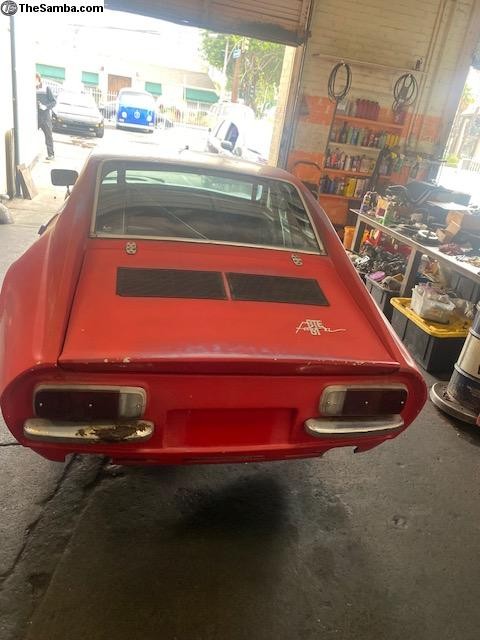
Before 1970, the model name was Puma GT, but safety regulations overseas forced a few changes to qualify the cars for export; the “E” was short for exportacão (export). The seller has new chrome bumpers and a new Puma fan shroud to deliver with the car; notwithstanding the extra parts, there’s plenty of work awaiting a new owner. If this were my car, I would put it back to as close to stock as possible. How would you handle the restoration?




if the cage is of correct design, vintage racer might be a better direction for this than restored/street
That’s what I was thinking, might be its highest and best use.
I’ll 3rd that. 223 200 hp VW engine would make it fast and stick with the Vintage rules. Suspension set up for racing is easy.
Recently I saw a single post lift in an ancient service station and remarked that it’s been a while…now here’s another!
Cool car that might make a decent autocrosser, but to bring it back to factory spec’s would probably be a tall order.
I remember those & the pit style too, but not how the 1st held the car. Cant remember it being in the way. The ones I didnt like (hit my head) were driven onto & the ‘ramps’ went up w/the vehicle (always in da way!)
This is a design I have loved since 1st seeing them. We need a 3rd shot to see well (beside the 1st’n last). A ‘dead on’ frnt view. However, never liked the drive train. How bout a transaxle on the rear axel, motor in frnt? Or a backwards current Japanese (the single motor/trans axle unit) ‘midships’? Like to see that body spiffed up and riding something more than the current subie 2.5 DOHC. May B use it w/a turbo?
Due to its import rules Brazil created the Amazonas motorcycle around the VW 1600cc engine and other parts about 1978.
A big machine.
So, if you need Puma parts, you can’t just look up a vendor in Brazil and buy online. You have to find a broker licensed to buy parts in Brazil and buy from them…with the additional mark up.