
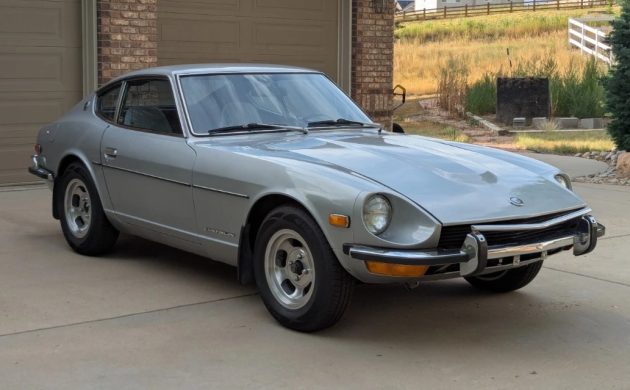
Japanese automobile manufacturers developed a reputation during the 1960s for producing cars that were well-built and economical. Most wouldn’t set pulses racing, but Datsun broke that mold in late 1969 when it lifted the cover on what would become the 240Z. This 1973 example is a tidy vehicle with an upgraded engine. That should lift its performance, while the seller’s decision to list the Datsun with No Reserve may make it irresistible. You will find the 240Z here on eBay in Erie, Colorado. The bidding has reached $6,700, with a new home just days away for this classic.
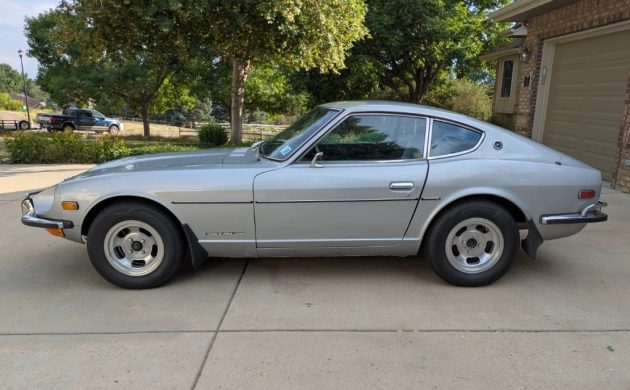
Datsun unveiled the 240Z for the North American market in 1970, and it would prove to be the first in a succession of Z-Cars that would cement the marque’s reputation for producing affordable sports cars. This 240Z emerged in 1973, finished in Code 901 Silver Metallic. This was one of only three shades that remained available throughout the badge’s production life, along with Kilimanjaro White and New Sight Orange. The seller admits that this classic isn’t cosmetically perfect, with a close inspection revealing minor marks and scratches. However, there are no major dings or dents, and it appears that this Datsun is rust-free. The seller includes a full window rubber kit in the deal, which may indicate that some of the originals are showing their age. Swapping them, if that is the case, would be wise. Letting water find its way inside these classics can produce nasty long-term results. The glass and trim are generally in good condition, and the 240Z rolls on a set of period-correct alloy wheels.
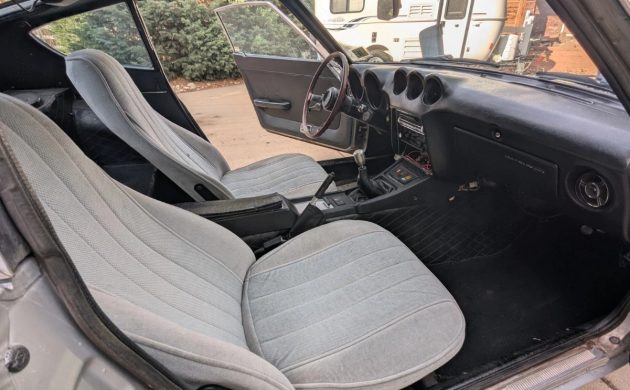
It appears that this Datsun’s interior might be a work in progress. The seats wear cloth covers, with the remaining trim in the original Black vinyl that was the only color that buyers could team with Silver Metallic in 1973. The spot reserved for the factory radio is empty, and the seller includes a new carpet kit in the deal. However, it isn’t all bad news, because I can’t spot any cracks on the pad above the center gauge cluster. This is a prone area, and reproduction replacement pads aren’t cheap. The factory vinyl looks to be in good condition, meaning that this interior could present well with a little time and effort.
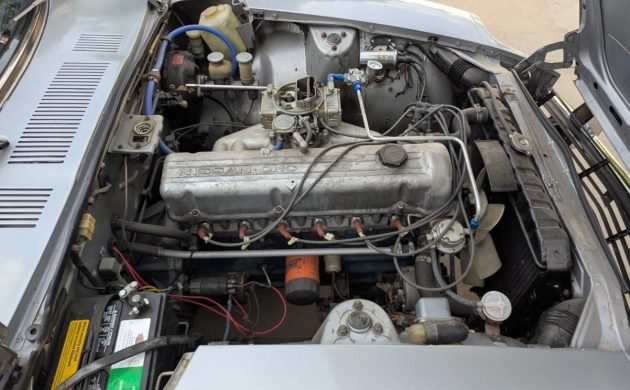
Ordering a 1973 Datsun 240Z brought buyers the company’s 2,393cc OHC six that generated around 151hp and 146 ft/lbs of torque. This motor could be teamed with a less desirable three-speed automatic transmission, although it is welcome news that this car features a four-speed manual that would maximize driving pleasure. The first thing to note about this Datsun is that it isn’t numbers-matching. The engine block is from a later 280Z, pushing the capacity to 2.8-liters. However, the builder bolted on the 240Z cylinder head, which will have lifted the compression slightly. They also ditched the twin Hitachi carburetors in favor of a Holley that should be easier to tune, and the result of this work should be a noticeable performance gain. Sadly, this classic doesn’t run, and it appears that it hasn’t for around a year. The engine will come to life with some tinkering and a splash of starting fluid, but the seller believes that a combination of a dud ignition switch and fuel pump could be the culprits. Therefore, revival may not be too difficult.
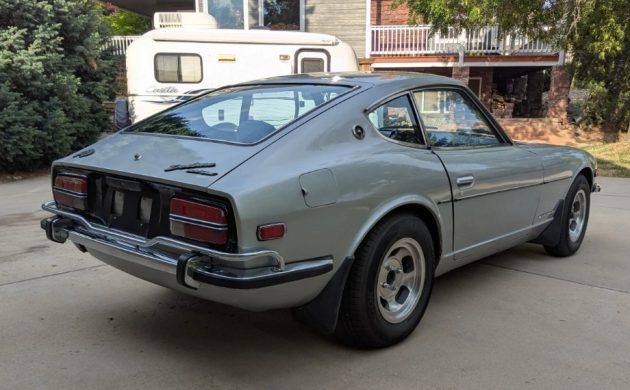
Datsun produced a winner with the 240Z, and this 1973 model is a promising example with what appears to be only a few problems. Rectifying them shouldn’t be difficult, but perhaps the best news is that the winning bidder won’t face the rust repairs, which are sometimes a part of the 240Z ownership experience. The bidding history and listing statistics demonstrate that there is a long line of people willing to take on the challenge of returning this Datsun to its rightful place on our roads. Are you tempted to be one of them?



Rare to find a rust free early Z. Even more rare to see an owner sell one that doesn’t run. Looking at the eBay ad I wonder if an air cleaner will fit under the hood. Having worked on these cars in the past I can say that the Hitachi carbs are easy to tune and will provide more power than the single downdraft unit. Optimum setup for more power is 3 Hitachis spreading the intake flow evenly across the 6 cylinders.
The seller is potentially telegraphing issues with the body. All they say is there are some scratches, no major dents and it looks good from 10 feet away, there is no mention of rust, or lack there of. To make the assumption there is none, then bid based on that assumption without asking the seller specific questions as well as for detailed pictures of rust prone areas would be foolish.
This car looks good in the pictures, the slot mags were a universal upgrade on early Z cars for a reason. Hopefully this car checks out in person, but potential buyers would be wise to not make the mistake of assigning the most favorable interpretation possible to a sellers vague description.
Steve R
Agreed Steve, a zoomed-in look at the left side rocker panel shows some bubbling under the paint and both of the door sills show some signs of rust too. Add the amount of surface rust evident in the engine bay and it is likely that the underbody may have some issues.
Wise words Steve. Though it appears people are making that most favorable interpretation of the sellers vague description. Always seems strange to me that someone would sell it supposedly only in need of minor repairs to have it running. If it’s that easy why haven’t they made the repairs? But who knows their life situation/ mechanical aptitude. It appears it’ll bring decent money regardless.
Brian, sometimes what appear to be minor issue aren’t easy to track down, especially electrical and fuel. In the past I’ve bought and sold cars due to an owners frustration. Sometimes sellers need cash for an emergency, they are moving, a broken car is causing drama in the family, there are countless reasons. Everybody is searching for the allusive “deal”, the owner simply wanting a car gone, is why many of those “deals” come to market. The main difference with this car is most “deals” are sold through word of mouth.
Steve R
That bar over the grill ruins the look of this classic.
Picture makes it look worse than it does in person. I had an early ’74 260Z that was exactly like this. The ’74 1/2 had smooth big bumpers like a ’75. It was a dealer added option that had the effect of protecting the leading edge of the hood. Not sure what the rear was actually supposed to do as mine didn’t have those. It does look better clean but if you take them off it leaves the holes they drilled.
The bumper over rider/grille guard is bent, which is why it looks so bad. It appears as though someone sat on it. If you delete it, the bumper guard rubber strips are available as reproductions. Who ever installed the new induction system, appears to have done it well with the fuel hard line and AN fittings, Holley adjustable pressure regulator, and a simple straight linkage. The original twin Hitachi, and other multiple SU type side-draft carburetor setups are not that difficult to tune. The dash appears to have a cap on it, which is an inexpensive alternative to restoring the original. If it had AC, it would certainly spark my interest.
Datsun made so many ugly cars and then they came up with the smooth an uncluttered 510 super sedan. AND THEN this awesome 240Z! I was lucky to get to spend alot of time in a well sorted 240Z and loved every minute of it. I would love to own now. And then they come out with more ugly cars.F10 anyone?
F10 was the pinnacle of ugliness.
why not spend the money and get it running. you get it back in thr form of more money from the sale.
Old joke about the guy at the parts store looking for a clutch for a 24 ounce Datsun.
But seriously, had a friend who drove a 240Z, worked for GM and couldn’t understand why they closed the plant down.
Sold 8/14/2025 for a high bid of $8,900.
Steve R