
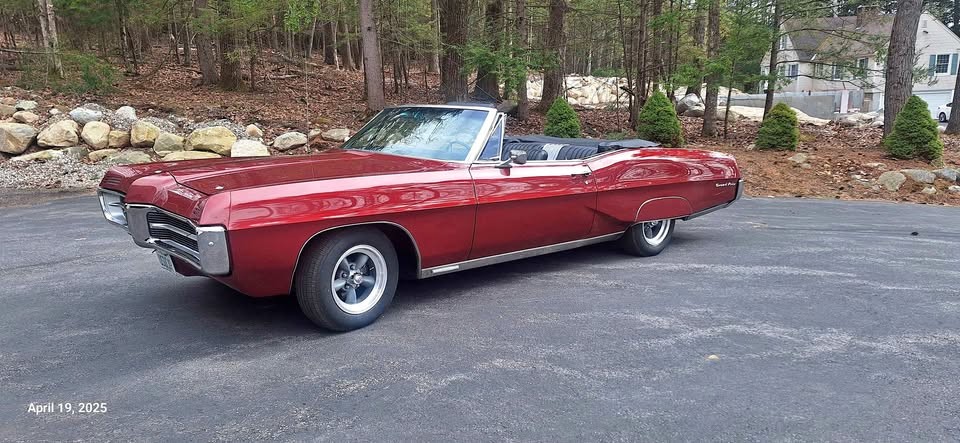
Any sixties vintage Pontiac Grand Prix is a neat find, but this 1967 Burgundy (Code N – assuming that the paint is the original shade) example is special because of its convertible body style – a one-year-only variation from the standard two-door hardtop. Richard in Maine discovered the listing for this Moultonborough, New Hampshire, domiciled rag top, and it’s available here on Facebook Marketplace for $32,500.
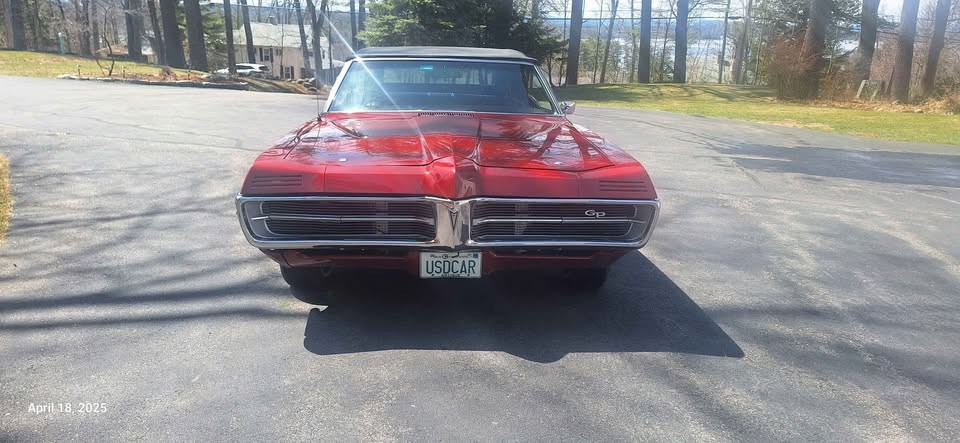
Though the GP convertible was a one-and-done offering, they’re not exactly rare as 5,800 buyers took the plunge in ’67 and signed up. Total GP production amounted to almost 43K units, so the ragtop accounted for 13.6%, a typical, or perhaps a bit higher percentage, for the wind in your hair variety. As to why this body style didn’t continue for the very similar ’68 Grand Prix is anyone’s guess, but perhaps the Poncho bean counters weren’t impressed enough with the convertible’s volume and, of course, a substantial change was in the air for Pontiac’s personal luxury coupe in ’69.
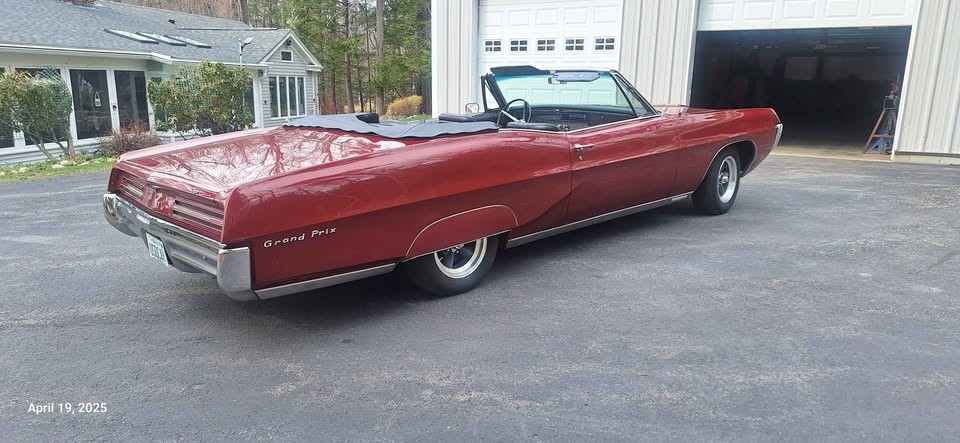
What’s not to like here? Nutffin’ as near as I can tell. The entire package presents brilliantly with nary an observable boo-boo. The finish is so strong that a repaint in its past wouldn’t surprise me, but there’s no claim to that having happened. The seller states, “No rust!” and I’d suggest no other foibles either; the chrome and stainless trim are just perfect. The only noted deviation from stock is the Torque-Thrust wheels – always a cool upgrade, but the fender skirts end up obscuring the rear ones. If this Grand Prix looks outsized, it is; it’s a big car, six and a half feet wide, stretching out eighteen feet in length while riding on a 121-inch wheel base, and tipping the scales at 4,200 lbs of curb weight.
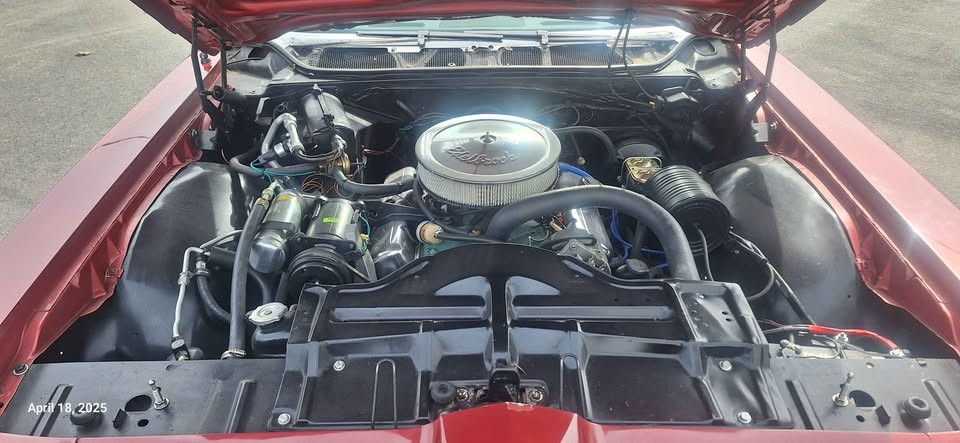
Standard power was a 350 gross HP, 400 CI V8, and we’ll have to assume that’s what’s going on here – there’s no disclosure. The engine compartment is super clean, and the only deviation from stock is the open-element air cleaner and chrome-plated valve covers. So, how does this non-documented 35 K-mile convertible run and drive? The seller never states specifically, but does claim: “Everything works on this classic as it should.” A Turbo-Hydramatic 400, three-speed automatic transmission handles gear changes, though a three-speed manual was standard and a four-speed was optional.
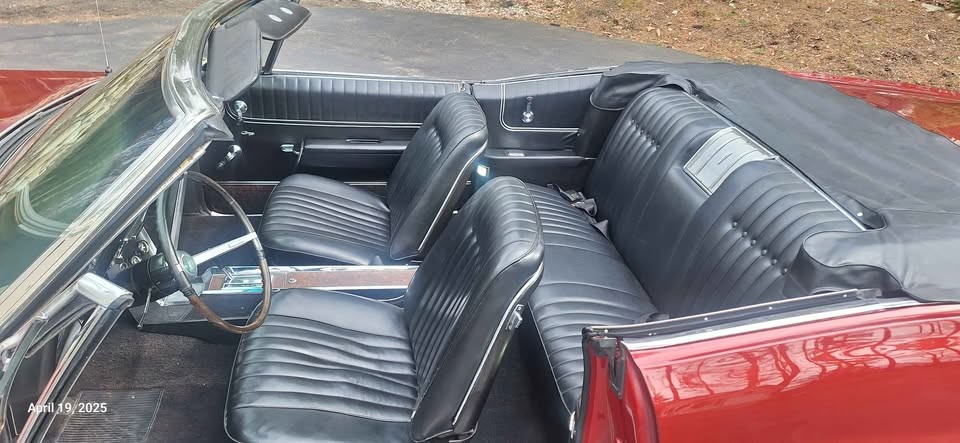
That “everything” working includes the factory A/C, which is good to know as those R12 systems are often on the fritz and need a lot more than just a recharge. The black vinyl “Morrokide” upholstery looks fine, and the bucket seat/center console is a desirable GP feature. That’s one huge interior perfect for cruising with lots of your friends or your extended family.
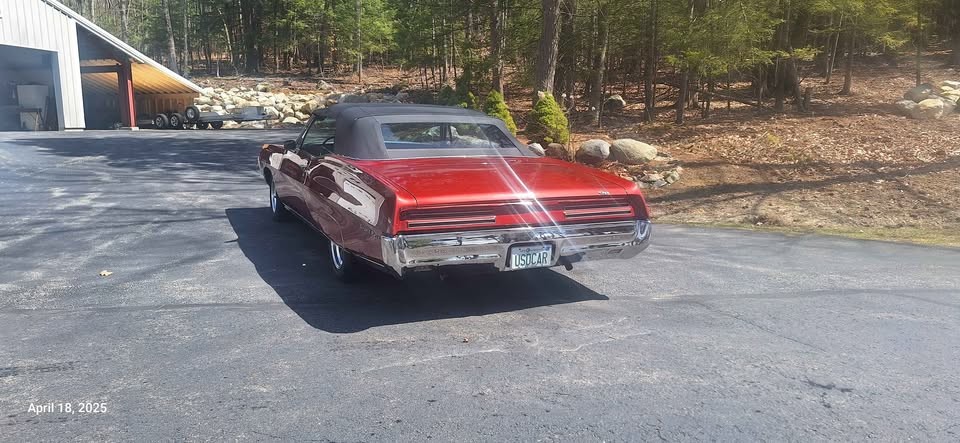
I would consider this uncommon Grand Prix convertible to be a turn-key deal – buy it, turn the key, and just enjoy it, it needs nothing. But first, let’s talk price; at $32,500, what’s your thought, priced right or not quite?




J.O..Was a 2bbl 400 the base offering?
Because it had 265hp/397lb-ft. Also w the Turbo 400 Hydramatic.
The 4bbl 400 had the 350hp you speak of, and 440lb-ft.
Beautiful Poncho.
The 400-4 was the standard engine for the 1967 Grand Prix. The 400-2 was optional for “economy.”
👍
This thing screams for some 8 lug wheels!
+ for the 8 lugs. If this were mine, with the torque thrust wheels, I’d remove the fender skirts. With the 8 lugs, they would look great with whitewalls and the skirts.
Time for some new coil springs jack!
This is puzzling but a pleasant surprise. In 1967 Gran Prix was the only one of it’s kind in the division to have AstroAir(?) I think was the name for the full on window with no side vent, yet this one has side vent windows. Was it just a convertible thing? Don’t get me wrong. Side vent windows were the very best thing to ever have been invented. It’s too bad Detroit cheapened their cars glass up and came up with the solid side windows, forcing A/C onto everyone.
I’m sorry, the full glass of the Gran Prix in 1967 was called Astro Ventilation signified by the Astro Ventilation white silk screened logo on the glass where the vent window used to occupy. This made the car look slick but it also took away the freedom of not having to use A/C as a way to “defog” windshields. Instead, you could pop open the side vent window, direct usually cold air against the windshield and thus keeping the windshield from fogging. In 1969 all full bodied GM cars came with it, eliminating the side vent window metal (usually chrome plated) and side latches saving the industry a ton of money. With that, also came the demise of firewall or scuff panel vents that allowed fresh air to rush into the car. The Astro Ventilation was nothing but a flop but it forced buyers to purchase the $600 A/C packages onto cars in order to get cooled air before becoming a standard feature later in the following decades.
Forgot what year it was as i owned several of, but one of my Lincoln Mark IV’s, had the power vent window. That when hit the switch, power vent window drops down 1st, then the whole window!
Now that too was also, one of the best inventions having gone to power windows! Wonder if Lincoln patented that mechanical design as to the why’, that the other car manufacturers didn’t carry that forward too?
Cost was high I’m most sure, for most lower end or intermediate car models of the other manufacturers, but Cadillac could have added that one I would think. One of the options, though ‘small’, was really super convenient!
Even if raining out which then when residing in CT, was prevalent, never had to worry about water coming in vs the original style vent windows.
Dammit, lol, now you have me aching for something like that once again, I’d have enjoyed having that cool setup for what $ I spent on my new F350 Ultimate Tremor!
Gorgeous. They make quite an impression when you see one of these up close.
I have written here before about discovering one of these in a South Carolina salvage yard, exposed to the elements, sporting the big mill and a factory 4 speed. It was completely beyond my means at the time, and it killed me to walk away. The car I really had to talk myself out of was the 58 Chevy panel express.
Beautiful old Poncho
400-4 @ 350 hp was standard on the GP. The 428 was also available but I believe the fenders would have “428” on them. The economy 400 was available on the Catalina. 5896 GP’s produced so not exactly rare, but when do you ever see one?
’67 & ’68 were my favorite GPs because of the hideaways along with the taillight treatment making these 2 years sleek looking, especially with skirts.
Guess I’d like the 8 luggers, too but the fact a convertible in the 60s has a/c is enough for me.
I love convertibles, but why did so many order them with a black vinyl interior? The back of my legs hurt just thinking about it. Even in a hardtop black vinyl front seats can get hot.
The wheels are great the way they are, unless you can find whitewall tires. Leave the fender skirts on. This car would look AWFULL if you took them off. There is a reason why it came with fender skirts. I don’t know why some people don’t like them.
P.K.Z, If you working in an auto repair shop in the rust belt. You would not have an appreciation for them either. I ought a high mileage ’68 Grand Prix as an emergency vehicle. My wife’s Vista Cruiser was totalled while parked at the curb and we had no money as we had just closed on our first home. The inside was like brand new as was the vinyl top. I had all the service records on the car and mechanically it was in great condition. But the trunk floor was practically non-existent because of the rust. We had to always drive with the high blower on to pressurize the cabin to keep the exhaust fumes out. It ran great and was a pleasure to drive. Parked out in back of a Burger King one rainey afternoon, listening to the radio and eating my lunch and I was a put to leave. When a guy in a Datsun Honey Bee parked right in front of me and blocked me in. I rolled down the window and asked him to let me out. He flipped me off and went inside. When he returned, his car was on the opposite side of the parking lot, tight up against the curb with a huge vertical dent right at the back edge of the door. About 18″ deep making it impossible to get the door open. There was also some light sideways skid marks on the parking lot. I wish I would have stuck around to see his expression. But I had to get to work. Loved that old car. But the rust was just unrepairable.
I always felt like this year of Grand Prix showed Pontiac at the top of its design game. I don’t think I’ve ever seen a convertible. So many beautiful touches here and there: the hidden headlights, the horizontal lined turn signals, the special taillights. Then, they knocked it out of the park again with the totally new Grand Prix that followed this car.