
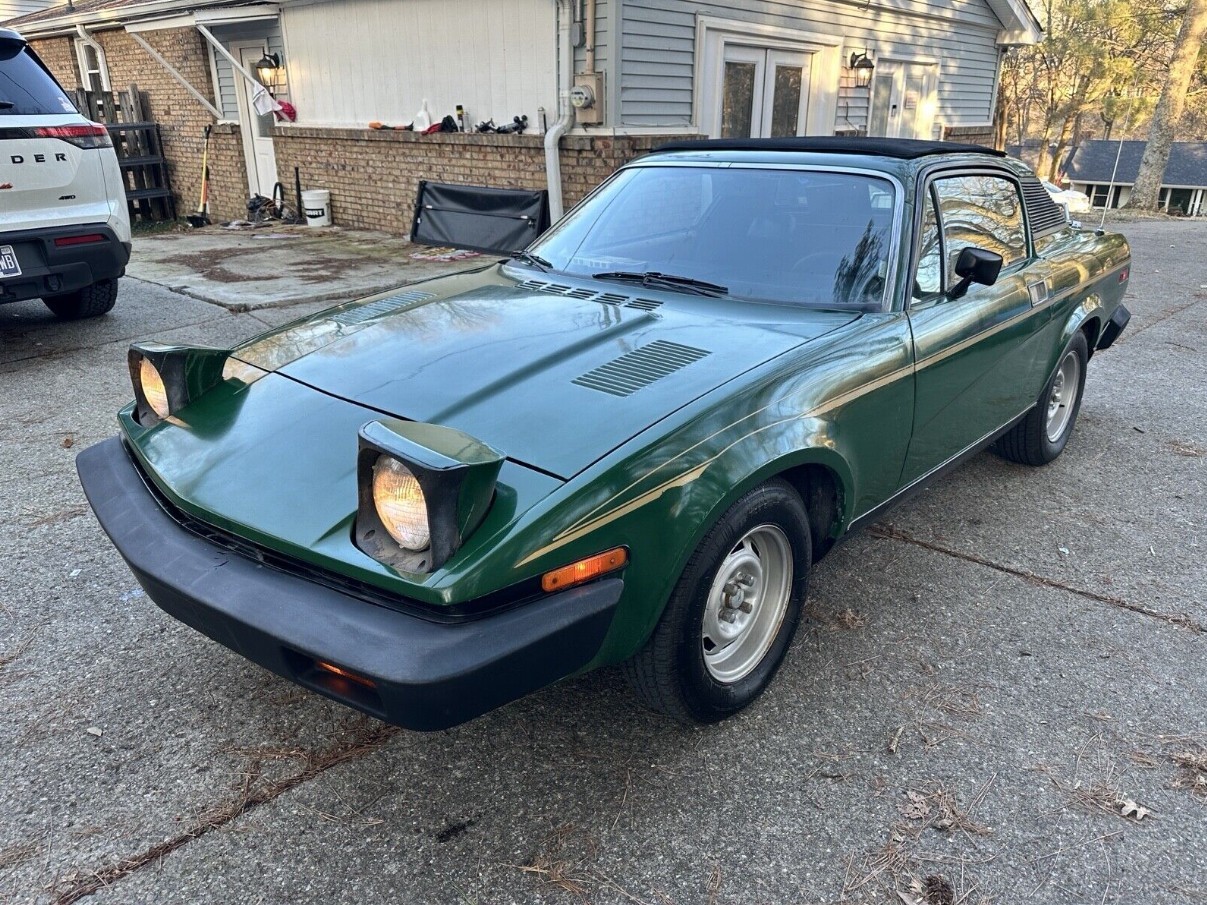
There was barely-concealed excitement among the motoring press and the buying public when British Leyland announced it would be releasing a new Triumph two-seat sports car in 1974. However, there was widespread disappointment when the new model turned out to be a Coupe, rather than an eagerly anticipated Convertible. The company would eventually right that wrong in 1979, but it is fair to say that the TR7 was on the ropes by then. This 1977 TR7 previously belonged to an enthusiast who rarely used it. The seller has ensured that it is in sound mechanical health, ready to make its next journey to a new home. They have listed the Triumph here on eBay in Hendersonville, Tennessee. They have received no bids on an auction that opened at $2,500, but do provide a BIN option of $6,750 for those wishing to bypass the auction process.
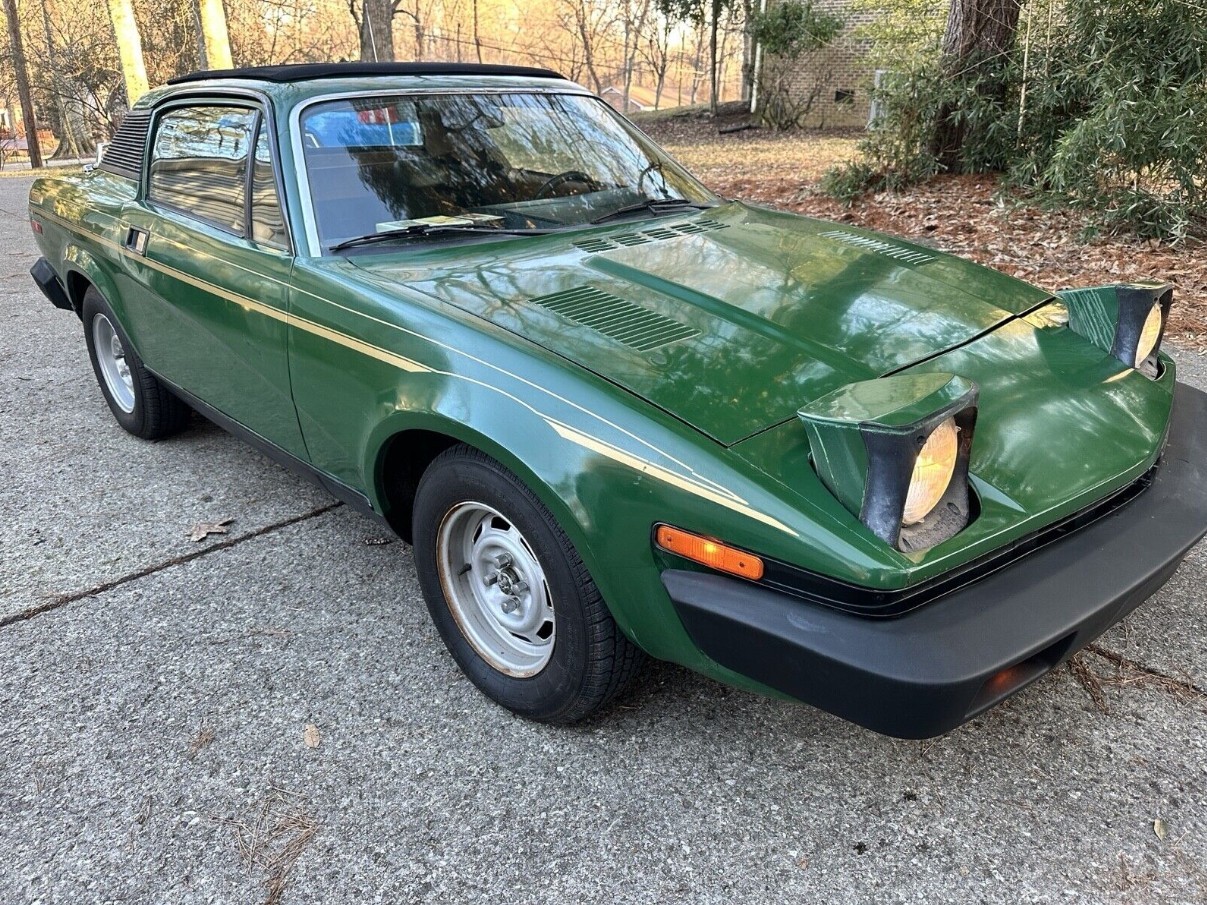
British Leyland described the Triumph TR7 as “the shape of things to come” when it unveiled the vehicle in 1974. Opinions were sharply divided on the subject of its appearance, with some questioning the wedge shape and the swage line running from the rear quarter panel to just behind the front wheel arch. Legendary designer, Giorgetto Giugiaro, was particularly scathing of the car’s appearance, but the consensus was that it was undeniably distinct. The first owner ordered our feature car in 1970, with the seller stating that they believe the Brooklands Green paint it carries today is original. They can find no evidence of restoration or repairs, admitting that a close inspection will reveal minor chips and scratches. The panels are straight, the plastic looks good for its age, and the pop-up headlamps appear to work as they should. Reassuringly, it appears that this TR7 was undercoated early, allowing it to avoid the rust problems that typically plague these classics. It is rock-solid, and its appeal is heightened by the factory folding sunroof.
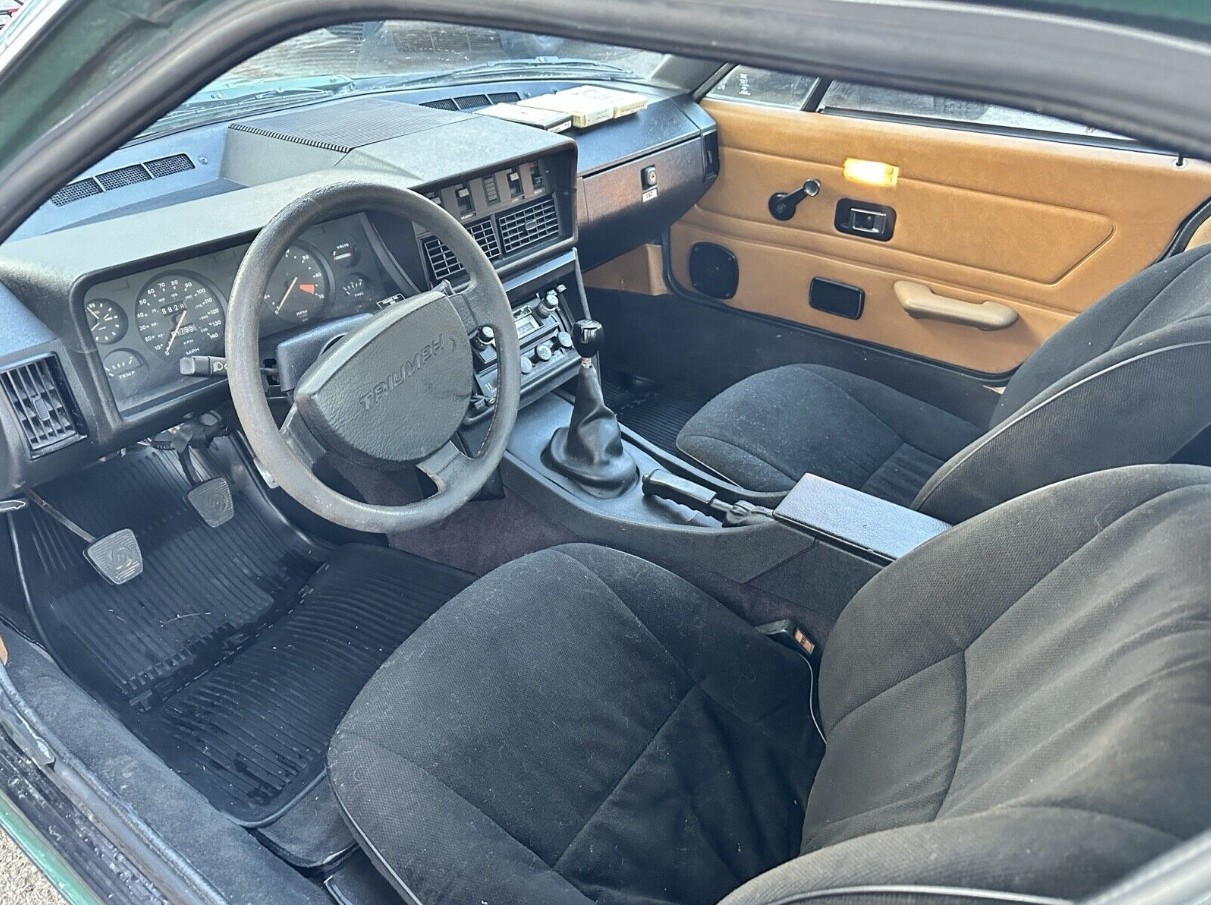
The seller believes that the originality of this TR7 extends to its interior, and if that is true, its condition is noteworthy. It wasn’t just build quality that earned the TR7 criticism because interior trim and plastic could be notoriously fragile. However, there are no such problems here, suggesting that this classic has been treated respectfully and protected from extreme UV exposure. It won’t earn many show trophies, but purists will appreciate it as a tidy and serviceable survivor. It is worth noting that this car would have rolled off the line early in the model year because Triumph ditched the broadcloth seatcovers in March of that year in favor of colored tartan which did nothing to add to the visual appeal. The seller indicates that the factory air conditioning doesn’t blow cold, but that the radio/8-track player still pumps out the tunes.
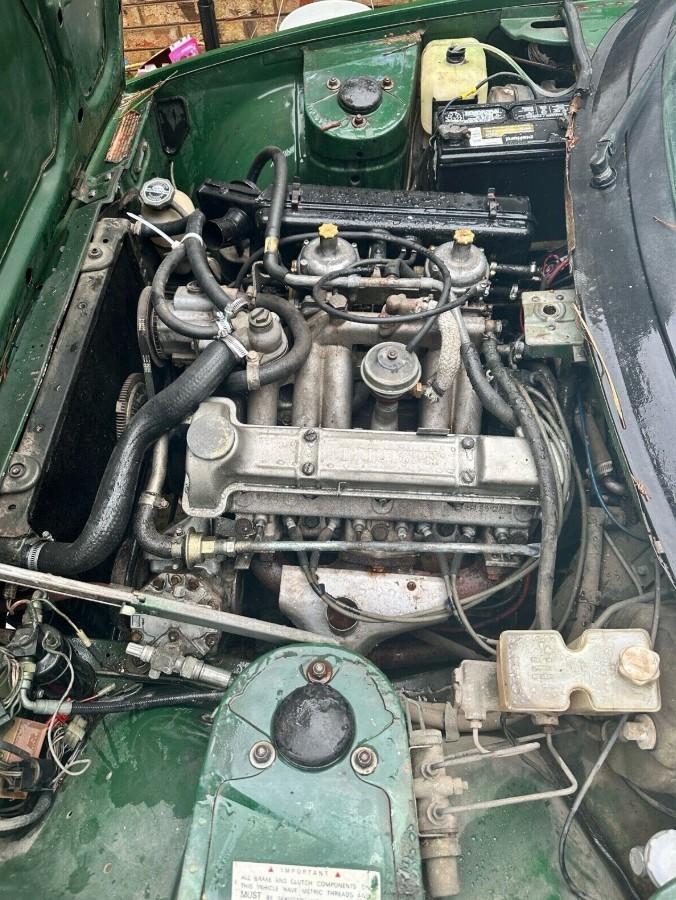
To reduce development costs, Triumph turned to an existing engine to power the new TR7. It selected the four that also served in the Dolomite, although it enlarged the capacity from 1,854cc to 1,998cc. Buyers initially received a four-speed manual transmission, with the five-speed manual and three-speed automatic joining the range in 1976. The first owner chose the five-speed, which was a wise move that improved the TR7’s open-road abilities. The engine only generates 85.5hp, but with the vehicle weighing in at only around 2,200 lbs, outright performance was better than that figure might suggest. The seller states that this numbers-matching classic recently emerged from a collection, with the elderly former owner rarely driving the vehicle. It features a performance exhaust, a new battery, new tires, and recently received an oil change. They state that there is an intermittent metallic noise from the car’s rear, but it doesn’t sound like it is a rear-end issue. They state that the e-brake cable needs adjusting, meaning that could be the source of the noise. Otherwise, this gem runs and drives well, with no identified maladies or issues.
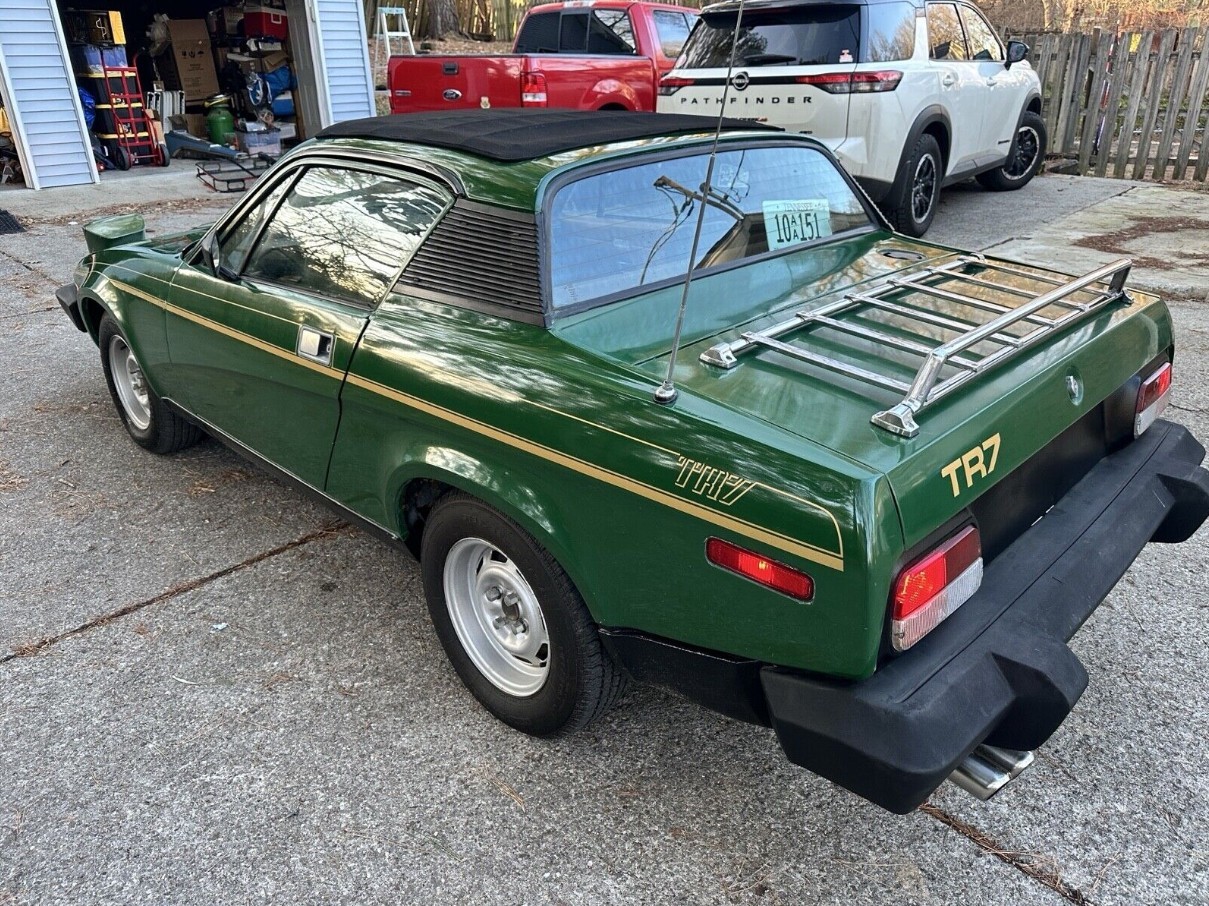
There was nothing inherently wrong with the design and engineering of the 1977 Triumph TR7. However, it was one of the many vehicles produced by British Leyland during this period that fell victim to the turmoil that was overwhelming what should have been a global automotive giant. Triumph would effectively cease to exist after 1984, joining a list of retired marques that included Riley, Wolseley, Austin, and Morris. The introduction of the Convertible and V8 versions couldn’t save the TR7, and although they developed a reputation for rust and quality control issues, any that have survived for almost five decades without major problems will always stand out in the crowd. Such is the case with our feature car, and I’m surprised that it hasn’t generated more market interest. Would you consider giving it a new home, or does the TR7 badge carry too much undeserved baggage for you? I hope it finds a buyer because this survivor has earned it.




I purchased a 1976 TR7 in 1984. It was very low mileage at 25K. Price was right and the car looked very original. Later I found out why the milage was so low. Multiple head gaskets and overheating problems continually sidelined it. Add in the ongoing electrical gremlins (Lucas) and it became obvious why the mileage was low. Finally sold it after it left the wife stranded for the third time. Something about having to walk home in high heels.
Azzura, I also had a ’76 TR7 that I purchased in 1980 which needed a head gasket.
The problem was well known, which I found out after the purchase, that the head gaskets would blow because the block was steel and the head was aluminum. Two metals expanding and contracting at different rates=NG!
I was not a trained mechanic, but like my dad and brothers, a kind of Jack of All Trades – Master of None! LOL
The TR7 was pretty easy to work on. I disassembled the head, had the timing chain held up by a coat hanger connected to the garage door rail. LOL
I used one of those wood dowels with suction cups and pumice to reseat the valves, cleaned the block and head surfaces, new head gasket, and reassembled it.
I had an air flow meter laying around that I used on my Datsun 260Z when I had it so it was easy to balance the carbs. I ran pretty well but by no means a speed demon!
Sounds similar to the Vega 4 cyl engine head problems.
If it’s the original paint, where is the Triumph logo decal on the nose?
Load up your metal detector, pick up your best your best pal, and race a moped with it.
I had both a TR7 and TR8 and when sorted out are nice. They are roomier and had more modern interiors than MGB’s and TR6’s. The 5 speed was an upgrade over the older Brit cars as well. Don’t knock them until you drove one.
I always liked these but never owned one, nor knew anyone that did. However, I think criticism of the styling came from people who expected an updated Spitfire look, not the new wedge. Two things that did hamstring these. The first is the huge US bumpers hurt its looks, and the engine, while being small and quite weak as it was, was further hamstrung by US emissions equipment. These 4-bangers were slow. Having said that, the car here is nice looking and probably won’t command a stupid price. I don’t think a TR7 fan could go wrong buying this one. If I bought it, I would reupholster the seats in light tan leather and also replace the carpets with a lighter color. As it is the interior looks cheap.
You either have lights in the doors, or you have broadcloth, but not both. Also where is the nose badge or decal? Methinks something isn’t on the level.
Guy I knew in High School’s dad had a big Used Car lot, so every week he’d have a different car from the lot, one week it was a year or 2 old TR7, guy absolutely didn’t know how to drive a stick, always starting in 2d gear, shifting to early, putting it in 5th at 30mph and flooring it, surprised the car survived the week.
I remember the advertising campaign for these-“The shape of things to come.” I know somebody that had one in a garage. Tried everything to get them to sell it and they refused. Never drove it, it just sat there.
I always wanted a Webasto. But I always had convertibles.
My 80 was a good car. I had it from 85-88. The transmission blew up on my on the San Diego freeway, but I made it off and parked it at a “foreign car repair” shop just off the freeway in Orange County. They were closed.
Calling them on Monday, they refused to work on it. Wrong kind of foregin.
In everybody’s car ownership history there is always one that was the worst of all. The 1980 TR7 I had thirty years ago wins the award hands down. I had to hide my delight and relief when the next sap took it away. Never again.
Haha, I had a friend over in Sweden who owned an Opel Omega in the late 80’s which he hated. When he had a buyer calling to confirm that he would buy it, my friend said he dropped the phone, fell down on his knees and screamed ”Yeeesss” before realizing that it wasn’t going to make the buyer very comfortable with his decision!
I’ve owned a 1980 tr7 for 11 yrs had a 79 parts car in this color my 80 is royal blue and bisque do NOT BUY one of these unless you are an extremely talented mechanic and have access to a machine shop I’m on my 3rd engine the 79 to 81 yrs are a better choice
I’m guessing the issue was the head studs. Easy to do wrong and catostrophic.
Lucas electronics
“Lucas, the man who invented darkness “
Greetings All,
First off, Brian, there are numerous cars that have steel blocks and aluminum heads.
They obviously figured it out. Jaguar has been doing it since 1948.
More likely the head studs were of insufficient diameter because of poor casting design which meant they couldn’t use torque values that the smaller diameter could not handle.