
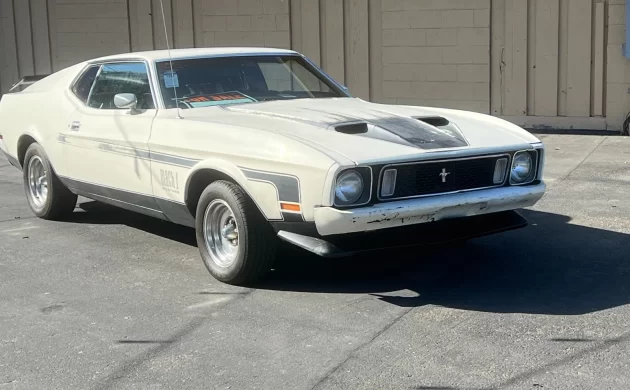
Your first decision as you approach the purchase of the 1973 Ford Mustang Mach 1 seen here on ebay will be whether you want one of these last-of-a-generation models. The 1971-73 cars are just such a long way from the compact beauty of the 1965-66 models that started the pony car era on April 17, 1964. If you decide that the long, wide, and flat body style is for you, hop in above the current price of $9,000, knowing that this won’t buy the car, as the reserve is not met. You’ll need a ride to Livermore, CA, to pick up your prize, should things go your way.
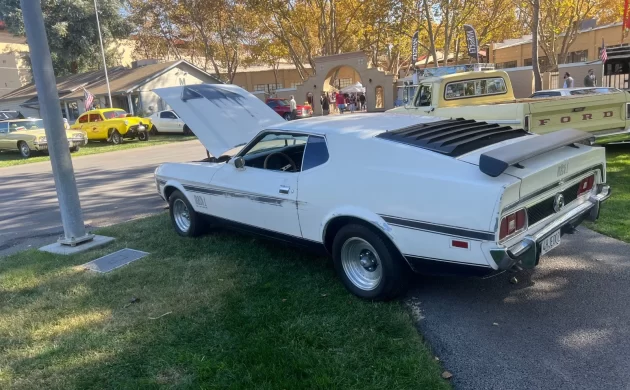
What do you think of the proportion of these cars? The rear glass is nearly flat, and there’s very poor visibility out back and to the sides. The size is daunting compared to the earlier cars, not just in width and length but also in terms of heft. In fact, the best word for this styling is perhaps “hefty.” At the time of release, these cars were competing with a redesigned Camaro and Firebird which had much more contemporary styling, having left 1960s proportions behind for a sleek, European look. However, fans of the Mustang in particular supported the breed, with about 135,000 ‘Stangs sold in 1973, compared to under 100,000 Camaros that model year. Perhaps the fear of the future drove Mustang buyers, as on the horizon loomed the Mustang II, a downsized version of their favorite marque. As it turned out, the 1974 models were very popular. 385,000 of those newly designed cars went out the Ford dealers’ doors in 1974.
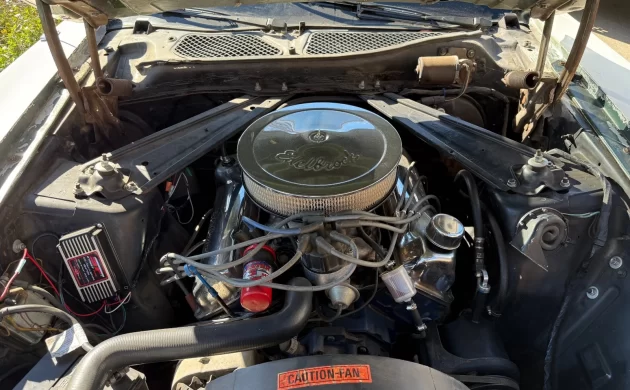
Sporting the 351-CID engine and automatic transmission, this 1973 is a cruiser all day long, and the seller indicates that the mileage is just below 150,000, though it is also noted that the original engine and transmission have been rebuilt. There is literally no other word of information about this car, leaving you to do your own sleuthing.
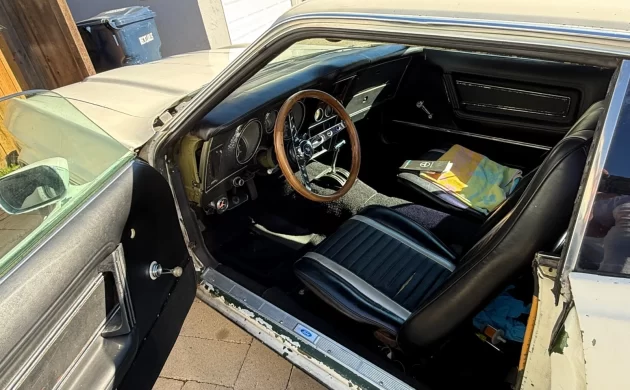
You’ll first find out, as indicated, that the power plant is in great shape. However, things might go awry from there, as the rear is another, potentially expensive, story. “Trunk pan is rusty, needs replaced.” How rusty? How did this happen, given that the rest of the car looks pretty good? Maybe the images are hiding the whole truth? What’s up with the paint, and any old bodywork? The images offered are of little help. They do, note, show the car as a Mach 1, a performance and appearance package offered on the Sports Roof (fastback) body style only. Whether this car is an authentic Mach 1 or a clone is not claimed. So on the surface, all seems OK. What will you discover is you do some further digging?



The “curse” on these “big” Mustangs evaporated around half a decade ago. People finally realized that these were not bad looking cars, and they were 3/4 of the price of a 67 thru 69 fastback.
Always liked them .
A high school buddy had a 1971 Mach 1 351 4 speed & that was a great car or we thought so. I’m thinking perhaps things are not as bad as some think with the big stang with the right drive train.
The “big mustang” term is a bit misleading, all things considered. The 73 mustang has almost identical dimensions to a 25 mustang. Most people don’t realize how big cars actually are today.
If the trunk floor is rusty the taillamp panel is going to need replacement as well. My ’71 had rust all around the taillamps from dried out closed-cell foam lamp gaskets that would dry out and crack holding water against the panel and rust it from the inside out. Added bonus was water would eventually drool through to the trunk floor. It does however make it easy to add the valance with the exhaust cut outs as this one doesn’t seem to have them.
What about that gasser across the street?
how rusty?? why no pics? seller not helping his cause
The wing is backwards.
Having owned a ‘71,72 and ’73 with the first being a convert and the second 2 sports roofs I can tell you they are big compared to my ’65 and ’67. In fact I raced my ’72 exclusively and I remember one day driving through the pits to the staging lanes and ran over the edge of an enclosed trailers rear loading ramp door because I couldn’t see it due to the size of the front end! Anyway, my grandson and I trailered home a garage kept ’73 like this in a mid 2.5 – 3 condition that has been garage kept for 25 years. He got it at an unbelievable price and it looks almost new. Nice cars if you can’t afford a ’65 – ’70.
How rusty show some more detailed pictures and looks to have been a green car fromthe door jams.
The size thing is ridiculous. They did get incrementally larger each body change but from ’65 / ’66 to ’71 thru ’73 we’re only talking about 7.9 inches longer…big deal. I own all of them and I can say that what plays a bigger role in the “feel” of the cars is the seating position. “65 thru ’68 the seating is a bit higher than ’69 thru ’73 cars, this gives a false sense of greater length. If you’ve driven them much, you don’t even think about it. Yes, the rear window on the latter cars is almost flat but that’s what mirrors are for.
They deserve more credit, the lines of particularly ’71 & ’72 cars (front bumper grew a bit on ’73) are some of the most beautiful of any American car ever. And by the way, there are plenty of great European super cars that are not known for their rearward visibility either lol.
Right on EC. It’s all about the seating/ride placement that confuses people and the body style of course. Just for optical example… A C8 vette is slightly shorter but wider than the 73 stang. And almost identical height. Pretty much the same size vehicle.