
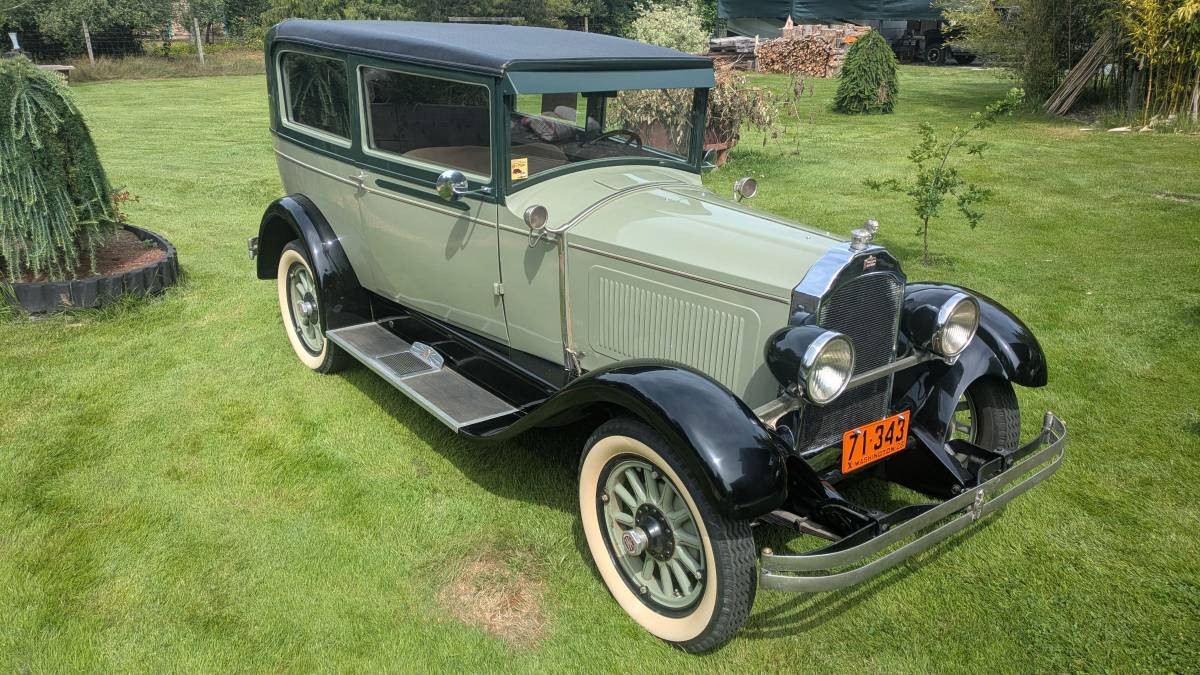
About fifteen years ago, my mom found a picture of my paternal grandmother perched on the running board of an antique car, and she gave me a task she knew I’d relish: finding out what kind of car she was sitting on. My grandma was only a few years old, and as she was born in 1924, I knew I could narrow down the search to anything from about 1928 on back. Eventually, I figured out that it was a Willys-Knight very similar to this one. The lights on the crisply folded cowl were the tell, and I’m glad they were there, because identifying anything from the 1920s without a head-on shot will test anyone’s abilities. That the car was a Willys-Knight makes a lot of sense; my grandma was from the Toledo area, and support for the home team must have been strong. This 1928 Willys-Knight is far from Toledo in Anacortes, Washington; Barn Finds reader Scott found it on craigslist for $22,000. You’d certainly own a conversation piece for a variety of reasons.
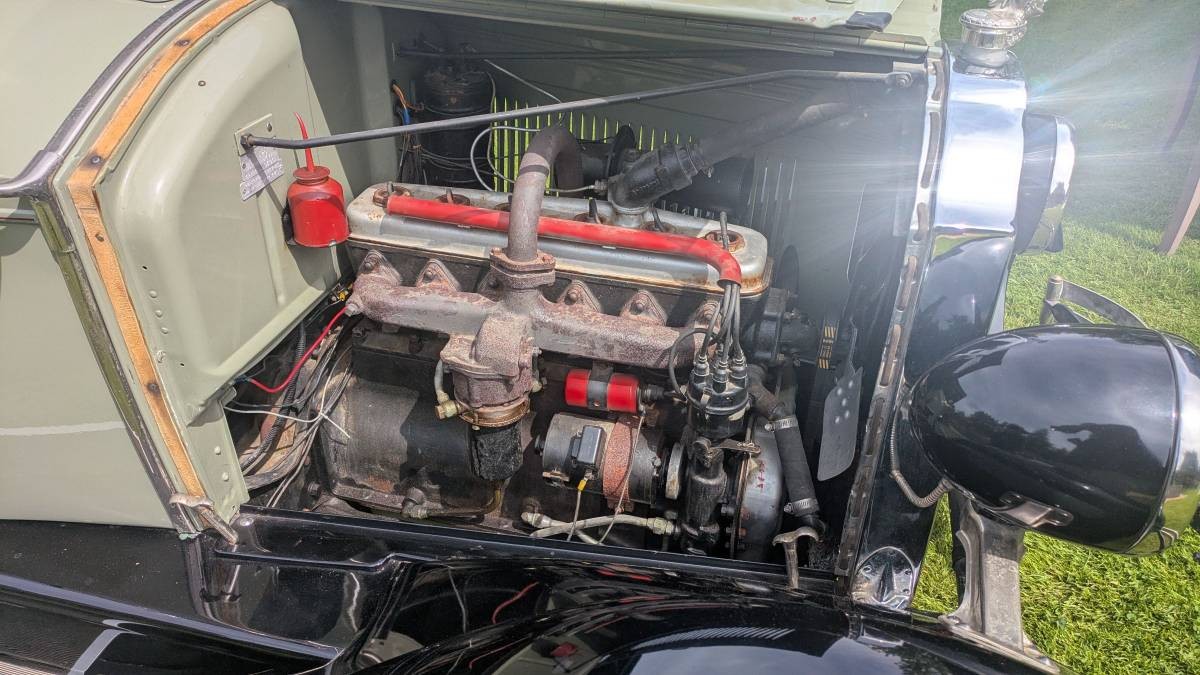
Perhaps the most interesting part of the car is its sleeve-valve engine, a 157-cubic-inch, 45-horsepower six cylinder in the case of this standard Model 56. It had seven main bearings (with removable inserts, according to the seller) and a 5.5:1 compression ratio. Fuel mileage over a 122-mile run was reported to be 24.5 miles per gallon, but of course, the average speed was a lowly (by today’s standards) 27.5 miles per hour. The downside of Knight sleeve-valve engines of the time was oil consumption due to its double-sleeve design, and indeed I’ve seen several Willys-Knights at car shows leaving a modest trail of oil smoke behind them (The ad claims that a patented “oil purifier” is the reason for light oil smoke; it uses the exhaust to burn off contaminants).
The seller of this one says that the engine was inspected at 50,000 miles and found to have minimal wear of sleeves, pistons, and bearings (and it’s only been driven 1,462 miles since). One peculiar thing regarding the ad that is glossed over a bit is that it “starts and drives, with starting fluid.” That might be worth a conversation with the seller.
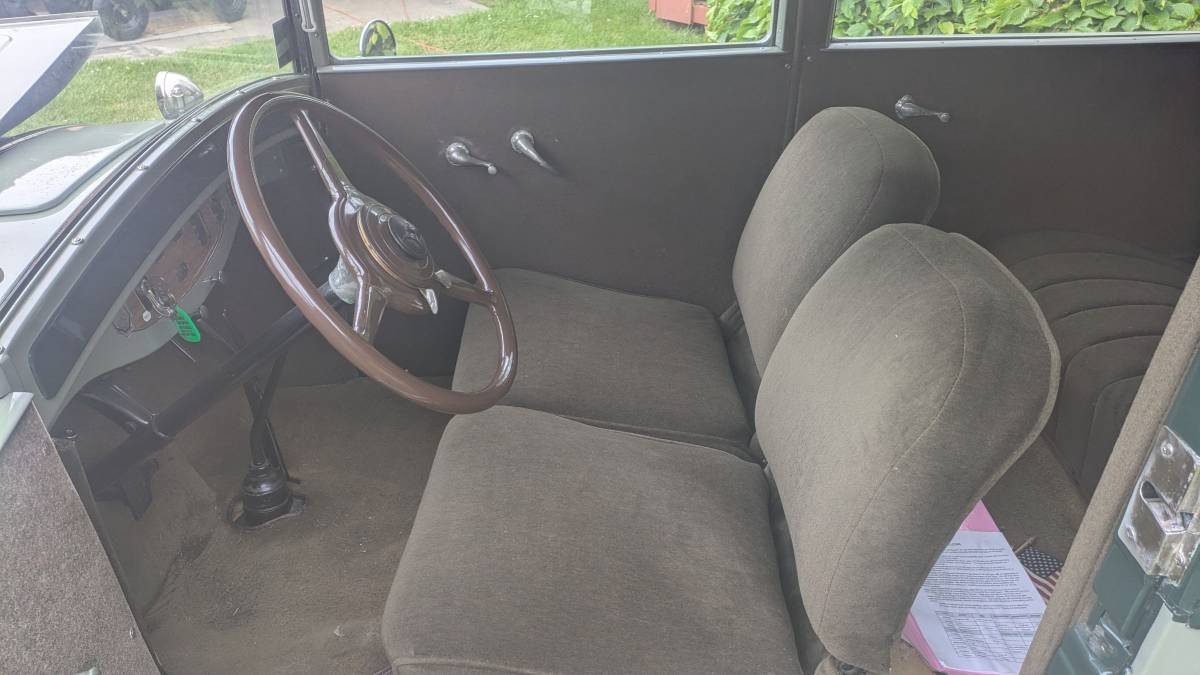
The Model 56 was Willys-Knight’s entry level car, and the Coach (two-door sedan) bodystyle’s price was reduced to $995 in April of 1928. According to the “Willys Overland Knight Registry,” 35,856 Model 56s were built in Toledo and another 2,075 in Canada.
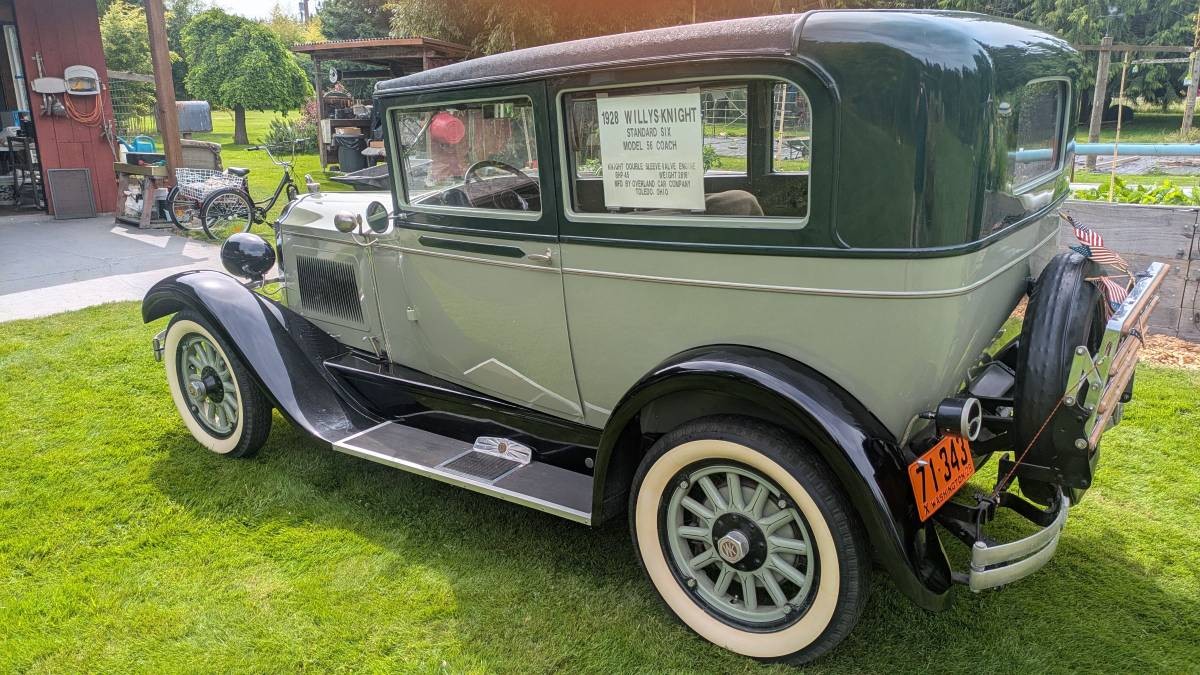
This looks like a nice older restoration (completed in 1989) that still looks good aside from a dent in the rear. Is it worth $22,000? Well, valuation is sometimes difficult for cars that you see very rarely outside of an orphan car show. It will take a specific sort of car fan to want a Willys-Knight, so the seller might have to be patient. I know my grandmother would have approved, but what do you think it’s worth?




Beautiful car but fewer and fewer people finding these as appealing to own today versus other “antique” vehicles. A shame really but a sign of the “boomer generation” and others dying off and/losing interest in car collecting all together. No doubt that price will need to come down or it will be a donation to a museum of some sort in the not too distant future.
I love this page, my father told me once, when I was thinking about buying one at a road side used car lot in 1960 in Lansing, Michigan. I should not get this car because of the sleeve-valve engine. They wear out and burn oil a lot. Also They only go 25 miles an hour and you have to start them on alcohol! The car was $250 and I did not buy it.
Your father told you wrong. My Dad restored 2 Willys Knight vehicles. The 1933 Model 66-E was the last known of this model to exist in running condition, and was made on the last day of production. It would cruise at 55 all day long. It started fine, with no alcohol or ether needed. They do burn some oil, and the life of the sleeve valve engine was slightly less than a normal valve engine. My Das cars were featured in Automobile Quarterly, they were National Award Winners.
Made a print of one for an old friend of mine named John Mullnese. His folks had one of these in the early ’30s and wanted a picture of that car in memory of his parents. I remember sitting in church with my family when he passed me a note asking me about making one for him.
He also wanted a ’34 Plymouth coupe
so I made ready to make both prints for him. He was very pleased with the results and so was his daughter. I saw her a few years after John passed away. She came by the restaurant for some food when she told me that her family still had the prints and how much their family loved them. It took quite awhile for me to find a pattern for the Willy’s.
sure wished I had these pics then. But it all turned out alright. To my knowledge, they’re still enjoying them.
While interest is clearly waning, make no mistake, the Willys-Knight was a high class car for the 20s. It was a casualty of the Great Depression, and its high class days were over and focused on cars like the Willys 77. They became Willys-Overland in the 30s, still did poorly, until you know what came along, and the Jeep sure turned things around for Max Klingers home town. While $995 seems cheap, but in 1928, a house ( and a new Caddy) cost $3900 and a Ford was $385, so it had a limited market.
While it’s true, only a real car nut could tell the difference then, to me they all looked the same, and we haven’t changed much in that regard. A wonderful find, I’d say a museum too, but who goes to those anymore? I just don’t know what will happen to these types of cars in the future. What is amazing, the transformation in just 50 years to the Dodge Magnum is outstanding
The French high end car, the Minerva, was also a sleeve valve. Maybe two decades ago one won the Concours at the high end show in Massachusetts, despite being purple, inside and out, and barely running – it had to make it from the trailer to the show field under its own power – belching clouds of blue smoke and sounding like lots of loose parts.
Small poi, but the Minerva was Belgian.
Interesting how different technologies were tried in the early days of the auto industry. Handsome car but I’d rather have a model A with a simpler engine for $14k-$20k.
The trend with transportation type museums is they are selling off exhibits to cover expenses if not outright closing. Sell it now, take the cash while you can still find a buyer.
The reason as I understand it for car body’s lookin so similar then and now is the cost of building molds to stamp them. I suppose that’s why I love cars from the 1950’s so much. They dared to change body styles yearly or at least every few years. From any angle you knew what you were looking at. Of course the foreign car market is to blame for American cars looking so cheap these days. Toyota makes a much better car, and even the cheap KIA sells more cars every year due to cost and reliability. Style doesn’t seem to mean as much anymore. Cookie cutter models with bland colors out sell everything else out there. So where do we go from here? Now that the De minimalist rule is being lowered perhaps all the Chinese stores (dollar stores) will disappear. I don’t know, but one thing is sure, Americans love cars.
God Bless America
Yes, the Automobile Driving Museum, later renamed the Zimmerman, with about 150 cars, in LA, near the airport, just closed. Cars on loan from owners returned, cars owned being auctioned off. Yard sale for “stuff”, like print materials, signs, photos, bookcases, file cabinets, etc. It was a great place, all but a half dozen high end classics in main room, you were allowed not only to touch them, but open doors, and sit in them, and on Sundays 3 or 4 were taken out by trained volunteers and you could ride around a big block in them. A restoration shop, manned by volunteers as well, constantly working on some. Despite hosting birthday parties, retirement parties, and other social events it could not make it financially. Even Bill Harrah who had a wonderful collection in Reno did not leave enough cash to support it and much of the collection had to be sold off to fund the museum. Reportedly, Jay Leno has made no express provisions for his collection on his death, so probably a big auction. Michael Dingman’s collection of 50 Fords and 50 other (among other things he was on Ford’s Board) was auctioned off on his death. Like Leno’s it was rarely, if ever, open to the public. I got to see it once.
Late 1920s cars were still quite common on the streets and roads when I was a child, and seeing this one brings those days back for me. But owning and driving one now is a most impractical proposition, and one does wonder what will become of the few well-preserved examples such as this one. There is a sadness to this, in my view.
While chasing old cars 20 years ago I came across one of these in a field in North Dakota. It might still be there for all I know, but I doubt it. I slept in my Duramax over night at 10 degrees just to catch the fellow home and didn’t get a single car bought from him. Good times though.
The old guys at the coffee shop were talking about that engine a few weeks ago.
That thing runs so quiet, you can barely tell it’s running, and bullet proof in longevity.
The engine builder was saying the British Royal family bought 6; they were that nice, of a ride, and quiet.
If the wood wheels are in good condition?
That makes it worth every bit of the 22K asking price.
A quality restoration in my area is going to run you at least 30K.
One guy had his 32 Auburn Boat tail a frame off restoration, came out far better than factory fresh; cost him over 100K and 3 years of a “As it is ready”
slow methodical work.
One of those guys that has a personal museum of antique cars; Viewing by invitation only, and you cannot disclose location.
You would be amazed how much money lives in my po’dunkity Village.
When parade time comes; you will see cars you didn’t know exist.
One guy did a rotissary restoration of his 57 Chevy, and some East Coaster took him to the bank and dropped 100K in cash for the car, granted the guy had to order in the cash. The car is now in Rhode Island with YoM NM plates.