
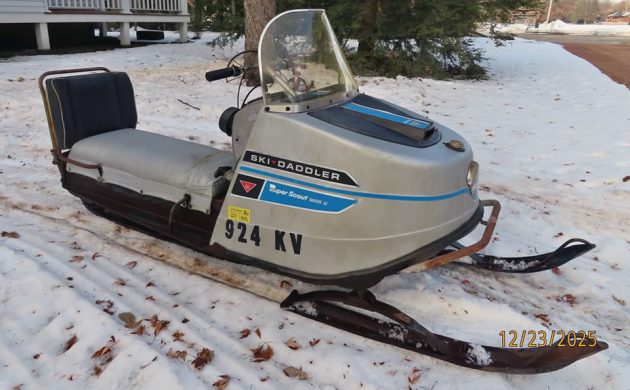
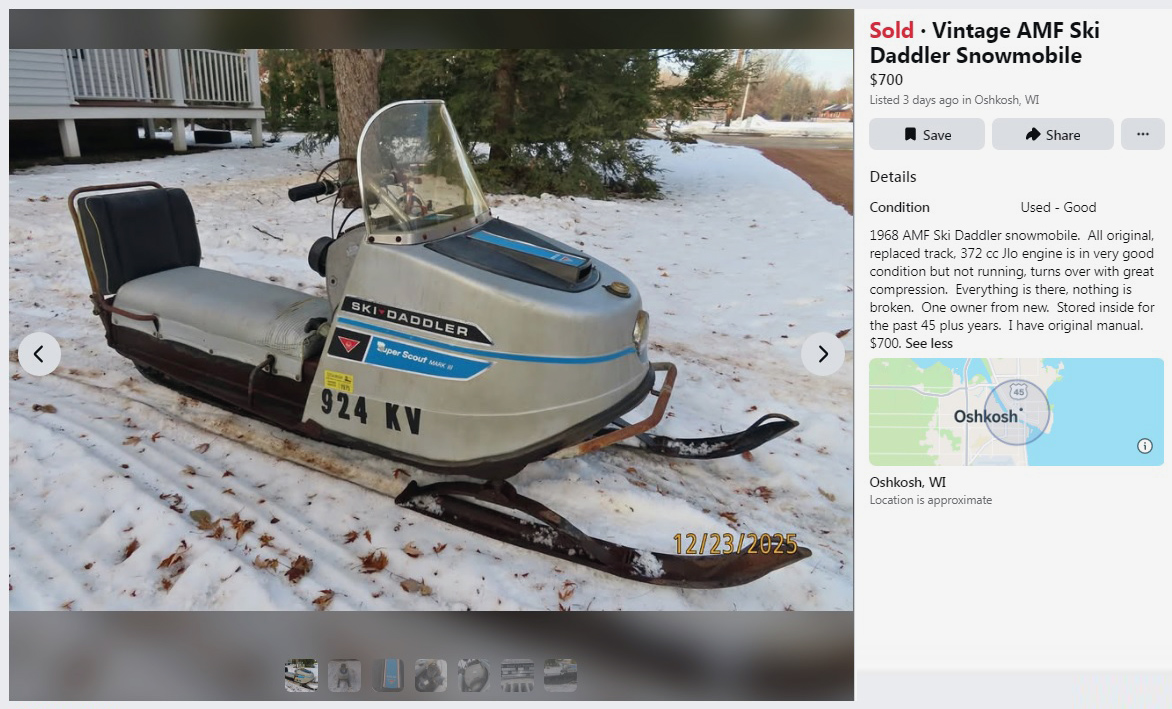
We recently saw a Harley-Davidson snowmobile from the AMF era, and their first attempt at making a successful snowmobile came with the Ski-Daddler series in 1966. This 1968 AMF Ski-Daddler can be found here on Facebook Marketplace in Oshkosh, Wisconsin, and they’re asking $700. Here is the original listing, and you already know who sent in this tip: Lothar… of the Hill People. Thanks, Lothar!
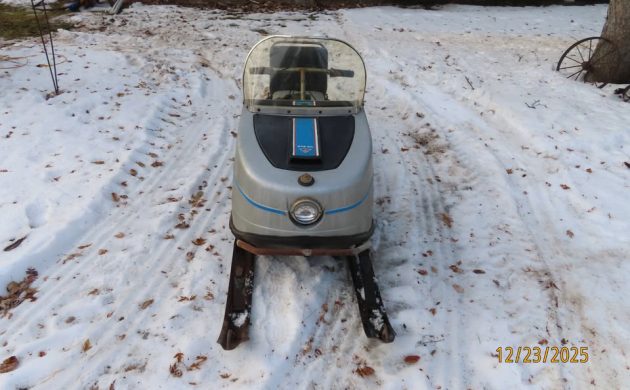
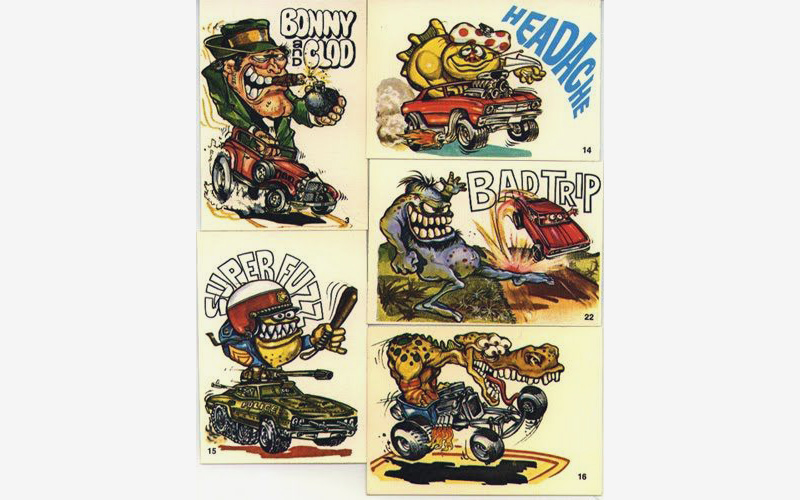
I think I have a few flannel shirts that I got new in 1968, and maybe some Odd Rod cards or old toys and odds and ends, but to have owned a vehicle that long is pretty amazing. This Ski-Daddler Super-Scout Mark III has been with the original owner since new, according to the listing, and has been inside a garage for the last 45 years. I’m not sure if that means it hasn’t been used in 45 years or not, but it does look incredibly well-preserved.
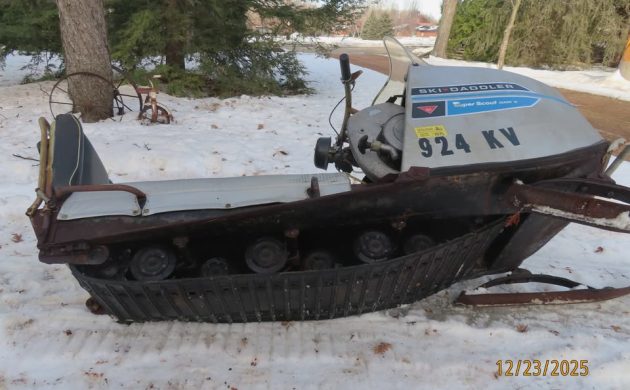
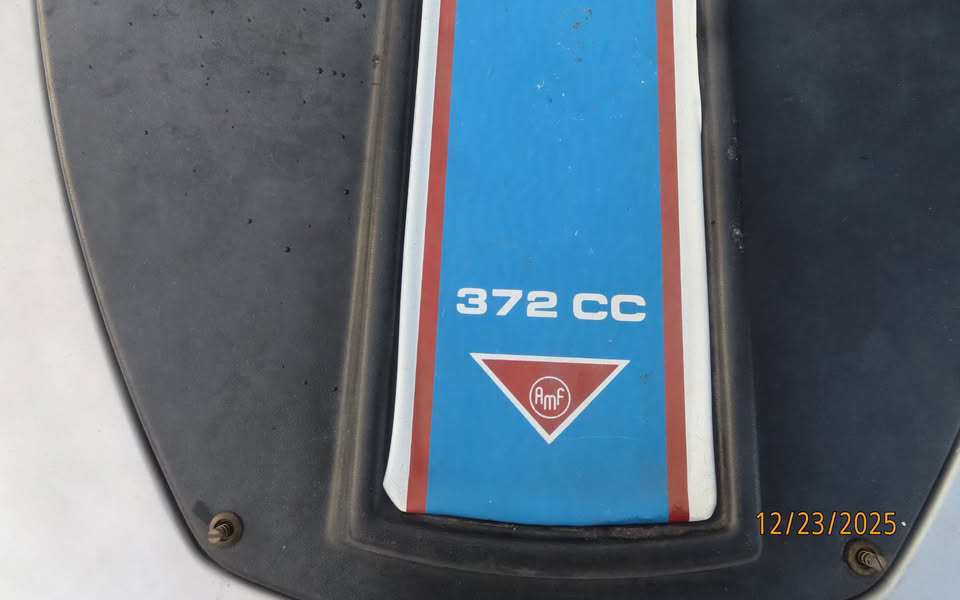
There are no slides on this one; this Ski-Daddler is from the bogey-wheel suspension era, and very few snowmobiles had the long, plastic-covered, curved-front slides under the tunnel (where the track goes, the recessed space under the seat). I believe Arctic Cat invented the slide suspension in the mid-1960s and used it on their Panther, but it took a while before they became standard equipment. The Ski-Daddler was made by American Machine and Foundry from 1966 through 1972, a critical year for snowmobile manufacturers. There isn’t a close-up photo of the decal, and I thought for sure it said Mark II, but this one has a 372cc engine, and that’s in the Mark III. Not to mention the aqua accent color was used on the Mark III.
There’s a lot of surface rust on this example, but it does look like it’s been in storage to me. The painted parts look almost perfect to me, but there’s a ton of surface rust on almost every metal part, or parts that can rust, that is. Ski-Daddle offered six models for 1968, five with a 15″ track and one with a 22″ track. The base model was the Sno-Scout, then came the Super-Scout Mark I (292cc), the Super-Scout Mark II (297cc), then the Super-Scout Mark III (372cc), as seen here, and the low-production Super-Twin racer with a 600cc engine. The 22″ model was the Wide-Track (540cc); not a surprising name.
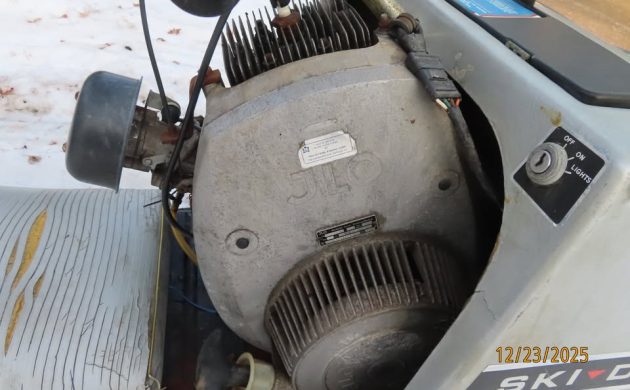
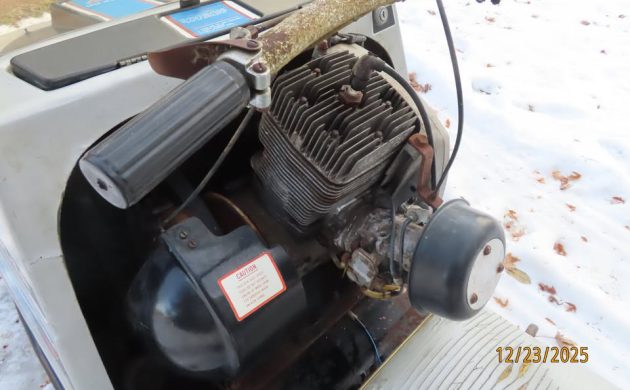
The engine here, as you can see, is a JLO, and it’s a 372cc single with 20 horsepower, and it doesn’t appear to have the optional electric start. We don’t get to see a photo with the hood/cowl off, and you can see that the original seat is a little rough. That may be hard to replicate, but maybe a creative upholstery shop can do the “siping” there. This sled weighs 320 pounds, so you’ll notice it when (not if) you get stuck, and with it having sat for so long, it isn’t currently running, but has great compression and even a new track. This one won’t last long at $700, guaranteed. Let’s hear those vintage snowmobile stories!


This is a neat old sled. It kind of almost looks like what it would have looked like in 1977 used. I’m sure there’s someone out there that can get this up and running. Cool find ( pun intended Scotty)
Don’t you just love the enthusiasm from the author on subjects of limited interest? I do. Sorry SG, preachin’ to the choir, snowmobiling has gone the way of common sense, and will never be the attraction it was when these sleds were new. There are a slew of reasons for that, we’ve discussed in the past. Global warm,,,oops, I mean, climate fluctuations have temps in the 60s here on Xmas Eve here, hardly a flake. ( except me) Abundant snow in the UP this year, but with that comes below zero temps, and I’ve decided, I’m too old for that. The author stopped at 1972, but AMF made Harley snowmobiles from 72-75, and were a lot cooler( pun intended) than these. In all my rides, I think I only saw’r one. These were much more popular, despite the name. Hey, it was better than Ski-Whiz.
Snowmobiling will go down in the annals of our past as the most fun you can have with your clothes on,,,your results may vary.
Boy, is my face red, sorry, SG, I see the newer HD sleds you posted, I seemed to have missed. Another minor gripe, the features go by too fast, and many are possibly missed.
The closest my nuclear family ever came to having a snowmobile was the occasional Flexible Flyer sled found under our Christmas tree in the seventies, which us kids used sparingly since there was rarely much significant snow. This vintage Ski-Daddler is way more to my liking as an adult, and if it were in my garage, I’d get it running properly, then pray for a blizzard! Excellent find, Lothar, and a great write-up Scotty! An enjoyable and educational post, thank you!
My first snowmobile was a Polaris Mustang with the same JLO 372 engine. Here is all you need to know about that engine: the recoil starter has a steel cable where most 2-stroke engines have a rope. Life hack: any single-cylinder engine that requires a steel pull cord also requires muscles of steel. These were notorious for fouling spark plugs, so best to also have a few of those along, too.
My first sled (dad bought for the family was a 68 Polaris Mustang. It had a 18 hp Sache engine man that thing could fly maybe 15/20 mph lol. Could fit 3 adults on the seat. Storage under the seat as well. Love seeing and hearing stories about old sleds.
In 1968 AMF may have been a top ten manufacturer? Ski-doo was dominate at that time (and are again) and Polaris and Cat were developing their following but not near what they would would become in a couple of years. Moto-ski had strong sales which many did not realize. Sno-jet had good sleds at that time and Rupp was building some sharp looking sleds and developing a strong following. Scorpion from Crosby MN was good too.
AMF sleds were decent and relied on outside manufactured engines which almost everyone did except Ski-doo (Rotax). JLO engines were sold by the 1000’s. I think I remember Hirth engines being popular in them too and a few had Lloyd engines. The Lloyd engines did not stick around for long with the snowmobile manufacturers. AMF did have some racing success in this era and I think many of us thought their sleds looked nice. For a long time there was a lot of N.O.S. parts out there but as expected they are drying up. New seats occasionally show up but don’t bank on finding one as time goes by.
$700 seems realistic here but you would want to know how bad the chassis is rusted. Look under the seat as that is typically a bad area.
These weren’t a popular seller out west for some reason. My friend’s family had a 300cc version and they took it out upon occasion. One day they no longer had it, and I never asked any questions; I had sold my machines as well.
Snowmobiles weren’t very practical out in the Chinook Belt. You had too many winters that were wide open, with almost no snow so, unless you headed for the mountains, your machine sat in the corner of the shop.
Since we were a John Deere dealer we sold John Deeres. I hated Friday afternoons, starting at coffee time. That’s when we got half a dozen guys showing up with beat up snowmobiles, demanding that we drop everything and get them ready for the weekend trip to the mountains. I’d pull guys off other jobs to get the snowmobiles fixed up. I’ll never forget finishing up a job, and the customer telling me (THEN) that it was under warranty.
Many heated discussions. I finally got wise and asked them if they were expecting warranty because I would get that straight before any work began. My favorite was broken hoods and missing windshields because the driver was chasing a coyote through a barbed wire fence. The driver would just crouch down low so he wouldn’t get clotheslined by the wire. He would always expect (and demand) warranty, which I refused from the get-go.
Some customers would cut a check, just so they could get their machine, but then, they would drive straight over to the bank and cancel it. I started getting wise and make sure we got the check before I even had someone load the machine up. I would slip the check to the secretary who would then race down to the bank and cash it immediately.
No, the only good memories of snowmobiles were those made on my own machines, and outings with friends. They were a major problem from a service standpoint…
These are all such great stories, you guys never disappoint!
I remember when my dad bought our one and only new snowmobile, a 1971.5 Ski-Doo Olympique, the base model. It had the two recesses in the hood, but they weren’t painted black until my dad painted them black… I think the one with the black recesses was a higher model? I should know that. We had it one winter, and my dad almost killed himself on it, so he sold it in the spring. We had a ’64 Arctic Cat (white cowl) with an 8hp Kohler, so that’s the speed he was used to.
We bought it for $750 or something like that, and it came with a free check-up after so many hours, so we brought it back to the dealer in a couple of months for that free service. When we came to pick it up, they were going to charge $50 for that, which in 1972 was a lot of cash. My dad argued with them about it and finally said, “You keep it!” (Actually, he said you can shove it, etc. etc…) We walked out and went home. The other people in the dealership were in shock that someone would just leave behind a brand new snowmobile. I think it was a day or two before they called and said they wouldn’t charge anything, which they shouldn’t have anyway. What a weird memory.
Scotty, the Ski Doos with the black recesses were the TNT models. My friend did the exact same thing, brought his sled into the warm garage, masked off those recesses/air scoops(?) and rattle canned them with semi-flat black paint. I always wanted a real TNT model back in the day.
Would love to see one featured here.
And that’s why you’re a successful banker today! Lol!
Scotty, you know Polaris & Arctic Cat were home-based in Mn. Arctic Cat almost folded this summer but I think they were saved.
Looks like the hood was designed from a garden tractor.
Scotty, I love how you bring up related items from the same same timeframe – like those Odd Rod cards. I had completely forgot about those and know that I had a collection of them at one point. I wish I still had them…..
Arctic had invented the conventional side suspension system by 1966. They did a limited run of 1966 prototype panthers and if you have one of these sleds, they are worth an arm and a leg. Within three years, the only way you could get an Arctic cat is with a version of their slide rail suspension. They did a one year run of 1968 cougars with bogeys. That was in response to criticism and worry about the side rail being adopted in the market. Everything was slide rail except for two other machines. They made a grass drag sled, Turf Tiger with bogies only for racing on grass for 1971. They did their version of the Scorpion Para Rail bogey on a very limited run of 1972 440 Panthers. I think it was just a couple hundred built. All the rest of the 1972 Panthers were slide rail. As far as I can recall 1973 to today, it’s all slide.