
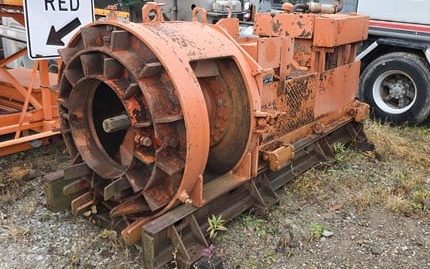
We’re not even going to pretend anyone will buy this Allied Auto-Bore 48 horizontal earth boring machine advertised here at Machinery Trader, for $48,500. (On the off chance you do need to bore a conduit, this little number runs great and is located in Sardis, Ohio.) But the listing offers a great opportunity to learn about one of the most fabulous machines man has ever concocted. The first tunnel boring machine (TBM) was constructed in 1846 by a Belgian engineer. It was called the Mountain Slicer, and it was basically a locomotive bristling with drill bits. It was commissioned to drill an underground path through the Alps between France and Italy – where detonations would be unacceptable. The Springtime of Nations in 1848 precluded its use, however, since Europeans were too busy revolting to dig tunnels. In 1853, good old America came up with its own TBM, courtesy of one Charles Wilson. His version was put to good use, building the Hoosac railroad tunnel in Massachusetts. From that point on, everyone and his brother jumped into the TBM market with different ideas around how best to configure tunnel borers. And in fact, eventually the market developed in a bespoke way, with plenty of variety for everyone’s needs – rock, dirt, horizontal, vertical, deep, shallow… TBMs work well anywhere you don’t want to blast.
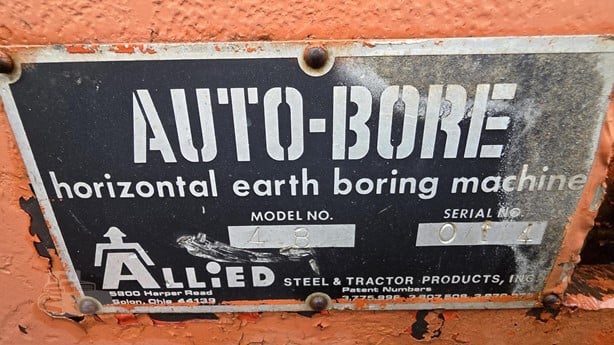
Allied Steel and Tractor Products made our Auto-Bore. The model number “48” refers to the bore size you could create – 12″ to 48″ in this case. We’ll meet the Mother of All TBMs in a minute, but 48″ is pretty good size for an earth borer back in the day; the largest that Allied sold was only one more step up at 54″. The engine was a 65 hp diesel, and the transmission gave four forward speeds and reverse. Crucial to the job was the hydraulic crowd force – how hard a machine could push horizontally into the material. The Auto-Bore 48 generated 300,000 lbs of force; the machine’s torque came in at 25,000 ft-lbs.
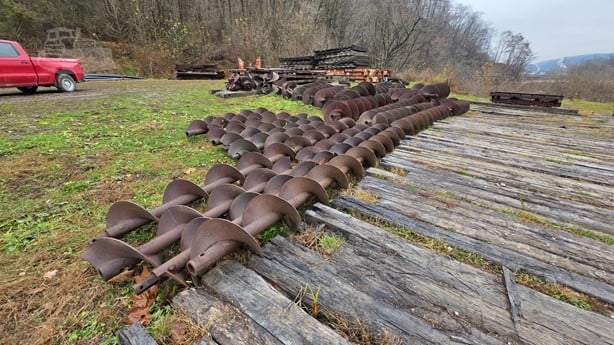
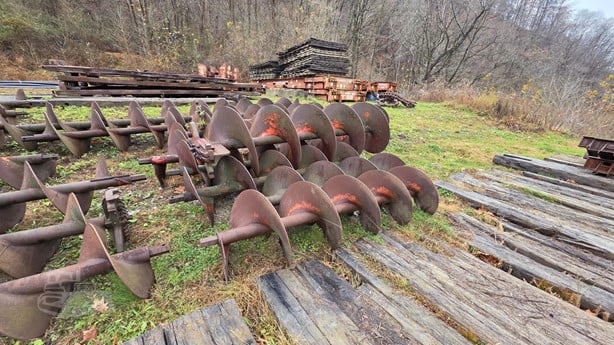
Of course, Allied could sell you all manner of bits, augers and cutting heads. This machine comes with a generous helping of boring tools including several rock bits.
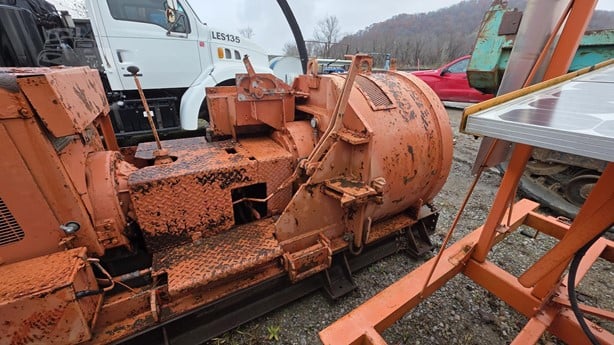
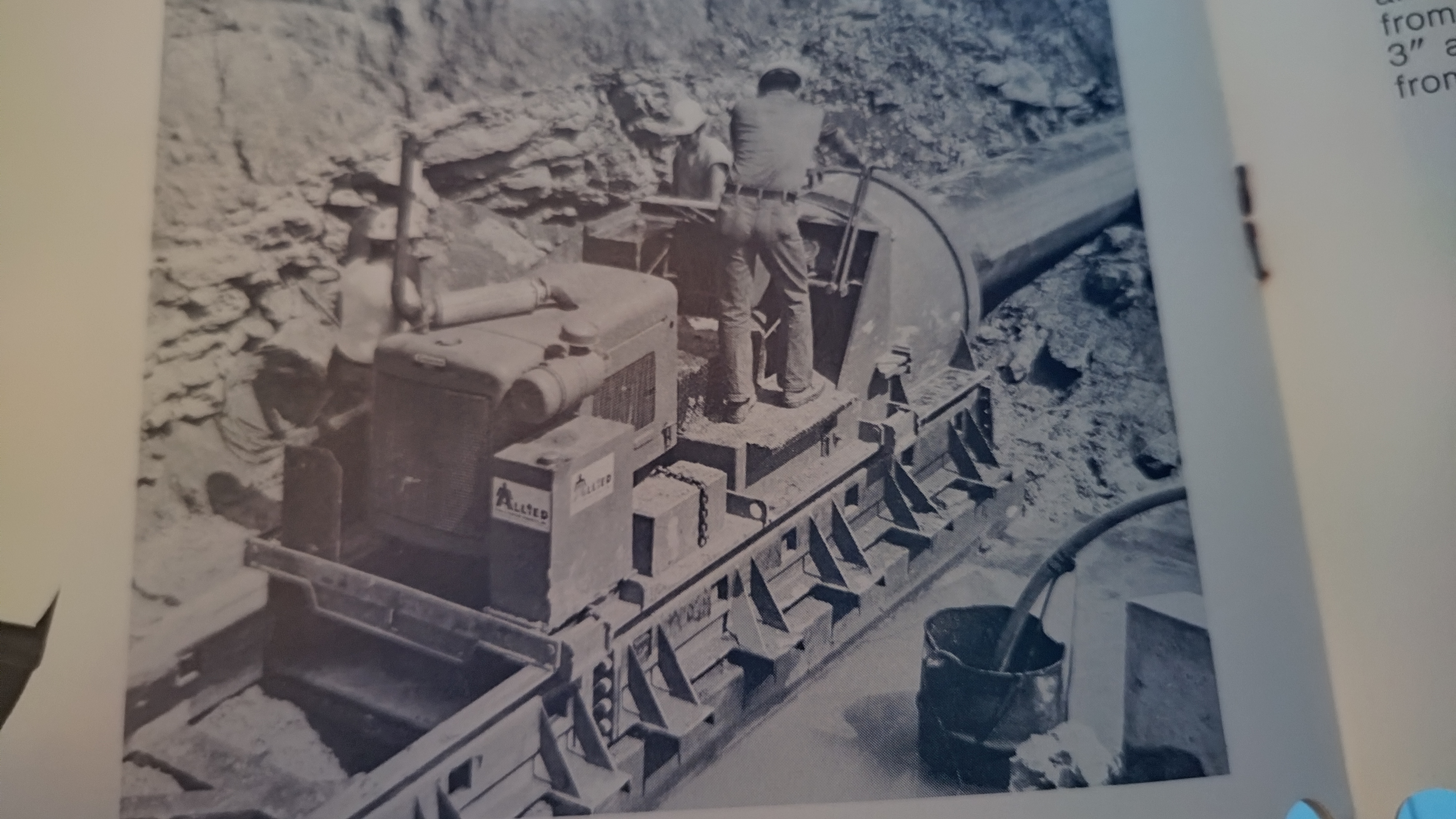
This is the operating platform, open to the weather unfortunately. The boring machine runs on track (included!) and it can set casing and drill simultaneously. Here’s a guy operating his Auto-Bore (yeah, I own an Allied brochure – is that weird?). Allied would sell you all manner of related equipment, too, from rock breakers to shoring systems.
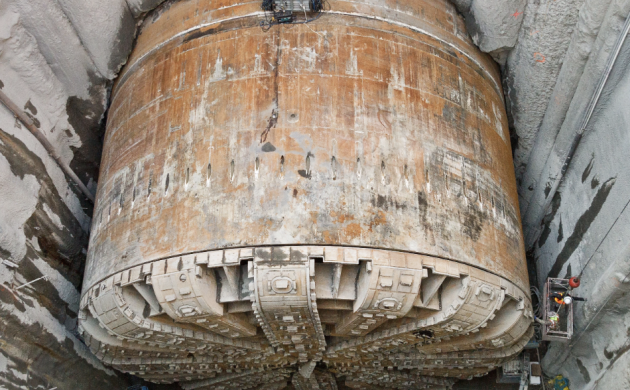
Enough of these baby borers, let’s take a look at Big Bertha, the world’s largest TBM. Off to the right, on the platform? That’s a couple of guys. The scale of Bertha is almost unimaginable. She weighs 6700 tons. The Auto-Bore 48 weighs 5700 pounds. Of course, Bertha is controlled electronically – no need to sit on a platform surrounded by a bunch of gear sticks. But Bertha isn’t infallible: while digging an underground highway in Seattle, Bertha hit a steel pipe in late 2013 and refused to proceed. The only way to fix her was to drill a new 120-foot shaft so Bertha could be removed (I bet folks were wishing for a reverse gear). Here’s one version of her rescue story – well worth three minutes’ time. All in all, it took two years for Bertha to start boring again.




Boring,,ha,ha,ha, finally got to use that one without hurting any writers feelings, and Lord knows I’ve been tempted( A Neon?) I think we can all agree, the VERY last thing we’d see here is a tunnel boring machine. What is going on in your head? I worked for a trencher dealer that also sold directional boring machines for utilities, but never anything like this. They sure could have used this when digging the Alpine Tunnel, 1800 feet, dug by hand! Took 2 years at 2.63 feet/day. Typically, these can do 50-60 feet/day, and no lives lost in the process. I saw’r a documentary on these things, I forget where, but digging a tunnel, under English Channel maybe, one on one end, one on the other, after they met in the middle, the only way to complete the tunnel, was to bury one of the machines. At a cost of almost $80 million, it was a tough decision. Naturally, I wonder what powers it, “diesel” could mean anything, being made in the 80s, probably Kubota, and you know what’s cool, is Allied is still in business in Solon, Ohio, SALUTE! A boring machine, good grief, what next? :)
I didn’t know they buried one in the middle. Must’ve been a big savings to drop 80 million dollars into a hole and leave it for the write off.
Que the Bad Dad Jokes!!! Nope, nevermind, I don’t want to BORE anybody with that… (insert rimshot here) Michelle, this is really interesting. And unfortunately to the newer generations, for the most part, just take for granted that there happens to be a hole bored into a mountainside or what not. But we needed machinery like this to forge ahead with progress, machinery like this many people have never heard of or seen. You must have some library to have a brochure from this company. Thank you for the great lesson and knowledge about “Bertha” I’m going to watch that later. This is a great write up Michelle although I don’t think I’ll be adding this one to my Bucket List.
Always good to your word, Michelle, you delivered as promised and went so far as to get down to the grass roots. I for one had no idea boring machines had such a lengthy history having thought it more recent as all the tunnels around here through the various mountain ranges were built by sweat, muscle and dynamite.
Again, another fascinating bit of machinery with a lesson in history to accompany it!
Thank you, Michelle.
To add to what Nevadahalfrack said….
“I for one had no idea boring machines had such a lengthy history”. I totally agree with Nevadahalfrack. Learning about the history about these machines is very interesting… It’s not BORING at all!!! ( insert rimshot here)
Ok…… Ok……. I’ll just let myself out now….. Every one on Barnfinds reading this will wish I didn’t take a vacation day off of work today!!!
In all seriousness, Michelle, please keep them coming!!! I’m honestly amazed at your range of experience and expertise with British sports cars, Ferraris, Michigan Loaders and Boring machines. Thank you!!!
-Dave
We had a similar incident in Toronto, where it took 19 months to rescue a boring machine.
https://www.cbc.ca/news/canada/toronto/boring-machine-freed-old-mill-sewer-1.6992520
That’s really something else. And hopefully the Condo buildings weren’t effected. That one photo really shows the mess it got caught up in and only 7 meters away too or 23 feet ( had to look it up).
I just want to add. You all really should watch the video link Michelle posted towards the end about the Mammoet crane they created. Its just as interesting as Big Bertha!! Thanks again Michelle!!!
-Dave
Saw alot of Mammoet 🐘 up in oil sands country. They’d move some massive equipment/supplies out to the mines.Their big rigs that hauled this stuff were usually automatics, at least the ones I saw. Great article and feature here. Thanks Michelle.
There’s that old joke about a tunnel project needed in order to build a highway under a wide river. They bring in the low bidder to find out just how he intended to perform the job. He said, “I’m going to start digging on one end, and my brother Bobby will start digging on the other, and we’ll meet in the middle.” They asked him what would happen if their calculations were off and they didn’t meet. He said, “Well, then you get two tunnels.”
Great write-up Michelle. Heavy machinery is fascinating to me. The info/videos about the “stuck” machinery were very interesting.
Very neat history of these machines!!
Sweet!! I will keep searching Craig’s List for a cheaper one.
I always hold out for free S&H.
That looks heavier than my mother-in-law. And she’s heavy.
Hmmm…better hope your MIL does not read “BarnFines!”
My MIL is sooo fat when she went Macys parade 5 guys tried to hook ropes to her. They thought she was one of the balloon floats. 😂😂😂
Ran when parked.
I had read that the Bertha had a failed main bearing that had to be replaced and it was still in its testing phase. The repair was almost as amazing as the tunnel. Modern machines have people working inside of them, they are that huge!
This is an interesting machine, probably more useful for pipelines or conduit under roads than longer projects. It doesn’t look like you could steer the head like modern machines either, just a straight shot.
Seems like a lot for a horizontal drill, but then again who knows what a new one would cost…
Michelle, another great write up!! And I learned something NEW today!!! I must admire the breadth of your, and Barn Finds”, expertise in finding new areas of the mechanical world to explore. Keep up the good work.
Not another one of these 🥱
Ha ha, nice double entendre!
Thanks to everyone for appreciating working machines as much as I do!
What a great history/information lesson!
Thanks so much!!!
Modify this to run in a vertical position and see if ya could reach China.
Rat rod this for sure ! Maybe some 24 ‘ hammers and one of those MAD Max type drivers.
I’m buying this!! I’m in Florida and I’ll dig tunnels that go nowhere and our Governor will pay me billions!! WooHoo!!
Well that’s something you don’t see everyday.
El Chapo and the Mexican cartel entered the chat*
Great video link Michelle on the action to save big Bertha. The tracked gantry crane fix to facilitate the lift was a nice plus. Love that stuff.
“call before you dig”
Very well-written and interesting, Michelle. I find almost anything mechanical interesting.
You never disappoint, Michelle.