

Rarely popular but usually interesting, at least for the era and its now-ancient tech, this 1980 Comuta-Car is a tiny car that a person could restore or upgrade with modern electric and other systems. It would be an interesting car for neighborhood errands and would no doubt draw a crowd on grocery runs. The seller has it listed here on eBay in Azusa, California and there is one bid at $1,350.
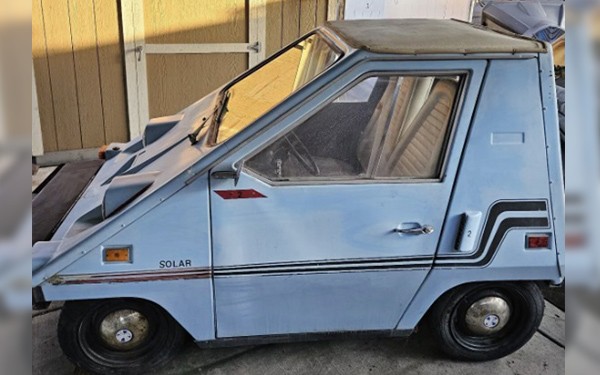
We’ve seen quite a few Comuta-Cars here on Barn Finds, along with the earlier version, the CitiCar. I prefer the earlier and smaller Citicar in that it didn’t have the huge battery-filled “bumpers” both front and rear. As Billy Crystal said while doing his impression of Fernando Lamas, “It’s better to look good than to feel good.” Ok, that made no sense here, sorry.
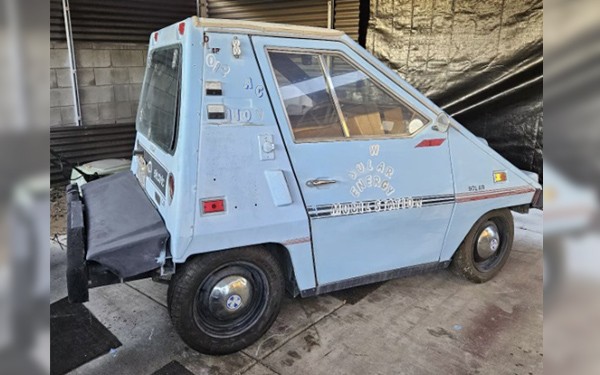
Speaking of looking good, uhhhhh.. er… The Comuta-Car was the offshoot of the earlier CitiCar as I mentioned, having been made from 1979 through 1982 by a Florida company called Sebring-Vanguard. I automatically think of the retirement community “The Villages” when I think of Florida, which probably isn’t fair. I had a photo gig there a few years ago and was in a drive-thru to grab a coffee before sunrise, as in, it was still dark out. There were a couple of golf carts in line ahead of me, something I had never seen before. I happened to have taken my 14 mpg Cayenne Turbo on this trip so I more than offset any gas savings those two golf carts saved while waiting in that line.
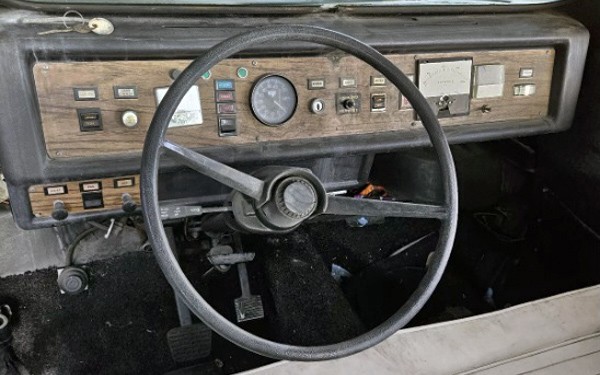
This example looks pretty good overall as you can see, and the seller says the glass (and/or plexiglass) and body are in good shape. The battery holder bumpers are often cracked and they appear nice on this one, with homemade foam bumpers that could be redone maybe at some point, or not. The interior looks pretty nice, and this is where you’re going to be spending an hour of your time before you have to stop and recharge for several hours. The reported range was between 30 and 40 miles and up to around 30 to 40 mph.
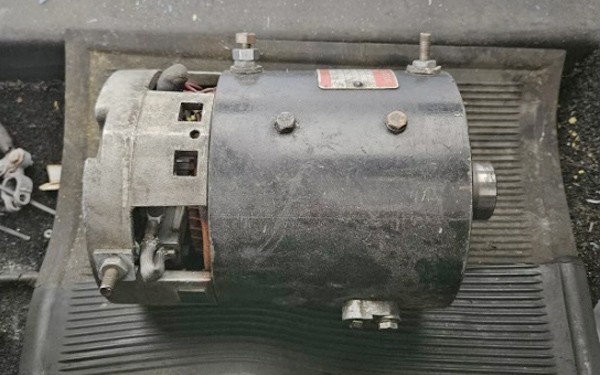
The motor would have been a 2.5, 3.5, or 6-horsepower General Electric DC unit, and since this is an early model, I’m assuming it’s a smaller motor. They say it needs to be rebuilt and never got around to it, but the batteries seem to hold a charge. Have any of you owned or driven a Comuta-Car?



Scotty……. “You looook Maaarvelous……. Absolutely maaarvelous”
Oh brother, I haven’t thought of that Billy Crystal bit for years….
These are very interesting cars. If all you do is run very locally, and you can charge it at home every night, it makes sense. And you can help contribute towards individuals with Porsche Cayennes getting 14.768 mpg. Neat find Scotty.
So, basically, the same best use case scenario as modern electric cars (local runs and you can charge it at home every night). Obviously the tech has evolved tremendously, but still.
“But EV’s are the fuuutuuure”, they say.
Comparing this 45-year-old car to a modern EV is a bit of stretch LOL.
I look at this Commuta-car, and have a hard time liking it beyond its engineering. Would something like this ever appreciate in value, like say, a 60s muscle car? I can’t see it. But, if I was an EV collector, I wouldn’t hesitate to include it in my collection.
Thanks, Driveinstile! I haven’t watched SNL in years but that was a pretty good era. I sold the beastly Cayenne about a year ago. It was fun and almost as reliable as anything I’ve owned but it was way overkill for a winter vehicle and I was always worried about some crazy overly-complicated system going haywire.
Yes!
@PRA4SNW…… You Loooook Maaavelous too!!! Ha ha ha.
Thanks for the image!!!
Those were some good years for SNL Scotty I totally agree. Thanks for the smile.
@Driveinstile: SNL was a weekly staple for me. I stopped watching many years ago when the skits became too political for my liking.
I think the 50th anniversary celebration show is hi weekend. I hope they get a lot of these old cast members back for a reunion.
I had one of these about 15 years ago. I lettered it with my company info to use it as an advertising tool. Even with brand new batteries and brakes adjusted back it needed to be charged after a 5mi trip. I live on a hill and can speak with authority about how these cars hate hills. Not to mention the bimetal strip that reduces voltage for low speed, is a fire hazard over dry lawns or leaf piles. Didn’t take long before it was parked to sit for about 10 years until I finally sold it.
Much more creative design than a Cyber Truck. More practical too. Would make sense for a neighborhood runabout.
There was a photographic and graphics processing service company in the late 70’s that bought a few of these to add to their gas fleet for light load pickup and deliveries around downtown areas of Chicago. They were kept these outdoors and now If I recall the power came from a series of typical acid batteries onboard and not located in the bumpers (maybe a different wedge model?) and how they were recharged never came to mind. Nostalgic yes, this listing triggered my curiosity, so I’ll have to go through my negatives to find the pics I took back then just to see if I can determine how they kept the batteries charged overnight and through the weekend as there certainly wasn’t an obvious single for each vehicle or multi charger bank with a tangled web of extension cords. One thing for sure I know they weren’t used in the snow and the gas saving experiment didn’t last more than a couple years before they resorted back to an all gas power fleet.
IIRC, there was another model named the Citi-Car which had the batteries inboard and under the seat instead of in the bumpers. Both models used regular lead acid batteries.
I’m not sure which one came first, or if maybe they were sold at the same time – maybe the one with them in the bumpers got better range, which may have made a buyer overlook the added ugliness.
These weren’t much more than glorified golf carts, but were street legal and could be driven anywhere. Great for short commutes and shopping. They used 6 volt golf cart batteries, for 48 volts if I remember right. Many parts were the same as golf carts. The resistance controller that Junkman mentions were often replaced with a Curtis solid state controller after a few years, which made for a smoother ride and more range. A larger version was made for the Post Office and had heavier duty components. Once the Iranian oil embargo and gas rationing ended, interest in these and other early electric cars faded away.
Roli’s (Counting Cars) “Hungarian Hotrod” came out pretty cool lookng.
Wow!!! I agree, thats some transformation. I like what he did to it. Maybe somebody could do something with this.
One of my teachers in high school around 1974 had a red CitiCar. It certainly got a lot of attention in the faculty lot. He was an English teacher and sort of an eccentric dude so it wasn’t surprising.
My wife’s grandfather had the CitiCar version of this in Akron Ohio that he used to fart around town in. He was an inveterate mechanic and tinkerer of all kinds of machines. She handled the disposition of his estate after he died in 1988 and sold it for $800 to the first person to come look at it. I wonder what they ever did with it and if it still exists?
Auction update: surprisingly, this one sold for $3,650!