
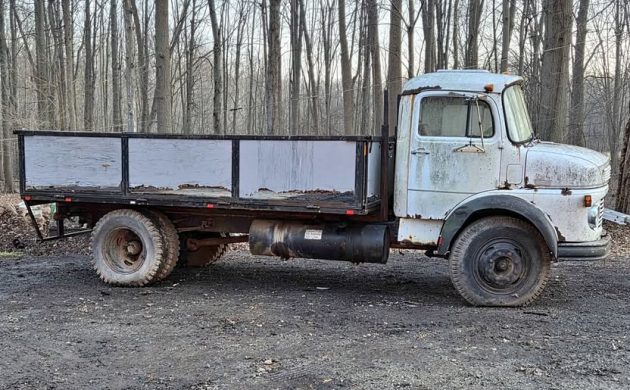
Here in the eastern United States, we’re getting ready for a major winter storm. Or, we’re supposed to be; the forecast is rapidly evolving, as it usually does, but it will almost guarantee that our world here in the mid-Atlantic shuts down with zero proof of needing to do so. My ranting about the weather aside, it is mildly exciting to think about having a reason to use four wheel drive on my vehicles that are actually capable of slogging through heavy snow. The mind wanders to other transportation options for going anywhere when needed, and while this 1982 Mercedes-Benz 1013 “Kurzhauber” isn’t 4WD, it is known to be near impossible to kill. Find this project-grade example listed here on Facebook Marketplace for $5,000.
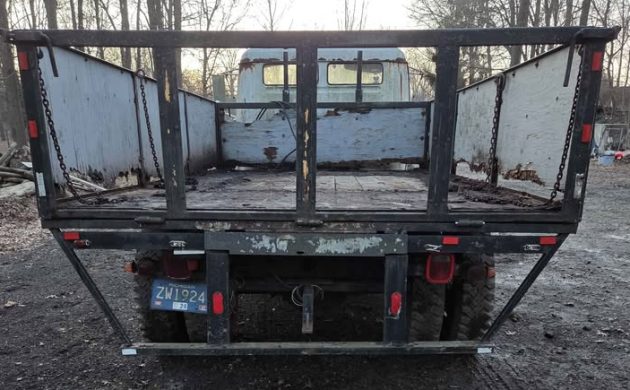
The “short bonnet” Mercedes trucks were part of an extremely long-lived lineup that made a surprising impact stateside in a truck market heavily dominated by domestic incumbents. The familiar shape of the hood, combined with the cab-over-engine layout, made these rigs proportionally-appealing to end-users that had to navigate narrow, rough roads and urban environments. While the design evolved with different grilles, headlights, and interiors used, the basic proportions stayed in place. Originally, this was due to requirements in Germany, where Mercedes was limited to a certain length of truck; eventually, it became an asset in global markets.
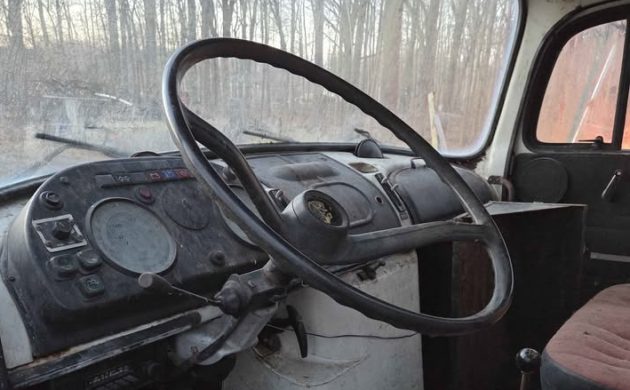
As someone who is a fan of Mercedes-Benz products, it’s always funny to me to peek inside their commercial applications and see a familiar cockpit. When you stick your head inside a Mack or a Kenworth, it’s pretty obvious you’re in a vehicle with no consumer carry-over. The gauge cluster and the dashboard is clearly European-inspired, whereas a similar offering from a U.S. manufacturer would appear anything but refined. The driving experience is likely a different story altogether, where I doubt there’s much refinement to be found driving a large commercial rig from this era.
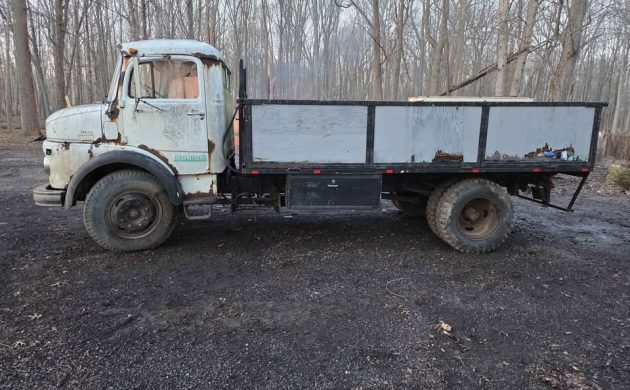
These trucks were generally powered by the stout OM352 inline-six diesel engine, which came in both turbocharged and naturally-aspirate form. Either version is known to be fairly robust, with the former kicking out 130 horsepower and the latter good for 168. Both numbers are shockingly “light” for a truck of this size, but speed was never the point – getting there time after time, mile after grueling mile, was. The seller claims the electrical system powers on and that the frame is rust-free. The body looks like it has some flaws that stem from years’ of Michigan winters, but overall, it looks like it has plenty more to give to its next owner.



With the plethora of different trucks out west, there were a few MB trucks like this that filtered through. I remember one of the local co-op fuel agencies had one to deliver fuel. His truck became a common feature in the Chinook Belt. Unfortunately, when the agent retired the new agent didn’t share the enthusiasm and the new truck was supplied by International.
In our shop we had a few come in from the oil patch. They seemed to be well made and stood up well. The fuel systems weren’t any different than a typical fuel system for a similar spec’d International. Bosch inline injection pump with automotive-style governor; multiple orifice, differential pressure injectors. They needed servicing just as often and we did them.
We had a Unimog (similar engine to this) come into the shop with a starting difficulty/rough-running complaint. The owner had recently completed a complete restoration but somehow overlooked the fuel system. I checked one element and found it to be dusted out. Needless to say, the entire fuel system was pulled, overhauled and reinstalled.
Major difference in performance, in addition to major reduction in the customer’s bank balance. The happy customer reported 90 kph going home, which was pretty good because Unimogs were supposed to maintain a maximum speed of 80 kph.
The three ton trucks weren’t a lot faster. I remember them to be a bit noisy but built like a Panzer tank. German winters must not be as cold as they are in the Chinook Belt because the heaters weren’t a lot better than the one in my ’71 Toyota pickup.
Of course a lot of things got standardized when Daimler Benz bought into companies like Frieghtliner and Mack, and Sterling, just to mention a few.
Interestingly, I passed one of these on the road the other day. Not overloaded with power but tough as nails. When I was a kid, I unloaded trucks for a local produce dealer, he ran a bunch of these in the city.
lots of rust, I don’t think I would tackle this one I would prefer an old international or something American made.
Thanks Jeff, I really enjoy the trucks and equipment mixed in with everything else here on BF.
5K for a rusty 44 year old truck that doesn’t run. Not for me, it would really help the cause if the bed had a hoist under it.
Most of what appears to be rust through is, I believe, just rotted out plywood panels on the body. As for the “not very fast” bit, commercial vehicles– and POVs where the owner isn’t planning any Autostrada/bahn/route driving– are limited to 90 clicks. Being caught exceeding that means a permanently pulled ticket… you become a pedestrian or passenger, forever.
The Opel Blitz comes to mind.
Thank You Jeff for bringing this unique vehicle to our attention. There were not very many in the States. Mostly city delivery vans and Unimogs. Australia was a whole different story. They had many of the largest sizes made. The Australian Historical Commercial Vehicle Assn website has a 4 year, 99 page topic on Mercedes trucks here:
https://www.hcvc.com.au/forum/truck_Chat
Shorten the frame and make it a pickup.