

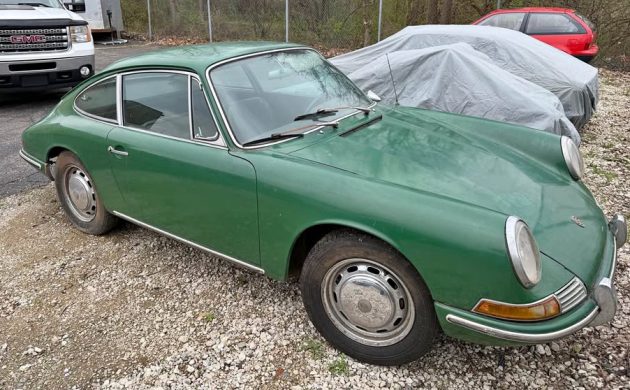
Although Porsche developed its reputation founded on producing high-performance sports cars commanding premium prices, it has released more affordable models to increase sales volumes and profits. The 912 was one such vehicle, and this 1967 example appears to be a promising project candidate. Described as “pretty much rust-free,” it has 20,000 miles showing on its odometer. It is complete, needing a new owner to recapture its former glory. The seller has listed the Porsche here on Facebook Marketplace in Waterford, Michigan. You could take it home for $40,000.
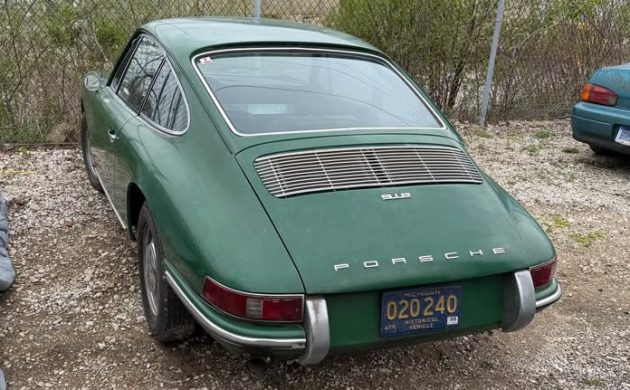
Released in 1965, the 912 remained on sale until 1969. It made a temporary return appearance in late 1975 as the 912E, replacing the 914 in North America until the company completed development of the 924. This 912 rolled off the line in 1967, ordered by its first owner in what I believe is Leaf Green. The paint shows its age, with minor chips and marks. However, with no major imperfections, it would be interesting to buff and polish the exterior. The results might be surprising, allowing the new owner to enjoy this classic as a genuine survivor. The seller claims that the car is solid, and if the underside shows nothing beyond surface corrosion, the grinder and welder could stay safely tucked away in the cupboard. I still feel that any restoration should be a rotisserie process, eliminating every square inch of corrosion to ensure the car’s longevity. The panels are straight, and the trim and glass look respectable.
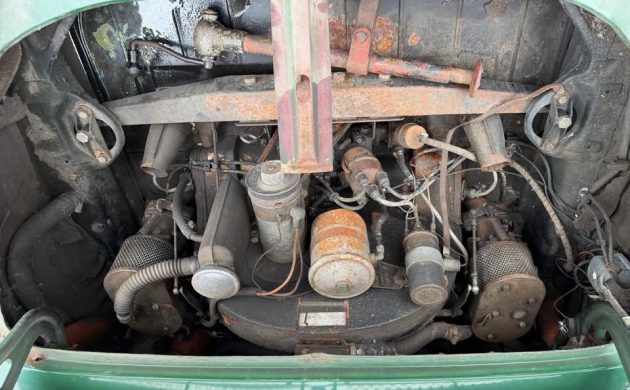
Mechanically, the 912 was standard Porsche fare. It features a rear-mounted air-cooled engine that sends power to the rear wheels via a manual transaxle. The 1,582cc four-cylinder motor produced 101hp and 98 ft/lbs of torque when the car was shiny and new, and while those figures aren’t startling, the curb weight of 2,140 lbs allowed the 912 to hit a factory-quoted 115mph. However, this car has a couple of mysteries that may require clarification. The seller doesn’t state whether it features the standard four-speed transaxle or the more desirable five-speed unit. They also don’t state whether the car runs or drives. However, the bulletproof nature of the drivetrain and simple engineering would make a rebuild pretty easy if it needs work.
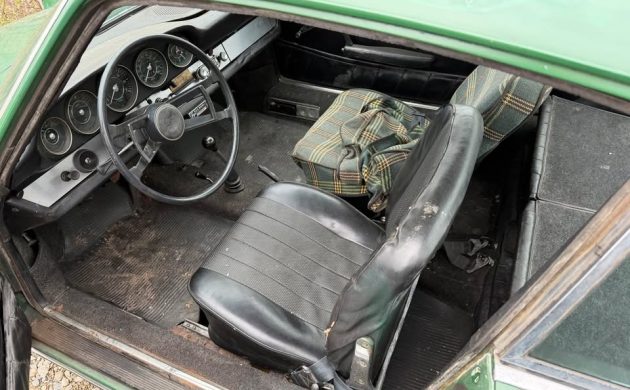
Trimmed in Black leatherette, I would describe this Porsche’s interior as reasonable. It is complete, and the only visible addition, beyond a slipcover on the passenger seat, is an FM converter. The upholstered surfaces look tired, and the carpet shows wear. The buyer could leave it untouched if they prefer a survivor or “shabby chic” look, but I suspect that the restoration would include a retrim. Kits to return the inside of this Porsche to a factory-fresh state are available. They aren’t cheap, but if the finished product is treated respectfully, it should look nice for many years.
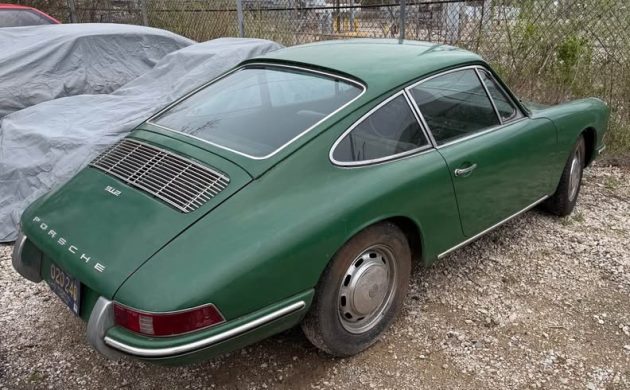
Regardless of the model designation, most Porsches seem to be solid investment prospects. This is true of the 912, with values for the 1967 model climbing faster than the market average. Whether the seller’s asking price is justified depends on what hides below the surface. If it is as solid as they suggest, the lack of significant rust would make a restoration relatively straightforward. I would still view a nut-and-bolt approach as the most appropriate, helping to ensure that it remains around for another six decades. Do you agree?

I would get it running and driving dependable then just cruise around as it is before moving it on to someone else who knows more about how to restore one of these
As soon as you said Michigan I said “rust” …but still a nice car. This one requires a very thorough inspection in person to make sure it is what it claims to be. I’d be surprised that a Porsche enthusiast has not picked it up because of potential rust issues.
Great write up!
Could be a nice one. Turning the engine picture right side up might help sell it.
There’s no way that car only has 20K miles. Even the license plate looks rusty!
After it is turned right side up, the engine could stand some detailing, as could the rest if the car.
I tried contacting a while back.No paperwork to share. “I’m helping them sell”. Nightmare to try to deal with……
Can someone explain the early 91x pricing craze?
I owned a ’72 911 in 1980. I paid about $10K at the time. It was a fun car for the money. Ever since, it’s been eclipsed by so much more.
With old American muscle, at least you get some horsepower and distinct styling and maybe a factory performance upgrade. Drivers are often less than $20k. With Ferrari and Aston and others, at least you’re getting limited edition snob appeal.
With old 911s and 912s at their current market prices, you get low horsepower, relative sameness across the board, ridiculous parts prices, and there is a sea of them out there. They are not “special”.
$40K for this worn out green thing? You can get a damn nice small block Camaro or ‘cuda or Mustang even a nice C3 Corvette driver for this money. Or even a nice BMW 2002 tii.
I don’t get it at all. Someone please explain to me what you are getting here that is so compelling?
Matters of taste, I guess. I could ask why a muscle car is worth so much when it can be cloned so easily from a 6 cylinder grocery getter. I can’t speak for this car and it’s definitely more than I would pay, but to me there’s something special about 911s.
I actually agree with you.
Older 911s are interesting cars, but, having owned one and experienced it first hand, at the prices being asked these days, the juice isn’t worth the squeeze for me. Not even close, when there are so many more interesting cars for a whole lot less money.
40k for what appears to be an expensive restoration and from end to end needs attention?? Ummm, no. Hard pass.
It’s Irish Green. 20,000 miles sounds fishy.
Irish Green, British Racing Green, Kermit Green. It’s all still green.
[sing] “It’s not easy being green…”
-Kermit
ninja3000 – tru dat!
I’m glad I’m not the only one who keeps his grinder and welder in the cupboard….
If it truly has very little rust this is a great price. Joe in Hudson
Matters of taste, I guess. I could ask why a muscle car is worth so much when it can be cloned so easily from a 6 cylinder grocery getter. I can’t speak for this car and it’s definitely more than I would pay, but to me there’s something special about 911s.
I had a 1967 912 back in the mid 1980’s. You had to wind up the RPM’s waaay up to get it sounding other than VW. Had to red-line it to lose an early 80’s Z-28 . It was the kind of car that you spent all week working on it, just to drive it on the weekends. Looked great at a stop light. Absolute chick magnet outside of nightclubs. The two (2) best days I owned that car were the day I brought it home, and the day it left my driveway. That’s all I got to say ’bout it.
I got better sound out of my ‘66, with a stinger pipe attached to the Bursch exhaust!
Not too scary. You would definitely want to see it in person, though.
If it was stored outside under one of those silver car covers in Michigan then at 10K it would still be too much.