

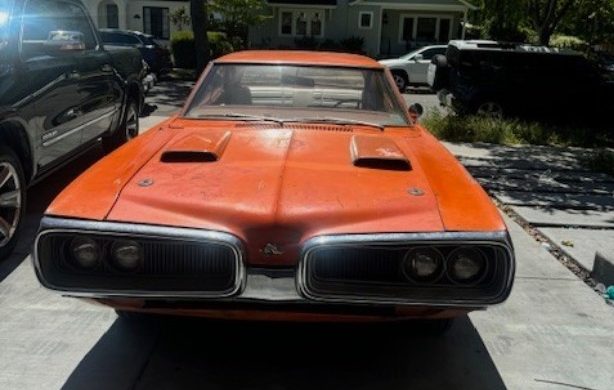
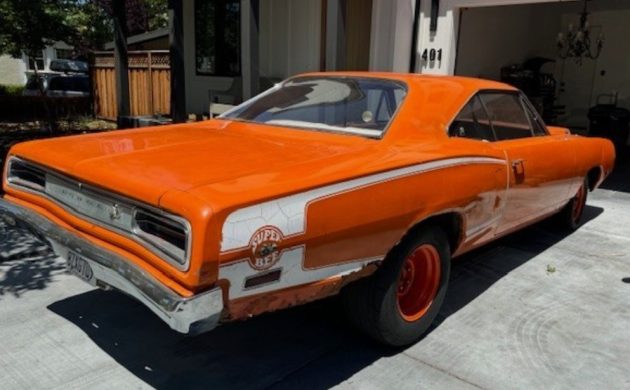
From the front, this 1970 Dodge Super Bee looks undeniably purposeful. The bumper makes a bold statement, and the Ramcharger hood is designed to allow the V8 under the hood to inhale large amounts of cold air, unleashing maximum performance. It needs plenty of work, but its lack of structural rust and the included parts selection make it impossible to ignore. The seller listed the Super Bee here on eBay in Redwood City, California. Bidding sits below the reserve at $3,238, but there is a BIN option of $30,000 for those wishing to bypass the auction process.
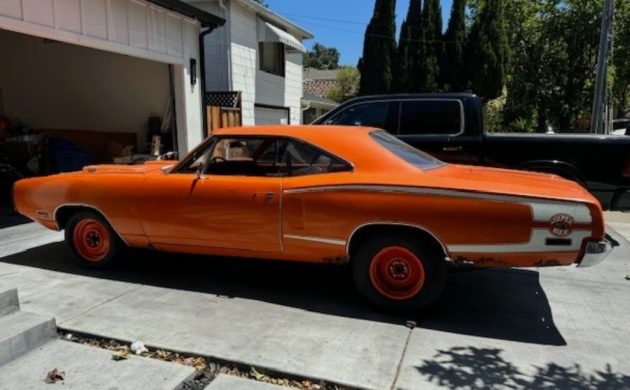
Dodge introduced the Super Bee for the 1968 model year, riding the crest of the muscle car wave. Based on the Coronet, the First Generation remained on sale until the end of 1970. The original owner ordered this final-year example in Go Mango, one of the company’s distinctive high-impact colors. It looks pretty tired, with many cosmetic flaws and shortcomings. There is no ignoring the rust, which is visible on the rear quarter panels and the lower front fenders. However, unlike an iceberg, the worst of its issues are above the surface. The seller states that the floors and rails are solid, and there is only minor rust in the trunk pan. The buyer will almost certainly replace the quarter panels, and I believe that adopting a nut-and-bolt approach to this restoration would be the most appropriate way of doing this Dodge justice. The seller includes the original wheels, the glass is clear, and some trim pieces would probably benefit from a trip to the platers.
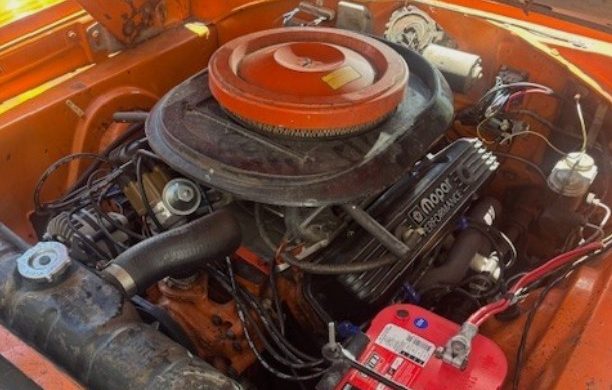
Decoding the VIN reveals that this Super Bee left the line with the entry-level 383ci V8 under the hood. Generating a factory-quoted 335hp and 425 ft/lbs of torque, it represented a pretty handy starting point for a vehicle with genuine muscle car credentials. Those wishing to splash the cash could tick the boxes for the 440 Six-Pack or the 426ci Hemi, but the 383 remained the most popular choice by a wide margin. This Super Bee isn’t currently numbers-matching, though that need not be a big drama. Its engine bay houses a 440ci V8, teamed with a four-speed manual transmission. The seller confirms that the Dodge runs and drives, but isn’t roadworthy. Remember the original 383? Well, the seller includes it, and most of the ancillary components in the sale, but the motor requires a rebuild. Therefore, returning this Super Bee to its factory form is viable, and the original Broadcast sheet will help the new owner to fill in any potential blank spaces.
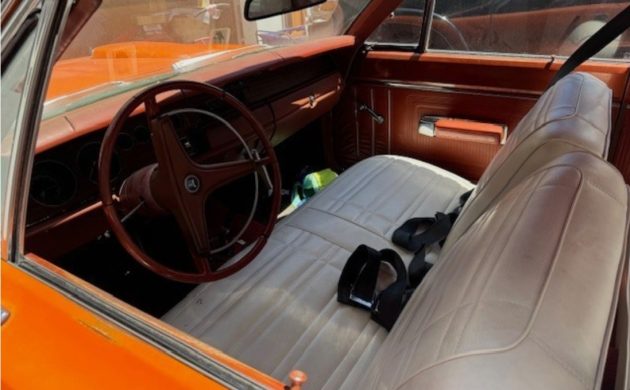
This Super Bee would have made such an impact in its prime. The first owner teamed the Go Mango paint with an interior trimmed in Burnt Orange. The listing images reveal that the Californian sun has exacted a high toll, and that someone has replaced the seats. However, that’s as bad as the news gets. Included in the deal is a trim kit in the correct color. Therefore, it will take more time than money to whip this aspect of the Dodge into shape.
Let’s be honest, $30,000 is a lot of money for a project candidate. However, American muscle cars tend to write their own rules. As modern cars become more complicated and manufacturers focus on zero-emission vehicles, many enthusiasts wish to recapture the vibe of a time when Detroit ruled the roost. You can walk into showrooms today and purchase cars that offer comparable performance to this 1970 Dodge Super Bee, but most won’t possess the inherent character and pure presence this classic would have if the buyer returns it to its former glory. The listing statistics suggest that people agree, but is that enough for you to commit to this restoration?

It’s got the right drivetrain, but 30k is a lot of cash for a car that needs a lot of work…and judging by the rust, I am sure there’s more work that’ll be needed that one cannot see from the pics. It’s just up the 101 from me though if anyone wants eyes on it.
Man I would have loved to be able to go to the dealer back then and just sit down and check off the boxes…..I like super bees,,,, In the 80s I did not see these advertised for sale in the classifieds section of sunday paper. Me and my dad would sit having breakfast and look over the cars for sale.. a lot of chargers and Buick skylarks and wildcats i had seen chevelles and some amcs. Those were the days….
I was just telling my wife how much fun it was back in the day to walk the used cars lots and see the old cars, not so old back then. 55 Chevs and Fords, GTOs and 442s, SSs, fastback Fords and big motor Plymouths & Dodges. Great cars and great times.
Now we walk thru a used car lot and see the same things with different nameplates. Nothing exciting.
They should have a contest for the angriest looking car. This model might win.
Makes you wonder what was on the designer’s minds and what their mood was that day when they started drawing. A lot of the Chrysler products look angry even the newer challengers have a look with the headlights
My grandparents had a ’70 and a ’73 Dart, and both of them looked a bit PO’d from the front!
Wow almost perfect! In ’78 or so my dad and I used to walk through boneyards and there were surprising number of ’70 Coronets I fell in love with the shape especially derelict!
There was a black ’70 Bee N96 440 slapstick just like this in there rusted to the door handles only 8 years old! Harrison Michigan. I wanted one ever since although I would have ticked the panther pink convertible white top and white interior if I bought one but would be the 440 with buckets. I love the filigree! The little 440 emblems on the side of the little scoops, the little bee sculptures. Born and bred a Chevy guy but a ’70 Bee is in my top five.
Looks like something David Freiburger would sell to get the next hot rod in his garage.
This was my first entry in the Mopar muscle car world. Bought one in the same color back in 87′ for about $5k, and it was in light years better shape than this one that needs a rustoration. It had the 383ci with a black interior, auto on the console. This one certainly will need it’s fair share of work, but I’m just glad I won’t be doing it lol.
Too much money for too much work. Especially for a non numbers matching vehicle. Everyone thinks they’re sitting on a pot of gold.
What is that space in the center of the bumper ends it looks like you could set down in the center front of this one
it’s cool indeed and in a special color combo. not sure why there are white seats, but they are there. a lot of rot that can be seen and not seen. 30k and it needs 50-70k to make it right. great if you have cash to burn. i don’t see it but then again i am the working poor
That’s just a reflection on the bumper center piece, not a place to sit.
Ended at $22186.
Reserve Not Met.
21 bids.