

- Seller: Giordano’s Vintage Motors (Contact)
- Location: Carnation, Washington
- Mileage: 55,000 Shown
- Chassis #: SAJNV5846DC108950
- Title Status: Clean
- Engine: 7.0-Liter Chevrolet 496 V8
- Transmission: Doug Nash 5-Speed Manual
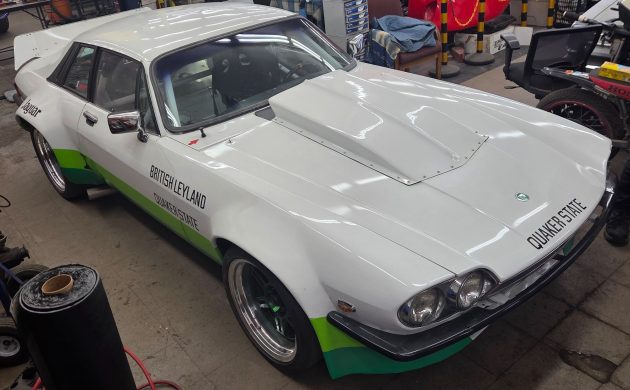
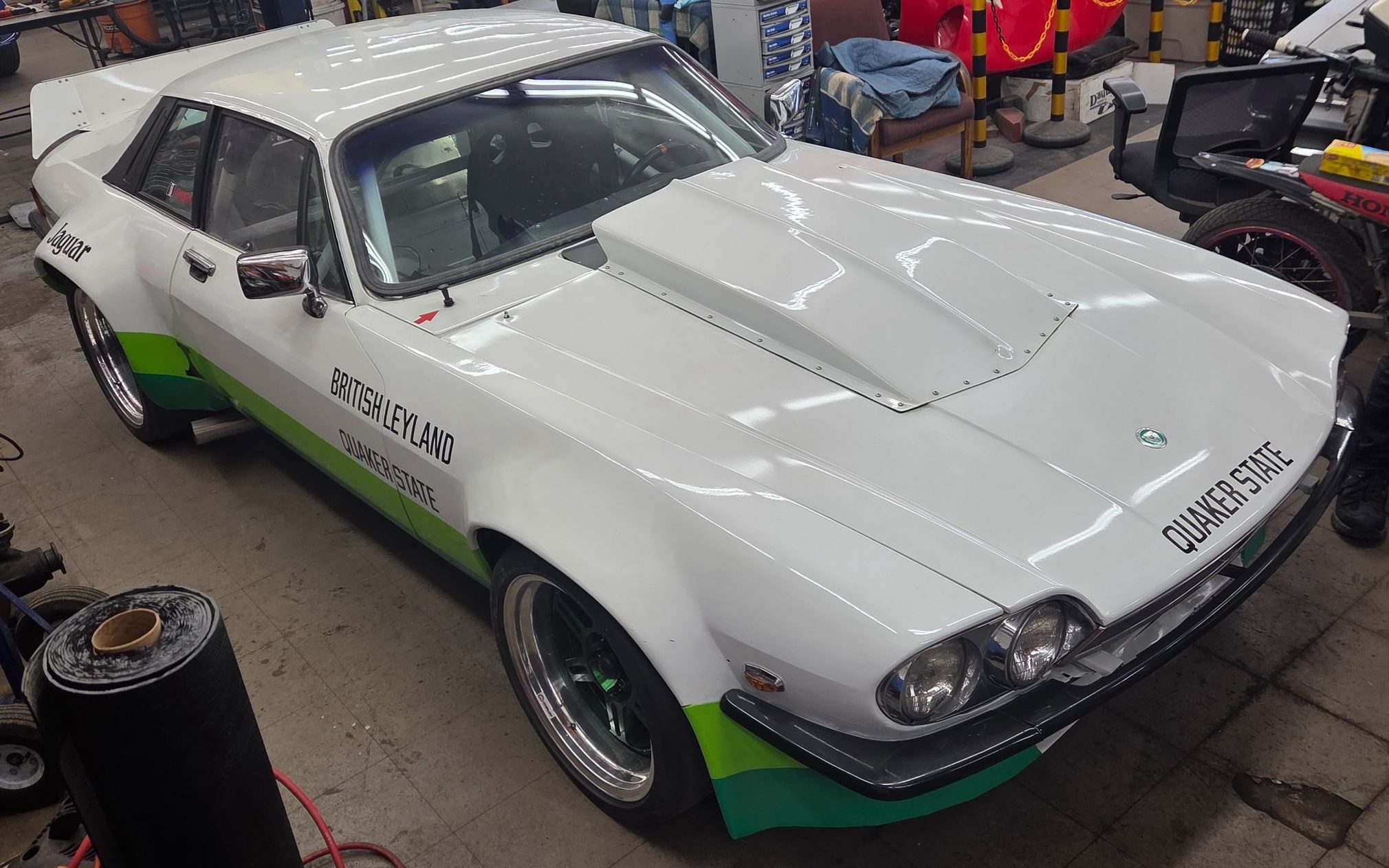
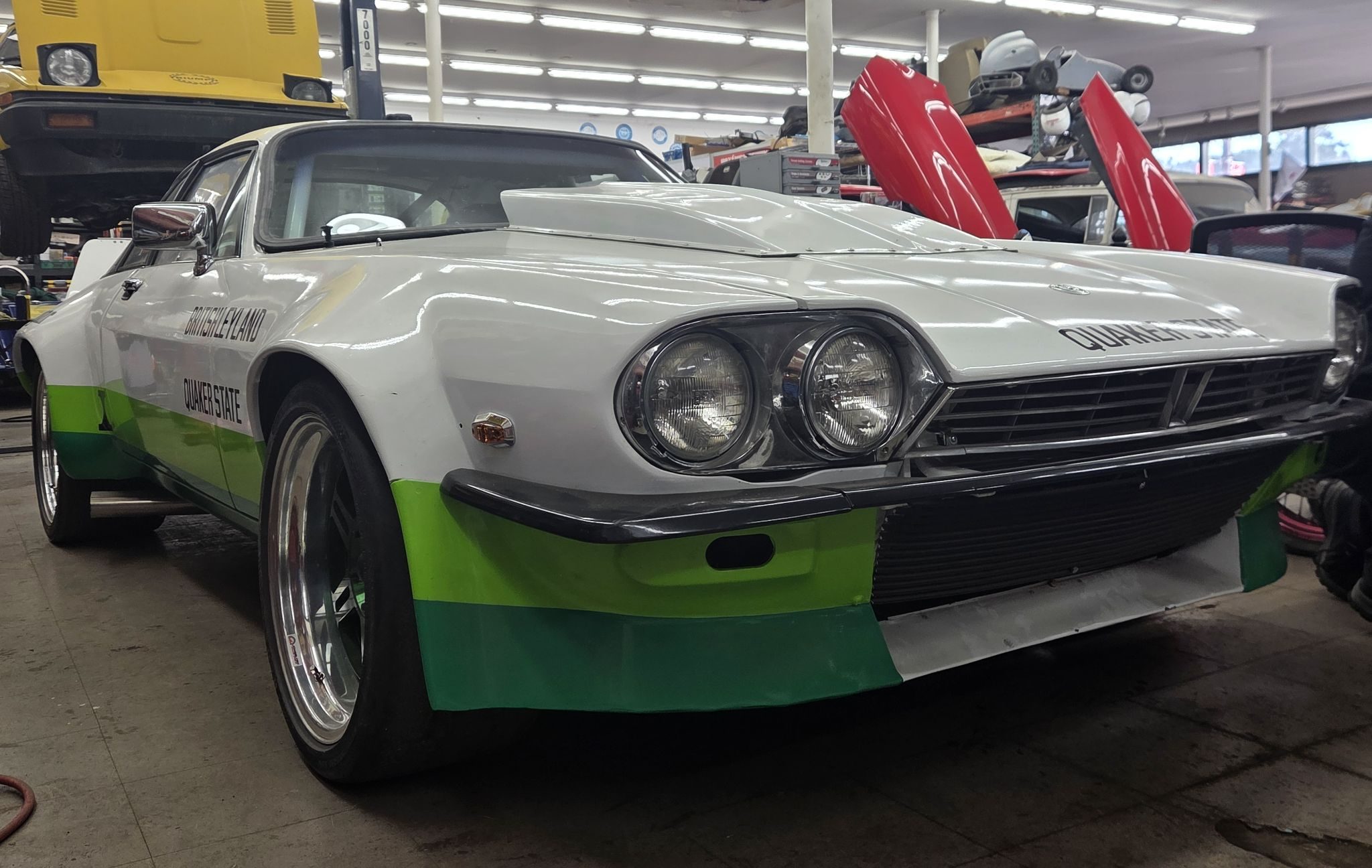
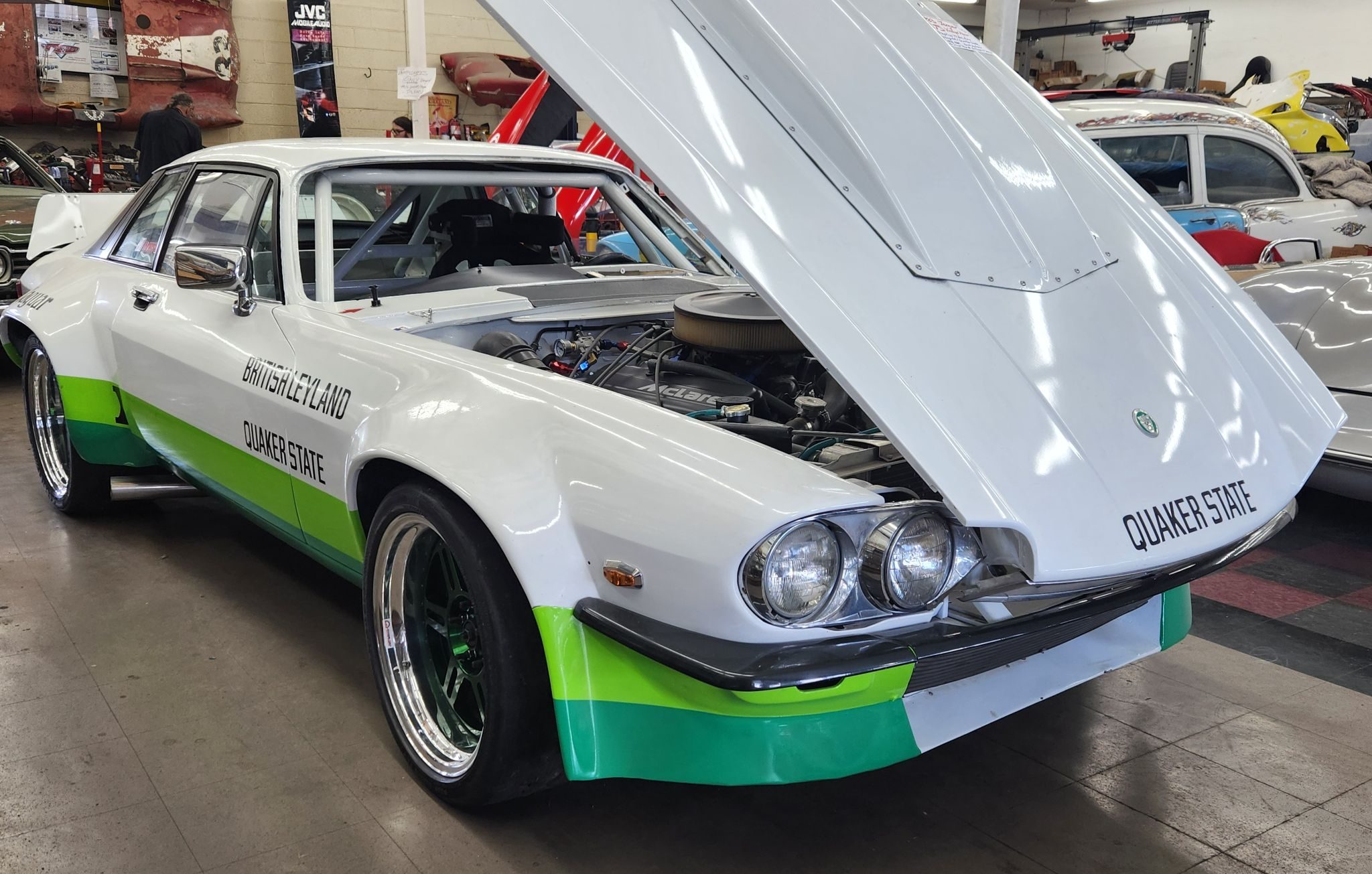
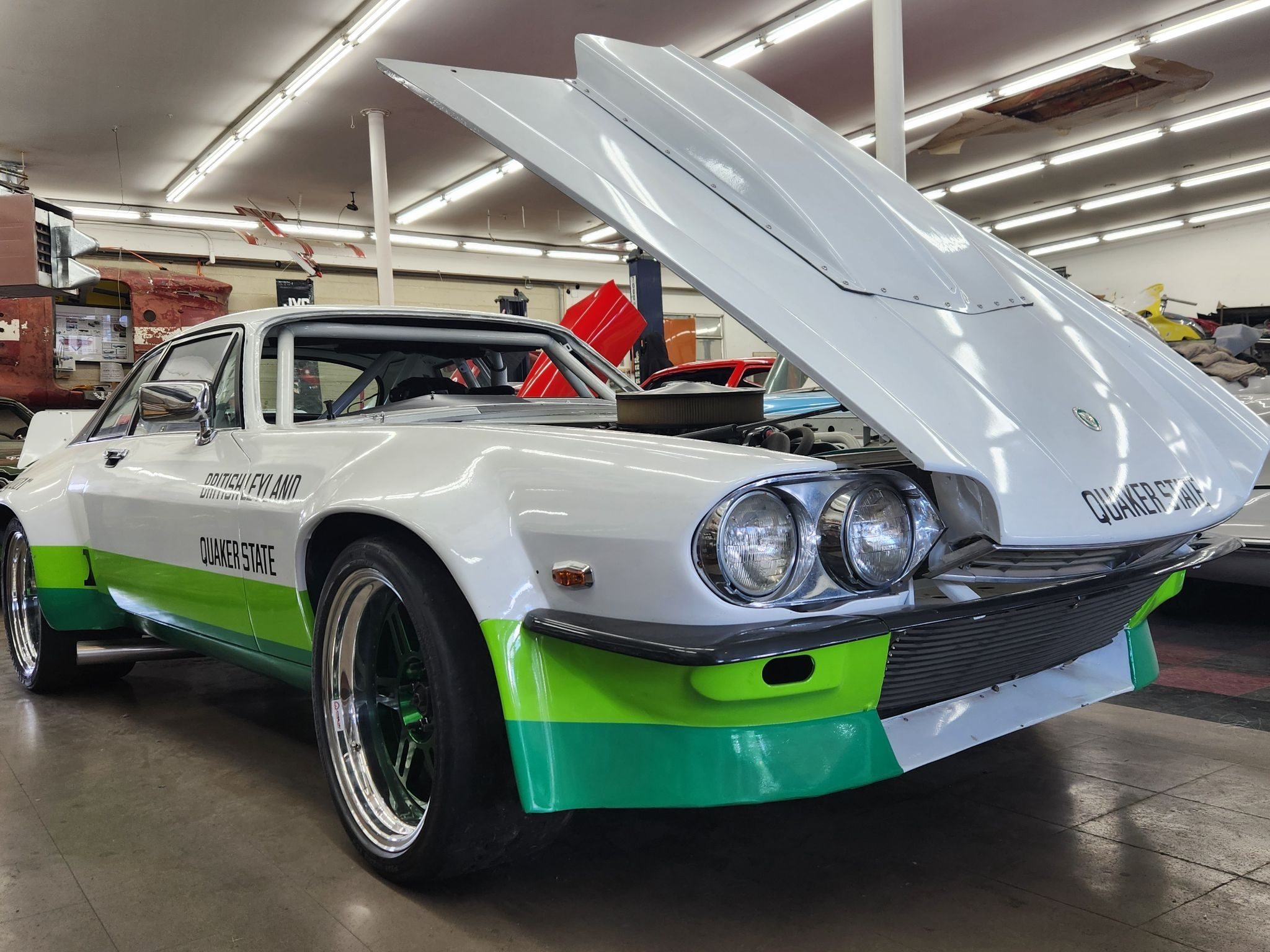
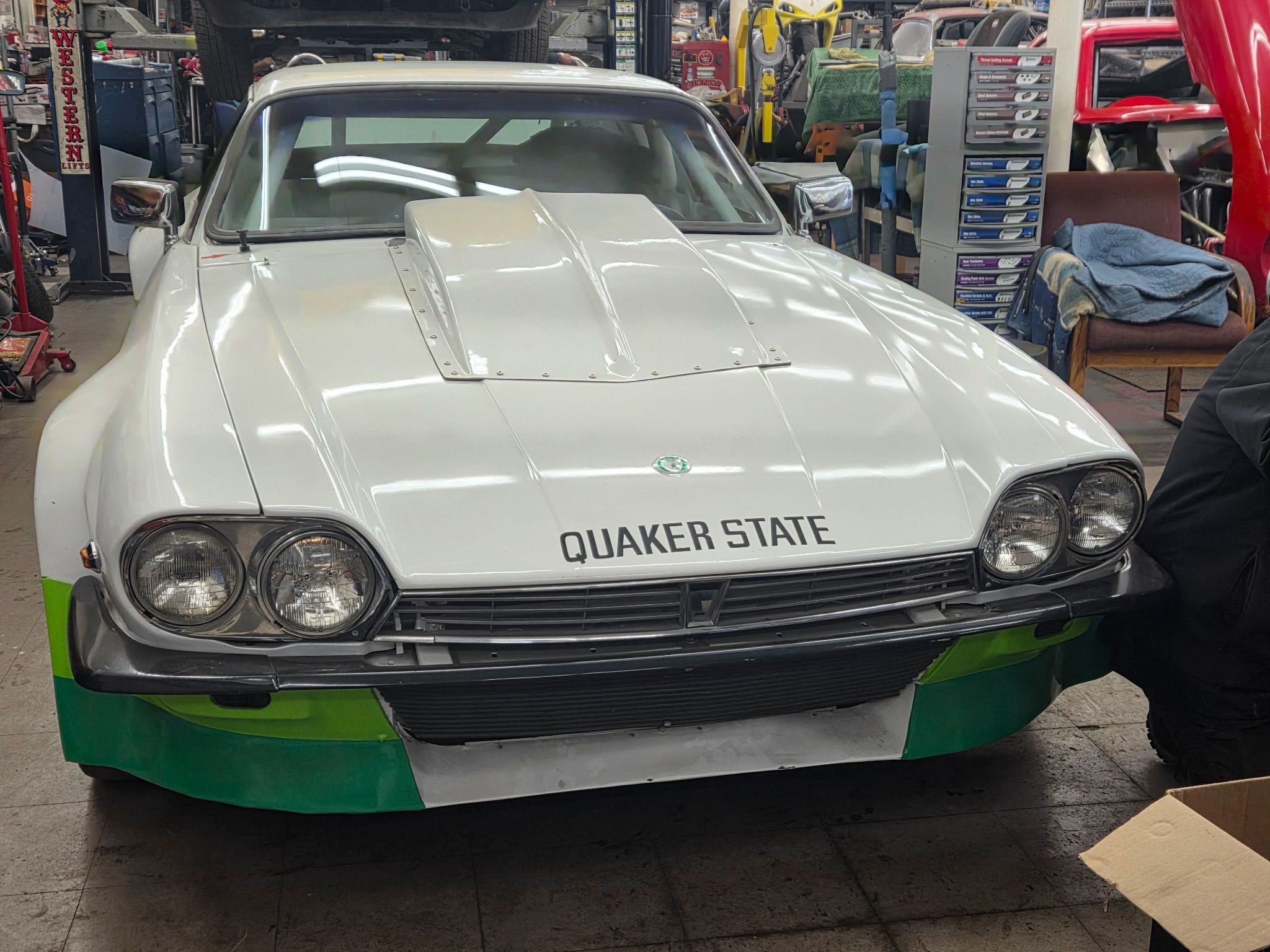
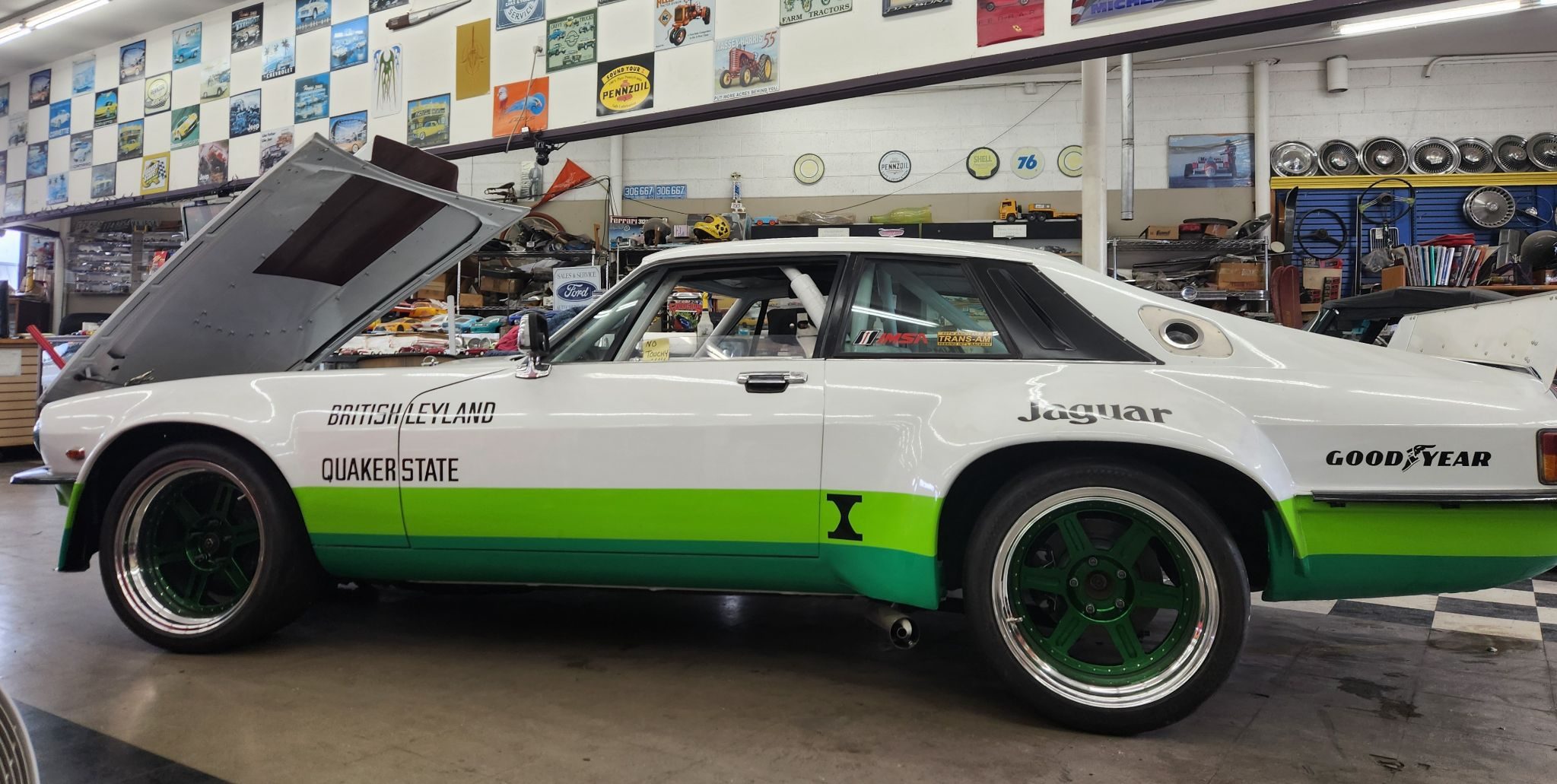
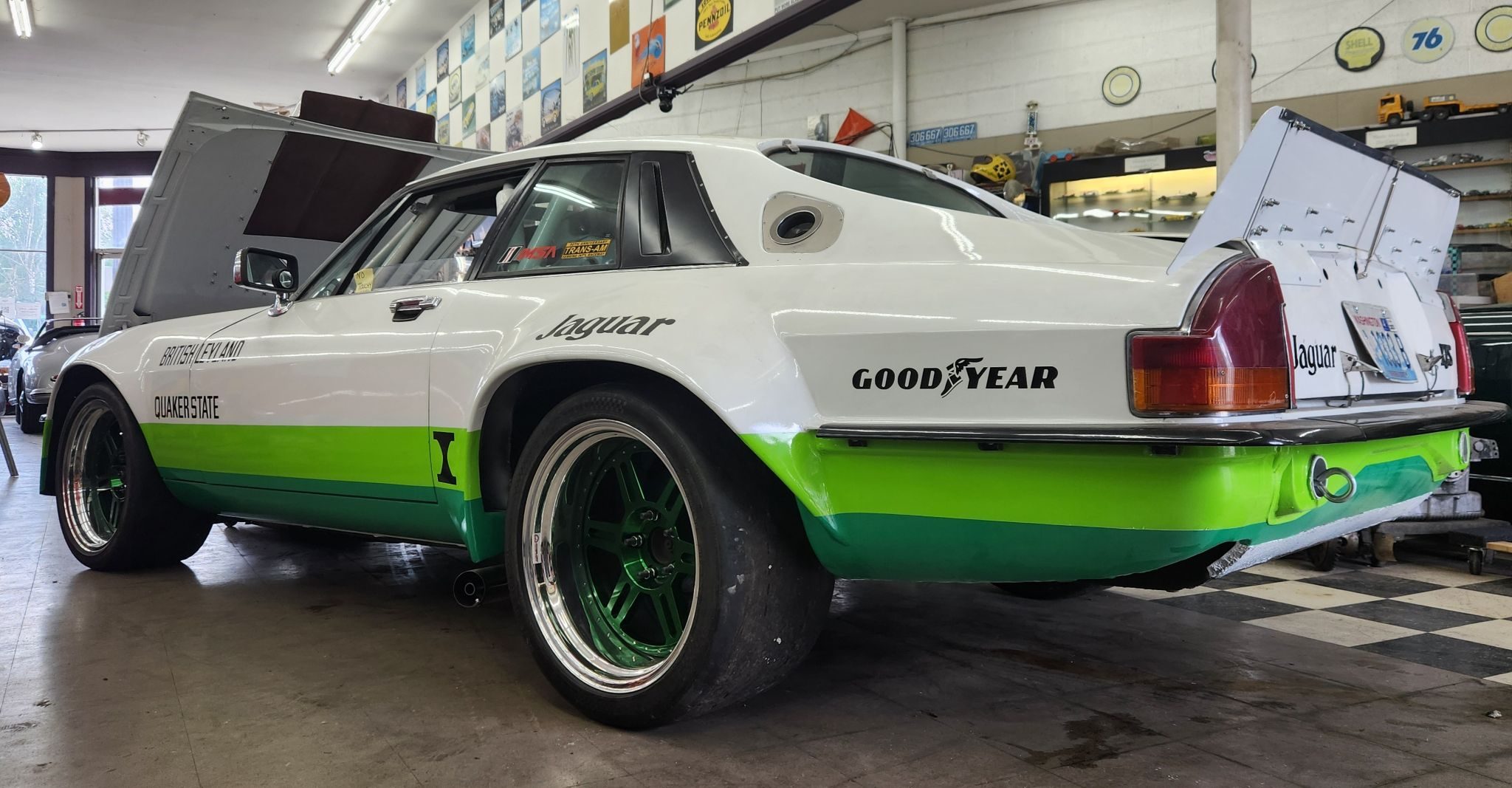
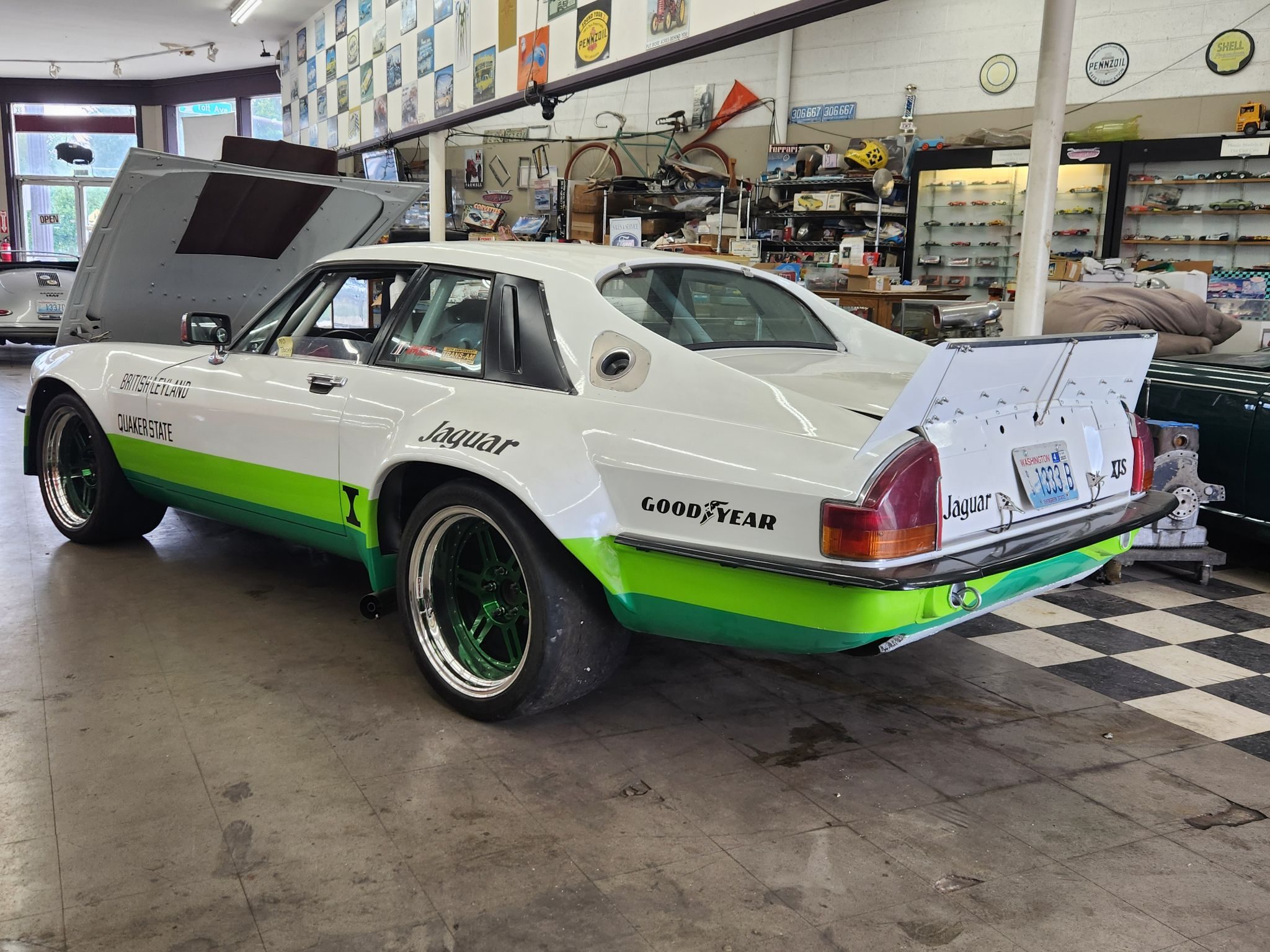
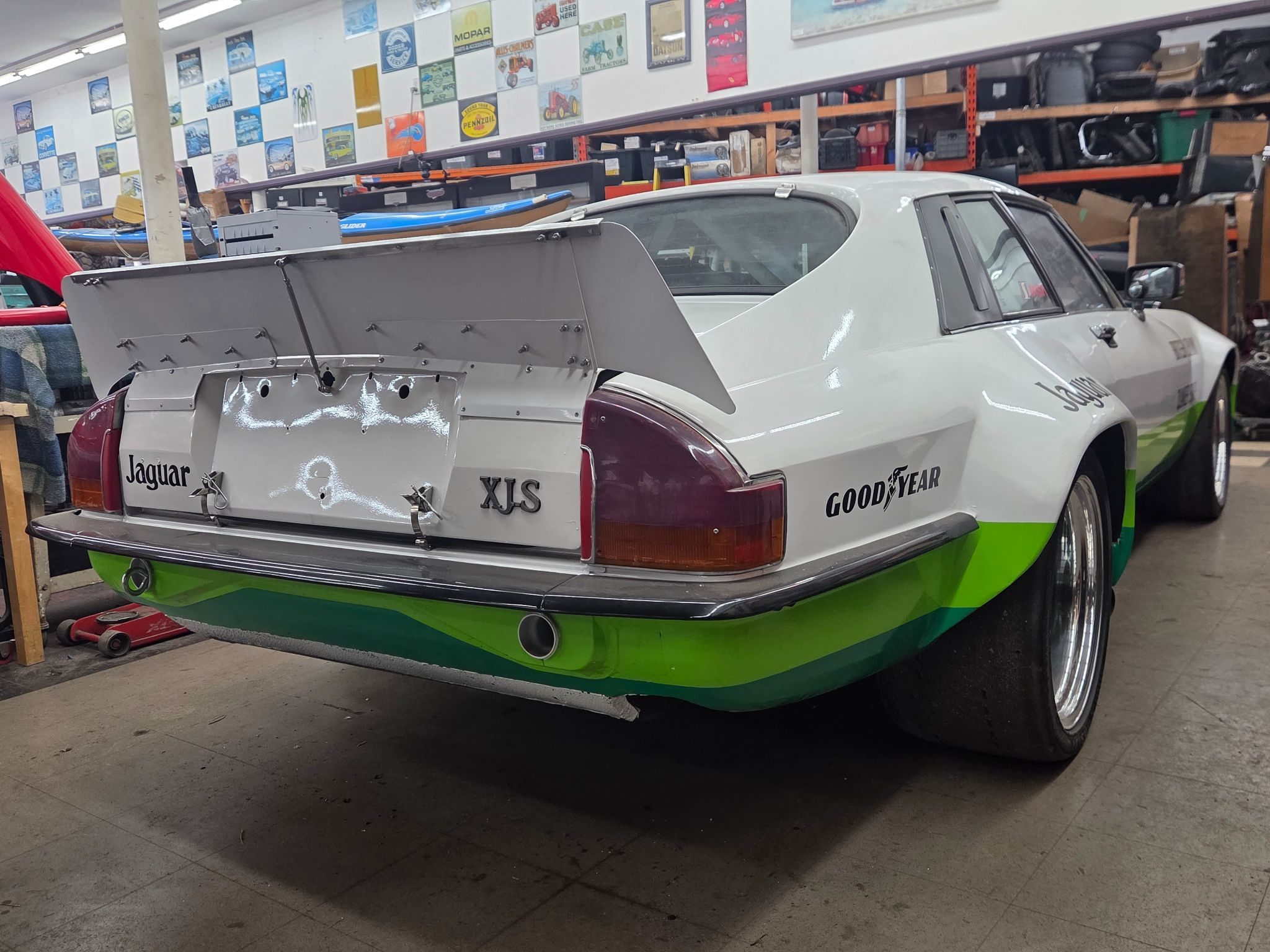
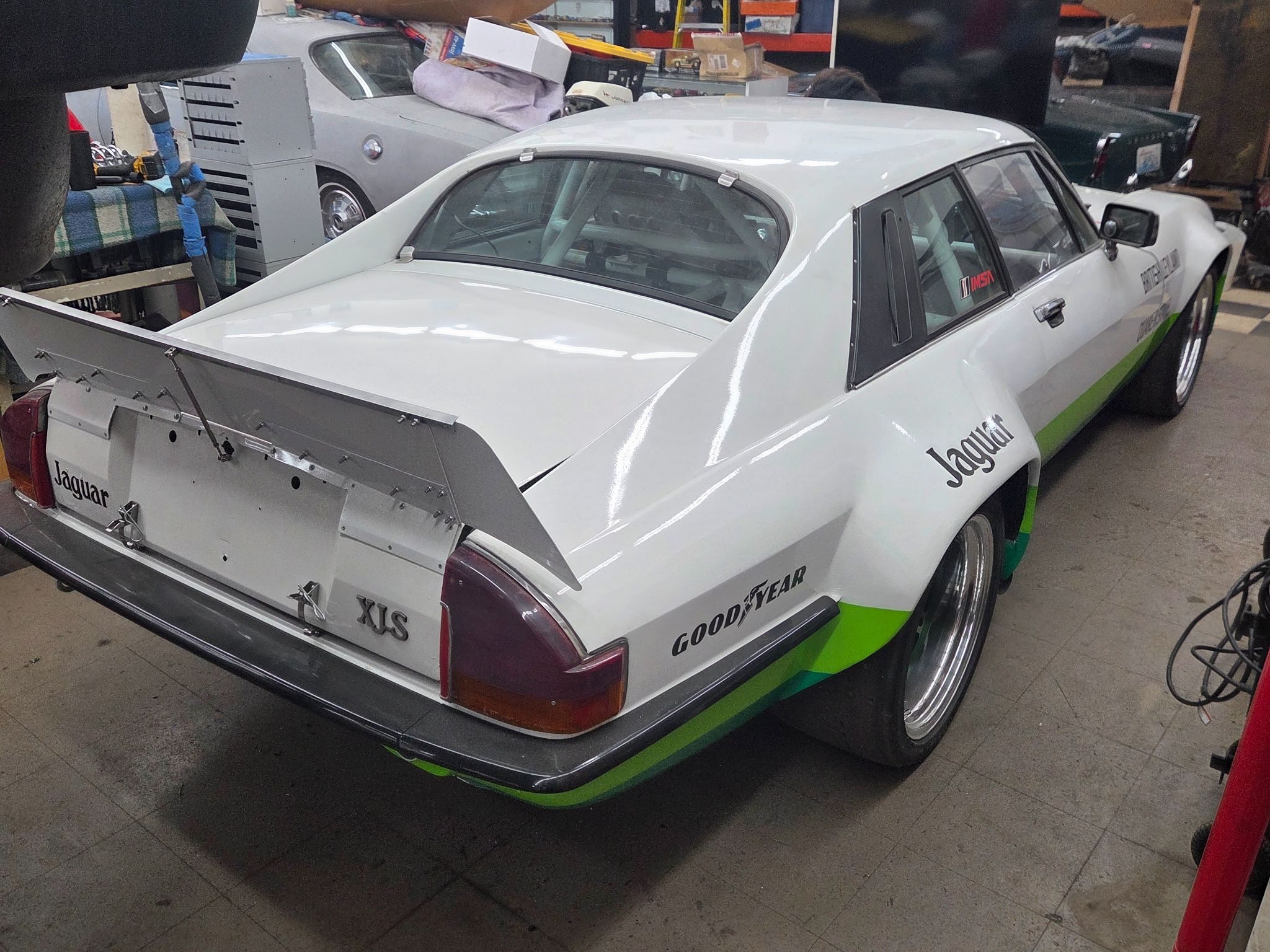
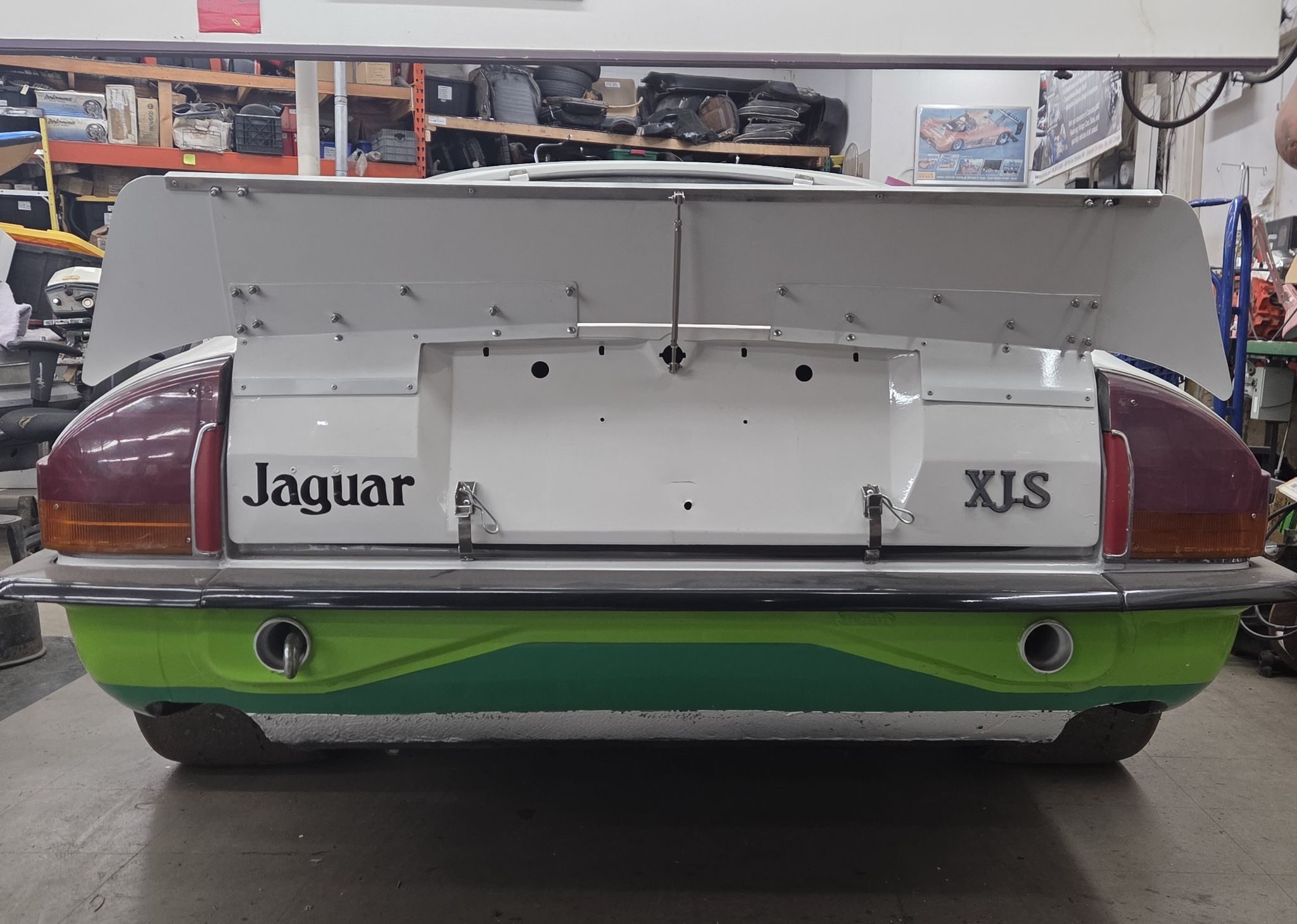
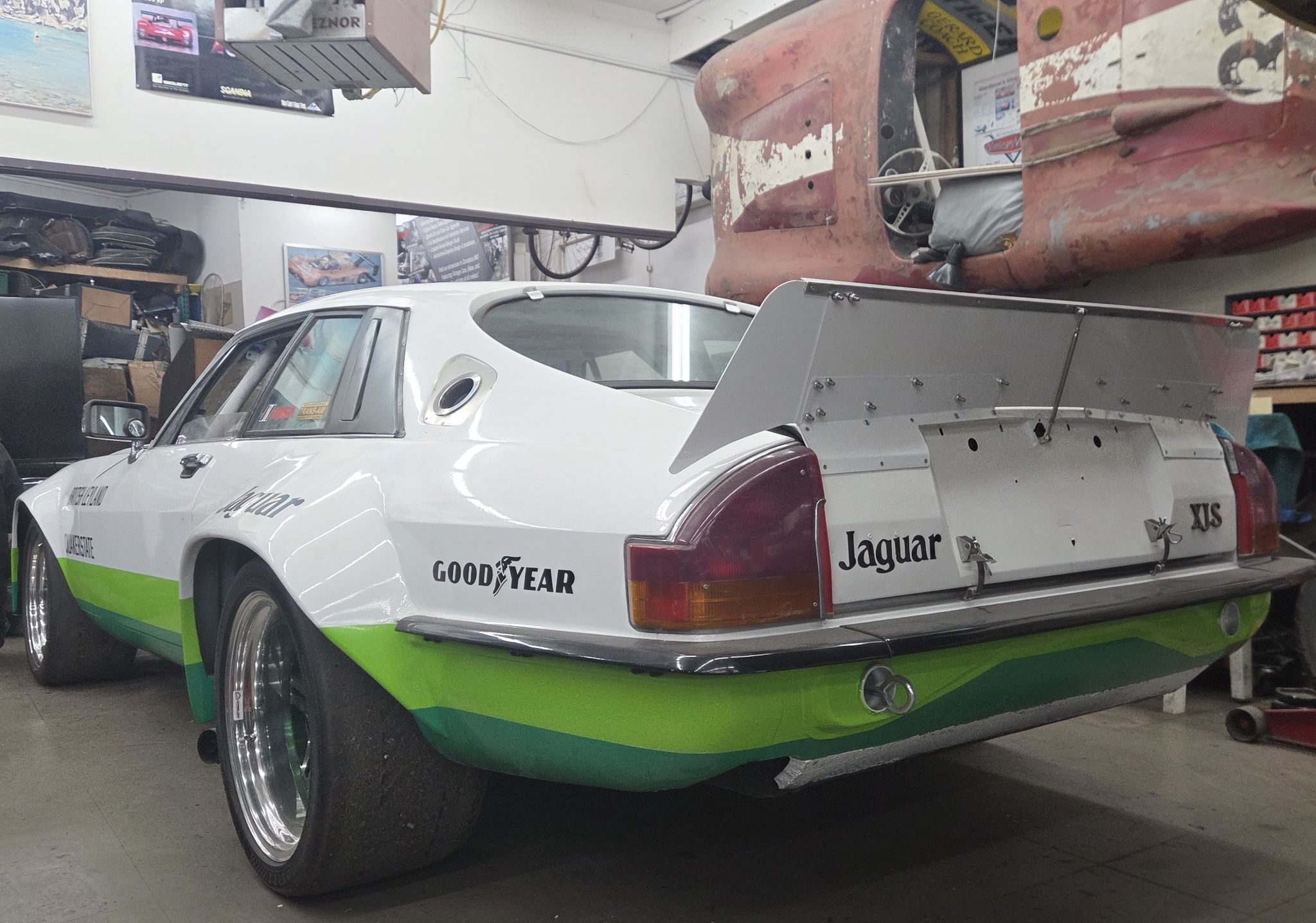
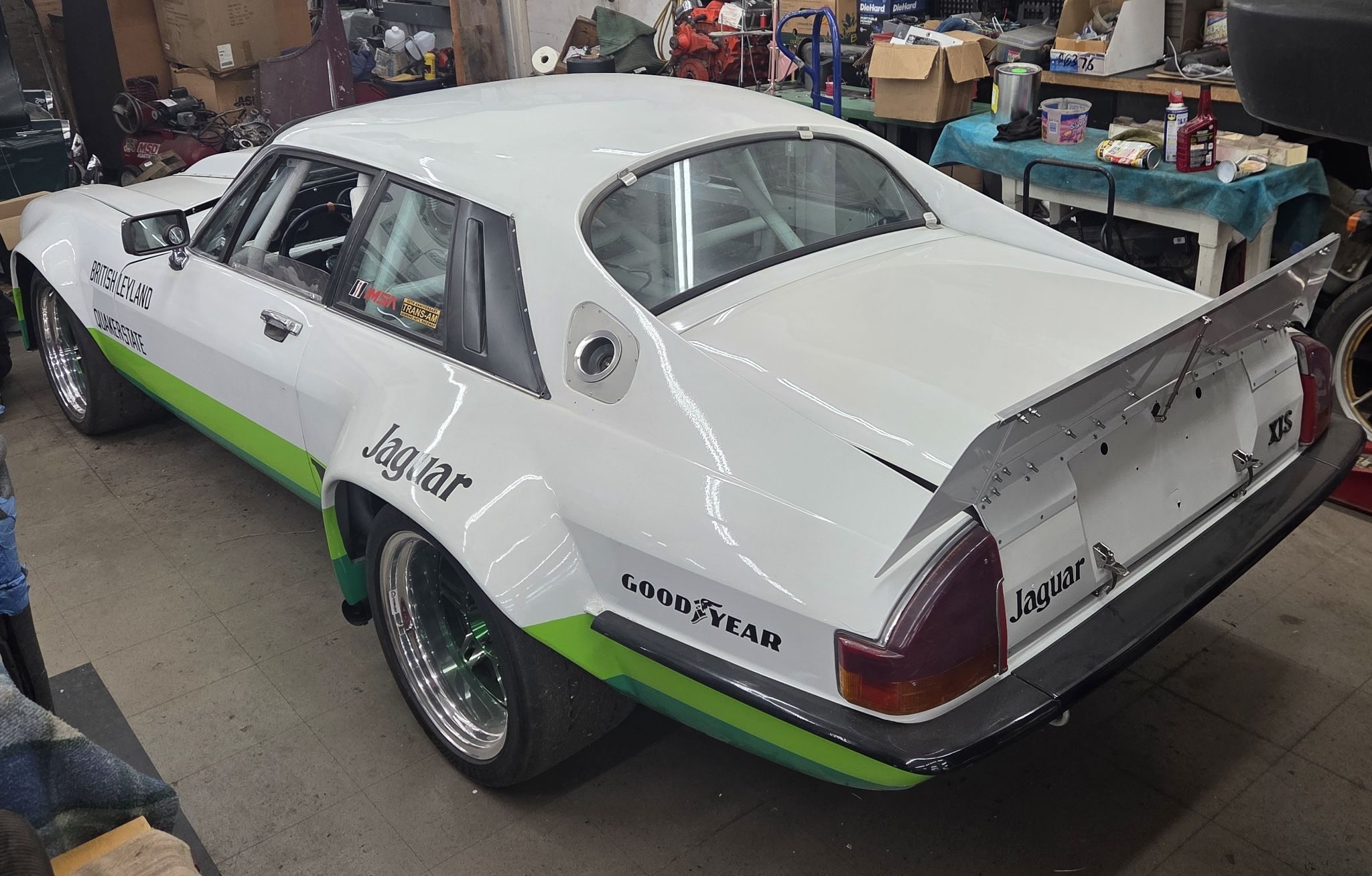
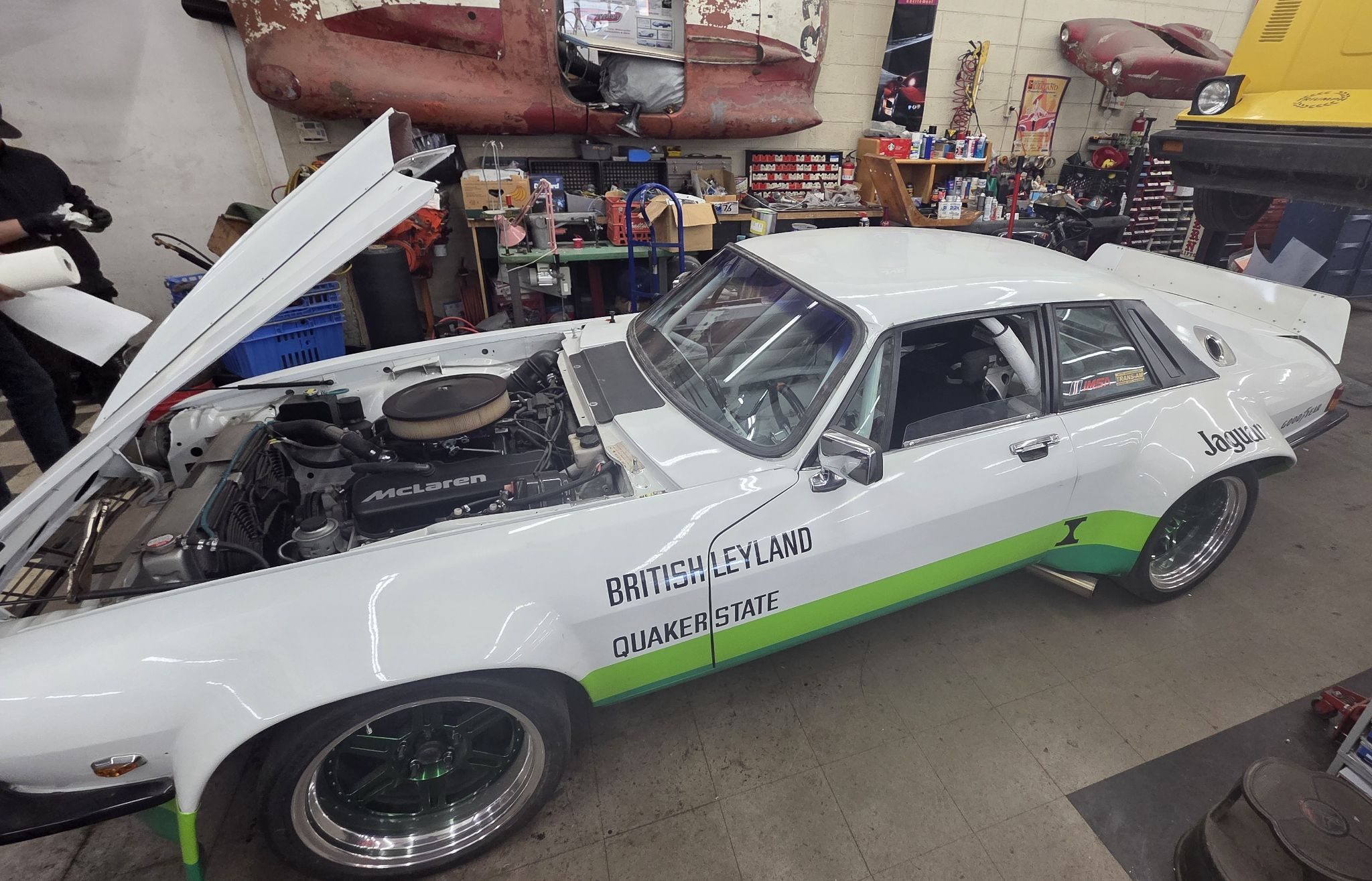
A standard Jaguar XJS is a luxurious grand tourer. This one has apparently forgotten that entirely. Inspired by Bob Tullius and the legendary Group 44 Jaguars that competed in SCCA Trans-Am racing, this 1983 Jaguar XJS has been transformed into a green-and-white Quaker State tribute with fabricated flares, racing suspension, a roll cage, three-piece Jongbloed wheels, side-exit exhaust, a Doug Nash five-speed, and nearly 600 horsepower from 496 cubic inches of Chevrolet big-block V8. Located in Carnation, Washington, the Jaguar has a clean Washington title and is offered as a Barn Finds Exclusive.
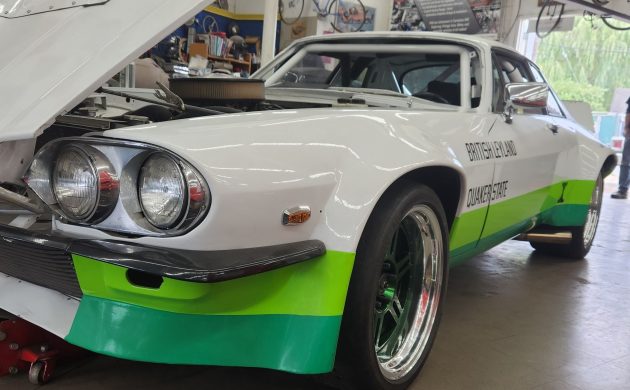
The build was completed by Giordano’s Vintage Motors as a tribute rather than a claim to genuine Group 44 history. That’s an important distinction, but it also freed the builders to create something enjoyable on the road, at track days, in vintage-style events, or simply as one of the more outrageous XJS street cars around.
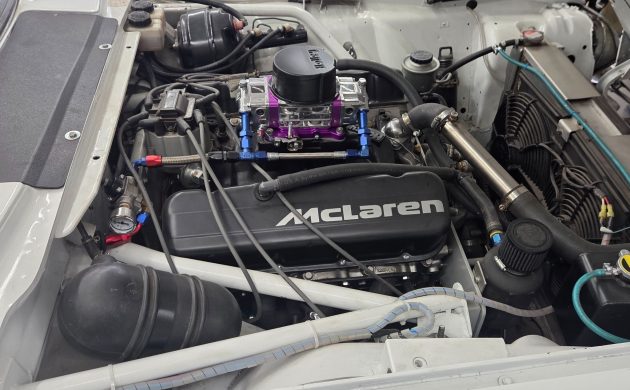
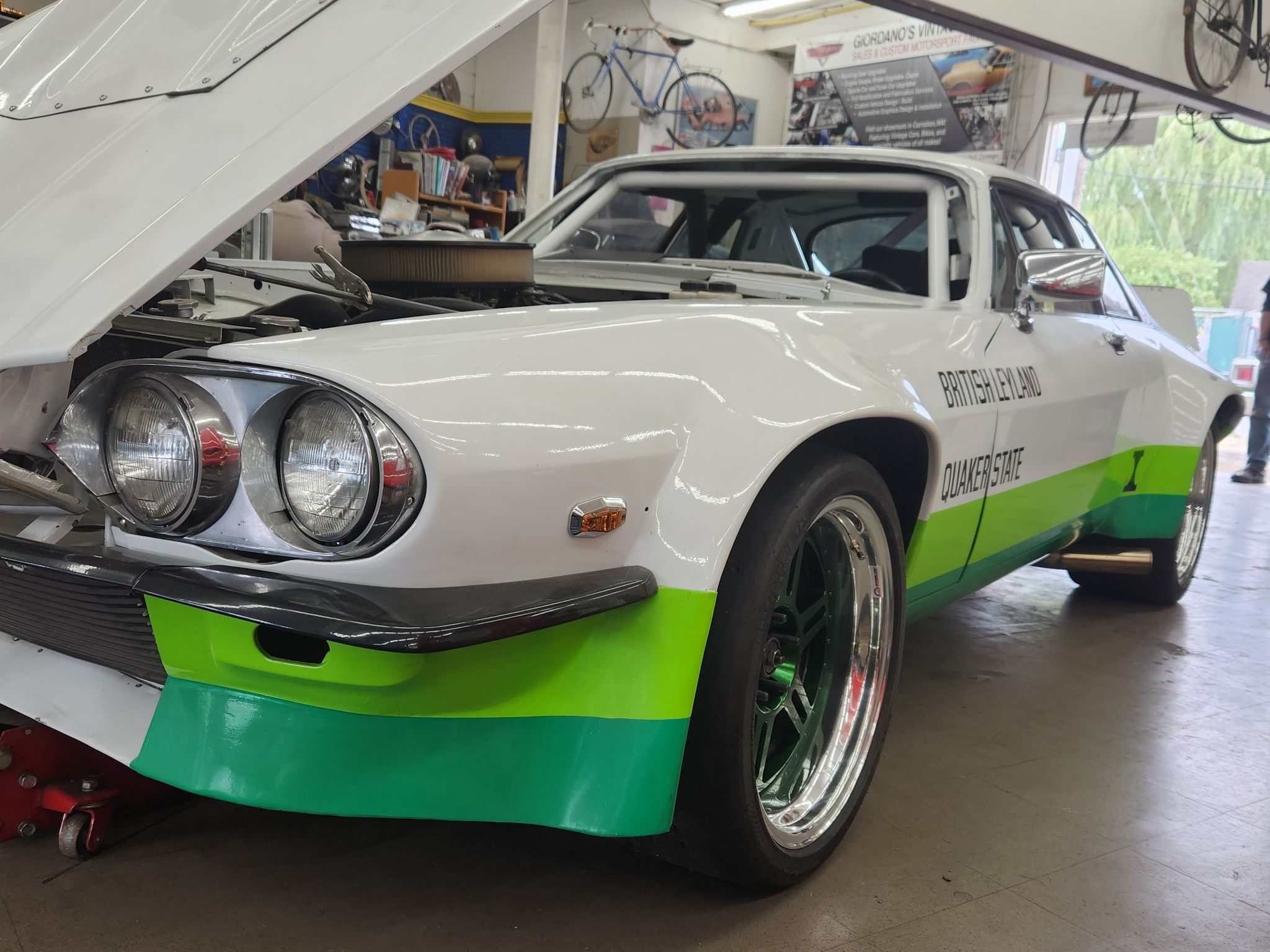
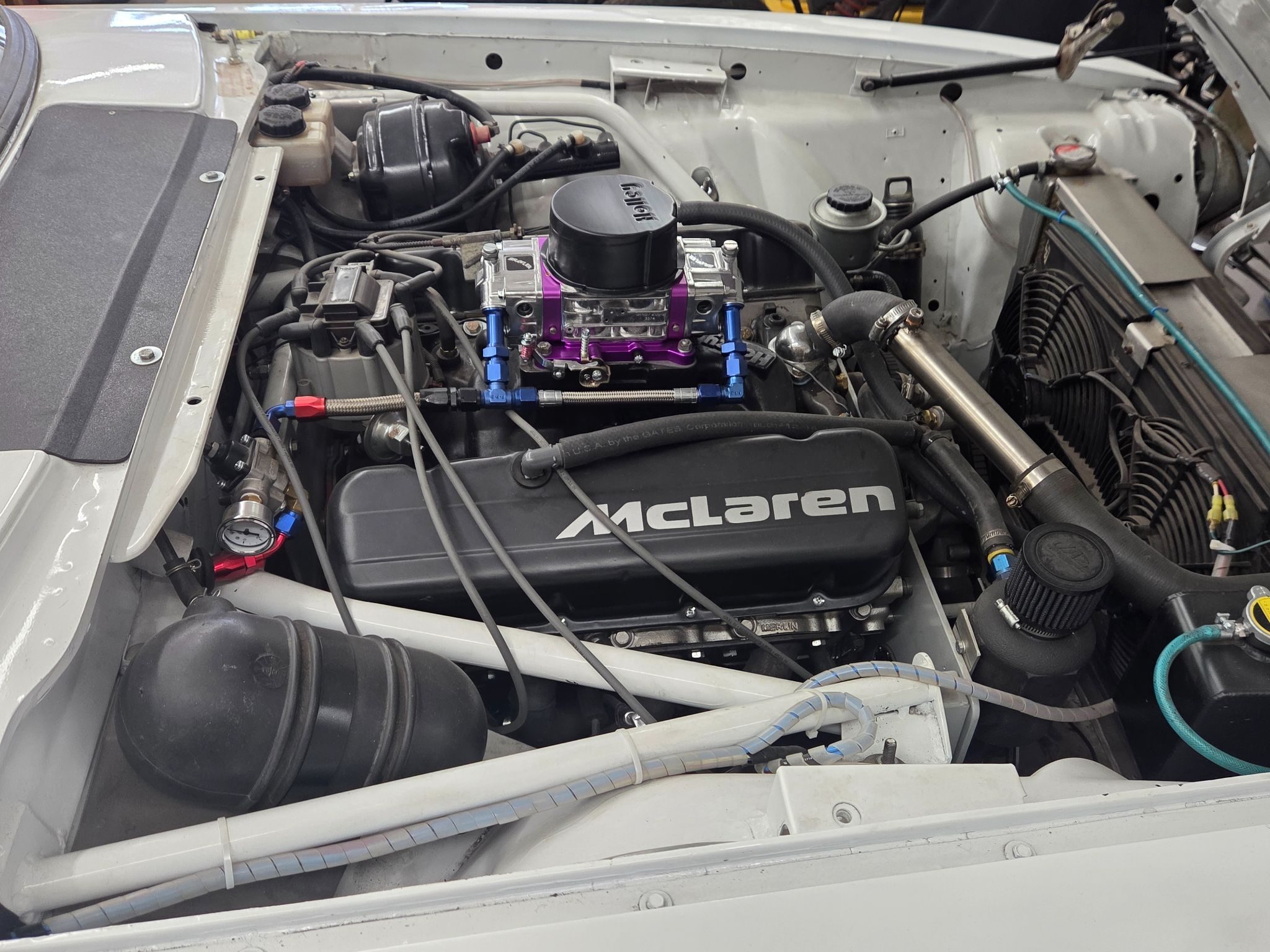
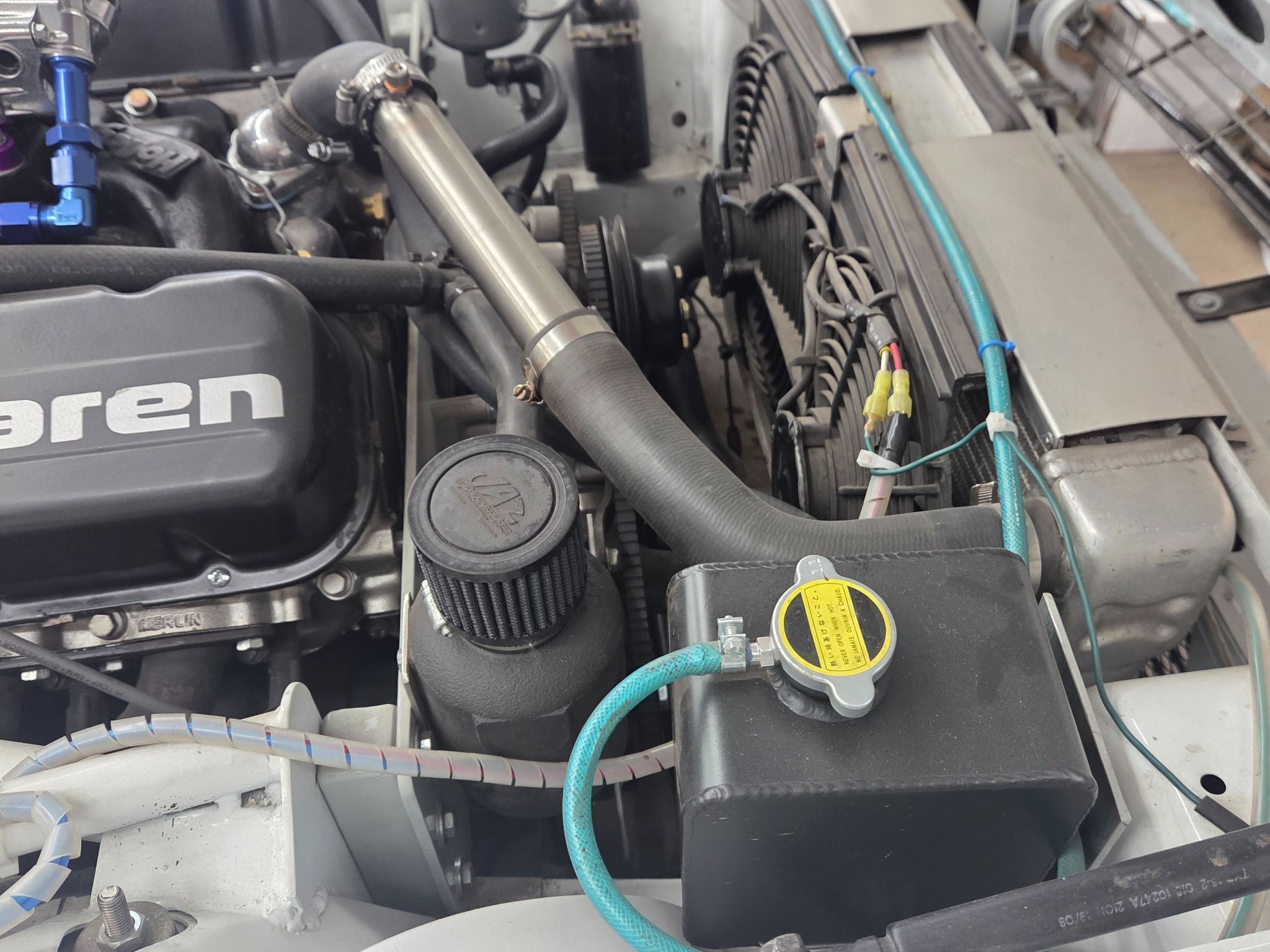
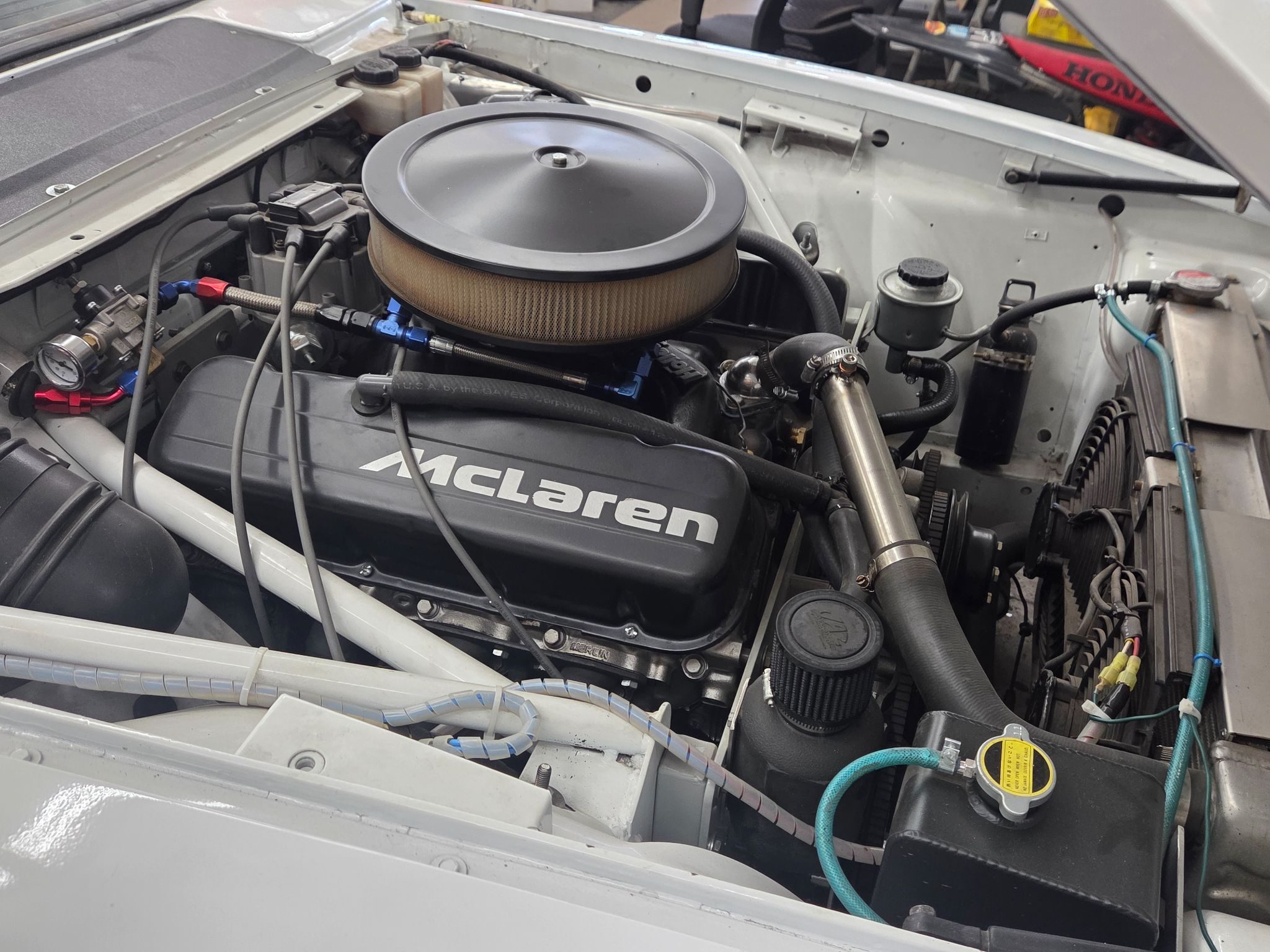
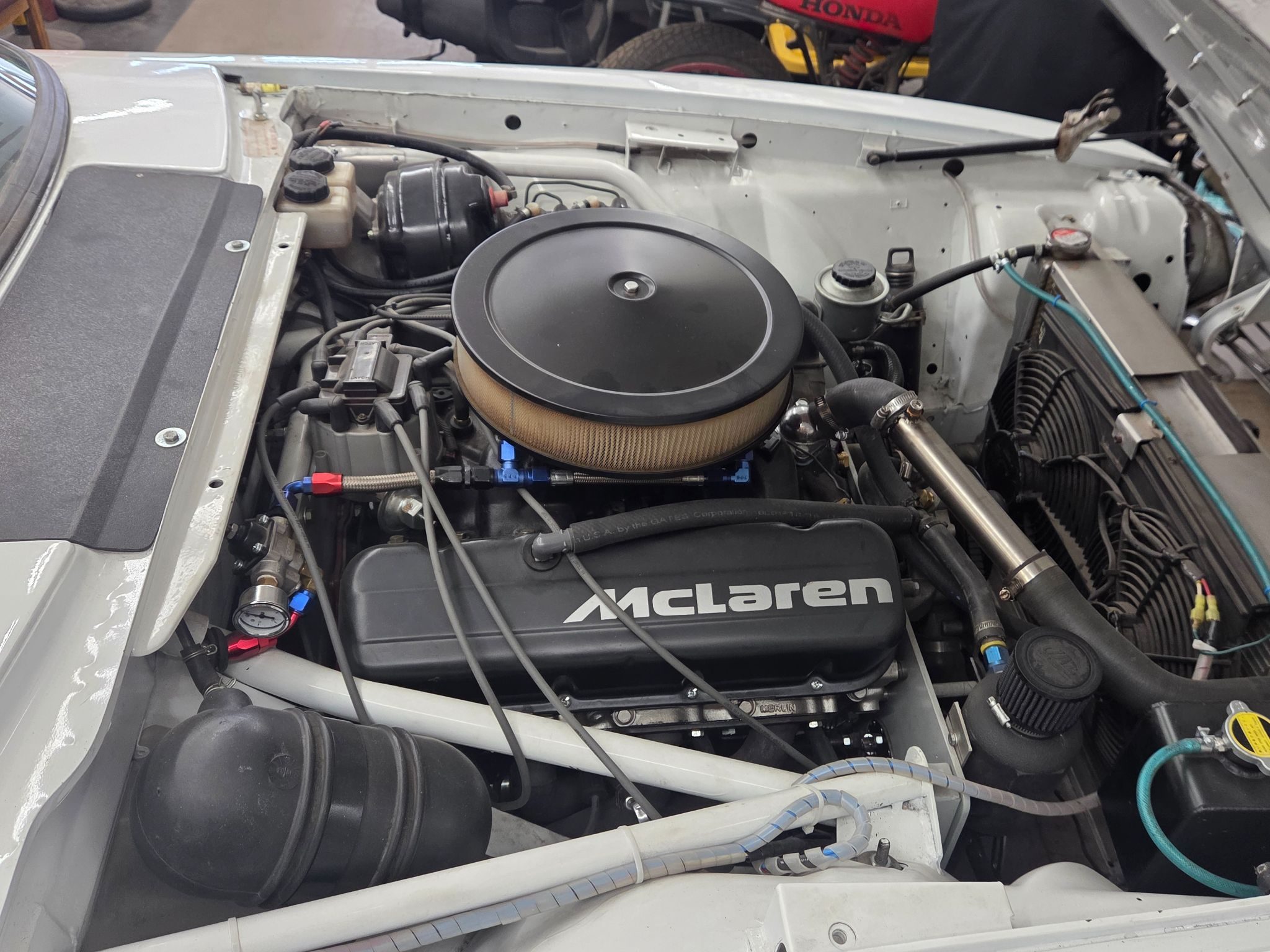
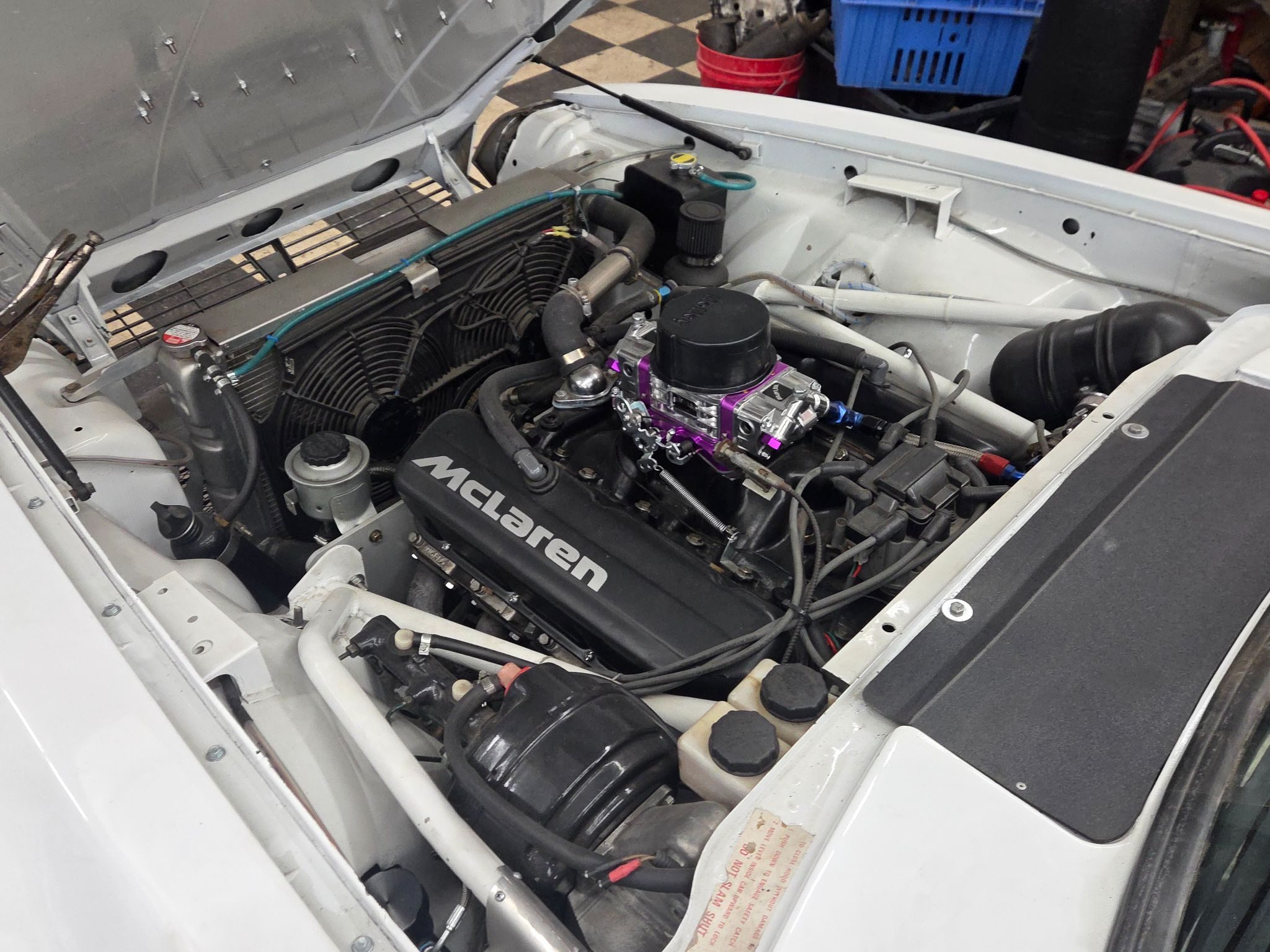
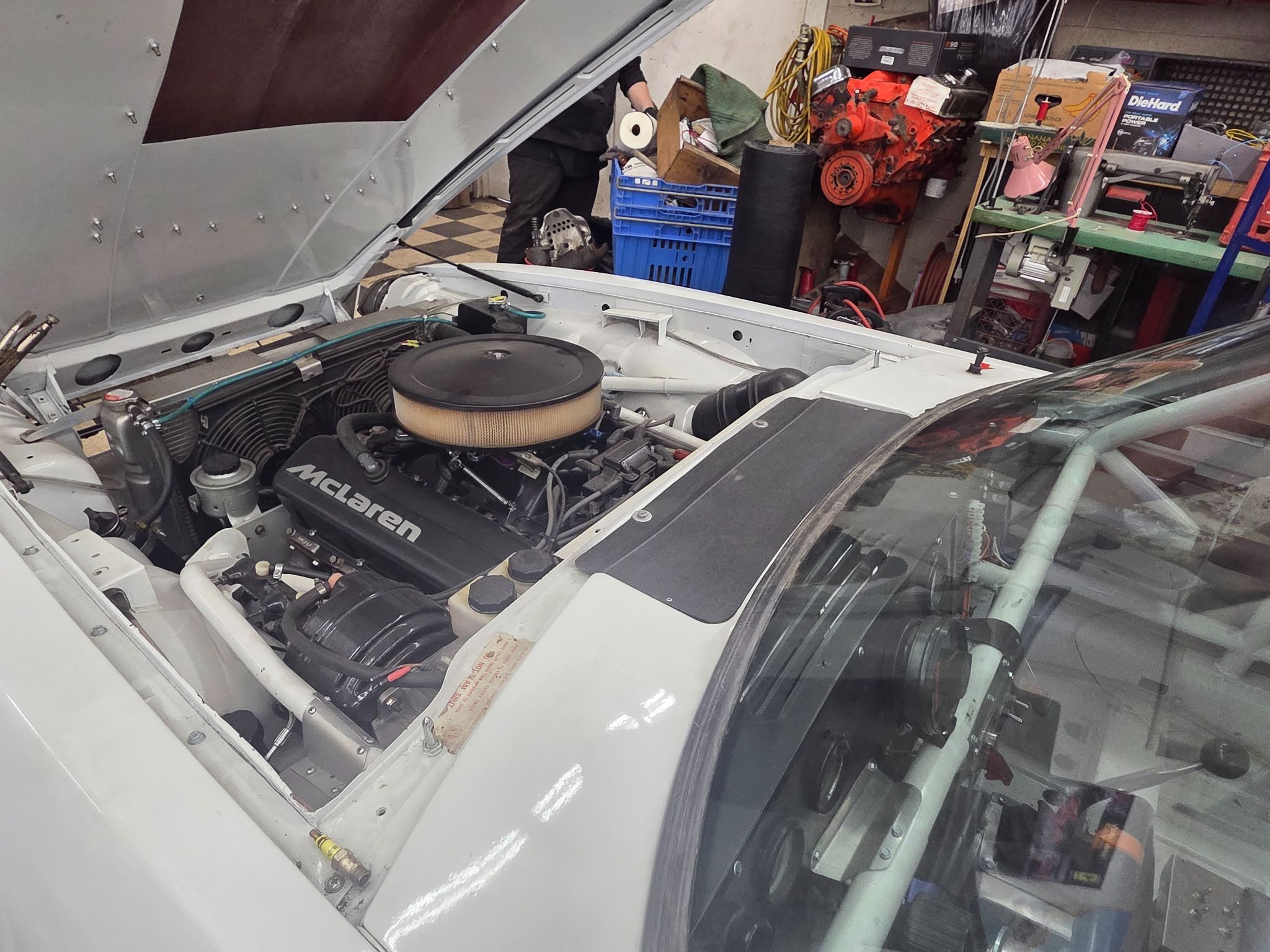
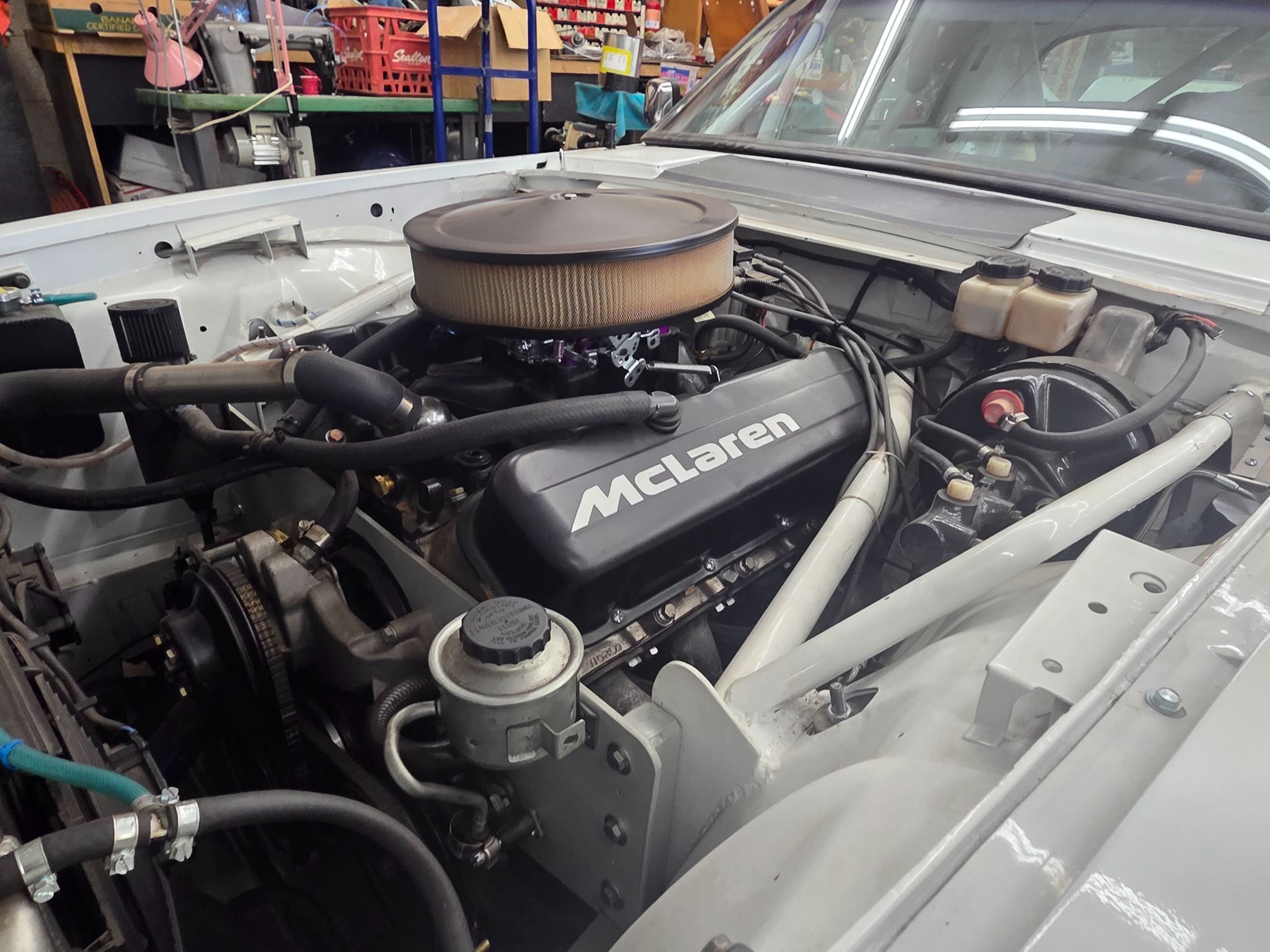
The centerpiece is the 496 cubic-inch Chevrolet big-block, which the seller states was professionally built and dyno-tested at nearly 600 horsepower and 700 lb-ft of torque. Rather than pairing that engine with an automatic, power travels through a rare Doug Nash five-speed manual transmission. The engine bay photographs show a serious installation, with the big-block surrounded by fabricated bracing and racing-oriented hardware rather than simply dropped between the Jaguar’s fenders.
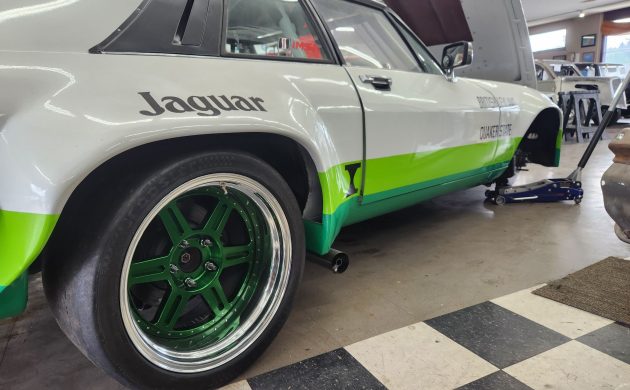
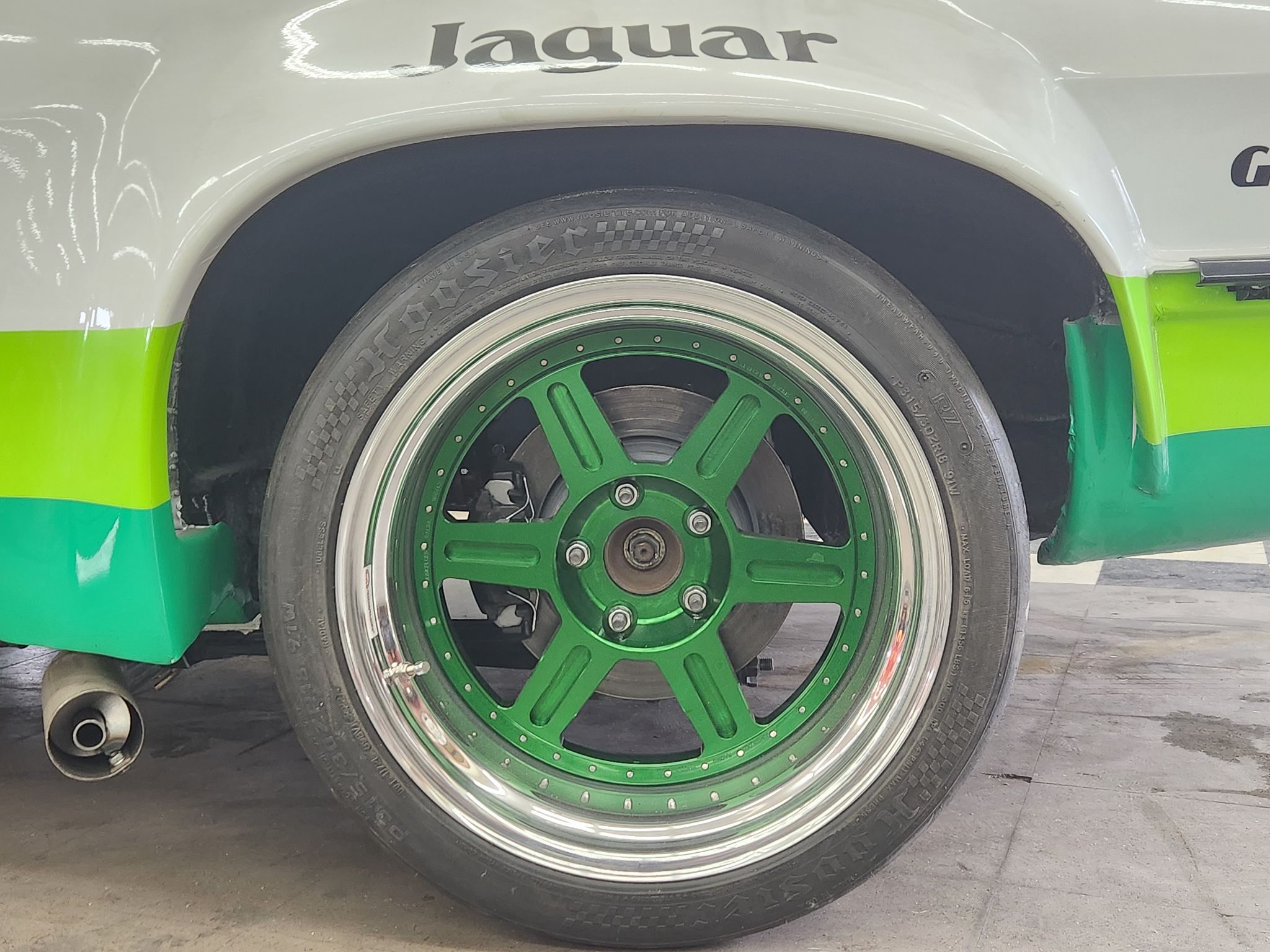
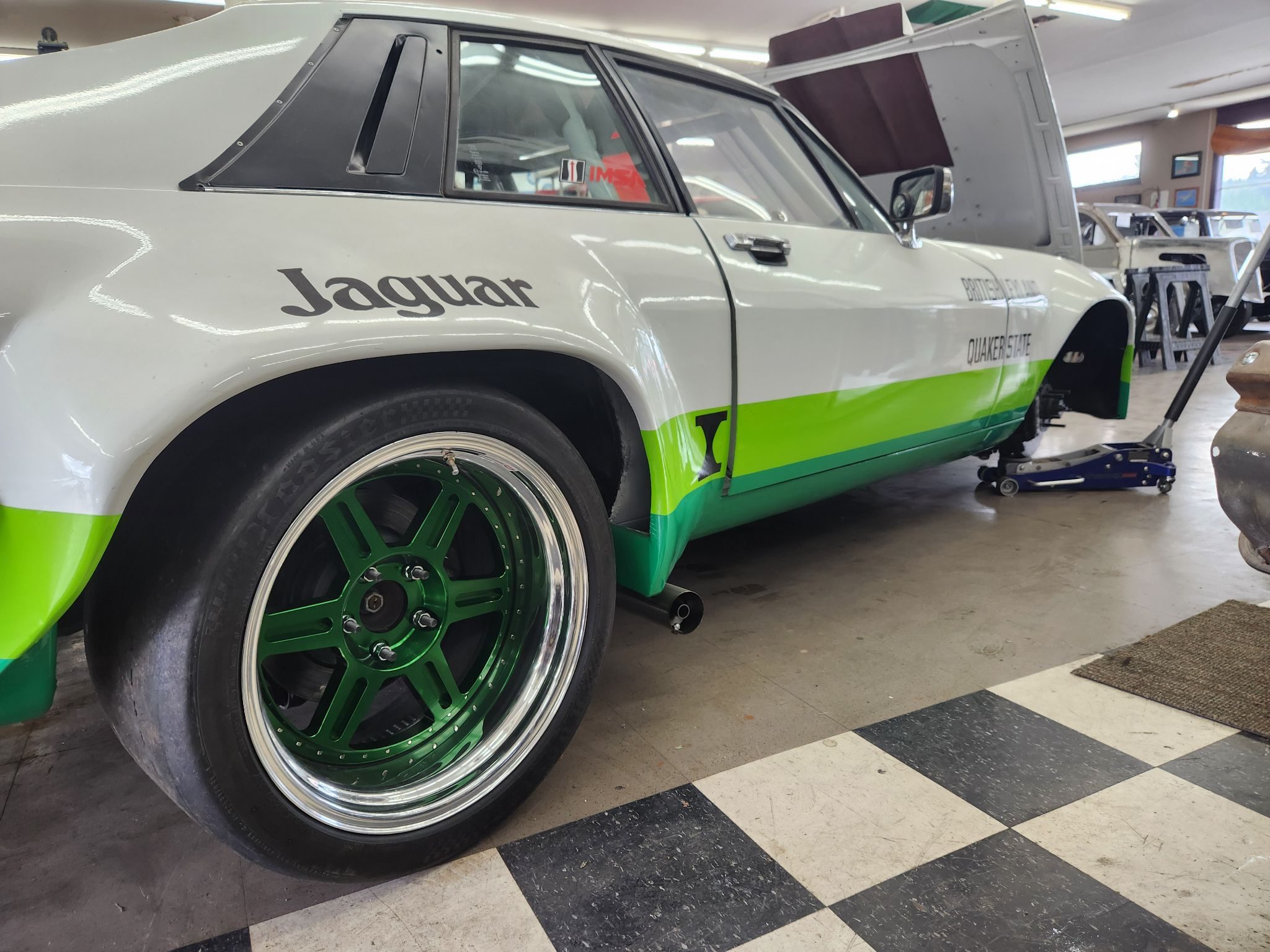
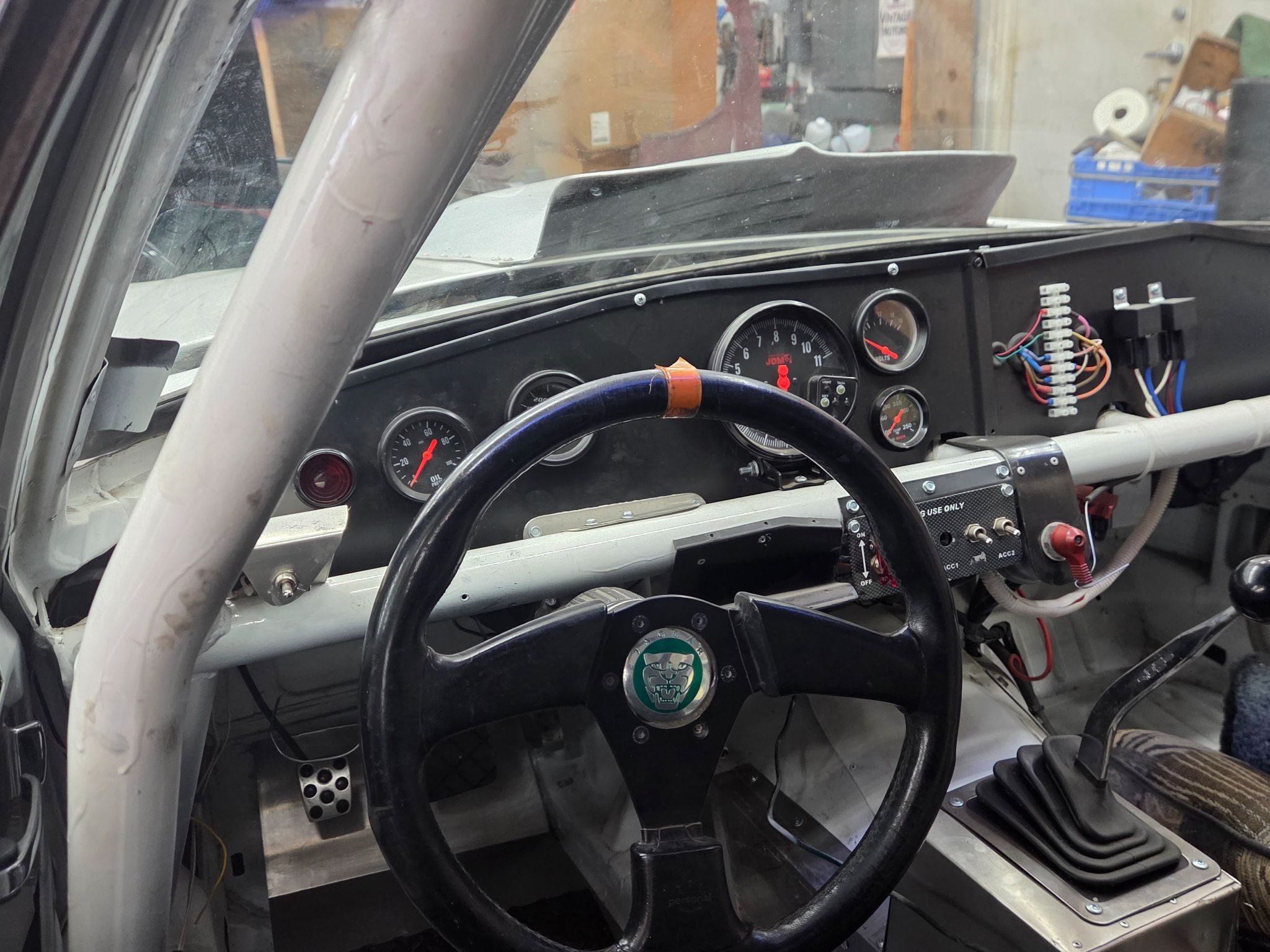
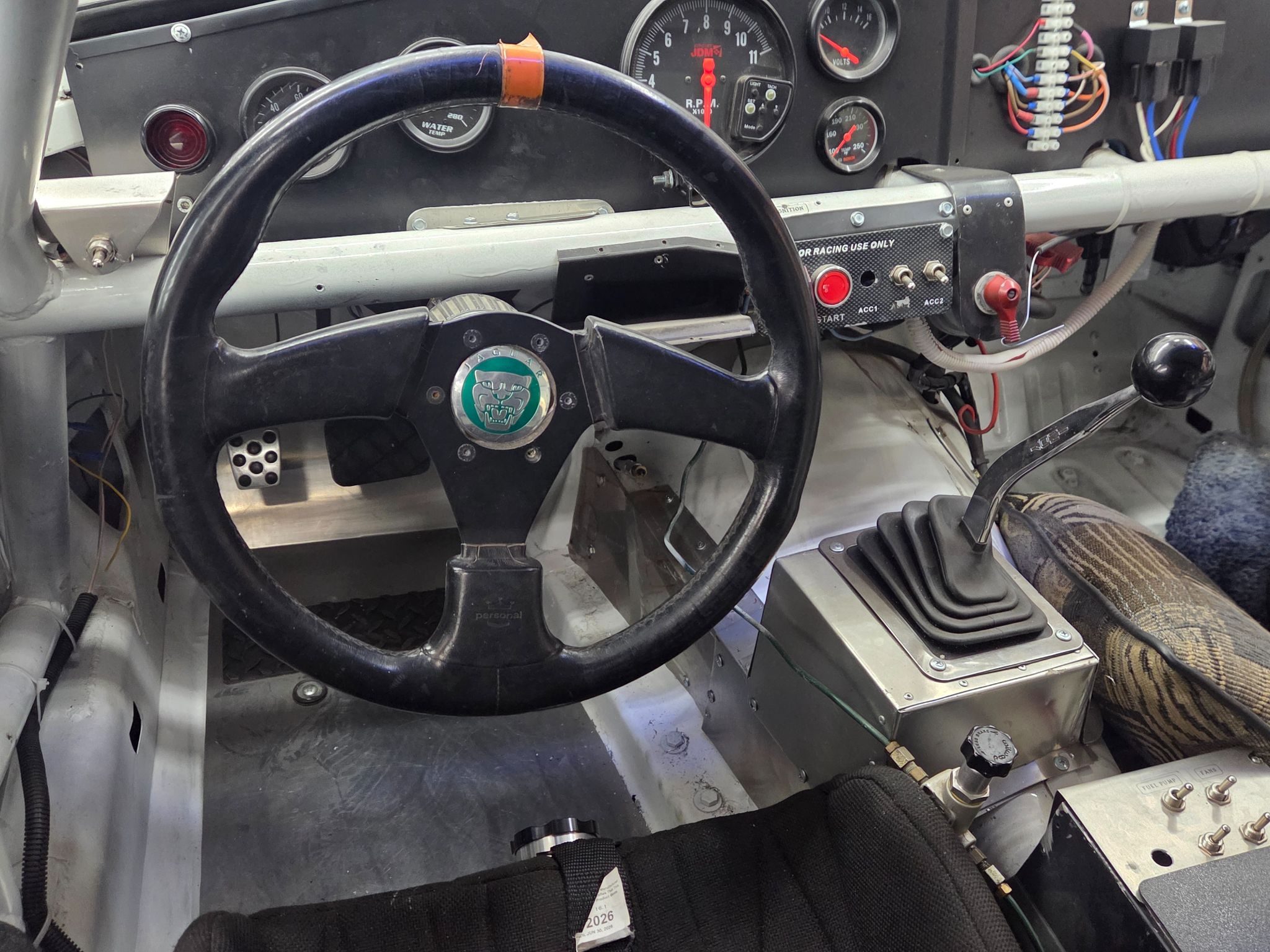
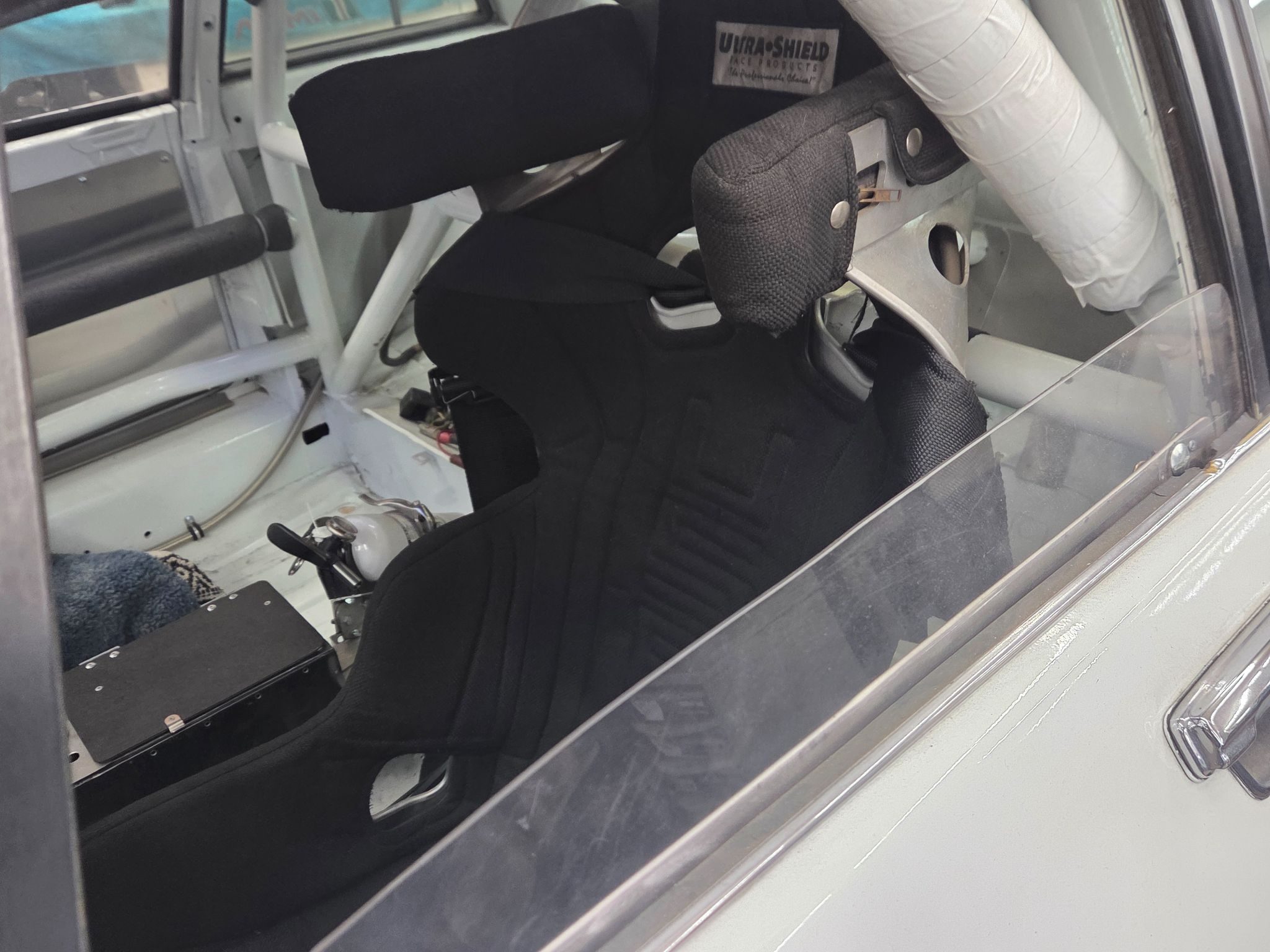
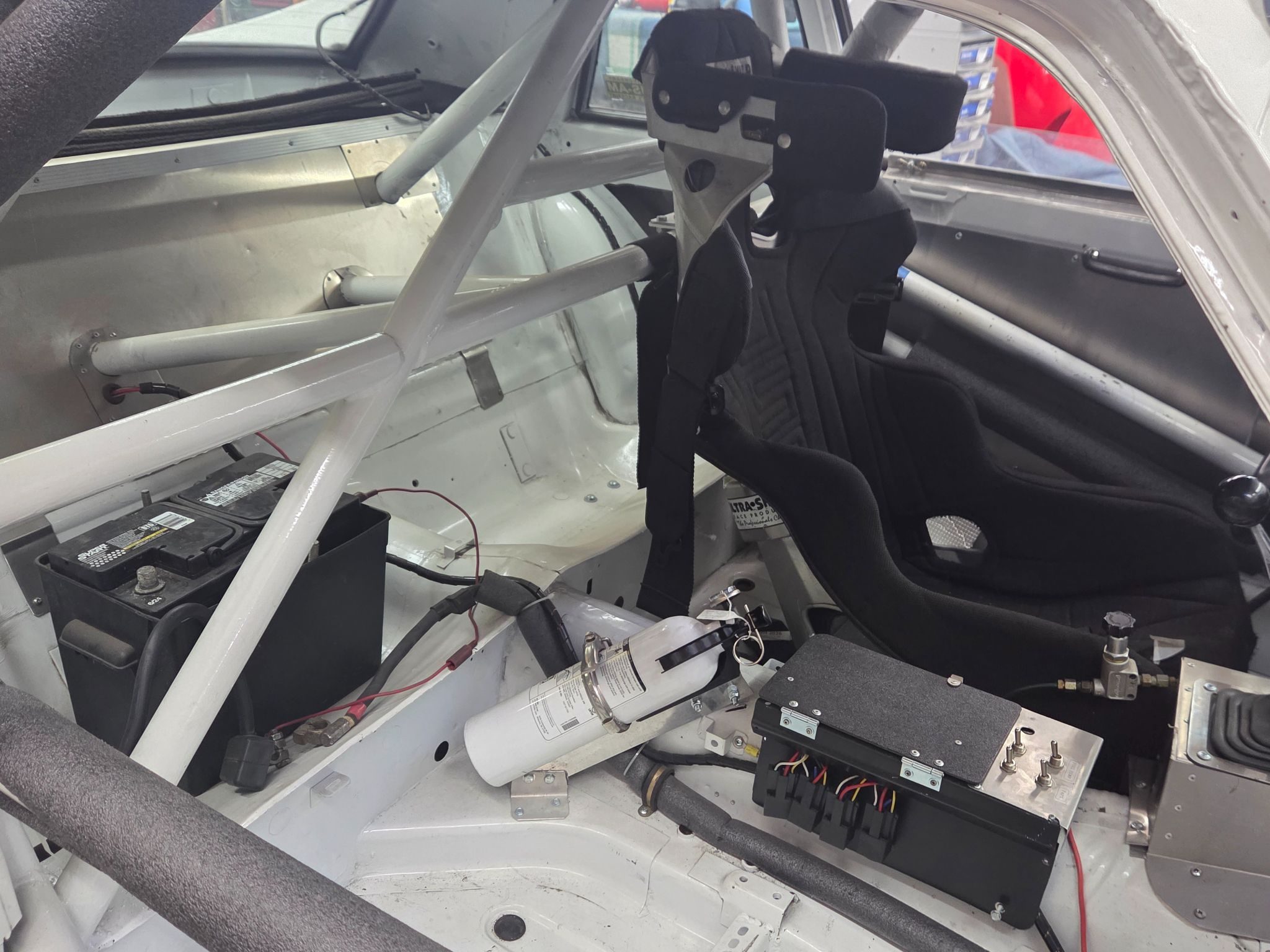
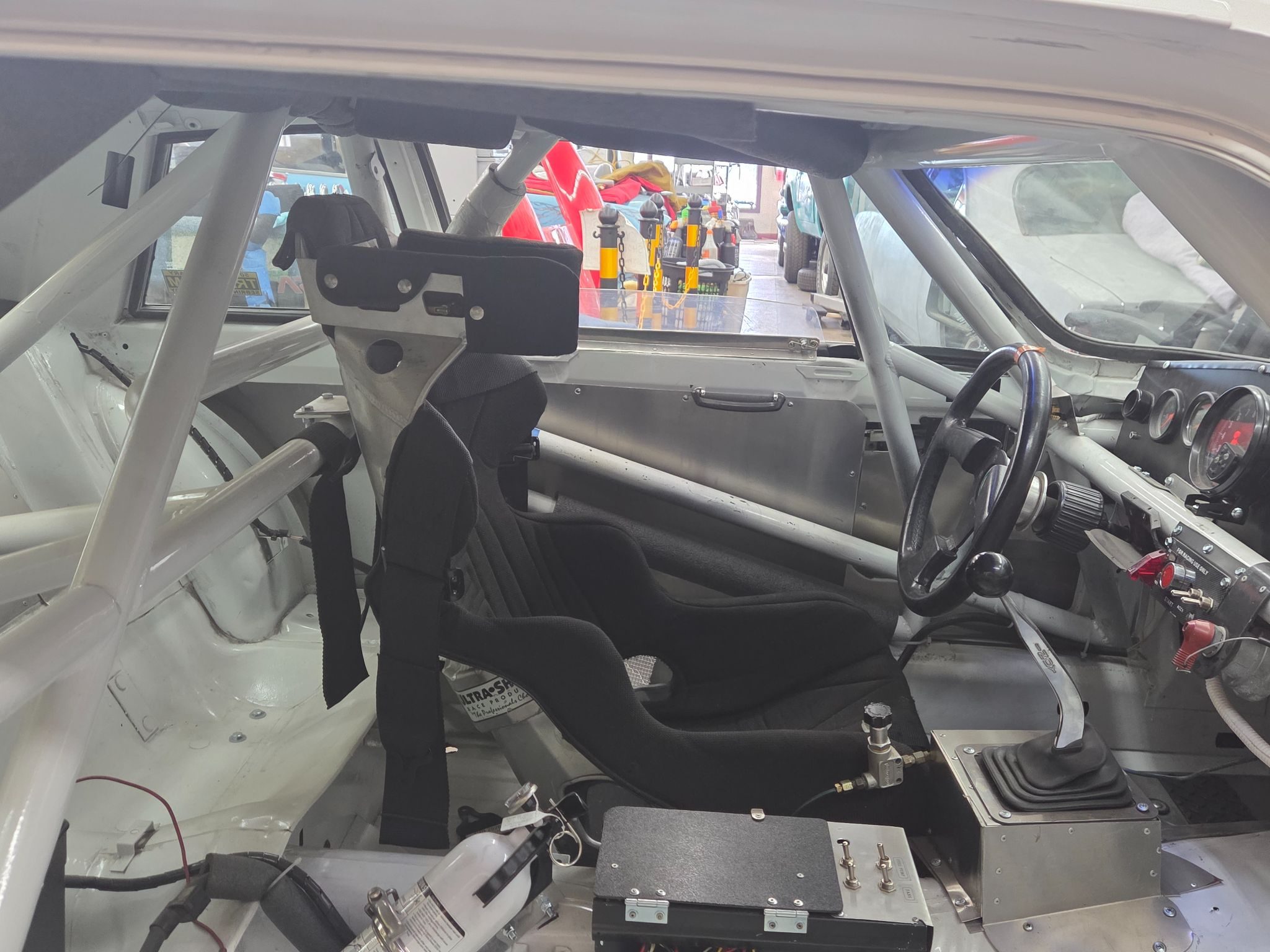
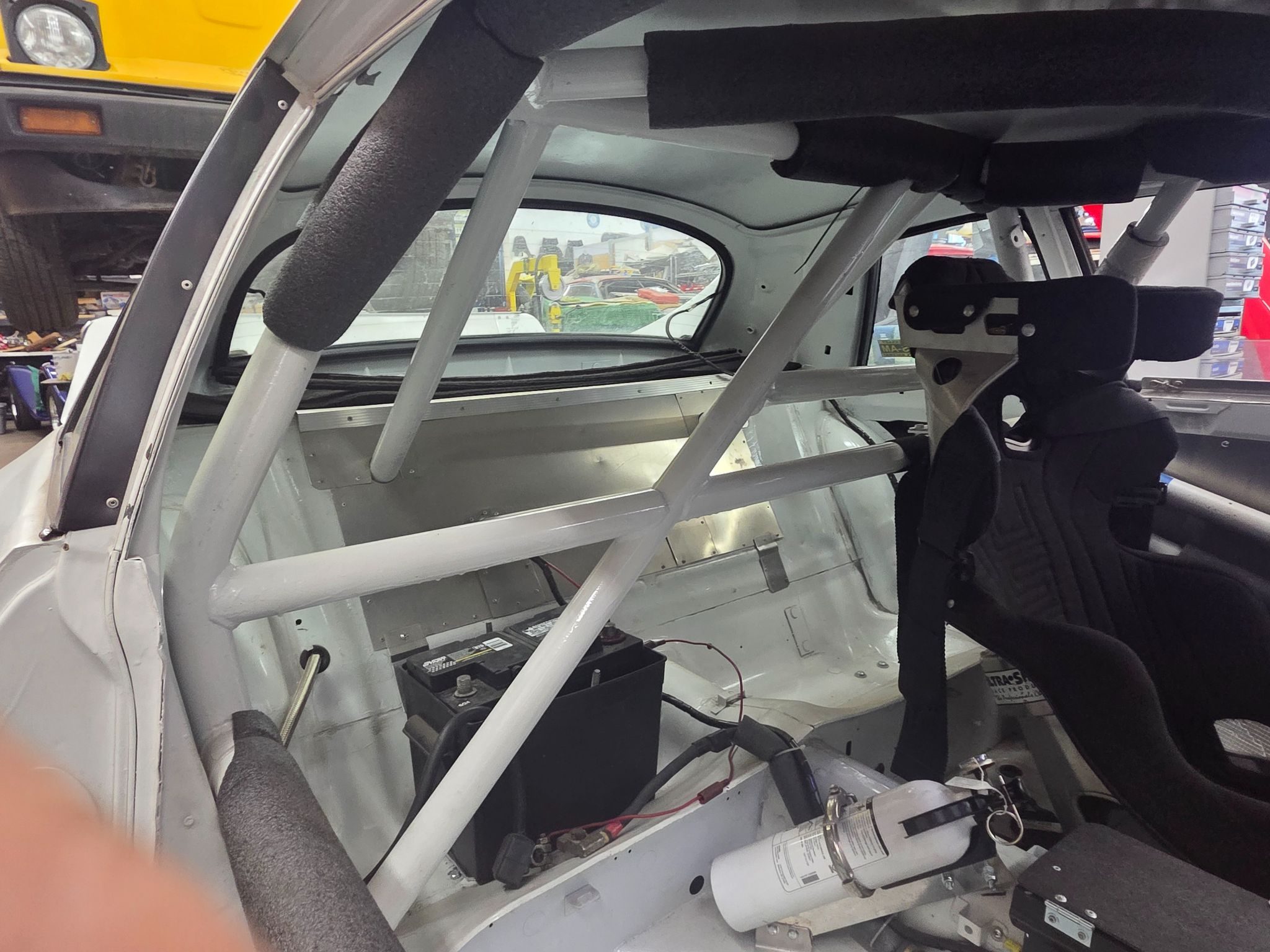
Suspension modifications are described as professionally built, while the rear axle uses the less-common Jaguar arrangement with outboard disc brakes. A fabricated roll cage fills the stripped cabin, along with racing seats, harnesses, auxiliary gauges, and a competition-style steering wheel. A custom stainless exhaust exits from side pipes immediately ahead of the rear wheels, again echoing the competition-car appearance.
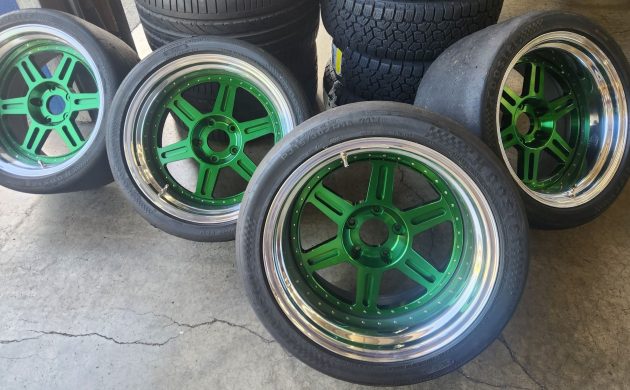
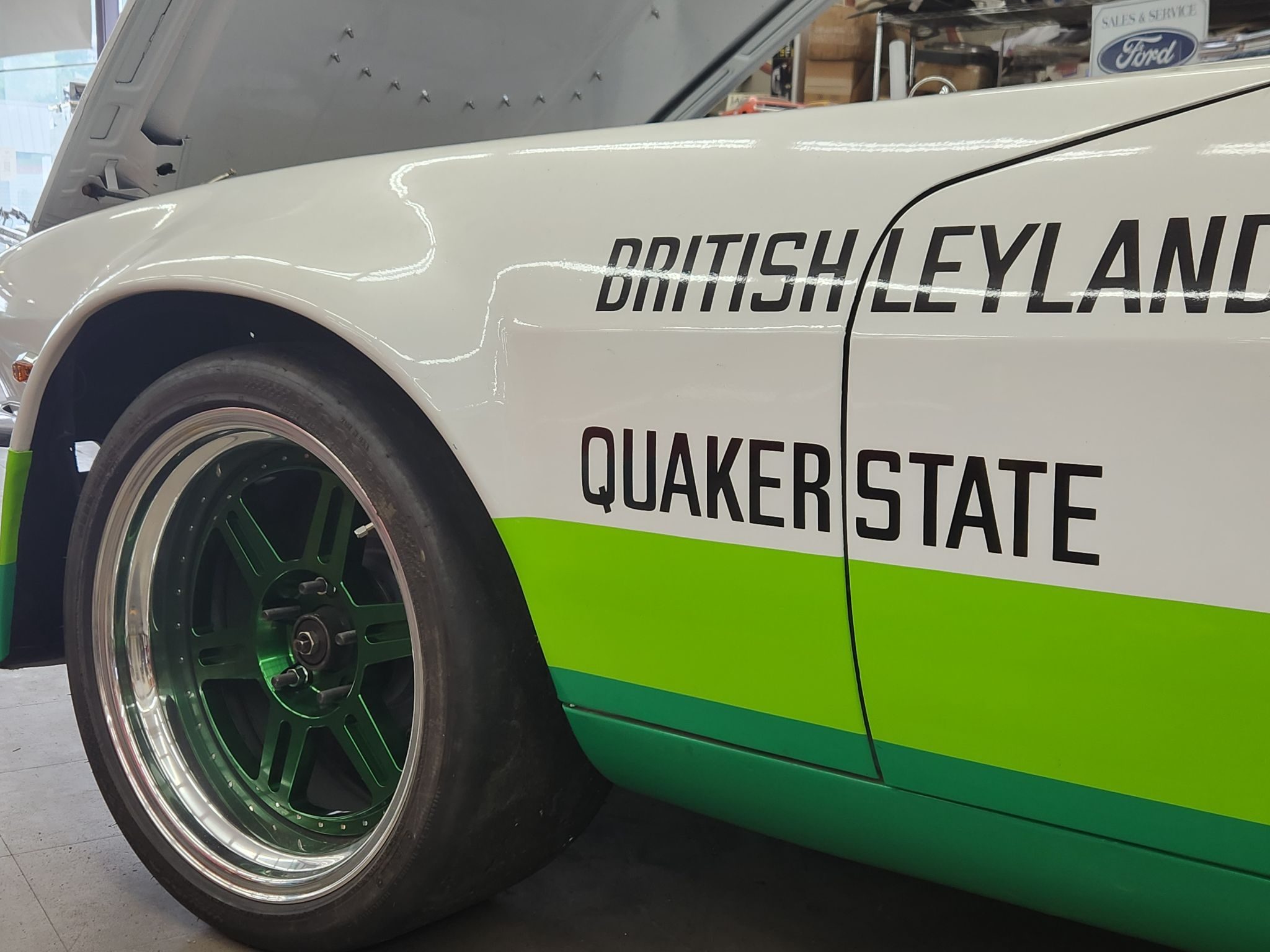
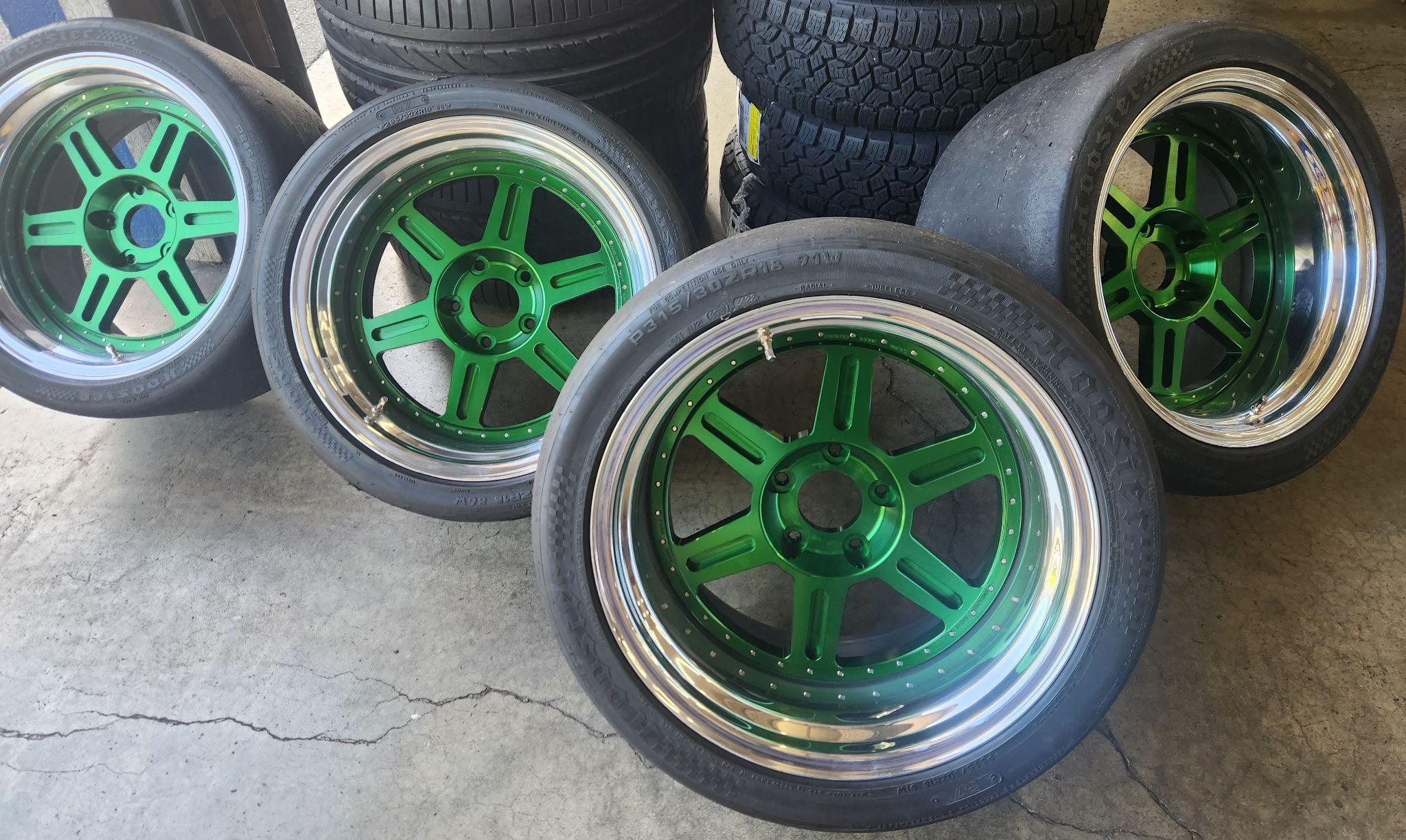
The all-metal body received aggressive fabricated fender flares to accommodate the three-piece Jongbloed racing wheels. Those green-centered wheels may be one of the car’s strongest visual details, filling the widened arches and tying into the famous Group 44-inspired color scheme. The white body is accented by green lower sections and Quaker State-inspired graphics. The photos leave little doubt about the inspiration, but this is not simply a vinyl-wrap exercise. Beneath the livery is a seriously modified chassis and drivetrain.
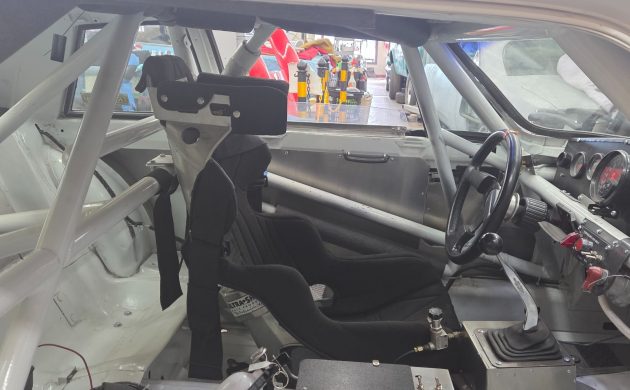
The seller describes the Jaguar as a blank canvas for its next owner, who can finish setting it up for vintage racing, track-day use, rallies, or street driving. Because the car retains its factory VIN tag, data plate, and clear Washington title, the seller notes that street licensing is possible, subject, of course, to applicable local requirements.
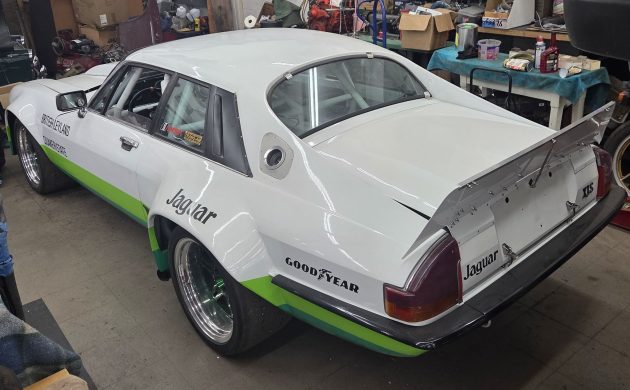
The real Group 44 Jaguars are historically important competition cars that deserve preservation. This tribute isn’t pretending to be one of those cars. Instead, it answers a more entertaining question: what if you could capture the appearance and spirit of one, then add a nearly 600-horsepower big-block and a five-speed? It may not be subtle, but neither was Trans-Am racing.

I guess test drives are out.
Maybe not. Might depend on credentials?
Definitely for someone more spry than I but it’d be one to enjoy racing, judging by the apparent attention to more than just cosmetic detail. A lot of cash for a weekend racer but then again it depends on how serious the owner/driver is about racing.
Best use of a ZL-1 hood. Ever. Good gracious!
WOW! – I didn’t know that the factory XJS’s ran Big Block Chevy engines!
You learn something new every day (or think you did).
The genuine ones ran Jaguar V12’s..nary a chebby in sight.
That’s cool. You know what would be cooler? This with the stock interior. Perhaps I should commission them to build me one like that if I ever hit the Powerball.
I hear you on the PB.. but I think I’d buy this one and leave the interior like it is.
The late production XJS uses a redesigned outboard brake suspension that was being real world tested. I know, I put one in my XJC. Also gave me a 3.54 Power Lock.
I would rip the V8 right out, and put the proceeds from its sale towards a built 6 liter V12. Anything worth doing is worth doing right.
:drool:
Well there’s something you don’t see every day…
I meant the car bodies hanging from the walls
Would have been nicer with a V-12 Jaguar engine instead of a Chevrolet big block. Group 44 cars ran a 5 speed trans. At the end of the 24 hours of Daytona Bob Tullius’s Jaguar was very clean and finished 1st in class. I have picture taken in pit row from then as I worked for the Jaguar dealer at the time.
I was thinking the same, but have the vague impression that Jag’s V12 was not stout enough to regularly finish races. Love the sound of a V12 running through the revs.
Incredible!
Peculiar taste meets disposable income.
I saw the Group 44 cars at Road Atlanta. Impressive and Imposing.
I would guess not eligible for vintage racing with the alternate motor. I saw one of the original Tullius-built cars at a vintage race some years ago. Had the v-12, but Group 44 moved it back a full 12″ to improve weight distribution. This is nicely built, just wondering where it would be eligible (other than track days).
496 cubic inches transates to 8.1 liters, not 7..
What a BEAST!
Terrifying to drive for the uninitiated, thriling for a more seasoned pilot.
Sure looks like fun!
Probably started life as a 7 liter…
Looks like fun! I wonder how much lift the front end gets woth the GIGANTIC rear spoiler! I drove an original ’67 Z28 that had worn rear springs tje original rear spoiler and no front spoiler. It was a true hand full over 90 MPH. (And not a fun handful!) v was This is really cool! It brings back memories of Tulius and Road America.
Oh My, my bet is that exhaust must sound freakin Amazing!!
Need a driving vid!
With a V12 putting out that Hp, it might just be worth the asking. But with a Chevy, well, that’s like putting a Roush in an orange Mclaren. Fun…but sacrilege.
Pretty cool car. I love this body style era of Jags. The only negative is the spark plug wires draped hap-hazardly over the valve covers. Yeah, I know, a little nit-picky, but it ruins an otherwise great engine presentation.