
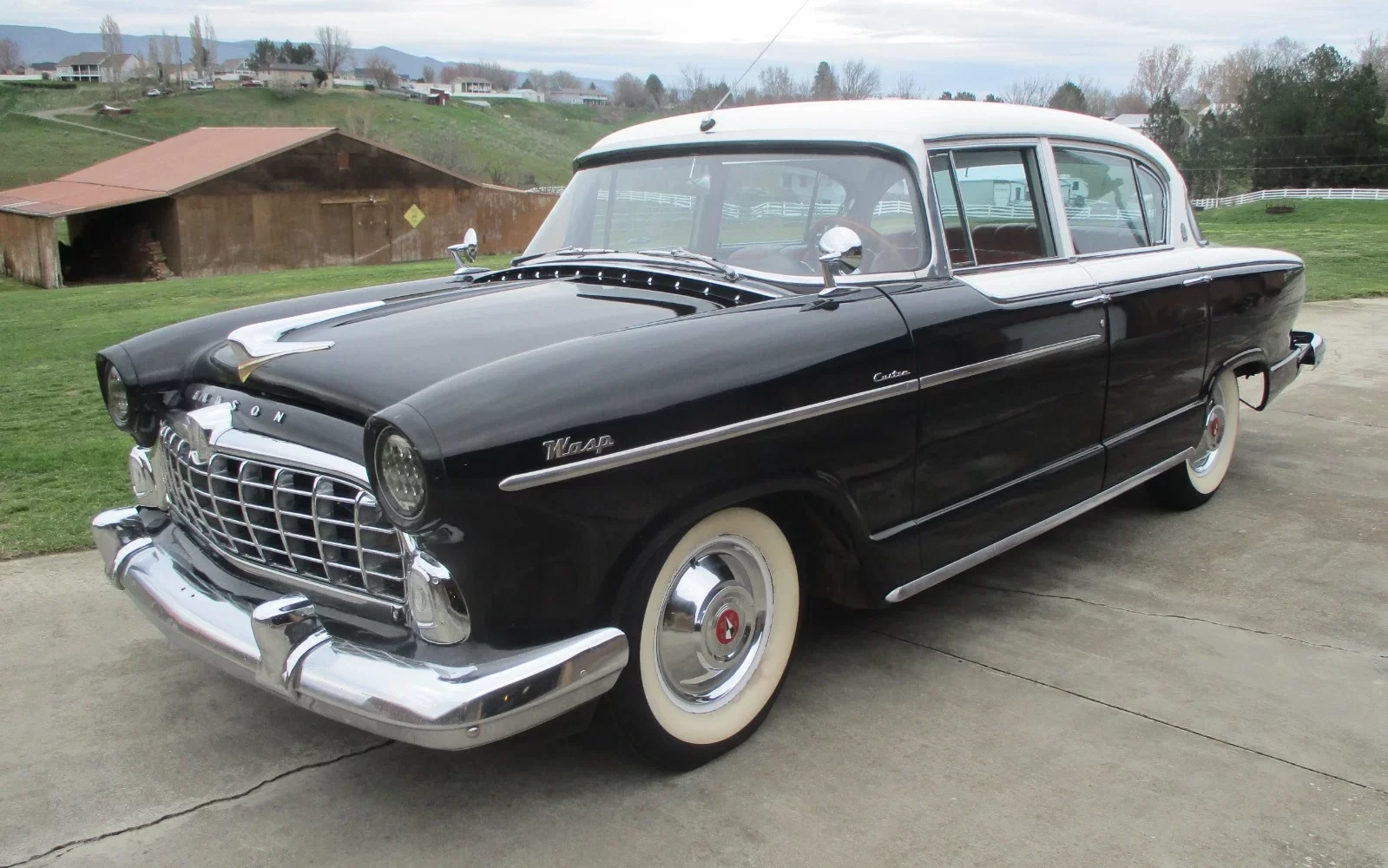
The clock was ticking on the well-respected Hudson nameplate as the 1955 models saw the light of day; sedans such this Wasp Custom shared their bodies with the concurrent Nash and had little in common with those step-down stockers that had done so well in NASCAR. Nevertheless, some Wasps still used Hudson’s famous flathead six, and the Hudson’s uniqueness still makes it a fun offbeat collector car today, 71 years later. The sellers of this 1955 Wasp, posted here on eBay in Clarkston, Washington, are moving out of state and unloading some of the collection, and they are asking $7,470 or best offer for the Hudson. Thanks to Barn Finder Jack M. for sending us the link for our appraisal.
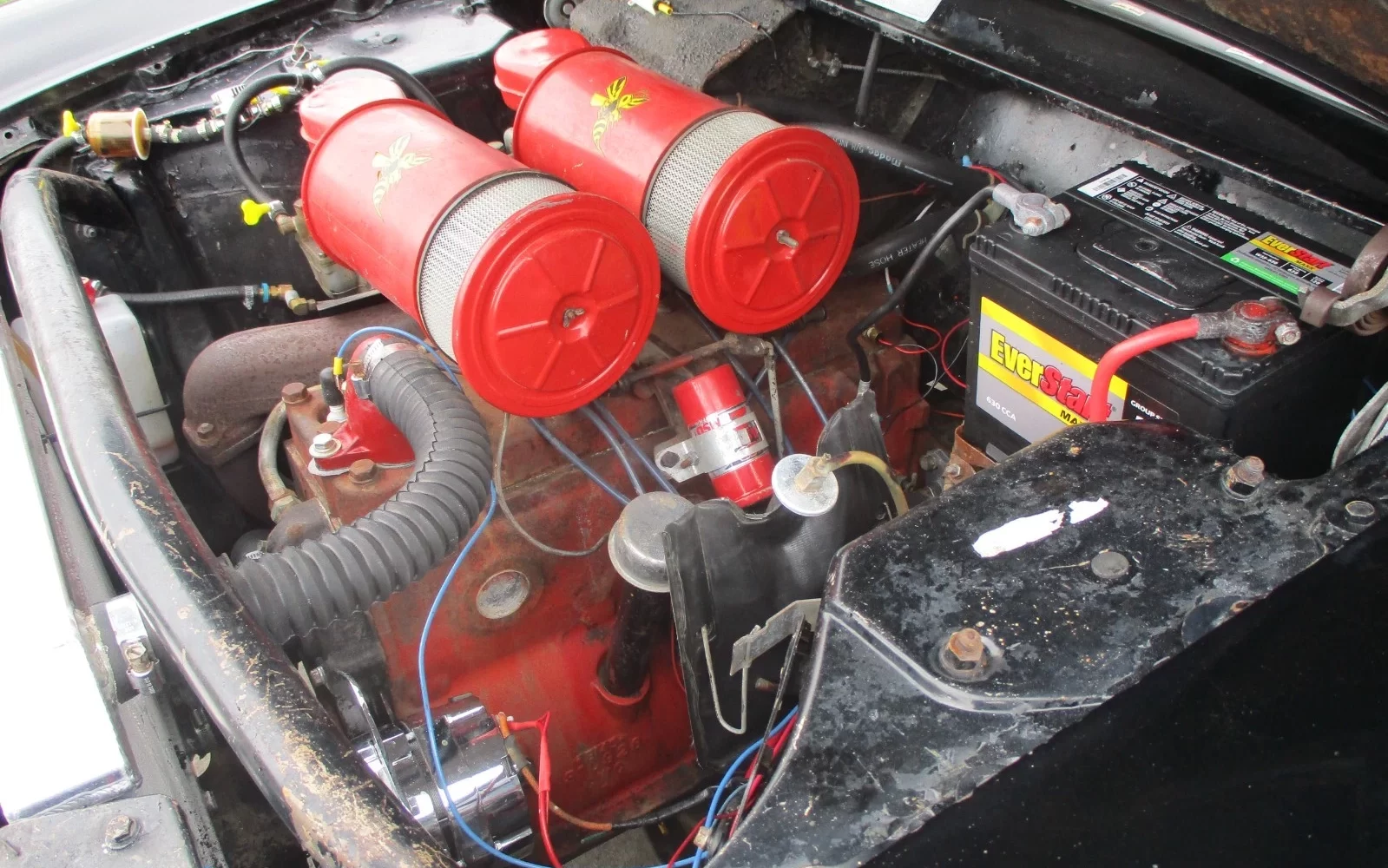
That’s not to say that this will be a trouble-free, turnkey purchase. While the Wasp’s factory 202-cubic-inch “Twin H-Power” six is still taking up residence under the hood (with 130 horsepower from the factory), it appears that someone needs to put down the soldering iron. Hudsons still used a positive-ground 6-volt electrical system in 1955, and this one has clearly been converted to a 12-volt system; however, it doesn’t appear to be a very neat job, and indeed the seller says that the car runs reasonably well but lacks power because “the owner…doesn’t know how to time it.” The Summit Racing catalog has seemingly been tossed at the Wasp, with what appears to be an MSD coil, a chromed alternator conversion, an aluminum radiator, and those twisty hose clamps all sharing space in the engine compartment. I know that there are downsides to a 6-volt electrical system (especially one with positive ground), but I always wish that people would try it out for a while before making conversions: Most of the time, 6-volt systems still work just fine. Still, you could clean up what’s here given a little time.
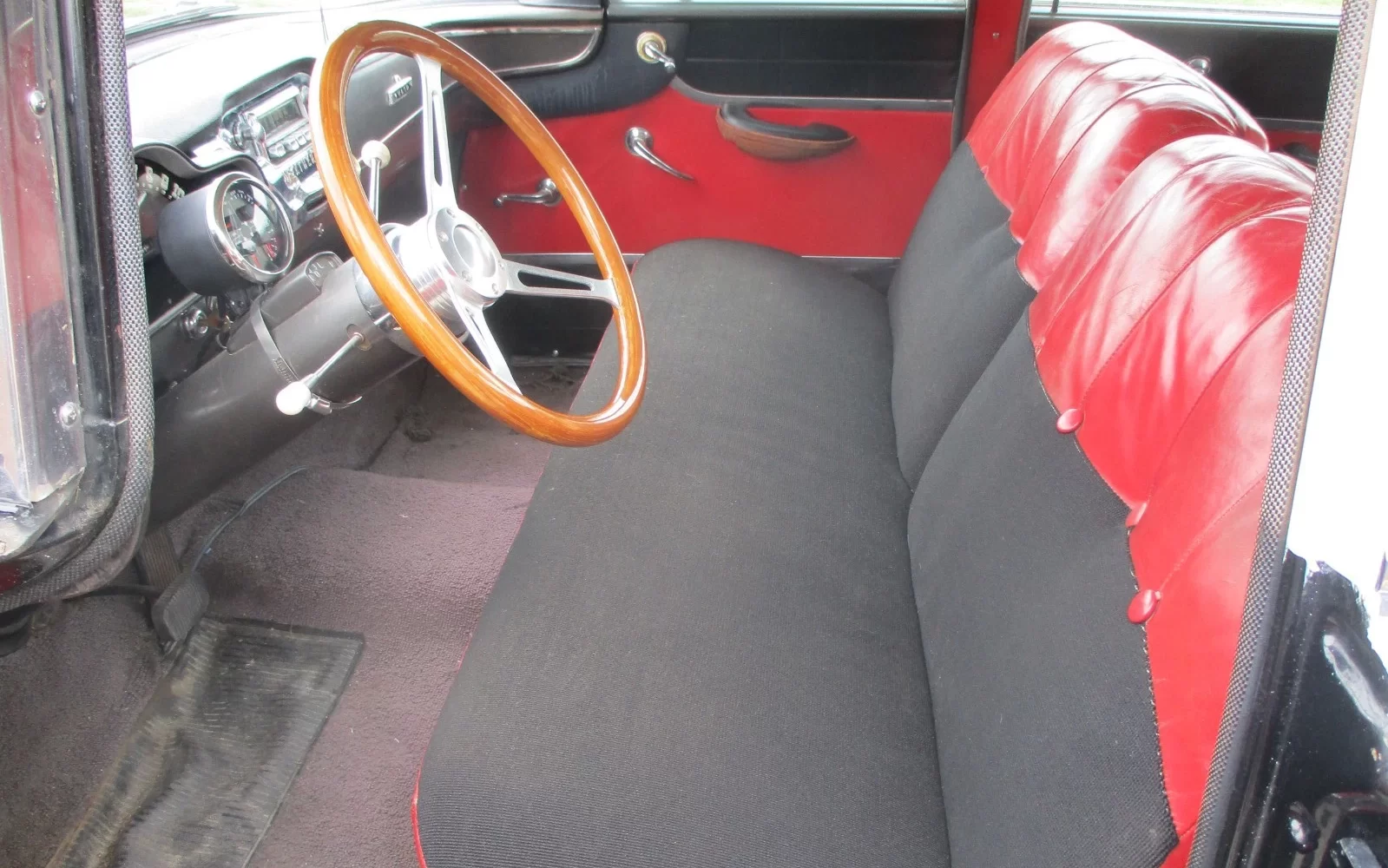
The carpet is apparently original and needs replacement, but the “lower” upholstery and headliner are newer, and the seats match other 1955 Hudsons I’ve seen (not that there are many). Luckily, the original steering wheel will come with the car, although in terms of aftermarket wheels, this one isn’t too bad.
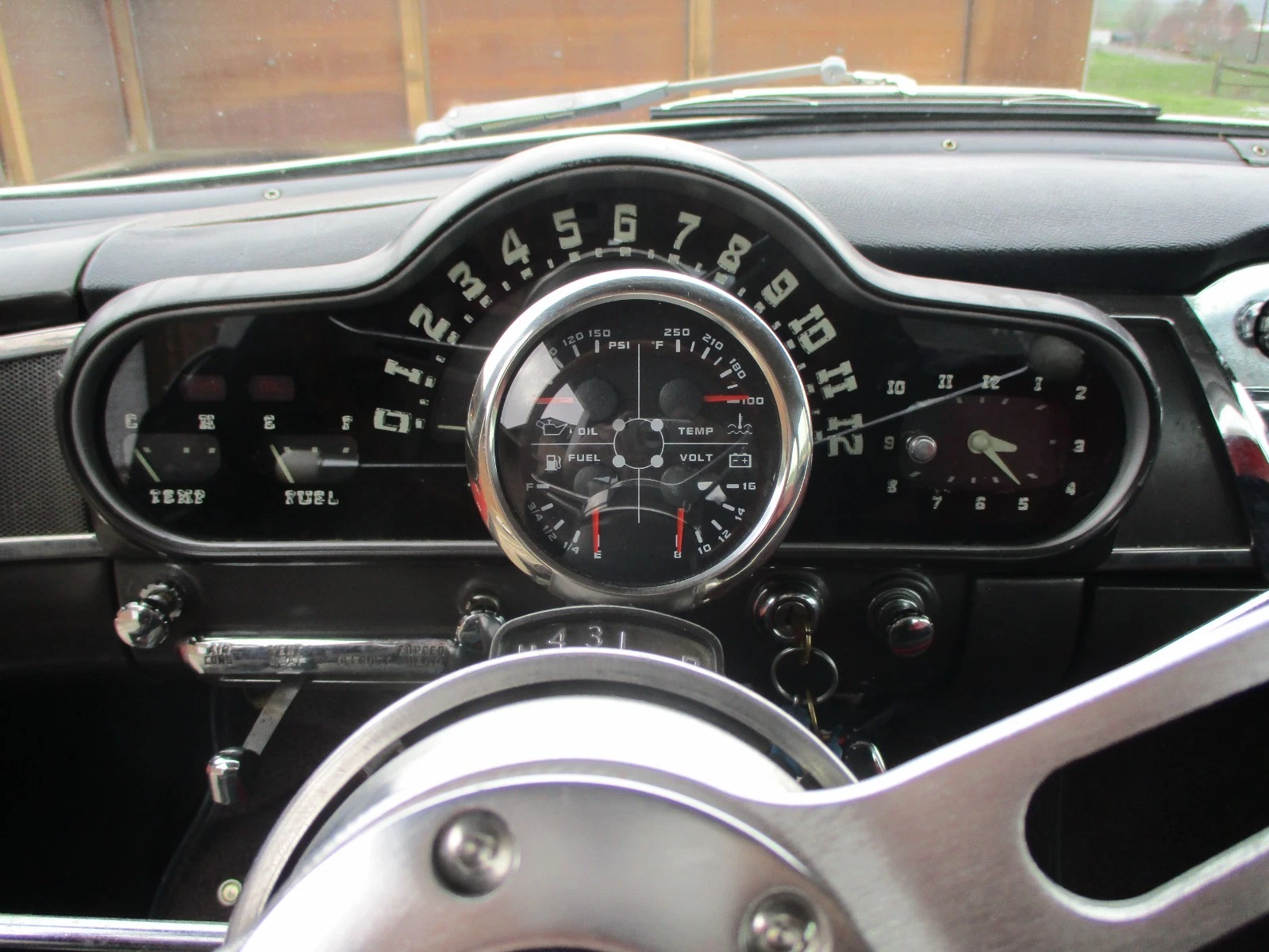
Here’s another downside to the electrical conversion: None of the original gauges work except for the speedometer (which is blocked by a modern 12-volt gauge pod). You can see from this picture that the Wasp has the optional Hydra-Matic, which came with a 3.58:1 rear axle ratio in Wasps, and with a set of tall whitewalls, that will actually be a decent cruising gear if you do the math.
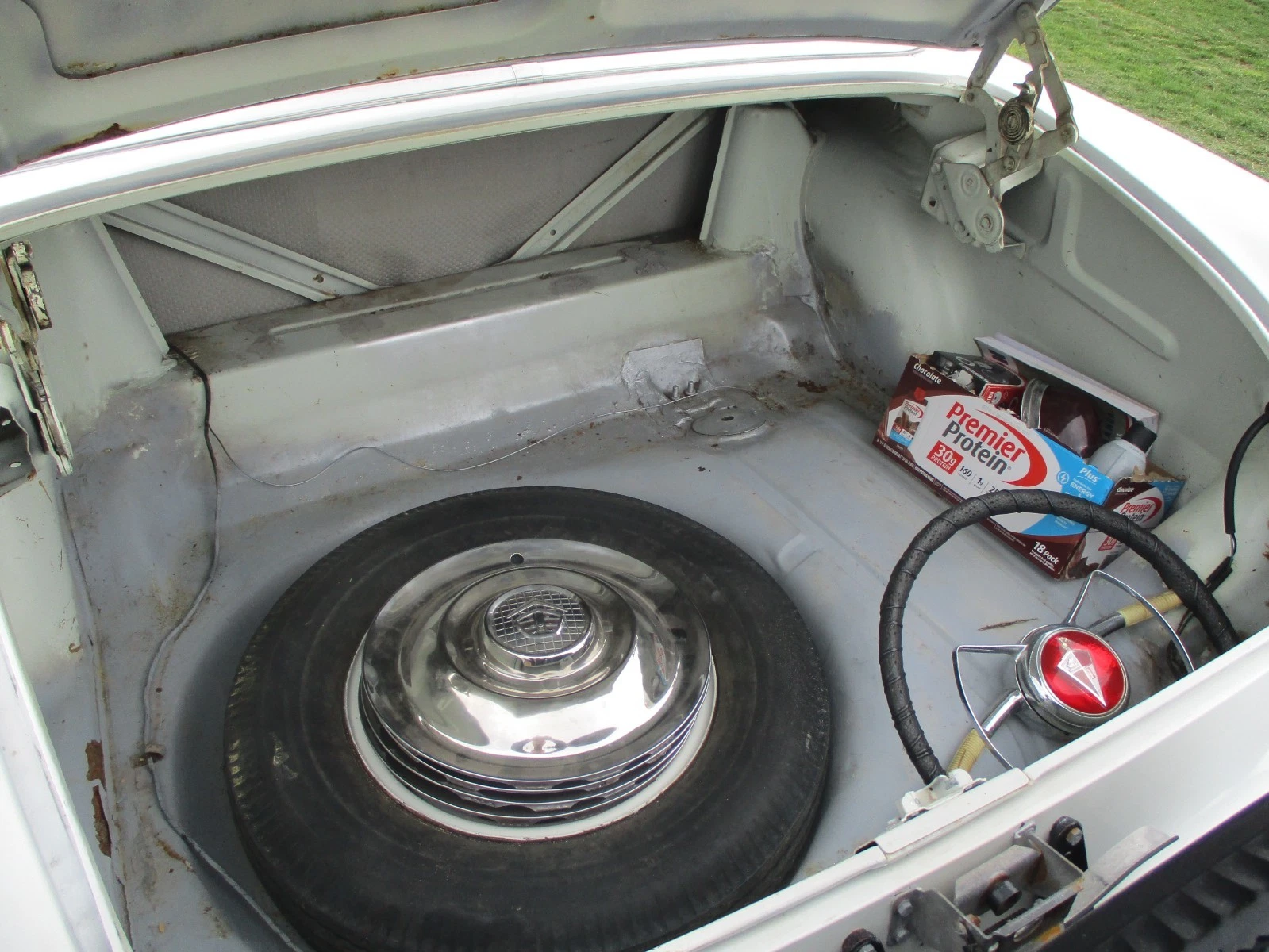
There’s that original steering wheel. The Wasp comes with an extra spare tire (more on that in a minute), and the trunk/undercarriage pictures show a car that clearly hasn’t been restored but is in solid survivor condition. A coat of white paint and a new mat in the trunk will have it looking just fine.
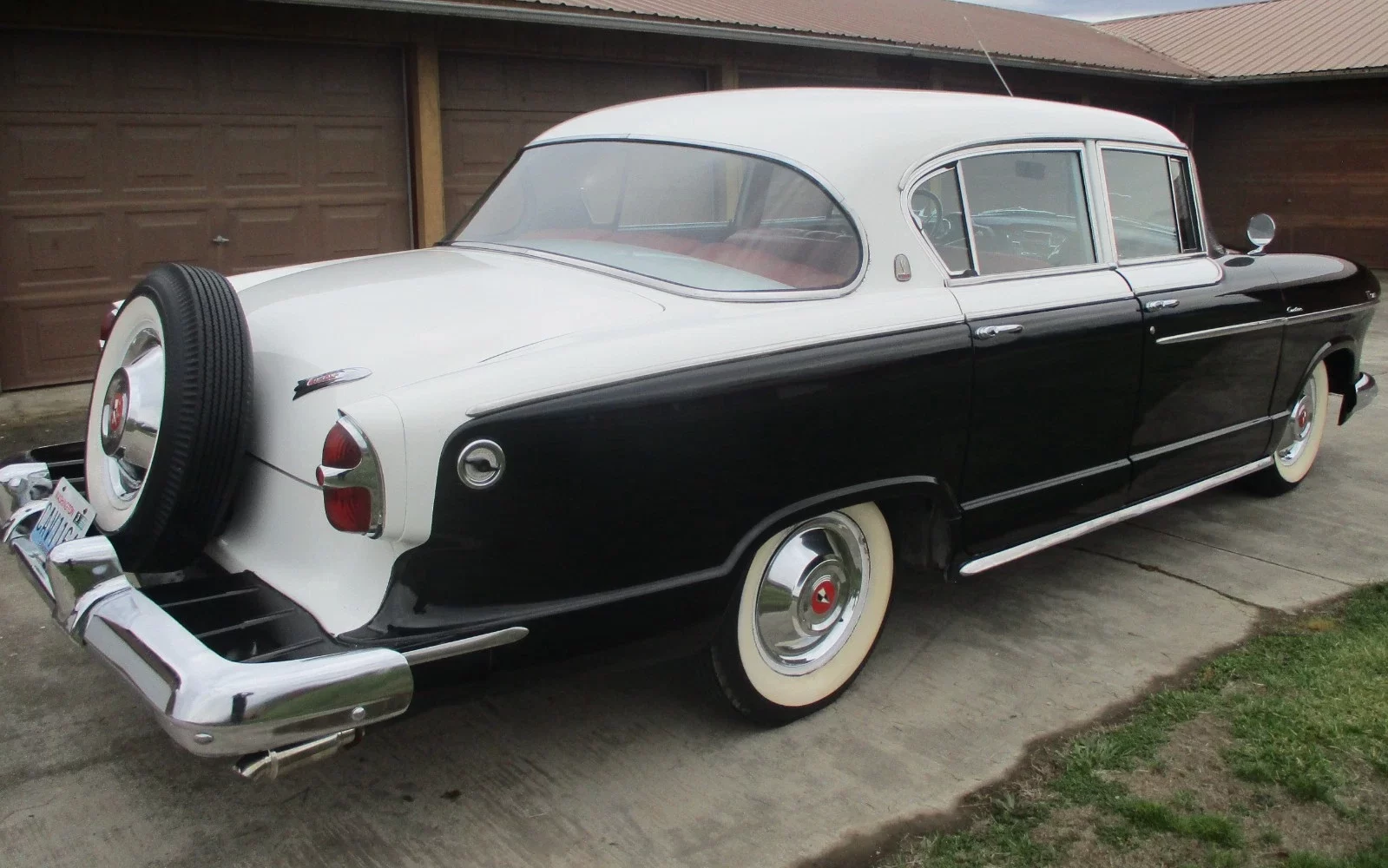
Here’s why the spare tire is superfluous; this car has the “continental tire mount,” which added ten inches to the length of the Wasp. The paint is “driver quality,” and according to the body tag, it looks like the original combination of “Snowberry White” and Black. The wide whites are older and should be replaced, but if you can work out the electrical system and get the old Hudson timed, you could have a great, solid ride that will have people asking, “What is that?”




Its a handsome car. The black and white ( like the ’55 Olds on here a few days back) looks sharp together. And the red interior really can compliment it. Unfortunately, for me, the electrical issues would make me nervous. I tell people all the time……. I hate wiring!!! My wife will even tell you, I hate wiring!! Some people ( who I would consider waaaay smarter than me) could look at a rats nest maze of wires and figure it out, but not me. I oftentimes tell people that a man has his limitations, and I know mine, and its wiring…. I agree with Aaron, there’s nothing wrong with a properly maintained 6 volt system especially if its properly maintained. I’m glad the original wheel is with the car, that would go back on. But I think you’d need a truly good mechaic ( like Geomechs for example) to figure it out. I wonder if you could even get a wire harness for it. It would be nice to see this Hudson back on the road for sure. Nice write up on a not often seen Hudson Aaron, thank you. Great find too Jack N.
Thank you, sir!
I agree with the above comments about 6 volt systems, the seller has created a host of problems for the next buyer to sort out. These cars are mechanically straightforward in stock configuration and if tuned properly will run like the proverbial sewing machine. The known issues weren’t enough to deter a buyer, the car has been sold!
It sold fast, faster than I expected! It must have sold within an hour of my hitting “publish!”
Even if the car is sold, they still bring up some great comments. Again, when mentioning the word “Hudson”, it’s seemingly only accolades is the racing history. That’s great, but it overshadows what great cars they really were. This is what I meant about Hudson having a short lived racing history, and concentrated on high quality passenger cars. Okay, even I’ll admit, this is a bit much, gee-gaws applied with a patching trowel, but “last gasps” are usually just that, clean out the parts bin, we’re going down anyway. I read, a paltry 7191 cars like this sold in 1955, and while providing a strong basis for AMC, it was a sad end to a once magnificent car maker.
While 12V conversions are complicated, most cars and options are 12V today, and just makes more sense. It’s a beautiful car, went out with class.