

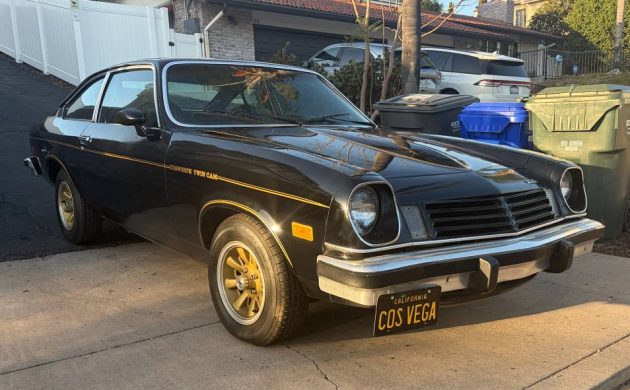
Hot hatches are often seen as a 1980s phenomenon, but some consider the 1975 Chevrolet Cosworth Vega the first of the breed. Introduced to add excitement to the Vega range, the high sticker price led to the program’s cancellation before it reached its production target. This first-year Cosworth is a beauty, with only one minor cosmetic flaw. It appears to have avoided the typical rust issues and is an unmolested survivor. I must tip my cap to Barn Finder Tony P. for spotting this beauty listed here on Craigslist in San Diego, California. The seller set the price at $20,500 but may consider appropriate trades.
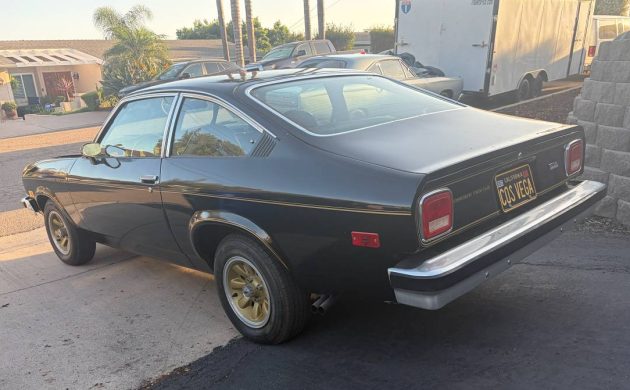
Chevrolet introduced the Vega as its subcompact model in 1970, pitting it against the Ford Pinto. Initial reception was positive, with many people drawn to its crisp styling. However, the Vega suffered from quality-control issues, and rust was a major problem. The company sought to inject excitement into the Vega range, introducing the Cosworth variant in 1975. All first-year examples featured Black paint, relatively subtle Gold pinstripes and “Cosworth Twin Cam” decals, and unique gold-centered alloy wheels. The company sold 2,061 of these classics in 1975 and another 1,147 in 1976. With 190,321 Vegas of all types rolling off showroom floors during this period, the Cosworth represented a mere 1.8% of total sales. This first-year example looks like a beauty. Its paint has a healthy shine, and the Gold highlights are crisp. There are no significant panel imperfections or rust to spoil the ownership experience. The trim is in good order, and the wheels are clean. Classing the Cosworth Vega as a hot hatch might seem a stretch, but it represented a genuine attempt to transform a volume-selling hatchback into a car with sparkling performance. That is why some enthusiasts feel it deserves that title.
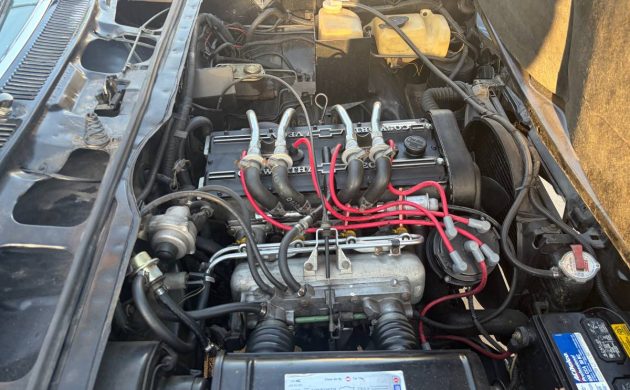
The standard Vega didn’t offer exciting performance, but Chevrolet wanted a “halo” model to right that perceived wrong. It could have produced a fully loaded vehicle with class-leading luxury, but the company chose a performance boost instead. It considered various options, but eventually contracted Cosworth to develop a unique DOHC 2.0-liter engine to add some spice. Featuring an aluminum engine block, Bendix fuel injection, and stainless exhaust headers, this motor delivered 110hp and 107 ft/lbs of torque. The initial prototypes produced significantly more, but Chevrolet had to detune the motor to meet emission regulations. Chevrolet focused on quality, hand-building each engine in a “clean room” previously used to assemble the all-aluminum 427ci ZL-1 big-block at the company’s Tonawanda, New York, engine plant. Every Vega sent its power to the rear wheels via a four-speed manual transmission, with various suspension upgrades completing the package. The seller’s listing information is limited, making it unclear whether the car is numbers-matching. They also don’t indicate the mechanical condition, but I would expect any Cosworth Vega in this price bracket to be turnkey and ready for action.
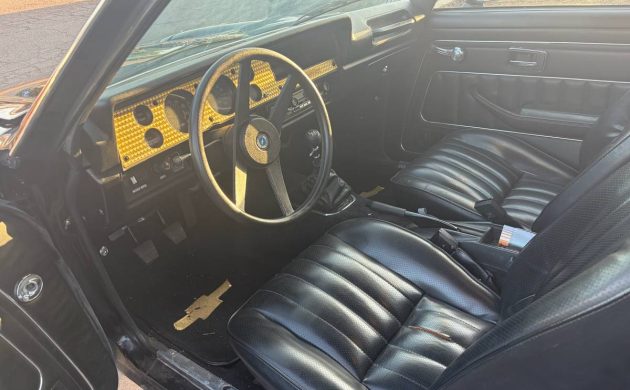
The Cosworth’s interior featured a few unique touches that set it apart from the rest of the model range. The dash fascia’s Gold, machine-turned appearance found near-universal acceptance, and each car received a numbered plaque on the dash. Buyers could choose between standard perforated Black vinyl trim or cloth in the same color. This Vega features the former, which shows no significant wear. Disappointingly, there is a seam separation on the driver’s seat base, which is the only upholstery flaw. A competent upholsterer might be able to fix the problem with a blind patch. Otherwise, it might require some patient online detective work to locate replacement covers. Beyond that, there is little to criticize about the appearance.
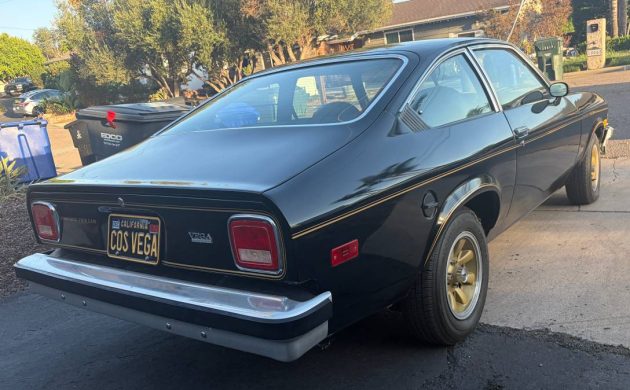
The Cosworth Vega was a bold experiment that deserved greater success than it ultimately achieved. Chevrolet projected production of 5,000 vehicles but discontinued the program after only 3,508 left the line. The company retained 500 of the unique engines as maintenance and warranty spares, scrapping almost 1,000 motors, which makes many current owners almost whimper. The Cosworth Vega’s problem wasn’t that it was a bad car; The sticker price was too high. It cost almost twice as much as a standard Vega and was perilously close to the Corvette. That made its failure almost inevitable, but a car that was a showroom flop in 1975 has developed a strong following in the current classic market. The seller’s price is at the top end for a Cosworth of this caliber, but would you throw caution to the wind to take this one home?

Yes, Mr. Clark, very impressive Vega, thank you for the story. Someone really took care of this car.