
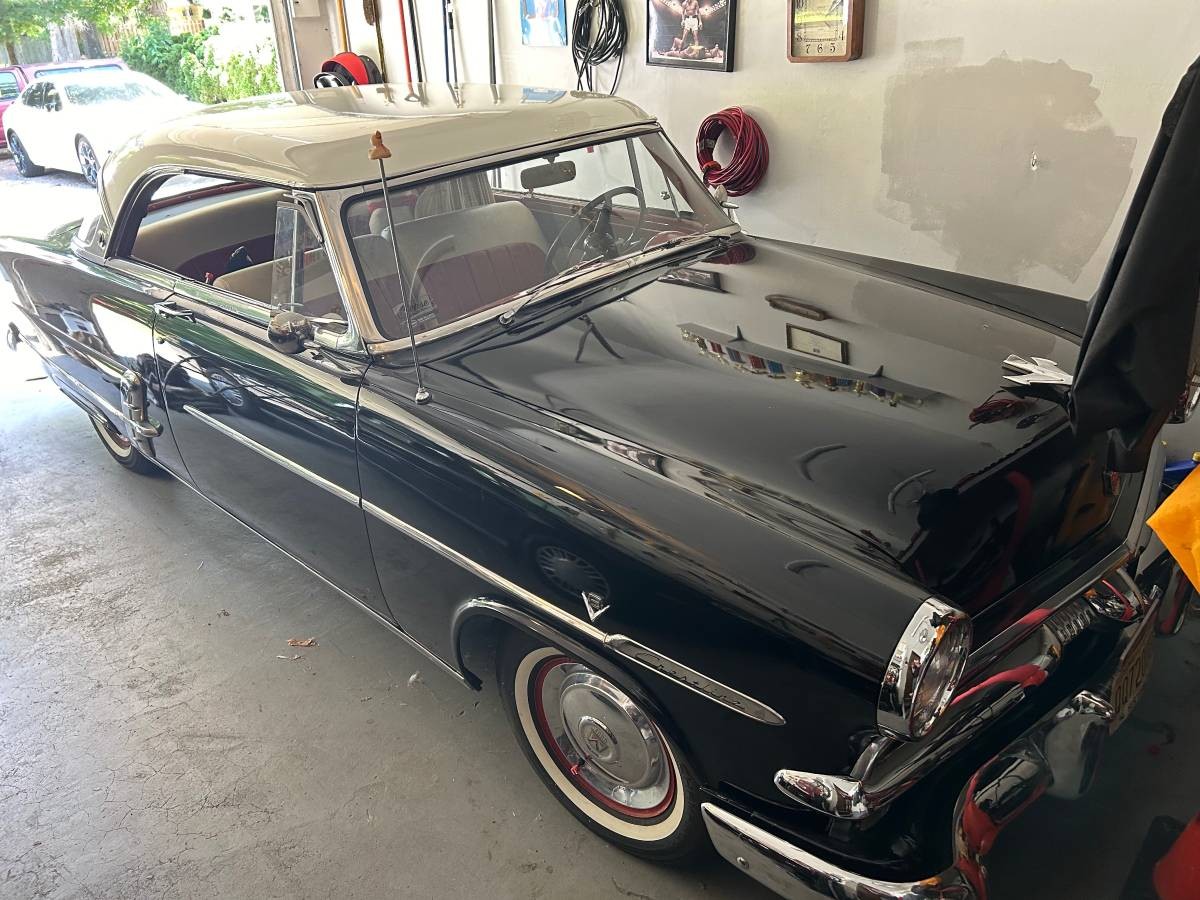
By the early 1950s, most car companies were shedding the bulky look of the ’40s in favor of sleek, spare designs telegraphing modern style. Ford was all-in on the new look, introducing its 1952 line-up in three trim levels – Mainline, Customline, and Crestline. The Crestline was the premier offering, available in three body styles that the lesser models didn’t offer: a convertible, an eight-passenger wagon, and the Victoria, a swanky hardtop. This 1953 Crestline Victoria is all dressed up in black with a two-tone interior, befitting its delivery in the year of Ford’s 50th anniversary celebration. The car comes from a fifteen-year owner and it’s available here on craigslist for $18,500. A new owner can drive it home from Manalaplan, New Jersey. Thanks to Mitchell G for the tip!
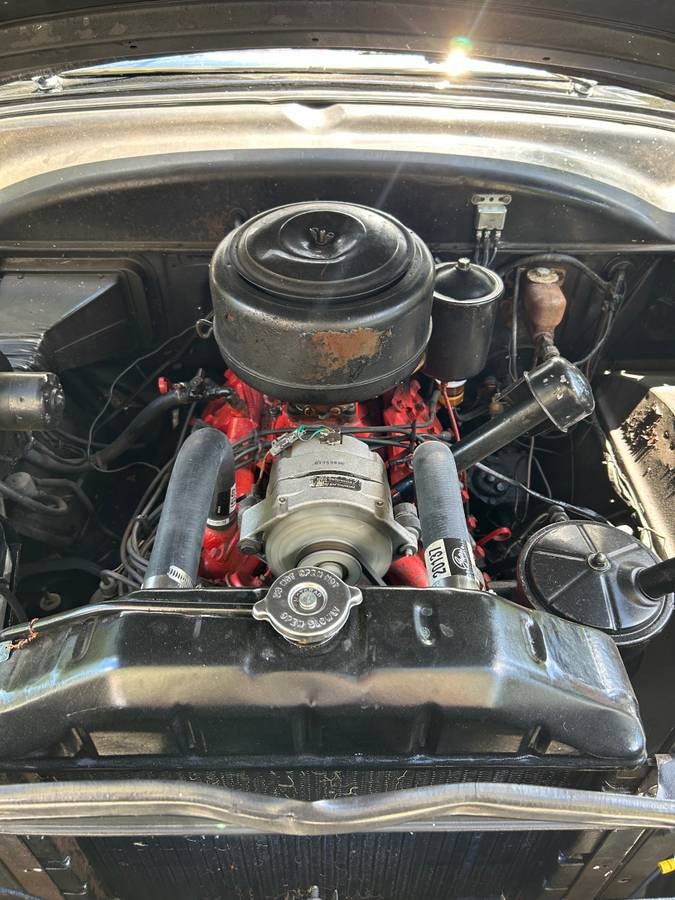
The Crestline was produced from 1952 through 1954, making way for the Fairlane in ’55. For the first two years, Ford utilized its tried and true 239 cu. in. flathead V8, but in ’54, the company shifted to its exciting new OHV Y-block V8. The car retains its original 239 flathead, and the seller notes that the odometer has registered only 70k original miles. New hoses and a shiny radiator cap indicate someone’s kept up on maintenance, but for details, we’d need to consult the seller. The Crestline was offered with a three-speed manual with or without overdrive, or the company’s relatively new Ford-O-Matic automatic. This example has the automatic and power steering – desirable options for the day.
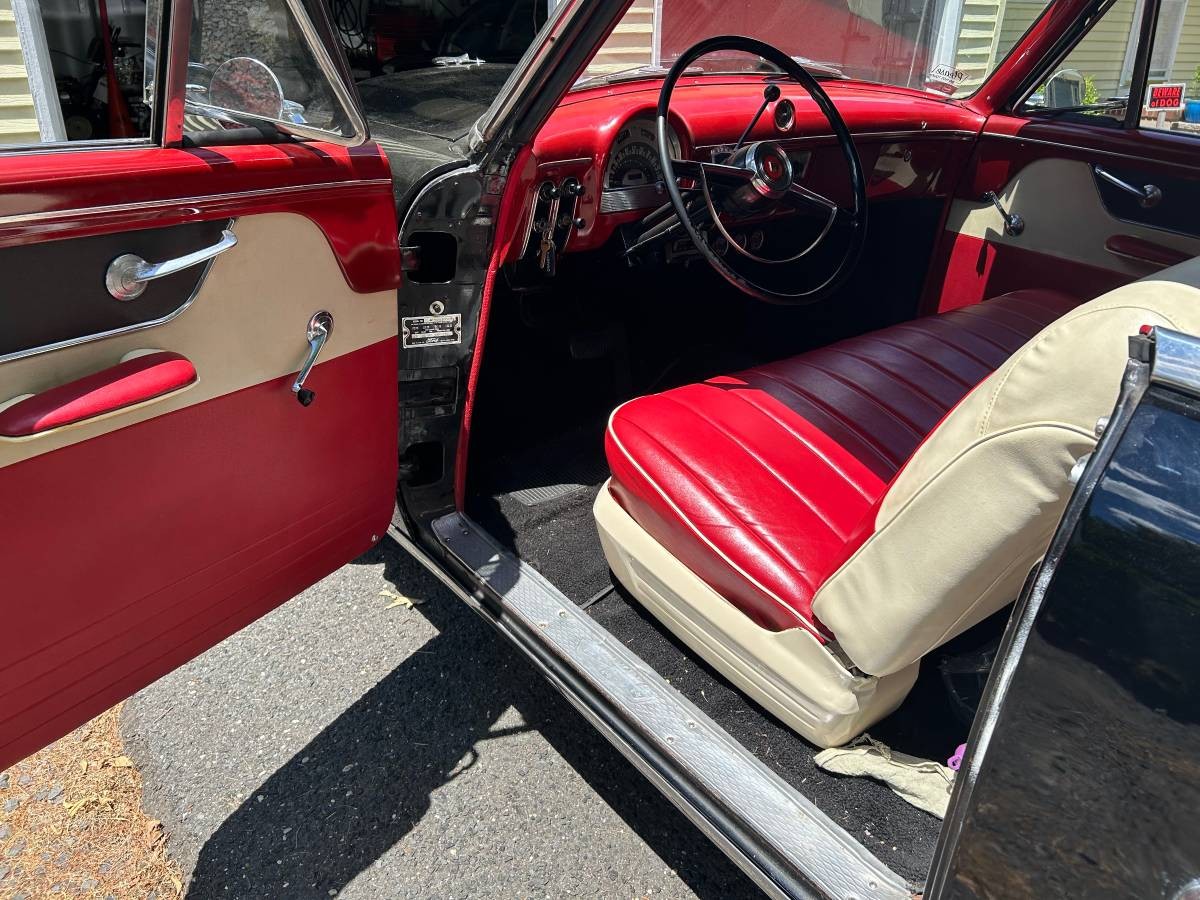
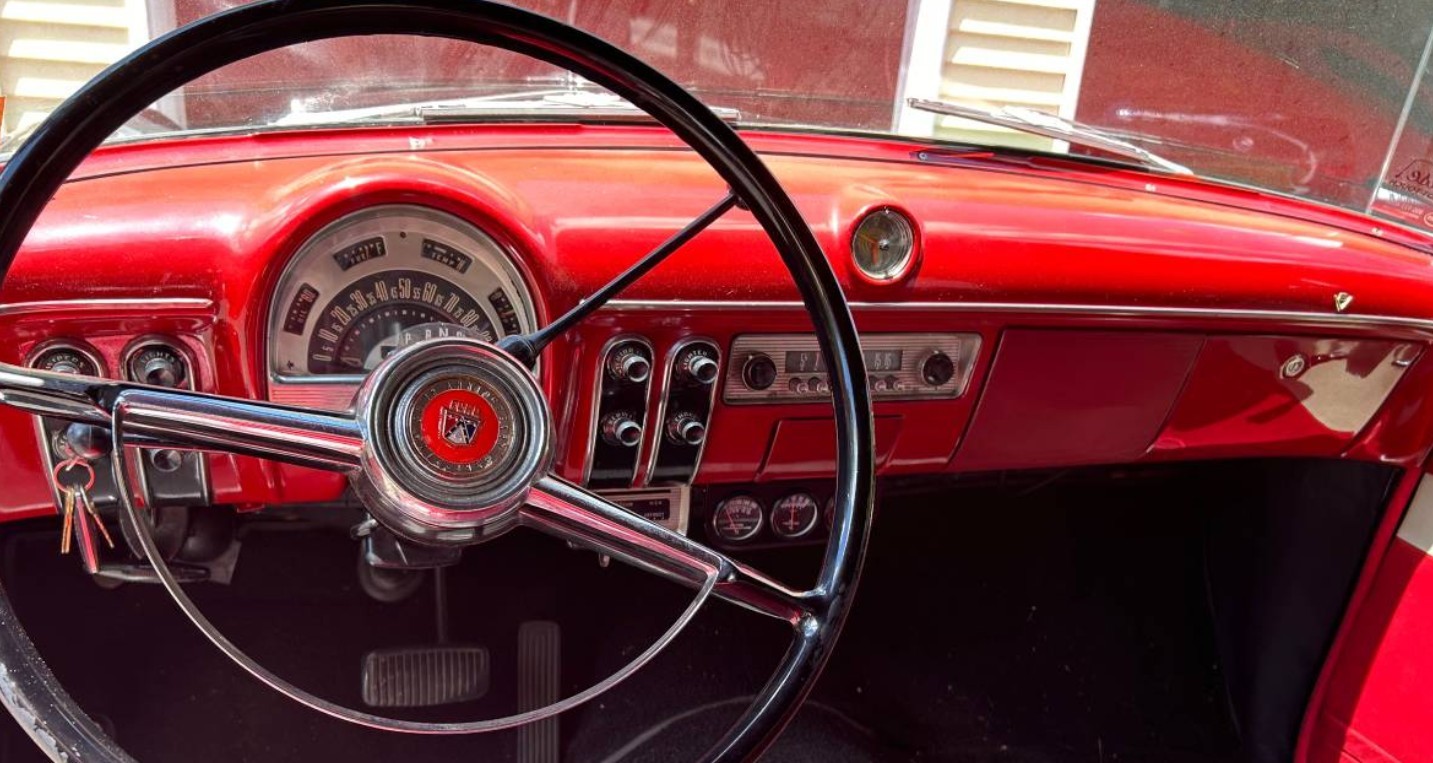
Two-tone upholstery was a neat trick designed to differentiate trim levels, and a clock – also a luxe feature – is inset at the top of the red-painted dash, looking lonely in its tiny nacelle. In the mid-’40s cabin design entered the “comfort” revolution, bringing drivers and passengers padded seating, reasonable ventilation, and enhanced visibility; car makers had yet to focus on the interior as an expression of style. The surfaces and upholstery here show moderate wear but the overall effect is jazzy with that black exterior paint.
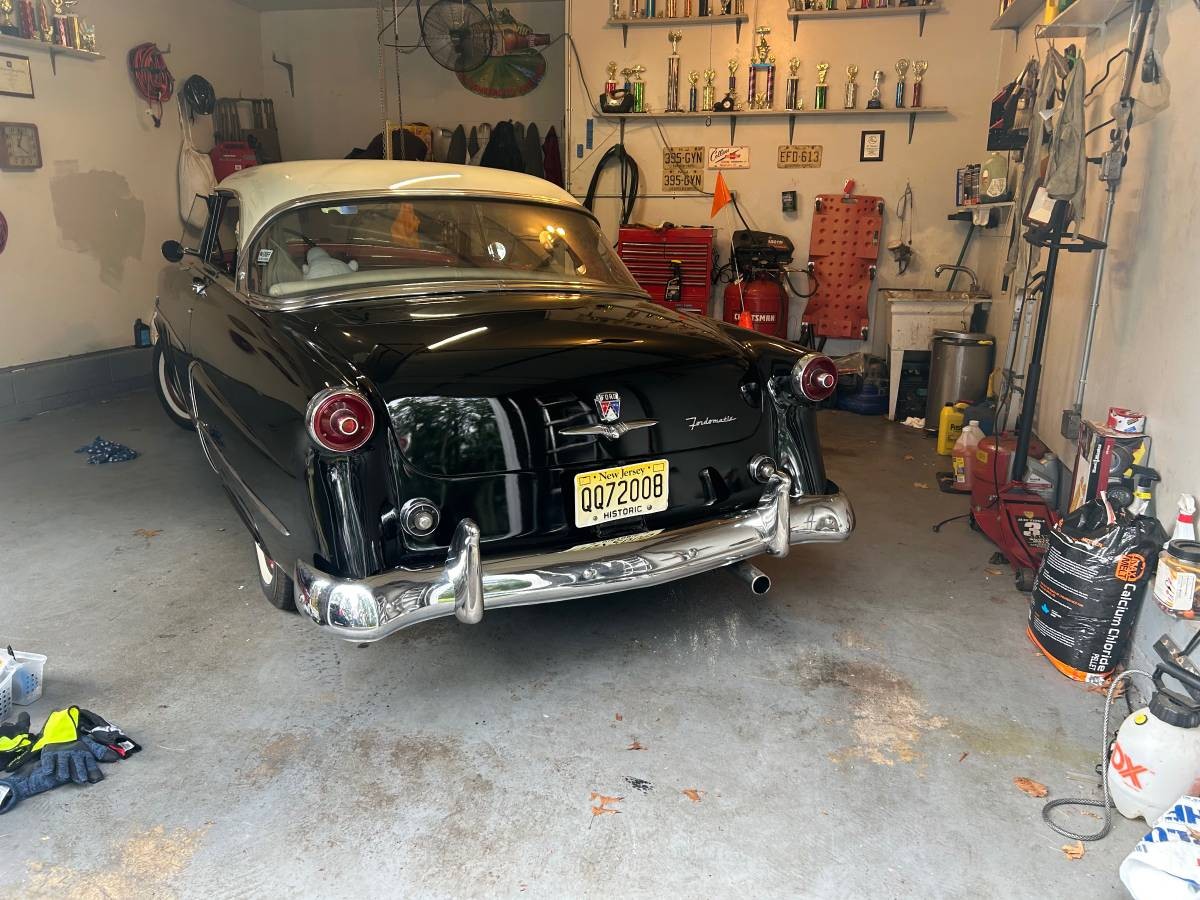
Ford’s new models overwhelmed smaller independent car makers like Studebaker and Kaiser-Frazer, sending many into financial tailspins. The company made minimal changes to its early ’50s cars, tinkering mostly with bumpers, grilles, and light placement. Of course, when the mid-’50s hit, all heck broke loose, bringing a galaxy of new sheet metal interpretations. But the Crestline sold very well indeed, padding Ford’s coffers for the development work to come. This ’53 is an attractive offering in a waning marketplace for cars of this era; that said, the price seems reasonable. What do you think?



Nice writeup Michelle, very well done. When I can buy this car for 5 grand, then I will admit there is a waning marketplace for cars of this era.
I bought same exact car in 1960 from a mercury Lincoln dealer for $195 yes one hundred ninety five dollars how times have changed
Al, I have you beat, sort of. My first car in 1967 was a 53 Ford, but it was a customline 2 door (post) that I paid $50. I mentioned it here before. Drove it from OH to CA, back to PA and to OH. Sold it for $150 then.
There is a 6 volt alternator available for these as well as 12 volt. The Victoria hardtop is desirable, but the engine compartment has flaxing paint, not sure that it is worth the asking price if a #3 condition.
$195 65years ago is a bit different to $195 now. How much were your wages 65 years ago? People who make these statements must be living in the 60s. And was the $195 car in the same condition as this one?
‘52 to ‘54 was my favorite of the “Shoeboxes.” It’s actually my favorite of the early 50s. Despite my having a ‘49 Chevy, I think that GM went too much for the jellybean look. Chrysler was having some difficulties making up its mind. But Ford hit a home run.
‘53, same vintage as me, was an interesting year for Ford enthusiasts. Last of the Flatheads; last of the kingpins. However, if you bought your car north of the 49th Parallel, you would see Flattys and kingpins for most of the ‘54 production year. A super rare CDN variant of the Shoebox is a (one of three, I was told) ‘54 Meteor Rideau convertible, with a balljoint front end and a 256 Y-Block under the hood.
Being a border brat, and living in a region where the closest dealers were just on the north side of the border, I got to see a lot of Canadian variants. Ford of Canada built a Mercury 114 as a basic car to be sold through CDN Mercury dealers. It was replaced by the Meteor, basically a Ford shoebox with Mercury-leaning livery in ‘49.
Right out of the box it had an edge over the Ford as it had a more powerful 239 engine, with aluminum heads and a half point higher compression ratio. In 1950 the Meteor was available with the Mercury 255 engine. The Mercury dealer, a proud Kansas transplant, loved to Lourd his more powerful Meteors (and light Mercury pickups) over the Ford dealers because they had a touch more power…
Interesting…..I always thought “shoebox” Fords were ‘49 to ‘51! Maybe it’s a regional thing?
I’ve heard both versions. Then there’s the one where the Shoebox covered everything from ‘49 to ‘56. All versions are okay with me…
shoe box fords 1949 to 1951
Here’s a photo of my Father and me exiting my Uncle’s Ford, probably around 1962.
No wonder you’re a car guy Rex. Olds taillights, full Moon wheel covers, removed bumper over riders and probably some lowering blocks in the rear. Go Uncle!
Correct me if I’m wrong but is that an alternator on that? Hints at a 12V conversion?
I thought it looked like an alternator too. Anyone know for sure? The seller didn’t say one way or the other…
Never saw a generator that looked like that.
I would LOVE to OWN this one; only one problem — I test-drove a 1953 Ford Fordor Customline a number of years ago, and I was too short from the waist to the shoulders to see out over the hood! I would have to devise a way to raise that front seat about two inches, before I could comfortably drive it. No thanks on putting an unabridged dictionary or old Manhattan telephone book under me! (Sorry) Nice car, though.
My daughter’s kids are pretty short so I raised the seats using 2 and 3 inch square tubing pieces with the drilled holes to match the original mounting bolts and got longer bolts to complete the projects.
Dave from pa. those where the days my first new car after I got home from nam was a new 1967 Corvette convertible 327 4 speed special ordered it with power windows not many had that paid $4200 dollars for it that’s four thousand two hundred out the door times have changed
To bobhess: Thanks for the tip!
Wayne from Oz you are right in 1960 i think avg wage was $95 a week