
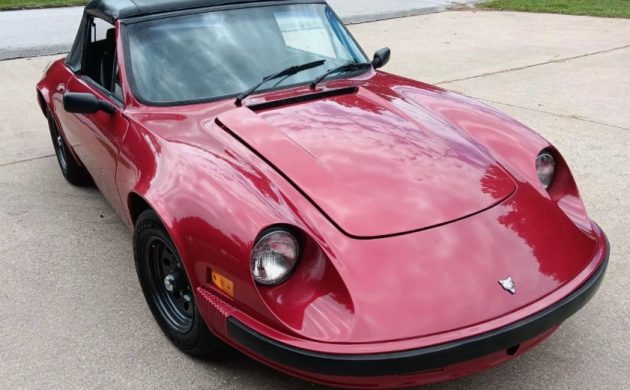
Trade protectionism is all the rage these days, with tariffs and trade rules galore. But this Puma from Brazil is a testament to the fact that import controls have existed for decades. Furthermore, the Puma wouldn’t exist without trade barriers. Before WWII, only Ford and GM operated in Brazil, but when the war wrecked supply chains, Brazilians were barely able to maintain their paltry fleet. In the late 1940s, President Getúlio Vargas founded government-owned steel and auto plants to jump-start a transportation economy. From there, import controls grew, boosting the price of cars – but local suppliers blossomed. Meanwhile, Rino Malzoni, a farmer’s son, was messing around altering Model As, Lancias, and BMWs – an effort aided by the presence of new manufacturers, including DKW. Malzoni’s first bespoke vehicle made use of DKW’s platform and drivetrain. As fiberglass became ubiquitous, Malzoni created race cars, and finally, the Puma, a road-going production car. Early Pumas still contained DKW engines, but later, after Volkswagen moved into the market and bought DKW-Vemag, Malzoni was forced to redesign his car to VW’s chassis. This VW-based Puma is available here on eBay, with bidding at $4550 and a buy-it-now price of $11,000. It can be driven away from Harrison, Arkansas.
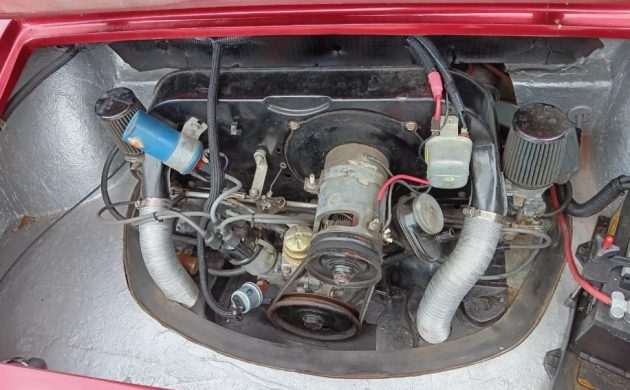
In its home market, the Puma was sold as a complete car, but early exports to the US were sold as kits, tasking the buyer with installation of the engine, suspension, and transaxle. This car’s rear-mounted 1600 cc VW flat four breathes through dual Webers; gearchanges are courtesy of a four-speed manual. The Puma weighs about 1800 lbs, so even four cylinders will provide satisfying propulsion. The seller notes that the car has been tuned recently, and the valves adjusted. The wiring harness is new, and the car rides on fresh Goodyears. It runs and brakes well.
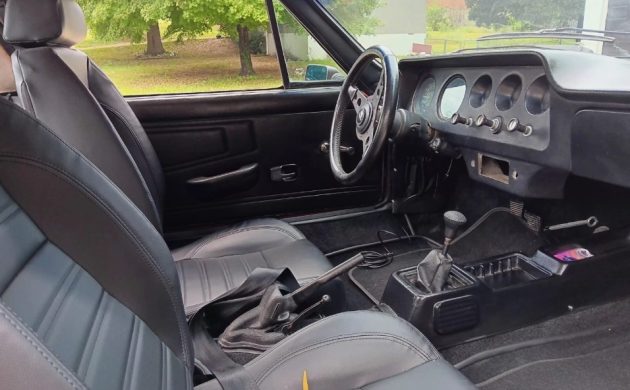
The seller notes the interior has been replaced, though the dash cover raises suspicions … is it hiding cracks? There’s no radio, leaving a raw hole in the panel. But for a car that hovers around kit-car quality, the fit and finish of the cabin is better than most of its peers.
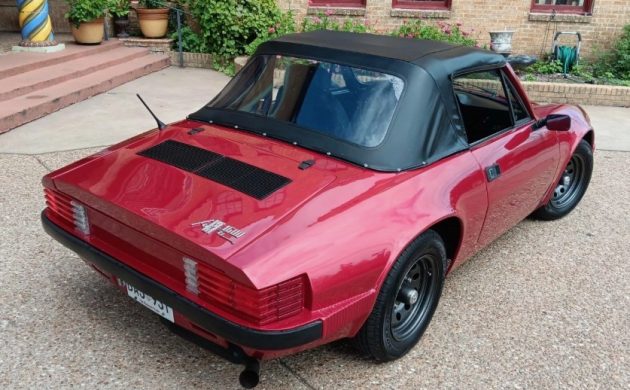
Roughly 22,000 Pumas were made from the mid-60s through 1991. The convertible arrived in 1971, first called the Spider, then the GTS, and in 1980, the GTC. The platform was changed over time as well, from the DKW to the Karmann Ghia to Chevy’s Opala, and finally, to the Brasilia – another VW product. While the Puma won’t garner you an invitation to Pebble Beach, it’s a cheap ticket to plenty of love at local shows. And besides, who else do you know who owns a Brazilian car?




One of the better cars of it’s type. Good workmanship and simple to maintain. My favorite is the fastback coupe version but this is no ugly duckling either.
I have had a notification set up on eBay for something like 5 years to let me know if an early, covered headlight Puma coupe comes up for sale. Nothing in all this time. I think the company only made 24-ish of the DKW cars, but the slightly later VW cars were still great looking, I’d take one of those. Looks like I need to go to South Africa, there’s a whole nest of them there.
Agree on all counts, the fastback looks great. I’m always impressed at how much finish is on the interior of these cars. Sadly they are often mistaken for kits, or lumped in with the kit cars because they’re fiberglass, but the Puma was a legitimate (if anemic) sports car of the time.
My neighbor has a 69-70ish silver GT coupe. Though it borrows styling cues from some other period sports car marques, it still manages to be cohesive and unique. Although it would be easy to put this in the same class, based on driveline, layout, and materials, it definitely doesn’t come across as any sort of kit car either.
I rather imagine it’s what the Bradley GT II aspired to be but ultimately wasn’t.
This thing looks cool. I admit Im not familiar with them though
Gotta love the cassette holders in the center console.
in my mind one of the best looking glass topped “Bug” floor pan ever.
With ‘frame stiffeners’ and a WRX subbie motor (SAAB did it in 9-2x)
it would be hot !
When you pamper this car, do you tell your friends “I’m doing a Brazilian Wax”?
Still can’t buy parts direct from Brazil for these. You have to go through a dealer licensed by Brazil to sell.
Way to go Michelle!!
Another great write up on a car I knew nothing about.
You have a great eye for the unique, unusual and special. You put a lot of research and study into your work and it’s greatly appreciated.
Thank you for making my day… again.
Aww, thanks! Appreciate the kudos.
Ended at $8,500.
Reserve Not Met.
23 bids.
I’ve owned two Ventura’s made by the same company. A fastback on a VW pan. Super low setting. Great build quality. If I’m not mistaken about 50 Ventura’s made it to America.