
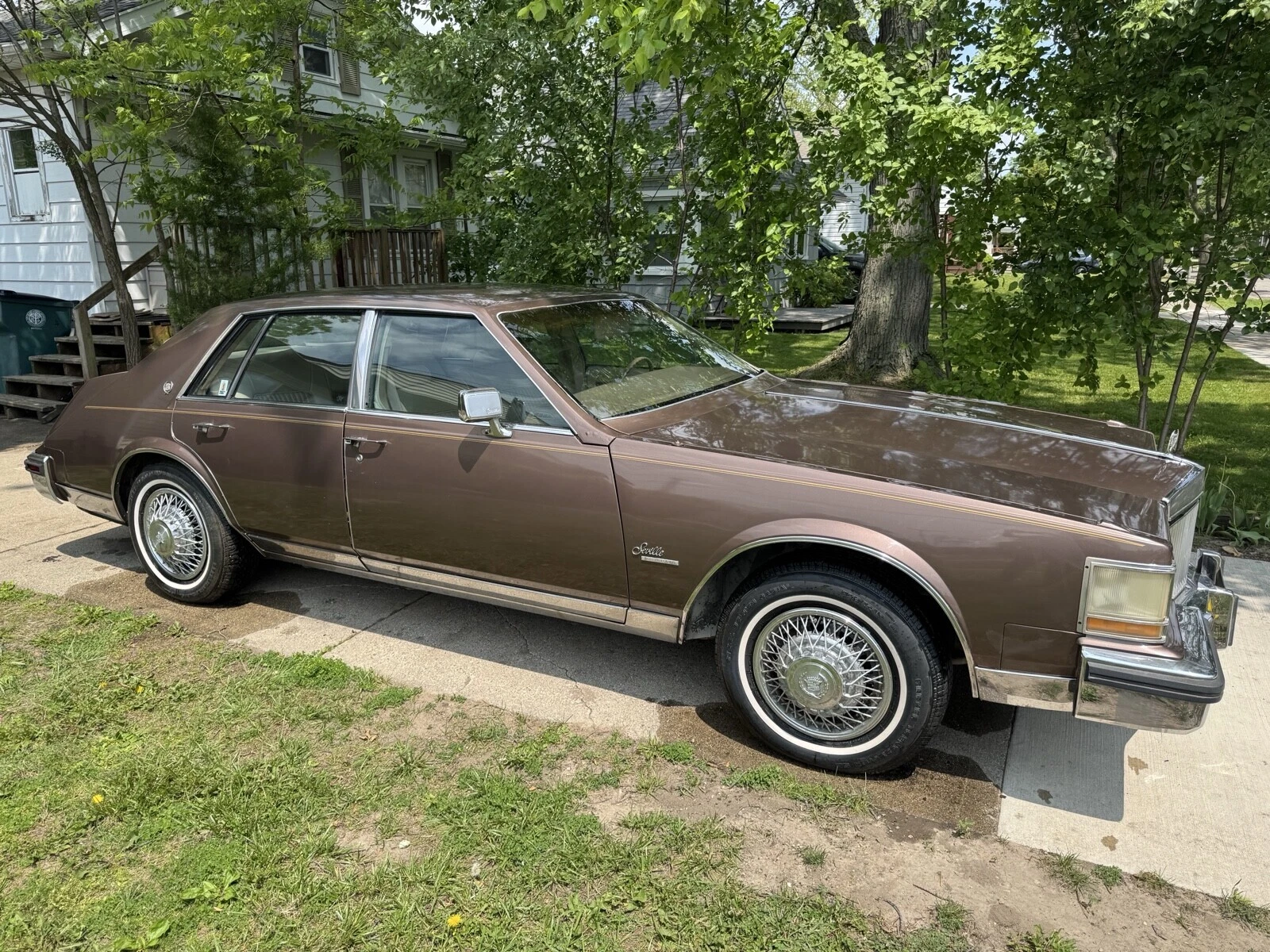
While not a huge success commercially, and somewhat scorned in the years after its introduction, the infamous “bustle back” Cadillac Seville has managed to cultivate a following that endures to this day. The styling is the obvious reason for the controversy it created among Cadillac loyalists, but despite perceptions that it sank the model’s success, it was actually a strong seller when introduced. Today, the fact that the styling is still fairly dramatic shows you just how significant the original design was, and this 1980 Seville listed here on eBay appears to be in excellent condition with an asking price of $6,000 or best offer.
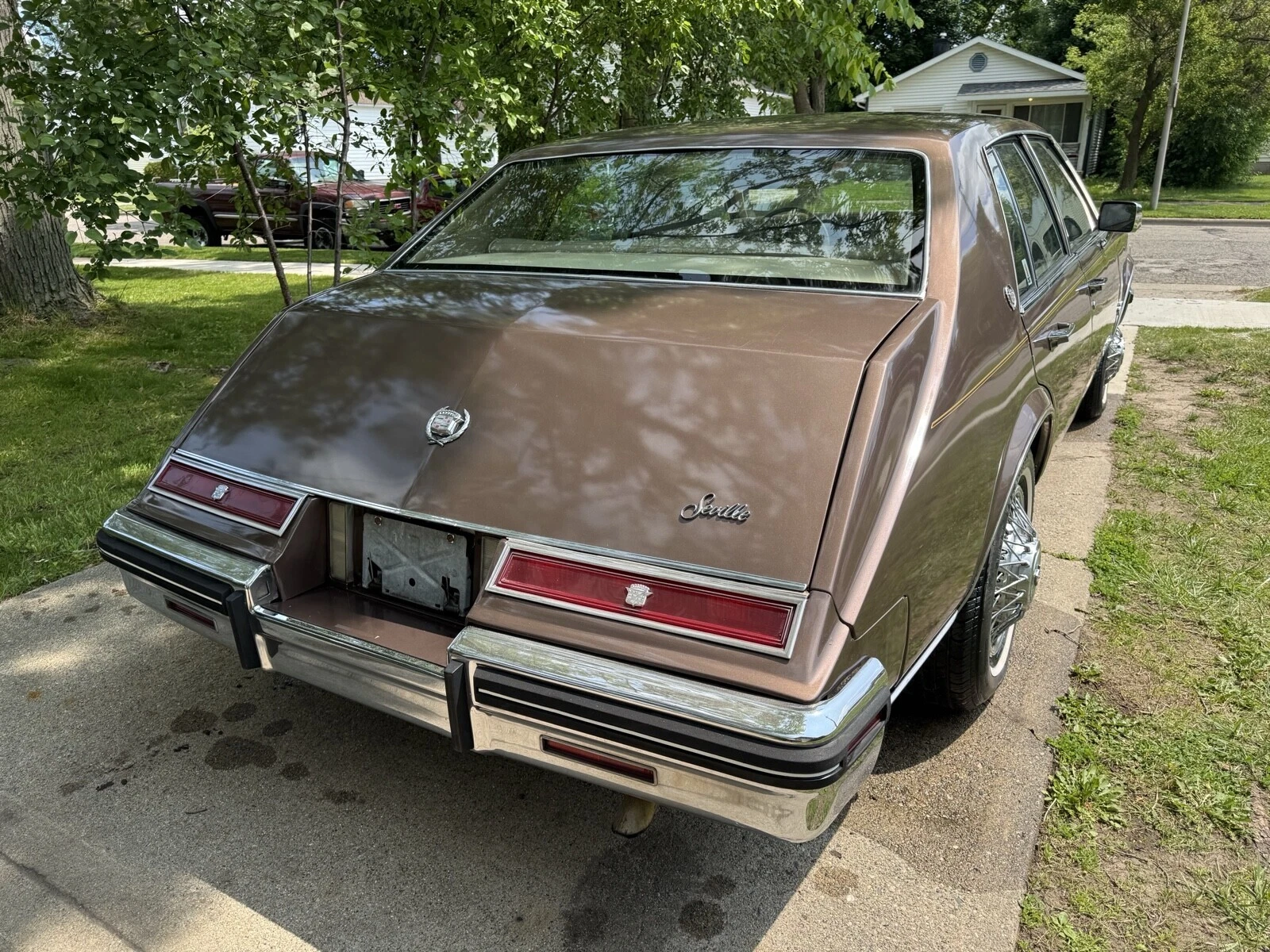
The Seville represented a major shift in other ways, the most significant of which was the decision to adopt the front-wheel drive E platform. In addition, Cadillac decided to push the 5.7L diesel, along with a traditional gas V8. More on that later, but it’s safe to say the Seville was shattering expectations in more ways than one. Engine-choices aside, it was the styling that was still the most significant departure from expectations. Legendary GM designer Bill Mitchell supposedly wanted the Seville to be his swan song, and this styling exercise was to be the exclamation point on a storied career.
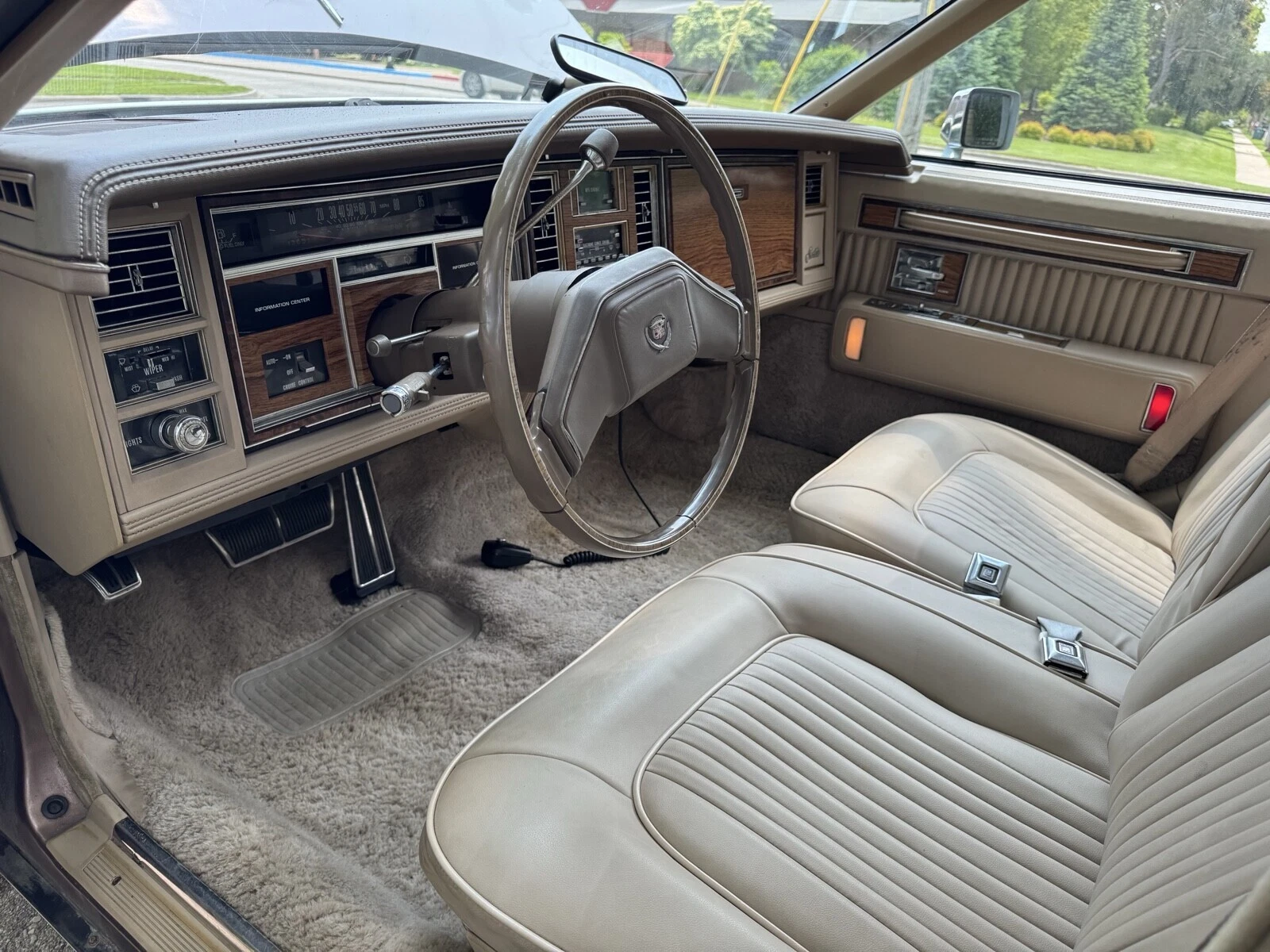
Of course, the Cadillac was still loaded up with the features and luxury you’d expect on the inside, with plenty of leather the thick, shag carpeting. The seller of this particular Seville is correct to hype the condition, and he notes that the numerous tech and power features all mostly work, save for the horn and the wipers. Is there a shared connection in the steering wheel and column causing those features not to function? You might get lucky pulling off the steering wheel. The door panels and wood-style trim are both in excellent shape as well, and as the cherry on top, the seller notes that the 8-track still works, too.
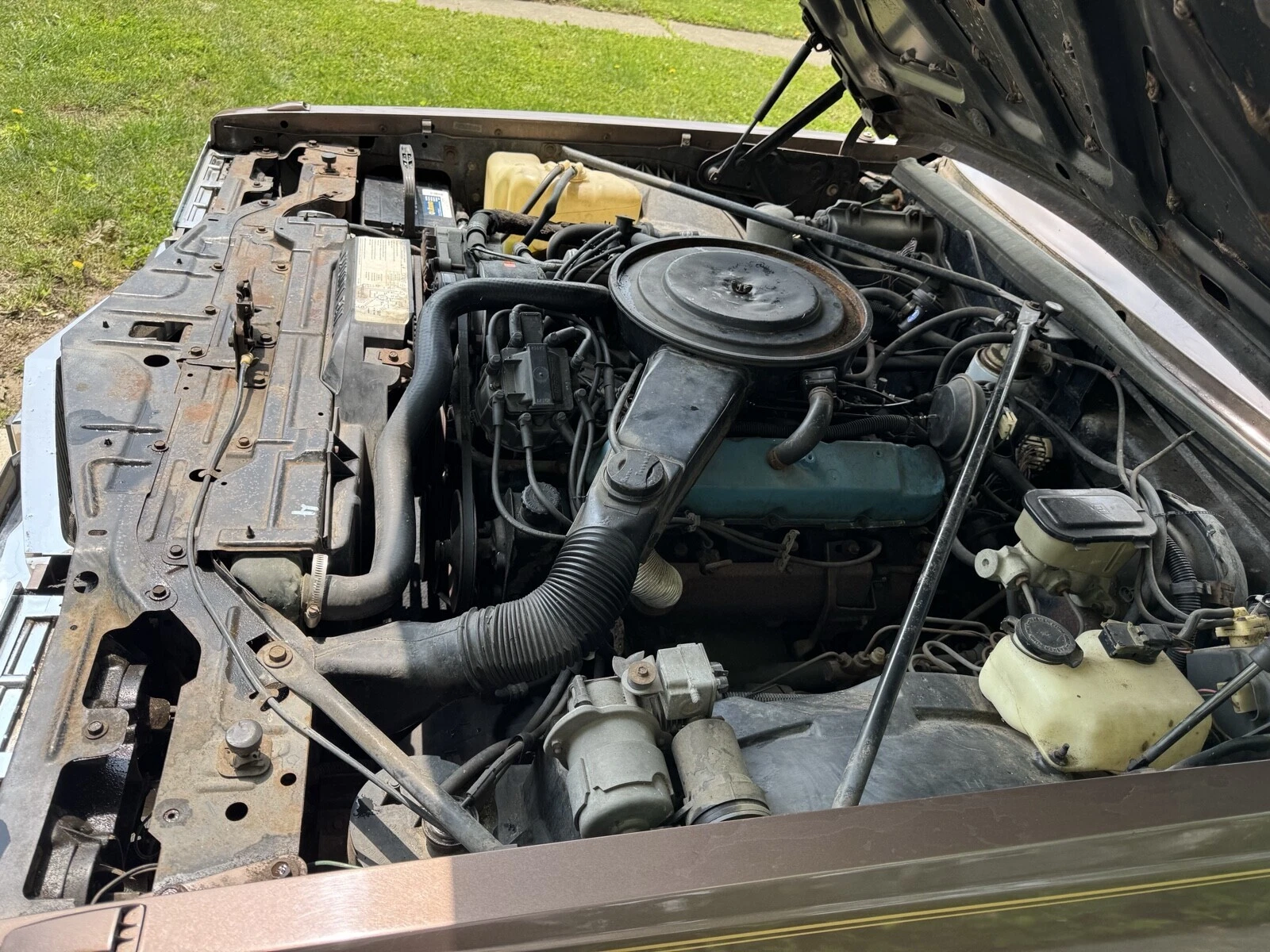
Back to the engine: the fact that Cadillac pushed the diesel mill in a premier flagship model was a mistake. The engine was not particularly reliable and it soured many owners on the Seville ownership experience. When Cadillac attempted to correct this the next year with the V-8-6-4 engine, things seemingly went from bad to worse. For buyers of a high-end, luxury car, which Cadillac still had the reputation for being, this felt like a severe let-down in the ownership experience. As a 1980 model, this Cadillac likely has L61 V8, with 145 b.h.p. on tap. The asking price seems reasonable for a Seville like this in solid condition, and perhaps it’s even more of a deal if you decide to make an offer.



Very clean Seville. I remember this color combination well. If there’s a year to go after, it would be the 1980 with the 368 V8 which still shared its basic design with the older 472 and 425. Before the V8 6 4 fiasco and HT 4100 series. ( not saying all were bad but you could probably fill a volume of things that were negative about those setups. Nice find here. If bought for the right price.
This Caddy has got me thinking. The seller describes it as a Hoopty, I’m not sure that term applies. It’s in excellent condition. Located in East Lansing, Michigan I think I would like to see more photos of the underside.
fox owner – Agreed–Too nice hoopty-dome, and besides, does not fall in the 500.00-1200.00 range.
I meant too nice to be called a hoopty.
Probably not gonna see any “underside” photos ’cause . . . it’s from Lansing Michigan . . . . .
The 1970 Seville thrilled me when I first saw one in 1979. I loved every bit of the styling… before I learned of the engine problems and other things. This could have been an elegant new direction for Cadillac, even as its senior models then still looked every bit the part of traditional Cadillac. HOWEVER, because of rhe engine troubles rhat Cadillac self-inflicted, this was the beginning of the end, and you were better-off with a Panther platform Ford product. For SOME reason, the “luxury” cars were very late in switching from 8-track decks to audiocassettes: 8-track players made sense in 1969, but not in 1980. Wrong colour for me; however, because RELIABILITY has been a persistent problem with these Cadillacs, a hard pass for me, no matter the colour or condition. My 1988 Mercury Grand Marquis now has 396,000 miles, and it still runs fine. But it needs a universal joint, wheel-bearings, tie rod ends, and a new set of tyres. Not sure I want to invest all of that in it, given its high mileage, yet it is too nice to be junked or parted-out. Quandaries, quandaries…
8-tracks then were the CDs of today. The slow transition was because their demographic had not changed over yet. Older folks like myself would gladly have CD in a new car but others have moved on and it’s not 1990 anymore.
I let the CD era pass me by because I still preferred cassettes. Still have ‘Frampton comes Alive,’ and the tape still sounds good-to my ears anyway. Does anyone feel like I do?
The 1980 Seville thrilled me when I first saw one in 1979. I loved every bit of the styling… before I learned of the engine problems and other things. This could have been an elegant new direction for Cadillac, even as its senior models then still looked every bit the part of traditional Cadillac. HOWEVER, because of the engine troubles that Cadillac self-inflicted, this was the beginning of the end, and you were better-off with a Panther platform Ford product. For SOME reason, the “luxury” cars were very late in switching from 8-track decks to audiocassettes: 8-track players made sense in 1969, but not in 1980. Wrong colour for me; however, because RELIABILITY has been a persistent problem with these Cadillacs, a hard pass for me, no matter the colour or condition. My 1988 Mercury Grand Marquis now has 396,000 miles, and it still runs fine. But it needs a universal joint, wheel-bearings, tie rod ends, and a new set of tyres. Not sure I want to invest all of that in it, given its high mileage, yet it is too nice to be junked or parted-out. Quandaries, quandaries…
The bubbling at the bottom of the A pillars is concerning, the rest is nice, the dent in the dogleg would be a relatively easy repair , finding a a replacement wheel opening molding may require some extra searching. Otherwise a very nice car.
Around 1989 or 1990, I got to work and saw one of these in the parking lot. It had the “V8-6-4” badge, and some bubbly paint too. When I got inside, I found out whose it was, and when I saw him, I said, “you’re gonna have trouble with that engine.” He said, “You just had to say something negative, didn’t you?” I think his next car was a Renault Alliance, so you just can’t help some people. Meanwhile, in 1991, I bought a ’65 Caddy. It had a few problems but I’ve never regretted that car.
That’s hilarious, Andy
Essentially a 4 door Eldorado. Nothing wrong with this engine. It’s very reliable. So was the 8 6 4 if you disabled the third gear switch on the trans to keep it in V8 mode. The Hook & Tow 4100 is another story all together.
Incidentally, that is NOT shag carpeting. It’s called “cut pile”, for your information.
I had many many real Cadillacs(60 to 76) as well as those Sevilles. To this day(from age 16 to 67)I have never bought a car other than a Cadillac and never had anyone ever repair any of my vehicles.
I’m not sure about a “third gear switch”. One simply could unplug the speed sensor. The 468 will not activate until 27 mph is reached, I had a few. The real problem is the solenoids would stick and the fulcrum points would not change so the engine could be running on 4,5,6,7, or 8 cylinders.
I always removed the valve covers, set the solenoids to be non active,(so the valves opened and closed normally and unplugged them so everything was on V8 mode.
A few had 180,000 miles and ran fine for me for over 14 years as did the ones with the HT 4100. I would never waste my time with a diesel, especially in a Cadillac.
I worked for GM when the diesel was introduced and remained in the diesel business until I retired in 2019. I’ll agree that some people had problems with diesels but the majority of diesel owners could blame themselves for the problems.
Lack of maintenance, cold engine operation (start-stop) plagued owners. Dealers didn’t help because every time a diesel-powered car or light truck showed up they threw an injection pump and injectors at it, hoping that those fixed it.
I remember standing at the parts counter at our shop when a diesel-powered Eldorado showed up. From inside the building I could hear it pop back through the air intake. Anyone with some mechanical experience would’ve known that it was caused by an exhaust valve not opening. Well, the owner came in. I met him and mentioned that he had a valvetrain problem. He was totally incredulous that someone could tell what was wrong from that distance away.
“That’s had (2) complete injection pumps and (3) sets of injectors!” the owner said.
It turned out that he had (5) worn out rocker supports. I told him that he needed to change the oil and filter every 2K miles because there wasn’t enough oil or a large enough filter to accomodate what that engine needed.
Needless to say, he was a new dedicated customer and brought in some more disgruntled customers.
I might add that if this was a gaspot instead of a diesel, the mechanics would’ve looked at the rocker support (practically the only part that interchanges between the gas and the diesel) right off the bat. But because it was a diesel the mechanics turned into the deer in the headlights…
Gotta agree 100%. I too, was the “diesel wizard” at my dealership. Used to be able to replace head gaskets AND “rebuild” the injection pump in 6 hours. Number one (only) cause for “blown” head gasket . . . bad A/C belt. ALWAYS broke the same right side head bolt due to excessive compressor vibration. NOT A BAD ENGINE. Still have mine. And you’re correct, rocker pivots were VERY common. ALWAYS the same two cylinders, right where the crankcase breathers entered the rocker cover(s). Big problem on Pontiacs, as well. For the same reason, breather tube.
Me too , thankfully that job is a distant memory.
I had an ’85 Seville with a dead no.1 hole that pushed oil at 120K. Cause? Flat Cam! How could Cadillac who had been making cars for nigh to 80 years allow this? Not to mention it was their flagship car aimed at MB and BMW buyers. Oh, that sagging headliner that GM allowed to plague their entire line for THREE DECADES and lifted not a finger to correct. Never saw a single case of that on a competing marque. For how many buyers who shelled out $20K+ was this their last GM purchase? Did love the looks thoough.
There was nothing wrong with Cadillac’s 368 OR the 8*6*4 Modulated Displacement engines. The issue with the 8*6*4 was Cadillac’s bean counters didn’t see the need to provide ANY technical or diagnostic information for the modulation control until A YEAR AFTER they began selling the products. As for the 368 . . . . . the ONLY issue that they had was that the intake manifold tended to loosen up due to mating geometry and the aluminum manifolds expansion/contraction rate conflicting with the cylinder heads rates. A simple bolt re-torque fixed the issue, took ten minutes. . . . .
Nice cars, does anyone know where I can get some of those big Superfly headlight surrounds? ( and here come the tomatoes) While fantastic cars in true Cadillac tradition,,,many, including my old man, didn’t care for them. We must remember, front drive is as normal today as the lack of common sense, but in 1980, it was a tough sale. How dare they cave in to the imports, and disrupt our “engine, trans, driveshaft, rear drive axle”, and stories of dangerous torque steer( that GM eliminated, I believe) , was all we needed, and stayed away as long as we could. Some, like me, never gave in to fwd. Cadillac sales were essentially cut in half with these models, and I dare say never recovered to its former glory. Too much competition. I begged my daughter to buy a newer Caddy, she went with the BMW. I read, sadly, the CT4 sold a measly 1400 units inn the US in 2024. Guess who beat them out? Yep, BMW, Acura, Audi, but ahead of MB. Not a lot of Yanks in that list. Here again, 448 viewers, and at $6 grand, no takers? That’s a shame.
Caddy did have its work cut out back then. Actually, I’d have to say that it has continued to this day. Personally, I tend to overlook the imports. I’m completely satisfied with what’s made right here, and the companies that are headquartered here. Therefore my choices for vehicles are the traditional ones. They’ve taken me to the moon and back with few complaints. I might add that my former boss is a dyed-in-the-wool import supporter (he’d be more useful as an athletic supporter) and I find it quite humorous to see his two “Autobahn Porcupines” (pri#k$ on the inside) on the business end of the local towing service rig. His new location is only six blocks away from work so I’ve gotten first hand views of his preferred transportation.
From a service standpoint those FWD Caddies/Toronados/Rivieras are actually quite accessable–from the top. But they can be challenging underneath.
My late MIL had a Cadillac crossover, similar to my Chevy Equinox. I wanted to buy it from her when she quit driving but she decided to give it to someone special. I drove it several times and I have to say that it handled very well. I might add that I piloted my former boss’s SUVs and I wasn’t at all impressed. I don’t think he was, either, when I drove up to the shop in the Beemer and I had a paper sack over my head (so people wouldn’t recognize me)…
I see the Caddy DOES NOT have an EMERGENCY BRAKE RELEASE HANDLE EITHEIR I found out when I bought a 79 Broughram the hard way. I BACKED it up on my portable car ramps to check the exhause system on it. After I got done. I went to release the emergency brake and their was NONE. Hear I had to take vice grips and under the dash had to release the brakes and it was hard. From about 77 on down–CADDY had gone down alot.. From the ride to you name it–its way over priced junk.
The release is there . . . it is “up in the dash”. Read the owner’s manual. . . . . and, as for “from 77 on down” comment, ALL manufacturer’s product/performance quality went down, starting in 1973. Especially the domestic makers.
The emergency brake on a Cadillac releases automatically. All you need to do is start the vehicle and put it in gear. If you had to use vice grips obviously you did not know what you were doing. All you had to do is push your foot on the e brake pedal to decrease the pressure from the cables and then push the lever down at the top of the brake unit.. It will release easily.
The Imperial ‘bustleback’ design was much nicer.
the wipers and horn are different circuits. Both are easy to diagnose and fairly cheap to fix, labor notwithstanding.
The 368 makes this the very best version of this car. Swap in a 425 and it would be perfect!