
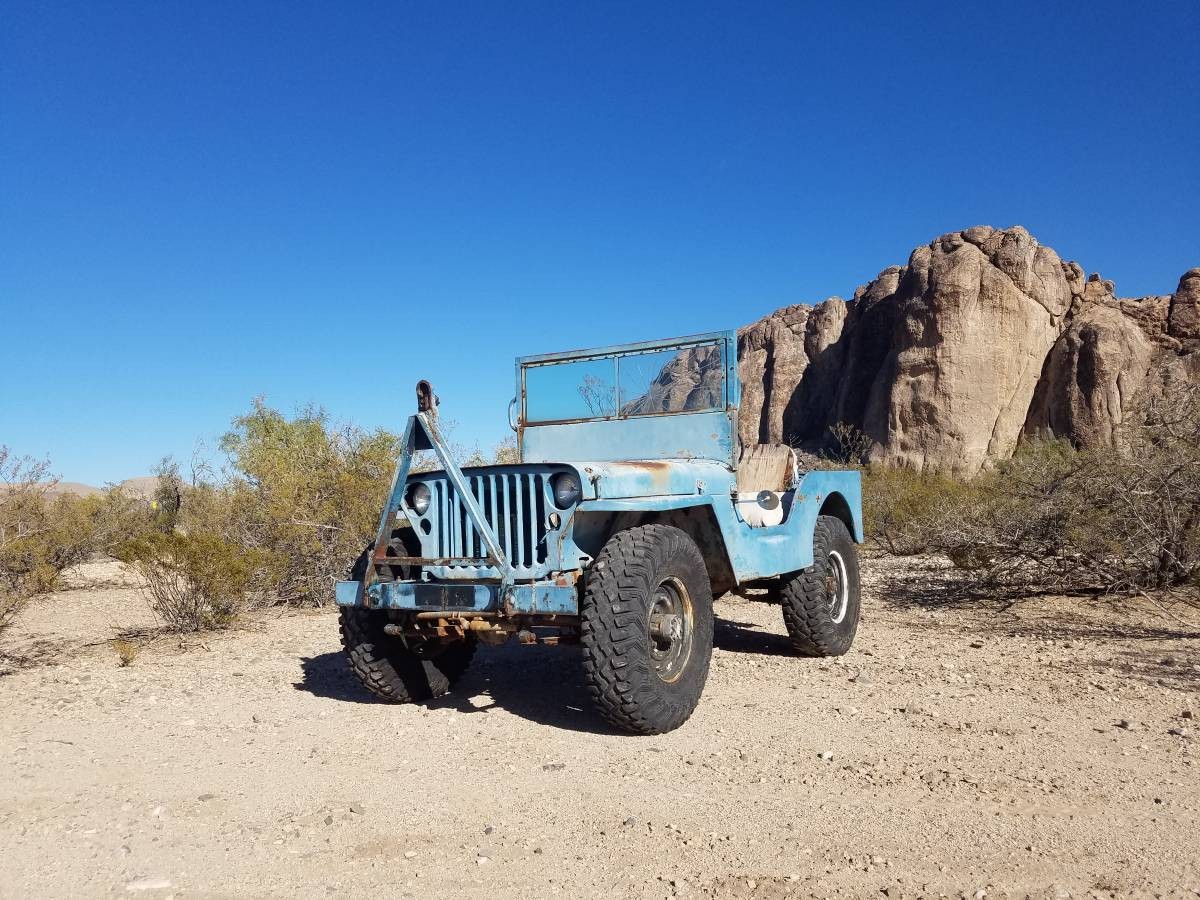
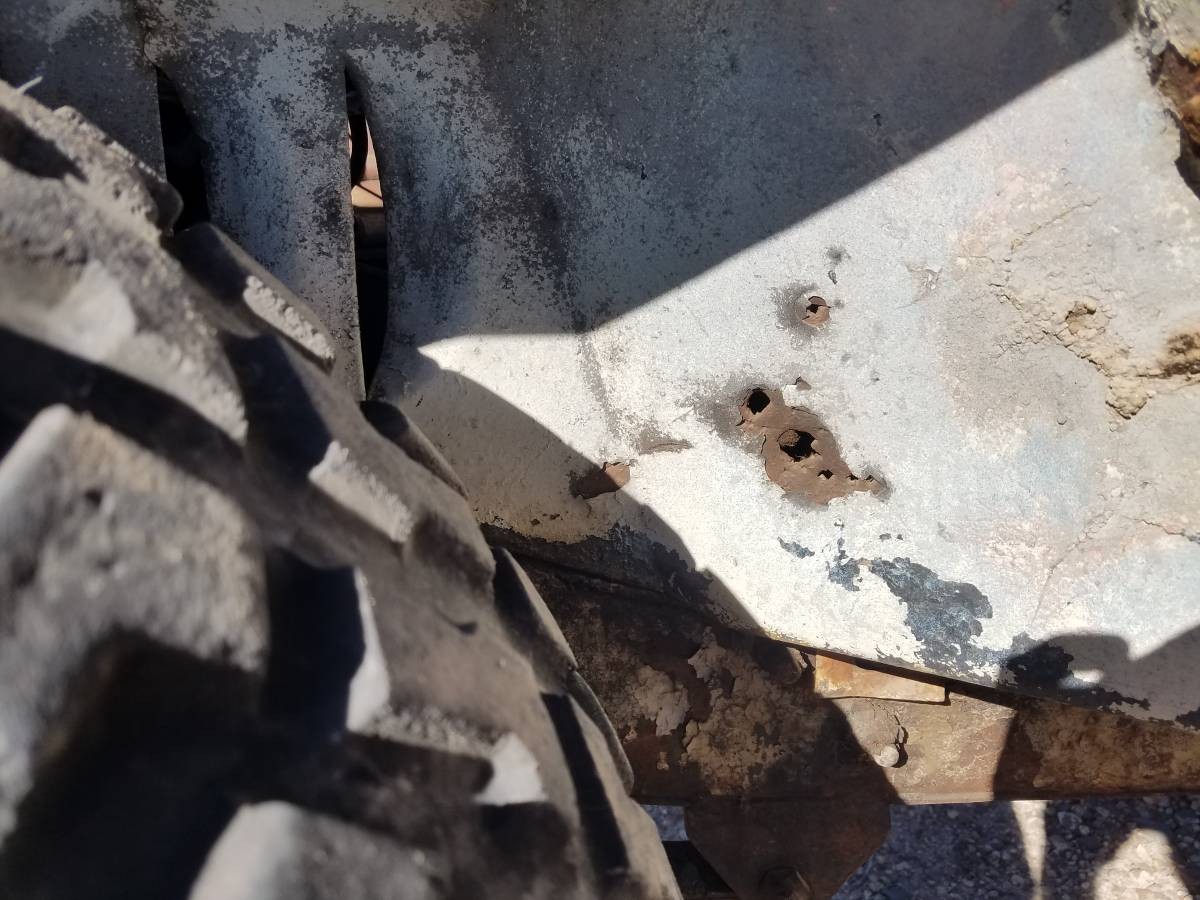
As America still struggled with the Great Depression, a new danger was emerging in Europe and the Pacific. The country had made great sacrifices in what came to be called World War I. However, a new global war was brewing, and America began the slow but inevitable buildup needed to face new threats. One of the developments invented here that changed warfare was the 1/4 ton 4×4 utility truck. Better known to us as the first Jeep, this vehicle allowed America’s military to leave the horse behind and take a decisive role in the horrific modern mechanized warfare to come. This 1941 Willys MB for sale on Craigslist in El Paso, Texas is claimed to be the 202nd Jeep of 500 total made on the first day of production for Willys. This remarkably original and solid Jeep may still bear a scar from the war in the form of a few bullet holes. Would you be willing to pony up the $6,500 asking price to become the caretaker for this amazing early example of what General Eisenhauer claimed was one of the three decisive US weapons of World War II? Thanks to TJ for this historical find!

When the United States War Department went to American industry with a request for a four-wheel drive reconnaissance car, only American Bantam and Willys responded. The Bantam entry was the only one ready at the specified date of completion. Using many Bantam components with a four-wheel drive system by Spicer, the company produced not only the winning design but perhaps one of the most revered vehicles in automotive history. Unfortunately, the War Department understood that American Bantam was far too small a company to produce the required number of vehicles. The design was handed over to Willys-Overland and Ford for a second round of testing on a larger number of prototypes. Willys won this round, and soon thereafter Ford was brought in to assist in production. Bantam’s consolation prize was a contract to produce trailers for the vehicle they helped birth.
When production got started in earnest, the Willys version was officially branded the MB, while Ford’s was known as the GPW. The seller of this sun-baked Jeep claims that it was the 202nd Jeep to roll across the Willys production line on the first day it began to spit out Jeeps. By the time the war was over, you could add about 640,000 other Jeeps to the combined production totals of Willys and Ford. Given the rough existence that nearly every Jeep went through during the war combined with the shortages of items like this in the early days of the war, the chances of a production vehicle like this surviving the entire war were extremely remote. Yet, here this 1941 example is on Craigslist.
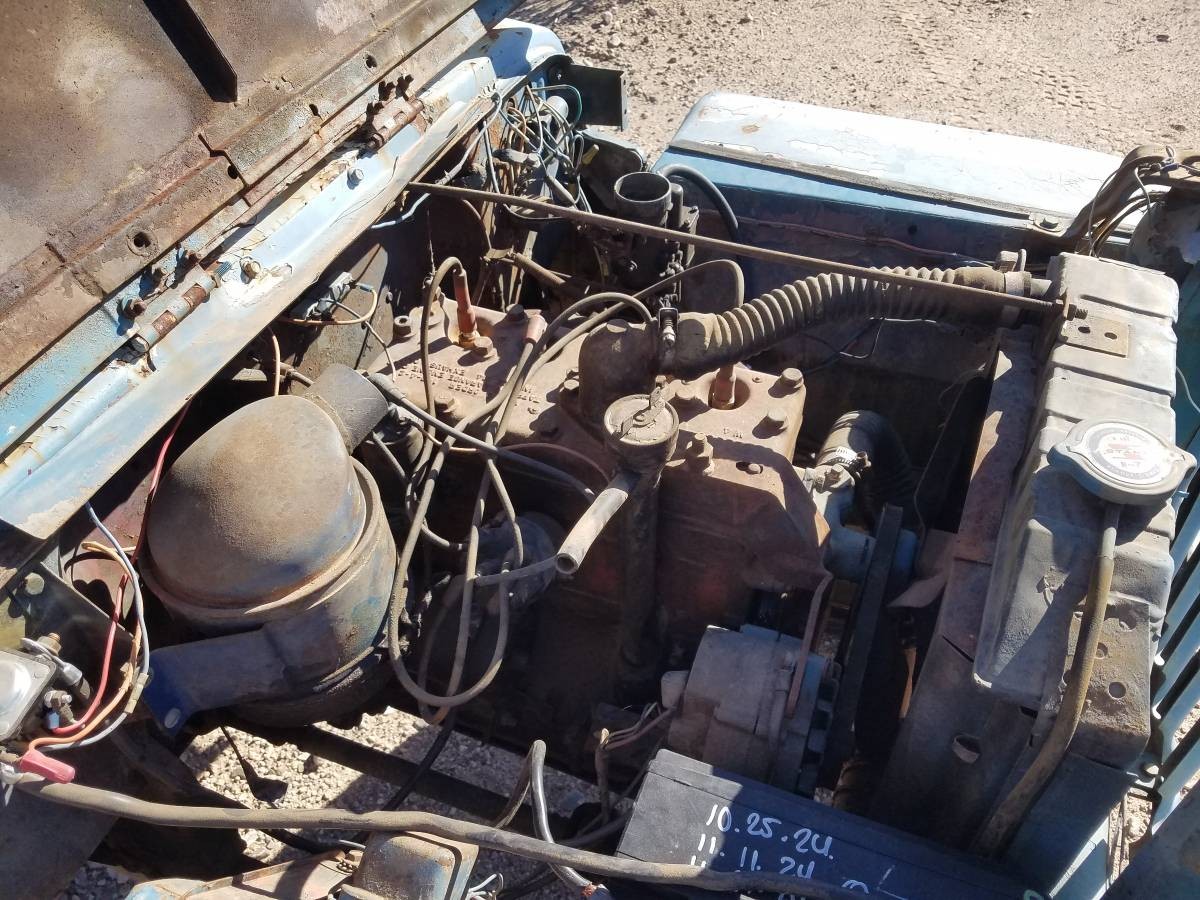
The seller tells us that this Jeep has spent decades in the Arizona desert. It is said to have very little rust and the only major damage is a few bullet holes that the seller does not know the history of. Under the hood is a Willys “Go-Devil” inline four cylinder engine that is possibly its original powerplant. The grille is unfortunately not original to the vehicle but was likely a replacement from when the Jeep was sent in for repairs. It is said to still run and drive.
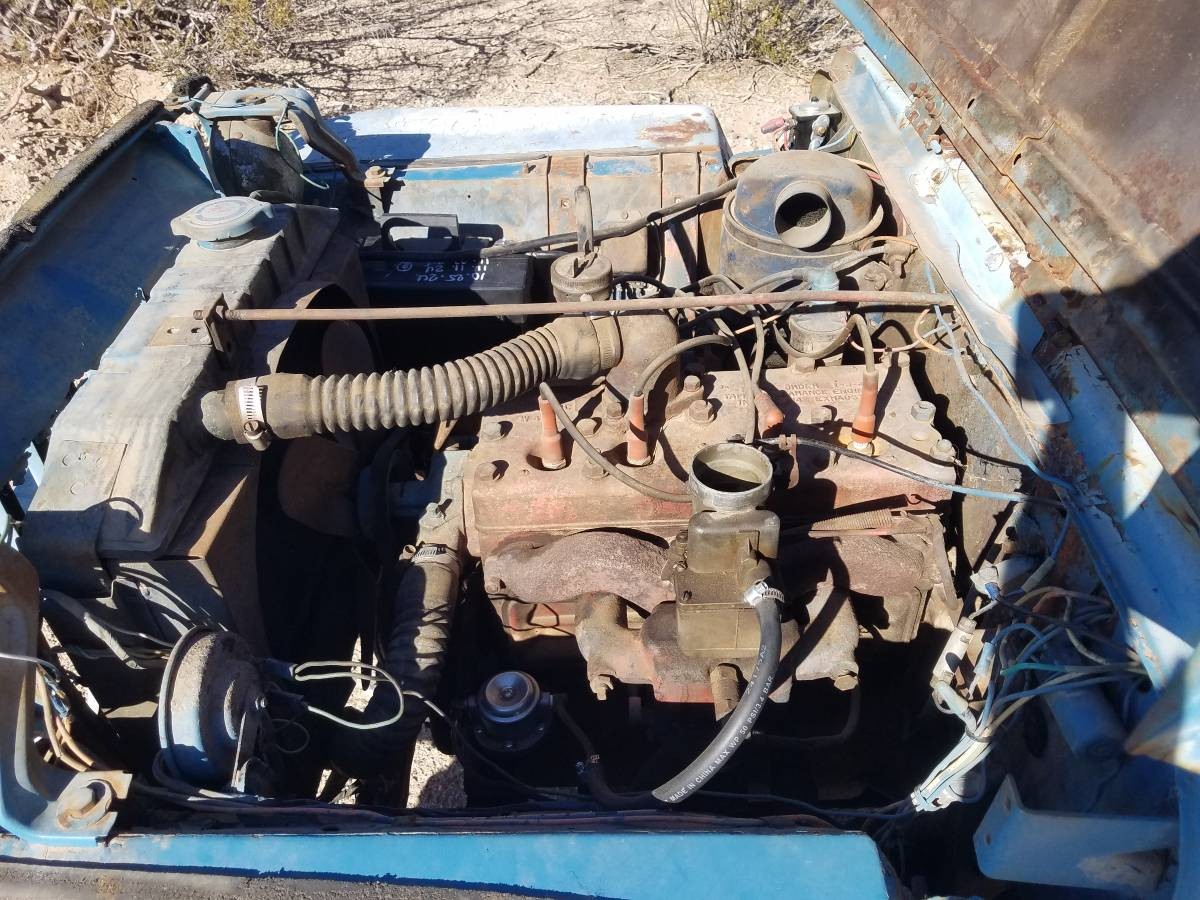
While the large tires and the open mouth of the carburetor in a desert environment give pause, this is still a very interesting Jeep. The blue-gray color may allude to it being in Navy service at one time. Another thing to note is that the seller lives in the Hueco Tanks State Park area on the eastern side of El Paso. After the war, a large percentage of the surviving Jeep population ended up in various places all around the United States. It would not be unheard of for a state park to be the recipient of a few war-surplus Jeeps. Perhaps a search of government records could fill in the blanks on the history of this unlikely survivor.
Would you be interested in purchasing a World War II era Jeep? Should this one be restored or enjoyed as-is? Please share your thoughts in the comments.



No air cleaner in the desert? What in ‘tarnation is wrong with these people,,,don’t answer that. Great writeup, as usual, I believe it was the Ford GPW that started the “Jeep” name, for “GP” or “General Purpose”, and I read, Toledo cranked out about 1 Jeep per minute, 7 days a week, 52 weeks a year for 4 years, that’s incredible. They made over 1,000 Jeeps a day, so 202 could be one of the first, as claimed. Photos show literally farm fields full of Jeeps that must have been partially disassembled and crated for shipment somewhere else(?) Regardless, a phenomenal vehicle that without it, we might all be speaking German right now, it was that important.
Tires are a bit much, and an alternator added, but for half the cost of an ATV and 100 times the patriotism, makes this a great find. Just plan on rebuilding the motor,,,desert and no air clearer,,,duh,,,
Maybe the air cleaner was taken off for the engine photos?
Hi Todd, as usual my sober ying to my raging yang, but the air cleaner is actually in place, it’s just the hose that’s missing. With as many that are missing, I wouldn’t give them that much credit. Most looking at engine photos today couldn’t tell the front from the back anyway.
Calm down , just because the air filter not pic don’t necessarily mean that’s how they running it..
What’s “that” important that we don’t speak German? Fact is, English is a Germanic language. Look it up. Even if Germany had succeeded in WW2, there’s no chance we would’ve been forced to speak German in the US.
In defense of the owner maybe the air cleaner was removed to better show the motor? I owned a 1943 Ford military jeep many years ago. You had to be quite tough to bounce around hunting in one of these old warriors the spring’s are way too stiff, and the horsehair seat pads are hard. Had a lot of good times in it though.
My ’42 Ford was tough as nails and a ball to drive. We used it primarily as a snow plow, the plow being half a steel drum and a Army rocket launcher hydraulic hand pump. Nice old piece here.
I have a friend up north with one like yours, also a plow. It should be noted, in our,”hydra-turn, 6 way this and that” plows of today, the hydraulic jack was inside the cab and a hydraulic ram on the plow. You’d pump the jack to raise the plow, and pins to manually turn the plow. Yes sir, those were the days.
Exactly the way mine worked.
Surely there were changes made to the production line as time went on, making this an historic jeep for reference?
Making the claim that it’s a Day One vehicle necessitates some verification (I’m not accusing the seller of anything nefarious). A picture of the original data plate or other factory serial number stamping on the vehicle would go along way to support the claim. (As there is a title with the low serial number, I’m presuming that a VIN verification of said data plate or original stamping—often done by a police officer or other official—was completed for the title to be issued.
Also, GPW was Ford’s designation for a government contract (G), on a vehicle with an 80-inch wheelbase (P), and based on the Willys design (W). It did not stand for general purpose.
I agree NHDave. It looks like a Ford grill. If it’s that early it should have elbow shockies.
There’s also interesting story that the Japanese captured one and Toyota got hold of it, and used it as a basis for their Land Cruiser!
What caught my eye was the production data in Jeff’s excellent write-up and Howard’s post. 500 the first day; given the inevitable glitches, I would have guessed 100 or 10. At full rate, 1000 per day, every day, for years. Think about all the logistics it took to make that happen, and how quickly it all came together. Yes they were simple machines, but still, what an amazing accomplishment…..
A blue “Nelliebell.”
I would love to buy this, living in the north I would find a top for it and put a plow on in place of the tow bar, great little workhorse, as one said half the cost of an atv with far more utility and fun factor.
My first vehicle was a 46 CJ-2A. Got it when I was 14 years old. Gosh that was 62 years ago. I literally rebuilt it in my back yard. Engine was lifted out by myself and a friend. If my memory is correct, I paid a whopping $300. for the rig and it had a canvas top. I later cut some doors out of plywood. Really do not think it had a heater.
If this was truly built on the first day then the grille has been changed. The first 25,000 or so Willys M.A.’s used what is referred to as a “slat grille”.
https://www.motortrend.com/features/1905-backward-glances-1941-willys-mb-slat-grille/#google_vignette
Ford did not start production of the GPW as quickly as Willys, but when they did they introduced the stamped grille we know as the face of the Jeep to this day. Willys adopted the same grille as it was cheaper to produce.
Growing up in Arizona during the 1950/60 era there were plenty of these running around and being used as the second car . . . mom drove the big boat with fins and dad had his Jeep . . . they were very inexpensive, easy to work on and plenty of spare parts available including the Sears catalog.
1000 jeeps a day for four years works out to a total of 1,460,000.
The actual total production for Bantam, Willys and Ford combined was 647,870.
Ford could have easily outproduced Willys except for the Army’s requirement that Ford move production around to different plants for fear of possible sabotage by German agents. Willys having only the one plant in Toledo could not possibly accomplish that. I can’t recall how many different Ford plants built the Jeep but I am certain of at least two, Dearborn, and Dallas.
If this was in fact produced on day 1 then it should have a slat grille as the iconic stamped grille did not become available to Willys until Ford started regular production of the GPW and had developed the tooling for stamping out what Ford officially called the “brush guard”.
The first 25,800 or so Willys used the slat grille. You will have to google “slat grille Willys” to see the difference. I attempted to post the link to a Motor Trend article previously but that posting didnt make the cut.
Yeah, I was thinking it should have a slat grill if it’s that early.
Windshield seems to be incorrect also. Too vertical. Little bit of a Frankenjeep.
https://warjeepstories.blogspot.com/2016/01/the-original-willys-jeep-1941-slat.html
It is said to have little rust. But the bottom of the body under the seat has been redone in a crude manor leaving out the indent for the axe and the fuel tank (under the driver’s seat) is not visible through the now missing fuel tank well part of body (which if slat grill would have square corners). The windshield is totally wrong (doesn’t attach to hinge mounts (close to back of hood), but was similar to windshield used with arctic cabs. Radiator looks to be Ford, air filter is not a slat grill type, wrong horn and incorrect location but original mount is still on body, electrics missing (generator/regulator), the body looks to have a glove box which indicates it is not a slat grill body also should have script “Willys” at back by left taillight. Should get engine S/N off of boss R/F of engine under head and should be close to vehicle S/N. If in decent driving condition it is well worth the money just to use as is.