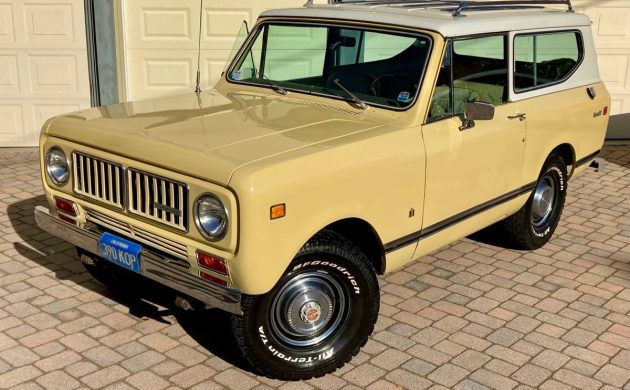
Finding a vintage 4×4 in the Bay Area usually means one of two things: it’s either a rusted-out beach cruiser or a six-figure restoration parked in front of a tech campus. But this 1973 International Scout II popping up in Berkeley hits that rare sweet spot. It’s a smog-exempt California survivor that looks ready for a second life on the trails. it is a 1973 International Harvester Scout II located in the city of Berkeley, California. It is listed here on Craigslist for $28,500. We appreciate both Rocco B and Tony Primo for submitting this listing. The first thing an educated eye notices is the front end. The 1973 model year wears a specific 14-bar vertical grille—seven slots on each side of a center divider. It’s a design cue often lost when owners swap in the later, square-headlight plastic grilles from 1980 or the horizontal bars from ’78. Seeing the correct front end here suggests this truck hasn’t been messed with too heavily. The body lines look straight, typical of “Binder” steel, though you always have to check the rockers and body mounts, even on a California car.
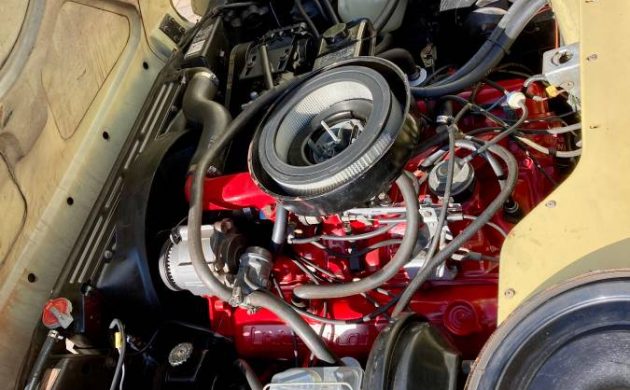
Under the hood, we are looking at International’s legendary durability. While the listing details should confirm the specific block, most buyers in ’73 opted for the 304 cid or the 345 cid V8. These aren’t high-revving screamers; they are industrial-grade lumps of iron designed to pull stumps and run forever. The seller states that this one spent most of its life pulling a boat. The seller states that this Scout packs the 345 cid engine which was rated at roughly 292 lb-ft of torque peaking low in the rev range. That’s enough grunt to turn 33-inch tires without re-gearing the Dana 44 rear end. And here is the kicker for California buyers: It’s a 1973. That means no smog checks, no referee stations, and no headaches when you want to tune that Holley carburetor.
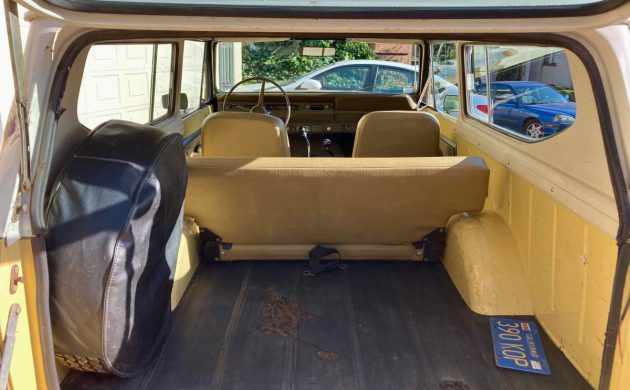
Inside, the Scout II is famously utilitarian. You won’t find soft-touch plastics here. It’s all painted metal, durable vinyl, and heavy-duty switchgear. The 1973 dash layout is simple, with round gauges that actually tell you what’s going on. If the Line Setting Ticket is still stuck to the glovebox, you’ve struck gold. That slip of paper will decode exactly what axles, transmission, and paint code that this rig left Fort Wayne with.
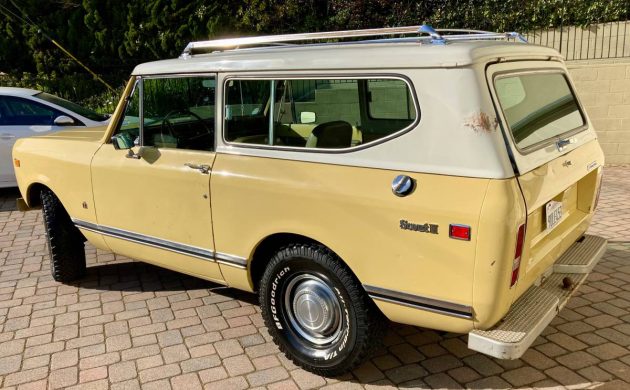
I believe that this Scout II is painted buttercup yellow (Code 5689). Along with red and blue, this was a popular color in 1973. International Harvester stopped making the Scout in 1980, and values have been climbing steadily as Bronco and Blazer prices exit the stratosphere. A solid, driving 1973 Scout II in a rust-friendly climate is a serious find. It’s looks like an honest well kept Scout II with a great family history.



This was about as good as it could get. The Scout II was as good or better than anything from the competition. Steadily increasing parts availability (including floor pans and other vital body parts) makes it worthwhile.
A friend of mine bought one of these new in ‘73. 304 and an automatic, I lost track of how many miles are on it but it’s got to be pushing half a million. He retired it from family car status about six years ago but it’s still a regular driver.
106K, but that’s not necessarily a bad thing. Someone detailed this truck to the nines,( even took the motor out?) and why would you take the air cleaner top off, unless to dry the puddle of gas these left behind. They were outstanding vehicles, but just couldn’t shake that “truck/farm” image. I read, this “truck” cost about $3500 new, or about $500 more than a CJ, but was twice the vehicle of a Jeep. It was $500 less than the Cherokee, its intended target. Production numbers of the Scout ll show about 34,000 Scout lls were sold in ’73, some say its best year. Another in the bad timing dept., if they could have held on, look where SUVs went. Great trucks, I don’t think I’ve ever encountered a bad IH.
Beautiful Scout!!
It will bring the coin!!
A tractor for the road, and I mean that as a compliment.
Used to see some of these when I was a kid. Most had a few things thing in common…a snowplow on the front and some rust in the back. Always loved the IH 4wd line. Likewise their big Highway Tractor the Eagle.
These have aged very well. Unfortunately, they are of poor build quality, even amongst their contemporaries and that is saying a lot, and fast to rust. But if you find a nice one and want to rub with a diaper, very cool.
They leak like sieves; even in CA that’s an issue. School buses of that time often had 345s and had camshaft problems for some reason.
Had this year with that problem back in the 90’s, cam and shaft walking .035 and finally went!
Looks like a good one. They were extraordinarily well built but rusted out like everything else back then. Chevy trucks of this era, Fiats, Datsuns and so on. At least these are honest in their rusting and never hide it! Other than typical period lack of rustproofing, one weird design feature that probably accelerated terminal rusting behind the seats was the shock absorbers being bolted to the body nearby. I remember an aftermarket bolt in crossmember for the chassis being offered. I had a few of these and love them but I’m priced out of that nostalgia.
I had a 73 Scout 2, one of the very few with 2wd, straight six (courtesy of AMC) and a 3 speed manual in Flame Red. Perfect high school car – can’t go fast enough to be a concern, can’t stop quickly enough so I wasn’t likely to try to go faster. 8 bolts and the top comes off (though you’ll need two sturdy friends to lift it) for summer.
The transmission literally disintegrated one day on the way home. Second gear just wasn’t there, so I shoved in into third and floored it, watching large chunks of metal litter the road behind me in the rear view mirror.
Couldn’t find a replacement transmission at the time, so Dad traded it off and I bought my first car with my own money, a 79 Renault LeCar.
I still have high school friends who send me links when one comes up for sale. But frankly, I’d rather have the LeCar back than a Scout with the same drivetrain.
I have a 1976 Scout II in Louisiana under a shed at my brother’s house. I now live in Nashville. I cannot decide what to do with it.
Bring it up to The Scout Connection in Ft. Madison IA. About 7 hrs from Nashville. Honest guys, tons of parts available. Should have taken my ’64 Scout Model 80 to them for restoring instead of what I did.
Very nice Scout, and IMHO one of the best years for them. I prefer a manual transmission. The seller deserves credit for a good write-up, and plenty of good pictures. Extra credit for showing things that are normally hidden… like the inside of a fresh master cylinder and a clean carburetor. I believe that he will get his asking price.
HOLLEY??? These came with Carter Thermoquads originally!