
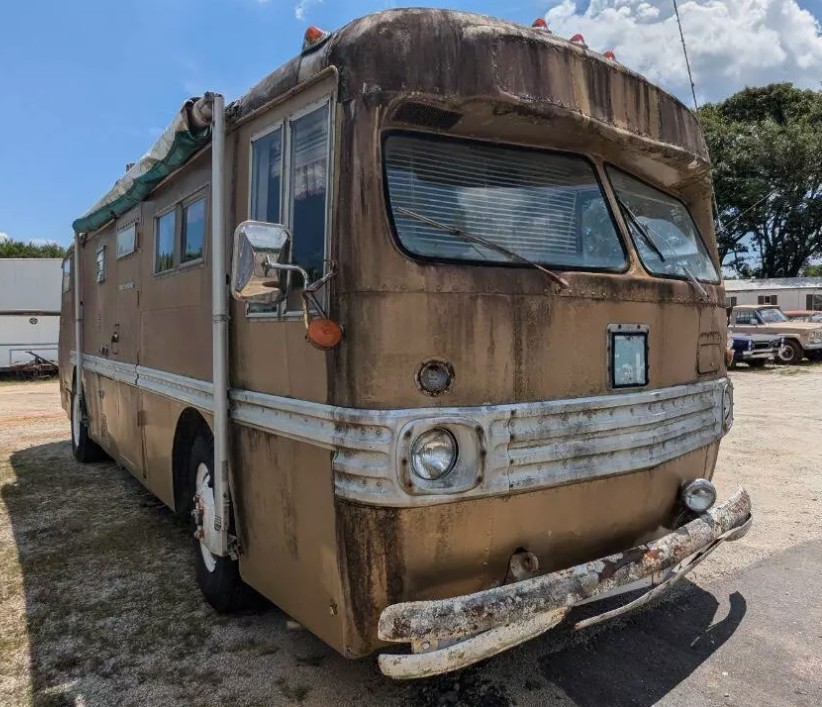
Let’s see…. you have a vintage Marmon-Herrington bus lying around – hmm, what to do with it? How about converting it to a motorhome! Here on eBay is a 1950 Marmon-Herrington made into a 28-foot RV, complete with a respectably spacious wet bath, hallway sink, kitchen, a good-sized bedroom, and plenty of storage. The seller is asking $10,000 but he’s closing his business, so offers are welcome. The lucky new owner will be hauling this impressive coach home from Gray Court, South Carolina. Thanks to Driven by Faith Restorations for the tip!
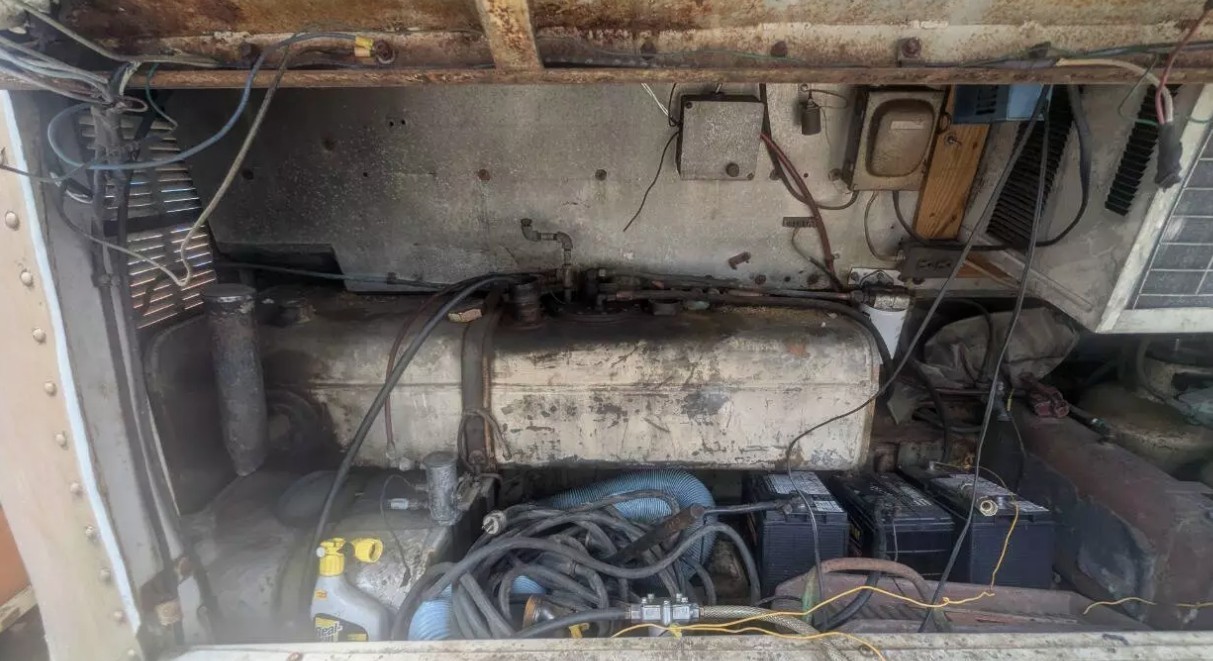
If ever I wished a vehicle could tell its story, I would want this one to have a voice. We don’t know who converted it, or how it was used. We do know it’s mounted on a bus or truck chassis – the seller believes it’s a Mack – and it’s powered by a well-running 6-71 Detroit diesel engine paired with a Clark five-speed manual. The 6-71 is a six-cylinder, good for about 170 hp; the Clark gearbox is as stout as they come. But the condition of the rest of the systems is unknown; a restorer should expect to rebuild virtually everything.
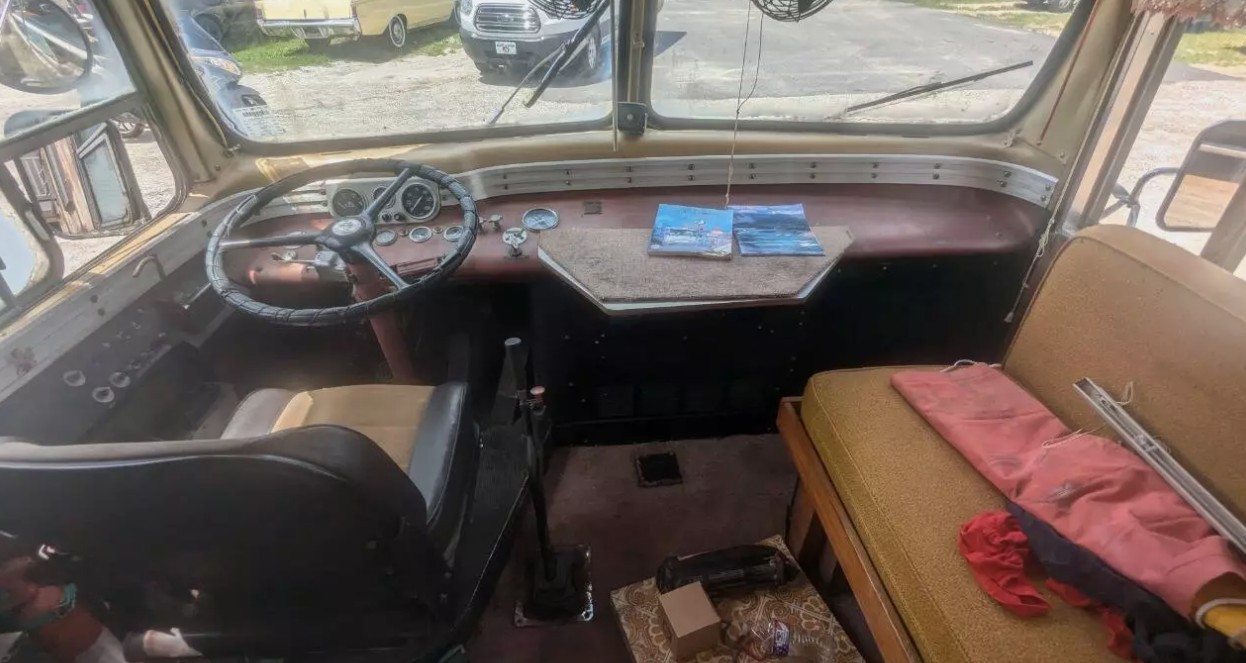
The driver’s “office” contains a couch where the original accordion entry door would have been. That dash layout is interesting, with a few gauges mounted on a horizontal surface. The steering wheel is a throwback to the early days of buses – which was one of Marmon-Herrington’s specialties. The company made heavy duty truck components, particularly 4WD conversions. It eventually began manufacturing military vehicles, snowplows, trolley buses, delivery vans, and diesel-powered buses under its own nameplate. The Chicago Transit Authority purchased 349 Marmon-Herrington trolley buses in 1950, a significant hunk of the entire production.

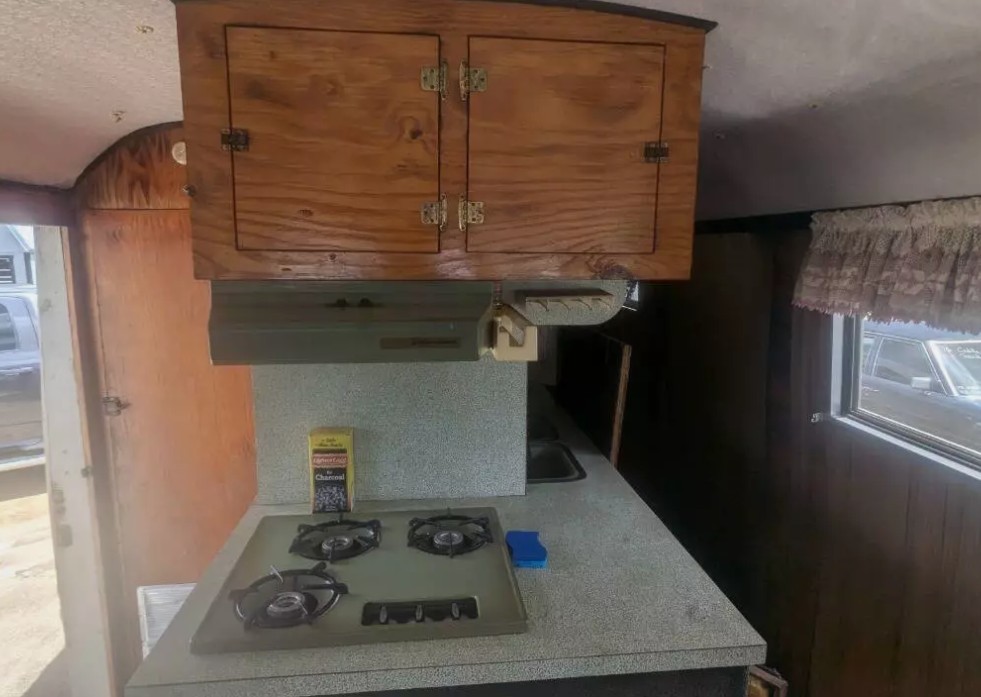
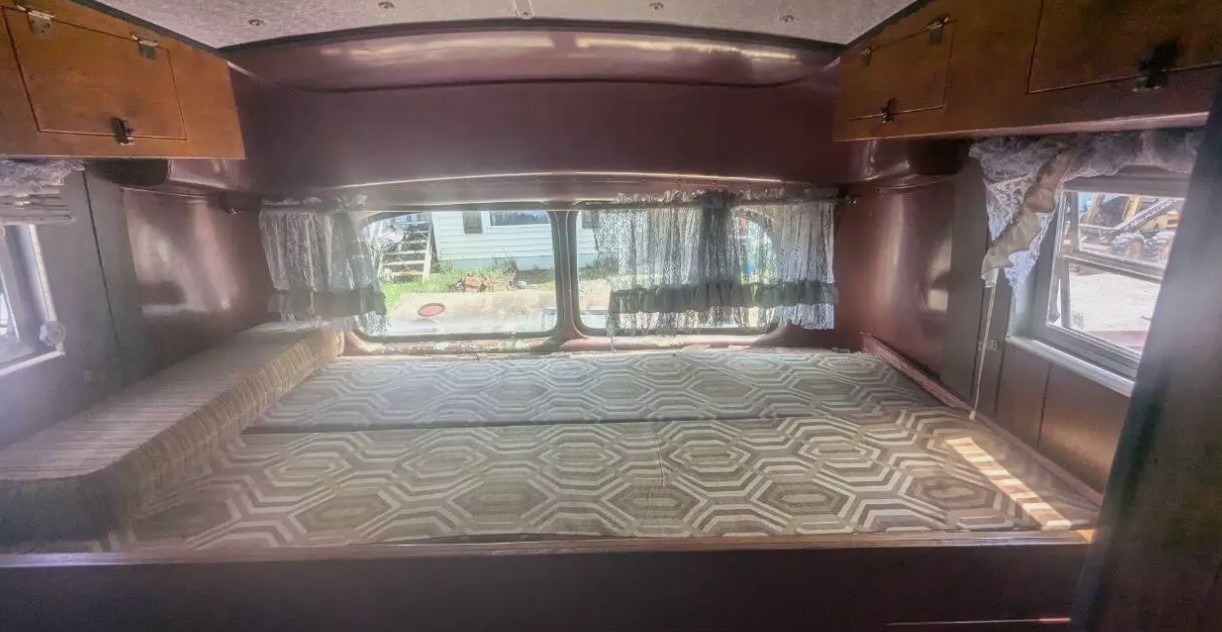
Here’s that bathroom, currently used for storage but in surprisingly decent condition. For those not familiar with RVs, “wet bath” means you take your shower in the same room with the toilet; a dry bath supplies the user with a separate shower space. The stove sits in the aisle, amidst plenty of storage. A refrigerator is pictured but I’m not sure where it is relative to the stove. The rear bedroom consists of a mattress situated on a wooden platform, with storage underneath. Abundant windows help defeat the claustrophobia that can be a part of RV life.
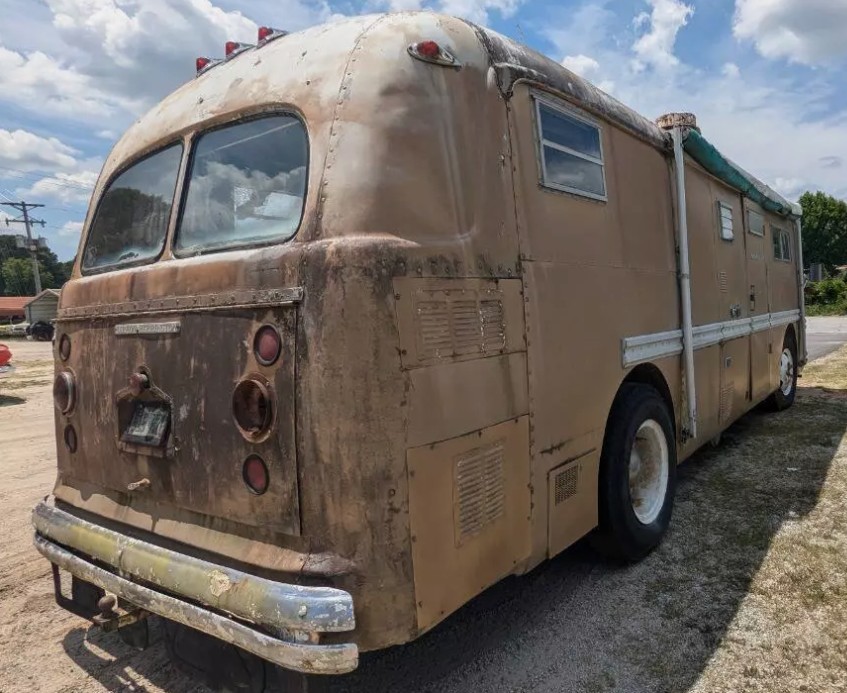
This view shows the metal panels covering what would have been windows down the sides and the center entry door. I like patina as well as the next enthusiast, but I’d love to see this motorhome restored to as-new condition. Of course, we’re probably talking an “investment” of around $250k, right? What do you think it would take to resurrect this majestic motorhome?




It’s a cool find, and no disrespect to the author, but I read the same “Coachbuilt” piece, and in it said, these were of Ford manufacture, and were actually very popular, Chicago ordering 349 I believe called the 27 or 31 passenger 8MB, after the war. In 1950, Ford sold the bus division to Marmon Harrington, probably flush with cash from the war. Originally these had flathead 115hp 6 cyl. gas Ford motors, 3 speed, V drive, and later an 8V-71, but no mention of a 6 cylinder diesel.
I had to chuckle, “a good running 6-71”,,( cue Detroit jokes here) never had a good running 6-71, some runnin’ V8s, but the in line 6 should be for marine or stationary application only. Made a lousy road motor, for a truck, a bus may be a bit better. It looks like a 2 speed rear axle, good for cruisin’, downwind, you’d be better off with a Dodge Cummins than this screamin’ Mimi. And those terlits are gross, somehow the smell of poop disgusts me.
Great find, lot of work, and not for the faint of wallet and make sure you slam your finger in a door before leaving, you know, to get in the right frame of mind,,,
Never driven a coach .. of any kind, let alone one w stick shift, heard from other truck drivers, they were tricky 6or7 speed units, long throw to that back motor.
I don’t know. Unique it is. It should be marketed as a traveling rest stop the way it sits. About that Detroit diesel. It can probably pull this mass, but not much better than the original Ford flathead would have. Unless someone has a lot of money to burn, this rig would be better served (no pun intended) to be converted into a stationery roach coach.
He needs to pay to have someone take it away. No disrespect, but it would be a labor of love – and a lot of money, to make this workable.
Impressed with the vehicle, but not favorably.
Reading the copy I don’t believe for a second this guy is closing his business. It’s Sell, Sell Sell! all the way.
My favorite line from the eBay ad,
We specialize in southern project cars but we do have some nice vehicles also.
Wow!
I can smell that interior from here.
Not for the faint of heart, but cool. 6-71 indicated 6 cylinders, each 71 cubic inches in displacement. So about 426 ci total. I was surprised to see that it’s good for 238hp, and a shocking 600 ft/lbs of torque. Of course, being a 2 stroke Screaming Green Leaker, it would keep you busy rowing the gears. A friend of mine did a complete motorhome conversion on a bus years ago. It was equipped with a 8V-92. He took it on one trip and got 3-4 mpg. I don’t think it ever turned a wheel again.
Marmon-Herrington was a late comer and never made trolley cars.
You meant trolley bus or trolley coach.
Thanks for the correction, you are right.
I didn’t think 6-71’s were that bad. Drove both a single axle tractor with a 5 and 2 set-up, and a 10 wheel dump with a 13 speed RR, and neither were road rockets, but they were good local trucks. A big move up from F5, F6, and F7 Fords us farm boys were used to, and not a lot noisier than a Farmall M or a John Deere G barking away five feet from your eardrums under full load.
Hi GOM, well, let’s say they were adequate. Coming from a 110hp gas job, a 238 was a step up, for sure. The attraction was they could be rebuilt easily, and be on the job the next day. Most 238s had many gears, to keep the “needle against the pin”, and got the job done. Kept you busy, but a Mack 237 or a 230 Cummins would leave them in the dust.
One of my Detroit stories, I drove a single axle Louisville Ford, 238/10 speed for a food distributor, had some long runs. One day, returning from a long one, the mechanic says drop the trailer, and we need to do a service. Okay, next morning, I come in, my truck is gone. I asked the mechanic, where it was? He said, they changed the oil, started it up, and it threw a rod through the block!.That whole trip the previous day showed no signs whatsoever it was going to puke.So, week went by, got the truck back, I thought, great, new motor, should have more power, no?It didn’t drive any different with the new motor than the old one,,,.
Yup. Within 150 or 200 rpm of the redline all the time. Around here, in hilly New England, that pretty much meant one hand on the wheel and the other on the stick virtually all the time. Of course, there were enough 53 and 71 series Detroits in farm and construction equipment, as well as stationary applications like stand-by generators and sawmills, and there was broad commonality of parts across the lines, so that parts and repairs were easily had and not too expensive. That may have part of their popularity, along with straight-weight engine oil being affordable, especially by the barrel — a friend of mine said his truck doesn’t leak, it’s just marking its territory!
This is my second attempt at typing this, so if it shows up twice I apologize.
An old time truck driver that started in the 50s, good friend of my Dads used to call them Screaming Jimmys and, my favorite, Rocky Mountain Hummingbird. They sound great, but a long day in the cab of one of these droning on could get very tiring. But they were quite popular, and must’ve been for good reason. I also agree with the above comments about restoring it. This is not a project for someone with ” Short arms…. Deep Pockets…”. Its not for the faint of heart. But it would look nice properly restored.
Looks like some of the bus conversions I used to ride on in my
playing days as a musician.
I played from 1970 to about 1993 or
so. The only thing I can say about
a rig like this that it sure beats sleeping in a crowded car after you
play a lot of one night stands. Reminds me of all the fun, insanity, and misery I had playing music. But
you know, I wouldn’t trade it for anything. All I can say is, that if you
actually have the nerve to buy this thing, you might wanna make it your
new living quarters after your wife or
significant other kicks you to the curb
and tells you to get lost!
I would pull the engine out for another project then strip the interior donating everything to habitat for humanity that they wanted then drag it across the scale so $10k is out of the question