

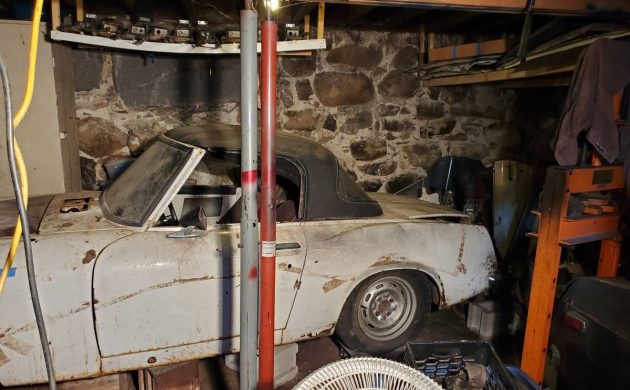
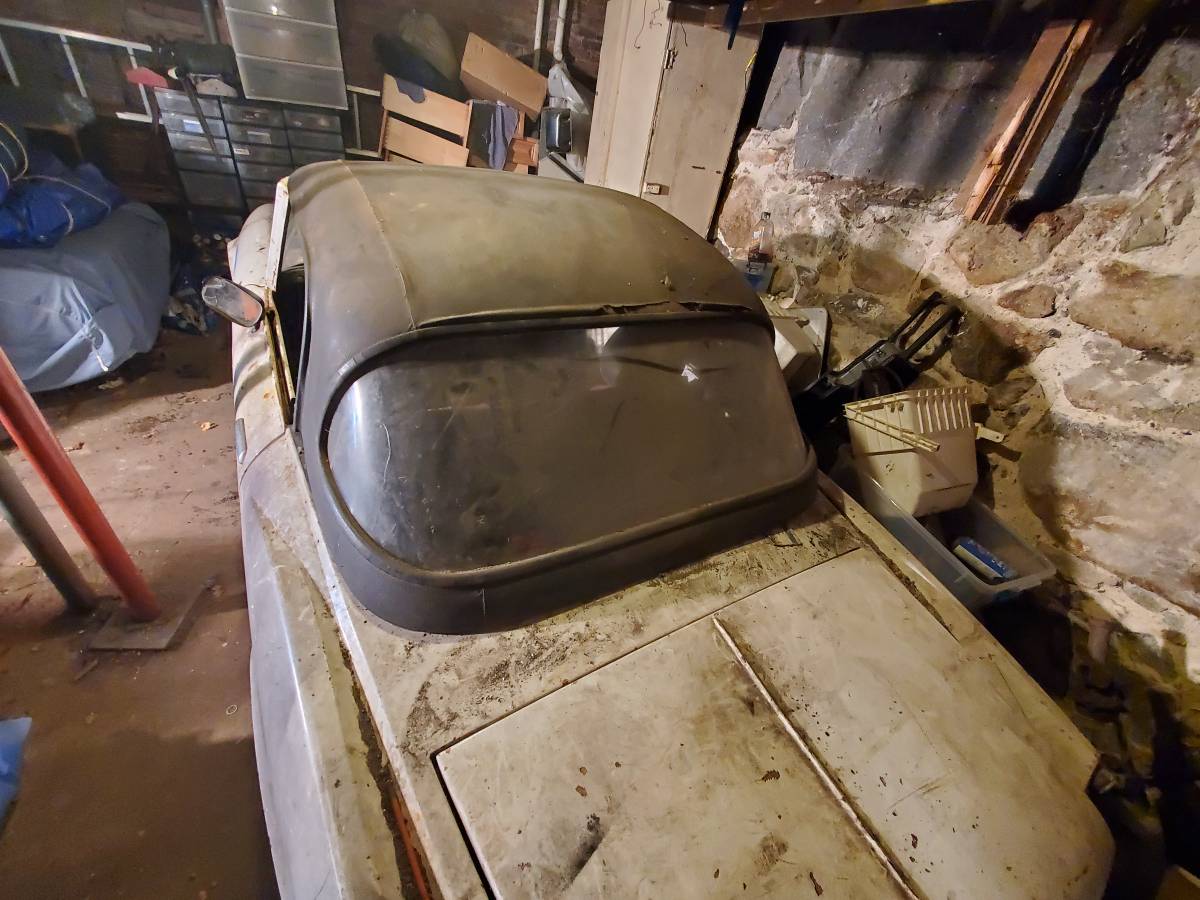
What I hope here is that the buyer of this Datsun 2000 Roadster won’t have to dismantle the seller’s garage to extricate the car. I’ve seen it happen, and it’s not pretty. But let’s look at the positives. This Datsun has a hardtop; it retains … some parts; it’s dry! What a humiliation, though, for a jewel of a car. Nissan launched its sports car ambitions under the Datsun brand back in 1959, with the S211. Only twenty were made. Dogged determination led the company to continually improve its product, changing platforms, engines, and interior configurations until, in 1963, the SP310 emerged. We know this car as the Datsun 1500 (Fairlady in Japan). An acceleration of enhancements brought the 1600 in 1965, and the 2000 in 1968. Today’s example is among the last of the breed, before the renowned 240Z was introduced. The seller has it advertised here on craigslist for $2000. It’s located in Ayer, Massachusetts. Sadly, the title is missing. Thanks to Zappenduster for the great tip!
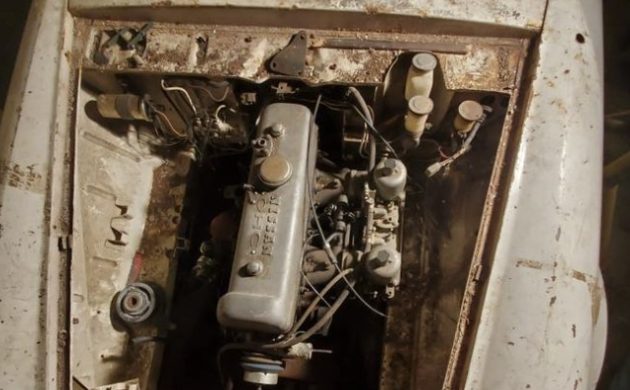
By the time the 2000 rolled out of factories, the SOHC, alloy-head four-cylinder engine was cranking out 135 hp, and though that pales in comparison to the average muscle car, the Datsun 2000 clocked in at only 2100 lbs. Aside from the peppy motor, the car also received a five-speed manual gearbox – a rarity for a cheap sports car in the 1960s. These little guys could fly, and speed parts made them even more energetic. While the MGB, introduced in 1962, sold about 140,000 units through 1970, only 40,000 Datsun roadsters found homes in the US over the same time frame, despite the Datsun’s superior technology and performance. As the seller notes, a lot of parts are missing from his car, most particularly from the engine bay.
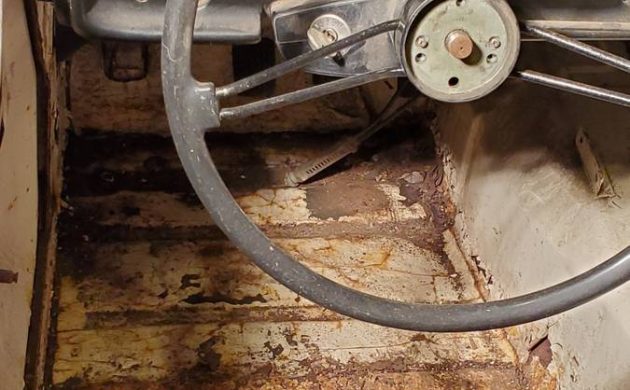
Though this photo doesn’t show the seats, they are present, upholstered in red vinyl. But the door trim, including the nearly unobtanium aluminum kick panels, is largely missing. And while we’re gazing upon the rusty floors, note that the slack US sales of most Japanese cars in the ’60s related to a perception of unreliability and susceptibility to the tin worm. At least the latter was true. Nissan moved from no rust-proofing to undercoating the roadster, which was better than nothing but didn’t last. Consequently, not many of these cars have survived intact.
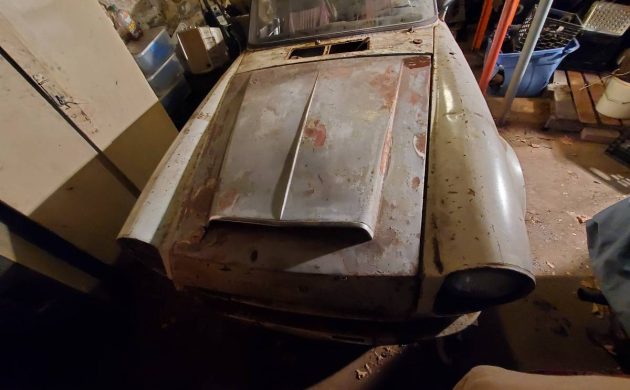
Styling cues make the Datsun roadster look a little mean, but in a weirdly delicate way. The hood scoop and fender flares are all business, but the tiny, stacked rear lamps have a “la-de-da” quality. Good thing the hood trim is present – that and the side trim are also nearly impossible to find. This is not an MGB, with spares galore. You’d think that with rarity, performance, and the fascination with Japanese cars in the mix, these cars would be quite valuable, but good quality drivers can be had for mid-teens. That knocks this car from contention, in my view. But what do you think?

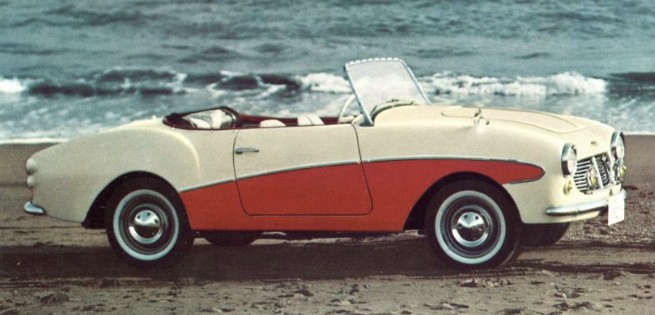
This was one of my many cars,except I had the 69. Built the engine drove it for a while,and regret selling it. Damn that was a fun car!
I think it’s now an overpriced parts car
Then I guess you won’t be bidding, will you.
Nope
no papers. too bad. lot of money for a parts car. not worth much else.
Last I heard, it’s easy to get an Alabama title.
Meh. Once someone spends the time getting it out, I’d guess they’d want to put it back.