
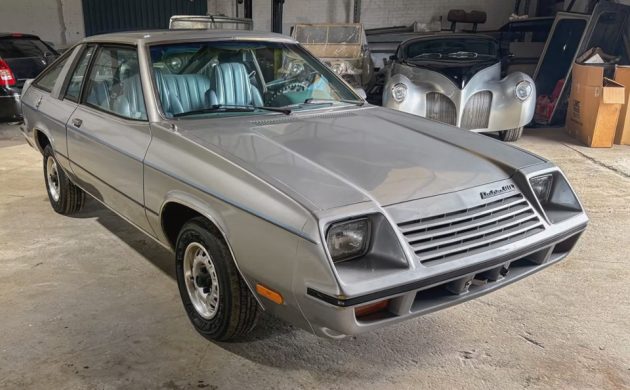
To EV or not to EV, that is the question, to misquote Bill Shakespeare. I like any method of moving a vehicle down the road, gas, diesel, batteries, pedals, a sail, oars, two friends pushing while you steer, etc. It all works in my world, and this 1982 Jet Industries 007 (titled as a 1982 Plymouth), from the Larry Klairmont Kollection in Chicago, Illinois, is being auctioned here on Mecum Auctions on September 21st. Thanks to Mitchell G. for the tip!
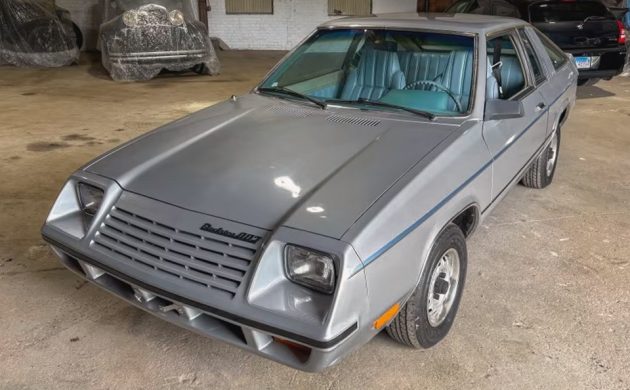
“Needs batteries” is a story older than Shakespeare himself. Well, I guess the first battery was invented 236 years after Shakespeare was born, so it really isn’t that old, but since the 1970s and 1980s, when there were a ton of battery-powered conversions in response to whatever was going on at the time, it seems like every vintage EV needs batteries. I think I’ve gotten one new battery for my 2002 Audi TT in over 20 years, and I can’t even remember if I have gotten a battery for another vehicle that I’ve owned, other than maybe a motorcycle. I’m not sure why EVs always need batteries.
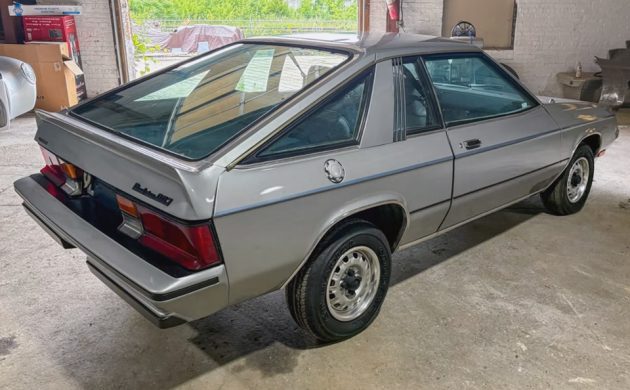
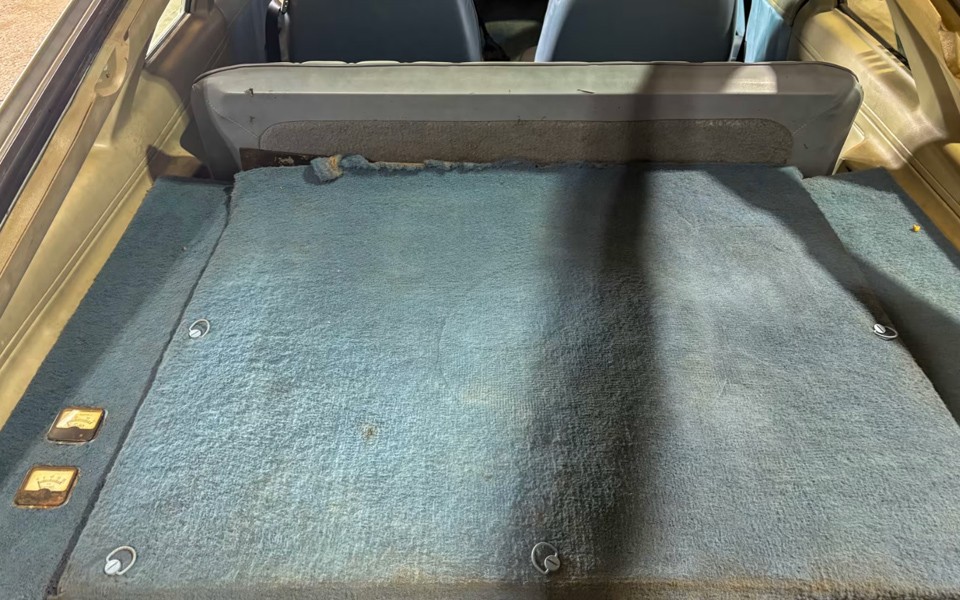
Speaking of the rear cargo compartment on a Plymouth TC3/Dodge 024, even though we weren’t, here’s a photo of the storage space you’ll have in this car. Those of you who know the Plymouth TC3, you know there should be a lot more room back there. There is, but it’s where the heavy lead-acid batteries went, back when this car had batteries, which it doesn’t anymore because, you know, it needs batteries. I believe this car was sitting in Mr. Klairmont’s museum for probably years, so that could be why it wasn’t used enough to keep the batteries in shape. The Burnished Silver Metallic exterior paint appears in nice condition, and I don’t see any rust on the body.
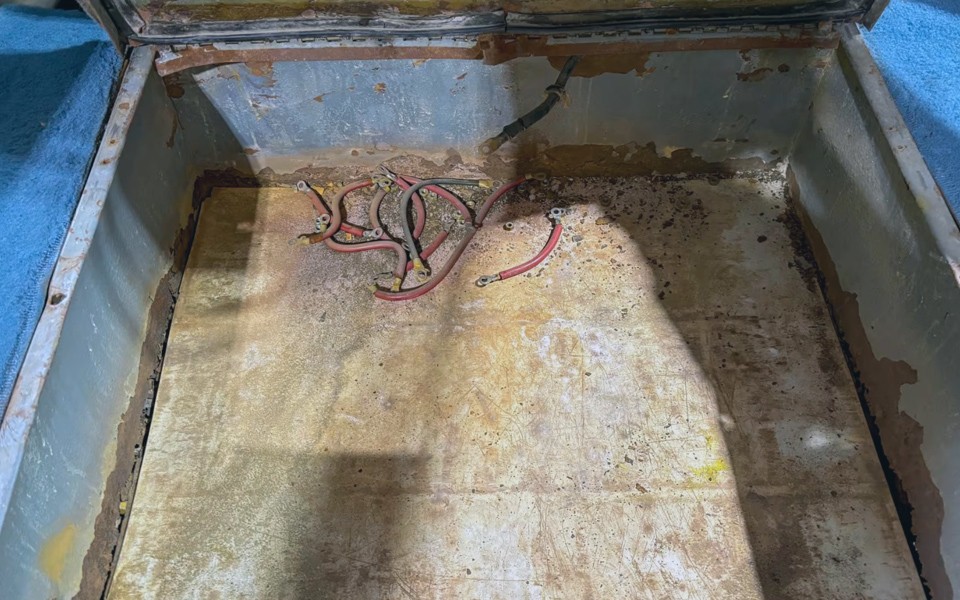
I do see some rust where the batteries sat under the rear cargo shelf, which is now empty. Jet Industries, out of Austin, Texas, made EV conversions for a few years in the late 1970s into the 1980s, and the Subaru Electra-Van is my personal favorite, but they also worked their positive (and negative) magic on Ford Escorts and the Mercury Lynx, along with full-sized vans and even the sporty Dodge Omni 024 and Plymouth TC3. We’ve only seen one of these Jet Electrica 007s here on Barn Finds, and it’s been many years.
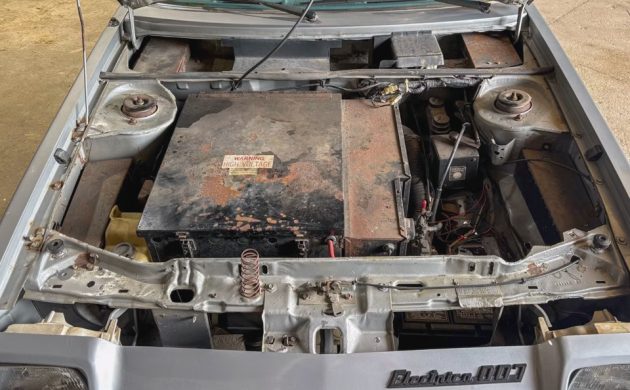
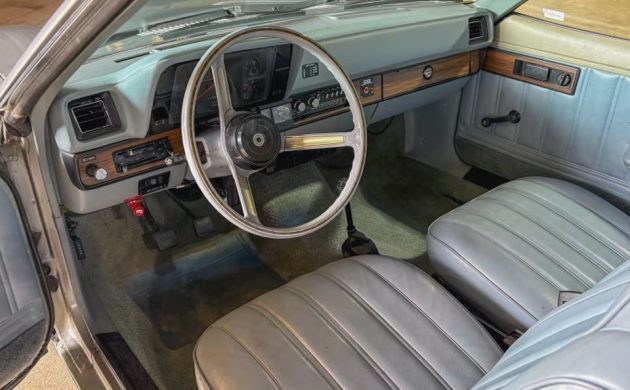
As you can see, surface rust is present under the hood, where what was likely a 2.2-liter inline-four sat originally, or would have. Jet Industries typically bought “bucks”, as in vehicles without engines, and we don’t know what kind of Doc Frankenstein technology originally powered this Electrica 007, but we do know that they had a 23-horsepower DC electric motor and 20 Group GC4 6V batteries. At 62 pounds each x 20 batteries, that’s 1240 pounds of weight missing in the back of this car. I hope this one gets restored (fixing the rust) and maybe is maybe updated with modern, much better, much lighter battery technology. It retains its 4-speed manual, although you typically don’t need several gears for EVs. Have any of you heard of the Electrica 007? Is this a car that Bond, James Bond, would drive?




Scotty, I’m no expert, but I think EVs ate batteries — at least in the old trunk-full-of-DieHard days — because of the excessive discharge-recharge cycles of EV operation, which said batteries weren’t designed to endure.
I don’t recall ever seeing a “classic” EV that hadn’t munched its batteries.
In any case, that’s enough to keep all but the serious EV fans and hard-core collectors from signing up. Me, I think I’d look for an appropriate Chrysler drivetrain and slot it back in. The result would be lighter and, well, more car-like. More usable, too.
I think if I were re-powering this, I’d be inclined to go with a Tesla (or some other modern EV) drivetrain swap, and a lithium/sodium battery pack.
Is this a piece of EV history worth saving though? I dunno, never really found these cars appealing to my eye.
I think its really great that there was an EV with a stick shift. I’d love to know what that would be like to drive. It looks great and It would be nice to see this fixed up mechanically and back on the road again.
I don’t pride myself on being a gloater, but see? I told you this EV mumbo jumbo wouldn’t fly. EV sales are slipping because govt. incentives to buy one are expiring. I think, like Harleys, anyone that wanted an EV already has one, and probably not in the market for another anytime soon. Not sure about EV batteries, but all batteries are junk today. Being the skeptical type, I say, there’s a chip in new batteries( explaining the outrageous prices) that at the end of the warranty, they go flat. Don’t think so? MY neighbor heeded a new battery, the old one was 1 MONTH OUT OF DATE. Been a couple years, I’m sure the Jeep will need one this winter. I wouldn’t waste a cent on this as is, they were pretty nice cars originally, just try and find another.
Now, since “batteries” are the topic, here’s my story. In the 80s, I hauled a load of lead bars ( from a creepy place in Mo.) to Globe Union in Milwaukee. I back in, the forklift guy says he’ll be right back. So, I’m looking around, I knew they made car batteries, but this is no lie, EVERY kind of battery case was there. I said to the guy, so what brand of battery do you make? He said, get your best price, inside they are all the same.
1. Most Lead/Acid batteries are the same. When you buy a 1 year, 3 year, or 5 year battery, the price difference is basically an insurance premium, not really a “better” battery. Some of the most heavily advertised brands are the worst.
2. The sale of a single, early electric vehicle from the 1970s has nothing to to with the current sales of electric cars in today’s market. Sales of electric vehicles continue to climb, and reached a new high in 2025. While I suspect the US sales rate will decline for a bit because of the end of subsidies in the USA, the transition will continue.
The only drawback we have found, and it’s not terrible, is charging on long distance drives, charging does slow you down. As consumers realize that they save money not buying gas or paying for service, the rate of adoption will accellerate once again, freeing consumers from the most heavily subsidized industry on the planet, fossil fuels.
Not a gloater, just a bloater.
Tell ya one thing I’ve noticed Howard…once the battery that the car left the factory with goes… I’ve never had a replacement last as long… even if I bought another one from the dealer.
I have several lead acid batteries well over 10 years old in my vintage cars. I think the oldest is from 2009. They don’t seem to decay much from age as much as they do from heat/cold cycles and charge/discharge cycles (which are limited on vintage vehicles). On my daily drivers is still generally get 7+ years out of them.
To Poppy
I agree. I have always taken my batteries in my Cadillacs(one had 3) and added a teaspoon of Epson Salts to each cell about once a year. They average 10 to 14 years.
You can still pop the caps of of newer batteries.
* Batteries Not Included
EVs need batteries for EXACTLY the same reason that ICE vehicles periodically need batteries. Batteries decay over time.
There is an entire infrastructure for recyling the hideously toxic lead in the batteries used by every single gas or diesel powered car in use today.
Recycling of lithium ion batteries are already re-usable in not motor vehicle applications (back up for telecommunications, lift stations, etc) and are becoming more recyclable every day.
Your bias is evident, and not conducive to convincing others to share your opinions.
A more accurate and balanced argument would be more helpful. For example, “recycling” EV batteries to less strenuous applications, only delays their inevitable failure. EVs and Hybrids have made great strides. Battery powered heavy duty, over the road trucks and buses not so much. The technology and infrastructure is just not there- yet?
Not all the way there but gaining everyday. Mobile apps guide you to charging locations and even give the voltage rate, number of chargers and how many in use. We have one at our dealership that is available to the public. In use throughout the day and evening.
Why do you assume that recycling won’t happen after that second use?
Because, to my knowledge, George, there’s currently no way to do that.
It looks like my mom’s old 1983 Plymouth Turismo 2.2 even the same color.
Good luck finding parts! The manual trans is cool.
This reminds me of my ’81 TC3. Being the fuel economy “Miser” model it wasn’t nearly as spiffy inside and didn’t have the added windwindow applique outside. I think this car may have came with the 1.6 Peugeot motor. 1200 lbs of batteries is a lot of weight on the rear suspension. Probably made steering effortless.
It’s interesting that that car ran on only 120 VDC.
They did not have the technology back then to build power inverters that boosted it up to 400 volts, AC three phase like they do now.
GLHSnot.
It’s still kind of funny when you think the first electric vehicles were made in the late 1800s. They are definitely getting much better now.
Last spring, I saw a Detroit electric made in 1916, an all original car.
The first owners used it for about six years, The second owners kept it until quite recently, when they sold it to an electric car collector
They use the car during World War II when gas was rationed, but by the late 50s, they abandoned it on family property in the desert near Palm Springs, where it sat until the current owner purchased it
All the owner had to do was put on new tires, check the wooden wheels and brakes, install new batteries (sound familiar) and they drove it away.
Electric cars are simply far simpler don’t break down as much and at least in these very primitive cars, are easily repaired. All new cars, gas or electric are victims of dozens of tiny computers waiting to be possessed like an HAL 1000.
Almost makes me want to buy it tear out all that electric conversion junk and drop a Toyota engine and transmission in there…. Almost
Ah heck, why go tiny? LS swap.
Honestly not sure the unibody can handle the torque is a LS
Actually, this car would be a great candidate for a Capstone Micro-Turbine which is basically a miniature Jet Turbine with an alternator on the same shaft as the turbine. No cooling system needed, No Lubrication needed as the turbine/alternator shaft is supported by louvered bronze bushings.
Air enters the inlet through the interior pipe of a coaxial pipe, outside of the exhaust gas pipes, passes through the alternator into the Compressor, then into the combustion chamber where fuel is ignited and burns, producing heat and expanding exhaust gases, spinning the turbine and shaft, and makes a u-turn and goes out to the atmosphere, passing through the center of the inlet pipe, preheating the incoming air.
Very lightweight, it’s not quite a throwaway engine. Running at a constant RPM level, it’s also very clean, as it only produces NOx when it first is cranked and accelerates to optimal generation speed.
Like all turbines, it can run on most any liquid or gaseous combustible fuel.
With a battery that can move the car at limited speeds and distances without the Turbine.
I’ve actually fired a natgas-fueled Capstone turbine, quite awhile ago. Neat idea, I even pitched them to my employer when we were looking to do something about flare gas. The one I had access to was far too large for a small vehicle, perhaps could be mounted on the deck of a flatbed truck.
Do you think it could withstand the vertical forces of a vehicle hammering over a railroad track intersection? I am under the impression they were designed strictly for stationary use – I don’t even know if they’re used in ships. Maybe an APU from a passenger jet plane would be a better candidate?
Chrysler famously abandoned turbines back in the 1960w, along with others, because they are very bad at stop/start driving in city traffic.
Turbines opperate idealy at constant speed/load conditions, as in jet airplanes.
Otherwise, in the ’70s, all cars would have been coal fired turbines (I believe one was to test in a Cadillac Eldorado.). They can run on anything.
The biggest trouble with turbines is they don’t have much torque so they need to be geared very very high.
Electric Drive is an excellent type of propulsion, used in Submarines and Diesel Electric Locomotives for more than a century.
Different solutions for different applications.
I love my Boxster, but frankly, driving in traffic on I-95, our Cadillac Lyriq is superior in every way. No plans to sell the Porsche, as they really complement each other.
I would say that 80% of our driving is electric now
How to make a bad car worse. Just add batteries!
I won’t comment on the drivetrain, but that is one clean TC3/024.
Auction update: this one sold for $5,500!
What about heat? Electric cars were going to use heat pumps but I think they abandoned that idea?
I hear some use a version of a hair dryer.
Resistance elements can kill batteries fast but it would be real nice to have heat right away. I did that in one of my old Cadillacs(65) with an inverter.
Crazy that this shares the same basic body with the Shelby just shown on this site. This, 0-60 in a week (Well 0-60 in never without new batteries). That Shelby, hang onto the wheel and stab the gas pedal! We are flying.
Quickly fixed by electric power