
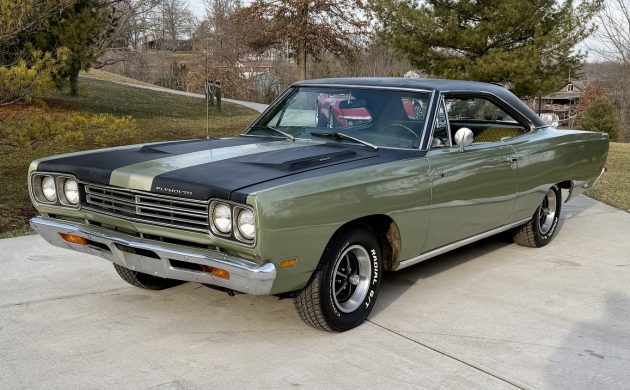
Once Pontiac unveiled the GTO, it seemed that virtually every American manufacturer joined the horsepower race with its own muscle car. Plymouth was no exception, and this 1969 Road Runner is a perfect example of the breed. The 383ci V8 under the hood may represent the entry-level powerplant, but the power it delivers cements the Road Runner’s place in the muscle car market. I must say a big thank you to Barn Finder Curvette for spotting the Plymouth listed here on eBay in Cleves, Ohio. The seller set the auction to open at $8,800, although the listing text suggests they may consider appropriate offers if interested parties wish to bypass the auction process.
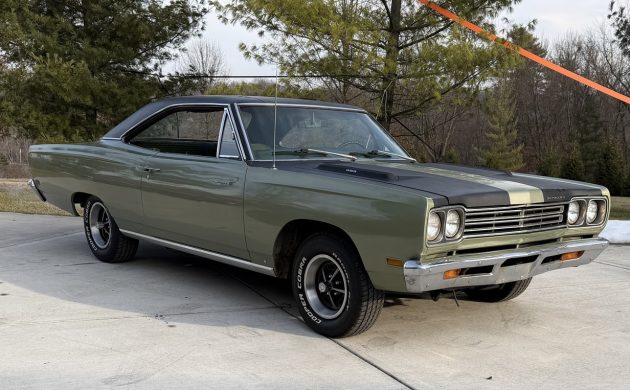
After joining the muscle car party in 1968 with the Road Runner, Plymouth performed a relatively minor update for 1969. This car rolled off the line that year, finished in Frost Green with a contrasting Black vinyl top. This classic presents well and is comfortably acceptable for those seeking a driver or survivor-grade vehicle. The paint retains a healthy shine, the panels are straight, and the underside shots confirm that this beauty is rust-free. However, there is something that causes concern. The seller supplies this YouTube video, featuring a walkaround. It suggests that the vinyl seams on the top are beginning to separate, potentially allowing moisture to pass through. That could be bad news, because it would allow rust to catch hold quickly and quietly. That is one aspect of this Plymouth deserving closer inspection. Most of the trim is in good condition, although the bumpers show their age. The glass is clear, and the Magnum wheels are free from issues.
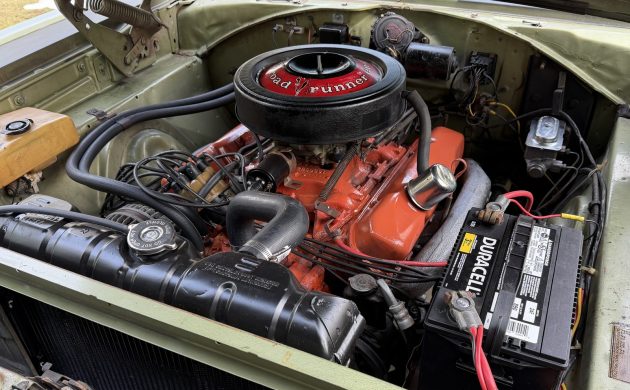
Purists will welcome the news that this Road Runner is numbers-matching. That isn’t a deal-breaker for some people, but others consider it crucial to maximizing long-term investment potential. Plymouth quotes power and torque figures of 335hp and 425 ft/lbs for the 383ci V8, which feeds to an 8¾” rear end via a three-speed TorqueFlite transmission. The first owner ticked the box beside power steering, but left the brakes unassisted. Plymouth may have offered more powerful versions of the ’69 Road Runner, but the entry-level 383 provided customers with impressive value for money. The seller states that this Road Runner is in excellent mechanical condition and runs and drives exceptionally well. The previously mentioned video features the 383 running, and it sounds sweet and crisp.
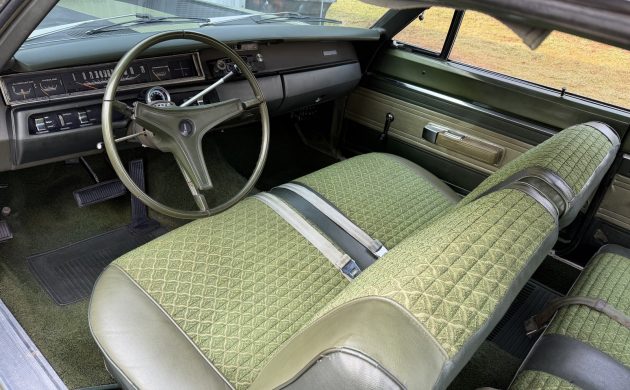
This Road Runner’s interior is consistent with a driver-grade classic that can provide immediate motoring pleasure. Trimmed in two-tone Green, the cloth and vinyl upholstered surfaces are free from distress. The carpet is slightly worn under the driver’s feet, but still presents extremely well for a classic of this vintage. The same is true of the dash and pad, and the only genuine flaw potential buyers may consider addressing is the cracked wheel. Someone has added a column-mounted tachometer and a radio/cassette player, but removing both would be child’s play if the new owner prefers originality.
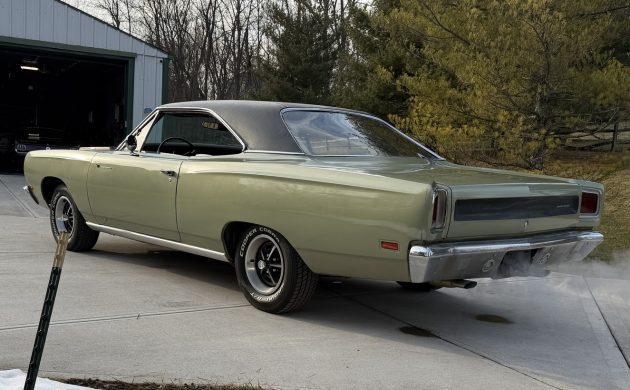
This 1969 Plymouth Road Runner isn’t perfect, but it is a solid classic featuring its numbers-matching drivetrain. That is an important consideration for those assessing its future investment potential. That raises questions about the seller’s expectations and where bidding might head before the hammer falls. This isn’t the seller’s first attempt to sell this classic. A previous listing reached $39,700, which was below the reserve. Recent successful sales suggest that figure is in the ballpark, but the seller may have loftier visions for this classic. What would you willingly pay for this solid, driver-grade Road Runner?



I’d call that one “a survivor” very original and not messed with or heavily modified. I actually love those seats! The colors in the 50s and 60s were so much better than today in my opinion. This Bird is nice and I feel like it’s under priced! I was expecting the 40k range or more! Reminds me of the 69 I had. I should’ve kept that one 😒
I agree that this is a nice survivor. Clen and not messed with. Nice cruiser here. Stock mufflers and even if is a column shifter car I would not mind that either. Price seems just right too!! Its not to over priced as seen with other Mopars of this time.
The roof issue could be a problem, but any B-Body Mopar that hasn’t been properly restored will have some problems with age. I know because the local Mopar restorer fixed several things with my 65 B-Body Belvedere that I thought was rust free but didn’t expect.
The inner cowl area was never painted, so it will rust if it has ever seen moisture. The inner fenders are lapped and spot welded, the area where they overlap will rust because it’s not painted.
Then there are a couple seals that will fail and leak water into the floor boards. There is a seal in the heater box that will fail and leak onto the front floor. Also there is a seal on the windshield wiper mechanism that will fail and let rain water run into the floor boards.
I never knew this stuff before the local Mopar expert got hold of my car. Now ($30K later) I know a LOT about B-Body Mopars. Maybe I should have stuck to Camaros. But I still like my car.
I’m following it just out of curiosity of what the market is doing. My suspicion is softer but we’ll see what this bids to!
Looks like bidders ladled in a few more bucks , but not enough to meet the reserve.
I think the market for cars like this is softening. Let us say that most people interested in cars like this are “aging out” of the market!
One of the many benefits of this site, is being able to actually see what these cars looked like when Johnny, the paperboy down the block bought one. That really happened, with the money he made from the paper route, and combined with Bar Mitzvah money, Johnny was instantly transported into the realm of the musclecar, much to his parents dismay. At just about $3grand new, almost 85,000 “Johnnies” bought one. Most initially looked like this once, as Johnny loved it, but as it progressed through the ranks, they never looked like this again. 1969,,,was quite a time.
Howard, I ordered a 1969 dart swinger 340. It was cheaper and much faster so I could pay for the Sunoco 260 I put in it.
I was a paperboy before this came out. Had over 50 customers, but never saw anything close to RoadRunner $
John
I suppose where you lived. I lived in a big city, and remember the guy I helped had almost 100 customers. Sundays were a bitxx. Road Runners went down in value pretty quick, and by the early 70s when I got my license, a (cough) used RR could be had for a grand, with still some life left. You might look at this car and think what a magnificent example, yet we trashed these cars.
The dealer has the reserve set north of $40,000, probably higher. He currently has 10 listings, which he runs continuously, a total of 89 times in the last 3 months, with not one meeting its reserve.
Steve R
looks good. pull the v/top deal with whatever issues there may be and paint the roof black. i would bet that the interior option on this car is pretty rare. i have never seen it before. i think it looks cool.
Great looking Mopar,, until you see that ridiculous interior. Looks like a couch in Gramas house during that same year, only thing it’s missing is the plastic cover. The bench seat and auto on the column is a waste in any Mopar between 1965 and 1974. Yes, even in a Hemi Cuda/Challenger or a Hemi Superbird/Daytona.
That’s the base level cloth and vinyl interior trim, straight out of a ’69 Belvedere, the model with which the Road Runner shared interior trim. This is rarely found in Road Runners, but if you wanted your Road Runner as close as possible to the base price and didn’t want vinyl seats, this is what you got. It’s seldom seen, though, as many buyers were willing to ante up and buy the upgraded Satellite interior trims.
Jerry in our town delivered groceries to people houses and he bought a road runner from the local dealership. I had a silver one with tinted windows and 4-speed
Really love these year Road Runners and this one overall looks really nice barring a few issues. Personally I love the bench seat and material. Hardly ever see them like that. Though trying to find NOS fabric to repair the rip in the drivers side might be difficult. Also, that steering wheel looks like it’s seen better days, though I know there are places that do repair them it might be pricey. That radio needs to be ditched for sure. It is a numbers matching car which is a big plus, just not sure with the current market if it will meet his reserve.
In 1973, I looked at an aqua 69 RR 383 4 speed just 2 miles from our house. I was 17. Dad went along. He hated fast cars. Seller wanted $1,300. Rockers were rotted. Dad said no.
I like the stripes on the hood.I think this is the way most
Road Runners looked when sold new.
I have driven, back in the day, 68, 69 and 70 RRs and liked them all. They were race ready from the sales lot. Lots of fun.
This one looks nice.
I didn’t see the “beep beep” purple horn in the engine bay. Did I miss it? Nice car, but no sale for me w/o the original horn lol
Ended at $41,700.
Reserve Not Met.
60 bids.
Predictable result, based on Steve R’s observations of this seller.
Too bad that bidders don’t do some research before wasting their time.
I really liked the look of the front end……….in the rear view mirror of my 69 Hurst SC/Rambler.