
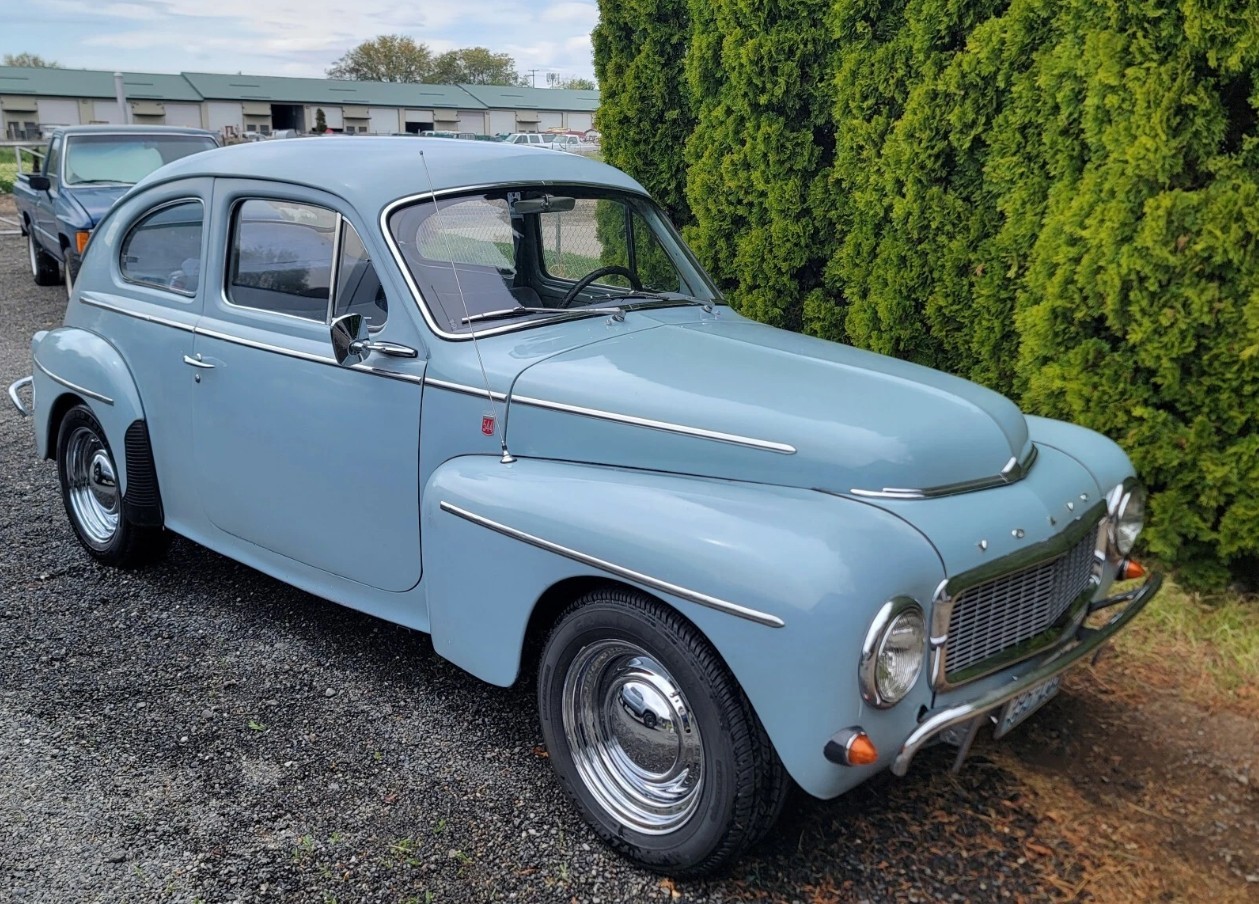
Volvo’s PV544 remains a surprise packet. An effective rally weapon upon its release, the PV544 still enjoys a strong reputation in domestic competition nearly six decades after the last examples left the factory. This 1966 model is a survivor wearing its original paint. It isn’t perfect, but it could be the ideal foundation for a straightforward cosmetic restoration. The seller has listed the Volvo here on eBay in Yakima, Washington. Bidding sits at $8,000 in a No Reserve auction.
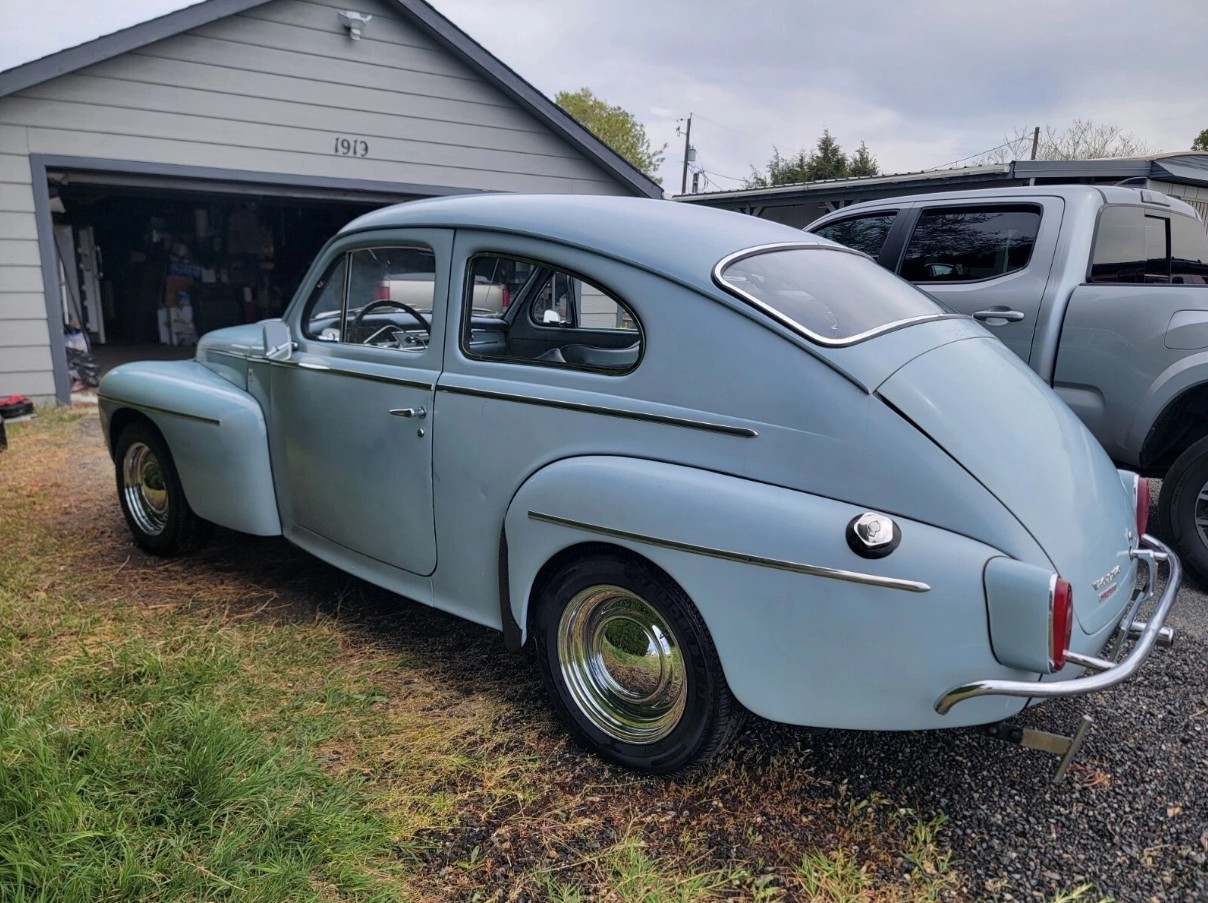
Volvo introduced the PV544 in 1958, with the final cars rolling off the line in 1966. It is fair to say that Volvo’s model development during this period proceeded at a snail’s pace, with the PV544 an evolution of the PV444 that first graced showroom floors in 1944. Therefore, many people would have viewed this final year example’s styling as quite dated in 1966. However, this gem is something of a survivor, wearing its original Light Blue paint. Close inspection will reveal deterioration and a few panel bumps and bruises, but the exterior’s healthy shine means that the car is quite presentable in its current form. Volvo engineered its vehicles to cope with the harsh Swedish winter climate, when snow was almost inevitable. Rust prevention strategies sat high on its list of priorities, and the PV544 is not prone to major problems. The seller admits to some rust in the trunk pan, although it appears the vehicle is essentially rock-solid. The trim and glass are in good order, and the wider chrome steelies add a touch of class to this beauty.
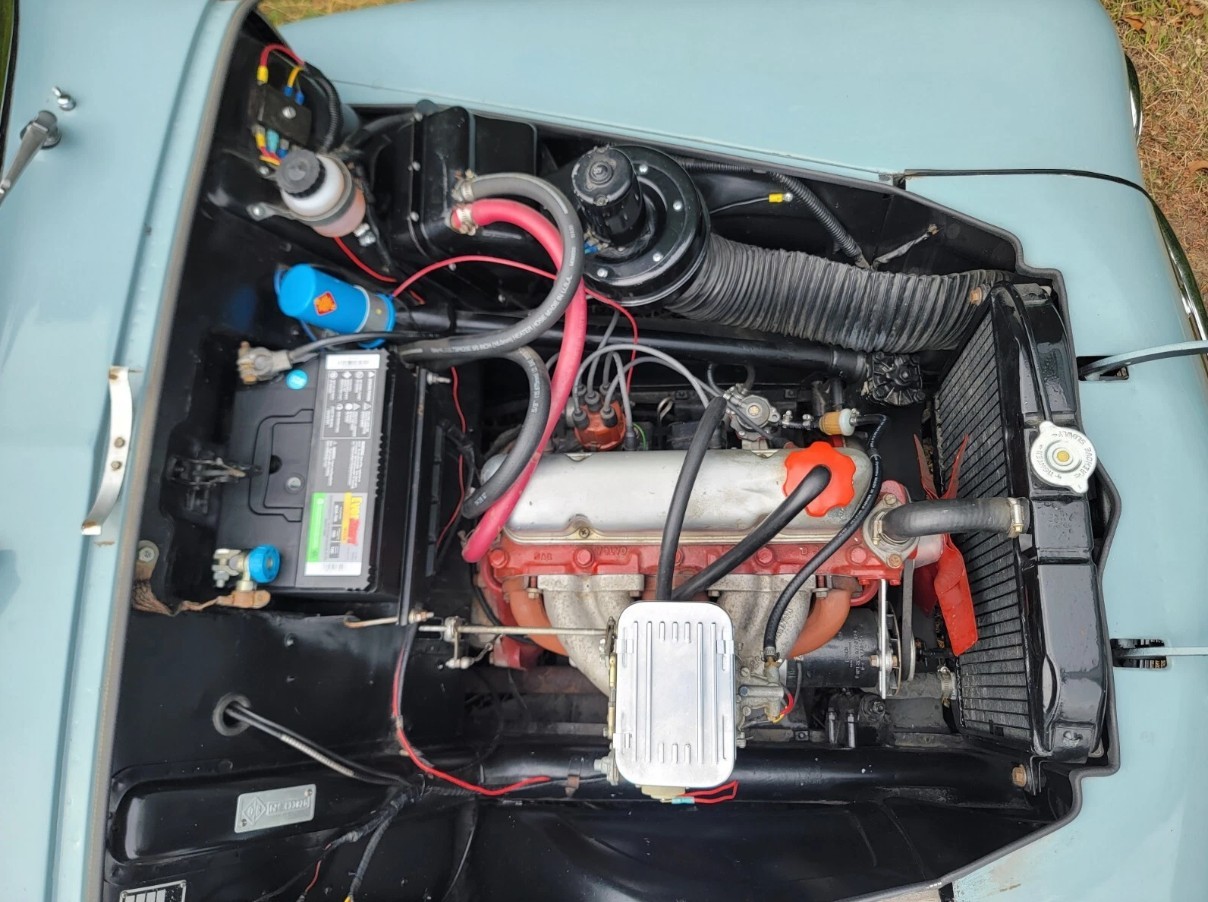
Volvo’s B-Series engine range is as tough as old nails, with many competitors still utilizing various forms of the powerplant in their rally machines. This car features the “high-performance” B18B four, which produced 90hp when the car was new. Those ponies feed to the back wheels via a four-speed manual transmission that is as robust as the engine. The seller confirms that while this 544 retains its original engine, it has been treated to a Weber carburetor upgrade. This may have unlocked slightly more power, but the main benefit is that, unlike the original setup, it will require significantly less tuning and will be more user-friendly. The seller indicates that the Volvo is mechanically sound, and the embedded video in their listing confirms that the engine sounds as sweet as a nut. They describe it as a joy to drive, suggesting that it is a turnkey proposition for its new owner.
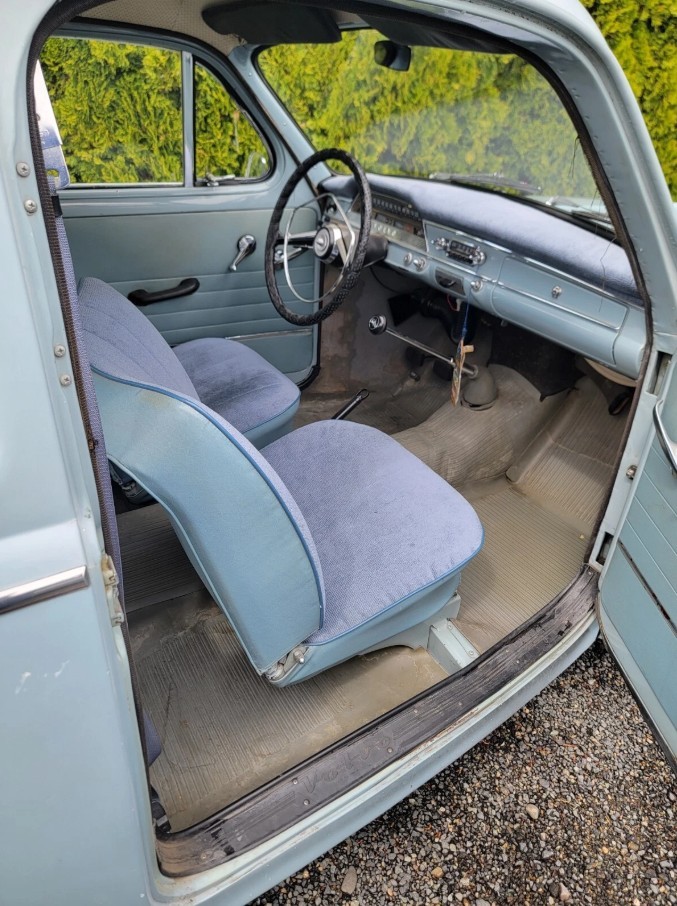
The Volvo’s interior leaves me slightly torn. It retains its original vinyl door trims, headliner, and rubber floor mats. The seats sport new cloth covers that, while they don’t match the door trims, still look quite nice. The item that worries me is the cloth on the dashpad, because that surface is prone to high UV exposure. It looks good now, but you have to wonder whether that will still be the case a few years down the track. Therefore, I would probably splash the $330 on a correct pad as a long-term investment. The mats also look tired, leaving the new owner with a couple of options to consider. A set of correct mats retails for approximately $550, and would be the preferred option for those seeking originality. However, since the seatcovers are no longer factory items, the lure of a $240 carpet set may prove irresistible. There are a couple of other minor shortcomings, although it remains comfortably serviceable and presentable in its current form.
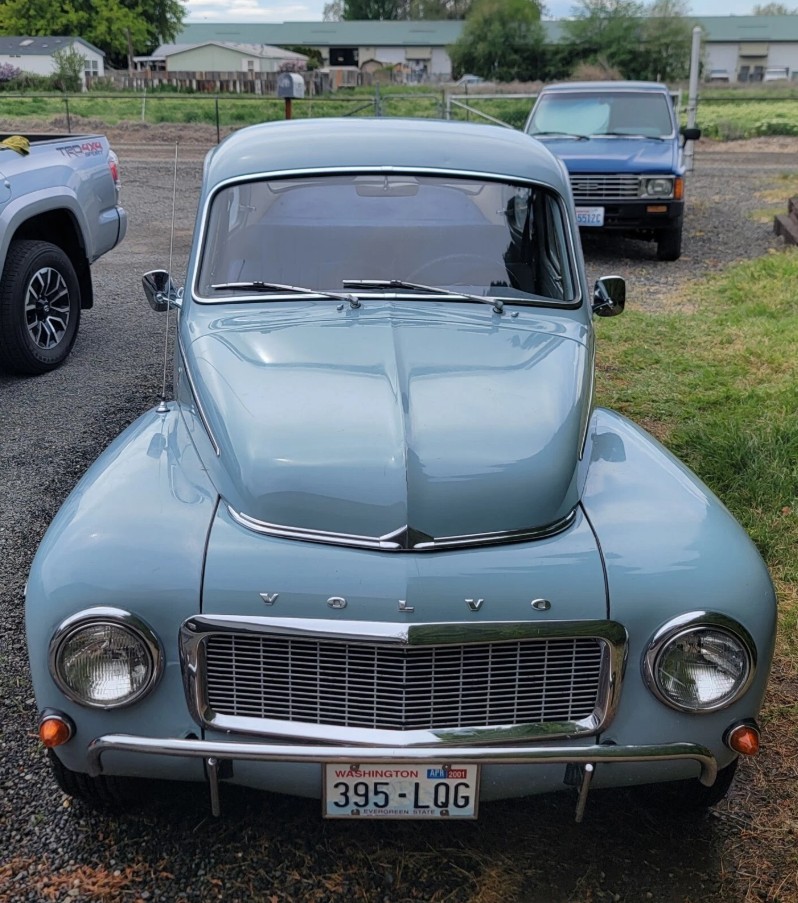
There was once a time when I gave Volvos little more than a passing glance, but my attitude changed the day my father purchased a 242 GT as his daily driver. I was impressed with the way that it cruised effortlessly on the open road and how easily it coped with heavy city traffic. The secret was its four-cylinder engine, which was remarkably flexible. The foundations for those characteristics were laid with cars like this 1966 PV544, and the B-Series powerplant hiding under its hood. This classic has survived largely unmolested for almost six decades and, if treated respectfully, there is no reason why it couldn’t repeat that performance with its new owner. The No Reserve auction means it is virtually guaranteed to find a new home shortly, but are you tempted to make it yours?




Was Volvo still producing these after the 122s and 1800s came out? I guess so, but seems odd.
sadly, the auction does have a reserve, which generally means it’s worth more to the owner than a buyer.
Not always John. It could also mean the seller is nervous that it won’t get bid to what it’s worth.
Well… if it’s for sale, then it’s worth exactly what someone will pay for it, so John’s point kind of stands.
In an auction the selling price at that auction is determined by the bidders. Many times I’ve seen that the auction hammer price has little to do with the value.
1 One bidder for an item makes for a sometimes crazy bargain.
2 Two bidders with tremendous wealth want the same thing real bad and it sells for more than double the established value.
Once upon a time, I rebuilt the carb, tuned and put fresh proper mix fuel in a name brand hedge trimmer…better part of an hour. Added some small things and what I believed was the first excercycle sold by Sears that was like new. Auctioneer sent me a check for $5
More recently toward the end of an auction, a wedding dress sealed in plastic didn’t get a bid and was put back on the shelf. Another item from that corner of the building didn’t get a bid. EVERYTHING IN THIS CORNER one lot! I got the wedding dress, miles of slot car track, posters, banners, Union Grove Dragway jacket (not worn) for a very small bid. Also in that corner were many plastic totes, 10-12 photo albums per tote and 3-500 photos per album. I filled the Amazon Estate with totes 2 high. Called for back up. He put totes across the front of his big open trailer. When I saw him putting loose albums in the back of his pickup, I asked why they were loose. The filing cabinets you bought were full of photo albums.
I went to that auction hoping to get ONE photo or permission to copy the one I had. I accidently bought 50k photos. Most are from Road America mid 90s till a few years ago when he got cancer.
If you were in a race, school, track day or Porsche, BMW club etc. event at RA , I might have your photo.
How about a wedding dress?
I can’t imagine selling a car or much else with no reserve.
I thought the 544 had the B18D engine, twin SU carbs (the seller says Stromberg’s, but shows the SU’s in the trunk)? The B18B engine was the one in the P1800, 122 wagon and 123GT. (I really miss my 123GT, totaled in the 1980’s.)
This car looks weird with wider chrome rims, and strange tube bumpers.
544 sport did come with b18d, twin su carbs. Amazon estates also had b18d. Some Amazons were special ordered and delivered in Europe with b18b, od and other goodies
I still believe the downdraft Weber is a down grade in performance. It can provide MPGs cruising with kudy the tiny primary.
My step daughter settled for a 242GT after getting insurance quote for a 242 turbo. 16 + turbo = $$$
She did a performance school at Road America with it
From 1962 through 1074, Volvo used the B18 and B20 engines. They all had the same problems from the beginning: water pumps, cams, and timing gear.
The engine got a little bigger, and the carburation went from bad to terrible, and then to FI, which was not much better.
I like these cars, but I feel Volvo was/is the most overrated car.
This is based on owning 2 and being in the import parts business for 40 years.
Really? I can’t think of too many cars in the same class that were better built. What are you comparing it to?
As far as imports in the 60s it was not until the late 60s when Datsun and Toyota arrived in major numbers. Before that, the Volvol was about as good as there was.
My point really was that Volvo never really addressed those problem areas in all of that time.
I would take an old Volvo over an old Datsun or Toyota any day. The quality wasn’t even close. The Japanese cars had thin steel and cheap interiors.
Why/how are SU carbs bad?
They switched to Strombergs because SU went on strike.
The EFI didn’t work in Chryslers.
Bosch bought it and made it work. It was the first working EFI almost 60 years ago.
I’ve had experience with these engines for 50 years and now learn they have water pump problems.
I think the soft cam blanks was a limited time with b20s. There are b18s running with original cam.
I never replaced a worn out fiber cam gear. Like all engines with fiber gear bonded to steel, separation is almost always the failure. Volvos with higher compression, were not in time or tune and fed too low octane would diesel. That was the demise of many gears.
Water-pumps – I changed one in my123GT at almost 100,000 miles; never a problem before. In that time I did change 2 thermostats, though.
Cams – ditto, at 100k miles. I put in an Isky VV71 and was delighted. I lapped the valves just because I was there, and ended up with 220# compression on all 4.
Fiber cam gear wore out at 75,000 miles. Steel IPD replacement gear was a bit noisier, but lasted forever.
My 122’s, 123 and 544’s were bullet-proof mechanically.
The fact that you got 100k out of the water pump and cam was about twice the average. It looks like they were bulletproof after you went to aftermarket fixes.
Had a ’64 544, battleship grey with red interior. Was my daily driver for a couple years, loved it.
I have a 57 444 I bought in 97, still sitting in my shop.
Those SU carbs are a pain in the ass, then finding bushings for the draglink is a bigger pain the ass.
Fell in love with these cars in the 70’s.
Looking to pull the B16 and replace with a B18; my engine builder is overwhelmed with Model A 4 bangers.
I hope he lives long enough to get to mine.
I have the intake manifolds to put a Holley.
I have had the car for nearly 40 years; love to drive it one day.
SUs are pretty simple. If you buy a B18 complete, get a late one with the 3 bolt air filter SUs. They’re less prone to throttle shaft wear.
PVs do not have a draglink. They’re like the Volvo sedans from the 60s. There’s the Pitman arm on the Steering box. It has one side tie rod end and the center tie rod end. The center tie rod goes to the idler arm that has a side tie rod going to the passenger side.
If the bushing for the idler arm is your problem. I have a PV444 here that’s been losing parts for many years. I think it still has the idler arm. If it’s not excellent, it can be rebuilt or ?? maybe get a bearing here.
If it’s not rusty, just pay the man. It’s not as if we’re talking $100,000 here. These are cool cars, and the 544 Sport was probably the best of “The Humps”, as we used to call them. They are becoming more and more scarce, and in 20 years who knows how many will be left in this shape? Meanwhile, you can have 20 years of fun with it.
That engine is clean, possibly from an overhaul. Leave the funky rubber mats; they’re part of the car’s character. And the car has more character than 100 Toyotas. Evidently it was stored for years, and the seller just got it running again. Contact him and ask what the reserve is, then make an offer.
These Volvo PVs look just like a ‘46 ford. I love that this car has its original paint but much prefer the stock bumpers and stock skinny wheels. I have a 1963 VW beetle that is also original paint and the color is very close to that of this Volvo. Susan Sarandon drives a Volvo PV544 in the movie “Bull Durham” that is the same color as this one.
I did a “contact seller” on eBay and asked about the wheels, etc. The seller has the original wheels and bumpers. He gave me access to other photos. Rust looks to be confined to a panel behind the fuel tank, at the rear of the trunk, and not serious.