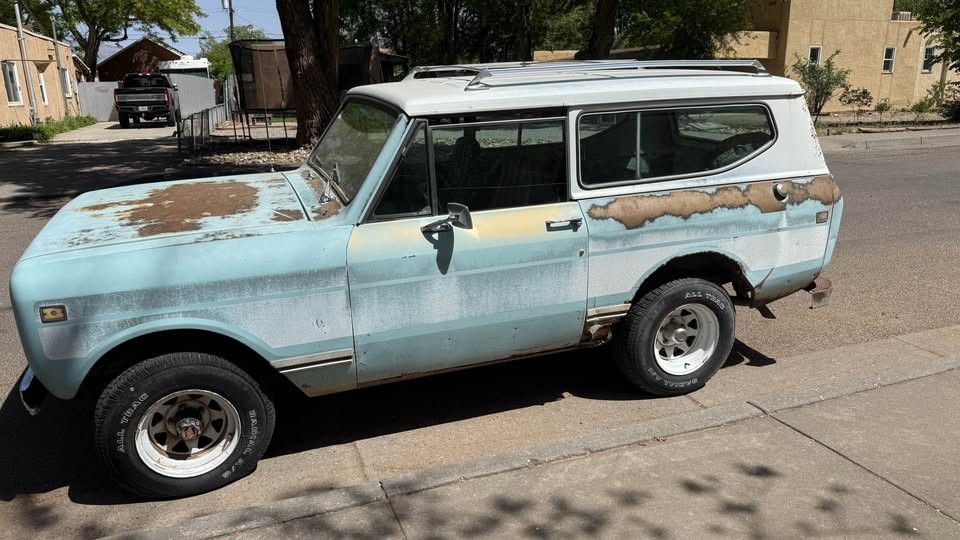
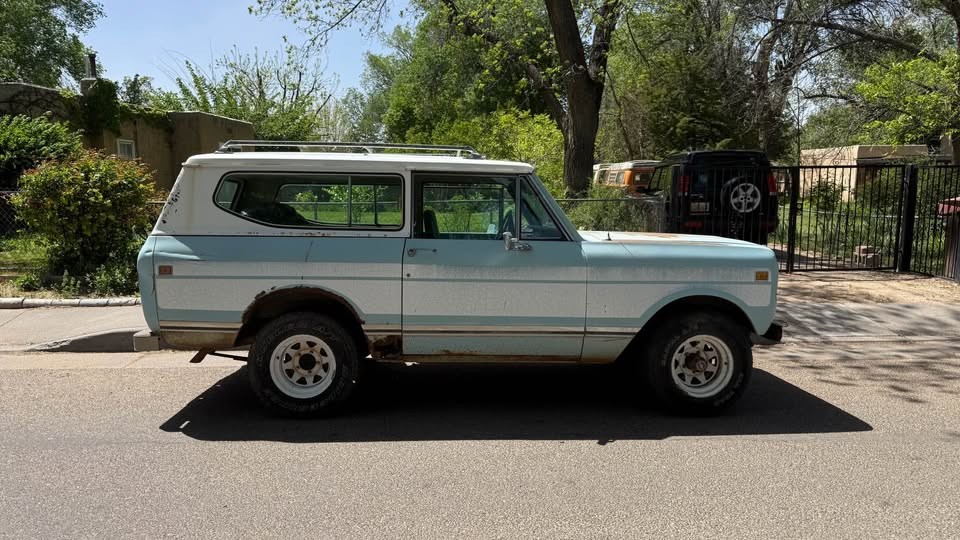
The seller states the sale of this International Harvester Scout II comes with the replacement sheet metal to restore the body. This is a four-wheel drive 1977 Scout II located for sale in Albuquerque, New Mexico. It appears to be in poor but restorable condition. It was listed a week ago at an asking price of $6,500. You can find this baby blue Scout II listed here on Facebook Marketplace. The seller states the vehicle runs and drives while listing the odometer mileage at 97,500 miles. International Harvester produced over 500,000 Scouts from 1960 to 1980.
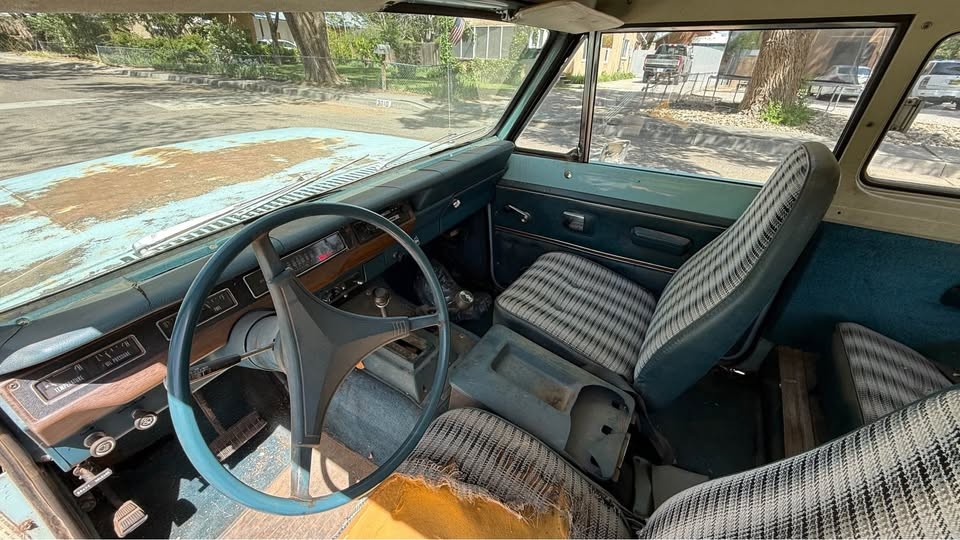
This Scout stands out with its bucket seats and console. The glass looks good but the dash is cracked. The interior fabric on the seats looks original but is torn on the driver seat. The Scout features power steering, power brakes, air conditioning, and automatic transmission. The first generation Scout 80 (1960-1965) was basic and kind of primitive. The second generation Scout 800 had three sub-models: 800 (1966-1967), 800A (1968-1970), and 800B (August 1970 to March 1971). The third generation, Scout II, was produced from 1971 to 1980. This is a Scout II and has more creature comforts than the earlier models.
The initial Scout 80 models (1960-1965) were equipped with a 152 cubic inch inline four-cylinder engine, which had a factory rating of 93 horsepower. This engine also served as the base engine for the second generation Scout 800. The Scout 800 could alternatively be ordered with a turbocharger, increasing its power to 111 horsepower. In 1966, an optional 196 cubic inch inline four-cylinder engine was introduced. Subsequent optional engines included a 266 cubic inch inline six-cylinder engine in 1967, a 304 cubic inch V8 engine in 1968, and a 345 cubic inch V8 engine in 1971, available in both the second and third generation Scouts. The example presented is equipped with the 345 cubic inch V8 engine paired with an automatic transmission.
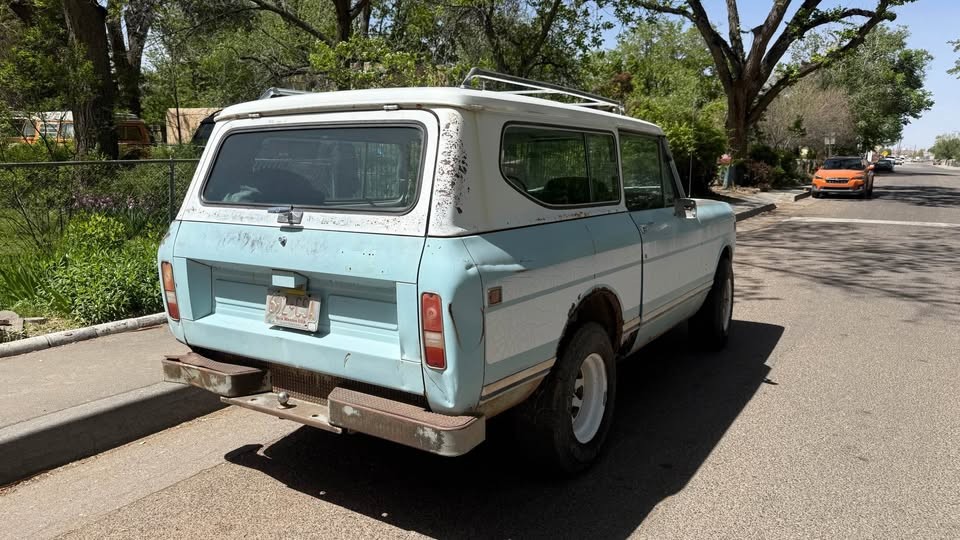
The seller states that they will include all the sheet metal to replace the damaged and rusted fenders, quarters and rocker panels on this example. Additionally, although there are no undercarriage pictures, the seller posts that there is no rust in the floors. That is kind of hard to believe based on the rot around the rear wheels. However, it is stated that the two front body mounts are rusty. So is $6,500 a good starting place for a running Scout II?




$6500 may seem like a lot for this Scout today, but once VW reintroduces the brand and interest spikes in the vintage models, it will probably seem like a bargain.
May have brought the whole tribe up to the mountains in NM for some skiing at Taos. 🌄 🏔 ❄️ ⛷️
Dad had one of these, a slightly earlier model, 304 V8, manual, 4WD. Unstoppable machine that rusted away in the same manner as this one is starting to; however, it had solid floors as well. Go figure.
I was under the impression that the 266 was a V8.
The 266 is a V8, used in American-built IH trucks, from ’59 to 1971. Canadians chose to use the 304/345 and leave it at that. There was a BG265, which was a six cylinder, also used on American-built Binders. It was nearly identical to the BD264 which, after 1960 was used in the Canadian trucks, until around ’68. The only difference I saw between the six cylinder engines was the BG engines were painted a seasick green while the BD engines were black.
After classic Bronco’s went thru the roof, only a matter of time before Scout’s start doing the same…