
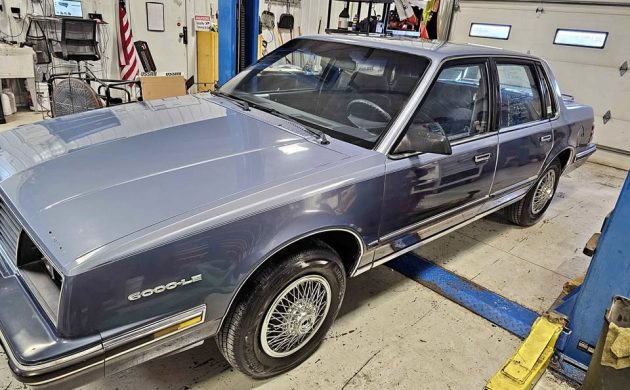
When you say the words “GM diesel” in the context of a vehicle from the 1980s, I wouldn’t blame you for thinking the worst. After all, GM had a significant swing and miss when it came to selling a diesel-powered sedan in the U.S. with the Oldsmobile V8 under the hood. These engines were trouble-prone and often not worth the cost of admission. However, a lesser-known engine and certainly seen quite rarely is the 4.3L diesel V6 that came in cars like this minty 1984 Pontiac 6000. The six-cylinder version fixed a number of issues with the earlier motor, but sadly seems to live in its shadow. Find the diesel Pontiac listed here on Facebook Marketplace for $6,500.
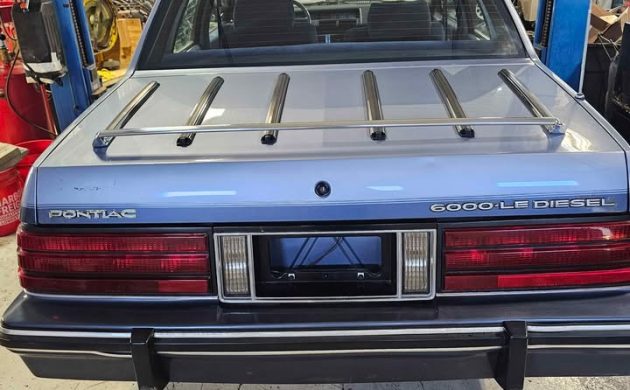
I often wonder with cars like these how many are truly still on the road. One would think it has to be nearing double digits – like, literally 50 cars still driving with registered plates on them. I haven’t seen a 6000 outside of a junkyard (and even there they’re a sight) in probably 10 years. I always loved the STE versions, especially the later cars that combined AWD with the racy appearance package. At one time, automotive pundits thought the 6000 could be a world-beater for Pontiac, putting it on the stage with the world’s best sport sedans. Obviously, that never happened, but it’s interesting to think about a brand like Pontiac being allowed to continue refining a decent platform – what could it have become?
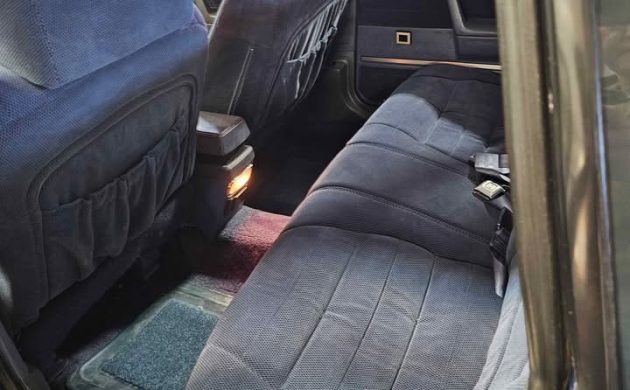
Back to the matter at hand: the 4.3L V6 diesel introduced a number of “fixes” for the shortcomings of the V8. A water separator and fuel filter in the V6 helped prevent the issues in the V8 caused by water entering the fuel mixture which, of course, ruined injection pumps and injectors, both of which were costly and annoying fixes. In addition, head bolts were the other major issue. While the material of the bolts themselves was suspect, the bigger issue was too few of them. The V6 addressed this by adding six bolts per cylinder, an increase over the V8’s four per cylinder design. Another fun fact is that the diesel used in front-wheel drive applications was the extensive use of aluminum, and as such, significant weight savings were achieved over rear-wheel drive diesel applications.
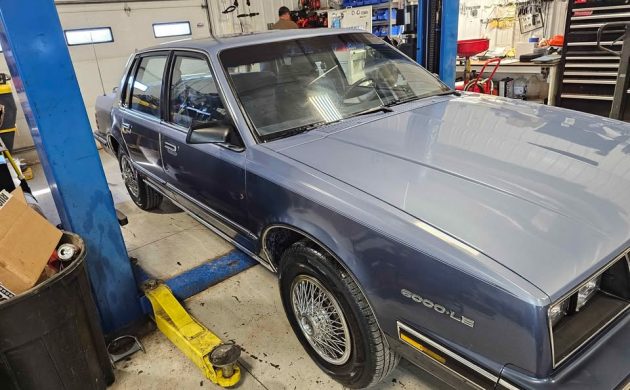
The shame of it is that even today, the flaws of GM’s diesel overshadow its efforts to mass-produce a fuel-efficient vehicle with good power. But the flaws themselves were not egregious, in my opinion – sloppy, yes, but GM’s engineers were quick to make the necessary fixes. Unfortunately, the impact of the media and consumer sentiment are two influences that make it very hard to reverse course. Regardless, this honey of a Pontiac 6000 looks like it has years of life left in its wheels and the interesting engine choice makes it an enthusiast darling despite not being particularly beautiful or fast. The asking price may have to dip below $5,000 for it to find a new home, in my opinion. Thanks to Barn Finds reader Sam61 for the find.


A “good” GM diesel from the ‘80’s-almost a oxymoron but the two V6 GM diesels (not sure what ci they were) in our neighborhood just seem to run for decades then disappeared some years after the owners quit driving.
GM–Oldsmobile–diesels got a real bum rap right out of the chute. They got launched into a field full of gas-pot mechanics who started blaming the LAST thing that should be blamed: the injection system.
Face it, whenever the engine acted up they blamed the ONE they knew nothing about. And they were WRONG almost 100% of the time.
Diesels played right into my hands. I was a diesel mechanic while I was a gaspot mechanic. I’d been around both long enough to know what made each one tick, so I knew what to look for when diagnosing a problem. Needless to say, our dealership had some problems with diesel but nothing close to what other dealerships had.
When the V-6 units came out most of the diesel problems were cleared up but there were some that carried over, mostly due to the mindset developed when the V-8s were at the forefront. But still the bad press generated by that mindset helped to kill an otherwise good engine.
Personally, I wouldn’t turn an Olds based diesel engine down if I was in the market. I’d like to find an ’80-’82 Cadillac Eldorado with a diesel. I looked after one for a customer and told him that when he was ready to sell it to let me know.
Obviously that time never happened…
The X body was never offered with a diesel. The A bodies were.
The Chevette offered an Isuzu diesel. But not the X bodies under any brand.
I couldn’t agree more. I had great service out of my 5.7 diesels and that 4.3 was bullet proof because of the extra head bolts. The biggest problems were when someone didn’t install a RACOR filter/separator. I always bought fuel from a place that moved their inventory rapidly. Mine were used almost exclusively on the highway. Constant short trip driving will kill one. An 81-85 Eldo or Riv diesel would be a great find.
Never knew they had a diesel 6000. Were they available up here 🍁 ?
Was the Celebrity and Buick Century, Olds Cierra offered w this motor ?
I worked for GM back then and I think that the diesel was offered in all the X-bodies. The ones I saw the most were the Buick versions and Olds Omegas. But I don’t remember seeing a Chevy Citation so-equipped either. 6000s were out there but I don’t recall one being in our shop…
The 80’s Omega was an X-body and, I believe, not offered with the diesel. However, the Ciera—an A-body—was offered with the 4.3-liter V6 diesel.
You know, it’s been 42 years since the dealership I worked for shut its doors. We were a Pontiac/Buick/GMC dealer but we worked on everything that GM built. A lot of water can run under the bridge in 42 years and now I’m questioning the models within the product lines. I know that Oldsmobile put the diesel into its X-bodies. The dealer down the road sold them and we ended up servicing them. When I worked for the independent shop we worked on everything…
No, they were never available in an X-body. It’s easy to forget details after over forty years — I still can’t believe that it’s been that long — so whether you’d seen them in Omegas or Cieras could be easily forgotten.
I was the Sales & New Car Inventory Manager at my dad’s Pontiac/Oldsmobile/Buick/GMC dealership, and I remember the 4.3 V6 well, even though we didn’t sell very many of them, because I ordered all of our stock cars, of all three makes.
They were available in all of the FWD A-body cars (Chevy Celebrity/Pontiac 6000/Olds Cutlass Ciera/Buick Century) and RWD G-body cars (Monte Carlo/Malibu/Grand Prix/Bonneville/Cutlass Supreme/Regal). The performance was remarkably decent, their fuel economy was excellent, and they were even more mechanically dependable than the DX-block 5.7 V8 diesel, which was a far better engine than the original D-block engines that earned the Oldsmobile diesel it’s lousy reputation.
If Wikipedia is to be believed, no X-body models of any generation or division ever got a diesel.
Reckon you may just be getting those mixed up with the mechanically similar A-bodies, which were available with an Olds V6 diesel (as seen here).
Phil D, I am really glad you said that. I had an 84 Century wagon with a 4.3 for a while. That had plenty of power and could get close to 40 mpg.
The 4.3 V6 diesel was also used in some RWD G bodies around 81 and 82. It was the same engine as the FWD V6 but a different block casting to accommodate the different bellhousing pattern of the RWD transmission.
All this is not to be confused with the short run of Oldsmobile 4.3 V8 diesels (260 cid). They were pretty much used in the Olds Cutlass series only. I don’t believe it was shared with the other GM Divisions because it could barely pull the hat off your head.
The 4.3 gasser and the 4.3 V8 diesel were so weak that Oldsmobile offered a 5 speed manual transmission behind them that was built for four cylinders and low output V6s, confident that their 260s wouldn’t be able to frag them.
I can’t knock (pun intended) the 4.3. I was plenty strong. Now, if you ever had the opportunity to drive a 1985 Electra 300 (that’s a 3.0L carbureted V6) then you know what gutless is.
did many a head gasket on the 4.3 diesel cutlass ciera’s . i do not miss that. good luck with the 6500.00 ask. you’re going to need it and need to finf a diesel lover for sure
There were about 20 of us dealer service reps went to Hartford CT to the Stanadyne factory for some orientation/education on the 350 diesels back in ’81. I remember them die-casting the housings for the injection pumps for the up and coming 6.2 engines right outside the classroom door. It was different to see some of the variations. Up until then all I’d seen were the Roosa Master pumps for mostly agricultural/industrial engines, and International DV573s. GM signing on as a new client sure picked up business for Stanadyne…
Worked for an Oldsmobile stand alone that sold the highest percentage of diesels in the country. One year (I think 82/83) almost 50% of new car sales were diesels. Obviously our shop was experts on these engines. We rebuilt pumps and cleaned/tested injectors and all the common stuff. I could install a gm target 350 diesel, test driven and paperwork done in 7.5 hrs. So, what’s the real deal with the later engines 81 and up, they were really good engines. The key to long life, change oil very often (I would not go more than 3000 miles), not because of bottom end failures, the frequent oil changes kept the insides of all the metal parts very clean, especially under the valve covers on the heads. This would eliminate almost all the head gasket failures because this was key to getting the heat transferred to the oil. I had an 83 custom cruiser wagon that had 175k mile when I junked if for body issues, never had a head off, did have 3 or 4 head bolts pop there heads off, I extracted them and just put in a new bolt.
On the later V6 diesels, good bottom ends, the first 6 months of builds had cast heads and had virtually no head gasket failures. They then went to an aluminum head and we then saw head gasket failures on some and they were a Bxxxx to put head gaskets in. The V6 diesel was first available in the A-body front drive then shortly came in the rear drive Cutlass chassis, I think the last model to get it was the 1985 new front drive Olds 98 and probably the same chassis on other GM brands.
Bottom line to me, the GM diesel were sorely misunderstood (even the early ones), we had a retired engineer with a 1978 delta 88 diesel, went over 100k with no problems (owner passed away). These first year ones really had a lot of poor designs problems but with good maintenance many still had good histories.
Sorry for the long rant, wanted to weigh in.
Seems like every other family I knew in the 80’s had some variation of an Olds Diesel in different body styles from GM divisions. None ever suffered from a blown head gasket as detractors often claim was a big problem with the 5.7. Most owners I knew had problems with bad starters, fuel pumps, oil pumps and other supporting mechanicals. But one thing that was odd and I never see discussed, was most everyone would have issues starting these engines without some sort of starting spray no matter the temperature outside. I remember seeing my friends with hoods popped up in our school parking lot spraying starter fluid into the air intake. They would fire right up with a little help!
A properly maintained diesel doesn’t need starting fluid. It can damage the engine.
Maybe that’s why so many people in the 80’s had issues! I think it was a GM thing. None of the Mercedes diesel owners had issues. But my friend had a GMC pickup with the 6.2 litre diesel. Very well maintained. But every now and then it would take starter fluid to get it going. I’m talking. It would not even turnover. Same thing with another friend who had a 1984 Cutlass Ciera diesel.
Well not to nitpick but if it wouldn’t turn over, that’s an indication of a weak battery or batteries. Remember that a diesel has about 22:1 compression. Also, if there was too heavy an oil in it, that would slow down the cranking speed. Even a bad fuel line heater would allow the starter to turn it over but not start due to fuel waxing.
Jay, I have to disagree with you about the Mercedes engines having no problems. Out west a lot of wealthy farmers and ranchers owned Mercedes cars. Since we were the only shop nearby who worked on diesel engines (plus worked on their diesel-powered farm equipment) they naturally brought their MBs over whenever they acted up. And contrary to popular belief they DID.
Crankshaft timing sprockets that came loose and oscillated back and forth, taking out the keyway in both the crankshaft and sprocket; failed timing chains; failed glowplugs and relays; failed camshafts and followers; sticking and bent valves–we fixed a lot of failures on MB diesels. The only thing I will say is that, back in the late 70s / early 80s, (allegedly) when the API changed the light oil spec from SE/CC to SE/CD, sparking (which seemed coincidental) a deluge of gaspot camshaft failures across all makes, MB had a mandate to check the camshafts of ALL vehicles coming into its service departments. The farmer customers I had used the same oil in their cars as they did in their tractors (which still used the Series 3 / Diesel Severe spec) and they had very few camshaft failures. Interesting enough, those who religiously used MB’s own oil at that time experienced camshaft failures…
You learn something new everyday, I thought I was pretty up on the cars from back then but never knew GM offered a different diesel other than the junk that was in the Cadillacs and the Olds.
@ACZ They didn’t need to be boosted. You could lift the hood. Spray whatever people used at the time into the air intake and the engine would turn over. If it were a low battery, you would need a jump start not a spritz of starter fluid.
Jay, I’m not trying to nitpick. You said it wouldn’t turn over. Did you mean that the starter motor would not engage and spin the engine? I may have misunderstood.
@geomechs I’ve had 8 w123 80’s diesels over the past 40 years and have never had any issues other than regular maintenance. I grew up in a farming community and there were diesel cars everywhere. None of the Mercedes owners complained about their cars. But it led to tense situations between our towns GM dealers (Cadillac, Chevy, Olds, Buick, and GMC) and the owners of their diesel products as they were always complaining. And you’ll never find an 80’s era Mercedes with gas replacement engine. You’ll find plenty of GM diesel to gas conversions, however. We had good luck with our 81 olds cutlass brougham diesel tho.
Lots of MB complaints where I worked. Most were for different things, such as transmission shift points or overall power. Some complained that the heater fell short of keeping the car comfortable when it was 20 below outside. There was the odd, totally unfounded complaint that was similar the Olds crowd. In a lot of cases many understood a diesel engine as it applied to a farm tractor or a big truck. Put them into a car or light truck and they were the deer-in-the-headlights.
I completely lost track of the number of complaints over poor fuel economy, especially from the GM side. “I bought the diesel for fuel economy!” The classic complaint. Of course the guy ran right over to K-Mart and bought a calculator, which he used to calculate every last tank of fuel. I had a customer who missed a major sales meeting drove 500 miles out of his way to get his outfit fixed because the mileage (he didn’t bother to realize that he was in the mountains) dropped below 18.
I would take the “ailing” vehicle for a structured mileage check and find nothing wrong, to which I’d promptly be accused of lying or calling him a liar.
I never saw an MB with a swapped in gas engine but the numbers were far less than the Oldsmobile editions. Plus, the Oldsmobiles ended up going to people who continued to drive them like gaspots. Stopping and starting; running cold; overloading.
The last one applied more to trucks but I have to say that if a diesel vehicle came in with a major engine failure there was always a telltale mark of overloading.
The pickup with the broken crankshaft; the owner always toted an 8ft overhead camper plus towed a four-horse trailer. Blown head gaskets and/or sheared off head bolts; check the two empty ether cans in the trunk or truck bed. The quick heating glow plugs were burned out because the guy decided they weren’t staying on long enough so he bypassed the solenoid.
The vast majority of my customers looked after their diesels but there was always that crowd of losers who could destroy an Abrams tank.
Wanted to tell a story on diesel experience when it gets really cold. I think it was the winter of 82/83 and we had a couple weeks early February that the temp rarely got above 10 during the day and had a few nights -25 to -35F. Being later in the winter the Olds diesel owners by then had their units right. Those nights down in the deep negatives, we did not have to tow in any diesels, but probably towed in 30 gas cars. I had an 82 Buick LeSabre diesel and it always started (not plugged in). If you had your fuel treated, good batteries, and the quick glow system working as it should, they would light off.
On the starter comment someone said, we almost never had to replace starter, problem usually came down to corroded or poor connection with the battery system or bad batteries. Obviously the glow system had to be right and “NEVER USE ETHER” unless you like paying for glow plugs and other repairs. The Olds diesels were made that if they were right you should never use it.
On the oil pump comment, there was a problem with the early engines with the shaft that drove the oil pump from the vacuum pump. The shaft was updated I think late 79. You wanted the new shaft that had a blue color. After that never saw a failure.
On the fuel pumps; the governor used a urethane ring on the governor housing to control pulses. Because of many not recommended additives people put in the fuel there definitely were some premature failures and for all that got up in the miles, they all had to be resealed at some point. I probably rebuilt a couple hundred of the pumps. At shops like ours that were familiar this was not a bad job or cost. We also did the injectors (cleaned, tested, polished seats, etc).
Big picture, yes the Olds gas V8s were bullet proof, they virtually never failed. The diesel, not so much, but as good or better than a lot of other products out there.
There was a cure for the pelthane ring problems. If you used the 1985 design weight retainer, it had springs instead of plastic. That was a permanent fix.
Yes the original injection pumps used an “Elastocast” ring to hold the two components of the governor cage together. What GM and Stanadyne didn’t realize was how hot that injection pump got, especially in the summer during the daily gridlock. On almost any industrial engine the pump seldom got hotter than 160 degrees. In the tight quarters under the hood the pump could get upwards of 240. Stanadyne first came out with a tougher (Pellathane) ring which was more tolerant to the high temperatures. But it failed too.
Stanadyne brought out a modified cage that was spring-loaded. It was a carryover from the DC pump that was used in the IH DV573. But it wasn’t as stable as was hoped. Stanadyne then brought out the “Encapsulated” cage that kept all the flexible stuff contained.
That was a good update. In all the years I worked on diesel fuel systems I only saw one that failed. And I believe that was on a Ford/IH 6.9 application.
The knowledge base you always find in these forums is neat. I had forgot about the newer style governor cage that was all metal with the springs. I had very few of those pumps apart because the only failures I saw were a few that leaked. I think I still have one of those all metal ones in a tool box somewhere (in case I ever needed it from probably 30 years ago; my wife say I am junk collector, probably right)
I know the feeling. I still have a complete V6 injection pump somewhere.