
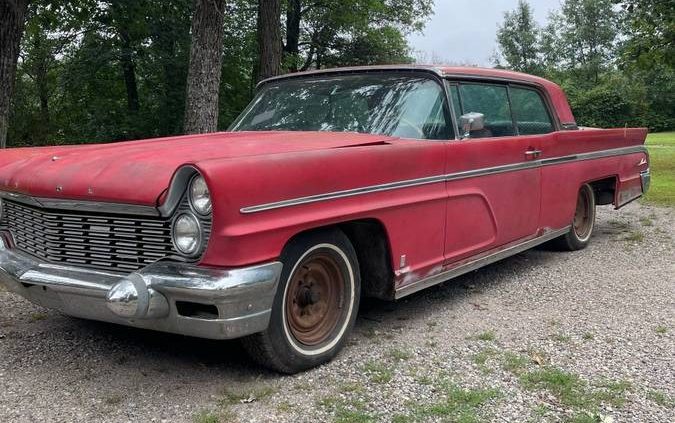
In Shakespeare’s Tragedy of Julius Caesar, the doomed Brutus remarks to the equally doomed Cassius that he wishes “man might know the end of this day’s business ere it come!” It’s unfortunate that this line is the first thing that came to my mind when I opened the craigslist ad for this 1960 Lincoln Premiere. I have had a low-key hankering for a ’60 Lincoln ever since I saw a roughed-up sedan for sale when I was 19, but I worry for the future of this long-dormant coupe. Located in Clear Lake, Minnesota, and sent in by Barn Finds reader Barney, this Lincoln will need a dedicated fan to save it from tragedy.
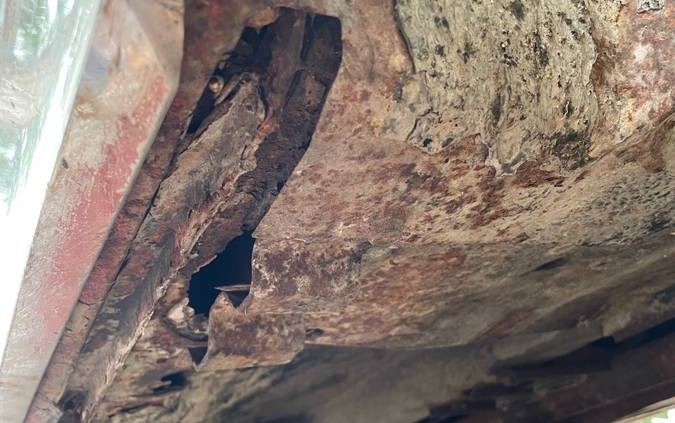
The primary reason for my concern is rust. While the rocker and floors are far from a lost cause, they will add to the expense of what will be an already pricey restoration. I know what you’re thinking: “Is sheet metal available for these big unibody Lincolns?” Surprisingly, yes. A quick Google search reveals that at least one outlet has both outer rocker panels and floor pans available for 1958 to 1960 models.
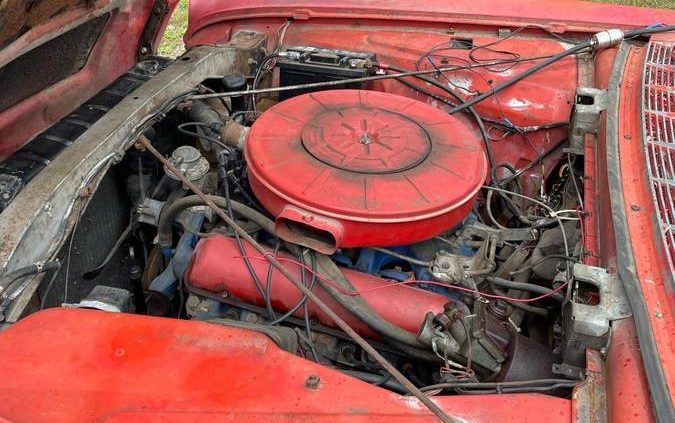
The seller’s grandfather was the car’s original owner. The Lincoln was last registered in 1974, but the engine was rebuilt in the late 1980s with the intention of commencing the car’s restoration, but clearly, work was stopped for some reason. Although the seller has owned the car since the 1990s, they have done little with it since then. The engine runs on an auxiliary fuel supply, but the transmission, which was rebuilt around the same time as the engine, is not “willing to wake up.” It also has no brakes except the emergency brake.
The engine itself is a 430-cubic-inch MEL V8, which produced 315 horsepower through a two-barrel (!) carburetor in 1960. Connected to a Turbo Drive three-speed automatic and 2.89:1 gears, it would have been a fine cruiser when new, if not a little thirsty.
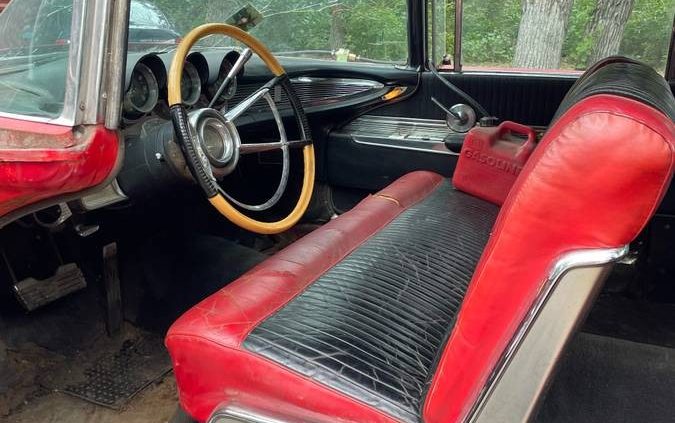
The interior seems to be mostly original based on the pictures posted, and with some elbow grease and perhaps a new carpet, it could be livable enough for a rolling restoration.
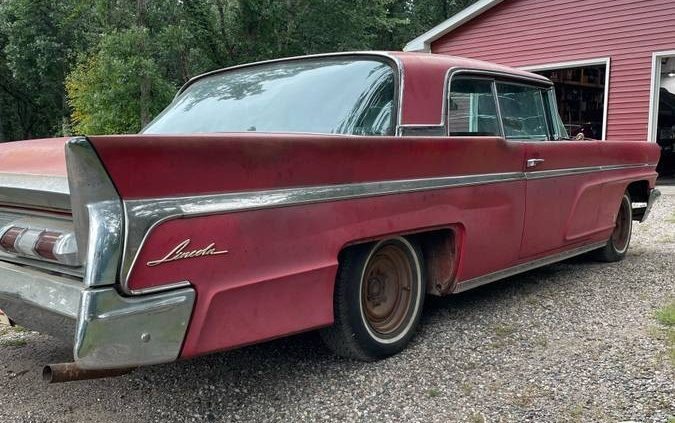
But that’s the issue – is anyone willing to restore it? It’s probably too nice to become a parts car, but there’s little financial upside to a full restoration. It’s almost too fancy a car to drive around as a beater, but that may be the best outcome for this grand old luxury coupe. The seller has the fender skirts, wheel covers, and a good used windshield, so it seems to be complete, but what will the end of the day bring for this big Premiere? I hope it finds someone who is willing to sort out the mechanical components and give it a happier closing act.


Seems worth the grief, at that price, if your doing most of the work.
It looks so….. undignified… without fender skirts.
That’s the fate that these ultra luxury cars fall into– once the new wears off, they go downhill pretty quick. All that gadgetry wears out and maybe 5 to 10 years later, they might serve as a
house painter’s car or a cheap second car for a growing family.
Note to the new owner: Don’t forget an ample supply of wooden clothespins, you’re gonna need ’em to keep this big
beast from vapor locking on hot
summer days. Other than that,
it’ll be a labor of love for the new
owner. Hey Angel, wanna try it?
Clothes pins? Please explain.
It’s an old wives’ tale that wooden clothes pins on the fuel line would prevent vapor lock. I’m sure plastic ones would work equally well.
Only if you’re bankrolling it, Ken! LOL
My preference is the ’58 but these are nice to a point.
Im just glad this one doesn’t have the breezeway rear window. That just ruins the roofline and the flow of the design. The ’60s fins grew downward towards the taillights, kinda dumb in my opinion.
As always, this would be a labor of love. I’ve got the love if someone has the purchase price.
True- all the cars I ever put in demo derbies were top of the line models that had bells and whistles that weren’t working anymore ,fender skirts, faded woodgrain , damaged vinyl roofs , etc. that people didnt want to deal with anymore and usually only about 10 years old . I never was able to pick up a plain jane sedan for my usual purchase price of $50 or less
According to automobile-catalog.com, Lincoln only made 1,963 of these. In 1960, Lincoln only produced 10,275 cars in total. I suspect parts must be very difficult and pricey.
Hats off to the person who takes on a restoration of this car. It would undeniably cool and unique.
Yes, a 2 barrel carb for 1960 to 62. According to Curbside Classics, they were “taming the thirsty beast,” along with de tuning.
Mike, it’s this way: all Ford cars
since 1932 have been prone to vapor locking. And the only way
to remedy the issue is by installing spring loaded wooden
clothespins on the fuel line from
the fuel pump to the carburetor.
You see, on a hot summer day, Fuel from the tank comes through your fuel line, up to the
fuel pump and on to the carb. In
a vapor lock scenario, the fuel makes it up to the fuel pump where it’s prematurely vaporized
BEFORE it gets to the carb. That
pre vaporized fuel gets to the carb where it’s mixed with air–and that’s where your problem begins. Your carb takes LIQUID
fuel under normal conditions and
sends it to the venturi to be vaporized and mixed with air. In a vapor lock scenario, all your carb is getting nothing but air
which causes an air bubble in the
system that causes your Ford to
stop running. The WOODEN clothespins absorb the heat on your fuel line and directs that heat elsewhere by holding said heat where it’s then pushed out by your engine fan. I’ve been doing this method for 55 years now and it’s always worked for me. Hope that helps Mike.
I’ve owned three Ford vehicles over the years (’57 Custom 300 sedan w/272 V8, ’64 Falcon sedan w/170 L6, ’63 Falcon Squire w/170 L6) and none of them ever vapor locked. Neither did dad’s ’65 Falcon or ’66 Mustang, both w/200 L6s.
I kinda figured that “plastic clothespin” comment was gonna get hell. Its obvious a wooden pin would be more effective.
I thought maybe it got too hot under the hood for a plastic pin. It could melt, but your reasoning is much better
l was being facetious. I don’t think either one of them work. But if you want to get down to it, wood is an excellent insulator and thus a poor absorber of heat or cold.
Like I said honey, wood absorbs
heat much better than plastic. Too bad I couldn’t come up with a
kit that could divert the heat from the fuel line, I’d make a fortune
selling them to Ford owners.
Copy and paste if it doesn’t highlight: https://www.britannica.com/science/wood-plant-tissue/Thermal-properties
A barge, by any other name.
I was taught that trick by an old
family friend named Don Grimm,
who served with my father with
the Normal police department 🙀
and collected old cars in his off duty time. Well, one afternoon, Don shows up with this sweetheart of a ’51 Lincoln ragtop he’d bought for a song.
That thing was nearly perfect in every way. I was getting an eyeful when Don popped the hood and I walked over to take a look at the engine. That 337 was
clean enough to eat off of and looked great. It was then that I noticed a long row of clothespins
running from the fuel pump 💪
up to the carburetor. I asked Don
about it and that’s when he told me about this fix. I still had that
’59 Lincoln that ruined a date for me not long before that. “Now Ya’ tell me!” I said as he closed the hood. He took us for a spin in
the ragtop by way of the Tru Value hardware store 🏬 where I
picked up 5 big bags of wooden
clothespins. And yes, there really is a city 🏙️ called Normal, Illinois.
I lived there about 10 years before I married my 1st wife. Now if I could only come up with a fuel line insulator kit for vintage
Ford’s, I’d be a very rich man today.