
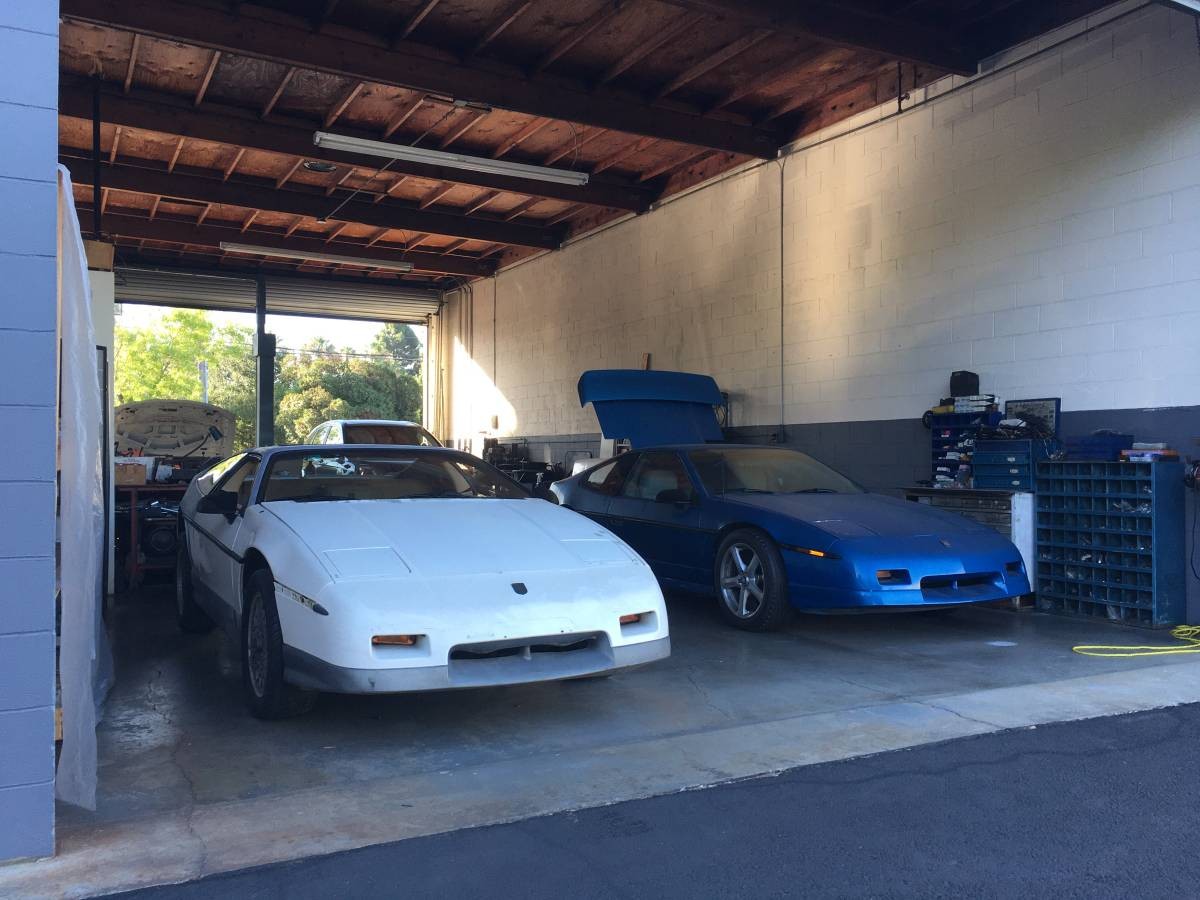
The best year of the Pontiac Fiero has always been the last year. While some may argue that the purer lines of the earlier design, especially with the Formula package, were more in keeping with the original concept, the later cars really did make it into the sports coupe it was destined to be. The later Fieros had major styling improvements (in my opinion) along with a nice bump in engine power. However, the seller of this final-year 1988 Pontiac Fiero GT listed here on craigslist has gone a step further and swapped in a supercharged 3800-series V6 paired to the preferred 5-speed manual.
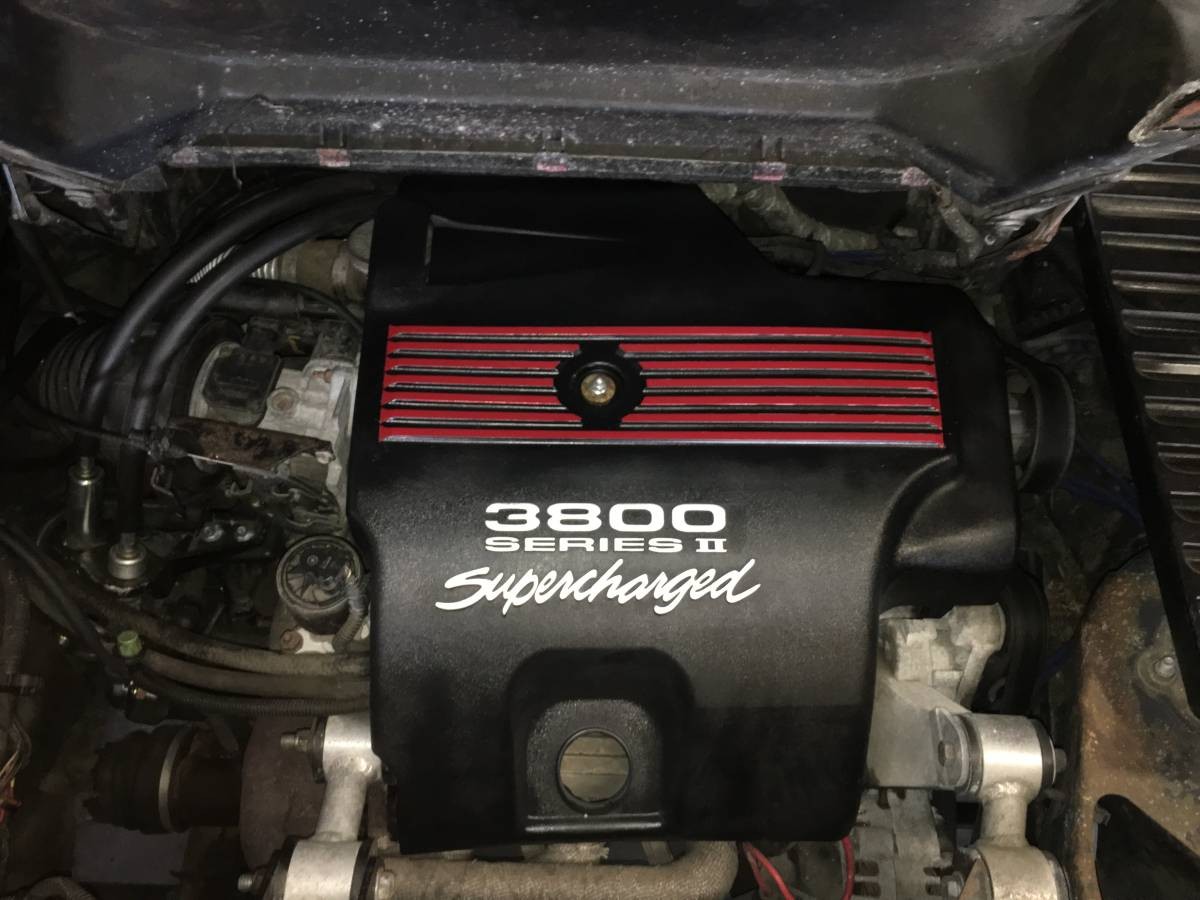
Thanks to Barn Finds reader Tony Primo for the find. The 3800 swap is fairly well documented in Fiero land, with most of the people who have done it citing its relative ease and cheapness of parts. However, most accounts I see indicate there’s still about 30-40 hours of labor involved in doing it “right” and even if the swap itself is well-documented, that doesn’t mean it’s simple. Dropping the engine in is one thing; getting wiring sorted out, making harnesses, and fabricating components when needed are all potential time sucks you can’t reasonably predict. Still, it looks awfully nice sitting in the cradle.
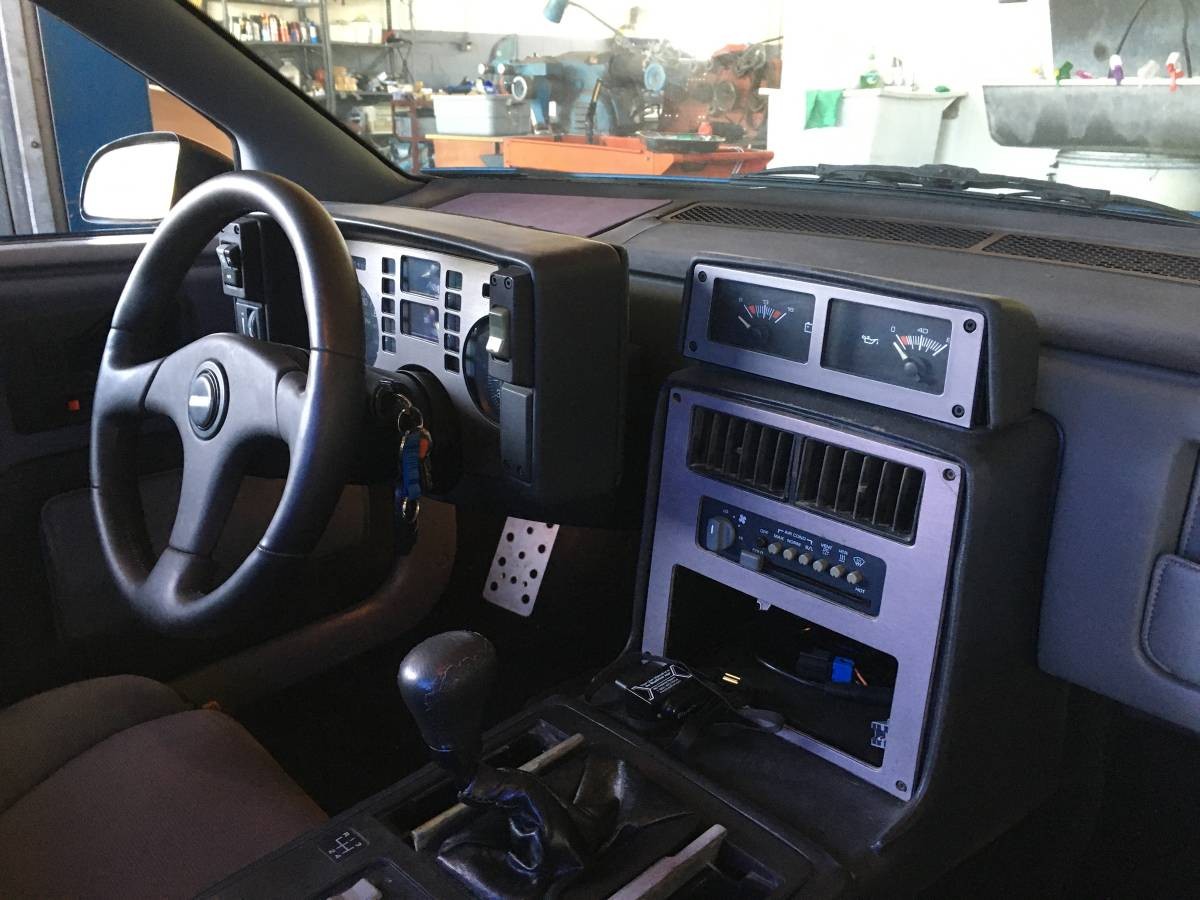
The 3800 in supercharged form made around 240 horsepower, so you’ll certainly experience the sensation of having performance available right now. Plus, you can’t beat the sound of the supercharger whining behind your head. And let’s not forget that the engine swap is just the beginning; then you get to play with a wide assortment of additional modifications that can take horsepower even higher. Of course, you also run the risk of introducing other complications and the need to upgrade additional components, such as suspension and brakes, the more you elevate the performance. The seller’s car looks fairly clean inside with some obvious loose ends to tidy up.
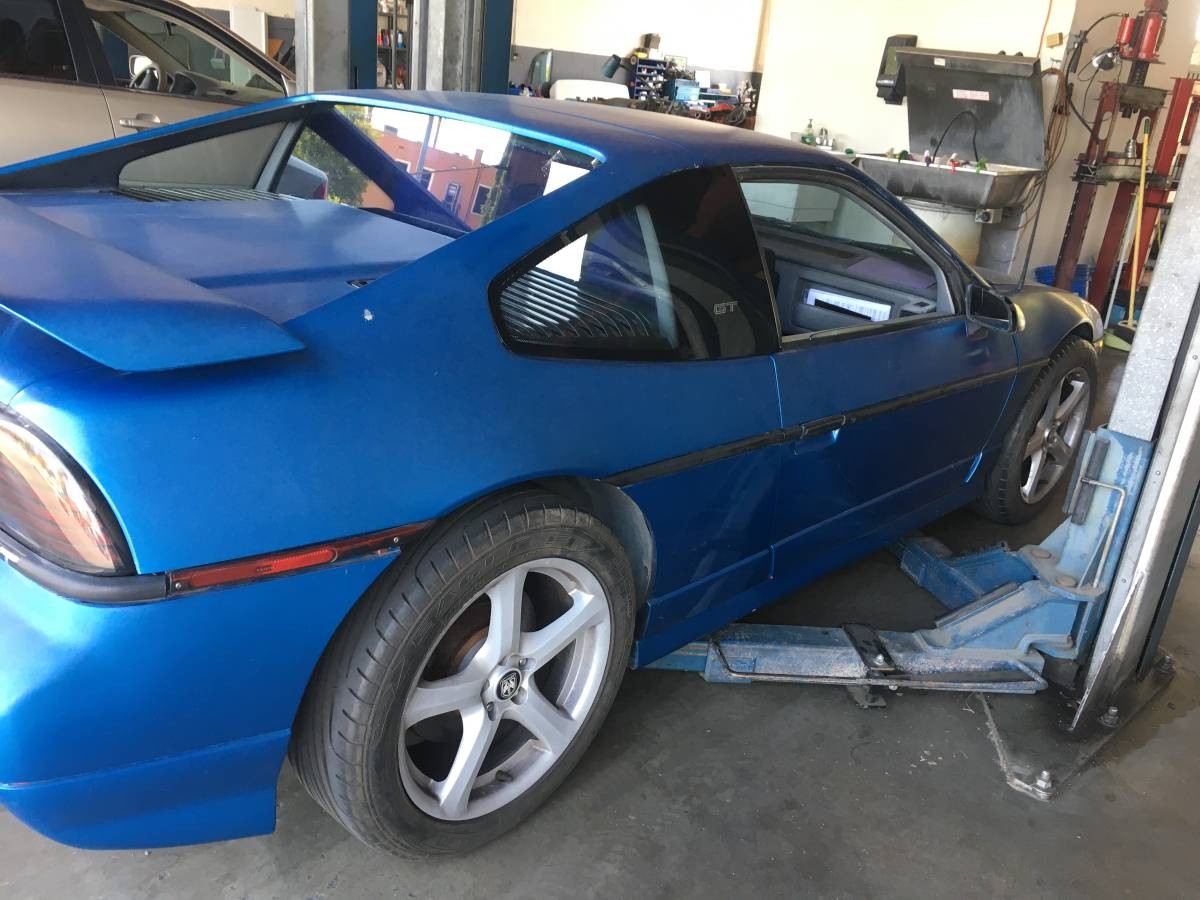
Overall pictures of the car aren’t the best but we can see it wears attractive blue paint (perhaps a respray – the listing doesn’t specify) and larger aftermarket wheels. The listing notes it has a coilover suspension and big brakes, so perhaps the seller has already addressed some of the concerns noted above about exposing other areas of weakness once you climb aboard the upgrade train. The Fiero GT is a terrific entry to 80s performance car ownership, and this one certainly has the potential to go even further if it’s suitably dialed in and ready for more power down the line.




I thought that the ’88 GT was the best looking back then (& still do). I test drove one when new and commented to the salesman that the shifter was a bit balky & vague. He said “you get used to it”. I bought a CRX Si & drove it for 32 years and got used to perfect shifting.
Mike B., I did the same thing in 1985, and loved my CRX Si!
I had a customer who did the 3800 swap. Saw him on a regular basis while we tried to get him the right CV axle to make it work. Eventually we figured it out. He kept the car for several years and finally got bored with it. Can’t imagine why, but I guess you can buy an old Corvette for less money, less labor, and more power.
Because it’s different. If he had wanted a Vette, he would have bought a Vette.
A standard V6 5sp was more than enough performance. Why do people feel they can do better then a team of engineers?
You mean a team of like the ones that built the Vega, the Aztec and all those engines from all the different manufacturers that are being recalled? Hmm. Gee. Interesting question.
NOT.
You’re joking, right? People have been modifying cars to make them faster for way over a century.
Curt, one reason is that the Fiero was from an engineering budget standpoint, really done on a shoestring. It was approved based on the justification it was an engineering exercise really intended to demonstrate a manufacturing process with body panel attachment to a steel structure, rather than use the body as the structure. The first one was based on Chevrolet Vega components, and if you looked carefully around the suspension attachemt areas, you could see pretty crude (for a production car) welded-on rectangular plates where cracks appeared on the test vehicles. The front solid disc brakes were really not up to the rest of the car. Threre wasn’t budget to engineer better brakes, or develop high-performance engines, but, while I never discussed that area with anybody involved, I would expect that was what they had in mind. But all the additional engineering and tooling expense depended on car sales. They then got approval to engineer major chassis changes, but unfortunately poor sales doomed the effort.
All of this was in the face of spiraling cost increases, as GM’s overall market share declined. In the mid-1960s, GM was on top of the world, with roughly half of the world auto market share, and 90% share of inter-city buses and locomotives. They negotiated deals with the UAW for what by today would be considered top of the line health insurance programs including for retirees. Competition for Japan, Germany, and even the beginnings of Korean companies, combined with in hindsight, bad decisions, cost them market share. As sales declined, they offered retirement programs that avoided the trauma and negative impacts of firing people. But all those retiree benefits costs were going up (in addition, health care costs were climbing) both the totals, and cost per car. It put huge pressure to cut vehicle cost, and cut vehicle engineering expense.
That’s why this kind of a swap makes sense. It isn’t that hot rodders can out-engineer the factories (they can once in a while). It’s that the engineers didn’t have the budget to do a lot of things they thought about.
Remember that Pontiac execs pitched the Fiero concept to GM management as a “commuter car” to avoid conflict with Chevrolet’s Corvette. They got it through as the first 1984 iteration was saddled with a weak 4 cylinder, Once the more powerful V6 and other improvements (esp. the ’88’s revised suspension) showed that the Fiero was capable of becoming a world-class sports car, Chevy used it’s clout to get it killed.
General Motors always eats it’s young.
BTW – here’s a pic of my ’88 T-Top Formula. I painted it in my garage by removing all the body panels. Easiest car I’ve ever painted.
We feel we can do better because we usually can, better HP and better reliability!
I have a modern car, Curt, made by a crack team of American engineers. To replace a front headlight assembly, one must first remove the entire front fascia. Which requires removing the front wheels.
Not insulting you, friend, just pointing out what a team of engineers can do. Besides, we’ve been hot-rodding cars since engines were first put in carriages. A lot of folks who read Barn Finds have modified cars, engineers be damned. It’s fun. :)
3800SC swap is a great upgrade. Put a 3.4″ pulley on the supercharger and a free flow exhaust and you’ve got close to 300hp.
I’d also like to know about the choptop next to it.
If I remember correctly there were a few test vehicles equipped with a turbo. They determined it was too powerful for public release and scrapped the idea.
” the purer lines of the earlier design, especially with the Formula”
Jeff- The FORMULA was only available in ’88.
Definitely a paint change as ’87 was the year for blue, not ’88.
I purchased a slightly used 86 Fiero GT 4 speed. Silver with all the ground effects and spoilers. Loved it! I’m 6’2″ and fit in it just fine although it was a little tough getting in and out. The shifter was a bit balky, but yeah, I got used to it. Car was literally a go cart, curve hugging fun machine. Sad that they stopped production just as the car was finally getting it right.
It didn’t help matters any that Toyota introduced the MR2 at about the same time. When the Fiero had the market to itself, it sold well, but when the much superior MR2 hit the streets, combined with sub-par GM build quality (engine fires, anyone?), it was game over for the Fiero and GM. It’s an old story. GM used its customers as development engineers, and by the time they finally got the car dialed in enough so the mechanicals could cover the checks the styling was writing, sales were in the toilet and Pontiac had to pull the plug. If the car had been competitive right out of the box, GM could have given Toyota a run for its money, and might have been a first step towards turning GM around, but instead, GM lost a golden opportunity to right the ship, and continued its long slow descent towards bankruptcy. I look at pictures of the stillborn 1990 model and think, damn, that was what the car should have been from the get-go! It had an upgraded interior that rivaled the MR2, to go with all of the mechanical upgrades.
https://www.curbsideclassic.com/blog/forgotten-future/forgotten-future-1990-pontiac-fiero-prototype/
I’d be wanting to ask lots of questions on this, and definitely would want to inspect this with a microscope.
The first two things I’d want to see, before even looking at the car, are the VIN and the title. It might all fall apart there.
Wouldn’t you check those two things with ANY car? Besides, ad states it’s a clean title.
I don’t care what the ad says. This car is radically different, because it has been highly modified. If the VIN decodes to a 4 cylinder, it is a foolhardy purchase at best.
People mention “rust free” in ads all the time, but that is often not the case.
If the title is clean, it should be included as proof. Too often, a Reconstructed title is represented as clean, but it isn’t the same as a regular title.
Looking at prices for other Fieros, I see this is advertised well below others I have seen. Why? It is also significantly lower than other 3800 swaps I have seen, even here on BF.
For those interested, it appears that this car was originally red, like the color of a warning flag.
I was slightly burned by a seller back in the 80s who misrepresented a vehicle to me, back when it was a lot harder to verify things than it is now. I am therefore looking at every vehicle with a very critical eye. Some may not like it, but if it protects someone from getting rooked, I am glad to have helped.
Being an ’88, this does at least have the final-year revised steering, brakes and suspension, which some have observed bears a striking resemblance to Lotus designs, tho’ apparently it was what Pontiac engineers had intended for the Fiero all along from the outset, before they had to cheap-out by adapting existing T- and X-platfiorm components to get production green-lit at all.
As to why GM would approve such major upgrades for one year only, they didn’t, at least not intentionally. The second-generation Fiero was then late in development, mostly a rebody of the existing spaceframe incorporating the suspension/brakes/steering revisions, which were already finalized and tooled-up, and thus readily transferable to Gen1 Fiero production.
They decided to roll out those updates for ’88 as a preview of better things to come, hoping to goose sales and build hype for the pending Gen2 Fiero. Alas, sales volume for ’88 actually continued to plummet, so GM pulled the plug on launch of the Gen2 Fiero in the eleventh hour.
Familiar tale from GM. I still mourn the loss of the Corvair.
Ditto. Also the GM Y-Bodies, the 1961-63 Buick Special, Oldsmobile F-85 and Pontiac Tempest, with the 215 aluminum V8, along with the DeLorean Pontiac OHC six-cylinder. All died too soon, as the bean counters killed them before the engineers could work the bugs out of them. Remember, these were all designed using slide rules and drafting tables, so it took several design iterations to work the kinks out of new designs, time that the GM bean bosses seemed unwilling or unable to give to the engineers. Remember, no mater how well you test a new design before full production, you don’t really find out what bugs are out there until they get into the customers hands!