
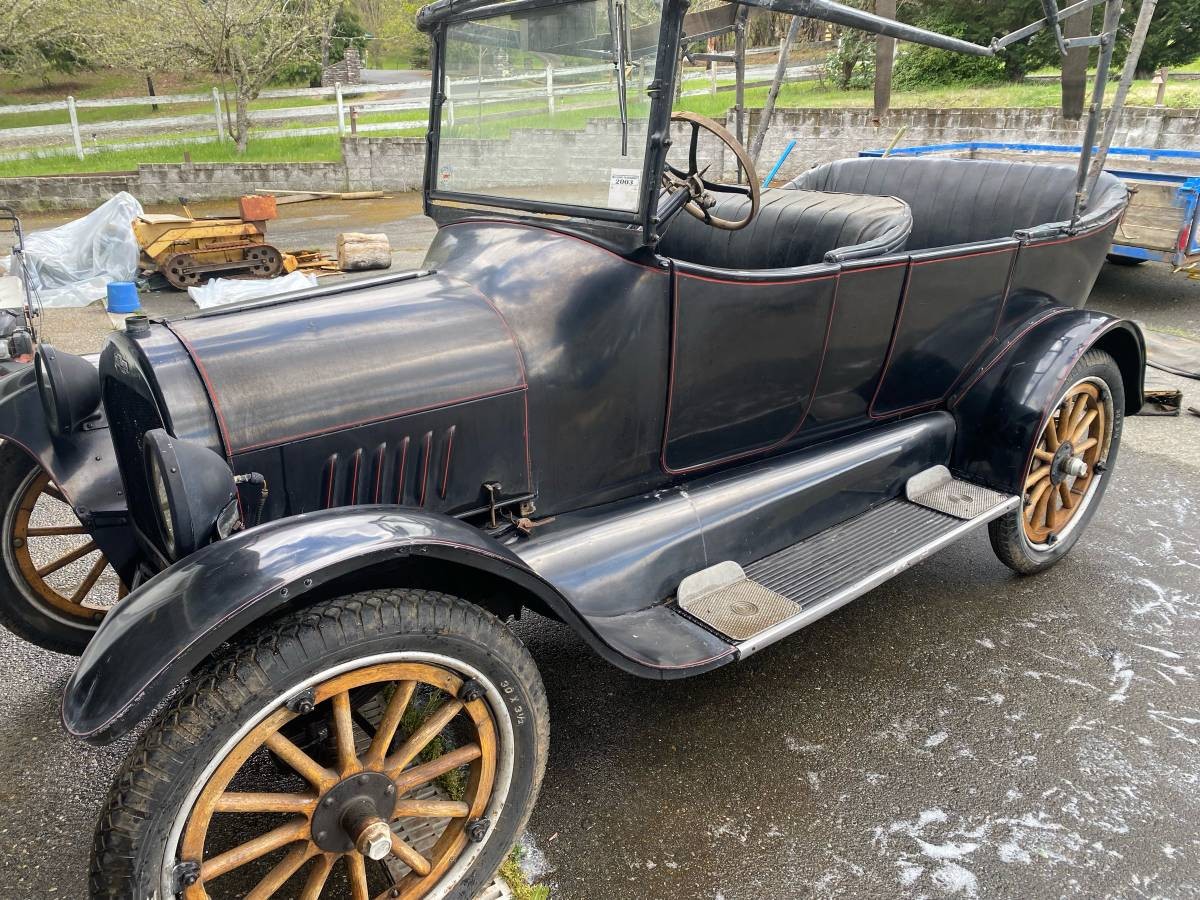
Rivalries in the automotive world never get stronger than the age-old battle between Ford and Chevrolet. From racing to the affections of their loyal owners, these two storied American brands have been locked in combat for over a century. When this clash began, Ford was the proverbial 800 lb gorilla of the automotive world when it came to sales. Yet, it was cars like this 1917 Chevrolet 490 touring for sale on Craigslist in Grants Pass, Oregon that eventually chipped away at Ford’s marketplace dominance. This rough but running Chevrolet is looking for a new home with an asking price of $9,750. Are you interested in restoring and returning to the road an example of the Model T’s main rival? Thanks to zappenduster for the vintage find!
The early days of automobile production in the United States were comparable to the legends of the Wild West. There were many players, some good and some not-so-good, who were all vying to gobble up a slice of market share. One of the most notable was William Crapo Durant. His idea was to have multiple automotive brand names under the umbrella of a single corporation. Customers would start with the lowest-priced car and slowly work their way through the brands as they became more affluent. Chevrolet wound up being the bottom rung of the ladder in the company we now know as General Motors.
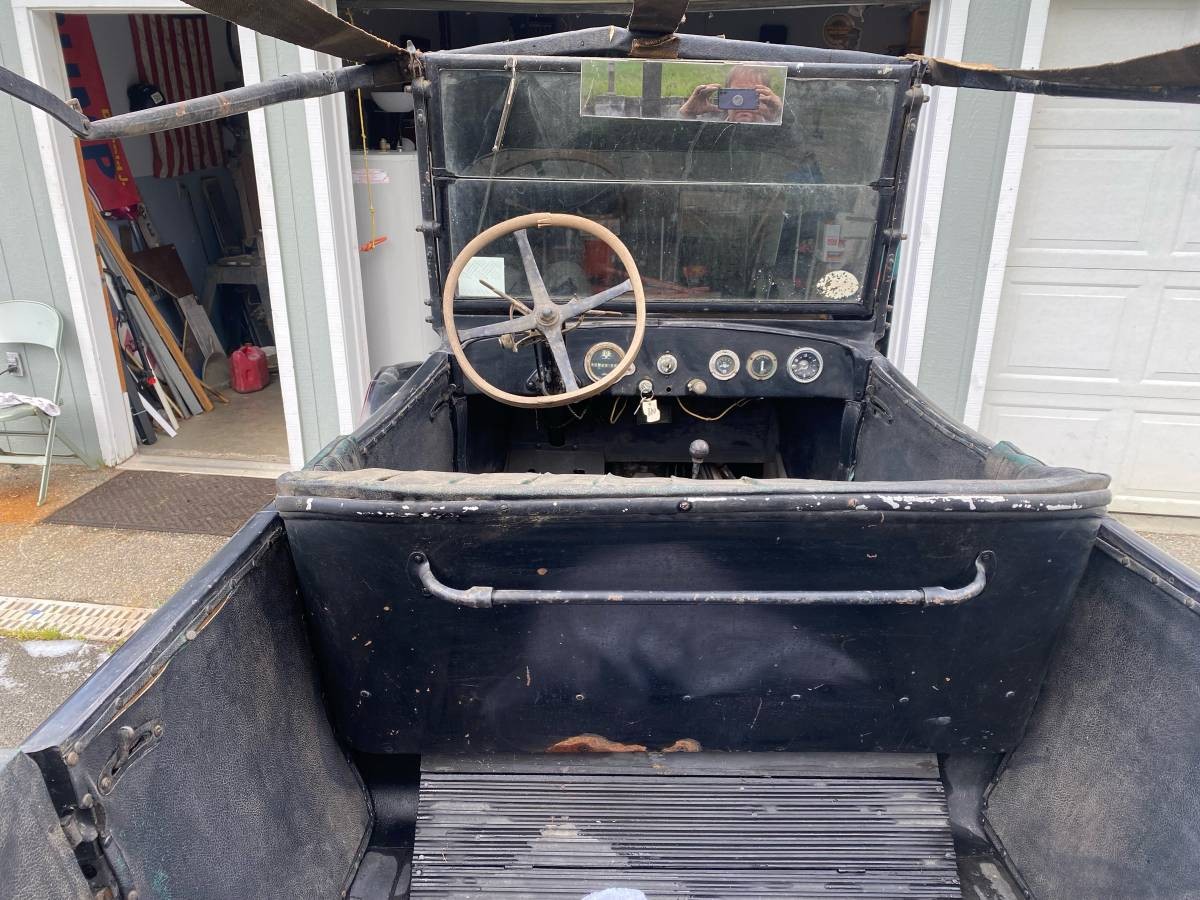
The Chevrolet Series 490 was the vehicle that Durant, whose control of General Motors was lost in 1910 but regained in 1916 and lost yet again in 1920, used to compete with Ford for dominance in the lower end of the market. The name for the car came from its introductory price in 1915: $490. While the price didn’t stay that low for long, the 490 was a runaway sales success until it was replaced at the end of 1922. Customers comparing the car to the Model T found that the Chevrolet had such technological advancements as an overhead valve engine, a three-speed transmission with a clutch, electric horns, extensive instrumentation, dome lights on closed cars, and headlight dimmers. An electric starter even made the standard features list eventually despite it being an extra-cost option on Fords.
Under the hood was an inline-four-cylinder engine displacing 171 cubic inches and producing 24 horsepower. In contrast to Ford’s rather agricultural inline-four, this engine featured battery ignition, a mechanical water pump, and overhead valves. This early valvetrain was labor intensive due to being an open design and the fact that pressurized lubrication was not implemented. It was up to the car’s caretaker to occasionally lubricate the valvetrain using a conveniently placed oil can mounted on the firewall. This engine was replaced by the famous “Stovebolt Six” in 1929.
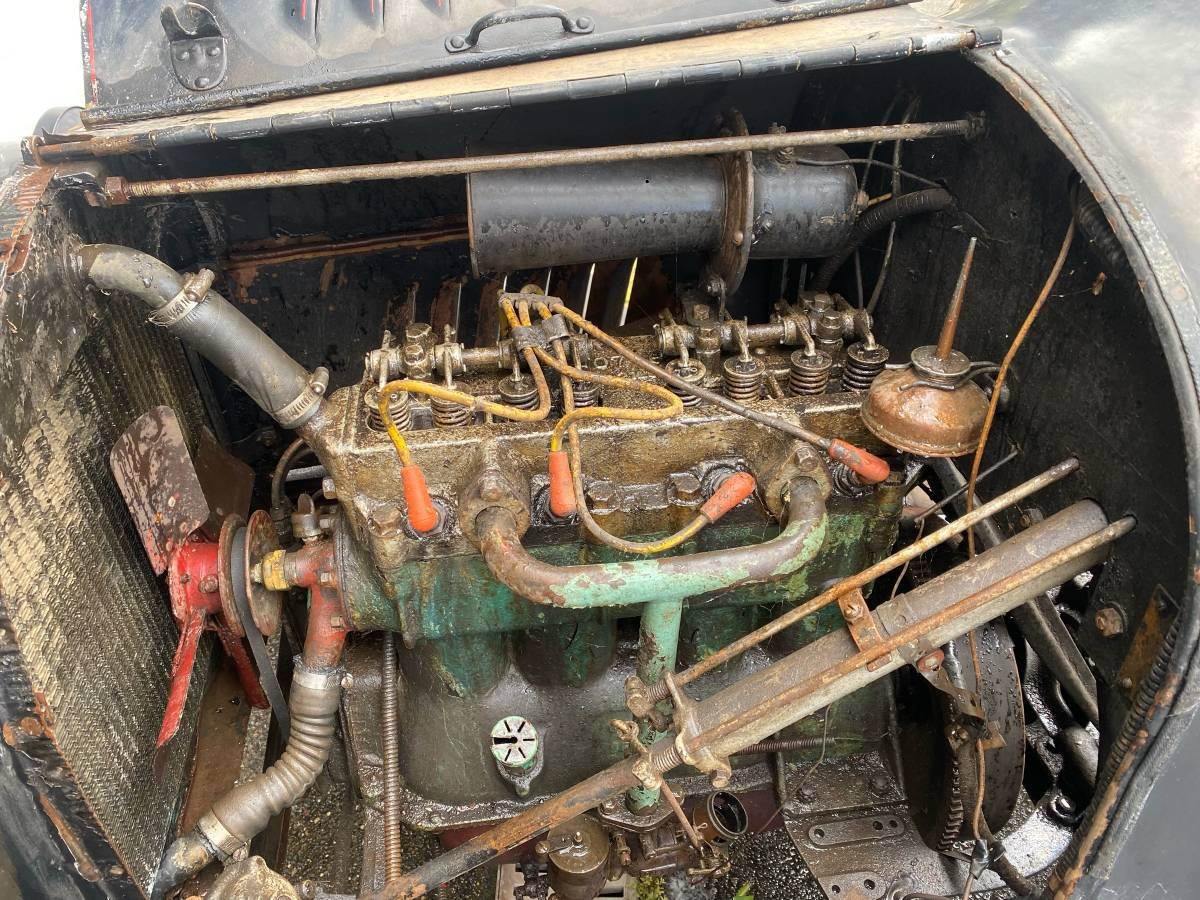
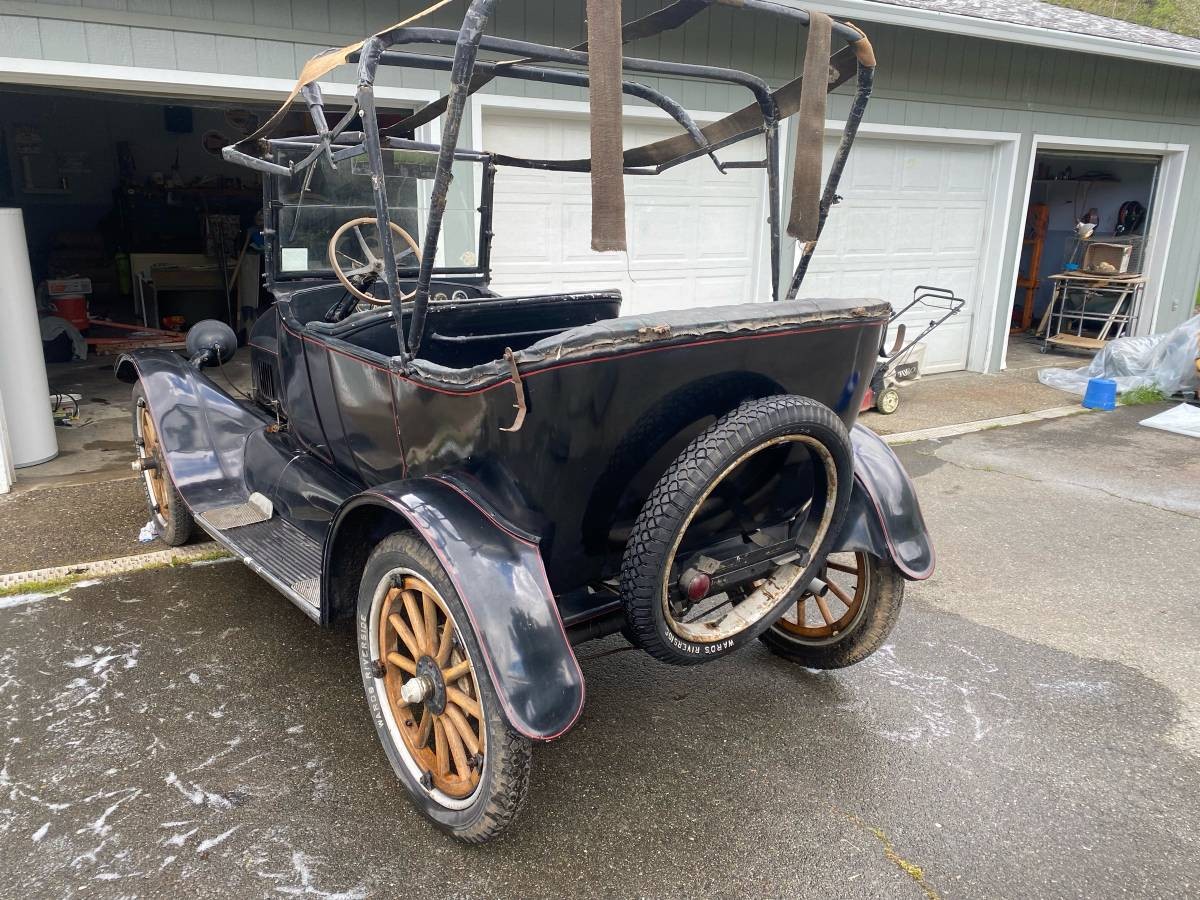
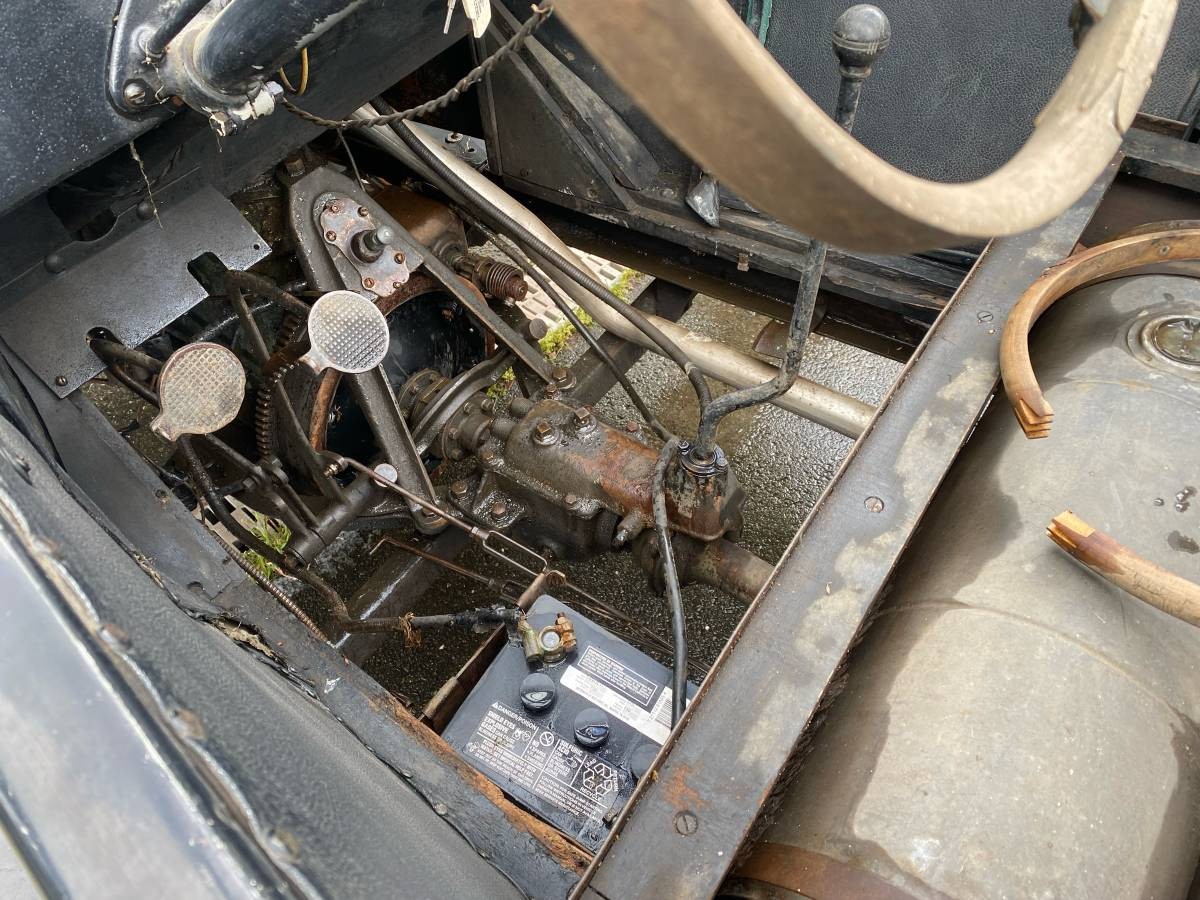
The 1917 Chevrolet 490 touring you see here appears to be a barn find that has recently spent a few days out in the weather. There is little written information in the ad. All we are told is that it has ok paint, the upholstery needs freshening up, the convertible framework is there but not the fabric, and that it amazingly starts and runs. The pictures reveal a surprisingly complete example of this Model T competitor. It looks to be larger than a T despite obvious similarities in design. Under the hood is where these similarities stop. The open valve gear gives the appearance of a car that is much older. Surprisingly, Chevrolet took this engineering approach when there were better solutions already in use. At least the oil can is still holding its faithful vigil.
If you decide to add this Chevrolet to your fleet, be prepared for some issues when it comes to parts. While thousands of Model T Fords still roam the roads, a Chevrolet of this vintage is an exceptionally rare sight with very little aftermarket support. The good news is that it would be a conversation starter of the first order at any car show. This amazing survivor gives us a good look at how the rivalry between Ford and Chevrolet got started so long ago.
Are you a faithful fan of a particular make? What would you do with this seldom-seen Chevrolet touring? Do you think the Model T was a better car? Please share your thoughts and opinions in the comments.



I believe 1917 was the year Chevy first offered a V8 in their cars, at least they were developing one that year. Someone correct me if I’m right.
Terry that’s what I also thought 1917 first Chevrolet V8 engine
I recall in ’73 going to Harrara’s (sorry for the miss spelling) auto musieum in reno and looking at a 1921 chev V8 displade on an engine stand.
I seem to remember seeing a vintage ad calling the 490 “Copper Cooled”, which meant they didn’t have a water pump, relied on convection to move coolant around. Anybody else out there have a better memory than me?
I bought one of these, a 1919, totally by accident while using my daughters laptop to monitor an R & M high end auction online (the flakey mouse clicked on “buy” for me). Never owned anything this old and my wife hated the fact that the doors flew open on corners. Could have been worse, a Mercedes Gullwing in the same auction broke an internet sales price record! This was the cheapest car in the auction
I don’t know much about a 1917 Chevrolet, but I do have fond memories of Grants Pass Oregon. It was 1971 and I was a student at Shasta College in Redding, California. I drove my wife and 3 daughters to Seattle to visit my older brother in our 1969 Firebird 400. On the way back traveling down I-5 as we approached Grants Pass the shaft on the water pump suddenly broke off sending the fan through the radiator. A state trooper soon came along and summoned a tow truck which towed our car to a full service gas station. The owner was really nice telling me it would take a week to get new parts, but he had an old Studebaker we could borrow and also told us of a nearby motel where we could stay. So we had 2 weeks of summer bliss enjoying this wonderful town at the foothills of the mountains.
God Bless America
An old timer in the old car hobby once told me that 490 stood for “4 days on the road, 90 days in the shop”.
Yup. Years later the same folks sold me a truck with the infamous 706 castech heads. A known problem but they refused to stand behind their product. No more Chevy trucks for this guy.
William Durant”s pre WW2 cars were like his middle name! Crapo! Crude, too much poorly designed wooden substructure and little competition to most other makes. Not only Ford.
Name was pronounced “CraYpo”, was his mother’s maiden name. I’m not smart enough to make my computer produce a “Long A”.
Thanks for the article and comments. The Fords are still here, so it is good to see an ancestor of the bowtie.
1st thing I’d do is swap plug wires 3 & 4
As a dedicated nit picker, it’s not an “Ancestor” of the bowtie, bowtie first used in 1913.
When these things catch on, model T’s dont have a chance!
My Mom and Dad, immigrants from Switzerland in the early 1930.s to Chicago had a “490”. Mom used to tell me her job was to sew the curtains on Saturday for their weekly Sunday drive. Dad, in working hard and further prosperity went up the ladder of General Motors: Chevrolet, Pontiac, Oldsmobile, Buick, and finally in 1965 a Cadillac which would not fit in the garage.
What happened to the United States Auto Industry? I go down “Auto Row and find all Japanese cars or Korea cars and almost no US cars. What happened?
Hi from Switzerland Roy! Where from?
My parents came from Lachen on Lake Zurich a pretty little town on the Lake. My Father was a slaughter house butcher, made good money in Winnepeg Canda, went back (a 2 week trip) to Switzerland, married my Mom after knowing her for 2 weeks and immigrated to the US. Their marriage lasted 56 years. From wo kumst du?
The 2 cars look so much alike The Ford and Chevy.
I’ve always worked on Chevy From the 60s. Engine parts or very easy to find. A lot of years and engine sizes have interchangeable Parts.
I have chosen to restore a 1923 4 door closed car model T. 23 Was the 1st year for a closed car 4 door. Price And availability of parts is why I chose this car.
It’s interesting that almost all “old” cars…just about anything older than 70s…have a dedicated following and a pretty good parts availability. But much newer than that, manufacturers quit carrying parts and the aftermarket hasn’t picked up the slack. Needdoor weatherstrip for a 54 Chevy…no problem. 2010 F150…no dealer parts, no aftermarket. Part of the problem is that newer cars have a lot more parts. And part of the problem is manufacturers want you to buy new cars, not fix older ones.