
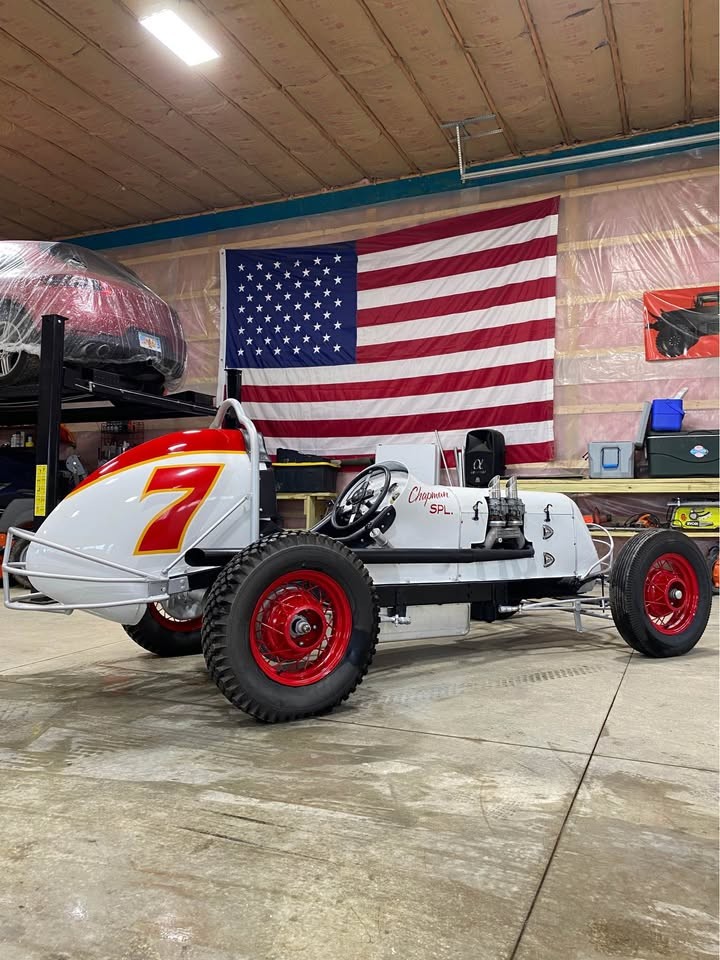
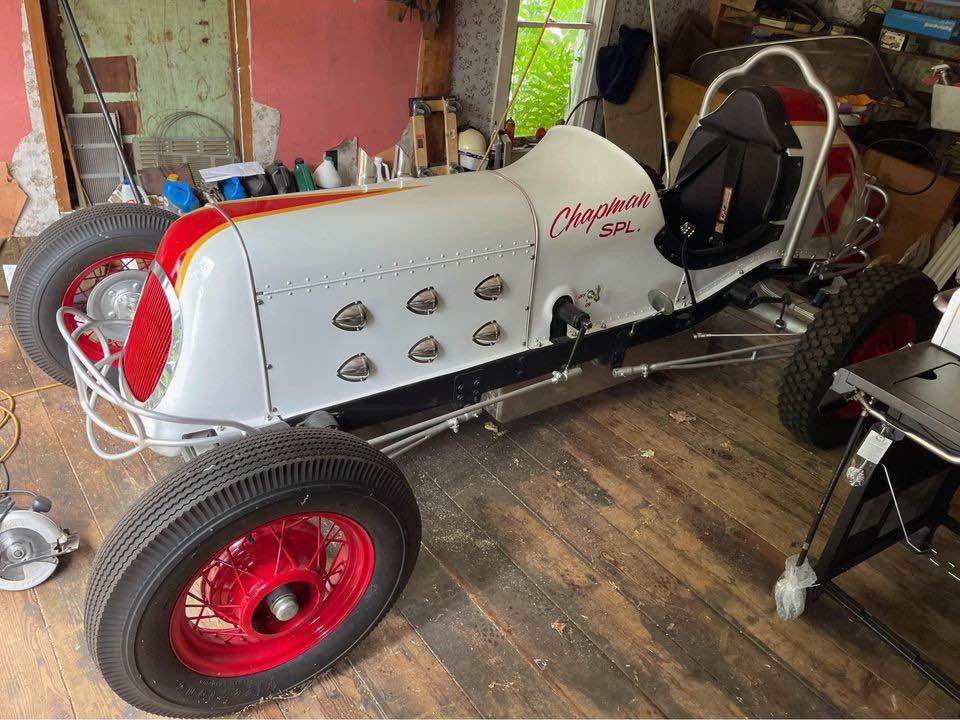
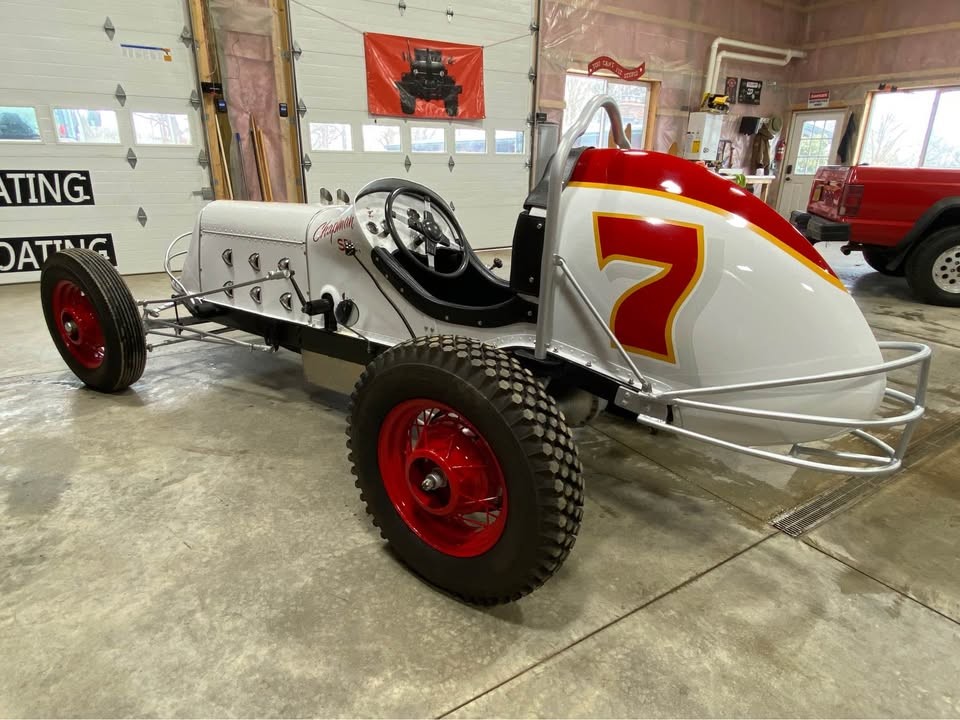
If you look around, race tracks all over this country are closing. Many are being converted into housing developments and industrial parks or just going bankrupt because attendance has fallen off a cliff. Why go to the track and fork out for a ticket and some grub when you can watch a race at home or even be the driver in a video game? This wasn’t always the case in America. Nearly every town worthy of a stoplight had a racetrack of some sort. One of the most popular forms of racing back then is now known as sprint car racing. These homebuilt racecars looked like the cars seen at the annual Indianapolis 500, but were smaller and raced on mostly dirt tracks. This 1937 Ford sprint car for sale on Facebook Marketplace in Lakewood, New York is claimed to be an original race car that was raced in Western New York in the 1930s. Restored and ready to hit the track, would you be interested in strapping on a leather helmet and getting behind the wheel of this vintage race car? Is the $26,999 cost of admission a good trade for the high-speed thrills that await you? Thanks to T.J. for yet another fascinating Ford-powered find!
The joke that the first automobile race happened when the second automobile was built is only partially untrue. Racing got its start early in America. From the first race at the Milwaukee Mile in 1903 to the Vanderbilt Cup race in 1904, the speed demons didn’t take long to find places to race. One of the most popular places for races were fairgrounds and the many horse racing tracks that dotted the landscape. Coming up with a race car was a bit more difficult. There wasn’t a place to purchase a ready-built race car in the early days. Once folks got past racing their showroom fresh production cars, they began to build racing cars through the “cut and try” method using the parts available to them. There was little information on how to make a car faster, but it was easy to understand that cutting out as much weight as possible and building heavy-duty components was as good a place as any to start.
These initial race cars were crude and dangerous. So were the tracks that they raced on. Injury and death were common, and many people came to see the danger up close. As with everything, order was eventually forged from chaos. The American Automobile Association stepped in to sanction races and brought with it a rule book. Those rules defined such things as racing seasons, classes, and rankings. Some of the classes included half-mile cars, championship and non-championship cars, and big cars. It wasn’t long before climbing up the classes was the ticket to be a driver at the Indianapolis 500. That road would be paved with copious amounts of blood, as these cars had rudimentary safety equipment at best. Those rules would also drive away some racers and track owners. What we now know as “outlaws” started with unsanctioned cars at unsanctioned races.
Sadly, despite their incredible popularity peak in the 1950s, the number of tracks hosting these race cars has greatly dwindled. Sprints, midgets, modifieds, and all the other forms of this type of racing have also become more standardized, safer, and limited to a small number of tracks. While major races held today like the Chili Bowl Nationals attract big-name racing stars from NASCAR and other series, the costs and dangers have had a detrimental effect on modern sprint car racing. Local tracks are fighting a losing battle to stay alive under the onslaught of higher costs, ridiculous insurance rates, and the inevitable march of encroachment into every place that was once pristine or fun.
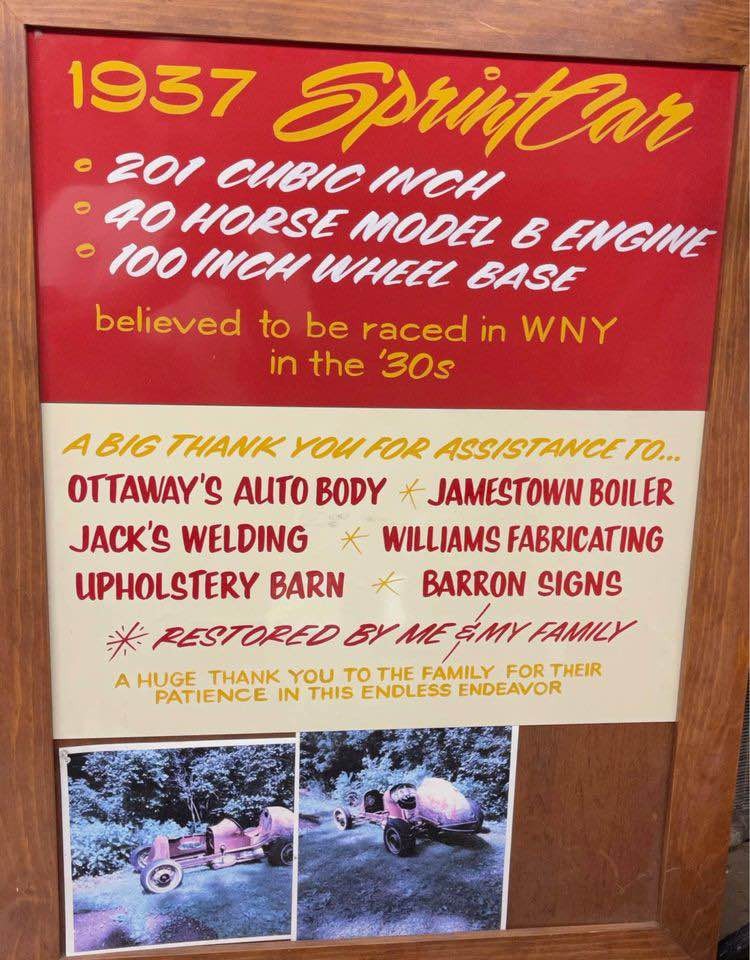
On the other hand, vintage racing with these cars has taken off in the past few decades. Cars like the one you see here being sold as a 1937 Ford sprint car are being rediscovered and restored. Many are also used in vintage races on both dirt and pavement by folks eager to act out their childhood dreams of being the local hot shoe driver. The restoration and preservation of these early race cars has also provided a window into just how they were built. For an era long before modern communications, seeing the way that early race car builders adapted production car parts and used their ingenuity to go faster is absolutely fascinating. No two cars are identical and those in the know can tell you where a car raced by looking at the clues provided in its construction.
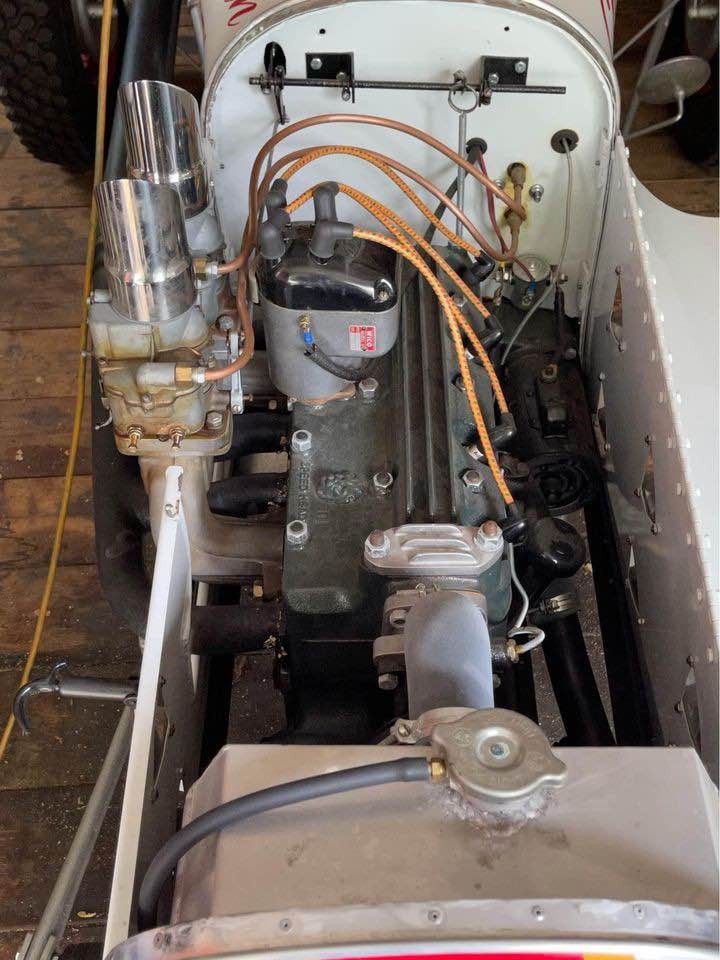
The ad doesn’t tell us much about this sprint car. It is described as a 1937 Ford despite having a Model B race engine under the hood. Ford produced the Model B as the four-cylinder version of the 1932 Ford. These were an improved version of the Model A engine. They were equipped with a larger crankshaft without counterweights, a pressurized oil system that provided lubrication to the main bearings instead of relying on splash lubrication as in the case of the Model A, and a water pump held on with four bolts. Such an engine was better equipped to handle the rigors of racing than its more primitive predecessor. Sadly, there is no other information given about the rest of the parts and pieces that make up this neat racecar.
The sign board for the car used at car shows states that it was raced in Western New York in the 1930s. That may be true, or some part of it raced at that time and it was continuously modified until it reached retirement for whatever reason. What we do know is that it is likely quite fast and would require a steady hand to extract the speed it is capable of on a dirt track. It is also a window into a time when ordinary people, bitten hard by the racing bug, risked life and limb to go fast and be a hero in their hometown on a Friday or Saturday night. While relics like this Ford remain, it appears that the way of life that brought this car into existence is slowly fading away.
Are any of you fans of sprint car racing? Do you have memories of racing at your local tracks? Can any of our readers identify individual parts used to build this sprint car? Please share your thoughts, memories, and knowledge in the comments.



When men were men, and very few women participated in such riskiness. I read, this has what was called a “Lion Speed Head”, and some of these had almost 200 HP. Speeds of 100 mph were not uncommon. Imagine, 100 mph in this. Sprint cars to this day are some of the most spectacular racing and haven’t changed much.
I remember seeing sprint cars at the old racetrack we had here, before it too closed to become a housing development. And they were basically just a roll cage with a wing on top, powered by a built 4-banger usually, nothing like the car shown here.
I used to live near Sun Prairie, Wis. home of Angell Park Speedway, 1/3 dirt oval been run by the fire dept. since 1903. The 4 cylinders were fun, sounded like a swarm of bumblebees, but the V8 jobs lifting the inside front tire, let’s just say we found out why nobody sat in the 1st 4 rows,,,
Growing up in central NY we were close to several racetracks, including hometown Oswego Speedway. Many remain, but cars like this one were fixtures in the Midwest, including 2 great uncles of mine who campaigned one in the 40’s
I have a couple black and white pictures of them proudly posing with it, and they even had Bardhall sponsorship.
As far as tracks closing, here in AZ it was a sad day when Manzanita closed down…
I’d take a lap with this one, but not sure I’d wind it up to full speed! 🏁
Cool car.
I’m pretty sure Model B crankshafts had counterweights. Maybe you meant to say that?
The ’32 Model B’s weren’t counterweighted but the ’33 and ’34 models had counterweights. Pretty stout engine from what I’ve been told…
Friday night 630 at the pinebrook in Caldwell
NJ. TQ races still have a phone poll advertisement our guy was tony romit good times with the whole family
i am 81 year old dirt track driver. tony was my guy to root for when i went to pinebrook and also atlantic city in door meet. great person and driver….ray liss
Nice little sprint car, and while it’s true many tracks are gone, there are still places to play with these. Search vintage sprint cars. There are a couple of events in Florida each year.
They sure don’t build Sprint Cars like they used to. I was the resident photographer at the local race track until they decided to close it 14 years ago. Every Saturday night from April till October we were at the track. Saw some spectacular crashes with everything, but those Sprint Cars put on one heck of a show.
A car like this, I’d almost expect to see a V8-60 in that engine bay. The 60 was used extensively in Midget Races over the years…
Albany Saratoga Speedway in Malta NY is where I grew up watching. Sadly closing its doors this year. Condos, imagine that…
Ascot Speedway in Gardena CA. Legendary track.
Closed in ’90. One curve and some of the fencing still remains. I think the outfit that bought it stores buses or cars there now? You can see what remains from the junction of the 91 and 110/405. Sad to see everytime I drive by. My brother raced there for a short time as well as a crazy family friend who ran on the figure eight course.
Tracks closing down. It really breaks my heart to see an institution fading to a bunch of photos and memories…
Back in the 50’s my good friend and class mate, Had what was called a 1/4 midget race car. It looked just like one of these but in go Kart size. Every Saturday night they had races which were broadcast on a local radio station. Ron would always win. When I asked him why he said because most of the other racers were to afraid to open them up. What a wonderful time in our lives. I wouldn’t have any use for this race car, but if someone else does I wish you the best.
God Bless America
When I was a kid my dad would take me to Lakeside Speedway (The Palace) to watch midget races. It was the highlight of my week watching them tear around the track as fast as they could go, but sadly the entire Lakeside park is in ruins now.
This is so cool! I, irrationally, want it. Start it up and go around my neighborhood. I’d look a lot better than the dozens of people who cruise around in golf carts, wouldn’t I?
1930s cars and 1930s aviation really strike my fancy. If I could time travel I’d give it a go. Great Depression? Money? If I can invent a time machine, I can make sure I have funds. :)