
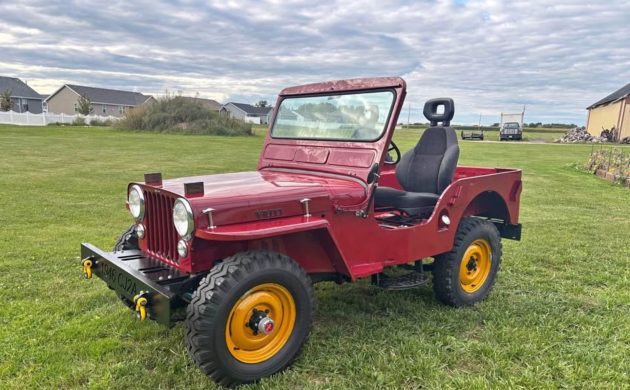
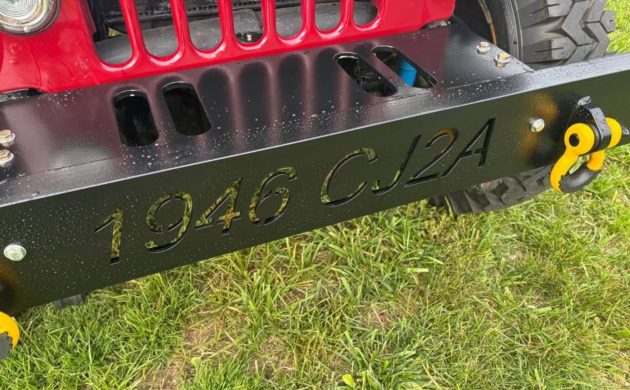
After WWII, Willys wasted no time in transforming its proven military design into a vehicle for the civilian market. The result was the CJ-2A, a tough little 4×4 that carried the same rugged DNA as the wartime MB while being adapted for farming, industry, and everyday use. This example, a 1946 Willys Jeep listed here on Facebook Marketplace, has already had much of the restoration work started and comes with numerous new parts. It’s nearly ready for someone to finish and enjoy, with a clean title included. Thanks for the tip Lothar!
According to the seller, this Willys has already had major updates, including a new starter and other fresh components. It even comes with the rare PTO option, which allowed these Jeeps to power farm equipment, saws, and other tools back in the day. That feature alone makes this one especially desirable among collectors who value originality and versatility.
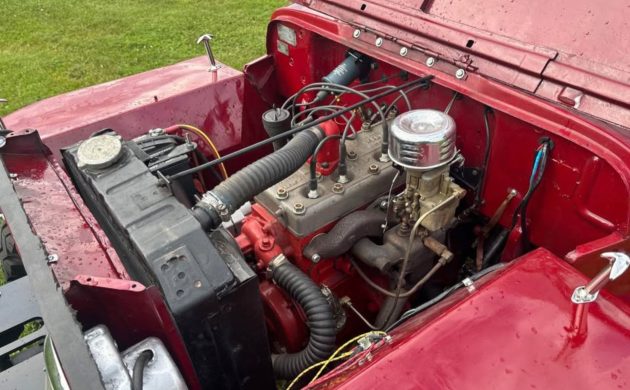
The Jeep is said to be fully functional, though the transmission does have an oil leak that will need addressing. Otherwise, the drivetrain, including the 4×4 system with front lockout hubs—is in working order. These simple, reliable powertrains are part of what made Willys vehicles legendary, and with the boxes of extra parts included, the next owner will have plenty of resources on hand to keep things running smoothly.
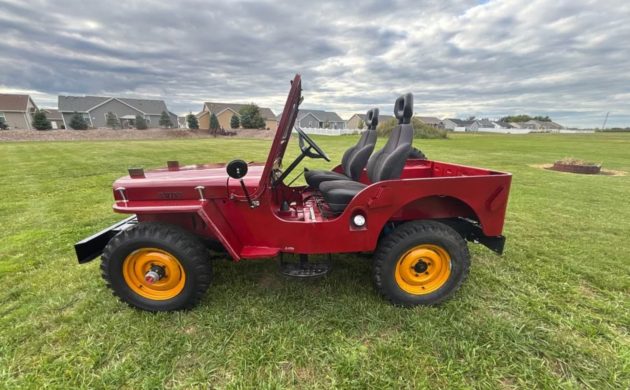
Cosmetically, the project appears presentable, though the seller notes that the restoration is not yet finished. With the hard work already underway, the new owner can decide whether to complete it as a show-quality restoration or leave it with a bit of rugged patina for use as a fun driver. Either way, the bones of a very desirable postwar Willys are here, and the presence of a clean title makes the process straightforward.
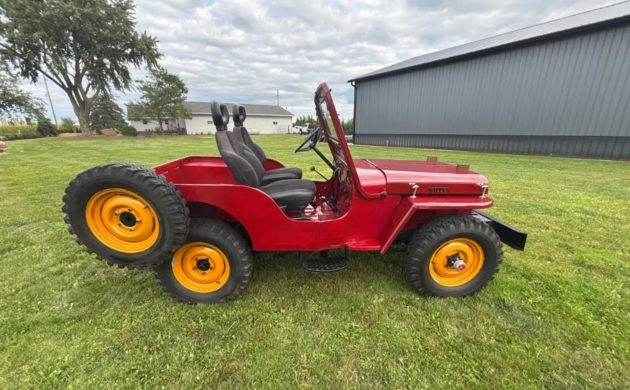
With its combination of wartime heritage, civilian practicality, and off-road capability, a 1946 Willys is always a great addition to any collection. Given how many were worked hard on farms and fields until they were worn out, finding one that’s already on the road back to completion is a rare opportunity.
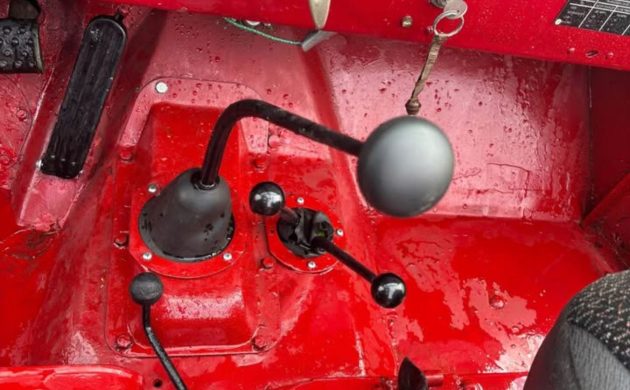
Would you finish this Jeep to factory specs, or keep it as a rugged driver that reflects its hard-working roots?



No reason to change anything as far I can see. had a ’42 Ford and it was a bunch of fun and a great snow mover. Nice one here.
Nice one bobhess. How did that plow raise, lower and angle ?
Hi Stan, pardon my intrusion, bob(?), but the up/down was accomplished with a bottle jack in the cab and a ram on the plow. The angle was turned by getting out and moving the plow and secured with a pin. How archaic can you get, but hey, it worked.
Howard hit it except the slave cylinder out front came off of a rocket launcher we found while scrounging for Jeep parts a an Army depot.
The front bumper is a pretty cool non-stock touch. But those seats… And it needs an OEM air filter. The existing one just looks silly. Other than that, not much to change. On the other hand, very difficult to judge a Jeep book by its cover. I just spent months helping a friend with a ’61 CJ5 he bought. It ran and stopped and the engine was good. We worked our way from the back to the front and $4000+ in parts later it was done. Just about every component was plum worn out, from the rear shackle bushings to the front where the frame had cracked all the way around the spring mount.
Ah, my old nemesis, “403 error”, miserable so and so, okay, take 2, a much simpler post, just in case. Sometimes, when I kvetch about the lack of power in my YJ, I say I’m driving a glorified army Jeep. Seeing this, maybe not. The YJ, and subsequent Jeeps really are a highly refined version. The PTO was a plus, ( $36) and Jeep tried to market it as a “do all” vehicle. Entire industries sprang up supplying Jeep owners with everything from 3 bottom plows, to grader blades, to backhoes, welders, generators, most PTO driven. For about the same price as an 8N, $1400, the Jeep was clearly the better deal. Truth was, however, it made a lousy farm tractor, and gravitated towards the service industry, Every service station had to have one, and we were mighty disappointed to see one show up to plow the drive, when a “snow day” was expected. And all just like this. I wondered why it was called “Go Devil”, and I read, it was “Goes like the devil”, but not sure what that means either.
As said, I’m not the most patriotic American, but I recognize simple things that bolster our freedom, and I drive a Jeep because I’m proud of what my old man and many like him did for us, and the Jeep, is almost instantly recognized as part of it. USA, USA,,,
In 20 years of USAF the closest I came to a Jeep other than mine was when we took the fighter commander’s Jeep apart and put it in the foyer of the officer’s club while we celebrated significant success in a critical North Vietnam mission.
Jeeps are good snowplow vehicles. Provided its a smaller/liteweight plow. Their short size is gold when plowing.
My 1/2 barrel with skids worked great. 1/2 barrel didn’t weigh much at all.
60 yrs. ago in Northern New England, just about every gas station had a CJ-series for snow plowing and parts chasing. There was even a concrete curbing company called Durastone that used rear placed winches and an overhead boom. The Jeeps were used because of their ability to get in/ out of tight locations.
Rebuilt two of them for my dad who was a WW2 vet he just loved them. This looks like a very good buy.
Supposedly in late 1945 you could buy brand new surplus ones for a song, though I have never ran into anyone who did. Urban legend? Personally, I would have rather bought a surplus P51.
Actually, in the early 60’s you had ads in the back of Popular Mechanics for “Jeeps in a Crate”. I forget the listed price, but wass probably real money then, as minimum wage was $1.50/hr in the early 70’s. You also had M1 Carbines for $30 as well, AND no F4473 required.
The decades-old tales of brand new surplus jeeps—including the elusive jeep-in-a-crate—sold cheap are largely fiction. Yes, lots of surplus military jeeps were sold at the end of the war, but they were almost all vehicles with plenty of wear and tear on them. (Why wouldn’t the military keep the best ones—including any new stock—and only surplus the most used/worn ones?) And, most MB/GPW were left overseas; transporting them home was too costly, took up too much room on ships, and were particularly useful to allies trying to rebuild war torn nations.
It’s not that there weren’t some nice ones available, it’s more that those were in the minority. Also, veterans had first opportunity to buy them, so often the remaining ones purchased by civilians needed work.
NHDave, there was probably a fair amount of ‘bogus speculation’ on those Popular / Science / Mechanics ads. But, if you’re from NH, there’s probably a fair amount of old Willy’s , etc. in the back of properties’ there.Even as late as the 1990’s there were a fair amount of unrestored former military vehicles. I had an elderly neighbor in MA that had a few old Willy’s parked on the side of his barn. One day, there was a For Sale sign on the property. A young woman on the property, told me the owner had passed. About two (2) weeks later, a car-hauler shows up and starts loading up multiple vehicles from the barn and property. Out of curiosity, I ask the driver about the vehicles. He stated that there were over thirty (30) Willy’s vehicles in the barn. He said that some were parts vehicles, but a fair amount were in good condition under tarps were easy to load. He estimated numerous trips to empty the barn. So, maybe not Popular Science / Mechanics WWII Jeeps, but there are vehicle hoarders out there, everywhere. Makes sense why this is called Barn Finds, eh?
I would have loved to poke through the stash of all those jeeps! Yes, Ablediver, there are many former WWII-era jeeps still tucked away in barns, garages, or—regrettably—sitting in the woods with all manner of growth around them. A lot of surplus vehicles made it into civilian hands after the war. That part is not in doubt; it was the seeming promise of new, unused surplus jeeps sold cheap that was the fallacy.
Often those magazine ads would simply prompt the receipt of a list of upcoming auctions. And that’s when the recipient would find out that the available vehicles were in less than like-new condition. But, if that person was willing to do a bit of work, often they could obtain a running, useable jeep for less than a what a new vehicle would cost. And, yes, so many of the barn finds we get excited about today, thankfully, started that way.